


I remember my first 'mentorship' in Lagos back in 2018.
Olumide Adeyemi
Pionero del Trading en África Occidental ·  Nigeria
☕ 10 min de lectura
Lo que aprenderás:
- 1What Actually Is a Forex Trading Academy? (It's Not What You Think)
- 2Breaking Down the Costs: What Should You Pay in Lagos?
- 3The Game-Changing Law: What the 2025 SEC Act Means for You
- 4How to Pick the Right Academy: A Step-by-Step Checklist
- 5The Broker & Funding Reality: What Academies Often Don't Tell You
- 6Red Flags & Common Scams: How Not to Lose Your Money Before You Trade
- 7Is an Academy Even Necessary? The Alternative Path
I remember my first 'mentorship' in Lagos back in 2018. I paid ₦250,000 to a guy in a fancy Lekki apartment. He showed me charts for two weeks, promised 'guaranteed' signals, and then ghosted when I blew my first $500 account following his advice. That loss, plus the course fee, set me back over ₦400,000. It taught me a brutal lesson: in Lagos's bustling forex scene, education is everything, but knowing where to get it is survival. This guide cuts through the hype. I'll show you what a real forex trading academy in Lagos should offer, how much it should cost, and the new 2025 laws that change everything.
Let's clear this up first. A forex trading academy isn't a university. There's no standardized curriculum or governing body (though that's changing, more on that later). In Lagos, it's usually one of three things: a physical classroom setup, an online course community, or a one-on-one mentorship program. The goal is the same: to take you from knowing nothing about a pip definition to having a structured plan to trade.
The best ones don't just teach you how to click buttons on MetaTrader. They build a foundation. You'll learn market structure, price action, risk management (this is non-negotiable), and, most importantly, trading psychology. The worst ones? They're just signal-selling services dressed up as education. They'll flash screenshots of winning trades and make you feel like you're missing out.

Warning: If an 'academy' leads with promises of monthly returns or 'funded account guarantees,' walk away. They are selling a dream, not an education. Real trading is a skill, not a lottery ticket.
I made the mistake of chasing the dream early on. I joined a WhatsApp group from a popular Lagos mentor. For ₦80,000 a month, I got 'VIP signals.' Some worked, many didn't. The problem was I had no idea why. When the mentor stopped posting, I was left with a losing account and zero skill. That's the difference between being fed and learning how to fish.
“In Lagos's forex scene, education is everything, but knowing where to get it is survival.”
Prices are all over the place, from 'free YouTube university' to programmes costing more than a year's rent. Here’s the real breakdown for 2026.
Physical vs. Online Academies
Physical classes in Ikeja or Lekki are the premium option. You're paying for the room, the instructor's time, and the networking. As per the research, expect to pay between ₦300,000 and ₦465,000 for a complete program. For example, Habby Forex charges ₦300,000 for their physical class mentorship. Is it worth it? Only if the instructor has a verifiable, long-term track record (ask for a live, not demo, trading statement) and the class size is small enough for you to ask questions.
Online courses are cheaper and more flexible. A solid self-paced course from a reputable international educator might cost $200 to $500 (₦180,000 to ₦450,000). The GNFOREX online mentorship at ₦155,000 fits here. The trade-off is you lack immediate feedback.
What Your Fee MUST Cover
- Foundation: Currency pairs, how to read charts, order types, understanding the spread definition.
- Analysis: Both technical (like using the RSI indicator and MACD indicator) and fundamental analysis (how news moves markets).
- A Complete Strategy: You should be taught one or two strategies from entry to exit. This could be a scalping strategy or a swing trading approach.
- Risk Management: This is the golden module. They must teach you about position sizing (use our position size calculator), setting stop-losses, and what a margin call is. If this isn't a core focus, the academy is negligent.
- Psychology & Journaling: How to handle losses, avoid revenge trading, and track your performance.

Example: Let's say you pay ₦200,000 for a course. If your starting capital is ₦100,000 ($65), that course fee is 200% of your account. That's a massive upfront cost. Sometimes, it's smarter to start with a cheaper course, preserve capital, and invest in advanced mentorship later.

💡 Consejo de Winston
The cost of your education should never exceed 50% of your initial trading capital. If it does, you're over-leveraging your learning before you even start.
“If an 'academy' leads with promises of monthly returns, they are selling a dream, not an education.”
This is the biggest shift every trader in Nigeria needs to understand. In March 2025, President Tinubu signed the Investments and Securities Act (ISA) 2025 into law.
Before this, the forex training space was the wild west. Anyone could call themselves an academy. Now, the law states it's an offense to operate an online forex trading platform or provide related services without registering with the SEC (Securities and Exchange Commission).
While 'related services' isn't fully defined yet, it casts a wide net. It strongly suggests that formal forex trading academies, especially those operating online, will need SEC registration. This is huge for you, the student.
Why this protects you:
- Accountability: Registered entities can be held to a standard. If a registered academy scams you, you have a formal channel for complaint.
- Quality Filter: The registration process will likely filter out the fly-by-night 'mentors' who pop up one month and disappear the next.
- Legitimacy: When you're evaluating an academy in 2026 and beyond, one of your first questions should be, 'Are you registered with the SEC under the ISA 2025?' Their answer will tell you everything.
This doesn't mean the guy teaching his small group of friends needs a license. But any organized, commercial training operation should be getting its paperwork in order. As a student, lean towards academies that are proactive about this. It shows they plan to be here for the long haul.
“If an 'academy' leads with promises of monthly returns, they are selling a dream, not an education.”
Don't just go with the one with the flashiest Instagram ads. Do your detective work.
Step 1: Verify the Mentor's Track Record. Ask for a verified myfxbook or fxblue link showing a live account history of at least 2 years. It should show consistent returns, not just a lucky 3-month streak. If they say it's 'proprietary' or 'private,' be very skeptical. I once asked a famous 'Lagos forex guru' for this. He sent me a screenshot of a MetaTrader window. Anyone can Photoshop that.
Step 2: Talk to Past Students. A real academy will have a community. Ask to speak to two or three past students, not just the ones they show. Ask the hard questions: 'Did the teaching match the marketing?' 'Were you supported after the course?' 'Are you profitable now?'
Step 3: Audit the Curriculum. Ask for a detailed syllabus. If it's vague ('Module 3: Making Profits'), that's a red flag. It should explicitly list topics like 'Risk-Reward Ratio Calculation,' 'London Session Breakout Strategy,' 'Trade Journal Setup.'
Step 4: Understand the Post-Course Support. Do you get lifetime access to updated materials? Is there a Q&A group? How long does the mentor provide support for? The course doesn't end on the last day of class; that's when the real learning begins.
Step 5: Match the Style to Your Life. If you have a 9-5 job, a 10am physical class in Lekki won't work. An online swing trading course might be perfect. If you need hand-holding, a one-on-one mentorship (like Lucky Mane FX's exclusive program) could be worth the higher cost, but verify its value intensely.
💡 Consejo de Winston
A mentor who cannot clearly explain their maximum historical drawdown is a storyteller, not a trader. Always ask for the worst period.
“The new 2025 SEC law turns the wild west of forex training into a regulated marketplace. Use it to your advantage.”
Your fancy academy training is useless if you can't fund a live account. This is a major Lagos-specific headache. Due to CBN capital controls, funding international brokers directly with your Naira card is a nightmare. Limits are low ($20-$50/month), and banks often block transactions to forex brokers.
Academies should teach you the legal workarounds. Reputable international brokers that accept Nigerians, like Exness, IC Markets, and XM, offer local bank transfer deposits. You pay in Naira into their local Nigerian account, and they credit your trading account in USD. It's the most straightforward method.
You'll also need to understand broker metrics beyond just 'they accept Nigerians.' Look at:
| Broker Feature | What to Look For | Why It Matters in Lagos |
|---|---|---|
| Spreads on EUR/USD | Raw spreads: 0.1 - 0.3 pips. Standard: under 1.0 pip. | Every pip saved adds up, especially for scalping. Brokers like Pepperstone are competitive here. |
| Deposit/Withdrawal | Local Naira bank transfers, no fees, processing < 24 hrs. | Avoids CBN card restrictions. This is non-negotiable. |
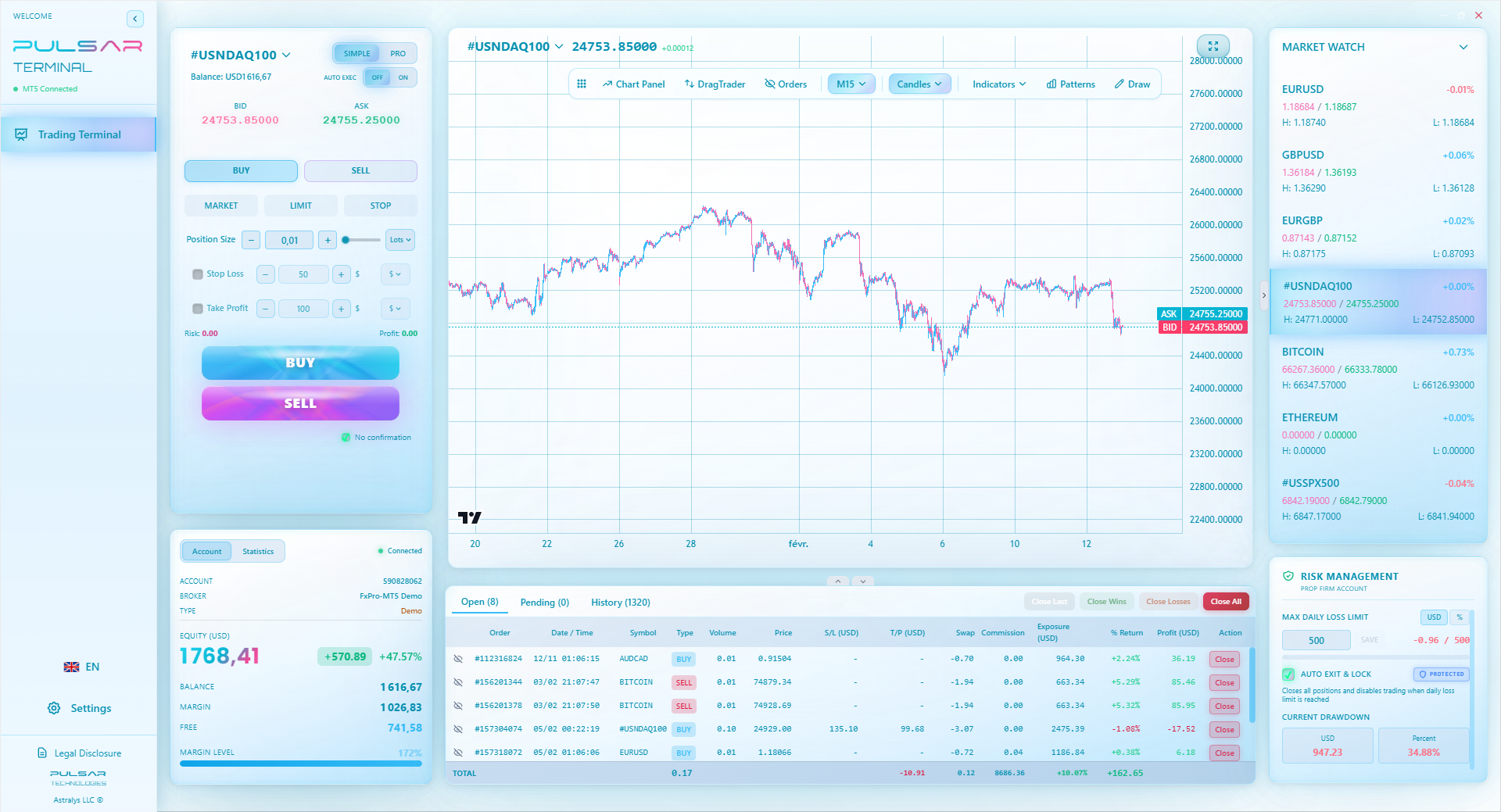
| Platform | Full MT4/MT5 support. | The platforms you'll learn on in the academy. Tools like Pulsar Terminal that enhance MT5 are a big plus. |
| Regulation | CySEC, FCA, ASIC. | Your fund safety. Never use an unregulated broker, no matter the bonuses. |
A good academy will guide you through this setup. If they just tell you to 'download MT4,' they're skipping a critical real-world step.
Managing a prop firm challenge requires flawless execution of your strategy's rules, which tools like Pulsar Terminal can automate directly on your MT5 platform.
Pulsar Terminal
La herramienta MT5 todo-en-uno: órdenes drag-and-drop, multi-TP/SL, trailing stop, grid trading, Volume Profile y protección prop firm. Usado por más de 1.000 traders diariamente.
“The new 2025 SEC law turns the wild west of forex training into a regulated marketplace. Use it to your advantage.”
I've seen it all. Here are the Lagos-specific scams to avoid.
The Signal Seller Scam: The 'academy' is just a front. The real product is a monthly subscription for trading signals. They'll show you incredible win rates from a 'master analyst.' These signals are often sent out late, or are so vague ('watch for buy on GBP/USD') they can't be tracked. You lose, they blame your execution.
The Prop Firm 'Partnership' Scam: This is big now. The academy says they have a 'special partnership' with a prop firm. Pay them ₦200,000, and they'll 'guide' you through the challenge, or worse, offer to trade it for you. This is dangerous. First, you lose the fee. Second, if they pass using reckless risk, the funded account will blow up with your name on it. Prop firms like FTMO are serious; do the challenge yourself with your own skills. Use a proper position size calculator for the challenge phases.
The 'Guaranteed ROI' Scam: Any form of guaranteed return is a lie. Forex is a probabilistic game. I had a mentor guarantee me 20% monthly. He took 5 trades with huge lot sizes, made 22% in a week, and called it a success. The next month, he lost 50%. Guarantees are marketing, not trading.
The Overpriced 'Secret' Indicator: They try to sell you a 'proprietary' indicator for ₦100,000 that 'predicts' the market. No indicator predicts the future. Price action and volume are king. Learn to read the chart itself, not a magic line.

Pro Tip: The best education often isn't the most expensive. Some of the most valuable lessons I learned came from a $50 book on trading psychology and hundreds of hours of practicing on a demo account with the EUR/USD guide and XAU/USD guide open.
“Your fancy academy training is useless if you can't legally fund a live account. This is a major Lagos-specific headache.”
Let's be honest. Not everyone has ₦300,000 for a physical academy. You can build a real education for much less, but it requires more discipline.
The Self-Education Blueprint:
- Free Foundation: Use Babypips' 'School of Pipsology.' It's free, complete, and covers all the basics. Do every quiz.
- Low-Cost Specialization: Instead of a full academy, buy one focused course from a reputable global trader on a specific skill, like 'Price Action' or 'Market Structure.' Cost: $100-$300.
- Demo, Demo, Demo: Practice for 6 months minimum. Treat the demo like real money. This is where you test strategies from your course.
- Community: Join free, serious trading Discord servers or Telegram groups focused on discussion, not signals. Engage, ask questions, share charts.
- Mentorship (Later): Once you have a foundation and have proven you can be consistent on demo, then consider paying for a one-on-one mentorship to refine your edge. You'll get 10x more value from it.
The advantage of an academy is structure and mentorship speed. The advantage of self-education is cost and developing your own research muscle. I know profitable traders who've done both. The common thread isn't the path they took, but the thousands of hours they put in studying charts, managing risk, and working on their mindset.
💡 Consejo de Winston
Spend 80% of your demo time learning how to lose well - cutting losses fast, journaling mistakes, managing emotions. Winning takes care of itself.
FAQ
Q1What is the average cost of a good forex trading academy in Lagos?
For a complete physical program in 2026, expect ₦300,000 to ₦500,000. Quality online courses or mentorships range from ₦150,000 to ₦300,000. Be wary of programs much cheaper (they're often incomplete) or exorbitantly more expensive (you're usually paying for hype, not extra quality).
Q2Is forex trading legal in Nigeria, and can I use international brokers?
Yes, forex trading is legal for individuals in Nigeria. Using internationally regulated brokers like Exness or IC Markets is common and accepted. The key is funding. Due to CBN restrictions, use brokers offering local Naira bank transfers to deposit and withdraw, avoiding direct card transactions which are often blocked.
Q3What should I look for in a forex mentor's track record?
Demand a verified, long-term track record. Ask for a live myfxbook/fxblue link showing at least 2 years of history. Look for consistency (a smooth equity curve), not just high returns. A real mentor shows their losses and wins. Screenshots or excuses about 'private systems' are major red flags.
Q4How does the new 2025 SEC law affect forex academies?
The Investments and Securities Act (ISA) 2025 requires entities providing 'related services' to online forex trading to register with the SEC. This likely includes formal academies. When choosing an academy, ask about their SEC registration status. It's a sign of legitimacy and accountability in the new regulatory environment.
Q5Can I become a profitable trader without joining an academy in Lagos?
Absolutely. Many successful traders are self-taught. It requires immense discipline: using free resources like Babypips, investing in a few focused paid courses ($100-$300 range), practicing relentlessly on demo for 6+ months, and joining communities for feedback. An academy provides structure, but it's not the only path.
Q6What is the biggest mistake new traders make when choosing an academy?
Falling for marketing over substance. They get sold on promises of quick riches, guaranteed signals, or the mentor's luxurious lifestyle. The right choice is based on a verifiable track record, a transparent curriculum focused on risk management, and post-course support - not Instagram glamour.
Lección del Prof. Winston
Puntos clave:
- ✓Verify a mentor's 2-year live track record, not screenshots.
- ✓Risk management must be 40% of any curriculum.
- ✓Prioritize brokers with local Naira deposit options.
- ✓The 2025 SEC Act is your new shield against scams.
¿Te resultó útil este artículo?
Haz clic en una estrella
Análisis Trading Semanal
Análisis y estrategias semanales gratis. Sin spam.
Sobre el autor
Olumide Adeyemi
Pionero del Trading en África Occidental
Uno de los educadores de trading forex más activos de Nigeria. 8 años de experiencia operando desde Lagos. Especialista en estrategias de bajo capital y desafíos de prop firms para traders africanos.
Comentarios
Aviso de riesgo
El trading de instrumentos financieros conlleva un riesgo significativo y puede no ser adecuado para todos los inversores. El rendimiento pasado no garantiza resultados futuros. Este contenido tiene fines educativos únicamente y no debe considerarse asesoramiento de inversión. Siempre realice su propia investigación antes de operar.
También te puede interesar

Cara Trading Forex Sukses: 7 Prinsip dari Trader Profesional
Cara trading forex sukses dengan 7 prinsip trader pro: manajemen modal, disiplin, journal trading, backtest. Data nyata, bukan janji profit palsu.
Jam Trading Forex Terbaik untuk Trader Indonesia: Panduan Lengkap dengan Tabel Waktu
Panduan jam trading forex untuk trader Indonesia. Tabel 4 sesi dunia, jam emas 20:00-00:00, sesi mana yang harus dihindari. Data akurat + tips dari trader berpengalaman.
Top 5 Sàn Forex Uy Tín Nhất 2026: Review Jujur dari Trader Indonesia
Top 5 sàn forex uy tín 2026 untuk trader Indonesia. Review jujur: spread, deposit, withdraw, dukungan lokal. Exness, XM, IC Markets & lebih.
Obtener Pulsar Terminal
Todas estas calculadoras están integradas en Pulsar Terminal con datos en tiempo real de su cuenta MT5.
Obtener Pulsar Terminal