


I lost $1,200 in 45 minutes trading the GBP/USD at 2:30 PM WAT.

Olumide Adeyemi
Pionero del Trading en África Occidental ·  Nigeria
☕ 10 min de lectura
Lo que aprenderás:
- 1Your Clock is Your First Indicator
- 2West Africa Time (WAT) and the Forex Sessions
- 3When Nigerian Traders Lose The Most Money (The Dead Zones)
- 4Building a Nigerian Trading Schedule That Works
- 5Weekends, News, and Time-Specific Psychology
- 6Tools to Manage Time and Risk
- 7Putting It All Together: A Typical Day

I lost $1,200 in 45 minutes trading the GBP/USD at 2:30 PM WAT. The chart looked perfect - a clean breakout on the 15-minute. I entered long at 1.3850 with a 20-pip stop. The price immediately reversed, spiked down 35 pips, stopped me out, and then rocketed back up to hit my original profit target. I was furious. It wasn't my analysis that was wrong. It was my timing. I was trading in the dead zone of the London session close, when liquidity evaporates and the market becomes a random, volatile mess. Most Nigerian traders blow up not because they can't read a chart, but because they don't understand the clock.
Forget the RSI or the MACD for a second. The single most important tool on your screen is the time. The forex market isn't a 24-hour monolith. It's a series of overlapping sessions, each with its own personality, driven by the bankers and institutions in London, New York, and Tokyo. When you trade at 9 AM WAT, you're trading in a completely different market than at 9 PM WAT. The volume, the spread, the typical price movement - it all changes. Nigerian traders operating on West Africa Time (WAT, UTC+1) have a unique, and often disadvantageous, alignment with these global cycles. We get the tail end of Asia, the heart of London, and the open of New York. Misunderstanding this flow is like trying to swim against a tsunami.

Warning: Trading during low-liquidity periods (like the Asian session for EUR pairs) is a common mistake. Your broker's spread widens, your stop-loss becomes a suggestion, and a single large order can cause a massive spike that has nothing to do with the trend. I've seen a 15-pip spread on the EUR/JPY at 3 AM WAT. That's a $150 headwind on a standard lot before you even start.
The first step is to internalize this: The market's behavior is dictated by who is at their trading desk. No major banks are making big moves from Lagos at midnight. The price action you see is often just the leftover noise from other time zones.

💡 Consejo de Winston
The market pays you for being patient, not for being present. If your prime session offers nothing, the trade is to wait. Forced action is the tax on boredom.
Let's map the global sessions to your local Nigerian time. This is the foundation. Remember, these are approximate windows where activity peaks.
| Market Session | Key Financial Center | Active Hours (WAT) | Character for a Nigerian Trader |
|---|---|---|---|
| Asian Session | Tokyo, Singapore | 1:00 AM - 10:00 AM | Often slow, range-bound. Good for pairs like AUD/USD, USD/JPY. Avoid EUR pairs here. |
| London Session | London, Europe | 8:00 AM - 5:00 PM | The main event. Highest liquidity, tightest spreads, strongest trends. This is your prime time. |
| New York Session | New York | 1:00 PM - 10:00 PM | High volatility, especially at the open (1 PM WAT) as it overlaps with London. Big moves on USD pairs. |
| Pacific / Late NY | Sydney, Late US | 10:00 PM - 1:00 AM | Very thin liquidity. Highly unpredictable. For most, this is casino time. Avoid. |
The Nigerian Prime Time: 8 AM to 5 PM WAT
Your most productive trading day starts when London wakes up. From 8 AM WAT, volume floods into the market. This is when the real money moves. If you have a day job, your lunch break (1 PM - 2 PM WAT) is the most volatile hour of the day, as New York traders hit their desks. It's high opportunity, but also high risk. I used to try and trade the Asian session before work. The result? I was bored into taking terrible trades just to see some action. Now, I save my focus for the London open. A good scalping strategy needs tight spreads, which you only get during these core hours.
The Overlap Trap: 1 PM - 5 PM WAT
This London-New York overlap is a double-edged sword. Yes, volume is insane. But the volatility can stop you out on noise before a real move begins. This is where I lost that $1,200. You need wider stops during this period, which means using a smaller position size to keep your risk in check. A position size calculator is non-negotiable here.
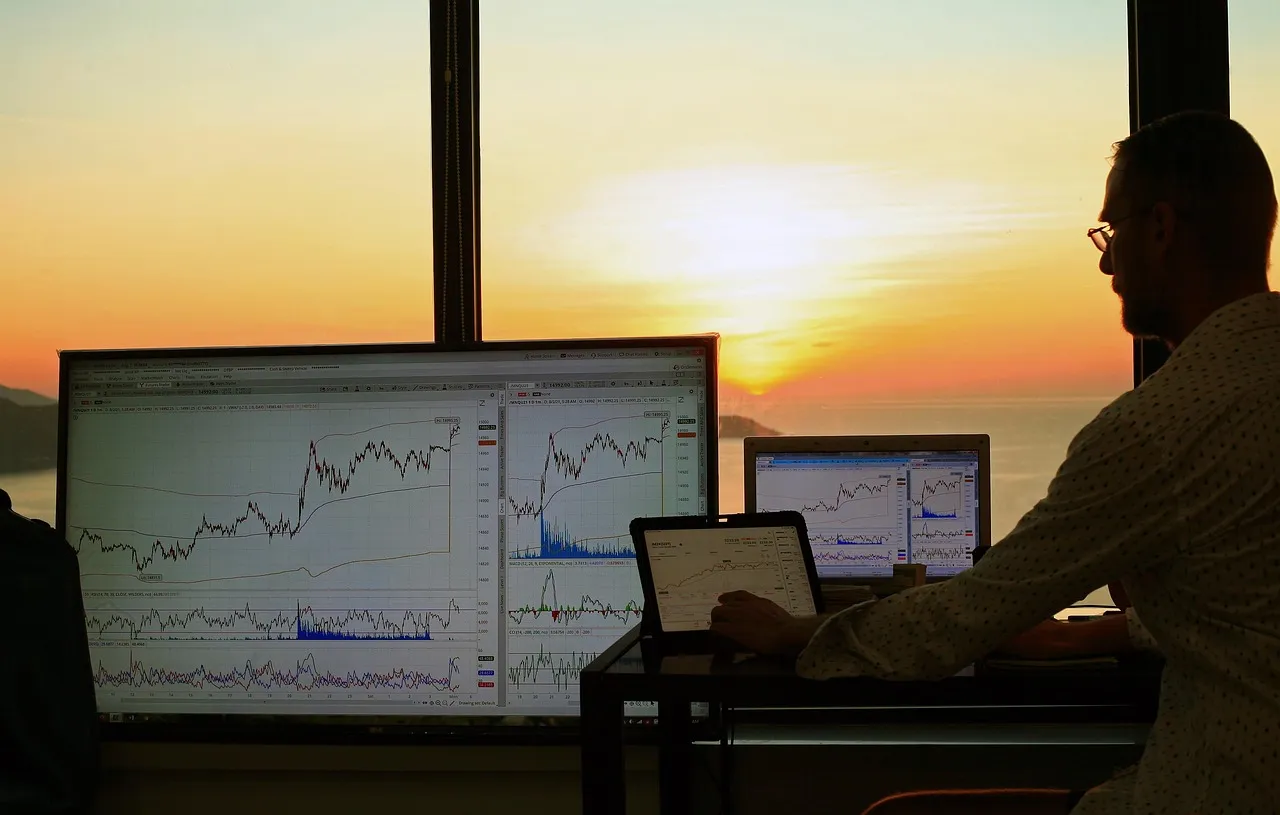
“Most Nigerian traders blow up not because they can't read a chart, but because they don't understand the clock.”
Based on coaching hundreds of traders and my own painful ledger, here are the specific times you should seriously consider walking away from the screen.
1. 5:30 PM - 7:00 PM WAT: The London close. Liquidity dries up fast. What looks like a breakout is often just the last big bank squaring its books for the day. The move frequently reverses in the next hour. It's a classic trap.
2. 11:00 PM - 1:00 AM WAT: The dead of night. Only the algorithmic bots are playing. The market can gap or spike on minimal volume, hunting for stop-losses placed by tired retail traders in other time zones. I once had a perfect swing trading setup on the XAU/USD. I left a stop-loss overnight. A $5 spike at midnight WAT took me out, and the price then rallied $30 in my original direction. My trade was right, my timing was idiotic.
3. Major News at Inconvenient Hours: A US Non-Farm Payrolls report is at 2:30 PM WAT. That's manageable. But a Reserve Bank of Australia statement at 4:30 AM WAT? If you're not awake, alert, and prepared, don't leave trades open that could be gutted by it. The FOMO of trying to trade news you just woke up to is a guaranteed account killer.

Pro Tip: If you must trade outside prime hours, stick to the major currency pairs (EUR/USD, GBP/USD, USD/JPY). Exotic pairs or even minor pairs like the EUR/GBP can have their spreads widen so much you're instantly in a losing position. Check your broker's typical spreads during these off-hours. A good broker review will highlight this.
You need a schedule that fits your life, not the other way around. Here’s how to build one.
For the 9-5 Worker (Abuja, Lagos):
- Pre-Market (7:30 AM - 8:00 AM WAT): Analyze. Don't trade. Set alerts for the London open. Plan your day.
- London Session (During Work): This is tough. If you can't watch the screen, don't day trade. This is the perfect window for longer-term swing trading where you set a trade and leave it, or use end-of-day analysis after work to plan for the next day.
- Lunch Break (1:00 PM - 2:00 PM WAT): High-risk, high-reward. Have a very specific plan. One trade, max. Use a tight stop. This is not the time for experimentation.
- Evening (After 7 PM WAT): Review. Analyze the day's moves. Plan for tomorrow. Do not open new trades. The late New York/Pacific session is a graveyard.
For the Full-Time Trader:
- Core Trading Hours: 8:30 AM - 5:00 PM WAT. Treat this like your job. Be at your desk, focused. This is when you execute.
- Post-Market Analysis: 5:30 PM - 6:30 PM WAT. Review your trades, journal, update your charts.
- After 7 PM WAT: Walk away. The market is closed for you. Your brain needs to disconnect. Forcing trades in the late session will erode your discipline and your capital.
The biggest mistake I see full-time traders make is feeling like they have to be in a trade because it's "trading time." If the London session was slow and choppy, the correct trade is often no trade at all. Preserving capital is a win.
💡 Consejo de Winston
Your most valuable trading hours are the first two after you wake up and the last two before you sleep. Guard them fiercely. Don't waste the first on chaos or poison the last with a loss.

“Trading after 7 PM WAT is like shopping at a market after all the real sellers have gone home. You're just haggling with ghosts.”
Sunday Night/Monday Morning (10 PM WAT - 2 AM WAT): The Asian session opens. This is often a “gap and crap” period. Price can gap from the Friday close based on weekend news, then often reverse as liquidity fills in. I have a hard rule: no trades until at least 8 AM WAT Monday. Let the market find its feet.
Friday Afternoon (After 3 PM WAT): Profit-taking and position squaring happens. Trends can reverse unexpectedly. If you're in a profitable trade, consider taking partial profits before the London close. Don't be greedy holding a full position over the weekend for a few more pips. A Sunday gap can wipe out a week's gains. Understanding the pip definition and its value helps you make these calculations rationally.
Your psychology changes with fatigue. At 10 PM WAT, after a long day, you are not the same trader you were at 10 AM. Your risk tolerance goes up, your patience goes down. You'll chase losses. I've broken every one of my rules after 9 PM, trying to “get back to even.” It never works. Set a hard stop time and use platform tools to enforce it. Some brokers like IC Markets or Pepperstone offer session break indicators right on the chart - use them.
You can't babysit the charts 24 hours. Use technology.
- Pending Orders & Alerts: Your best friend. If you identify a key level at 1.0950 on the EUR/USD during your analysis, set a buy stop or sell limit order there with your stop and target. Let the market come to you. Set a price alert so you know when it's triggered.
- Economic Calendar: Filter it for “High” impact events only. Note the WAT time. If a major event is at 3 PM WAT, you should have a plan by 2 PM. Are you trading the news or avoiding it? Decide before the volatility hits.
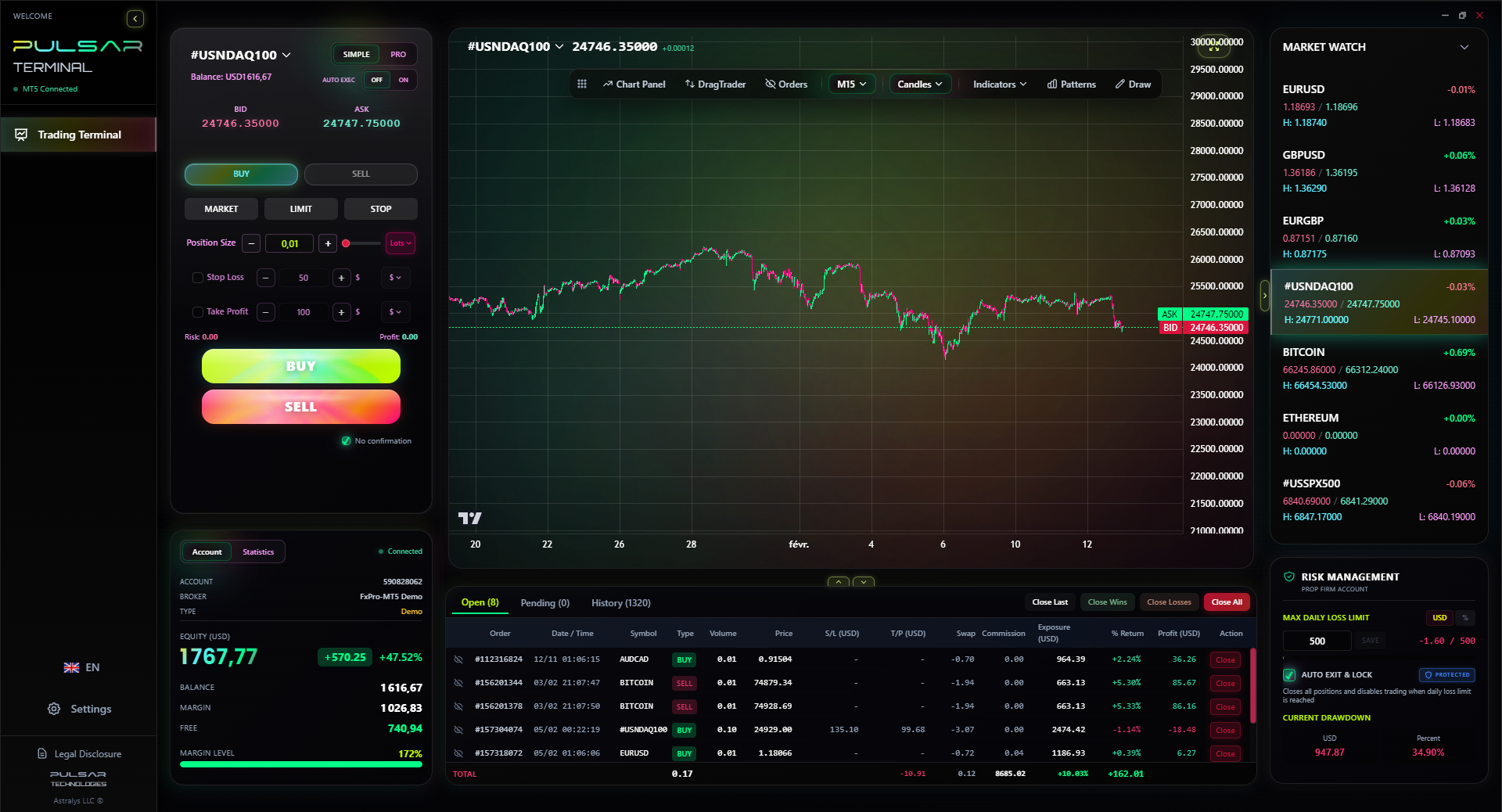
- Time-Based Automation: This is where advanced tools change the game. You can set rules like: “If I'm in profit by 20 pips after 4 PM WAT, automatically move my stop to breakeven.” This protects you from the late-session reversals without you needing to watch it.

Example: Let's say you buy GBP/USD at 1.2600 at 10 AM WAT. By 3 PM, it's at 1.2640 (+40 pips). You're happy, but New York volatility is coming. You could set an automated rule to trail your stop 20 pips behind the price. If it reverses to 1.2620, you're out with +20 pips. If it runs to 1.2680, your stop moves to 1.2660, locking in +60. This manages time-based risk for you.
Managing time-based risk, like auto-moving stops to breakeven before the London close, is exactly the kind of rule-based automation that Pulsar Terminal builds directly into your MT5 platform.
Pulsar Terminal
La herramienta MT5 todo-en-uno: órdenes drag-and-drop, multi-TP/SL, trailing stop, grid trading, Volume Profile y protección prop firm. Usado por más de 1.000 traders diariamente.
“Your profitability didn't come from more trades; it came from better-timed trades. Be a sniper, not a machine gunner.”
Here’s what a disciplined day looks like for me now in Lagos.
- 7:30 AM WAT: Coffee. Check charts from the Asian session. Did anything important happen? Check the calendar. Plan 2-3 key levels to watch.
- 8:00 AM - 8:30 AM WAT: London open. I watch for the first 30 minutes without trading. I want to see the initial direction and volume.
- 9:00 AM - 12:00 PM WAT: My main execution window. I look for setups that formed in the last hour. I might take 1-2 trades max.
- 1:00 PM WAT: New York open. I am hyper-alert. I check all open positions. I might tighten stops or take partial profit. I am very hesitant to enter new trades in the first 30 minutes of this chaos.
- 2:30 PM - 4:00 PM WAT: Management mode. I am not looking for new entries. I am managing what I have, or I am done for the day.
- 5:00 PM WAT: London close. All trades are either closed or have trailing stops/breakeven stops set. I do not open anything new.
- 6:00 PM WAT: Trade journal. What worked with the timing? What didn't? I note the market's character for the day.
This structure forced me to respect the clock. My profitability didn't come from more trades; it came from better-timed trades. The goal is to be a sniper, not a machine gunner.
FAQ
Q1What is the best time to trade forex in Nigeria?
The absolute best time is during the London session, from 8:00 AM to 5:00 PM West Africa Time (WAT). This session has the highest liquidity and most reliable trends, especially for pairs like the EUR/USD and GBP/USD. The overlap with New York (1:00 PM to 5:00 PM WAT) offers high volatility but requires stricter risk management.
Q2Is it good to trade forex at night in Nigeria?
Generally, no. Trading after 7:00 PM WAT, when both London and New York are winding down, is extremely risky. Liquidity is thin, spreads widen, and price action becomes erratic and prone to sharp spikes. This is when many retail traders get stopped out on meaningless noise. It's better to analyze and plan for the next day.
Q3Can I trade the Asian session from Nigeria?
You can, but you should be selective. The Asian session (approx. 1:00 AM - 10:00 AM WAT) is quieter. It can be suitable for range-bound strategies on AUD/USD or USD/JPY, but avoid Euro-based pairs. Most Nigerian traders find the sleep sacrifice isn't worth the lower opportunity compared to the London session.
Q4How does West Africa Time (WAT) affect trading news events?
It puts you in a decent position for European and US news. High-impact EU news often drops between 9:00 AM - 11:00 AM WAT, and US news (like NFP) is at 2:30 PM WAT. However, news from Australia/Japan happens in the middle of the night (2:00 AM - 5:00 AM WAT), which is dangerous if you have open trades you can't monitor.
Q5I have a day job in Lagos. When should I trade?
Focus on the London open during your morning (8-9 AM) or use a swing trading approach. You can analyze after work, set pending orders at key levels with stop-loss and take-profit orders, and let the market execute them the next day. Trying to actively day trade during work hours leads to distraction and poor decisions.
Q6Why do my trades always get stopped out before reversing?
This is a classic symptom of trading in low-liquidity periods or at session overlaps. When volume is low, the spread widens and normal market "noise" can easily hit your stop-loss. Before you blame your stop placement, check the time you entered. Were you trading at 5:45 PM WAT (London close) or 11:30 PM WAT? That's likely the culprit.
Lección del Prof. Winston
Puntos clave:
- ✓Trade the London session (8 AM-5 PM WAT) for reliable liquidity.
- ✓Avoid new trades after 5:30 PM WAT (London close).
- ✓Set a hard daily stop time, like 7 PM WAT.
- ✓Use pending orders to execute your plan across time zones.
- ✓Widen your stops during the 1 PM WAT NY open overlap.
¿Te resultó útil este artículo?
Haz clic en una estrella
Análisis Trading Semanal
Análisis y estrategias semanales gratis. Sin spam.
Sobre el autor
Olumide Adeyemi
Pionero del Trading en África Occidental
Uno de los educadores de trading forex más activos de Nigeria. 8 años de experiencia operando desde Lagos. Especialista en estrategias de bajo capital y desafíos de prop firms para traders africanos.
Comentarios
Aviso de riesgo
El trading de instrumentos financieros conlleva un riesgo significativo y puede no ser adecuado para todos los inversores. El rendimiento pasado no garantiza resultados futuros. Este contenido tiene fines educativos únicamente y no debe considerarse asesoramiento de inversión. Siempre realice su propia investigación antes de operar.
También te puede interesar

Cara Trading Forex Sukses: 7 Prinsip dari Trader Profesional
Cara trading forex sukses dengan 7 prinsip trader pro: manajemen modal, disiplin, journal trading, backtest. Data nyata, bukan janji profit palsu.
Jam Trading Forex Terbaik untuk Trader Indonesia: Panduan Lengkap dengan Tabel Waktu
Panduan jam trading forex untuk trader Indonesia. Tabel 4 sesi dunia, jam emas 20:00-00:00, sesi mana yang harus dihindari. Data akurat + tips dari trader berpengalaman.
Top 5 Sàn Forex Uy Tín Nhất 2026: Review Jujur dari Trader Indonesia
Top 5 sàn forex uy tín 2026 untuk trader Indonesia. Review jujur: spread, deposit, withdraw, dukungan lokal. Exness, XM, IC Markets & lebih.
Obtener Pulsar Terminal
Todas estas calculadoras están integradas en Pulsar Terminal con datos en tiempo real de su cuenta MT5.
Obtener Pulsar Terminal