


Everywhere you look online, you see ads screaming about 'free forex trading' - zero commissions, no fees, just pure profit.

Olumide Adeyemi
Pionero del Trading en África Occidental ·  Nigeria
☕ 9 min de lectura
Lo que aprenderás:

Everywhere you look online, you see ads screaming about 'free forex trading' - zero commissions, no fees, just pure profit. It sounds like the ultimate shortcut, right? I fell for it too, back in 2012. I thought I'd found a loophole. Spoiler: I hadn't. I'm going to set the record straight on what 'free' really means for a Nigerian trader, why that word is often a trap, and how to approach the markets without getting scammed or slaughtered by hidden costs.
Let's cut through the marketing nonsense. When a broker advertises 'free forex trading' or 'zero commission,' they are not running a charity. They are making money from you in other, less obvious ways. The primary method is through the spread - the difference between the buy and sell price. A 'free' broker will often have a wider, more expensive spread. Think of it like a bureau de change at the airport advertising 'No Commission!' but giving you a terrible Naira-to-Dollar rate. You're still paying.
Another common trick is inactivity fees. You open an account because it's free, deposit some money, maybe trade a little. Then life gets busy. Six months later, you check your account and find monthly fees have been quietly eating away at your balance. I've seen brokers charge $5 to $15 a month after a period of inactivity. That's not free.

Warning: If a platform's main selling point is being 'free,' immediately ask: 'How do they make money?' If the answer isn't crystal clear, walk away. Their profit is your loss.
The most dangerous version of 'free' is the signal seller or 'account manager' who offers their services for free. Their profit comes from taking a cut of your profits (if any) or, more commonly, from the rebate they get from a shady broker when you blow up your account. This is a direct conflict of interest. Their goal isn't your success; it's your volume.

💡 Consejo de Winston
The market doesn't charge you a fee for patience. The most expensive thing you'll ever buy is a trade you enter out of boredom.
To trade sustainably, you must account for every Naira that leaves your account. Ignoring these costs is a surefire way to fail. Here’s what actually eats into your returns:
1. The Spread: This is your most frequent cost. It's the broker's fee for facilitating the trade. On major pairs like EUR/USD, a good raw spread can be as low as 0.1 pips with a commission. A 'free' broker might have a spread of 1.5 pips or more. That difference adds up fast, especially if you're a scalping strategy trader placing many trades.
2. Swap Rates (Overnight Financing): If you hold a position past 5 PM EST (10 PM Nigerian time), you pay or receive a swap fee. This is the cost of borrowing one currency to buy another. For Naira-based pairs (which are rare with international brokers), or when trading exotic pairs, these can be significant. Holding a sell position on a high-interest-rate currency can cost you daily.
3. Deposit and Withdrawal Fees: This is a huge one for us in Nigeria. Funding your account isn't free. Whether you're using bank transfer, credit card, or crypto, there's almost always a fee, often hidden in a poor exchange rate. Some brokers like Exness have local deposit options, but you still need to check the actual Naira conversion rate they use.
4. Slippage: During high volatility (like news events), your order might not get filled at the price you clicked. You might get a worse price. That difference is slippage, and it's an indirect cost of trading. 'Free' platforms with poor execution suffer from this more often.

Example: Let's say you trade 10 standard lots of EUR/USD in a month. A 1.5 pip spread 'free' model costs you $150 per round trip (10 lots * 1.5 pips * $10 per pip). A 0.1 pip spread + $3.50 commission model costs $45 per round trip (10 lots * 0.1 pips * $10) + $35 in commissions. The 'free' option just cost you an extra $105 that month.
“One moment of arrogance, ignoring my 1% risk rule, cost me 35% of my account. It took four months of discipline to recover.”
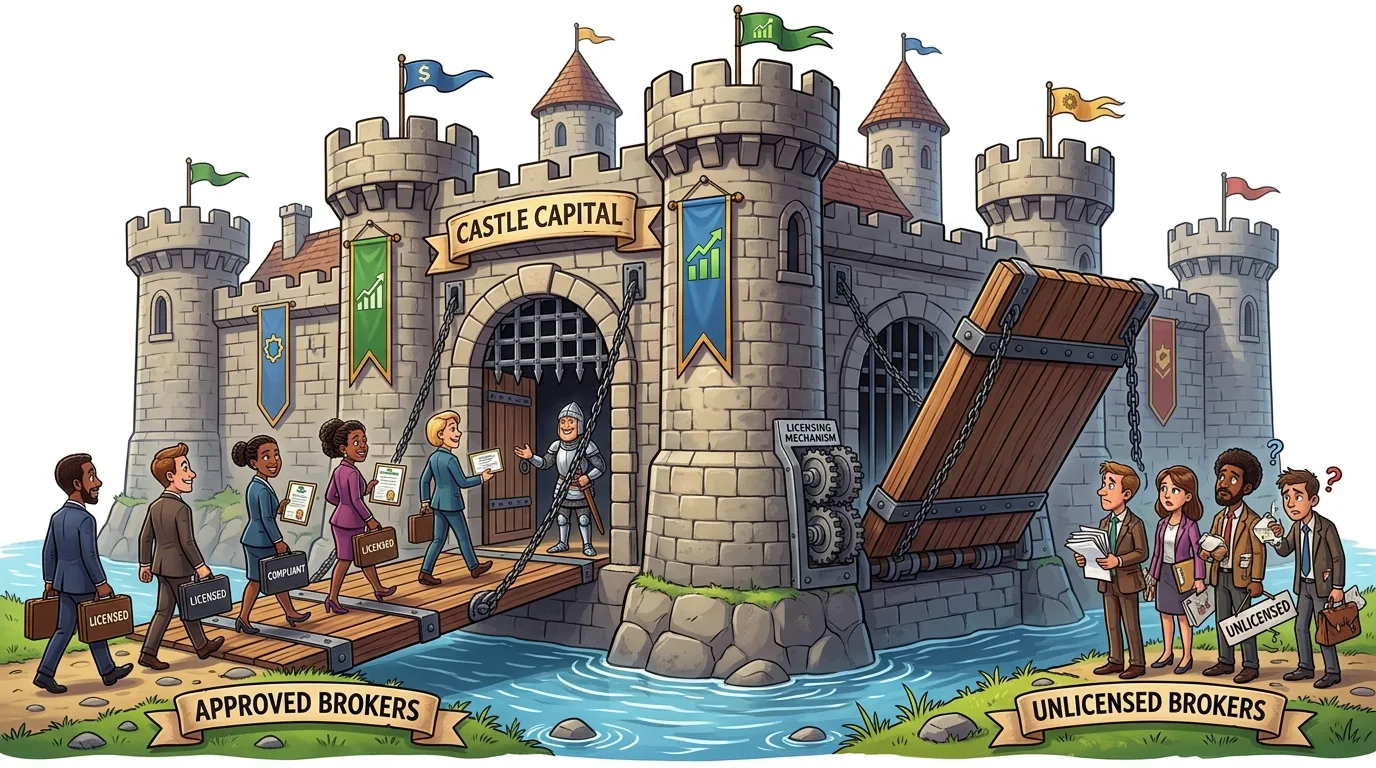
Your broker is your gateway to the market. A bad gateway will fail you at the worst possible moment. Here’s what to prioritize instead of a 'free' tag.
Regulation and Safety of Funds
This is non-negotiable. Is the broker regulated by a reputable authority like the FCA (UK), ASIC (Australia), or CySEC (Cyprus)? While these don't have direct jurisdiction in Nigeria, they impose strict rules on client fund segregation and conduct. Avoid unregulated offshore brokers promising the moon. Your capital is not safe there.
Trading Conditions
Examine the real, live spreads on the pairs you want to trade. Check for commission structures. Look at the XM review, IC Markets review, and Pepperstone review for comparisons of their raw spread accounts versus standard accounts. Often, the account with a small commission has far better overall trading costs.
Deposit and Withdrawal Ease
For Nigerians, this is critical. How easy is it to get your money in and, more importantly, out? Do they support local bank transfers or popular crypto methods? How long do withdrawals take? I once waited 3 weeks for a withdrawal from a 'free' broker. Never again.
Platform and Tools
You need reliable execution. MetaTrader 4 or 5 is the standard. Does the broker offer stable MT4/MT5? Do they provide useful tools? A few extra pips in spread is worth it if the platform doesn't freeze during the London open.
My personal mistake? I once chose a broker for their bonus offer, not their execution. During a major ECB announcement, my platform froze, my stop-loss didn't trigger, and I lost 8% of my account in minutes. The 'free' bonus didn't cover that loss.
Now, let's talk about the things that should be free and are incredibly valuable. This is where you should focus your energy.
1. Demo Accounts: This is the ultimate free tool. Every reputable broker offers a demo account with virtual money. Use it relentlessly. Test your strategies for months, not days. Get used to the platform. I still use a demo account to test new ideas before risking a single Naira.
2. Charting and Analysis Platforms: TradingView has an excellent free plan. You can analyze charts, use dozens of indicators, and build ideas. Babypips offers a completely free forex school. These are goldmines.
3. Economic Calendars: Sites like ForexFactory offer free, real-time calendars of economic events. Knowing when major news is coming is vital for risk management.
4. Broker Comparison Tools: Use sites that compare real broker spreads, regulations, and fees. Don't just take one broker's word for their 'low costs.'
The one thing that should never be free? Your own education and strategy development. That requires your time, discipline, and the willingness to lose small amounts in a demo to learn. Don't outsource your thinking to a free signal channel. Learn to read the charts yourself. Understand what the MACD indicator or RSI indicator is actually telling you.
💡 Consejo de Winston
If you can't articulate exactly how your broker makes money from your account, you are not a client; you are the product.

“Your goal should not be 'make ₦100,000 today.' Your goal should be 'execute my plan correctly.'”
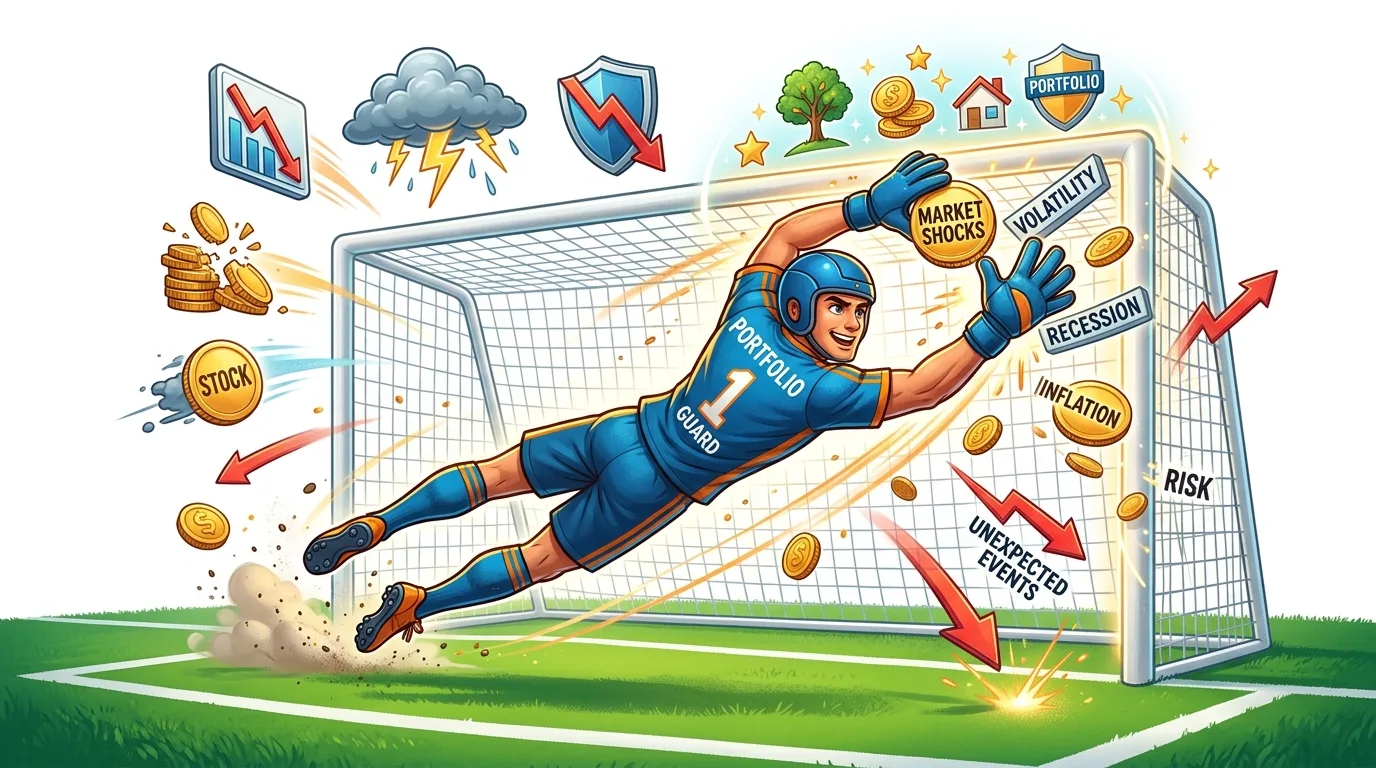
This has nothing to do with fees and everything to do with survival. You can have the lowest costs in the world, but without risk management, you will lose. Here’s the brutal truth most ignore.
You must define your risk per trade before you enter. Period. I risk no more than 1% of my account on any single trade. This isn't a suggestion; it's a rule. Use a position size calculator every single time. If your account is ₦500,000, your max risk on a trade is ₦5,000. This means if your stop-loss is 50 pips away, you can only afford to trade a position size where 50 pips = ₦5,000.

Pro Tip: Your stop-loss should be based on market structure (a key support/resistance level), not on the amount of money you're willing to lose. Find where the trade idea is invalidated on the chart, place your stop there, and then use your 1% rule to calculate your position size.
Understand what a margin call is. It's when your losses eat up your available margin, and the broker automatically closes your positions. This happens when you're over-leveraged. Regulated brokers offer negative balance protection, but many offshore 'free' brokers do not. You could owe them money.
A personal story: Early on, I got cocky. I had three winning trades in a row on XAU/USD (gold). On the fourth, I tripled my position size. The trade went against me. I didn't have a stop-loss because I was 'sure' it would reverse. It didn't. I lost 35% of my account in one afternoon. That loss took me 4 months of disciplined trading to recover. One moment of arrogance, years ago, still stings.
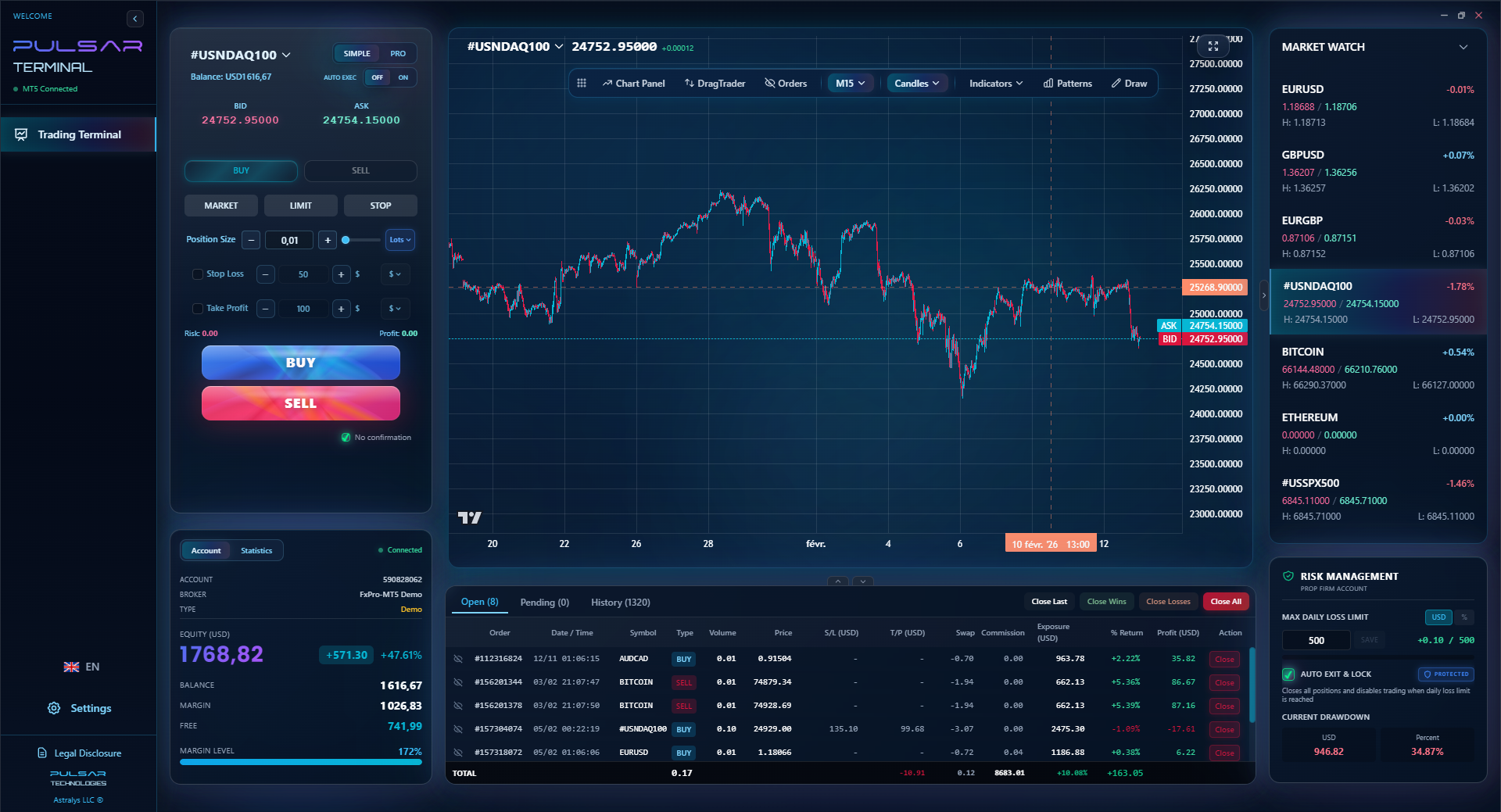
Sticking to a 1% risk rule requires precise position sizing and stop-loss management, which tools like Pulsar Terminal automate directly on your MT5 charts, removing emotional calculation errors.
Pulsar Terminal
La herramienta MT5 todo-en-uno: órdenes drag-and-drop, multi-TP/SL, trailing stop, grid trading, Volume Profile y protección prop firm. Usado por más de 1.000 traders diariamente.
Forget get-rich-quick. Aim for get-rich-slow. Sustainability beats spectacular, short-lived gains every time.
Start with a Strategy: Are you a swing trading person, holding trades for days? Or do you prefer quick moves? Choose one style and master it. Use your demo account to back-test it over hundreds of trades. What's the win rate? What's the average win vs. average loss? If you don't know these numbers, you're gambling.
Keep a Trading Journal: This is free and more valuable than any paid course. Write down every trade: entry, exit, why you took it, your emotional state. Review it weekly. You'll see your stupid patterns emerge (chasing losses, cutting winners short). I still do this.
Focus on the Process, Not the Payout: Your goal should not be 'make ₦100,000 today.' Your goal should be 'execute my plan correctly.' If you follow your rules and lose 1%, that's a good trade. A bad trade is one where you break your rules and make money - it rewards destructive behavior.
Finally, understand taxes. In Nigeria, the tax implications on forex trading profits can be unclear, but it's your responsibility to figure it out. Keep clear records of all deposits, withdrawals, and trades. A sustainable business keeps its books in order.
FAQ
Q1Is there truly any completely free forex trading?
No. There's always a cost - spread, swap, slippage, or poor execution. The goal is to find a broker with transparent, low costs, not one that hides fees behind a 'free' marketing slogan.
Q2What is the best broker for Nigerians?
There's no single 'best.' Look for brokers with strong regulation, good Naira deposit/withdrawal options, and tight spreads on the pairs you trade. Do your own comparison using reviews of brokers like Exness, IC Markets, and Pepperstone to see which conditions suit your style.
Q3How much money do I need to start trading forex in Nigeria?
You can start with as little as $50 or ₦25,000 on a micro account. However, with that amount, your focus must be 100% on learning and preserving capital, not making life-changing money. Realistically, a few hundred dollars gives you more breathing room for proper risk management.
Q4Are forex trading profits taxable in Nigeria?
The legal landscape is evolving. Trading with international brokers may be considered foreign exchange gains. It is your responsibility to consult with a Nigerian tax professional to understand your personal liabilities. Never assume it's tax-free.
Q5Why do most Nigerian traders fail?
The core reasons are universal: poor risk management (over-leveraging, no stop-loss), chasing 'free' signals instead of building their own knowledge, trading with money they can't afford to lose, and choosing unregulated brokers that scam them or provide terrible service.
Q6Can I use a VPN to trade with brokers not available in Nigeria?
This is very risky. If the broker discovers you've misrepresented your location (which you do by using a VPN), they can freeze your account and confiscate your funds for violating their terms of service. Always trade with brokers who openly accept clients from Nigeria.
Lección del Prof. Winston
Puntos clave:
- ✓'Free' trading always has a hidden cost, usually a wider spread.
- ✓Risk a maximum of 1% of your account per trade. No exceptions.
- ✓Prioritize broker regulation over flashy bonuses.
- ✓A demo account is your most valuable free tool. Use it for months.
¿Te resultó útil este artículo?
Haz clic en una estrella
Análisis Trading Semanal
Análisis y estrategias semanales gratis. Sin spam.
Sobre el autor
Olumide Adeyemi
Pionero del Trading en África Occidental
Uno de los educadores de trading forex más activos de Nigeria. 8 años de experiencia operando desde Lagos. Especialista en estrategias de bajo capital y desafíos de prop firms para traders africanos.
Comentarios
Aviso de riesgo
El trading de instrumentos financieros conlleva un riesgo significativo y puede no ser adecuado para todos los inversores. El rendimiento pasado no garantiza resultados futuros. Este contenido tiene fines educativos únicamente y no debe considerarse asesoramiento de inversión. Siempre realice su propia investigación antes de operar.
También te puede interesar

Cara Trading Forex Sukses: 7 Prinsip dari Trader Profesional
Cara trading forex sukses dengan 7 prinsip trader pro: manajemen modal, disiplin, journal trading, backtest. Data nyata, bukan janji profit palsu.
Jam Trading Forex Terbaik untuk Trader Indonesia: Panduan Lengkap dengan Tabel Waktu
Panduan jam trading forex untuk trader Indonesia. Tabel 4 sesi dunia, jam emas 20:00-00:00, sesi mana yang harus dihindari. Data akurat + tips dari trader berpengalaman.
Top 5 Sàn Forex Uy Tín Nhất 2026: Review Jujur dari Trader Indonesia
Top 5 sàn forex uy tín 2026 untuk trader Indonesia. Review jujur: spread, deposit, withdraw, dukungan lokal. Exness, XM, IC Markets & lebih.
Obtener Pulsar Terminal
Todas estas calculadoras están integradas en Pulsar Terminal con datos en tiempo real de su cuenta MT5.
Obtener Pulsar Terminal