


You're looking up UBA forex rates.

Olumide Adeyemi
Pionero del Trading en África Occidental ·  Nigeria
☕ 10 min de lectura
Lo que aprenderás:
- 1What Are UBA Forex Rates, Really?
- 2How Nigerian Traders Actually Use UBA (And How They Get Burned)
- 3The Real Cost Breakdown: Numbers Don't Lie
- 4UBA Rates vs. Your Forex Broker: The Critical Difference
- 5Trading Strategies That Survive the Bank Spread
- 6The New Rules: 2024-2026 Changes You Can't Ignore
- 7Your Action Plan: What to Do Today
You're looking up UBA forex rates. Let me guess: you're either trying to fund a trading account, cash out some profits, or just figure out why the rate on your screen never matches the one at the bank. I get it. For over a decade, I've watched Nigerian traders get tripped up by the gap between the interbank market and what hits their bank account. This isn't just about checking a number; it's about understanding a system that's designed to cost you money. Let's break down exactly how UBA's rates fit into your trading life, where the hidden fees are, and what you should actually be focusing on instead.
When you see 'UBA forex rates,' you're not looking at a trading price. You're looking at a retail exchange service. It's the rate United Bank for Africa offers to buy or sell physical foreign currency (USD, GBP, EUR) from you, for purposes like travel allowance, school fees, or business transactions.
These rates are derived from the Nigerian Foreign Exchange Market (NFEM) rate, but with a markup. Think of it like a bureau de change inside a bank. The CBN's 'willing buyer, willing seller' model sets a baseline, but UBA, as an authorized dealer, adds its spread. This is their profit and their buffer against volatility. For example, if the NFEM mid-rate is N1,450/$, UBA's sell rate to you for dollars might be N1,470/$, and its buy rate from you might be N1,430/$. That N40 difference is the spread, and it's how they make money on the service.

Warning: Never, ever confuse UBA's retail exchange rate with the bid/ask price on your MT5 platform. They are completely different animals. One is for converting physical cash, the other is for speculating on price movements. Mixing them up is a sure sign you're not ready to trade with real money.
I learned this the hard way early on. I made a nice profit on a EUR/USD swing trade and needed to get the dollars into my naira account. I saw the market rate and budgeted based on that. The rate UBA gave me was 2.5% worse. That 'small' difference wiped out nearly a third of my actual profit from the trade. It was a brutal lesson in real-world execution costs.

💡 Consejo de Winston
A trader obsessed with bank exchange rates is like a fisherman staring at the fuel price for his boat. It's a cost of doing business, not the business itself. Focus on finding the fish.
Funding Your Broker Account
This is the most common touchpoint. You have naira, your broker accepts dollars. You use UBA to purchase forex (like a Personal Travel Allowance or via your domiciliary account) and then wire it out. Here’s the catch sequence:
- You pay UBA's sell rate (high).
- You pay an international transfer fee (5% + VAT, min $10).
- Your broker might charge a receipt fee.
- The money takes 2-5 business days. Your perfect trade setup? Gone.
By the time the funds land, you've already lost 5-7% to fees and slippage. I've had students blow their entire first deposit on just getting money to a broker like IC Markets or Exness. They never even placed a trade.
Cashing Out Profits
The journey back is worse. Your broker sends dollars to your UBA domiciliary account. UBA converts it at their buy rate (low). You get hit with the EMT levy (N50 on amounts over N10k). If you need the naira instantly, you're stuck with their rate. This two-way spread is a wealth transfer from your pocket to the bank's.

Pro Tip: For funding, consider brokers with local naira payment options or popular e-wallets. The spread might still be there, but it's often faster and sometimes cheaper than the full bank wire route. For cashing out, plan ahead. Don't be forced to convert at a bad time because you need to pay a bill tomorrow.
The Domiciliary Account Trap
A UBA Freedom Dom Account (min $50) is essential for receiving wire transfers. But leaving large sums sitting in it is a mistake. It's not a trading account. It earns negligible interest and exposes you to bank-induced complexities. Move what you need for trading to your broker, and convert to naira what you need for living expenses promptly. Don't use it as a savings vehicle.
“UBA's forex rate is a retail service with a fat spread, not a trading quote. Confusing the two is an expensive beginner's mistake.”
Let's attach real numbers from the current framework so you feel the pain. Assume you want to fund a $1,000 trading account.
| Cost Component | Example Calculation | Approximate Cost |
|---|---|---|
| UBA Forex Spread | (Sell Rate - NFEM Rate) on $1,000. If spread is N20/$, that's 20 * 1000 = N20,000 | ~1.4% of principal |
| International Transfer Fee | 5% of $1,000 = $50 + 7.5% VAT ($3.75) = $53.75 (~N78,000) | 5.375% of principal |
| Total Initial Cost | N98,000 on a ~N1.45m deposit ($1,000) | ~6.8% |
📊 Example: Your $1,000 needs to grow to about $1,068 just for you to break even on the naira you originally spent. That's before your broker's spread on your first trade. This is why scalping tiny moves with a large position size is a fool's errand for most Nigerians - you're fighting an uphill battle before the market even opens.
Now, for taxes. The FIRS wants 10% Capital Gains Tax on your gross profits. Made N500,000 profit across the year? Set aside N50,000. This is non-negotiable and a serious operational cost most new traders ignore.
This is the core confusion. Let's end it.
UBA (Retail Bank FX):
- Product: Currency Exchange Service.
- Rate: A single, all-in rate with a huge built-in spread (e.g., N1,470/$).
- Purpose: Converting physical currency for compliance reasons (PTA, BTA, school fees).
- Speed: Slow (hours to days).
- Your Role: Customer.
Your Forex Broker (e.g., Pepperstone, XM):
- Product: Contract for Difference (CFD) or Spot FX speculation.
- Rate: A live, two-way quote with a tight spread (e.g., EUR/USD bid 1.0850, ask 1.0851).
- Purpose: Speculating on price movement. You never take delivery of physical dollars.
- Speed: Instant execution.
- Your Role: Trader.
The broker's rate is what you trade. UBA's rate is how you fund and cash out. The connection between them is tenuous and expensive. Your trading edge must be large enough to overcome the friction of moving between these two worlds. This is why understanding pure trading costs - like broker spreads, commissions, and swap fees - is far more important for your P&L than obsessing over daily UBA forex rates.
💡 Consejo de Winston
Your first profitable trade doesn't happen when you close the position. It happens when your net withdrawal, after all bank fees and taxes, exceeds your total deposited naira. That's your only true P&L.
“Your trading edge must be large enough to overcome the 6-8% friction of moving money between Nigeria and your broker.”
If you need to clear a 6-7% hurdle just to get to zero, your strategy needs room to breathe. This kills certain approaches from the start.
Forget This:
- Micro-Scalping: Aiming for 5-10 pips? The spread on funding and the broker's spread will eat you alive. That scalping strategy you saw on YouTube likely doesn't account for Nigerian funding costs.
- Frequent In/Out Funding: Treating your broker account like a current account, moving money in and out weekly, is a fee death sentence.
Focus on This:
- Higher Timeframe Swing Trading: This is where I've seen Nigerians have real, lasting success. You're aiming for moves of 200+ pips. The 2-pip broker spread and the one-time funding cost become rounding errors. You trade less, which means fewer decisions and lower cumulative costs. Use the weekly chart to find your direction, then the daily for entries. A tool that helps you visualize these swings and manage the trade is non-negotiable.
- Position Trading: Fund your account once with capital you can afford to leave there. Trade only a few times a month, or even per quarter. Your enemy becomes inactivity, not fees.
- Master Risk Management: This is your only lever. If your strategy has a 1:2 risk-reward, you need to be right 34% of the time to break even. With our added costs, maybe you need to be right 40% of the time. So tighten your stops? No. Widen your profit targets. Aim for 1:3 or 1:4. This forces you to be more selective, trading only the highest-probability setups.
I once held a XAU/USD long swing trade for 6 weeks. Entry at $1830, target at $1950. The 120-pip move ($1200 profit on a standard lot) made the N80,000 I lost on funding and conversion feel irrelevant. The patience was the hard part.
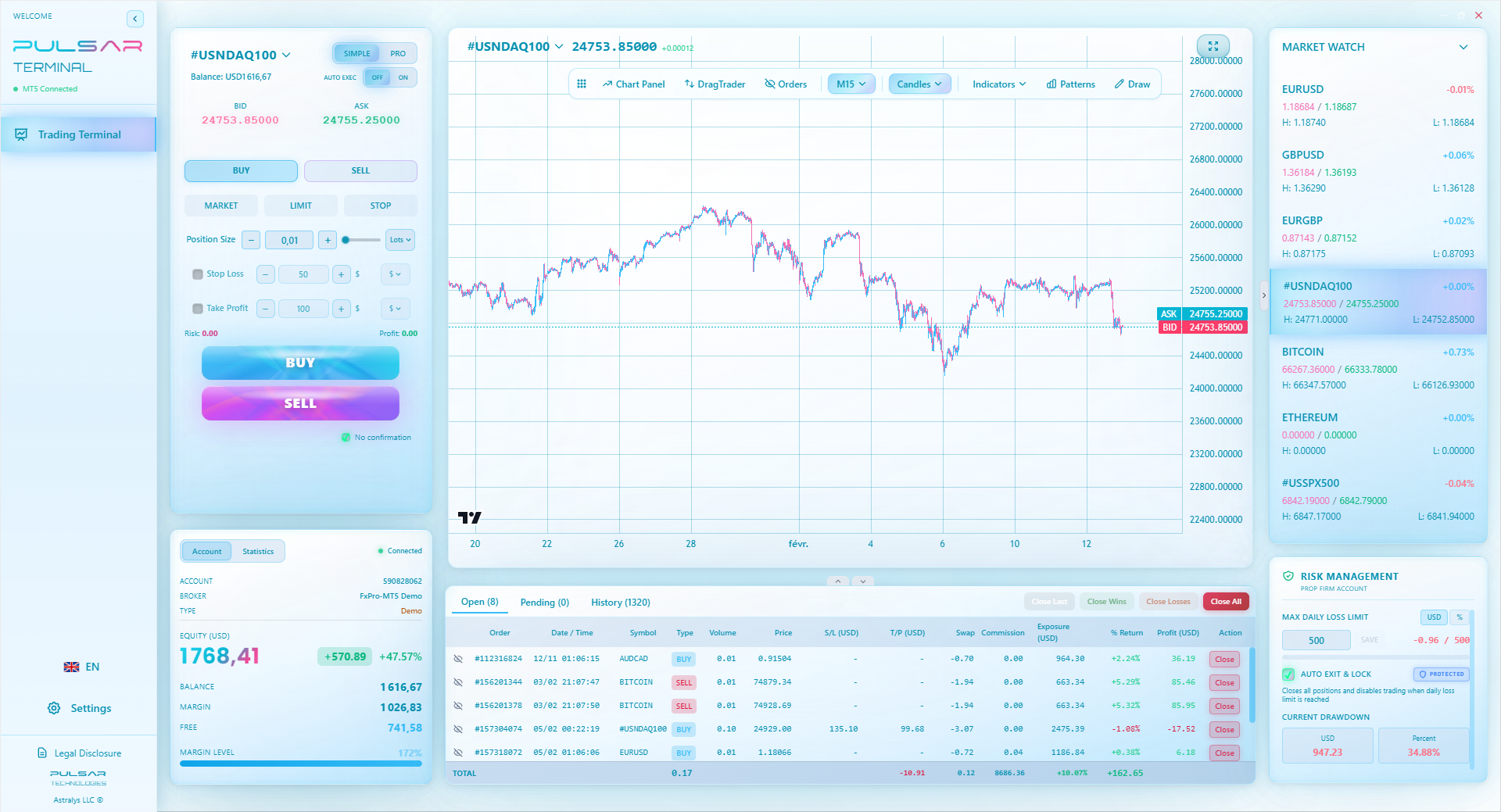
Managing a multi-week swing trade requires precision and discipline, which is where a tool like Pulsar Terminal's advanced order management and chart pattern recognition on MT5 becomes indispensable.
Pulsar Terminal
La herramienta MT5 todo-en-uno: órdenes drag-and-drop, multi-TP/SL, trailing stop, grid trading, Volume Profile y protección prop firm. Usado por más de 1.000 traders diariamente.
The landscape shifted. If you're trading in 2026, you're playing a different game than in 2023.
The Big One: NFEM Unification (Oct 2023 Onwards) The CBN collapsed multiple exchange rate windows into one 'willing buyer, willing seller' market. Good in theory for transparency, but it led to massive volatility. The Naira swung wildly. This means the UBA forex rate you see today could be 10% different tomorrow. You cannot assume stability when planning withdrawals.
BDCs Are Back (Feb 2026) After being kicked out in 2021, licensed BDCs are back as intermediaries. They can buy up to $150k/week from banks at market rates. For you, this might mean more competition and slightly better cash rates on the street compared to banks, but always, always use a licensed operator. The black market is a great way to get scammed or arrested.
The Nigerian FX Code (Jan 2025) This is a code of conduct for banks and authorized dealers. For you, it should mean slightly more transparent pricing from UBA and less funny business. If you feel you're getting a blatantly unfair rate, you now have a formal code to reference in a complaint.
The Bottom Line: Regulation is tightening. The wild west days are fading. This is good for the economy, but it also means the loopholes and arbitrage opportunities traders used to exploit are closing. Your edge must now come from pure market analysis and discipline.
“In Nigerian trading, patience isn't just a virtue; it's a financial necessity to offset brutal funding costs.”
- Stop Checking UBA Rates Daily. Seriously. Bookmark the page if you must, but checking it obsessively won't make you a better trader. It's just noise. Check only when you have a concrete, planned transaction.
- Open a Domiciliary Account. If you don't have one with UBA or another tier-1 bank, do it. It's a necessary tool. Fund it with the minimum and understand its online portal.
- Calculate Your TRUE Cost of Trading. Do the math I showed earlier. Know exactly how much your first $100 needs to earn just to get back to zero. This number will sober you up and kill any desire for reckless trading.
- Choose Your Broker Based on REAL Costs. Look at average spreads on the pairs you trade, commission structures, and reliable deposit/withdrawal methods for Nigeria. A broker with a 0.1-pip spread but terrible withdrawal times is worse than one with a 0.6-pip spread and smooth local bank transfers. Read our XM review and others for specifics on Nigerian service.
- Build a Swing Trading Mindset. Move to the 4-hour and daily charts. Learn to use the MACD indicator and RSI indicator on these timeframes to filter trends and momentum. One good setup per month that nets 150 pips is better than 20 scalps that net 200 pips total but cost you 250 pips in spread and bad executions.
- Set Aside Tax Money From Day One. Open a separate savings pot and put 10% of every single withdrawal into it. Do not commingle these funds. The taxman always gets his share.
FAQ
Q1What is the current UBA forex rate for dollar to naira?
I won't give you a number here because it's obsolete by the time you read it. It's dynamic and changes throughout the business day based on the NFEM. The only way to get the real, executable rate is to log into your UBA internet banking, use the FX Mart feature, or visit a branch. Remember, the rate you get for buying dollars (for travel) will be different (and worse) than the rate they buy dollars from you.
Q2Can I trade forex directly with UBA?
No. UBA is an authorized dealer for currency exchange and international transfers, not a retail forex brokerage for speculative trading. You cannot open a MetaTrader account with UBA to trade EUR/USD CFDs. For that, you need a licensed international or (where available) local broker.
Q3How much does UBA charge for international transfers?
For foreign currency transfers sent via their online platform, UBA typically charges 5% of the transaction value, with a minimum fee of $10 (or equivalent), plus a 7.5% Value Added Tax (VAT) on that fee. So, to send $1,000, the fee is $50 + $3.75 VAT = $53.75. Always confirm the latest charges on their website or app before initiating a transfer.
Q4Is it cheaper to use a bureau de change (BDC) than UBA for forex?
It can be, but it comes with higher risk. Licensed BDCs (re-admitted in 2026) might offer more competitive cash rates due to lower overhead. However, you must ensure they are CBN-licensed. Using unlicensed operators is illegal and risky. For larger amounts or wire transfers, the bank's security and paper trail are often worth the slightly higher cost.
Q5Why is the UBA rate different from the rate on my trading platform?
Because they are completely different prices for different products. Your trading platform shows the live interbank spot rate for a CFD, with a tiny spread. UBA's rate is a retail exchange rate for physical currency, which includes a large markup (spread), operational costs, and bank profit. They should never be expected to match.
Q6Do I pay tax on forex trading profits in Nigeria?
Yes. The Federal Inland Revenue Service (FIRS) considers forex trading profits as capital gains, which are taxable at 10%. You are legally required to declare this income and pay the tax. Failure to do so can result in penalties and interest.
Q7What is the minimum amount to open a UBA domiciliary account?
The minimum opening balance is typically $50, €50, or £50, depending on the currency of the account. You'll need your BVN and a passport photograph. This account is crucial for receiving international wire transfers from your broker.
Lección del Prof. Winston
Puntos clave:
- ✓UBA rates are for cash, not CFDs. Different markets.
- ✓Calculate your true cost: Funding spread + 5.375% transfer fee.
- ✓Swing trade. Scalping can't overcome Nigerian friction.
- ✓Set aside 10% of every profit for Capital Gains Tax.
¿Te resultó útil este artículo?
Haz clic en una estrella
Análisis Trading Semanal
Análisis y estrategias semanales gratis. Sin spam.
Sobre el autor
Olumide Adeyemi
Pionero del Trading en África Occidental
Uno de los educadores de trading forex más activos de Nigeria. 8 años de experiencia operando desde Lagos. Especialista en estrategias de bajo capital y desafíos de prop firms para traders africanos.
Comentarios
Aviso de riesgo
El trading de instrumentos financieros conlleva un riesgo significativo y puede no ser adecuado para todos los inversores. El rendimiento pasado no garantiza resultados futuros. Este contenido tiene fines educativos únicamente y no debe considerarse asesoramiento de inversión. Siempre realice su propia investigación antes de operar.
También te puede interesar

Cara Trading Forex Sukses: 7 Prinsip dari Trader Profesional
Cara trading forex sukses dengan 7 prinsip trader pro: manajemen modal, disiplin, journal trading, backtest. Data nyata, bukan janji profit palsu.
Jam Trading Forex Terbaik untuk Trader Indonesia: Panduan Lengkap dengan Tabel Waktu
Panduan jam trading forex untuk trader Indonesia. Tabel 4 sesi dunia, jam emas 20:00-00:00, sesi mana yang harus dihindari. Data akurat + tips dari trader berpengalaman.
Top 5 Sàn Forex Uy Tín Nhất 2026: Review Jujur dari Trader Indonesia
Top 5 sàn forex uy tín 2026 untuk trader Indonesia. Review jujur: spread, deposit, withdraw, dukungan lokal. Exness, XM, IC Markets & lebih.
Obtener Pulsar Terminal
Todas estas calculadoras están integradas en Pulsar Terminal con datos en tiempo real de su cuenta MT5.
Obtener Pulsar Terminal