


Let's cut through the noise.

Olumide Adeyemi
Pionnier du Trading en Afrique de l'Ouest ·  Nigeria
☕ 10 min de lecture
Ce que vous apprendrez :
- 1The Raw Basics: It's Just a Global Bazaar
- 2Who's Really in the Market? (Spoiler: It's Not Just You)
- 3How Trading Actually Works: Pips, Lots, and use
- 4The Pairs That Matter (And Ones to Avoid)
- 5Market Hours: Finding Your Trading Window
- 6How to Read the Market: Two Lenses, One Picture
- 7The Nigerian Reality: Starting Without Getting Scammed
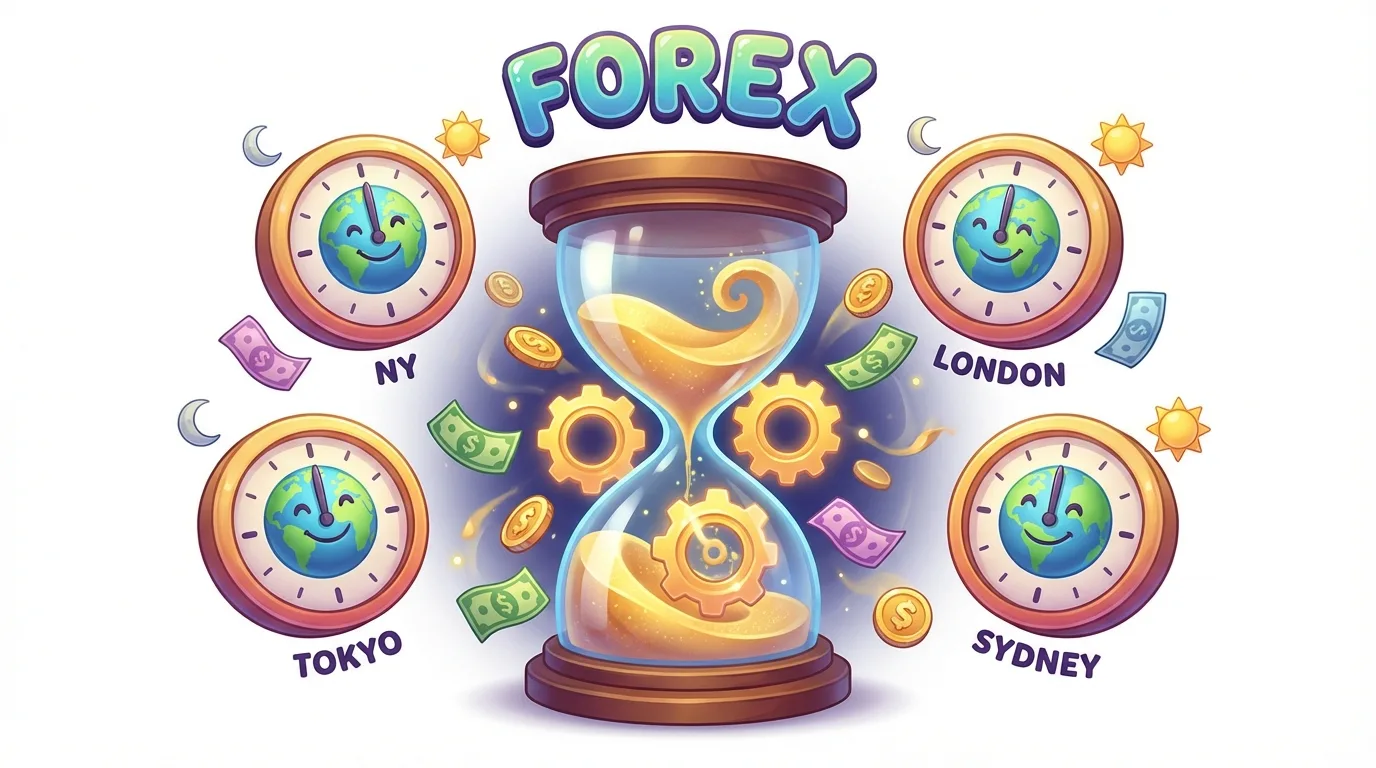
Let's cut through the noise. The forex market isn't a magic money printer, and the way it's sold to Nigerians on social media is borderline criminal. I see it every day: new traders think it's a quick path to a Benz, only to get their accounts wiped out in weeks. The truth is, understanding what the forex market actually is - a decentralized global marketplace for exchanging national currencies - is the first and most important step to not becoming a statistic. This guide will strip away the fantasy and show you the real, often brutal, mechanics of how money moves and how you can (maybe) find your edge within it.
Forget Wall Street. The forex (foreign exchange) market is the world's biggest, messiest, and most liquid financial market. We're talking about $7.5 trillion traded every single day. That number is so large it's meaningless, so think of it this way: it's where the value of your Naira against the US Dollar is decided every second, not by the CBN alone, but by banks, corporations, governments, and yes, speculators like you and me.
It's an over-the-counter (OTC) market. There's no central exchange like the Nigerian Stock Exchange. Instead, it's a global network of computers where trades happen directly between parties, mainly through brokers. This is why you can trade at 2 AM on a Sunday if you want to. The market only truly sleeps from Friday evening to Sunday evening (GMT).
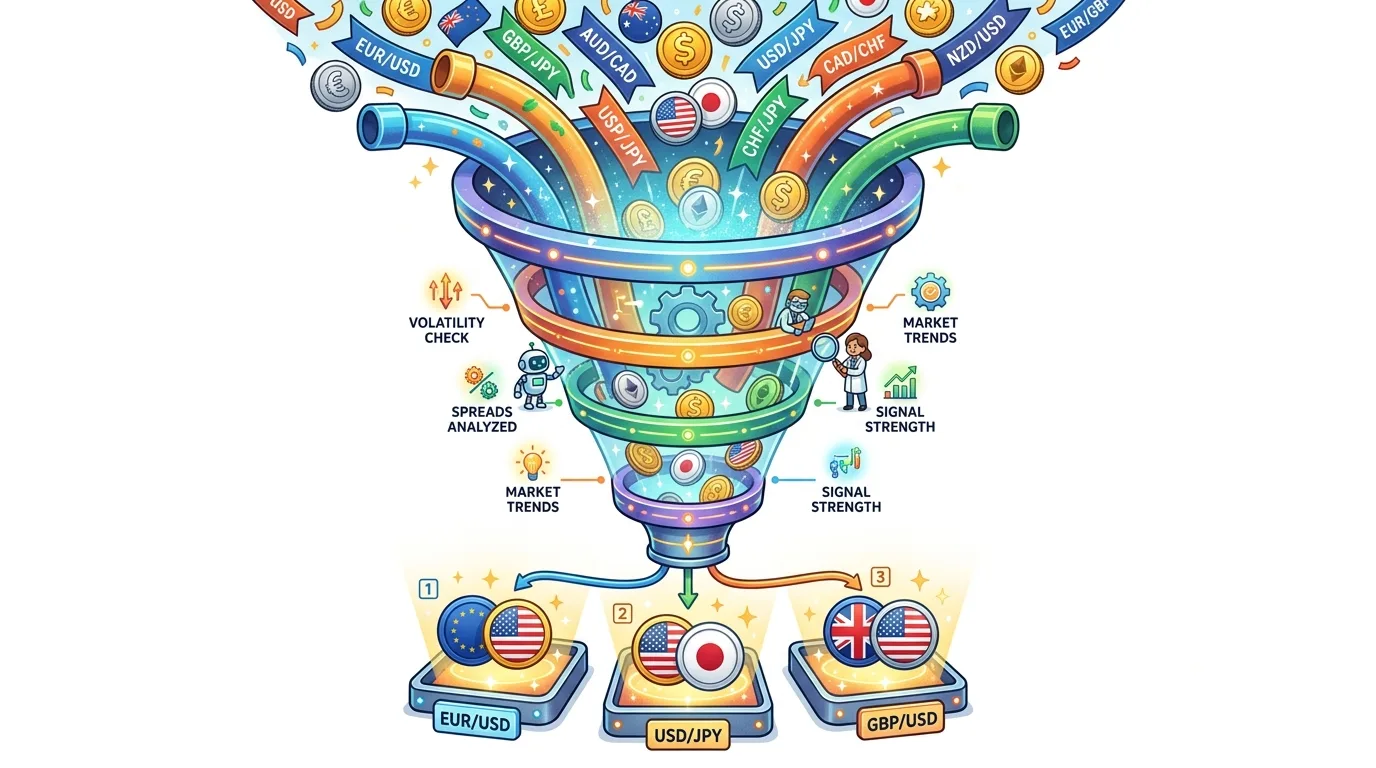
The core activity is swapping one currency for another, always in pairs. EUR/USD. GBP/JPY. USD/NGN (though that's a tricky one for retail). You're betting on the relative strength of one economy versus another. When you buy EUR/USD, you're not just buying Euros; you're simultaneously selling US Dollars. Your profit or loss comes from the change in the exchange rate between them.

Warning: Liquidity doesn't mean stability. Major news can cause violent, unpredictable swings that will hunt your stop-loss orders. I learned this the hard way during a Swiss National Bank announcement in 2015. I was short EUR/CHF. The pair dropped over 2,000 pips in minutes. My account? Gone. Poof. That's the 'liquid' market at work.

💡 Conseil de Winston
Stop obsessing over entries. A perfect entry with poor risk management is a guaranteed loss. Focus 80% of your energy on where you'll exit, both for profit and for loss.
“The forex market isn't a magic money printer, and the way it's sold to Nigerians on social media is borderline criminal.”
If you think you're competing against other guys in Lagos with a laptop, you're dead wrong. You're a minnow swimming with whales. Knowing who moves the price is critical.
The Big Fish: Banks and Institutions
This is the interbank market. Commercial and investment banks like JP Morgan or Citibank trade for themselves (proprietary trading) and for their clients. They help the bulk of global transactions for international trade and investment. Their order flow is what creates the real price you see. Your broker's price is usually a derivative of this.
Central Banks
Like our own Central Bank of Nigeria (CBN). They intervene to stabilize or devalue their currency, control inflation, or support economic policy. When the CBN makes a move on the official Naira rate, it sends shockwaves through the parallel market (the 'black market' rate we all watch). Their actions are based on macroeconomics, not chart patterns.
Corporations
Imagine Dangote Group needing to buy machinery from Germany. They need to convert billions of Naira to Euros. That's a forex transaction hedging real business risk. They're not speculating for profit; they're locking in a cost.
Hedge Funds and Speculators
These are the big-money players trying to profit from currency movements, often using complex strategies and use. They can move markets with concentrated bets.
Retail Traders (That's Us)
We're the smallest segment by volume, but a huge segment by participant count. We access the market through online brokers like Exness, IC Markets, or XM. Our collective action can influence price at minor levels, but we are largely price-takers, not price-makers. Your job is to try and read the footprints the whales leave behind.

“You're a minnow swimming with whales. Knowing who moves the price is critical.”
This is the practical engine room. You need to speak this language fluently.
Currency Pairs: They're quoted as a bid/ask price. If EUR/USD is 1.0850/1.0852, the spread is 2 pips. You buy at the ask (1.0852) and sell at the bid (1.0850). You need the price to move in your favor just to break even.
What's a Pip? A pip is usually the fourth decimal place in a quote (0.0001). For JPY pairs, it's the second decimal (0.01). If you buy EUR/USD at 1.0850 and it goes to 1.0900, you've made 50 pips. Here's a deeper look at what a pip really means for your profit.
Lot Sizes: This is your trade volume.
- Standard Lot: 100,000 units of the base currency.
- Mini Lot: 10,000 units.
- Micro Lot: 1,000 units. If you trade a micro lot (0.01), each pip movement is worth roughly $0.10 for USD-based pairs. Never guess this. Use a position size calculator for every single trade.
use and Margin: This is the double-edged sword. Nigerian brokers often offer use up to 1:2000. It sounds great: control a $10,000 position with just $5 of your own money (margin). But here's the reality check. If that trade moves 0.5% against you ($50 on the full position), you've lost your entire $5 margin. That's a margin call. I used 1:500 use early on. A single bad trade on GBP/JPY wiped out 40% of my account in under an hour. It was a brutal, expensive lesson. use amplifies losses faster than it amplifies gains.

Example: You buy 0.1 lots (10,000 units) of EUR/USD at 1.0850 with 1:100 use. Your required margin is roughly $108.50. If price drops to 1.0800 (a 50-pip move against you), your loss is $50. You've lost nearly 50% of your margin on that one trade.
“You're a minnow swimming with whales. Knowing who moves the price is critical.”
Not all pairs are created equal. Your choice here dictates your trading costs and volatility.
| Pair Type | Examples | Key Characteristics | Good For? |
|---|---|---|---|
| Majors | EUR/USD, GBP/USD, USD/JPY, USD/CHF, AUD/USD, USD/CAD, NZD/USD | Highest liquidity, tightest spreads, most news/analysis available. | Beginners. Lower transaction costs. EUR/USD is the most traded pair globally. |
| Minors (Crosses) | EUR/GBP, GBP/JPY, EUR/AUD | No USD. Slightly wider spreads, can be volatile. | Intermediate traders looking beyond USD dynamics. |
| Exotics | USD/NGN, USD/TRY, USD/ZAR | One major + one emerging economy currency. Very wide spreads, illiquid, prone to sharp, unpredictable moves. | Avoid as a beginner. The spread alone can eat 5-10% of your potential profit. |
Let's talk about USD/NGN specifically. You see the parallel market rate on the news and think you can trade it. Most international brokers don't offer it to retail clients because of capital controls. The ones that do are often CFDs with massive spreads and huge overnight swap fees. It's a trap for the uninformed. Stick to the majors where the game is slightly more transparent. If you want commodity exposure, look at XAU/USD (Gold), which often reacts to similar drivers as forex.
💡 Conseil de Winston
If you can't explain in one sentence the fundamental reason why a currency should move in your direction, you're gambling, not trading. Know the story behind the chart.
“use amplifies losses faster than it amplifies gains.”
The market is open 24/5, but it has distinct personalities based on which financial center is active. This is crucial for planning your strategy, whether you're a scalping enthusiast or a swing trader.
Sydney Session (Opens 10 PM Nigerian Time): Usually the quietest. Good for practicing analysis without much noise.
Tokyo Session (Opens 12 AM Nigerian Time): Adds liquidity. Focus on JPY pairs (USD/JPY, GBP/JPY).
London Session (Opens 8 AM Nigerian Time): The big one. Over 30% of all forex volume happens here. Volatility and volume spike. Major trends often start during the London overlap with other sessions. This is when most serious trading gets done.
New York Session (Opens 1 PM Nigerian Time): High volume, especially when it overlaps with London (1 PM - 4 PM Nigerian Time). This 3-hour window is often the most volatile period of the day. Major US economic data is released at 1:30 PM Nigerian time, causing immediate, sharp moves.
My personal rule? I don't take new positions within 5 minutes of a major news release (like US Non-Farm Payrolls at 1:30 PM our time). The spreads widen to absurd levels, and price can spike 50 pips in a second in both directions. It's a coin toss, not trading. I learned this after getting stopped out on a perfectly good EUR/USD trade because of a CPI news spike. The trade would have been a winner an hour later, but my account didn't survive the initial volatility.

“use amplifies losses faster than it amplifies gains.”
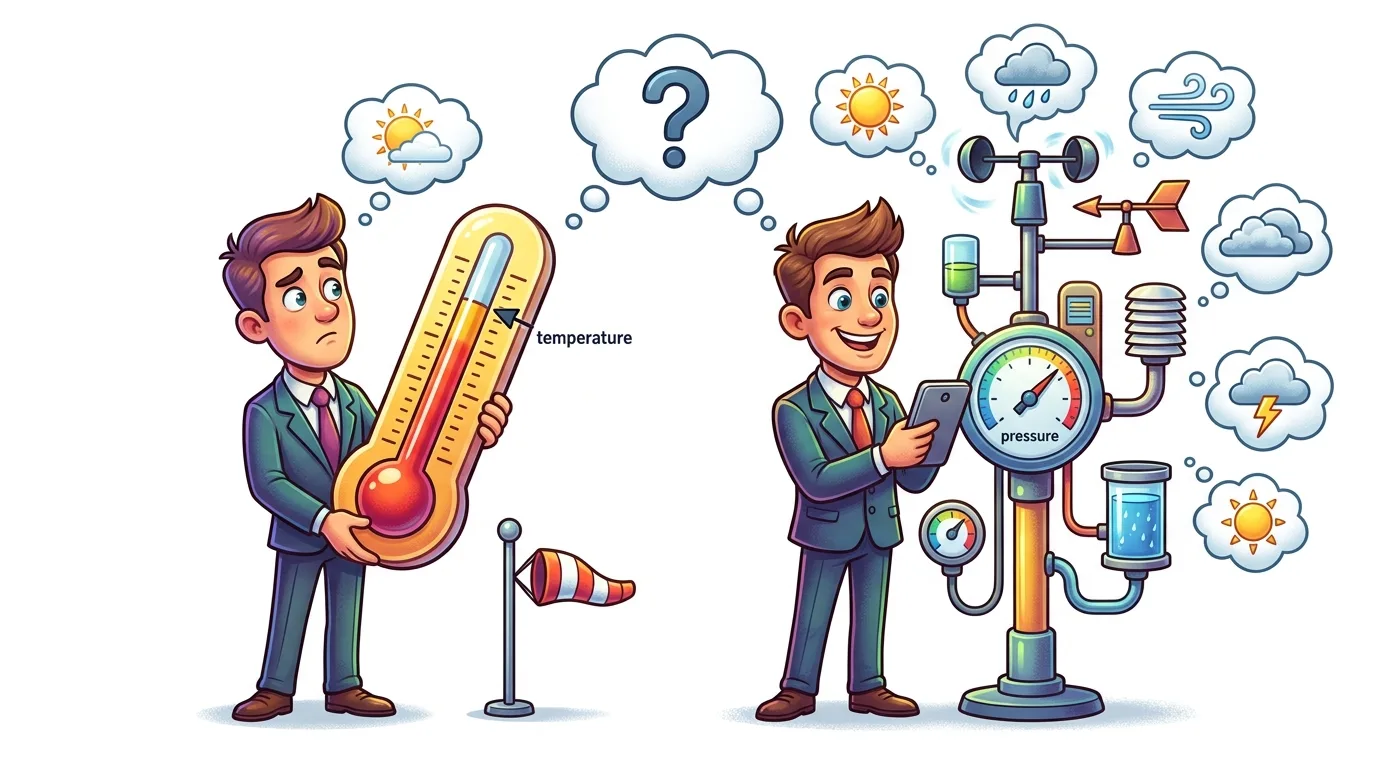
You need both a telescope and a microscope.
Fundamental Analysis: This is the 'why.' It looks at economic factors that affect a currency's value: interest rates (set by the CBN, Fed, ECB), inflation, GDP growth, employment data, and political stability. When the US Federal Reserve raises interest rates, the USD typically strengthens because investors seek higher yields. You're trading the macroeconomic story. This is what the big banks are watching.
Technical Analysis: This is the 'when' and 'where.' It studies past price action and volume to identify patterns and potential future movements. You're looking at charts, trends, support/resistance levels, and indicators like the RSI indicator or MACD indicator.
Here's the honest truth: as a retail trader, you will never have the fundamental edge of a bank with a team of PhD economists. Your edge, if any, comes from technical and behavioral analysis - reading the market's psychology on the chart. But you must respect the fundamentals. Never hold a trade against a major central bank meeting unless you have a death wish for your capital.
The best approach is a hybrid. Use fundamentals to determine the overall bias (e.g., USD is strong because the Fed is hawkish). Then use technicals to find high-probability entry points to ride that trend. Trying to pick tops and bottoms against a strong fundamental trend is a surefire way to blow up your account.
💡 Conseil de Winston
Your first live account should be so small that a 50% loss feels like a mild annoyance, not a catastrophe. Emotional capital is more important than financial capital at the start.
Once you understand analysis, precise trade execution and risk management become critical, which is where tools like Pulsar Terminal automate complex orders and stops directly on your MT5 platform.
Pulsar Terminal
L'outil MT5 tout-en-un : ordres glisser-déposer, multi-TP/SL, trailing stop, grid trading, Volume Profile et protection prop firm. Utilisé quotidiennement par 1 000+ traders.

“Real trading is boring. It's about discipline, risk management, and consistency over years, not days.”
The environment here is unique, and you must adapt.
1. Choose a Regulated International Broker. Don't fall for 'Naira-based' platforms with too-good-to-be-true offers. You want a broker regulated by ASIC (Australia), FCA (UK), or CySEC (Cyprus). I have used IC Markets and Pepperstone for years. They offer reliable deposits/withdrawals via bank transfer or crypto. Do your own broker review research.
2. Start with a Demo Account. For at least 3 Months. Not 3 days. Not 3 weeks. Three months of consistent, disciplined demo trading. Prove to yourself you can follow a plan and manage risk before risking a single Kobo.
3. Fund with Money You Can Afford to Lose. This isn't cliché; it's survival. Your trading capital should not be your rent money, school fees, or business capital. Start small. A $100 account trading micro lots is a perfect, low-pressure learning environment.
4. Ignore the 'Guru' Hype on Social Media. The flashy cars and wads of cash are almost always rented or fake. Real trading is boring. It's about discipline, risk management, and consistency over years, not days.
5. Understand the Tax and Legal Gray Area. Forex trading profits are not explicitly taxed in Nigeria, but that doesn't mean it's a free-for-all. Keep careful records of all your trades, deposits, and withdrawals. When bringing profits back, use official channels and be prepared to explain the source of funds.
The forex market is a tool. It can build wealth slowly and steadily, or it can destroy savings in the blink of an eye. Your success depends entirely on your respect for its power and your commitment to treating it like a serious business, not a casino.

FAQ
Q1Is forex trading legal in Nigeria?
Yes, trading forex with international brokers is legal for individuals. However, trading the Nigerian Naira (NGN) on the parallel market through an unlicensed platform is not. The CBN regulates official currency exchange. Most Nigerian retail traders legally trade major pairs like EUR/USD through brokers regulated overseas.
Q2How much money do I need to start forex trading in Nigeria?
Technically, you can start with as little as $10 with some brokers due to high use. Practically, this is a terrible idea. A small move will wipe you out. I recommend a minimum of $200-$500 to trade micro lots (0.01) comfortably, allowing for proper risk management and the psychological room to handle losses without panic.
Q3Can I get rich quickly from forex trading?
No. Anyone telling you that is lying to sell you a course or a signal service. Consistent profitability takes years of study, practice, and emotional discipline. Aim for consistent 5-15% returns per year on your risk capital; that's a stellar performance. The 'get rich quick' mindset is the #1 reason over 80% of retail traders lose money.
Q4What is the best time to trade forex in Nigeria?
The most active and volatile times are during the London session (8 AM - 4 PM Nigerian time) and the London-New York overlap (1 PM - 4 PM Nigerian time). This is when you'll find the best liquidity and trading opportunities, especially on pairs like EUR/USD and GBP/USD.
Q5What's the difference between the forex market and the black market for dollars?
The forex market (as discussed here) is the global, institutional market for currency pairs. The 'black market' or parallel market in Nigeria is a local, physical market for exchanging Naira for physical USD cash, often at a rate different from the official CBN rate. They are fundamentally different markets with different participants, purposes, and risks.
Q6Which forex pair is best for beginners in Nigeria?
Stick to the major pairs, especially EUR/USD. It has the lowest spreads, highest liquidity, and the most available educational material and analysis. Avoid exotic pairs like USD/NGN or USD/ZAR as a beginner - their wide spreads and unpredictable jumps are account killers.
La leçon du Prof. Winston
Points clés:
- ✓Forex is a $7.5 trillion/day OTC market, not a centralized exchange.
- ✓Retail traders are price-takers, competing against banks and institutions.
- ✓use is a risk tool, not a profit accelerator.
- ✓Stick to major pairs (EUR/USD) and avoid exotics like USD/NGN.
- ✓Trade the London/NY overlap (1-4 PM Nigerian time) for best liquidity.
- ✓Fundamentals give the trend, technicals give the entry.
- ✓Start with a regulated broker and a 3-month demo minimum.
Cet article vous a-t-il été utile ?
Cliquez sur une étoile
Analyses Trading Hebdo
Analyses et stratégies hebdo gratuites. Pas de spam.
À propos de l'auteur
Olumide Adeyemi
Pionnier du Trading en Afrique de l'Ouest
L'un des formateurs de trading forex les plus actifs au Nigeria. 8 ans d'expérience de trading depuis Lagos. Spécialisé dans les stratégies à petit capital et les challenges de prop firms pour les traders africains.
Commentaires
Avertissement sur les risques
Le trading d'instruments financiers comporte des risques importants et peut ne pas convenir à tous les investisseurs. Les performances passées ne garantissent pas les résultats futurs. Ce contenu est fourni à titre éducatif uniquement et ne constitue pas un conseil en investissement. Effectuez toujours vos propres recherches avant de trader.
Vous aimerez aussi

Cara Trading Forex Sukses: 7 Prinsip dari Trader Profesional
Cara trading forex sukses dengan 7 prinsip trader pro: manajemen modal, disiplin, journal trading, backtest. Data nyata, bukan janji profit palsu.
Jam Trading Forex Terbaik untuk Trader Indonesia: Panduan Lengkap dengan Tabel Waktu
Panduan jam trading forex untuk trader Indonesia. Tabel 4 sesi dunia, jam emas 20:00-00:00, sesi mana yang harus dihindari. Data akurat + tips dari trader berpengalaman.
Top 5 Sàn Forex Uy Tín Nhất 2026: Review Jujur dari Trader Indonesia
Top 5 sàn forex uy tín 2026 untuk trader Indonesia. Review jujur: spread, deposit, withdraw, dukungan lokal. Exness, XM, IC Markets & lebih.
Obtenir Pulsar Terminal
Tous ces calculateurs sont intégrés dans Pulsar Terminal avec des données en temps réel de votre compte MT5. Dimensionnement de position en un clic, gestion automatique des risques et calculs instantanés.
Obtenir Pulsar Terminal