


The screen was a sea of red.

David van der Merwe
उभरते बाजार के ट्रेडर ·  South Africa
☕ 9 मिनट पढ़ने
आप क्या सीखेंगे:
The screen was a sea of red. It was March 2020, and USD/ZAR had just ripped through 19.00 like it was tissue paper. My phone was buzzing with panicked messages from guys who'd been 'scalping' the pair with 100:1 use on unregulated platforms. They were getting margin called into oblivion. That week taught more South African traders about real market risk than any course ever could. It also perfectly illustrated why understanding the background forex environment here isn't academic - it's survival. Let's strip away the hype and look at what trading in SA actually involves.
First thing you need to know: trading is legal here, but the landscape is split. You've got the official, regulated world and the wild west. The Financial Sector Conduct Authority (FSCA) is the main sheriff in town. If a broker is FSCA-licensed, it means they've jumped through some serious hoops: client funds must be segregated (so they can't just vanish with your money), they need proper risk disclosures, and they're subject to audits.
But here's the rub, and I see this mistake constantly. An FSCA license isn't a golden ticket to easy profits. It's a minimum safety standard. I've used brokers like Exness and XM which hold FSCA licenses, and the peace of mind is worth the slightly stricter rules. The critical rule for retail traders? use is capped at 30:1. That came in a few years back, and honestly, it saved a lot of amateurs from themselves. Before that, seeing 100:1 or even 200:1 was common, and it was a one-way ticket to a blown account.
Then there's the SARB and exchange controls. You can't just move unlimited cash in and out of the country willy-nilly. All international transactions must go through an authorized dealer (your bank). This is a key piece of background forex reality that many gloss over. When you deposit to an international broker, you're technically supposed to report it. It sounds tedious, but working with a broker that has a local presence or understands these flows makes life infinitely easier.

Warning: If a 'broker' approaches you on WhatsApp or Instagram promising insane use and 'guaranteed' returns with no FSP number visible, run. That's not trading; it's a scam waiting to happen. Always verify the license on the FSCA's website.
Let's talk money, because the fantasy of turning R500 into R50,000 is what fills broker sign-up forms. The reality is far more mundane, and profitable.
The True Cost of a Trade
Your main cost is the spread. On a major pair like EUR/USD, you can get spreads as low as 0.2 pips with a reputable broker. On USD/ZAR, expect wider spreads - often 40-80 pips during active hours. Why? Lower liquidity. That's a huge chunk of your potential profit gone before you start. Then there's the commission. Some brokers like IC Markets offer raw spreads but charge a commission per lot (around $3.50 per 100k traded). Others bake it into a wider spread. You need to do the math for your scalping strategy or swing trading style.
Overnight financing (swap) is another silent killer, especially on ZAR pairs. If you're holding a position for days or weeks, these fees add up. I once held a short USD/ZAR trade for three weeks in 2021. I made 220 pips, but the negative swap ate nearly 30% of that profit. A painful lesson in background forex economics.
Starting Capital: Be Realistic
Yes, you can open an account with $1. But should you? No. Transaction costs will devour you. For any serious attempt, you need skin in the game to absorb normal losses without panic. My rule of thumb? Never start with less than you're willing to lose completely. For most, a realistic starting point is R5,000 to R20,000. This allows for sensible position size calculator use without risking 10% of your account on a single trade.

Example: Trading USD/ZAR with a 50-pip spread. If your account is R1,000 and you risk 2% (R20) per trade, your stop-loss can only be 4 pips after the spread! That's impossible. With R10,000, a 2% risk (R200) allows for a 40-pip stop after costs - much more workable.

💡 विंस्टन की सलाह
Your first R10k is tuition, not capital. The goal isn't to double it. The goal is to learn enough so that your second R10k survives.
“The Rand is a classic risk-sensitive, commodity currency. You feel the volatility when Eskom announces load-shedding stages.”
This is where South African traders have a potential edge, but also a major blind spot. USD/ZAR, EUR/ZAR, GBP/ZAR - these are our home turf. You feel the volatility when Eskom announces load-shedding stages or the finance minister gives a budget speech. The Rand is a classic risk-sensitive, commodity currency.
I learned to trade ZAR pairs by watching local news as much as charts. A major union strike? ZAR weakens. Stronger commodity prices (platinum, gold)? ZAR often strengthens. But here's the mistake I made early on: over-trading based on local news alone. The global dollar trend almost always overwhelms local factors. In late 2022, I was long USD/ZAR because of local political noise, ignoring a massive global risk-on rally. The pair dropped 15% in a month against me. A R12,000 lesson: local context is a flavour, not the main course.
The liquidity in these pairs is also thinner. This means moves can be sharper, and spreads can widen dramatically during news events or off-peak hours. If you're trading these, you need wider stops and a calmer stomach. Using the RSI indicator or MACD indicator on these pairs requires adjusting the settings for their higher volatility compared to something like EUR/USD.
Your broker is your gateway. Your platform is your cockpit. Get this wrong, and you're fighting with one hand tied behind your back.
For South Africans, I break brokers into three categories:
- Global Brokers with FSCA Licenses: Like Pepperstone or IC Markets. You get international pricing, tight spreads, and the safety of local regulation. This is my personal preference for most trading.
- Local FSCA Brokers: Like Khwezi Trade. The advantage is local support, ZAR-based accounts, and easy deposits. The downside can be slightly higher costs and fewer instruments.
- International Brokers (No FSCA): The wild card. Sometimes offering higher use or unique products. The risk? If something goes wrong, your recourse is complicated and expensive.
A quick comparison based on my experience:
| Broker Type | Pros | Cons | Best For |
|---|---|---|---|
| Global (FSCA) | Tight spreads, great tech, many instruments. | Withdrawals can take 2-3 days. | Serious traders focused on cost & execution. |
| Local (FSCA) | Instant deposits/withdrawals, local support. | Costs can be higher, fewer platforms. | Beginners who value hand-holding and ZAR accounts. |
| International | Potentially higher use, exotic options. | Regulatory risk, complex tax reporting. | Experienced traders who know exactly what they need. |
Platform-wise, MT4 and MT5 are the kings here for a reason. They're stable, have endless custom indicators, and every broker supports them. cTrader is gaining ground for its slicker interface and better order entry. Don't get sucked into a broker's flashy proprietary platform unless you've tested it thoroughly. I've been stuck on a platform that froze during a SARB announcement before. Never again.
💡 विंस्टन की सलाह
When trading ZAR pairs, your stop-loss must be twice as wide as your greed thinks it should be. Volatility isn't your enemy if you plan for it.
“Your broker is your gateway. Your platform is your cockpit. Get this wrong, and you're fighting with one hand tied behind your back.”
We have a unique mindset. Years of economic volatility, load-shedding, and political uncertainty make us either brilliantly resilient or dangerously impatient. I've seen both.
The impatience comes from wanting quick fixes. The 'get-rich-quick' mentality is rampant. This leads to over-leveraging, revenge trading after a loss, and jumping from one strategy to another. I was guilty of this for my first two years. I'd have a losing day, then double my lot size on the next trade to 'make it back.' I turned a R2,000 loss into a R8,000 loss in one afternoon that way. That's a fast track to a margin call.
The resilience, however, is our superpower. When you've lived through 15% interest rates and a Rand at 20 to the dollar, a 50-pip swing doesn't feel like the end of the world. This can give you the emotional discipline to sit through drawdowns that would break traders in more stable economies. The key is channeling that resilience into a system: a trading plan with strict rules on position size calculator use, maximum daily loss limits, and defined entry/exit criteria. Your psychology is part of your background forex context. Ignore it at your peril.
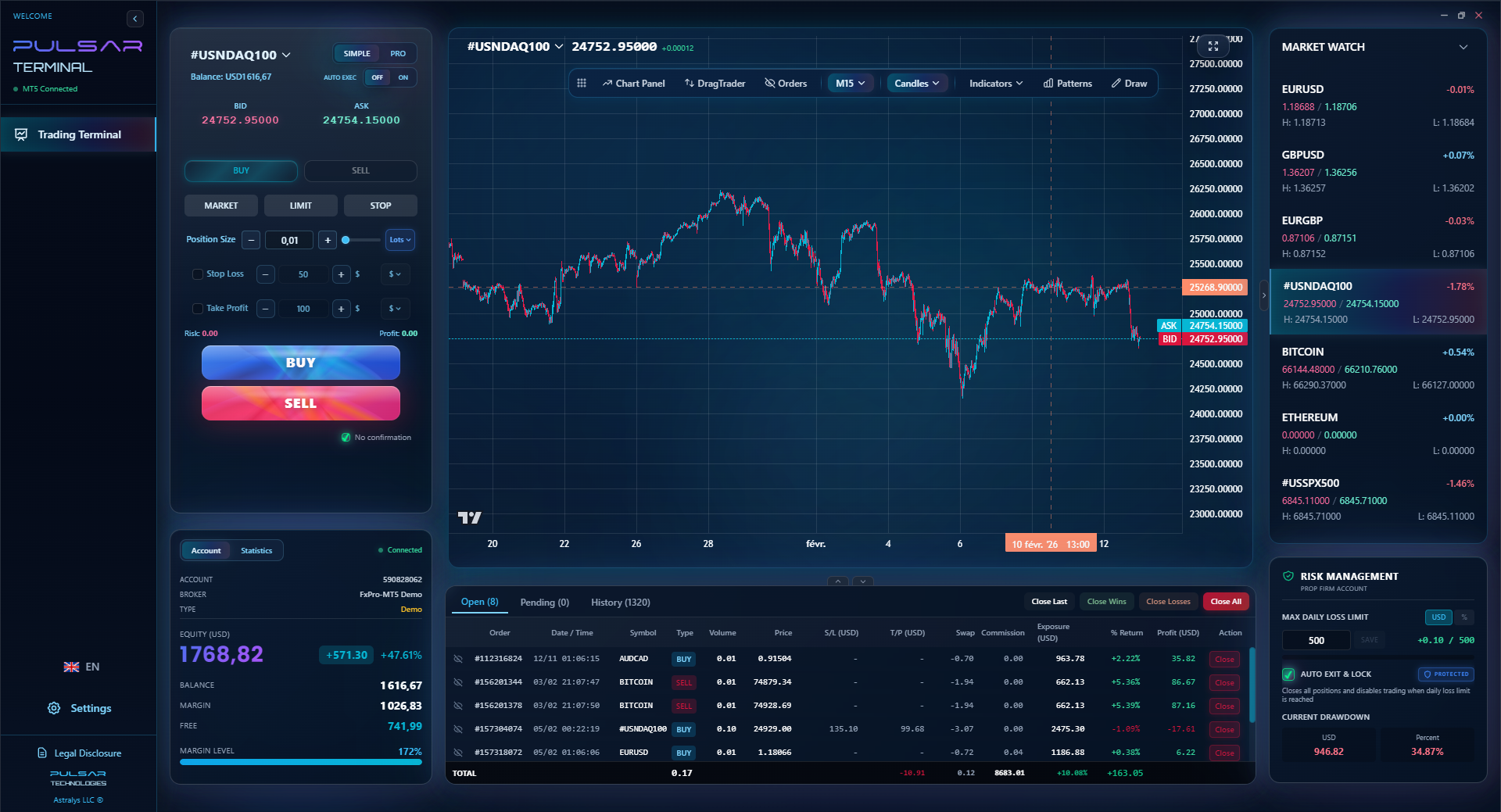
Managing the psychology of volatile ZAR pairs is easier when your platform lets you set and forget key risk parameters like stop-losses and take-profits with precision.
You can't just copy a strategy from a YouTube video filmed in the US and expect it to work on USD/ZAR during Johannesburg lunch hour. You need to adapt.
Factor in Time Zones: The sweet spot for liquidity in ZAR pairs is 9am-5pm SAST, when local banks and London are active. Trying to scalp at 2am is a recipe for huge spreads and erratic moves.
Mind the Gaps: ZAR pairs often gap open on Sunday night or after a major local holiday. If you're holding positions over the weekend, you need to account for this risk. I learned this holding a long EUR/ZAR position over a long weekend where a surprise cabinet reshuffle was announced. It gapped down 1.5% against me on open.
Use Volatility-Based Position Sizing: Don't just risk a fixed percentage. Use the Average True Range (ATR) indicator. If USD/ZAR's daily ATR is 300 pips, your stop-loss needs to be wider than if it's 150 pips. This means your position size must be smaller to maintain the same monetary risk. This is the single most important adjustment for trading in our volatile market.
Start simple. Maybe just trade EUR/USD or XAU/USD (gold) during London/NY overlap to get a feel for execution and your own emotions. Then, only add ZAR pairs once you're consistently not blowing yourself up. A strategy isn't a set of indicators; it's a strong process for dealing with the specific market you're in.
💡 विंस्टन की सलाह
If a trade idea feels obvious because of a local news headline, assume every other retail trader in SA sees it too. The smart money often fades that initial move.
“You can't just copy a strategy from a YouTube video filmed in the US and expect it to work on USD/ZAR during Johannesburg lunch hour.”
So, where does this leave you? The background forex market in South Africa is mature, regulated, and offers real opportunity - but it's not a casino. It's a tough business.
Your first R10,000 is tuition, not capital. Expect to pay it. The goal is to learn enough so that your second R10,000 survives and grows. Focus on understanding the pip definition and spread definition not just in theory, but in how they impact your specific trades on your specific broker.
Choose a regulated broker, start with far less use than they offer, and trade tiny sizes. Keep a journal. Write down not just your trades, but what you were feeling. Was you were bored? Greedy? Scared? That journal will teach you more about background forex success than any indicator ever will.
The market will be here tomorrow, and next year. You don't need to win today. You need to survive long enough to get good. Now, go turn the screen on. But maybe just watch for a while first.
FAQ
Q1Is forex trading tax-free in South Africa?
No, it's not. Any profit from trading is considered income by SARS and is taxable. It falls under 'gross income' in the Income Tax Act. You can deduct certain trading expenses (platform fees, data subscriptions), but you must keep careful records. Speak to a tax consultant who understands trading.
Q2What's the minimum amount I need to start trading forex in SA?
Technically, you can start with $1. Practically, it's pointless. With a realistic 2% risk per trade, a R500 account means risking R10. After a 50-pip spread on USD/ZAR, you have no room for a stop-loss. A minimum of R5,000 is a more sensible starting point to actually learn and apply risk management.
Q3Can I use international brokers like Binance or eToro?
You can, but it comes with complications. They may not be FSCA-regulated, meaning less protection. More importantly, getting your money in and out involves exchange controls. You must declare international transfers over a certain threshold to an authorized dealer (your bank). It's legal, but it's an administrative layer that local brokers simplify.
Q4Why is the spread on USD/ZAR so much wider than on EUR/USD?
Liquidity. EUR/USD is the most traded financial instrument on the planet. USD/ZAR has a fraction of that volume. Fewer buyers and sellers means a larger gap (spread) between the bid and ask price. It's the cost of trading a less liquid, more volatile currency pair.
Q5Does the 30:1 use limit apply to all brokers?
It applies to all FSCA-regulated brokers offering services to retail South African clients. Some international brokers not targeting SA might still offer you higher use if you sign up. However, using it is incredibly risky and voids many of the protections the FSCA rules provide.
Q6What's the most common mistake new SA traders make?
Over-leveraging on ZAR pairs based on local news. They hear a negative headline, go all-in short on the Rand with huge use, and get wiped out by a broader global dollar move they ignored. They confuse local insight with a complete market view.
प्रो. विंस्टन का पाठ
:
- ✓FSCA's 30:1 use cap is a lifesaver, not a limit.
- ✓Realistic starting capital is R5k-R20k, not R500.
- ✓USD/ZAR spreads are wide; factor them in first.
- ✓Local news is a flavour, not the main course for ZAR pairs.
यह लेख कितना उपयोगी था?
रेट करने के लिए स्टार पर क्लिक करें
साप्ताहिक ट्रेडिंग विश्लेषण
मुफ़्त साप्ताहिक विश्लेषण और रणनीतियाँ। कोई स्पैम नहीं।
लेखक के बारे में
David van der Merwe
उभरते बाजार के ट्रेडर
जोहानसबर्ग स्थित ट्रेडर, इमर्जिंग मार्केट करेंसीज में 11 साल का अनुभव। ZAR पेयर्स, FSCA-विनियमित ट्रेडिंग और दक्षिण अफ्रीकी मार्केट एनालिसिस में विशेषज्ञ।
टिप्पणियाँ
आपको यह भी पसंद आ सकता है

Cara Trading Forex Sukses: 7 Prinsip dari Trader Profesional
Cara trading forex sukses dengan 7 prinsip trader pro: manajemen modal, disiplin, journal trading, backtest. Data nyata, bukan janji profit palsu.
Jam Trading Forex Terbaik untuk Trader Indonesia: Panduan Lengkap dengan Tabel Waktu
Panduan jam trading forex untuk trader Indonesia. Tabel 4 sesi dunia, jam emas 20:00-00:00, sesi mana yang harus dihindari. Data akurat + tips dari trader berpengalaman.
Top 5 Sàn Forex Uy Tín Nhất 2026: Review Jujur dari Trader Indonesia
Top 5 sàn forex uy tín 2026 untuk trader Indonesia. Review jujur: spread, deposit, withdraw, dukungan lokal. Exness, XM, IC Markets & lebih.
All these calculators are built into Pulsar Terminal with real-time data from your MT5 account. One-click position sizing, automatic risk management, and instant calculations.
