


Here's a statistic that should sober you up: over 70% of retail forex traders lose money.

Olumide Adeyemi
पश्चिम अफ्रीकी ट्रेडिंग अग्रणी ·  Nigeria
☕ 12 मिनट पढ़ने
आप क्या सीखेंगे:
- 1What Is Forex, Really? (Forget What You've Heard)
- 2The Nigerian Legal Landscape: Is It Even Legal?
- 3Choosing Your First Broker: The Non-Negotiables
- 4Understanding Pips, Spreads, and use (The Math That Matters)
- 5Your First Trading Strategy: Keep It Stupid Simple
- 6The Real Game: Psychology & Risk Management
- 7Common Scams & What to Avoid in Nigeria
- 8Your First 30-Day Action Plan
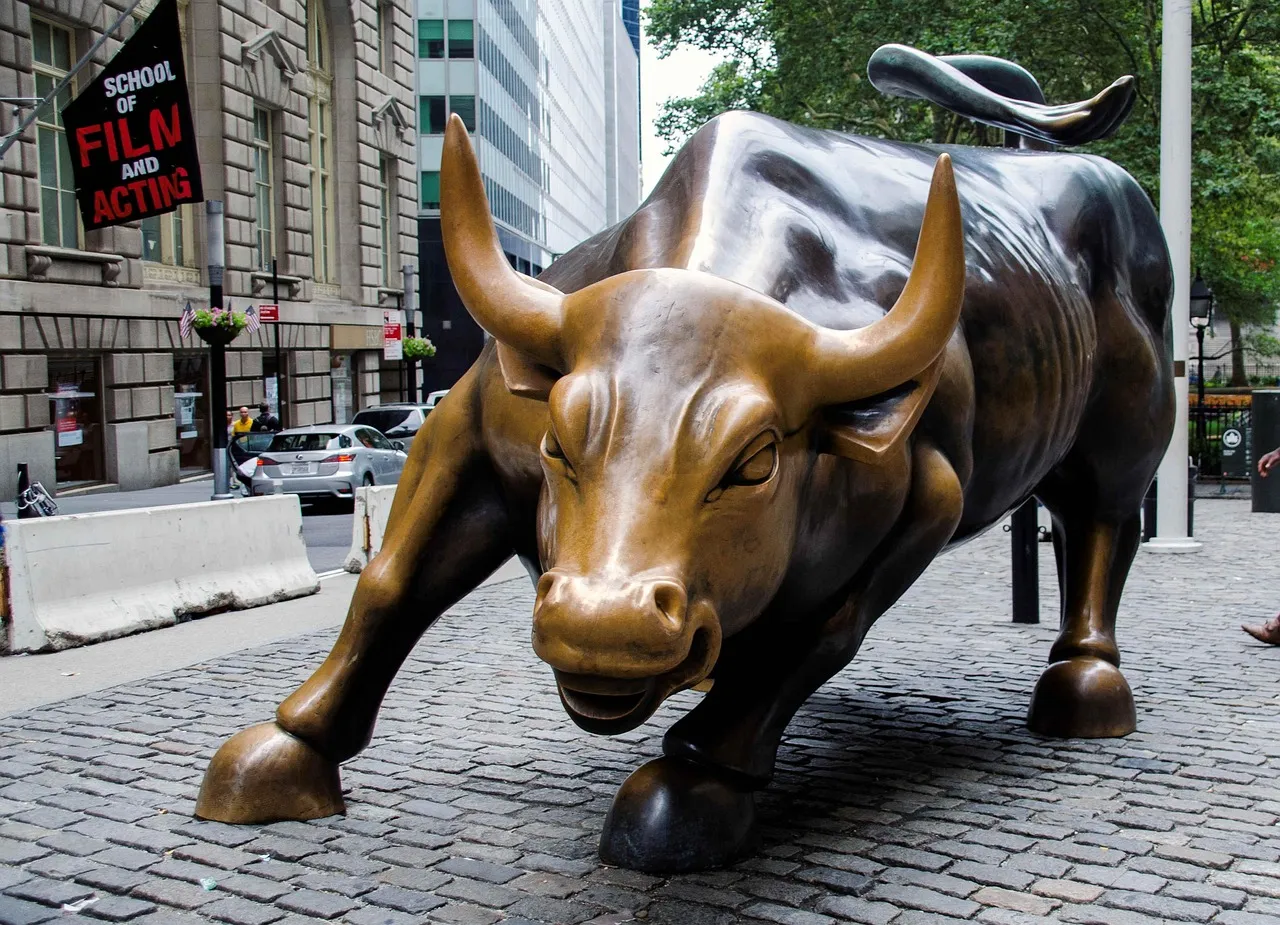
Here's a statistic that should sober you up: over 70% of retail forex traders lose money. In Nigeria, I'd argue that number is higher, maybe 80-85%. Not because Nigerians are bad traders, but because they're fed garbage information from 'gurus' selling dreams. This isn't that. This is a straight-talking, no-BS forex beginners guide from someone who's blown accounts, made comebacks, and now trades for a living. We're going to cover what forex actually is, how it works in Nigeria specifically, and the exact steps to take so you're not part of that 80%.
Forex is just the global marketplace for exchanging currencies. That's it. You're betting on whether one currency will go up or down against another. The EUR/USD pair? That's just the Euro versus the US Dollar.
What makes it attractive, especially here, is the 24/5 market and the use. use is a double-edged sword that brokers love to advertise. 1:500 use means with $100, you can control a $50,000 position. Sounds great until a 0.2% move against you wipes out your entire capital. That's called a margin call, and it happens fast.
Here's the local twist: you're not trading the Naira on these platforms. You're mostly trading major pairs like EUR/USD, GBP/USD, and XAU/USD (gold). Your account is in USD, Euros, or maybe GBP. So when you fund it with Naira, you're already making a currency conversion bet. With the Naira's recent volatility, that deposit itself can gain or lose value before you even place a trade. Keep that in mind.

Warning: If anyone tells you forex is a 'get-rich-quick scheme' or promises you guaranteed weekly returns, run. That's a Ponzi scheme wearing a trading costume. Real trading is a skill, not a lottery.
I learned this the hard way early on. I deposited 150,000 NGN (about $200 at the time) into an account, got excited by the 1:1000 use, and put on a full position on GBP/JPY. The pair moved 30 pips against me in 10 minutes. Account gone. Poof. That $200 taught me more about position size than any book ever could.
This is the biggest source of confusion. Let's clear it up.
Forex trading itself is not illegal in Nigeria. You will not get arrested for trading EUR/USD on your phone. However, the Central Bank of Nigeria (CBN) does not license or regulate the international brokers you and I use. Their job is to manage the official Naira rate and the country's reserves, not to babysit retail traders on MetaTrader.
The Nigerian SEC has issued warnings, but those are aimed at shady local investment schemes pretending to be forex brokers - the ones promising 50% monthly returns. They're not coming after individuals using properly regulated international firms.
So, who regulates your broker? It should be a reputable foreign authority. The big ones are:
| Regulatory Body | Country/Region | What It Means For You |
|---|---|---|
| Financial Conduct Authority (FCA) | United Kingdom | Strong client fund protection (up to £85,000). Strict rules. |
| Cyprus Securities and Exchange Commission (CySEC) | Cyprus (EU) | Common EU standard. Investor compensation fund. |
| Australian Securities & Investments Commission (ASIC) | Australia | Tough regulatory framework. High credibility. |
Your safety net is that international regulation. Always verify a broker's license number on the regulator's official website before depositing a single kobo.
Funding Your Account: The Practical Stuff
You'll typically fund in USD. Here’s how it usually works:
- Bank Transfer: Slow, and your bank might charge a fee for the international transfer. Some brokers use local payment partners to make this easier.
- Debit/Credit Cards (Visa/Mastercard): Instant. This is my go-to. Just make sure your card is enabled for international transactions.
- E-wallets (Skrill, Neteller): Fast and efficient. Good for smaller amounts.
- Cryptocurrency: Increasingly popular. It bypasses traditional banking hurdles entirely. You deposit crypto, the broker converts it to USD in your account.
Withdrawal is the same process in reverse. Reputable brokers like Exness or IC Markets process withdrawals within 24 hours on these methods.

💡 विंस्टन की सलाह
Your first profit target should be to survive for 6 months without blowing your account. Consistency beats a single lucky win every time.
“use isn't a magic profit multiplier. It's a risk amplifier. Use less than you're offered.”
Don't get swayed by fancy bonuses. Focus on these pillars:
- Regulation: As above. Non-negotiable.
- Trading Costs: This is your spread and commission. For a beginner, a broker with tight, consistent spreads on majors is key. You don't want to fight a 3-pip spread on EUR/USD when you're trying to make 10 pips. Check live accounts, not just advertised rates. A broker like Pepperstone is known for razor spreads.
- Platform: MT4 or MT5. That's it. Don't bother with a broker's weird proprietary platform. MT4/5 are the industry standards, with all the indicators, charts, and automated trading tools you'll ever need. Everyone uses them, so finding help or tutorials is easy.
- Minimum Deposit: Start small. If a broker asks for $500 minimum, walk away. You should be able to start with $50-$100 for educational purposes. This is practice money, not investment capital.
- Customer Support: Test them. Send an email or live chat with a question. See how long they take to respond and if they actually help.

Pro Tip: Open a demo account with at least 3 different brokers. Trade on them for a month. Feel the difference in execution speed, see the real spreads during volatile news events, and test their platforms. Only then deposit real money.
I made my first real deposit with a broker offering a 100% bonus. Sounded amazing. What they didn't make clear was that the bonus came with insane trading volume requirements before I could withdraw any of my own money. I was locked in. Lesson learned: if it sounds too good to be true, it is.
This is the engine room. Get this wrong, and you'll blow up.
- Pip: The smallest price move a currency pair can make. For most pairs, it's 0.0001. If EUR/USD moves from 1.1050 to 1.1051, that's 1 pip. It's how you measure profit and loss. Our full pip definition breaks down the calculations.
- Spread: The difference between the buy (ask) and sell (bid) price. This is the broker's fee. If EUR/USD is quoted as 1.1050 / 1.1052, the spread is 2 pips. You start your trade 2 pips in the red. Tighter spreads = less cost to you.
- use: This isn't a magic profit multiplier. It's a risk amplifier. Use less than you're offered.
Let's do a real example with numbers. You have $100 in your account. Broker offers 1:500 use.
- Foolish Approach: You use all the use. You can control $50,000. A standard lot is $100,000, so you open a 0.5 lot on EUR/USD. A 20-pip move against you (common in a day) on a 0.5 lot is a $100 loss. Account gone.
- Sensible Approach: You decide to risk only 1% of your account per trade. That's $1. You use a position size calculator. You find that to risk just $1 on a trade where your stop-loss is 20 pips away, you should only trade a 0.005 lot (a micro lot). This uses very little use but keeps you in the game.
See the difference? One bad trade ends you in the first scenario. In the second, you can survive 100 losing trades in a row (unlikely) and still learn. Start with micro lots (0.01) and ignore the use number on your screen. Focus on your risk per trade.
“A losing trade is a tuition fee paid for education. A blown account is a donation to the broker.”
Beginners drown in indicators. They put 10 squiggly lines on their chart, and when they all align, they take a trade. The problem? By the time they all align, the move is often over.
Start with price action and support/resistance. Look at a naked chart. Where has the price bounced up from repeatedly? That's support. Where has it fallen from? That's resistance. Price tends to respect these levels.
Add one or two indicators for confirmation, not for signals.
- The RSI Indicator: Tells you if a market is overbought (above 70) or oversold (below 30). Don't sell just because RSI is at 75. Wait for price to show weakness at a resistance level too.
- The MACD Indicator: Helps gauge momentum. When the MACD line crosses above the signal line, momentum is turning up. Again, use it with price action.
Here’s a simple swing trading setup I used when starting:
- Identify a clear support level on the 4-hour chart of EUR/USD.
- Wait for the price to touch that level and form a bullish candlestick pattern (like a hammer or engulfing bar).
- Check the daily RSI. Is it coming out of oversold territory (<30)? Good.
- Place a buy order 2 pips above the high of that bullish candle. Stop loss 15 pips below the support level. Take profit at the next resistance level.
- Your position size is calculated so that if the stop loss hits, you lose only 1% of your account.
That’s it. No complexity. I took a trade like this in 2019 on GBP/USD. Bought at 1.2205, stop at 1.2185 (20 pip risk), target at 1.2280. It hit target two days later for a 75-pip gain. The risk was $20, the reward was $75. That's a 1:3.75 risk-reward ratio. You can lose more trades than you win and still be profitable with ratios like that.
💡 विंस्टन की सलाह
If you feel the urge to double your position size after a win, log off for the day. Euphoria is just as dangerous as panic.
Trading is 20% strategy, 80% psychology and risk management. Your brain is your worst enemy.
Common Psychological Traps:
- Revenge Trading: You lose a trade. You're angry. You jump right back in with a bigger size to 'make it back immediately.' This is how accounts die.
- Fear of Missing Out (FOMO): You see a pair rocketing up. You chase it at the top, it reverses, and you're left holding a bag.
- Moving Your Stop Loss: You put a stop loss 20 pips away. Price approaches it. 'Maybe it'll bounce,' you think. You move the stop loss further away. Price keeps going, and now your small loss becomes a catastrophic one.
Your Survival Rules:
- The 1% Rule: Never, ever risk more than 1% of your account balance on a single trade. This is the golden rule. It lets you sleep at night.
- Use Stop Losses Religiously: Every trade must have a stop loss entered the moment you open the trade. No exceptions. It's not a suggestion; it's an insurance policy.
- Have a Trading Plan: Write it down. 'I will only trade when X and Y condition are met on the 4H chart. My risk per trade is Z. I will not trade during major news events.' Then follow it.
- Accept Losses: Losing trades are part of the business. Even the best traders are wrong 40-50% of the time. It's the size of the wins versus the losses that matters.

Example: Account Balance = 100,000 NGN ($65). 1% Risk = 1,000 NGN ($0.65). If your stop loss is 25 pips away, your position size must be small enough that a 25-pip loss equals $0.65. That's a micro-lot or less. This feels tiny, but it's how you learn without pain.
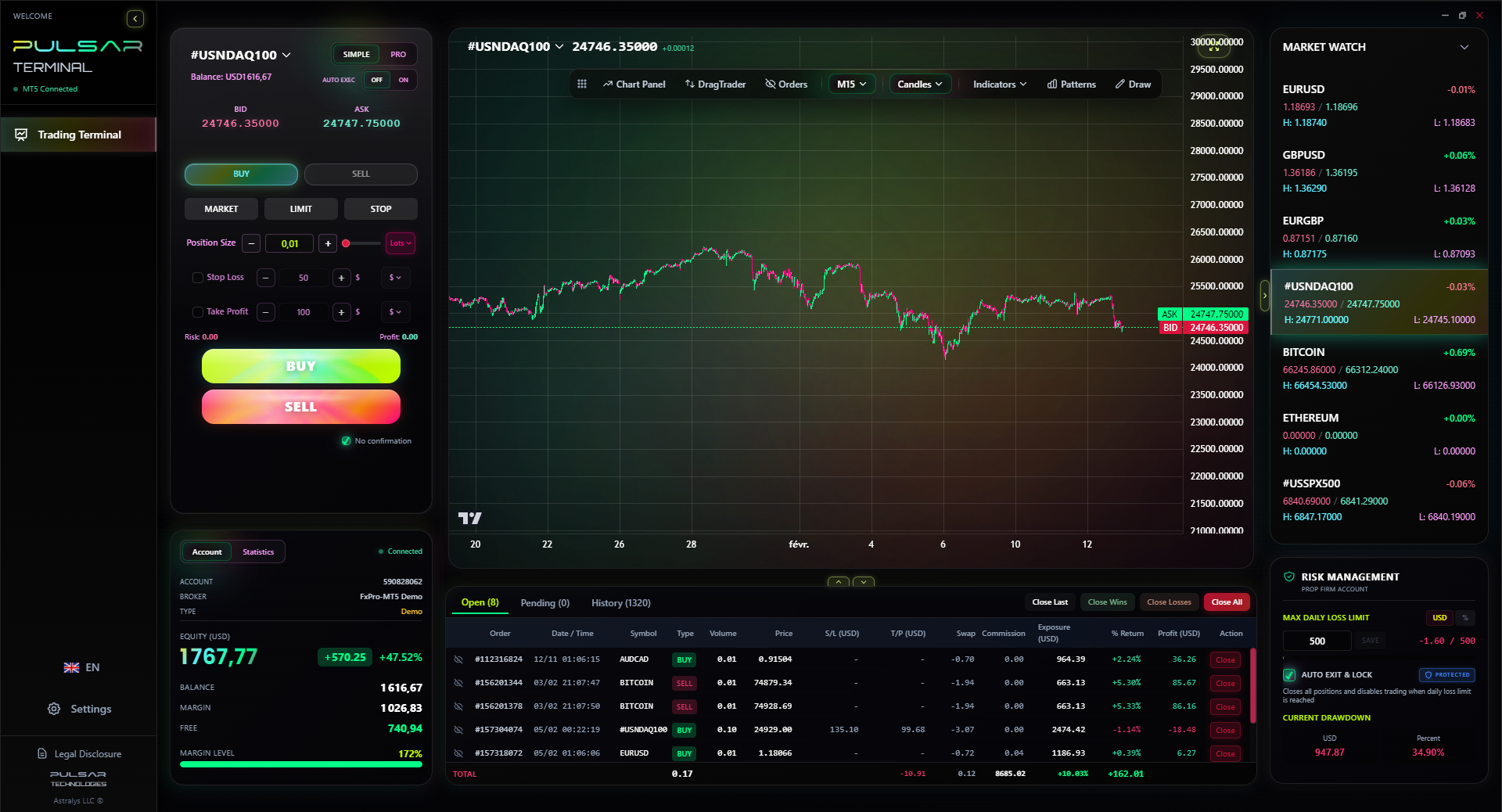
Sticking to your risk management plan is hard when emotions run high, which is why automating tools like Pulsar Terminal's one-click stop-loss and take-profit orders directly on MT5 can save you from yourself.
“Your safety net isn't a guru's signal. It's a broker regulated by the FCA, ASIC, or CySEC.”
The 'forex space' here is riddled with predators. Here’s what they look like:
- The Signal Seller Guru: He flaunts luxury cars (often rented) and screenshots of massive profits. He charges 50k NGN monthly for 'signals.' The signals are either fake (posted after the move) or so vague they're useless. If he's so good, why is he selling signals instead of trading?
- The Fund Manager/Prop Firm 'Helper': They offer to manage your account or help you pass a prop firm challenge for a fee. They'll often use insane use to try and hit targets quickly, which usually blows the account. You lose your fee and your challenge money.
- The Fake Broker: A 'local' broker with an office in VI or Lekki offering amazing bonuses and 'CBN approval.' They're not regulated internationally. When you want to withdraw, there are endless 'verification' problems, or they just disappear.
- The WhatsApp/Telegram Group Pump: You're added to a group. The 'analyst' picks a illiquid penny stock or crypto, tells everyone to buy, they pump the price, then dump it, leaving you holding worthless assets.
Your Defense: Be cynical. Verify everything. Never give your login details to anyone. No legitimate person will ever ask for them. Use only internationally regulated brokers. Invest in your own education, not in someone else's promises. Tools like Pulsar Terminal can give you a professional edge with features like one-click order entry and trailing stops, but they don't replace your own knowledge.
💡 विंस्टन की सलाह
Keep a screenshot of your biggest loss on your phone's home screen. It's the best reminder to always use a stop loss.
Don't try to do everything at once. Follow this order.
Week 1-2: Education & Paper Trading
- Read this guide again. Understand pips, use, and risk.
- Download MT4 or MT5 on your PC and phone.
- Open 2-3 demo accounts with different brokers (like XM or others mentioned).
- Practice the simple support/resistance strategy on the demo. Don't use indicators yet. Just draw lines and watch how price reacts.
- Use the position size calculator on every demo trade. Get used to the math.
Week 3-4: Developing a Routine
- Start a trading journal (a simple Google Sheet). Log every demo trade: entry, exit, reason for trade, emotion.
- Add the RSI indicator to your chart. Learn to spot divergences (price makes a new high, RSI makes a lower high = potential reversal).
- Watch the market at specific times. The London open (8 AM GMT) and the London/New York overlap (1 PM - 4 PM GMT) are the most volatile.
- Pick one currency pair. I recommend EUR/USD. Learn its personality. Read our EUR/USD guide for a deep dive.
Month 2: Going Live (With Real, Small Money)
- Fund your chosen broker with the minimum amount. This is tuition fee money, not an investment.
- Trade micro lots (0.01) only.
- Your only goal for the first 3 months of live trading is to not break the 1% risk rule and to follow your plan. Profit is a secondary goal.
- Review your journal weekly. What patterns do you see in your losing trades?
This journey is a marathon. It took me 3 years of consistent study and small live trading before I became consistently profitable. There's no shortcut. But if you focus on preserving capital first, you give yourself the time to learn the craft. Good luck.

FAQ
Q1How much money do I need to start forex trading in Nigeria?
Technically, you can start with as little as $10 with some brokers. Realistically, I'd recommend a minimum of $50-$100. This should be money you can afford to lose completely. It's your 'tuition fee' for learning. The goal with this first deposit isn't to get rich, it's to learn how to trade real money without panic, using proper micro-lot position sizes.
Q2Can I trade the Nigerian Naira (NGN) on forex platforms?
Generally, no. Most major international brokers do not offer NGN pairs like USD/NGN for retail speculation. You trade major global currencies (USD, EUR, JPY, GBP). Your account is funded in a foreign currency (usually USD), so you're exposed to the USD/NGN rate when you deposit and withdraw, but you're not directly trading the Naira's value on the platform.
Q3What is the best time to trade forex in Nigeria?
The most active and volatile sessions are the London session (8 AM to 5 PM GMT) and the overlap with the New York session (1 PM to 4 PM GMT). In Nigerian time (WAT), that's 9 AM to 6 PM and 2 PM to 5 PM. These times have the highest volume, which means tighter spreads and clearer price movements. Avoid trading during very quiet periods like the Asian session late night/early morning here, as spreads can widen.
Q4Are forex trading profits taxable in Nigeria?
As of now, there is no specific tax law targeting individual retail forex trading profits in Nigeria. The tax authorities (FIRS) are more focused on corporate income and capital gains from more traditional assets. However, this could change in the future. It's always wise to keep detailed records of your trading activity and consult with a local tax professional for the most current advice.
Q5What's the difference between a demo account and a live account?
A demo account uses virtual money. It's for learning the platform and testing strategies without risk. A live account uses your real money. The crucial difference is psychology. On a demo, a 50-pip loss is a number. On a live account with your hard-earned Naira, it triggers fear and greed. That's why you must start with very small, affordable amounts when you go live - to manage that emotional leap.
Q6Is scalping a good strategy for beginners?
No, it's one of the worst. Scalping involves taking tiny profits (5-10 pips) many times a day. It requires lightning-fast execution, intense focus, and eats you alive with spreads and commissions. Beginners lack the discipline, platform mastery, and emotional control for it. You'll end up overtrading and churning your account away on fees. Start with swing or day trades on higher timeframes (like 4-hour charts) where you have more time to think.
प्रो. विंस्टन का पाठ
:
- ✓Risk only 1% of your account per trade. No exceptions.
- ✓Verify your broker's license on the regulator's official website.
- ✓Start with a $50-$100 'tuition fee' deposit, not your life savings.
- ✓Master one simple strategy on one pair before adding complexity.
- ✓A trading journal is more important than any indicator.
यह लेख कितना उपयोगी था?
रेट करने के लिए स्टार पर क्लिक करें
साप्ताहिक ट्रेडिंग विश्लेषण
मुफ़्त साप्ताहिक विश्लेषण और रणनीतियाँ। कोई स्पैम नहीं।
लेखक के बारे में
Olumide Adeyemi
पश्चिम अफ्रीकी ट्रेडिंग अग्रणी
नाइजीरिया के सबसे सक्रिय फॉरेक्स ट्रेडिंग एजुकेटर्स में से एक। लागोस से 8 साल का ट्रेडिंग अनुभव। अफ्रीकी ट्रेडर्स के लिए लो-कैपिटल स्ट्रैटेजीज और प्रॉप फर्म चैलेंजेज में विशेषज्ञ।
टिप्पणियाँ
आपको यह भी पसंद आ सकता है

Cara Trading Forex Sukses: 7 Prinsip dari Trader Profesional
Cara trading forex sukses dengan 7 prinsip trader pro: manajemen modal, disiplin, journal trading, backtest. Data nyata, bukan janji profit palsu.
Jam Trading Forex Terbaik untuk Trader Indonesia: Panduan Lengkap dengan Tabel Waktu
Panduan jam trading forex untuk trader Indonesia. Tabel 4 sesi dunia, jam emas 20:00-00:00, sesi mana yang harus dihindari. Data akurat + tips dari trader berpengalaman.
Top 5 Sàn Forex Uy Tín Nhất 2026: Review Jujur dari Trader Indonesia
Top 5 sàn forex uy tín 2026 untuk trader Indonesia. Review jujur: spread, deposit, withdraw, dukungan lokal. Exness, XM, IC Markets & lebih.
All these calculators are built into Pulsar Terminal with real-time data from your MT5 account. One-click position sizing, automatic risk management, and instant calculations.
