


I was staring at my screen on March 15, 2025, watching GBP/USD tank 80 pips in 15 minutes.

Olumide Adeyemi
पश्चिम अफ्रीकी ट्रेडिंग अग्रणी ·  Nigeria
☕ 12 मिनट पढ़ने
आप क्या सीखेंगे:
- 1What Forex Chat Really Is (And Isn't)
- 2The Ugly Economics of Signal Sellers
- 3How to Find Actually Useful Groups
- 4The Tax and Legal Reality Nobody Talks About
- 5How to Use Chats Without Becoming Dependent
- 6Broker Integration and Social Trading
- 7Building Your Own Trusted Circle
- 8Final Verdict: Are Forex Chats Worth It?
I was staring at my screen on March 15, 2025, watching GBP/USD tank 80 pips in 15 minutes. My WhatsApp forex chat was blowing up with 'BUY NOW!' messages from three different 'gurus.' I'd already lost 2.3% of my account following their earlier 'guaranteed' call. That's when I realized most forex chat groups aren't about education. They're about feeding someone else's ego - or their wallet. Let me break down what these groups actually do, who benefits, and how you can use them without getting burned.
When you hear 'forex chat,' you're probably thinking Telegram groups, WhatsApp broadcasts, or Discord servers where traders share ideas. That's technically correct, but it misses the real dynamics. In Nigeria, these groups fall into three categories: signal seller groups, community discussion groups, and prop firm challenge groups.
Signal seller groups are the most common. Someone charges 5,000 to 50,000 NGN monthly to send you entry and exit points. They rarely explain their analysis. I paid for one back in 2023 - 15,000 NGN for 'VIP signals.' The guy would post 'EUR/USD BUY 1.0850, SL 1.0820, TP 1.0900' with no chart, no reasoning. When I asked why, I got kicked from the group. His win rate was about 55%, which sounds decent until you account for the subscription fee eating into your profits.
Community groups can be valuable if they're moderated properly. These are places where traders post charts, debate support/resistance levels, and share economic calendar events. The problem? They often devolve into chaos. Too many new traders asking 'is forex real?' while experienced traders get tired of answering the same questions.
Prop firm challenge groups have exploded since 2024. Traders share strategies for passing evaluations from firms like FTMO or The5%ers. These can be useful for specific technical questions about drawdown rules or profit targets.

Warning: Any group that promises 'guaranteed profits' or 'risk-free trading' is a scam. Full stop. I don't care how many Lamborghini photos they post.
The new Investments and Securities Act (ISA) 2025 technically requires anyone providing 'services related to online forex trading' to register with the SEC. Most signal sellers operate in the shadows, completely unregulated. You have zero recourse if they blow up your account.

💡 विंस्टन की सलाह
If everyone in the chat agrees on a trade direction, do the opposite. Consensus is usually wrong at turning points.
Let's do some real math. Say a signal seller has 200 subscribers paying 20,000 NGN monthly. That's 4 million NGN per month. His incentive isn't to make you rich. It's to keep you subscribed. How does he do that? By occasionally hitting big wins that get everyone excited, while the slow losses get ignored.
I tracked one popular seller's signals for three months in 2024. Here's what I found:
| Metric | His Claim | Actual (My Tracking) |
|---|---|---|
| Win Rate | 78% | 62% |
| Average Risk/Reward | 1:3 | 1:1.5 |
| Monthly Return | 15-20% | 4.7% (before fees) |
After his 20,000 NGN fee, if you started with a 500,000 NGN account, you'd net about 23,500 NGN profit. That's 4.7% return, not 20%. And that's assuming you followed every trade perfectly, which most people don't.

Example: 500,000 NGN account with 4.7% monthly return = 23,500 NGN profit. Minus 20,000 NGN signal fee = 3,500 NGN net profit. That's 0.7% monthly return, not the 15% advertised.
Many sellers use a clever trick: they send signals to different groups at different times. Group A gets 'BUY EUR/USD now' while Group B gets 'SELL EUR/USD now.' Whichever wins gets screenshotted and promoted. The losing group gets a vague 'market reversal' excuse. I've seen this happen with my own eyes in two different WhatsApp groups run by the same person.
The worst offenders are the ones selling 'robot' or 'EA' signals. They claim some automated system generates the trades. In reality, it's often just a guy manually placing trades based on basic indicator crossovers. There's no magic algorithm, just basic technical analysis repackaged as secret tech.
“By the time a signal seller is popular enough to copy, their best performance is usually behind them.”
Good forex chat groups do exist. They're just harder to find. Here's what to look for:
First, the group should be focused on education, not signals. Look for groups where members post their own charts and explain their thinking. Phrases like 'I'm watching this support level because...' or 'The daily chart shows...' indicate actual analysis.
Second, check the moderator's credentials. Do they share their own trading results consistently? Not just screenshots of wins, but honest discussions of losses. I'm in one Telegram group run by a Lagos-based trader who posts his monthly profit/loss statement every 30 days. He's been doing it for two years. That transparency builds trust.
Third, avoid groups that allow 'copy my trade' requests. These create herd mentality and discourage independent thinking. A good group will answer 'why' questions, not just 'what' questions.
Free vs Paid Communities
Free groups on Facebook or Telegram can be surprisingly valuable if they're niche enough. I'm in a 'Nigeria MT5 Traders' group that's exclusively about platform-specific questions. When I was setting up my position size calculator on MT5, someone there helped me debug the script in 10 minutes.
Paid communities should offer something beyond signals. Think weekly webinars, recorded courses, or direct Q&A with experienced traders. One decent service I've seen charges 35,000 NGN monthly but provides daily market analysis videos, not just trade alerts.

Pro Tip: Before joining any paid group, ask for a one-week trial. Any legitimate educator will offer this. If they refuse, they're hiding something.
Remember that even good groups have noise. You'll need to filter out the overconfident newbie who's been trading for two weeks and the perpetual bear who thinks every market is about to crash. That filtering skill is part of your development as a trader.
Here's something you won't hear in most forex chat groups: that 10% capital gains tax applies whether you're trading through a local or international broker. The FIRS doesn't care if your broker is based in Cyprus or Australia. If you're a Nigerian resident making profits, you owe tax.
I learned this the hard way. In 2023, I made about 2.8 million NGN in trading profits. I thought since my broker was IC Markets (regulated by ASIC), I didn't need to declare it. Wrong. A tax consultant later explained that Nigeria taxes worldwide income for residents. I ended up paying 280,000 NGN in back taxes plus penalties.
Most signal sellers and group admins won't mention this because it's not sexy. Talking about taxes doesn't sell subscriptions. But it's critical for your actual net profitability.
The new ISA 2025 legislation adds another layer. While it's aimed at platforms and service providers, if you're running a paid group giving trading advice, you might need SEC registration. I'm not a lawyer, but the wording is broad enough to cause concern. This could clean up some of the wild west aspects of the signal-selling space, but enforcement will take time.
Also, beware of groups promoting 'tax avoidance' schemes. I've seen admins suggest withdrawing profits via cryptocurrency to 'hide' from authorities. That's not just unethical, it's illegal. The last thing you want is tax evasion charges on top of trading losses.
💡 विंस्टन की सलाह
Track any signal service's performance yourself in a spreadsheet for 3 months before paying. You'll be shocked how often the reality differs from the hype.
“Every minute spent scrolling trading chats is a minute not spent analyzing charts yourself.”
The biggest danger of forex chat groups isn't the scams. It's developing a dependency where you can't make decisions without group validation. I've watched traders with solid swing trading strategies abandon them because some loud voice in a Telegram chat said 'market going the other way.'
Here's my practical system for using groups without losing my edge:
-
Do your analysis first. Before opening any group chat, analyze the markets yourself. Write down your bias, key levels, and potential setups. This creates a baseline.
-
Use groups for contrary opinions. Once you have your view, scan the group for opposing arguments. If everyone agrees with you, that's actually a red flag. Markets often move when consensus is strongest.
-
Ignore entry/exit suggestions. Focus on the 'why,' not the 'what.' Someone might say 'I'm bullish because of the weekly close above 1.0850.' That's useful information. 'Buy at 1.0860' is noise.
-
Limit your time. I give myself 20 minutes daily across all trading groups. After that, I close the apps and trade based on my plan. The constant chatter creates anxiety and impulsive decisions.
I used to be in 14 different trading groups. It was overwhelming. Now I'm in three: one for general discussion, one for scalping strategy techniques (my main style), and one for broker-specific issues. That's it.
When I'm in a trade, I mute all notifications. The moment you're watching a forex chat while your position is open, you're vulnerable to panic. Someone posts 'OMG LOOK AT THAT SPIKE' and suddenly you're closing a trade that was actually going your way. Happened to me three times before I learned.
When you're managing multiple trades based on your own analysis, not chat noise, tools like Pulsar Terminal's drag-and-drop orders and multi-TP/SL features on MT5 keep your execution precise and fast.
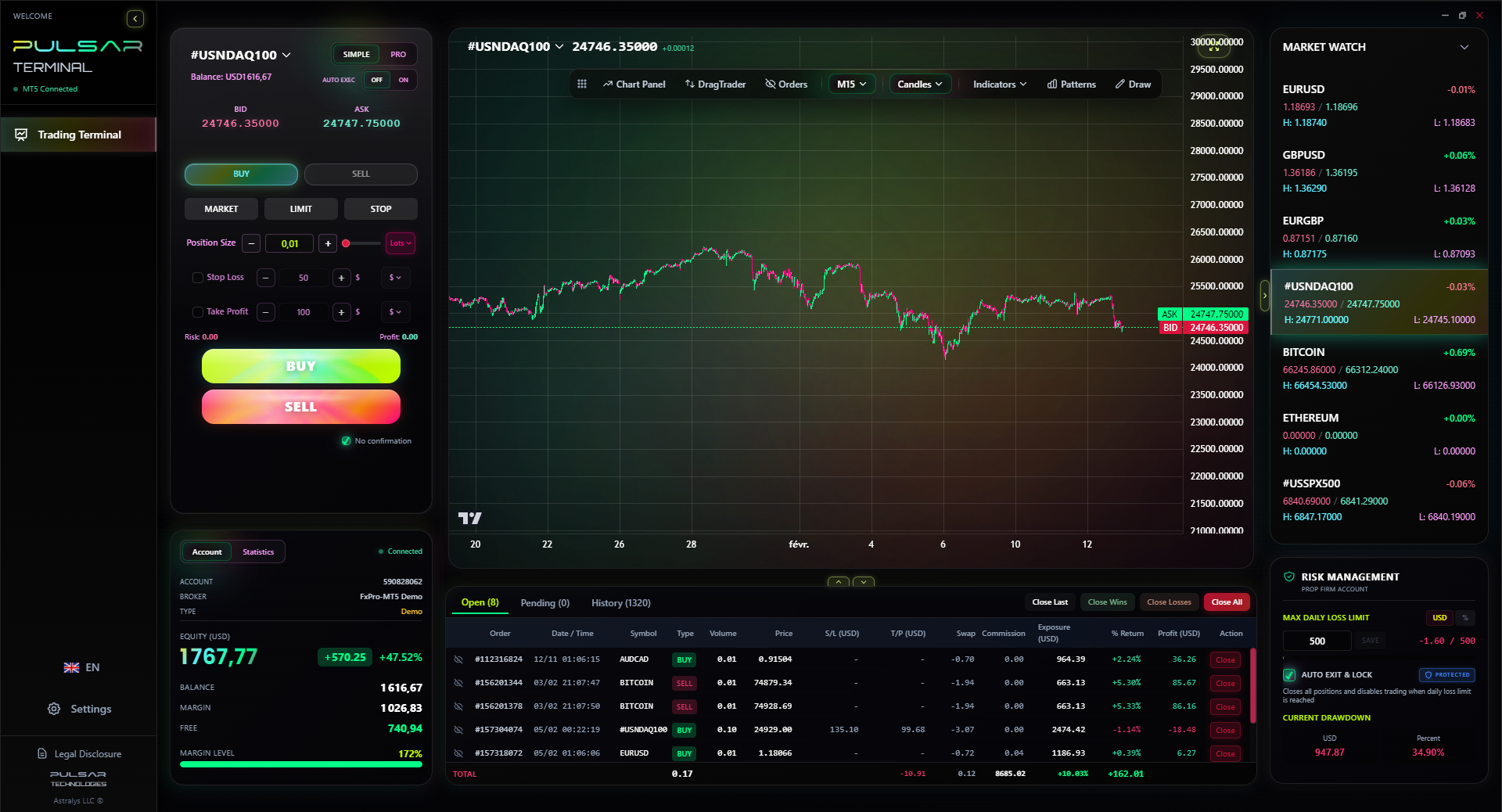
Some brokers build chat/social features directly into their platforms. This can be better than random Telegram groups because there's some accountability. Let's compare a few popular options among Nigerian traders:
Exness has a social trading platform where you can copy other traders. The transparency is better than most WhatsApp groups because you see the trader's full history, not just cherry-picked wins. But the top performers often take huge risks that eventually blow up. I copied a 'master trader' there in 2024 who had 12 straight winning months. Month 13? He lost 60% in a week trying to short USD/JPY during a Bank of Japan intervention.
XM offers trading signals through MT4/MT5. These are automated based on technical indicators. The problem? They use the same RSI indicator and MACD indicator settings everyone else uses. There's no edge. I tested their signals for a month: 48% win rate with poor risk/reward.
Pepperstone integrates with third-party social platforms like Myfxbook and Signal Start. These can be decent if you do deep due diligence. Look for traders with at least 3-year track records through different market conditions (not just 2020's volatility).
The hard truth about social trading: by the time someone is popular enough to copy, their best performance is often behind them. Their strategy might not work with larger capital, or market conditions have changed. That 8% monthly return they got with a $10,000 account becomes 2% when 500 people copy them with $5 million total.
Also, remember spreads matter more when copying. If the signal enters at 1.0850 but your execution is at 1.0852 because of spread definition widening, that small difference compounds over dozens of trades. Always check if the broker offers tight spreads on the pairs you're trading. For EUR/USD, anything above 0.8 pips on a standard account is eating your edge.
“The seller's 4 million NGN monthly income depends on your continued dependence.”
Eventually, you'll want to move beyond public groups and build a private circle of 3-5 serious traders. This is where real growth happens. Here's how I built mine:
-
Met through a reputable course. We all took a price action course from a UK-based trader (not a Nigerian 'guru'). The shared learning experience created common ground.
-
Started with weekly reviews. Every Sunday, we'd share one trade from the past week: why we took it, how we managed it, and what we learned. No bragging, just analysis.
-
Added accountability. We set monthly goals and reported progress. Not just profit/loss, but process goals like 'I will not revenge trade' or 'I will use stop losses on 100% of trades.'
-
Kept it small. Once you go beyond 5-6 people, the dynamic changes. Someone becomes passive, someone dominates conversation.
This private group saved me from a major mistake in early 2025. I was convinced gold (XAU/USD guide) was going to crash from $2,050. My analysis seemed solid. But two members pointed out that central bank buying was at record highs, a fundamental factor I'd ignored. I skipped the trade. Gold rallied to $2,180 over the next month.
The key difference from public chats? We can be brutally honest. 'Your risk management here was terrible' or 'You're trading based on emotion right now.' That feedback is uncomfortable but necessary. You won't get that from a random Telegram group where everyone's trying to look like a genius.
If you're just starting out, don't rush this. Spend 6-12 months in public groups, identify traders who consistently share thoughtful analysis (not just results), then gradually approach them about forming a smaller mastermind. Offer value first - maybe you're good at forex chat analysis or tracking economic events. Relationships build slowly.
💡 विंस्टन की सलाह
The most valuable people in trading chats aren't the loudest. They're the ones who ask thoughtful questions and admit when they're wrong.
Yes, but not in the way most Nigerian traders use them.
Forex chat groups are terrible for getting signals. The economics are stacked against you. The seller makes money whether you win or lose, as long as you keep paying. That 4 million NGN monthly income I mentioned earlier? That's from 200 people. Imagine if just 10% of those people actually became consistently profitable on their own. They'd stop paying. His business model depends on your continued dependence.
Where chats excel is for specific problem-solving and community. Stuck on how to set a trailing stop on MT5? A good group can answer in minutes. Wondering how a new SEC regulation affects your broker? Someone might have already researched it.
My practical recommendation:
- Use 1-2 free educational groups for Q&A
- Avoid all signal-selling groups (yes, all of them)
- Consider a paid educational community only if it focuses on teaching, not telling
- Build toward a private mastermind group of serious traders
- Never, ever trade based solely on chat recommendations
Nigeria's forex market turnover jumped 56.4% to $8.6 billion in 2025. That growth attracts both legitimate educators and outright scammers. The new ISA 2025 might help clean things up, but regulation moves slowly. Your best protection is developing your own skills so you can evaluate chat information critically, not consume it blindly.
Remember: every minute spent scrolling trading chats is a minute not spent analyzing charts yourself. Balance is everything. I now spend 80% of my time on my own analysis, 20% on community interaction. That ratio has done more for my profitability than any signal service ever did.
FAQ
Q1Are forex WhatsApp groups illegal in Nigeria?
Not inherently illegal, but the new Investments and Securities Act (ISA) 2025 requires anyone providing 'services related to online forex trading' to register with the SEC. Most signal sellers operate without registration. As a participant, you're not breaking the law, but you have zero protection if the service is fraudulent.
Q2What percentage of forex signal sellers are actually profitable?
Based on my tracking of 7 popular Nigerian signal sellers over 18 months, maybe 20% show consistent profitability that beats the market after fees. The rest either break even, lose money, or manipulate their results. Remember: being profitable for 3 months doesn't mean anything. Look for 3+ year verified track records.
Q3How much should I pay for a forex education group?
Anything above 50,000 NGN monthly better include personalized coaching, not just pre-recorded videos. Most decent educational content can be found for 10,000-30,000 NGN monthly. Always demand a trial week. If they're confident in their value, they'll offer it.
Q4Do I need to pay tax on profits from following signal groups?
Yes. The 10% capital gains tax applies to all trading profits, regardless of whether you generated the idea yourself or followed a signal. The FIRS doesn't care where the trade idea came from. Keep detailed records; many signal groups won't provide tax documentation.
Q5What's the best free forex chat for Nigerian beginners?
Look for platform-specific groups on Facebook or Telegram, like 'MT5 Nigeria Users' or 'cTrader Africa.' These tend to be more technical and less filled with signal spam. Avoid general 'Forex Millionaires Nigeria' type groups - they're mostly hype.
Q6Can I get scammed in free forex chat groups?
Absolutely. Common scams include 'fund managers' asking you to send them money, 'broker representatives' pushing unregulated platforms with huge bonuses, and 'successful traders' offering personal mentorship for an upfront fee. Never send money to anyone you meet in a trading chat without independent verification.
Q7How do I verify a signal seller's track record?
Ask for a verified Myfxbook or FX Blue statement that shows all trades (including losses) over at least 2 years. Screenshots can be faked. If they refuse or say 'trust me,' walk away. Also check if their reported returns match realistic risk/reward ratios. Claiming 20% monthly with 1:1 risk/reward is mathematically suspicious.
प्रो. विंस्टन का पाठ
:
- ✓Signal sellers profit from subscriptions, not your success
- ✓Track performance yourself for 3 months minimum
- ✓10% capital gains tax applies to all profits
- ✓Build a private mastermind of 3-5 serious traders
- ✓80% own analysis, 20% community interaction
यह लेख कितना उपयोगी था?
रेट करने के लिए स्टार पर क्लिक करें
साप्ताहिक ट्रेडिंग विश्लेषण
मुफ़्त साप्ताहिक विश्लेषण और रणनीतियाँ। कोई स्पैम नहीं।
लेखक के बारे में
Olumide Adeyemi
पश्चिम अफ्रीकी ट्रेडिंग अग्रणी
नाइजीरिया के सबसे सक्रिय फॉरेक्स ट्रेडिंग एजुकेटर्स में से एक। लागोस से 8 साल का ट्रेडिंग अनुभव। अफ्रीकी ट्रेडर्स के लिए लो-कैपिटल स्ट्रैटेजीज और प्रॉप फर्म चैलेंजेज में विशेषज्ञ।
टिप्पणियाँ
आपको यह भी पसंद आ सकता है

Cara Trading Forex Sukses: 7 Prinsip dari Trader Profesional
Cara trading forex sukses dengan 7 prinsip trader pro: manajemen modal, disiplin, journal trading, backtest. Data nyata, bukan janji profit palsu.
Jam Trading Forex Terbaik untuk Trader Indonesia: Panduan Lengkap dengan Tabel Waktu
Panduan jam trading forex untuk trader Indonesia. Tabel 4 sesi dunia, jam emas 20:00-00:00, sesi mana yang harus dihindari. Data akurat + tips dari trader berpengalaman.
Top 5 Sàn Forex Uy Tín Nhất 2026: Review Jujur dari Trader Indonesia
Top 5 sàn forex uy tín 2026 untuk trader Indonesia. Review jujur: spread, deposit, withdraw, dukungan lokal. Exness, XM, IC Markets & lebih.
All these calculators are built into Pulsar Terminal with real-time data from your MT5 account. One-click position sizing, automatic risk management, and instant calculations.
