


You're probably looking at those flashy ads promising 'passive income' from a Forex IB program and wondering if it's legit.

David van der Merwe
उभरते बाजार के ट्रेडर ·  South Africa
☕ 9 मिनट पढ़ने
आप क्या सीखेंगे:
- 1What Exactly Is a Forex IB? (It's Not What You Think)
- 2How South African IB Programs Really Work
- 3The Hard Numbers: What You'll Actually Earn (And When)
- 4The Biggest Traps for South African IBs
- 5How to Start an IB Business the Right Way
- 6Tools That Actually Help (Beyond the Broker's Portal)
- 7Final Verdict: Should You Do It?
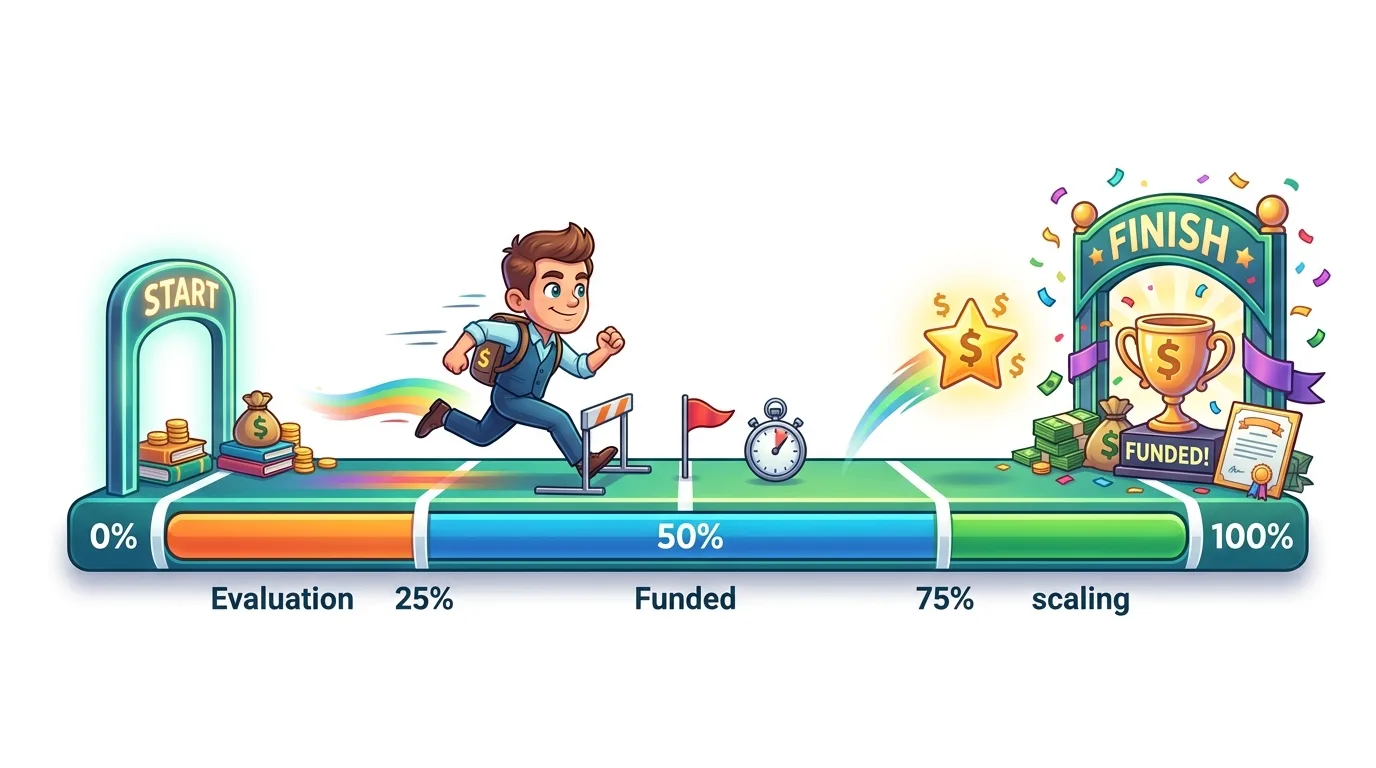
You're probably looking at those flashy ads promising 'passive income' from a Forex IB program and wondering if it's legit. Can you really make money just by referring traders? I've been on both sides of this fence, as a trader and someone who's evaluated these programs for a decade. The short answer is yes, but it's not the easy money they sell you. It's a sales and relationship business with a very long tail. Let's cut through the hype and look at what you're actually signing up for.
An Introducing Broker (IB) is basically a commissioned sales agent for a Forex broker. You refer clients, they trade, and you get a cut of the broker's revenue from those clients' activity. That's the simple version.
Here's what they don't tell you upfront: you're not being paid for a one-time referral. You're being paid a tiny fraction of the broker's spread or commission, for as long as that client trades. We're talking about a share of the spread, maybe 0.1 to 0.3 pips per trade, or a percentage of the commission. Your income is directly tied to your clients' trading volume and their longevity. If they blow their account in a week (and many do), your 'residual income' stops dead.
I made this mistake early on. I referred five friends when I joined a program with a well-known international broker. I was thrilled when they all deposited. Three of them lost their entire R15,000 starter deposits within a month trying to scalp the EUR/USD. My total commission? About R1,200. Hardly life-changing, and I probably lost more in friendship capital.

Warning: If a program promises huge upfront bonuses for deposits alone, be very suspicious. Reputable programs pay based on generated revenue, not just the deposit amount. The former aligns with client success; the latter encourages you to recruit cannon fodder.
“Your income is a tiny fraction of the broker's spread, for as long as that client trades.”
The local scene is a mix of global brokers offering IB schemes and a few South African-focused ones. The mechanics are similar, but the regulatory backdrop is key.
The Revenue Model: Pips and Percentages
You'll typically choose between two payout models:
| Model | How It Works | Good For |
|---|---|---|
| Revenue Share | You get a % (e.g., 20-50%) of the spread/commission your client pays. | Long-term, higher-volume traders. More sustainable. |
| Cost Per Action (CPA) | A flat fee for a qualified action (e.g., R500 for a verified, funded account). | Quick, upfront cash. No long-term relationship. |
Most serious IBs go for revenue share. That CPA fee looks nice, but if that client goes on to trade R1 million in volume, you'll have left thousands on the table.
The FSCA Shadow
Brokers operating here should be licensed by the Financial Sector Conduct Authority (FSCA). This matters for you. If you're aggressively marketing for an unlicensed offshore broker, you could be facilitating something that skirts the law. It also affects your clients' fund safety. Always, always check the broker's regulatory status. A good local example is Exness, which has a strong global IB program, but you need to verify their specific offering complies with local standards.
Your real job is client retention. It's about providing value so they keep trading responsibly. That means teaching them about risk, maybe pointing them to a position size calculator, and not encouraging them to gamble. A blown account pays you once. A consistently trading account pays you for years.

💡 विंस्टन की सलाह
Your first ten clients will teach you more about this business than any broker's manual. Listen to their questions, their frustrations. That's your real market research.
“To make R10,000 a month, you'd need 40 active clients. How long does that take? Years.”
Let's get brutally honest about money. That 'unlimited earning potential' graphic is nonsense for 99% of IBs.
Here's a realistic scenario for a South African IB:
- You refer a client who deposits R20,000.
- They're a moderate trader, executing about 10 standard lots per month (that's R1 million notional value).
- Your broker's spread on EUR/USD is 1.0 pip. Your revenue share is 25%.
- Your monthly commission: (10 lots * R100 per pip * 1.0 pip spread * 25%) = R250.
That's R250 per client, per month. To make a decent side income of say, R10,000 a month, you'd need 40 active clients trading at that volume. How long does it take to find and retain 40 serious traders? Years.

Example: My most successful IB relationship was with a single swing trader. He traded XAU/USD (gold) with larger but less frequent positions. Over three years, he generated about R45,000 in total commission for me. The key? He was a good trader who managed his risk. I didn't find him through an ad, he was a reader of my analysis who trusted my perspective.
The first payout is also a wake-up call. Most brokers have a netting system. If your client makes a winning trade, the broker pays out less (or nothing) on that trade. You only earn when the broker earns. Payouts are usually monthly, with a minimum threshold (like $100). It can take 3-6 months to see your first real payment.
“To make R10,000 a month, you'd need 40 active clients. How long does that take? Years.”
I've seen people lose more money trying to become an IB than they ever made from it. Here are the classic pitfalls.
Trap 1: Paying to Play. Any legitimate forex IB program does NOT charge you an upfront fee to join. They make money when you make them money. If they ask for a 'registration', 'software', or 'training' fee, walk away. It's a pyramid scheme dressed in Forex clothes.
Trap 2: The 'Build-a-Downline' Fantasy. Many programs incentivize you to recruit other IBs, not just traders. This quickly becomes a multi-level marketing (MLM) hustle. Your focus shifts from finding traders to recruiting salespeople. The top of the pyramid wins, everyone else wastes time. Your effort should be 90% on educating and supporting end-clients.
Trap 3: Promoting Garbage Tools. You'll be given referral links, banners, and maybe even a 'branded' website. The temptation is to just spam this everywhere. This doesn't work. You need to build a genuine platform - a blog, a YouTube channel, a Telegram group - where you offer real value. Then, and only then, do you recommend your broker as part of a solution. Blindly promoting a broker with high spreads or poor execution will burn your reputation fast. Check out our reviews for brokers known for good IB support, like IC Markets or Pepperstone, but do your own due diligence.
Trap 4: Ignoring the Tax Man. SARS sees IB income as ordinary revenue. You must declare it. If you're doing this at any serious scale, you're running a small business. Keep immaculate records of all commissions paid.
💡 विंस्टन की सलाह
Track your time. If you spend 20 hours a week for three months to earn R2000, you're working for R25 an hour. Be a ruthless economist about your own labour.
“Never pay a broker to join their IB program. They should pay you.”
If you're still not deterred (good, you're stubborn), here's a practical blueprint. This isn't a get-rich-quick scheme, it's a slow-build business.
Step 1: Pick Your Niche. Don't try to attract 'all Forex traders'. That's a nightmare. Are you targeting newbies who need education? Experienced traders looking for better execution? Maybe focus on a specific instrument like XAU/USD or EUR/USD. My niche was traders interested in combining fundamental analysis with technicals. It filtered out the pure gamblers.
Step 2: Choose a Broker Partner Carefully. Don't just go for the highest revenue share. Look for:
- Regulation: FSCA, or a top-tier regulator like ASIC or FCA.
- Trading Conditions: Tight spreads, reliable execution. Your clients' success depends on this.
- IB Support: Dedicated account manager, timely reports, reliable payment history.
- Technology: Does their client portal or tools give you an edge? For instance, if your clients use advanced order types, a platform that supports them is key.
Step 3: Build Your Platform, Not Your Link. Create content that helps traders. Write market analysis, explain how the MACD indicator really works, create videos on avoiding a margin call. Become a trusted source. Your broker referral becomes a natural recommendation - 'this is the platform I use and trust for these reasons.'
Step 4: Manage Expectations (Yours and Theirs). Be transparent with potential clients. Tell them you earn a commission if they trade. A good trader won't care if you're getting 0.2 pips, as long as you're providing value and their overall costs are fair. Never, ever promise them profits to get them to sign up.
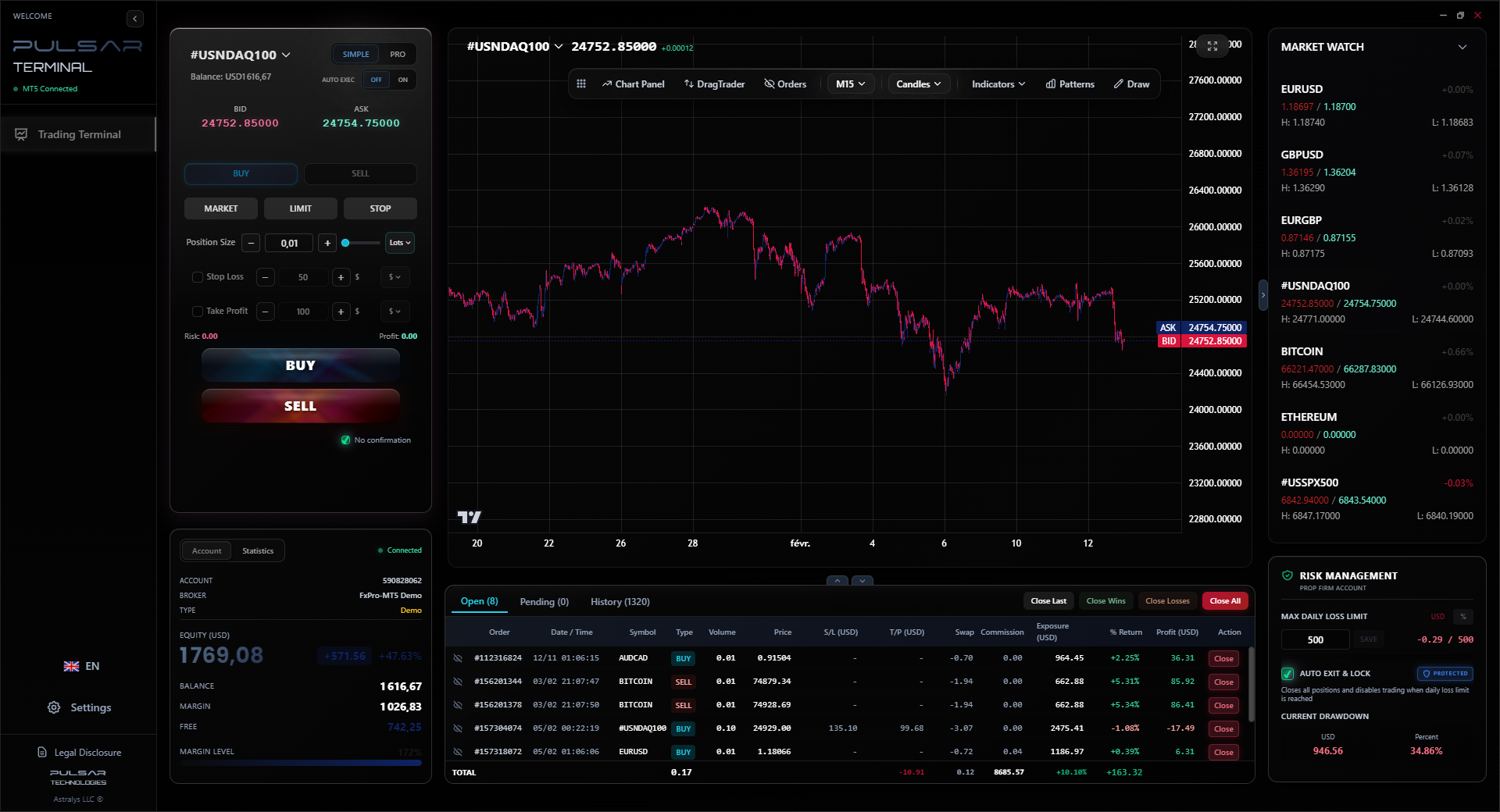
Providing real value to clients often means showing them better trade management, which is where tools like Pulsar Terminal's drag-and-drop order and multi-TP/SL features can give you an edge.
“Never pay a broker to join their IB program. They should pay you.”
The broker's IB portal will show you clicks, sign-ups, and commissions. It's a rear-view mirror. To actually grow, you need tools that help you serve clients better.
Analytical tools are gold. If you can provide deeper chart insights than your clients can get alone, you're valuable. Being able to quickly spot divergences on the RSI indicator or explain complex market structure keeps them engaged.
Client communication is another. A simple CRM to track conversations, a calendar for weekly market outlook webinars, a clean email newsletter system. This is the unsexy backend work that separates a professional from a spammer.
, your best tool is your own trading knowledge. The more you understand the pain points of a trader - the frustration of a missed entry, the fear of a drawdown - the better you can support them. That support is what turns a one-month client into a five-year partner.
💡 विंस्टन की सलाह

“Your best tool is your own trading knowledge.”
So, is a forex IB program worth it for a South African?
Yes, if:
- You see it as a 2-3 year business build, not a side hustle.
- You genuinely enjoy educating and helping other traders.
- You have a skill (analysis, teaching, community building) you can package.
- You're patient and understand that real residual income takes years to materialize.
No, if:
- You need money quickly.
- You hate sales, marketing, or consistent content creation.
- You think it's 'passive.' It's intensely active at the start.
- You're not a competent trader yourself. You can't guide someone through a storm if you've never sailed.
I view my IB income as a validation of my teaching. It's not my primary income, but it's a rewarding trickle that proves some people found my guidance useful. It will never replace the income from managing my own capital well. But as a way to monetize your knowledge and build a brand in the trading space? It's one of the few legitimate paths. Just go in with your eyes wide open, your expectations low, and your effort level high.
FAQ
Q1Do I need a financial license to be a Forex IB in South Africa?
Generally, no. You are not giving financial advice or managing client funds. You are a marketing affiliate. However, the line can blur if you start providing specific trade signals or portfolio advice. Always operate transparently as a referrer, not an advisor, and disclose your commission arrangement. If in doubt, consult a legal professional.
Q2How much does it cost to start an IB business?
Zero in terms of fees to a legitimate broker. Your costs will be for your own business infrastructure: website hosting, email marketing software, maybe advertising budget to drive traffic to your content. I spent about R500 a month on these basics when I started. Never pay a broker to join their IB program.
Q3Which brokers have the best IB programs for South Africans?
Look for brokers with a strong global presence and dedicated IB support. XM has a very structured multi-tier IB system. Pepperstone and IC Markets are also popular among serious IBs for their transparency and reliable payouts. The 'best' is the one whose trading conditions align with your niche and who pays you on time.
Q4Can I be an IB for multiple brokers?
Technically, yes. Practically, it's a terrible idea. It dilutes your focus, confuses your audience, and makes you look like a mercenary rather than a trusted partner. Pick one primary broker you truly believe in and build your entire recommendation around them. Loyalty has more value here than you think.
Q5How are IB commissions taxed in South Africa?
SARS treats this as business income (if you're actively building it) or miscellaneous income. You must include it in your annual tax return (ITR12). Keep all your commission statements from the broker. If your profits are consistent, you may need to register for provisional tax. Again, when money starts coming in, talk to an accountant.
Q6What's the single most important metric for an IB?
Client Active Rate (CAR). It's not how many people sign up, it's what percentage of them are still trading (and generating revenue) after 90, 180, and 365 days. A high CAR means you're attracting and retaining quality traders. A low CAR means you're just feeding accounts to the market.
प्रो. विंस्टन का पाठ
:
- ✓IB income is based on client volume, not deposits.
- ✓Realistic earnings: ~R250/month per active retail client.
- ✓Avoid any program charging an upfront fee.
- ✓Focus on client retention, not just acquisition.
- ✓Declare all IB income to SARS.
यह लेख कितना उपयोगी था?
रेट करने के लिए स्टार पर क्लिक करें
साप्ताहिक ट्रेडिंग विश्लेषण
मुफ़्त साप्ताहिक विश्लेषण और रणनीतियाँ। कोई स्पैम नहीं।
लेखक के बारे में
David van der Merwe
उभरते बाजार के ट्रेडर
जोहानसबर्ग स्थित ट्रेडर, इमर्जिंग मार्केट करेंसीज में 11 साल का अनुभव। ZAR पेयर्स, FSCA-विनियमित ट्रेडिंग और दक्षिण अफ्रीकी मार्केट एनालिसिस में विशेषज्ञ।
टिप्पणियाँ
आपको यह भी पसंद आ सकता है

Cara Trading Forex Sukses: 7 Prinsip dari Trader Profesional
Cara trading forex sukses dengan 7 prinsip trader pro: manajemen modal, disiplin, journal trading, backtest. Data nyata, bukan janji profit palsu.
Jam Trading Forex Terbaik untuk Trader Indonesia: Panduan Lengkap dengan Tabel Waktu
Panduan jam trading forex untuk trader Indonesia. Tabel 4 sesi dunia, jam emas 20:00-00:00, sesi mana yang harus dihindari. Data akurat + tips dari trader berpengalaman.
Top 5 Sàn Forex Uy Tín Nhất 2026: Review Jujur dari Trader Indonesia
Top 5 sàn forex uy tín 2026 untuk trader Indonesia. Review jujur: spread, deposit, withdraw, dukungan lokal. Exness, XM, IC Markets & lebih.
All these calculators are built into Pulsar Terminal with real-time data from your MT5 account. One-click position sizing, automatic risk management, and instant calculations.
