


Most of what you've heard about George Soros and forex is probably wrong.

Olumide Adeyemi
पश्चिम अफ्रीकी ट्रेडिंग अग्रणी ·  Nigeria
☕ 9 मिनट पढ़ने
आप क्या सीखेंगे:

Most of what you've heard about George Soros and forex is probably wrong. It wasn't magic, it wasn't just a hunch, and you absolutely cannot copy it with your $500 account. But that doesn't mean there's nothing to learn. The 1992 trade that "broke the Bank of England" is the most famous single play in market history, and buried under all the legend are a few brutal, timeless principles that can save your account. I'll break down what really happened, separate the Hollywood story from the trading desk reality, and show you how to think like Soros without needing his billions.
Let's get the story straight. In 1992, George Soros's Quantum Fund made roughly $1 billion in profit by shorting the British Pound (GBP). The popular version says he was a genius who bet against a currency and won. The real version is a masterclass in spotting a political and economic trap.
Europe had a system called the Exchange Rate Mechanism (ERM). It tried to keep European currencies, like the Pound and the Deutsche Mark, trading within a tight band. The UK joined at a rate that was too high (around 2.95 DEM to 1 GBP). Their economy was weak, inflation was high, and interest rates were painful. To keep the Pound in its band, the Bank of England had to buy Pounds and raise interest rates, which was choking the UK economy. It was a fundamental mismatch.
Soros didn't just see a weak currency. He saw a fundamental disequilibrium where political promises (staying in the ERM) were directly at odds with economic reality (a recession needing lower rates). He famously called it a "flawed system." His trade wasn't a prediction that the Pound would fall. It was a conviction that the system forcing it to stay up would break.

Warning: Don't romanticize this. This was a high-conviction, high-risk macro trade with enormous capital behind it. The Quantum Fund reportedly built a short position worth over $10 billion. They were prepared to lose big if the political will held. This isn't a scalping strategy; it's a world-changing bet.
My own experience with trying to emulate "big picture" trades was a disaster. In 2018, I was convinced the Naira was fundamentally overvalued. I shorted USD/NGN on a CFD platform, thinking I was being Soros-smart. I ignored the Central Bank of Nigeria's (CBN) absolute control and willingness to burn through reserves to defend it. I lost 15% of my account before I admitted the political force was stronger than my chart. The lesson? The fundamental picture is only half the battle. You must accurately gauge the power and willingness of the institution on the other side.

💡 विंस्टन की सलाह
A 'fundamental disequilibrium' is just a fancy term for a price that's lying. Your job is to find the lie, bet against it, and have the patience to wait for the truth to show up.
“The 1992 trade wasn't a prediction that the Pound would fall. It was a conviction that the system forcing it to stay up would break.”
This is Soros's real contribution to trading theory, and it's more useful than any specific trade. Reflexivity is the idea that markets aren't efficient mirrors of reality. Instead, they actively influence the reality they are supposed to reflect.
Here's a simple example: A bank's stock price falls (market perception). This makes it harder for that bank to raise capital (changes reality). That weakened reality then causes the stock to fall further (changes perception again). It's a feedback loop.
How This Applied to the Pound Trade
The ERM band created a perception of stability. This perception allowed the UK government to delay necessary economic reforms (changing reality by building complacency). The worsening underlying economy (reality) eventually made the perception of stability unsustainable, causing the crash. Soros didn't just analyze economic data; he analyzed how the market's belief in the system was propping up a flawed reality, and he bet on the moment that belief would shatter.
For you and me, this means watching for moments where narrative and reality diverge. Is everyone buying a stock because of a hype story, while the company's debt is ballooning? That's a reflexive setup for a fall. In forex, it might be a central bank talking confidently about a strong currency while their foreign reserves are draining fast. The MACD indicator won't show you this. You have to read the news, understand the politics, and think about psychology.

Pro Tip: Build a simple "Reality vs. Narrative" checklist for any major trade. On one side, list the hard data (inflation numbers, trade balances, interest rates). On the other, write the dominant market story (e.g., "CBN will defend the Naira at all costs"). When the gap between the two gets painfully wide, you have a potential Soros-style opportunity.

“Reflexivity means markets don't just reflect reality; they change it.”
You have a broker like Exness or IC Markets, a few hundred thousand Naira, and a dream. Here’s the cold water: you cannot execute the 1992 Soros trade today. The scale, the specific political moment, and the market structure are gone. Trying to directly copy it will blow up your account.
But you can adopt his strategic mindset. Don't try to break the Bank of England. Try to identify smaller, reflexive setups in markets you understand.
1. Focus on Asymmetric Risk/Reward: Soros's bet had limited downside (the Pound stays in its band) and massive upside (the band breaks). Look for your own asymmetries. For instance, using a well-placed stop-loss and a wider take-profit on a high-probability swing trading setup.
2. Bet Big on Conviction, Not Hope: Soros didn't allocate 2% of his fund. When his team identified the flaw, they went huge. For you, this doesn't mean risking 50% of your capital on a whim. It means that when your analysis - your real analysis, not hope - lines up perfectly, have the courage to use a larger-than-normal position size calculator output. I once caught a perfect breakout on XAU/USD after weeks of consolidation. My analysis was solid, the volume confirmed it. I used a 5% position instead of my usual 2%. It became my best trade that quarter.
3. Understand the "Other Side": Who will lose if you're right? In 1992, it was the Bank of England. In your trade, is it a crowd of retail traders all stacked on the same support level? If you're buying USD/NGN, are you betting against the CBN's firepower? Always know who's on the other side of your idea.
💡 विंस्टन की सलाह
If you can't explain your trade's thesis in one simple sentence to a smart friend who doesn't trade, you don't understand it well enough. Complexity hides poor thinking.
“Don't try to break the Bank of England. Try to identify smaller, reflexive setups in markets you understand.”
Okay, enough theory. How does this look in Lagos or Port Harcourt? Here’s a down-to-earth approach.
First, Master Your Local Context: You have an advantage trading the Naira pairs (USD/NGN, GBP/NGN) that a guy in London doesn't. You feel the inflation at the market. You hear the CBN governor's speeches and understand the subtext. Use that. Follow local reserves data, inflation reports, and parallel market rates. The gap between the official and black-market rate is a classic reflexive situation - a perception (the official rate) versus a reality (the street price).
Second, Use the Right Tools: You need a broker with reliable execution for when volatility hits. I've found XM and Pepperstone to have stable platforms during CBN announcements. More importantly, you need a rock-solid risk management framework. Every single trade must have a stop-loss. Soros could withstand 20% drawdowns; you probably can't. Understand margin call levels inside out.
Third, Look for Modern "Flawed Systems": The ERM was a flawed system. Today's equivalents might be:
- A central bank promising rate cuts while inflation is still raging.
- A government pegging its currency (like the Naira was for years) while running massive trade deficits.
- A market consensus that "this asset only goes up" (see crypto bubbles).
Your job is to spot the tension, wait for the catalyst (a poor economic data print, a failed bond auction), and have a plan. This is where a tool for managing multiple take-profits and trailing stops becomes useful, letting you scale out of a winning position as the trend accelerates.
“Don't try to break the Bank of England. Try to identify smaller, reflexive setups in markets you understand.”
Trying to apply Soros's lessons the wrong way is a fast track to a zero balance. I've made most of these.
Mistake 1: Confusing Conviction with Stubbornness. I held a short EUR/USD position for weeks in 2020 because I was "convinced" the Eurozone would collapse. I ignored the price action screaming that I was wrong. That conviction cost me 12%. A stop-loss isn't a lack of conviction; it's an admission that your timing might be off.
Mistake 2: Trading Without a Macro Edge. You're not Soros with a team of PhDs. Don't try to out-think the IMF on global macro. Find your edge where you have an information or understanding advantage - like in local markets or specific sectors you follow obsessively.
Mistake 3: Misunderstanding use. Soros used enormous use, but it was based on a deep understanding of risk parameters and market liquidity. For a retail trader, high use is a death wish, especially in volatile Naira pairs. It amplifies the spread definition cost and turns a small move against you into a disaster.
Mistake 4: Chasing "Home Runs." The 1992 trade was a once-in-a-career event. Don't sit around waiting for the next one. Focus on building consistent, smaller gains. A series of solid singles and doubles builds wealth. Swinging for the fences every time strikes you out. Use indicators like the RSI indicator to find higher-probability, lower-timeframe entries that align with your bigger picture view, rather than just gambling on the big picture alone.
💡 विंस्टन की सलाह
Your edge isn't a secret indicator. It's the unique combination of what you know, what you've seen before, and the patience to wait for that specific setup to repeat.

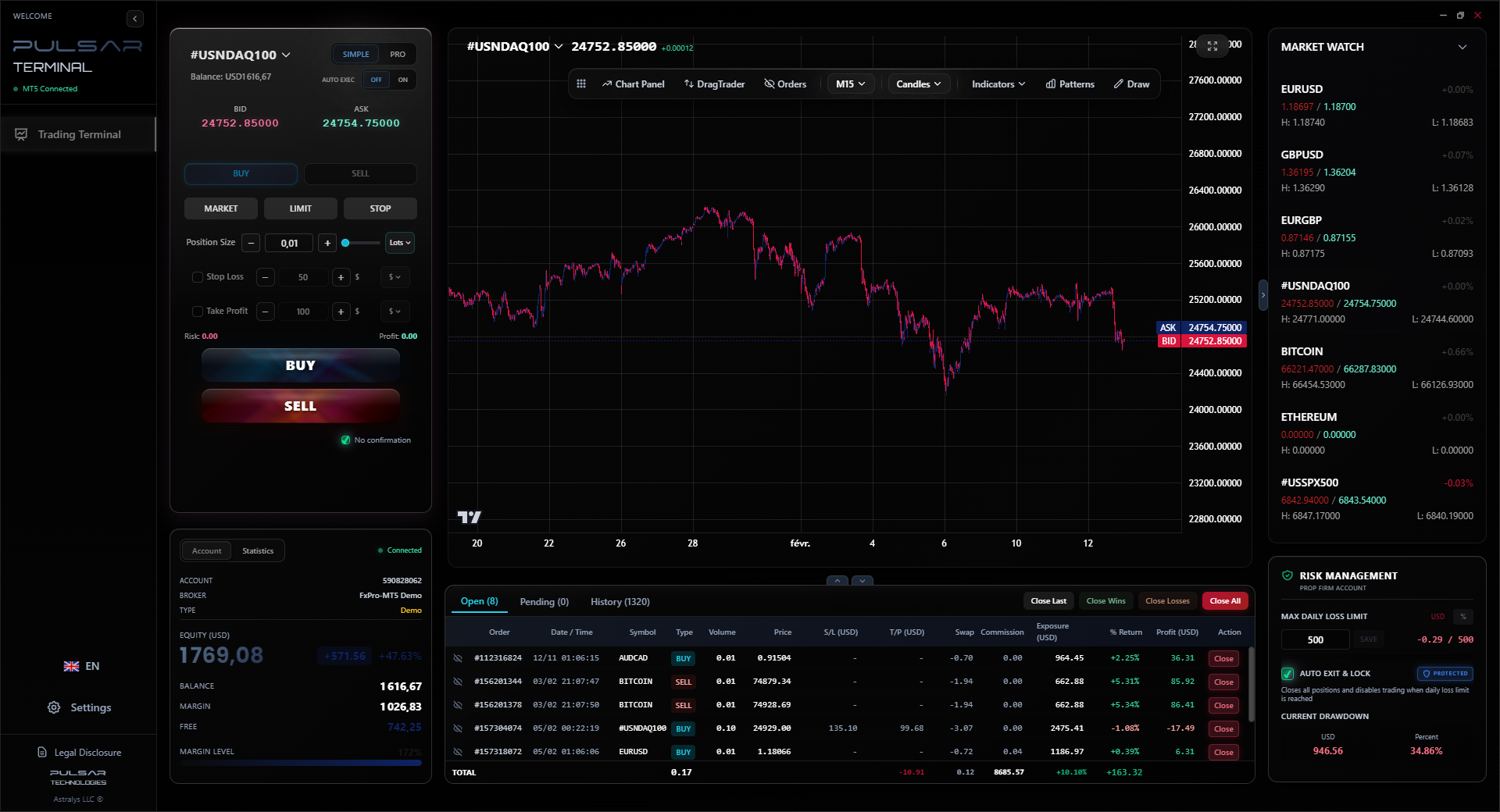
Manually managing multiple take-profit levels and moving stops to breakeven on a winning, Soros-style trend trade is stressful and error-prone.
“A stop-loss isn't a lack of conviction; it's an admission that your timing might be off.”
So, what's your takeaway? Don't be George Soros. Be a smarter version of yourself, informed by his principles.
- Develop a Thesis, Not Just a Signal: Before you click buy, write down in one sentence why this trade should work. Is it because the pip definition distance to your target is great? No. Is it because supply is dropping while demand is rising? Better.
- Practice Patience: Soros waited for the perfect alignment. You should too. Most of trading is waiting, watching, and doing nothing. The right setup might come only a few times a month.
- Manage the Trade, Not Just the Entry: Soros's team managed their massive position actively. Have a plan for what happens after you enter. Will you add to it? Where will you move your stop to breakeven? How will you take partial profits? This is where manual trading gets messy and emotional.
- Keep a Journal: Write down every trade, but more importantly, write down your thesis before you enter. Review it weekly. Were you right for the right reasons? This is how you learn the difference between a lucky guess and real insight.
The goal isn't to make a billion dollars from one trade. The goal is to cultivate the kind of thinking that identifies billion-dollar opportunities, and then to execute a scaled-down, risk-managed version of that logic in your own trading. That's how you grow an account sustainably.
FAQ
Q1How much money did George Soros actually make on Black Wednesday?
The widely reported figure is a profit of approximately $1 billion for the Quantum Fund. Some estimates suggest his personal share was around $650 million. It's crucial to remember this was the profit on a position that was reportedly much larger, in the $10 billion+ range, highlighting the immense scale and risk.
Q2Can I use Soros's strategy with technical analysis?
Not directly. The core of his 1992 trade was fundamental and political analysis - identifying a flawed system. Technical analysis is a tool for timing entries and managing risk within a broader thesis. You might use a chart pattern to enter a short position on a currency you believe is fundamentally overvalued, but the charts alone won't give you the "flawed system" insight.
Q3What is the best currency pair to trade like Soros today?
There's no single "best" pair. The concept is to find currencies caught in a reflexive bind. This often involves pegged or heavily managed currencies (like some emerging market pairs) where economic fundamentals are at odds with the official policy. For Nigerian traders, understanding the dynamics between the official USD/NGN rate and the parallel market is a practical local example of this tension.
Q4Did George Soros use stop-losses?
While not publicly detailed for that specific trade, at the fund level, risk management was paramount. They would have had a clear understanding of their maximum potential loss if the Pound stabilized. For a retail trader, a physical stop-loss order is non-negotiable. We don't have their capital buffer to withstand unlimited drawdowns.
Q5Is forex trading legal in Nigeria, and can I do this here?
Yes, forex trading is legal in Nigeria for individuals through licensed international brokers. The Central Bank of Nigeria (CBN) regulates the official foreign exchange market but does not license brokers for retail speculative trading. Nigerians legally trade forex using brokers regulated abroad (like by CySEC, FCA, ASIC). You deposit and withdraw in Naira, trading currency pairs like USD/NGN via CFDs or other derivatives.
Q6What's the minimum capital needed to apply these principles?
The principles are free. The capital needed is whatever your chosen broker requires as a minimum deposit, which can be as low as $10-$100. However, to practically implement proper position sizing and risk management (e.g., not risking more than 1-2% per trade on a meaningful trade size), a more realistic starting point for serious learning is $500-$1000. This allows you to feel the psychological impact of wins and losses without being wiped out by a single spread definition or small move.
प्रो. विंस्टन का पाठ
:
- ✓Seek prices built on a lie (flawed system).
- ✓Your biggest edge is local knowledge.
- ✓Risk 1-2%, not 10-20%.
- ✓Patience is a position.
- ✓Write your thesis before every entry.
यह लेख कितना उपयोगी था?
रेट करने के लिए स्टार पर क्लिक करें
साप्ताहिक ट्रेडिंग विश्लेषण
मुफ़्त साप्ताहिक विश्लेषण और रणनीतियाँ। कोई स्पैम नहीं।
लेखक के बारे में
Olumide Adeyemi
पश्चिम अफ्रीकी ट्रेडिंग अग्रणी
नाइजीरिया के सबसे सक्रिय फॉरेक्स ट्रेडिंग एजुकेटर्स में से एक। लागोस से 8 साल का ट्रेडिंग अनुभव। अफ्रीकी ट्रेडर्स के लिए लो-कैपिटल स्ट्रैटेजीज और प्रॉप फर्म चैलेंजेज में विशेषज्ञ।
टिप्पणियाँ
आपको यह भी पसंद आ सकता है

Cara Trading Forex Sukses: 7 Prinsip dari Trader Profesional
Cara trading forex sukses dengan 7 prinsip trader pro: manajemen modal, disiplin, journal trading, backtest. Data nyata, bukan janji profit palsu.
Jam Trading Forex Terbaik untuk Trader Indonesia: Panduan Lengkap dengan Tabel Waktu
Panduan jam trading forex untuk trader Indonesia. Tabel 4 sesi dunia, jam emas 20:00-00:00, sesi mana yang harus dihindari. Data akurat + tips dari trader berpengalaman.
Top 5 Sàn Forex Uy Tín Nhất 2026: Review Jujur dari Trader Indonesia
Top 5 sàn forex uy tín 2026 untuk trader Indonesia. Review jujur: spread, deposit, withdraw, dukungan lokal. Exness, XM, IC Markets & lebih.
All these calculators are built into Pulsar Terminal with real-time data from your MT5 account. One-click position sizing, automatic risk management, and instant calculations.
