


Most Nigerian traders think indices are just another chart to stare at, a side hustle to the main event of EUR/USD.

Olumide Adeyemi
पश्चिम अफ्रीकी ट्रेडिंग अग्रणी ·  Nigeria
☕ 10 मिनट पढ़ने
आप क्या सीखेंगे:

Most Nigerian traders think indices are just another chart to stare at, a side hustle to the main event of EUR/USD. That's a costly myth. Indices in forex are a different beast entirely - they're a direct bet on the health of entire economies, not just currency pairs. They move differently, they're priced differently, and if you trade them like you trade forex, you will lose your money. I've seen it happen too many times. Let's set the record straight on what indices really are, how you can trade them from Lagos or Port Harcourt, and more importantly, how not to get wrecked by them.
An index is a basket. Think of it like a market's report card. Instead of tracking one company like MTN or Dangote Cement, it tracks the performance of a group of major companies. The S&P 500 tracks 500 of the biggest US companies. The FTSE 100 tracks the 100 largest on the London Stock Exchange.
When you trade indices in forex, you're not buying shares in those companies. You're trading a derivative contract whose price is based on the value of that basket. Your broker creates this contract. You're betting on whether the overall value of that group of companies will go up or down.
This is powerful for a Nigerian trader. With one trade, you can get exposure to the US economy (via the US30 or SPX500), the German economy (GER40), or the Japanese economy (JPN225). You don't need a foreign brokerage account or to worry about converting large sums to dollars for direct stock purchases. It's all done through your forex broker, in your familiar trading platform.

Warning: The price you see for the US30 on your MT5 is not the exact Dow Jones Industrial Average. It's a CFD (Contract for Difference) price quoted by your broker. There will be a small difference (the spread), and overnight financing charges apply. This is the core of trading indices in forex.
Not all indices are created equal. Some are slow and steady, others are volatile and fast. Knowing their personality is half the battle.
The US Heavyweights
These are the most traded indices globally, and for good reason.
- US30 (Dow Jones): Tracks 30 massive, established US companies. It's a bellwether for American industrial and commercial health. It moves in big, clean trends but can be slower to react than the tech-heavy indices.
- SPX500 (S&P 500): The 500-pound gorilla. This is the broadest measure of the US stock market and is considered the benchmark. It's more diversified than the US30 and is heavily influenced by big tech.
- NAS100 (Nasdaq-100): This is the wild child. Packed with tech giants like Apple, Microsoft, and Tesla, it's incredibly volatile and sentiment-driven. Great for big moves, terrible for your blood pressure if you're over-leveraged.
The European Contenders
- GER40 (DAX): Germany's blue-chip index. It's Europe's economic engine room, full of manufacturers like Volkswagen and Siemens. It reacts strongly to European Central Bank news and Chinese economic data (because Germany exports so much there).
- FTSE 100 (UK100): The London index. Packed with multinational mining, energy, and banking giants. It often moves inversely to the British Pound (GBP).
The Asian Players
- JPN225 (Nikkei 225): Japan's premier index. It's highly sensitive to the value of the Yen (JPY). A weakening Yen typically boosts the Nikkei as it helps Japan's export giants.
For a Nigerian trader starting out, I'd suggest focusing on just one or two. The US30 and SPX500 offer the most liquidity and clearest trends. My personal preference is the SPX500; it's where I've made my most consistent profits. I got chopped up trying to scalping strategy the NAS100 early in my career - its overnight gaps were brutal.
“The best time to trade the US30 is when America is awake, not when you are.”
This is where accounts blow up. Traders use the same lot sizes, the same stop-loss distances, and the same mindset. It's a recipe for disaster.
| Feature | Forex (e.g., EUR/USD) | Indices (e.g., US30) |
|---|---|---|
| Price Quote | Exchange rate (e.g., 1.0850) | Index point value (e.g., 38,450.75) |
| Point Movement | Measured in pips (e.g., 10 pips) | Measured in points (e.g., 100 points) |
| Volatility | Often range-bound, driven by interest rates & politics | Can have explosive trending moves, driven by earnings & sentiment. |
| Trading Sessions | 24-hour, but most active during London/NY overlap. | Trades only during the underlying market's hours (e.g., US30: 2:30pm - 9pm WAT). |
| Key Drivers | Central banks, economic data, geopolitics. | Corporate earnings, sector-wide news, overall economic data. |
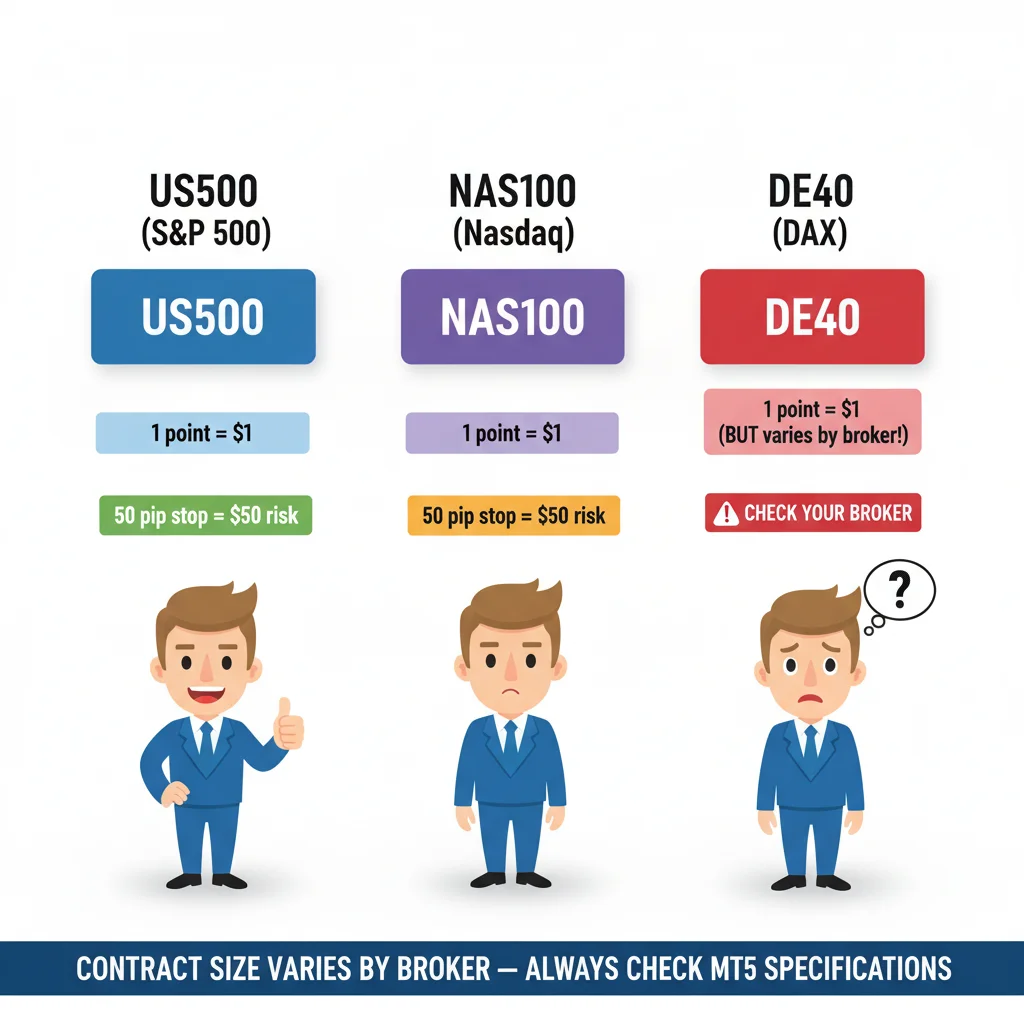
The biggest practical difference? A point is not a pip. A 100-point move on the US30 is normal. A 100-pip move on EUR/USD is a major event. If you place a 50-point stop loss on the US30 thinking it's like a 50-pip stop on forex, you'll get stopped out by mere noise before breakfast. You must use a position size calculator and input the correct point value for your index CFD.

Example: Let's say you have a ₦100,000 account and risk 1% (₦1,000) per trade. On EUR/USD, a 20-pip stop might mean a 0.05 lot size. On the US30, a 200-point stop (which is still tight) would require a much smaller position size, perhaps 0.01 lots, to risk the same ₦1,000. Getting this math wrong is the fastest path to a margin call.

💡 विंस्टन की सलाह
A point on an index is a mile, not an inch. Recalculate your risk for every new instrument, never assume.
Indices lend themselves to certain styles better than others. Forget the hyper-active stuff.
Follow the Session
This is the simplest edge. Only trade the US30, SPX500, and NAS100 when the US cash market is open (2:30 PM - 9:00 PM West Africa Time). That's when the real volume and institutional orders hit. Trading these indices at 3 AM WAT is a fool's errand; you're just gambling on thin, manipulated prices.
Swing Trading the Trend
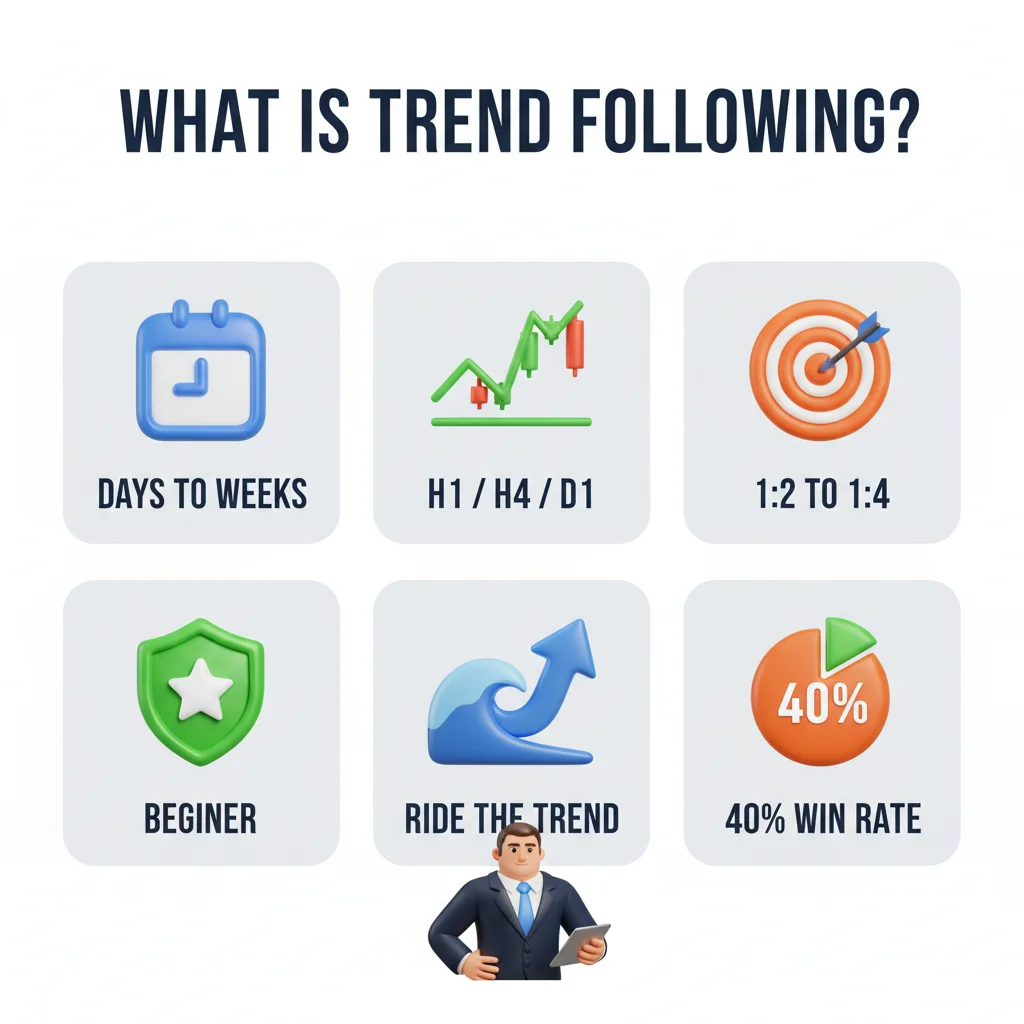
This is my bread and butter for indices. Indices trend beautifully because they reflect broad economic momentum. I use higher timeframes (the 4-hour and daily charts) to identify the direction. A simple strategy:
- Identify the trend on the daily chart using price action (higher highs/higher lows).
- Wait for a pullback to a key moving average (like the 50 or 100 EMA) on the 4-hour chart.
- Look for a bullish or bearish reversal candlestick pattern at that support/resistance.
- Enter, placing a stop loss below the recent swing low (for a long trade).
I once caught a fantastic swing trading move on the SPX500 in late 2022. After a heavy sell-off, it formed a clear double bottom on the daily chart. I went long at 3,850 with a stop at 3,780 (risking 70 points). I held for three weeks and took profit at 4,100. That was a 250-point move, not chasing pips.
Earnings & News Catalyst Plays
Major companies report earnings every quarter. When giants like Apple or Amazon report, they can drag the entire index. You can plan for this. Know the earnings calendar. If the top 10 weighted companies in the NAS100 are reporting, expect volatility. I don't recommend trading during the report (the spreads widen crazily), but you can often trade the anticipation or the follow-through trend the next day.

Pro Tip: Combine price action with one or two key indicators for confirmation. I often use the MACD indicator on the 4-hour chart to gauge momentum during a pullback. If price is pulling back to support and the MACD histogram is starting to tick up from below the zero line, that's a much stronger signal.
“An index doesn't care about your analysis. It reflects the economy's health, not your chart's beauty.”
You can't trade indices in forex without a broker that offers them. Most international brokers available in Nigeria do. The key is understanding the real costs.
Spreads & Commissions: This is your main cost. For indices, spreads are usually wider than for major forex pairs, especially during market opens. A typical spread on the US30 might be 2-4 points. On the NAS100, it can be 5-10 points easily. Some brokers like IC Markets review or Pepperstone review offer raw spread accounts with a small commission per lot, which can be cheaper for frequent traders.
Overnight Financing (Swap): This is critical. Since you're trading a CFD, you pay or receive a fee for holding a position overnight. For indices, these fees can be significant, especially if you're shorting. Always check the swap rates on your broker's website. Holding a long position on the US30 for a week can eat into your profits more than you think. This makes indices less ideal for very long-term "buy and hold" trades.
use: Nigerian traders love high use, but it's a death trap with indices. Because of their point-based volatility, 1:500 use on a full-sized lot of the US30 means a 100-point move against you wipes out a huge chunk of your capital. I never use more than 1:20 use on index trades. Regulated brokers often cap use on indices at 1:20 or 1:50 anyway.
Prop Firms & Indices: Many prop firms allowing Nigerian traders include indices in their challenges. This is a double-edged sword. The profit targets are often easier to hit due to volatility, but the drawdown limits are perilously easy to breach. You must have iron-clad risk management. A tool that can automate daily loss limits is not a luxury here, it's a necessity for survival.
💡 विंस्टन की सलाह
The trend of an index is the combined intelligence of millions of investors. Fighting it is far more expensive than following it.
I've made some of these. My clients have made all of them. Learn from our losses.
- Trading the Wrong Session: As mentioned, trading US indices during Asian hours is like trading Naira volatility when the banks are closed. You're at the mercy of your broker's liquidity feed.
- Ignoring Earnings Season: Jumping into a big position on the NAS100 the night before Tesla and Netflix report is asking for a margin call. The gap risk is enormous.
- Using Forex Lot Sizes: This is the #1 account killer. You must recalculate your position size for the index's point value. A standard lot (1.0) on an index is a massive, professional-level position.
- Setting Stops Too Tight: Index markets breathe. A 50-point range on the US30 is normal churn. Placing a 30-point stop guarantees you'll be taken out by market noise, not a wrong thesis. Use daily chart support/resistance for your stops.
- Over-Leveraging on News: Non-Farm Payrolls (NFP) moves indices wildly. Traders see the volatility, use huge use to catch a piece of it, and get whipped out in seconds when the price reverses. If you trade news, use 1/10th of your normal position size.
My most painful lesson was Mistake #3. Early on, I made a great call shorting the GER40. I used my standard 0.1 lot size from forex. The trade went 80 points in my favor, but then retraced 120 points before continuing down. That 120-point move against my oversized position nearly wiped out two weeks of profits in minutes. I hadn't respected the instrument. Now, I have separate, smaller preset profiles for indices in my position size calculator.
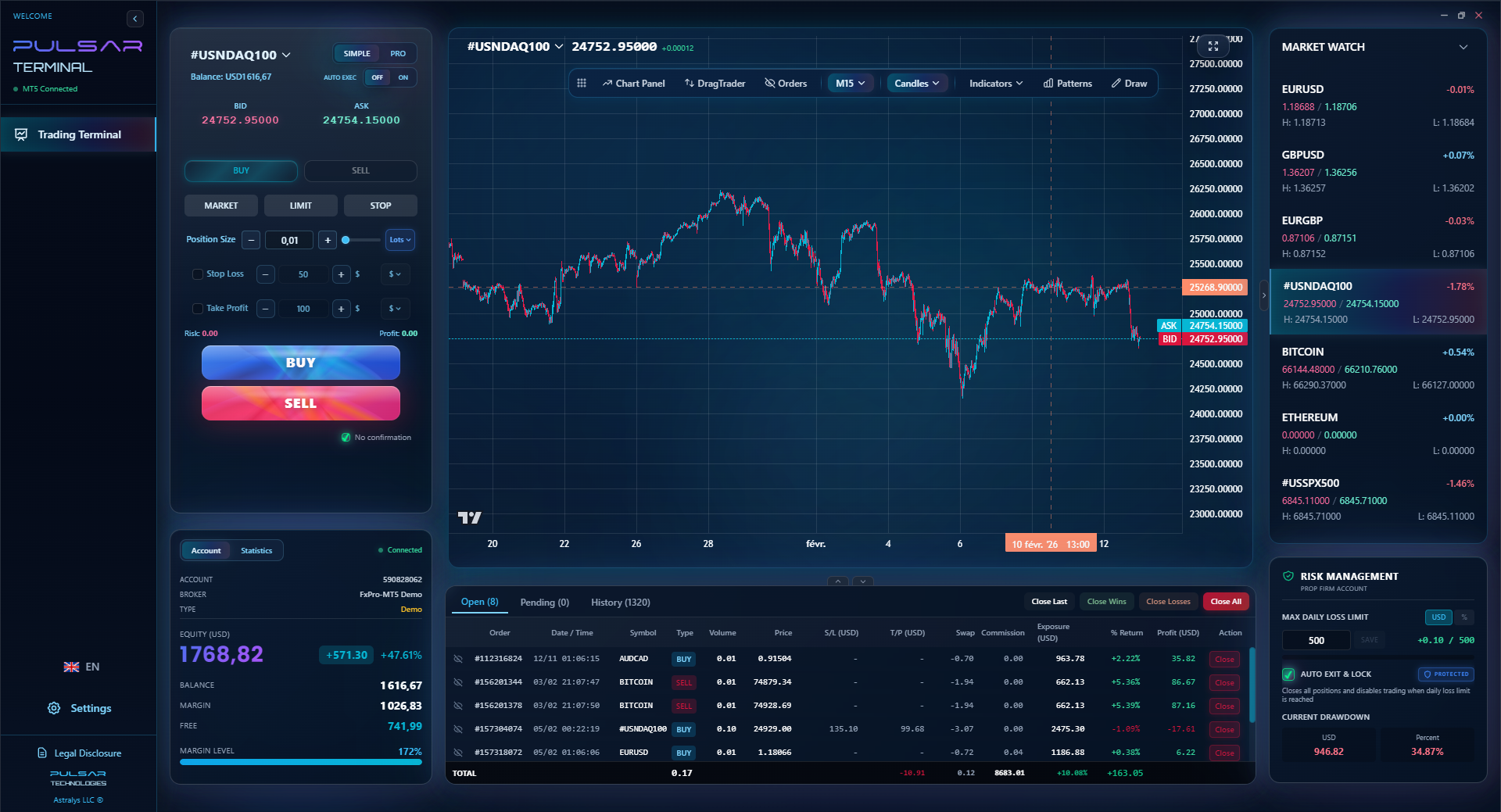
Managing the volatile swings of indices requires precise order tools, which is where a platform like Pulsar Terminal, with its drag-and-drop orders and multi-take-profit grids, becomes essential for executing complex strategies on MT5.
FAQ
Q1Can I trade indices with a small account in Nigeria?
Yes, but you have to be extremely careful. You need a broker with micro or cent accounts (like XM review or Exness review) that allow tiny position sizes. Even then, you must calculate your risk based on points, not pips. With a ₦50,000 account, you might only be able to trade 0.01 lots on the US30 to maintain sensible risk.
Q2What is the best time of day to trade indices for Nigerian traders?
For US indices (US30, SPX500, NAS100), the best time is when the US market is open: 2:30 PM to 9:00 PM West Africa Time (WAT). This is when liquidity is highest and spreads are tightest. For European indices like the GER40, focus on 9:00 AM to 5:00 PM WAT.
Q3Do I pay tax on profits from trading indices in Nigeria?
Currently, there is no specific capital gains tax on personal trading profits from forex or CFDs in Nigeria. However, this is a complex area that can change. You should always consult with a local tax professional for the most current advice regarding your specific situation.
Q4What moves the price of an index?
The overall sentiment towards the economy and the companies in the index. Key drivers include: major corporate earnings reports, broad economic data (like US GDP or jobs reports), central bank interest rate decisions, and geopolitical events that affect global trade and business confidence.
Q5Is trading indices better than trading forex?
It's not better or worse, it's different. Indices often have stronger, smoother trends, which can be easier to follow. Forex markets can be more range-bound and driven by specific interest rate differentials. Many successful traders diversify and trade both, using strategies suited to each market's character.
Q6Why does my index chart sometimes have big gaps?
Indices only trade during the hours of their underlying stock exchange. If major news (like an earnings bomb or a surprise Fed decision) happens after the US market closes, the index price will "gap" up or down when it re-opens the next day. This is a significant risk that doesn't exist in the 24-hour forex market.
प्रो. विंस्टन का पाठ
:
- ✓A 100-point move on an index is normal, not extreme.
- ✓Always trade the core session hours for your chosen index.
- ✓Recalculate position size for points, never reuse forex settings.
- ✓Overnight financing costs can silently eat your profits.
यह लेख कितना उपयोगी था?
रेट करने के लिए स्टार पर क्लिक करें
साप्ताहिक ट्रेडिंग विश्लेषण
मुफ़्त साप्ताहिक विश्लेषण और रणनीतियाँ। कोई स्पैम नहीं।
लेखक के बारे में
Olumide Adeyemi
पश्चिम अफ्रीकी ट्रेडिंग अग्रणी
नाइजीरिया के सबसे सक्रिय फॉरेक्स ट्रेडिंग एजुकेटर्स में से एक। लागोस से 8 साल का ट्रेडिंग अनुभव। अफ्रीकी ट्रेडर्स के लिए लो-कैपिटल स्ट्रैटेजीज और प्रॉप फर्म चैलेंजेज में विशेषज्ञ।
टिप्पणियाँ
आपको यह भी पसंद आ सकता है

Cara Trading Forex Sukses: 7 Prinsip dari Trader Profesional
Cara trading forex sukses dengan 7 prinsip trader pro: manajemen modal, disiplin, journal trading, backtest. Data nyata, bukan janji profit palsu.
Jam Trading Forex Terbaik untuk Trader Indonesia: Panduan Lengkap dengan Tabel Waktu
Panduan jam trading forex untuk trader Indonesia. Tabel 4 sesi dunia, jam emas 20:00-00:00, sesi mana yang harus dihindari. Data akurat + tips dari trader berpengalaman.
Top 5 Sàn Forex Uy Tín Nhất 2026: Review Jujur dari Trader Indonesia
Top 5 sàn forex uy tín 2026 untuk trader Indonesia. Review jujur: spread, deposit, withdraw, dukungan lokal. Exness, XM, IC Markets & lebih.
All these calculators are built into Pulsar Terminal with real-time data from your MT5 account. One-click position sizing, automatic risk management, and instant calculations.
