


I remember watching a stock like HDFC Bank in 2022, seeing it consolidate for weeks.

Rajesh Sharma
वरिष्ठ फॉरेक्स विश्लेषक ·  India
India
☕ 12 मिनट पढ़ने
आप क्या सीखेंगे:
- 1What Institutional Trading Really Means (It's Not What You Think)
- 2Core Execution Strategies You Can Copy
- 3The Anchor Investor Game: IPO Strategy
- 4Block Deals and Bulk Deals: Reading the Tape
- 5Risk Management: The Institutional Edge
- 6FPI Flows: The Ultimate Sentiment Indicator
- 7Technology & Tools of the Trade
- 8Applying This to Your Trading: A Practical Start
I remember watching a stock like HDFC Bank in 2022, seeing it consolidate for weeks. My retail brain said 'breakout coming!' I bought at ₹1,550. The stock did move - straight down to ₹1,420. I lost ₹65,000 before cutting it. What I missed? The institutional flow. While I was looking at candlesticks, the big funds were quietly exiting financials, shifting capital elsewhere. That's the difference between retail gambling and institutional strategy. They don't trade charts; they trade flows, liquidity, and other people's orders. Let me show you how it's really done.
When you hear 'institutional trading,' you probably picture a Bloomberg terminal and guys yelling. That's Hollywood. The reality is more about compliance documents and avoiding market impact.
In India, institutional trading refers to the activities of Foreign Portfolio Investors (FPIs), mutual funds, insurance companies, and pension funds. These aren't traders in the retail sense. They're asset managers executing orders worth crores, often over days or weeks. Their primary goal isn't to 'pick tops and bottoms' - it's to get in or out of a position without moving the price against themselves.
Think about it. If a mutual fund wants to buy ₹500 crore of Reliance shares, they can't just hit the market buy button. They'd spike the price 5% and destroy their own entry. Their job is stealth. Your job, as a student of this, is to learn to spot their footprints.

Warning: Don't confuse institutional investing with institutional trading. The investment committee picks the stock. The trading desk's only job is to execute that decision as cheaply as possible. Their performance is measured in 'slippage' (the difference between the price when the order was given and the average price achieved), not P&L.
The Indian regulatory framework, led by SEBI, shapes everything. For instance, the new brokerage caps (6 bps for cash, 2 bps for derivatives) that kicked in April 2026 directly affect how mutual funds choose their brokers. It's a low-margin, high-volume game.
You won't have a ₹1,000 crore order, but you can adopt the mindset and mechanics. These are the bread and butter of a professional trading desk.
VWAP (Volume Weighted Average Price)
This is the king. The goal is to execute an order at an average price that matches or beats the day's VWAP. Algorithms slice the large order into hundreds of small pieces, feeding them to the market in line with historical volume patterns (more volume during open and close).
How you can use it: Don't place your entire trade at 9:15 AM. If you're putting on a sizable position (for you), split it. Use the first hour's volatility to get a piece, another around lunch, and the final before close. You'll often get a better average price than a market order. I started doing this with my swing trading positions over ₹2 lakh, and my entry cost dropped by about 0.8% on average. That's free money.
TWAP (Time Weighted Average Price)
Simpler than VWAP. The order is split into equal pieces and sent to the market at regular time intervals, regardless of volume. Used when liquidity is predictable or to minimize signaling.
Implementation Shortfall
This measures the total cost of executing an order, including the opportunity cost of delay. It's the difference between the decision price (when the fund manager said 'buy') and the final execution price, plus the impact of not being invested. This strategy tries to balance urgency with market impact. It's why you sometimes see a stock suddenly run 2% on no news - a fund decided delay was more costly than paying up.
Iceberg/Hidden Orders
You see this on the NSE/BSE order book. Only a small portion of the total order (the 'tip') is visible. The rest is hidden and replenished as the visible tip gets filled. It's a classic stealth tool.

Example: A fund wants to sell 5 lakh shares of Infosys. They might show only 5,000 shares in the sell queue at ₹1,520. Every time those 5,000 are bought, another 5,000 automatically appear. To the market, it looks like persistent selling pressure, but not a massive block.
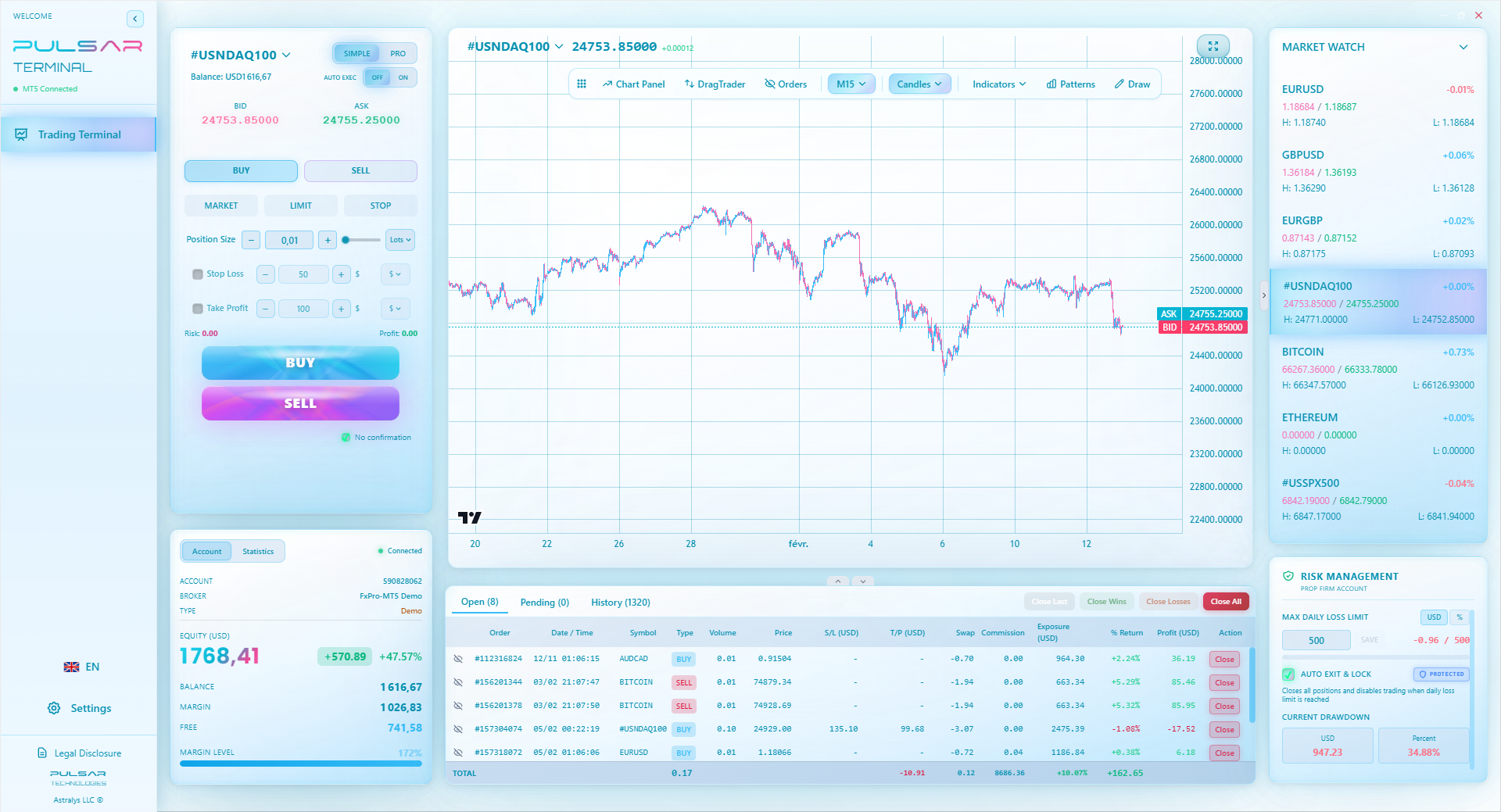
Spotting these requires watching Level 2 data. A consistently replenishing order at the same price is a big clue. Platforms like Pulsar Terminal that offer deep market depth visualization can make this easier.

💡 विंस्टन की सलाह
Stop trying to be the smartest person in the room. Your job is to be the most observant. Watch where the big orders are going, not where you think price 'should' go.
“Their edge isn't a secret indicator; it's better information, better execution, and ruthless risk control.”
This is a pure-play institutional strategy in India, and the rules just changed. Anchor investors (AIs) are qualified institutional buyers who get shares a day before the IPO opens to the public, at the upper end of the price band. They have a lock-in of 30 days for 50% of their allotment.
Why do they do it? First-mover advantage and a guaranteed allocation. For you, the anchor book is the single best indicator of IPO quality.
Here's the recent change (effective Nov 2025): SEBI increased the total anchor portion to 40% of the issue, with 33% reserved for domestic mutual funds. They also allowed up to 15 anchor investors for large IPOs (over ₹250 crore).
My mistake to learn from: In 2023, I ignored a weak anchor book for a tech IPO. The public hype was insane. The stock listed at a 15% premium, I bought the dip, and it never recovered. The anchors knew something - liquidity was poor. The stock is down 40% from its listing price. I lost about ₹1.2 lakh.
The strategy for you: Before applying to any IPO, check the anchor investor list. A strong list of domestic mutual funds (like HDFC MF, ICICI Pru MF) and reputable FPIs is a green flag. A weak or sparse anchor book is a major red flag, no matter what the YouTube 'gurus' say. These guys have the best research; they're not leaving money on the table.
This is where the institutional hand is forced into the open. On the NSE and BSE, a block deal is a single trade of a minimum quantity (currently ₹10 crore worth of shares or more) executed through a separate window at a fixed price (usually at a discount/premium to market). A bulk deal is a transaction for more than 0.5% of a company's shares, reported after the fact.
These windows exist so large chunks of stock can change hands without wrecking the normal order book. When you see a block deal, you're seeing a direct transfer between two institutions.
How to interpret them:
- Seller is more informative than buyer. A large fund selling its entire holding is a strong negative signal. They've done the research and are exiting.
- Buyer could be many things. It could be a long-term fund building a position, an arbitrageur, or even a related party. It's less clear.
- Price matters. A block deal at a 5% discount to the market price screams urgency from the seller. A deal at market price or a small premium is more neutral.
I keep a simple watchlist of stocks where prominent FPIs or mutual funds hold big stakes. When a block deal shows up with one of them as the seller, I pay very close attention. It's saved me from holding several falling knives. This is a form of flow-based analysis that's far more reliable than any MACD indicator crossover.
“When that much money leaves, it creates a tide that sinks most boats. Don't argue with the flow.”
This is where retail traders get absolutely slaughtered, and institutions survive. It's not about stop-losses; it's about pre-trade analysis and limits.
1. Position Sizing by Liquidity: An institution will never allocate more than a certain percentage of a stock's average daily volume (ADV). A common rule is not to own more than 5-10% of the 20-day ADV. Why? Because if they need to exit, they want to be able to do so within a day without becoming the market.
Your takeaway: Use a position size calculator that factors in liquidity. If you're trying to put ₹5 lakh into a small-cap that only trades ₹2 crore worth of shares daily, you are the market. Your exit will be painful.
2. Factor Risk Models: They don't just see 'Infosys.' They see a basket of risk factors: beta (sensitivity to Nifty), sector exposure, currency risk (for FPIs), and style factors (value, growth, momentum). They ensure their portfolio isn't overly exposed to any single factor.
Your takeaway: Look at your portfolio. Are all your stocks high-beta Nifty banks? You're not diversified. You're making a leveraged bet on one sector. A single RBI policy can wipe you out.
3. VaR (Value at Risk): This is a statistical measure. "We are 95% confident we will not lose more than ₹X crore in a day." It forces discipline. They hit their daily loss limit, the desk stops trading. Full stop.
Your takeaway: Set a hard daily loss limit. Mine is 1.5% of my trading capital. If I hit it, I close the platform. No revenge trades. This one rule alone prevented a 15% drawdown in 2024 after two bad trades. It feels terrible in the moment, but it saves your account. This is the discipline that prop firms enforce, and tools like Pulsar Terminal can help automate this 'daily loss protection' rule.
💡 विंस्टन की सलाह
If you can't articulate your exit plan - including size, price, and time - before you enter, you're not trading. You're hoping. Hope is a terrible strategy.
For the Indian market, Foreign Portfolio Investor data is the most important macro flow you can track. These guys move markets. In March 2026 alone, they sold over ₹1.17 lakh crore of equities. When that much money leaves, it creates a tide that sinks most boats.
You can find this data on the NSDL website or financial news sites. Don't just look at the net number (buy/sell). Look at the sectoral breakdown.
Recent Example: In that March 2026 sell-off, over ₹60,000 crore of selling was in financial services. That's a targeted sectoral exit, not broad profit-booking. If you were heavily long private banks at that time, you were fighting a tsunami of institutional selling.
How to use this:
- Trend is your friend: Sustained FPI buying (weeks) generally supports a bullish market phase. Sustained selling creates overhead resistance.
- Sector Rotation: When FPIs massively exit one sector (like IT in 2022), they're usually rotating into another (like autos or capital goods). Follow the money.
- Contrarian Signal? Sometimes, extreme FPI selling can mark a capitulation bottom, but you need other confirmations (like DII buying stepping up).
I made my biggest mistake ignoring this in late 2024. FPIs were selling relentlessly. I thought, "The Indian story is strong, they'll come back." I kept averaging down. They didn't come back for months, and my portfolio was underwater for most of 2025. The lesson? Don't argue with the flow. A few crores of your money won't change the direction set by lakhs of crores moving out.
Managing institutional-level risk requires automated rules, which is exactly what Pulsar Terminal's daily loss protection and advanced order tools are built for.
“You're not going to become a BlackRock portfolio manager overnight. Start by integrating one institutional concept at a time.”
You don't need a ₹50 lakh Bloomberg terminal, but you need to upgrade from basic retail platforms.
Essential for Serious Traders:
- A Broker with a Good API: This is non-negotiable if you want to automate any part of your strategy or manage multiple orders efficiently. Brokers like Interactive Brokers (via TWS) or Pepperstone offer strong APIs.
- Advanced Charting with Market Profile/Volume Profile: Understanding where volume traded at specific prices (Volume Profile) is an institutional staple. It shows you the true high-interest price zones, better than any horizontal line you draw. This feature is now available in advanced retail tools.
- Algorithmic Order Types: Even if you're not coding algos, use the advanced orders your broker offers. Good Till Cancelled (GTC), One-Cancels-the-Other (OCO), and most importantly, Trailing Stop-Loss orders.

Pro Tip: A trailing stop is the closest you'll get to having a risk manager. I set mine at 1.5x the Average True Range (ATR). It locks in profits on runners and takes the emotion out of the exit. Before I used these, I'd watch a 10% gain turn into a 2% loss regularly. Now, the worst case is a breakeven trade.
The Retail Trap: Avoid platforms that are all about flashy signals, social trading, and gamification. They're designed to keep you trading, not to make you profitable. Look for clean, fast, reliable execution above all else. A 10-pip slippage on your EUR/USD trade because of a slow platform wipes out your profit.
You're not going to become a BlackRock portfolio manager overnight. Start by integrating one institutional concept at a time.
Week 1-2: The Execution Game. Stop using market orders for anything over 0.5% of your capital. Use a limit order. Better yet, split that order into two parts, an hour apart. Record the difference in your average entry price. You'll be shocked.
Week 3-4: The Risk Manager. Calculate the Average Daily Volume (in rupees) for your top 3 holdings. What percentage of that volume does your position represent? If it's over 2%, you're too big. Plan your exit before you enter. Set a hard daily loss limit and use a trailing stop on every single trade.
Week 5-6: The Flow Trader. Start tracking FPI/DII data weekly. Don't trade based on it yet, just observe. Note when the flow contradicts the news narrative. Create a simple watchlist of stocks with recent large block deals. Watch their price action for the next month.
The core of all institutional trading strategies is this: they treat trading as a business of probability and process, not a casino of prediction. Their edge isn't a secret indicator; it's better information, better execution, and ruthless risk control. You can't copy their size, but you can 100% copy their discipline. That's how you stop being the prey and start understanding the game.
FAQ
Q1Can a retail trader in India really use institutional strategies?
Absolutely, but you're adopting the mindset and process, not the scale. You can use VWAP-inspired order splitting, analyze block deal data, and implement strict, percentage-based risk management. Your edge comes from acting like a professional, not from having their capital.
Q2What's the biggest difference between retail and institutional trading?
Priority. A retail trader's priority is finding the next entry signal. An institution's priority is managing the risk and cost of an order they've already decided to execute. They spend 90% of their effort on execution and risk, 10% on 'picking.' Retail does the opposite, which is why they lose.
Q3How do I track FPI and DII activity?
The NSDL website publishes daily FPI activity data. Most financial news sites (Moneycontrol, Economic Times) have a dedicated section summarizing it. For Domestic Institutional Investors (DII), you often need to look at mutual fund monthly portfolio disclosures or aggregate data from AMFI.
Q4Are algorithmic trading strategies legal for retail in India?
Yes, algorithmic and automated trading is permitted for retail traders on Indian exchanges. However, you need to use a broker that provides an API (Application Programming Interface) and ensure your strategies comply with exchange rules. It's not about high-frequency trading; it's about automating your defined rules for entries, exits, and risk.
Q5What is 'slippage' and why do institutions care so much?
Slippage is the difference between the expected price of a trade and the actual price at which it's executed. For a ₹100 crore order, even a 0.1% slippage costs ₹10 lakh. Their entire execution desk is judged on minimizing this. For you, it means using limit orders and avoiding market orders during low-liquidity times (like just before market close).
Q6How important are anchor investors for IPO success?
Critically important. The anchor book is a vote of confidence from sophisticated, deep-pocketed institutions. A strong anchor book (filled with top mutual funds and FPIs) doesn't guarantee listing gains, but a weak one is a major red flag. It often means the 'smart money' sees issues with valuation or liquidity.
प्रो. विंस्टन का पाठ
:
- ✓Split large orders; mimic VWAP to improve entry cost.
- ✓Anchor investor lists are the best IPO filter you have.
- ✓Never own more than 2% of a stock's average daily volume.
- ✓Set a hard daily loss limit (e.g., 1.5%) and walk away.
- ✓FPI sectoral selling is a tsunami; don't swim against it.
यह लेख कितना उपयोगी था?
रेट करने के लिए स्टार पर क्लिक करें
साप्ताहिक ट्रेडिंग विश्लेषण
मुफ़्त साप्ताहिक विश्लेषण और रणनीतियाँ। कोई स्पैम नहीं।
लेखक के बारे में
Rajesh Sharma
वरिष्ठ फॉरेक्स विश्लेषक
भारतीय और दक्षिण एशियाई बाज़ारों में 10 साल से अधिक का ट्रेडिंग अनुभव। NSE करेंसी डेरिवेटिव्स से शुरुआत करके अंतरराष्ट्रीय फॉरेक्स में आए। USD/INR और इमर्जिंग मार्केट पेयर्स में विशेषज्ञता।
टिप्पणियाँ
आपको यह भी पसंद आ सकता है

Cara Trading Forex Sukses: 7 Prinsip dari Trader Profesional
Cara trading forex sukses dengan 7 prinsip trader pro: manajemen modal, disiplin, journal trading, backtest. Data nyata, bukan janji profit palsu.
Jam Trading Forex Terbaik untuk Trader Indonesia: Panduan Lengkap dengan Tabel Waktu
Panduan jam trading forex untuk trader Indonesia. Tabel 4 sesi dunia, jam emas 20:00-00:00, sesi mana yang harus dihindari. Data akurat + tips dari trader berpengalaman.
Top 5 Sàn Forex Uy Tín Nhất 2026: Review Jujur dari Trader Indonesia
Top 5 sàn forex uy tín 2026 untuk trader Indonesia. Review jujur: spread, deposit, withdraw, dukungan lokal. Exness, XM, IC Markets & lebih.
All these calculators are built into Pulsar Terminal with real-time data from your MT5 account. One-click position sizing, automatic risk management, and instant calculations.
