


Here's a statistic that should make you pause: industry data suggests the average retail forex trader is gone within 2 to 4 months.

Olumide Adeyemi
पश्चिम अफ्रीकी ट्रेडिंग अग्रणी ·  Nigeria
☕ 12 मिनट पढ़ने
आप क्या सीखेंगे:
Here's a statistic that should make you pause: industry data suggests the average retail forex trader is gone within 2 to 4 months. Only about 2% remain consistently profitable. So, is forex profitable in Nigeria? The short answer is yes, it absolutely can be. But the real question is, will it be profitable for you? That depends entirely on your approach. I've seen traders turn N500,000 into N5 million, and I've seen others blow their entire savings in a week. Let's cut through the hype and look at the reality of making money with forex in Nigeria.
Forex trading is legal here. You can use your personal funds to trade with brokers. But the regulatory scene for us retail traders is... let's call it 'developing'. The Central Bank of Nigeria (CBN) and the Securities and Exchange Commission (SEC) are the main watchdogs. The SEC has said online forex is a securities activity and warns against unlicensed platforms.
Here's the practical reality most Nigerian traders face: many of the top-tier, well-regulated brokers aren't physically based here. So, we often end up using international brokers that accept Nigerian clients. This isn't inherently bad, but it means you must do your homework on a broker's overseas regulation. I've always stuck with brokers regulated by reputable bodies like the FCA or ASIC, even if their office isn't in Lagos.
Then there's the taxman. Forget any ideas of flying under the radar. You are subject to a 10% capital gains tax on all your gross trading profits. It doesn't matter if your broker is in Cyprus or your money is in a USD account. If you're profitable, you need to factor this in and file your returns. I learned this the hard way in my third year, facing a hefty bill I hadn't properly saved for.

Warning: The SEC actively shuts down local 'forex investment funds' promising guaranteed returns. If it sounds too good to be true, it's probably illegal. Your capital is only safe with a legitimate, regulated broker.
The Naira's own story is a major factor. With the CBN's reforms, we've seen wild volatility - a 48% plunge in 2023, then a 7.5% gain in 2025. This volatility creates opportunity, but it also amplifies risk, especially if you're trading pairs involving the Naira.

💡 विंस्टन की सलाह
The market's job is to make you feel wrong. Your job is to have a plan so solid that the market's noise becomes irrelevant. Write your rules down. Trade the plan, not your gut.
“High use is the fastest route to a margin call.”
Let's talk concrete numbers, because vague promises don't pay bills.
What Can You Realistically Earn?
Earnings are a function of your skill, strategy, and most importantly, your capital. A beginner who gets lucky or has a solid start might see N50,000 to N150,000 a month. An experienced trader with a proven system and more capital can aim for N200,000 to millions monthly. But these figures come after years of losses and learning for most people.
Here's a blunt example from my early days. I started with $500 (about ₦400,000 at the time). I was scalping EUR/USD, taking 5-10 trades a day. In a 'good' month, I'd make $150 (₦120k). Then the next month, one bad trade with poor risk management would wipe out $200. My net over six months was barely positive, and that's before the 10% tax. I wasn't trading; I was gambling.
The Silent Killers: Spreads and Commissions
Your profit is eaten from the moment you enter a trade. The spread is the difference between the buy and sell price. On a major pair like EUR/USD, this can vary massively:
| Broker (Account Type) | Typical EUR/USD Spread |
|---|---|
| IC Markets (Raw Spread) | From 0.0 pips + commission |
| Exness (Zero Account) | From 0.0 pips + commission |
| XM (Standard) | From 0.8 pips |
| Pepperstone (Razor) | From 0.0 pips + commission |
A 'pip' is the smallest price move. If the spread is 1 pip on EUR/USD, your trade is already down about $10 on a standard lot the second you open it. You can see why scalpers fight for the lowest spreads possible. I switched to a raw spread account with a commission fee years ago, and it saved me thousands in the long run, even with the extra fee. You need to understand your spread definition and costs intimately.
The use Trap
Nigerian traders can access insane use - up to 1:2000 or even 'unlimited' with some brokers. This is a double-edged sword. use of 1:100 means you control $10,000 with just $100 in your account. A 1% move in your favor doubles your money. A 1% move against you wipes out your entire deposit. That's not trading; it's a coin flip. I never use more than 1:30 use now, even on my smallest account. High use is the fastest route to a margin call.
“Profitability doesn't come from guessing. It comes from a repeatable, disciplined strategy.”
Your broker is your gateway to the market. Picking the wrong one can cost you money, sleep, or even your capital. Here’s what I look for, in order of importance:
- Strong International Regulation: This is non-negotiable. It means the broker is held to standards that protect your funds in segregated accounts. Don't just look for 'regulated'; look up who regulates them.
- Low and Transparent Costs: Compare their spreads on the pairs you'll trade and any commission fees. Use a demo account to see real-time costs.
- Reliable Deposits & Withdrawals in Naira: You need smooth, fast ways to fund your account. Look for brokers supporting local bank transfers, Naira cards (where possible), and e-wallets like Skrill or Neteller. Withdrawal speed is a true test of a broker's reliability.
- A Platform You Can Use: MT4 is the undisputed king for beginners in Nigeria. It's stable, has every indicator you'll need, and there's a mountain of educational content for it. MT5 and cTrader are great, but start with MT4.
Based on my experience and the community chatter, here are a few that consistently come up for Nigerian traders:
- XM: Great for beginners, low minimum deposit ($5), solid education. Check out our full XM review.
- Exness: Known for very high use options and tight spreads. Popular among experienced traders here. See our Exness review.
- IC Markets: My personal favorite for raw spreads and execution speed. A top choice for scalping strategy.
- Pepperstone: Excellent all-rounder with great customer service and multiple platforms.

Pro Tip: Always open a demo account first. Test their platform execution during major news events (like US Non-Farm Payrolls). If the platform freezes or spreads widen to 50 pips, that broker isn't for you.
“Profitability doesn't come from guessing. It comes from a repeatable, disciplined strategy.”
Profitability doesn't come from guessing. It comes from a repeatable, disciplined strategy. You need a clear edge. Here are the core components.
Finding Your Edge
Your edge is what gives you a statistical probability of winning over many trades. It could be:
- Price Action: Reading raw price movements on the chart. I made my first consistent profits learning to spot and trade support and resistance breaks.
- Indicator-Based: Using tools like the RSI indicator for overbought/oversold conditions or the MACD indicator for trend momentum. My most reliable setup for years was a simple RSI divergence on the 4-hour chart.
- Fundamental: Trading based on economic news and central bank policies. This is huge for a currency like the Naira.
Pick one style and master it. Don't jump between five different methods.
Risk Management: Your Survival Kit
This is what separates the 2% from the 98%. You must control your losses.
- Risk Per Trade: Never risk more than 1-2% of your account on a single trade. On a ₦500,000 account, that's ₦5,000-₦10,000 max. Use a position size calculator for every single trade.
- Stop-Losses: ALWAYS use a stop-loss. It's not a suggestion; it's a mandatory part of the trade. Decide where you're wrong before you enter.
- Profit Targets: Have a clear goal. A common starting ratio is to aim for at least 1.5 times what you're risking (a 1:1.5 risk/reward).
I once broke my own rule. I was trading XAU/USD (gold) and didn't set a stop because I was 'sure' it would bounce. It didn't. I lost 22% of my account in one afternoon watching the chart fall. That loss took me three months of disciplined trading to recover. Never again.
Timeframe and Style
Are you a scalper, a day trader, or a swing trader? Your lifestyle dictates this.
- Scalping: Taking 10-100 tiny profits a day. Stressful, requires intense focus. See our guide on scalping strategy.
- Day Trading: Opening and closing all positions within the day. You avoid overnight swaps.
- Swing Trading: Holding trades for days or weeks, catching bigger moves. This fits better around a day job. Learn more about swing trading. I started as a scalper, burned out, and found my peace in swing trading. It lets me analyze deeply, set my trades, and walk away.
💡 विंस्टन की सलाह
Your first profitable year is a fluke. Your second is luck. Your third is the beginning of a career. Don't confuse a good month with skill. Skill is consistency across market cycles.
“Your psychology is 80% of the game. The charts are easy; controlling your own brain is hard.”
We all make mistakes. Here are the classic ones that destroy Nigerian trading accounts, so you can sidestep them.
1. Chasing Losses: You lose ₦20,000 on a bad EUR/USD trade. The instinct is to immediately jump back in with a bigger position to 'make it back fast.' This is emotional trading, and it's how you blow up an account. After a loss, close the platform. Take a walk. Come back tomorrow.
2. Trading Without a Plan: Entering a trade because you 'have a feeling' is gambling. Every trade needs a written plan: Why are you entering? Where is your stop-loss? Where is your take-profit? What's your position size?
3. Overleveraging: We covered this, but it's worth repeating. That 1:1000 use is a marketing trick, not a tool for sustainable trading.
4. Ignoring Fundamentals: Especially for us in Nigeria. A surprise CBN announcement on interest rates can send the Naira pairs into a tailspin. Have an economic calendar open and know when major news is due.
5. Neglecting the Tax Man: Set aside 10% of every single withdrawal you make. Open a separate savings account for it. When the tax bill comes, you'll be ready, not panicked.

Example: Let's say you make a gross profit of ₦1,000,000 in a year. Your 10% Capital Gains Tax is ₦100,000. If you haven't saved that, you're now digging into your remaining ₦900,000 to pay it. That brutally changes your actual net return.
Sticking to your trading plan, especially with stop-losses and multiple take-profit levels, is much easier when your tools automate the discipline for you.
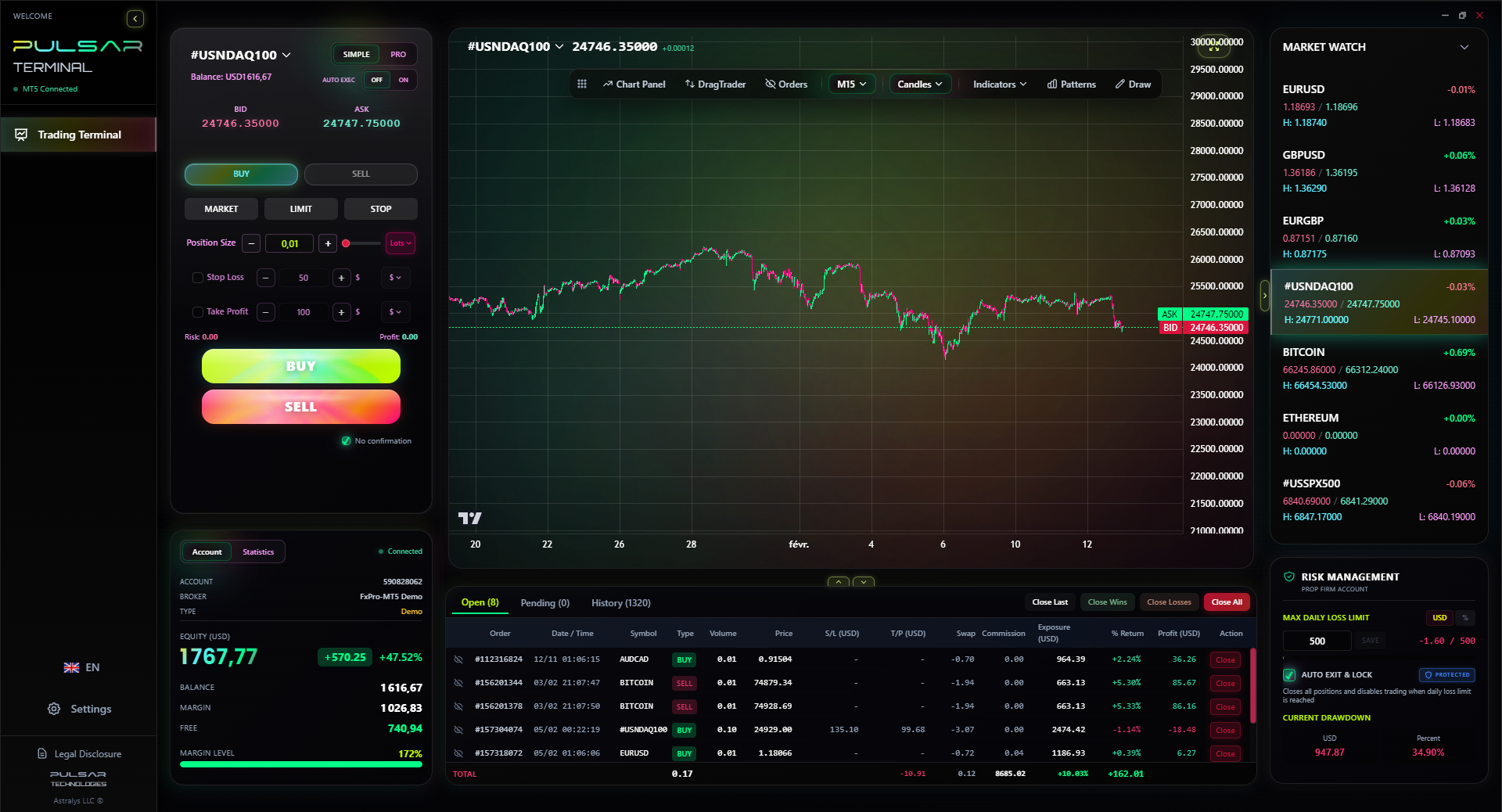
“Your psychology is 80% of the game. The charts are easy; controlling your own brain is hard.”
Your psychology is 80% of the game. The charts are easy; controlling your own brain is hard.
Treat It Like a Business. You are the CEO, risk manager, and analyst of a small firm. Your capital is your business loan. You wouldn't gamble your business loan on a hunch, would you? Track every trade in a journal. Review your wins and losses weekly. What patterns emerge?
Embrace the Losses. You will have losing trades. A lot of them. Even the best strategies have losing streaks. A 60% win rate is excellent, but that still means you lose 4 out of every 10 trades. If you can't handle a string of 3 losses without deviating from your plan, you're not ready.
Patience is a Weapon. The market will always be there tomorrow. The best traders spend most of their time waiting - waiting for their perfect setup, waiting for a trade to play out. I missed a huge move on GBP/JPY once because I was impatient and entered early. My stop got hit, and then the price rocketed in my original direction. The profit I missed was five times the loss I took. Waiting is an active strategy.
Continuous Learning. The market evolves. The strategies that worked in 2020 need adjusting in 2026. Read books, follow reputable analysts (not 'signal sellers'), and always be refining your approach. The moment you think you know it all is the moment you start losing.
💡 विंस्टन की सलाह
The most expensive lesson is the one you ignore. Keep a trading journal. Not just entries and exits, but your emotional state. The patterns you find in your journal will be more valuable than any indicator.
“The path to answering 'is forex profitable' is a marathon, not a sprint.”
If you're serious about answering 'is forex profitable' for yourself, here's your roadmap.
- Educate First, Deposit Later. Spend at least 2-3 months learning. Understand basic terms like a pip definition, what moves currencies, and basic chart patterns. Don't touch real money yet.
- Find a Regulated Broker. Use the criteria above. Open a demo account with 2-3 contenders like IC Markets or Pepperstone.
- Develop and Test a Strategy. On your demo, practice one simple strategy. Could be trading bounces off a moving average. Paper trade it for at least 100 trades. Record the results. Is it profitable? If not, tweak it or learn a new one.
- Start Small with Real Money. Once your demo shows consistent profit over 3 months, fund a live account with money you can afford to lose completely. I'm talking an amount that, if it vanished, wouldn't affect your rent or family. For many, that's ₦50,000 - ₦100,000.
- Trade Your Plan, Religiously. Use your 1% risk rule. Use your stop-losses. Stick to your strategy, even when it's boring or you have a losing streak. This is the real test.
- Scale Gradually. Only add more capital to your account once you've grown your initial small stake by at least 20-30% through disciplined trading. This proves you can handle real money pressure.
The path to answering 'is forex profitable' is a marathon, not a sprint. It's a skill you build over years. There are no shortcuts, but for those willing to put in the work, manage their risks, and control their emotions, the market offers a genuine opportunity. Good luck, and trade safe.
FAQ
Q1Is forex trading legal in Nigeria?
Yes, forex trading is legal for Nigerian residents using their personal funds. However, the retail online trading space is not as tightly regulated as in some other countries. The SEC and CBN are the main regulators, but many Nigerian traders use internationally regulated brokers.
Q2How much tax do I pay on forex profits in Nigeria?
You pay a 10% Capital Gains Tax on your gross trading profits. This is mandatory. You must file a tax return and pay this on any profitable trading year, regardless of whether your broker is local or international.
Q3What is a realistic monthly income from forex in Nigeria?
It varies wildly. A disciplined beginner might aim for N50,000-N150,000 monthly after covering losses. An experienced trader with significant capital and a proven system can make N200,000 to millions. However, most beginners lose money initially. Consistent profitability often takes 1-2 years of dedicated learning and practice.
Q4Which broker is best for beginners in Nigeria?
Look for a broker with a strong reputation, clear regulation, low minimum deposit (like $5-$100), and excellent educational resources. XM is often recommended for beginners due to its low barrier to entry and extensive learning materials. Always start with a demo account first.
Q5Can I start forex trading with 50,000 Naira?
Absolutely. Many brokers allow you to start with even less. The key is to manage your risk carefully. With ₦50,000, you should risk no more than ₦500-₦1,000 per trade (1-2%). This means your position sizes will be small, but it's the perfect way to learn real-money psychology without catastrophic risk.
Q6Why do most forex traders fail in Nigeria?
The main reasons are universal: lack of a tested strategy, poor risk management (especially overusing high use), emotional trading (chasing losses), and treating trading like get-rich-quick gambling instead of a skilled profession. Success requires treating it as a serious business.
Q7Should I trade Naira pairs?
Pairs like USD/NGN can be very volatile, offering opportunity but also high risk, especially around CBN announcements. For beginners, I recommend sticking to major, liquid pairs like EUR/USD or GBP/USD where spreads are tighter and price action is often more predictable. You can learn our EUR/USD guide first.
प्रो. विंस्टन का पाठ
:
- ✓Risk only 1-2% of capital per trade
- ✓Always use a stop-loss order
- ✓Save 10% of profits for tax immediately
- ✓Master one strategy before trying another
- ✓Demo trade for 3 months minimum
यह लेख कितना उपयोगी था?
रेट करने के लिए स्टार पर क्लिक करें
साप्ताहिक ट्रेडिंग विश्लेषण
मुफ़्त साप्ताहिक विश्लेषण और रणनीतियाँ। कोई स्पैम नहीं।
लेखक के बारे में
Olumide Adeyemi
पश्चिम अफ्रीकी ट्रेडिंग अग्रणी
नाइजीरिया के सबसे सक्रिय फॉरेक्स ट्रेडिंग एजुकेटर्स में से एक। लागोस से 8 साल का ट्रेडिंग अनुभव। अफ्रीकी ट्रेडर्स के लिए लो-कैपिटल स्ट्रैटेजीज और प्रॉप फर्म चैलेंजेज में विशेषज्ञ।
टिप्पणियाँ
आपको यह भी पसंद आ सकता है

Cara Trading Forex Sukses: 7 Prinsip dari Trader Profesional
Cara trading forex sukses dengan 7 prinsip trader pro: manajemen modal, disiplin, journal trading, backtest. Data nyata, bukan janji profit palsu.
Jam Trading Forex Terbaik untuk Trader Indonesia: Panduan Lengkap dengan Tabel Waktu
Panduan jam trading forex untuk trader Indonesia. Tabel 4 sesi dunia, jam emas 20:00-00:00, sesi mana yang harus dihindari. Data akurat + tips dari trader berpengalaman.
Top 5 Sàn Forex Uy Tín Nhất 2026: Review Jujur dari Trader Indonesia
Top 5 sàn forex uy tín 2026 untuk trader Indonesia. Review jujur: spread, deposit, withdraw, dukungan lokal. Exness, XM, IC Markets & lebih.
All these calculators are built into Pulsar Terminal with real-time data from your MT5 account. One-click position sizing, automatic risk management, and instant calculations.
