


Let's cut through the noise.

Rajesh Sharma
वरिष्ठ फॉरेक्स विश्लेषक ·  India
India
☕ 12 मिनट पढ़ने
आप क्या सीखेंगे:
- 1Why That Fancy PDF Will Fail You in India
- 2The Indian Market's Unique Rhythm & Price Action
- 3The Real Costs of Trading in India (Forget the PDF)
- 4Core Price Action Setups That Actually Work in India
- 52026 Regulations: How SEBI's New Rules Change the Game
- 6Building Your Own System (Forget the PDF)
- 7Essential Tools & Platforms for the Indian Price Action Trader

Let's cut through the noise. Every other day, some 'guru' is selling you a magical 'price action trading strategies pdf' promising the keys to the market. Here's a statistic that should sober you up: SEBI data shows over 90% of active retail traders in India lose money. The problem isn't a lack of strategies; it's a lack of context. This isn't about fancy patterns. It's about understanding the Indian market's unique rhythm, its brutal costs, and the 2026 regulations that change everything. I've traded through three major crashes here. Let me show you what price action really means when you're staring at a Nifty chart with STT and GST eating into every move.
You download a 100-page price action trading strategies pdf. It's full of perfect pin bars and engulfing candles on clean EUR/USD charts. You feel enlightened. Then you open Zerodha Kite, pull up Bank Nifty futures, and reality hits. The moves are jagged. The spreads widen during news. Your perfect setup gets whipsawed by a sudden bout of FII selling.
The core issue is location. Most free or paid PDFs are created for a global, often US or European, audience. They ignore the local market microstructure that dictates success or failure here. They don't account for the Securities Transaction Tax (STT) that silently chips 0.025% off your intraday profit on the sell side. They don't factor in the 18% GST slapped on your brokerage, turning a small winning trade into a breakeven one.
I learned this the hard way. Early in my career, I perfectly executed a textbook bullish engulfing pattern on Reliance. Entry: ₹2,450. Target: ₹2,520. Stop loss: ₹2,420. The trade went my way, hitting ₹2,515. I closed. My profit before costs? ₹65 per share. After brokerage, STT (0.025%), exchange charges, and GST? My net was about ₹48. The taxman and the broker took nearly 25% of my gross gain. That PDF never had a chapter on that. Your strategy isn't just entries and exits; it's a profit equation that must overcome these friction costs first. This is why understanding your position size calculator with Indian costs baked in is non-negotiable.

💡 विंस्टन की सलाह
The first rule of Indian trading: Your gross profit is a lie. Always calculate your net after STT, brokerage, and GST before you even think a trade is a winner.

“Your price action strategy isn't just entries and exits; it's a profit equation that must overcome India's friction costs first.”
Price action in India doesn't exist in a vacuum. It dances to a very specific drumbeat. If you're not listening, you're just gambling.
The FII/DPI Tug-of-War
The single biggest driver of large daily ranges on the Nifty and Sensex is the flow of Foreign Institutional Investor (FII) and Domestic Institutional Investor (DII) money. A sustained bout of FII selling can override any beautiful bullish pattern on a chart. Conversely, strong DII buying can halt a downtrend dead in its tracks. You need to develop a sense for this. I watch for large block deals in the pre-open market and the first hour's volume profile. A strong green candle with high volume in the first 30 minutes, especially if it reclaims a key level like 22,000 on Nifty, often signals institutional conviction that can last the session.
Sector Rotation is King
India isn't a monolithic market. While the US might trade on tech (NASDAQ), India rotates through sectors like Financials (Bank Nifty), IT, Auto, and FMCG. A classic price action setup on Infosys might fail not because the pattern was wrong, but because the entire IT sector is under pressure from weak US guidance. I got caught in this in 2022. I saw a perfect double bottom forming on TCS. Bought at ₹3,280. The pattern broke upward, but the sector was dead. It crawled up to ₹3,310 and stalled for days. I finally exited at ₹3,295 for a pathetic gain that didn't cover costs. The lesson? Always zoom out. Check the sector index (Nifty IT) before taking a trade in an individual stock. Your stock's price action is a slave to its sector's trend.

Warning: Trading around budget sessions or RBI announcements based on pure price action is a great way to get your account shredded. The volatility is insane, and spreads on indices can blow out. These are events to watch, not trade, for most retail traders.
The 9:15 AM & 3:15 PM Phenomena
The open and the last hour in India are where 70% of the action happens. The first 15 minutes often sees massive volatility as overnight global cues and pre-market orders get digested. The last hour sees squaring off of intraday positions and positional buildup for the next day. Many of my best swing trading entries come from strength or weakness confirmed in the last 30 minutes of trading.
“A perfect pattern on a stock chart is useless if the entire sector is being sold by FIIs.”
Let's get brutally specific with numbers. That price action trading strategies pdf won't teach you this math, but your P&L will.
Assume an intraday trade on 100 shares of a stock priced at ₹500. You buy at ₹500 and sell at ₹505.
| Cost Component | Calculation | Amount (₹) |
|---|---|---|
| Gross Profit | (505 - 500) * 100 | 500.00 |
| Brokerage (Flat fee, discount broker) | ₹20 per order | 40.00 |
| STT (0.025% on Sell) | 0.00025 * (505 * 100) | 12.63 |
| Exchange Transaction Charge (~0.00345%) | 0.0000345 * 100,500 | 3.47 |
| SEBI Turnover Fee (0.0001%) | 0.000001 * 100,500 | 0.10 |
| Stamp Duty (0.003% on Buy) | 0.00003 * (500 * 100) | 1.50 |
| Subtotal (Charges) | 57.70 | |
| GST (18% on Brokerage + Exch. Charge) | 0.18 * (40 + 3.47) | 7.82 |
| Total Cost | 65.52 | |
| Net Profit | 500 - 65.52 | 434.48 |

Example: Look at that. Your ₹500 win is actually ₹434. A 13% haircut before you even blink. Your price action strategy needs a win rate and risk-reward ratio that survives this drain. This is why scalping tiny moves is a loser's game for most. The costs eat you alive. You need moves of 1.5%+ just to make a decent net return on intraday.
For futures and options, the STT structure is different, but the principle is the same. Every tick must pay for the friction. This is the main reason I shifted a large portion of my activity to longer-term swing trading on the equity side - the STT on delivery trades (0.1%) is higher, but you're not getting nickel-and-dimed on brokerage every single day. It forces better trade selection.
💡 विंस्टन की सलाह
If you're not watching Bank Nifty when trading the main Nifty index, you're missing half the story. Financials lead the market here.

“A perfect pattern on a stock chart is useless if the entire sector is being sold by FIIs.”
Forget the 30 patterns. You need three, maybe four, that you can read like the back of your hand. Here’s what has stood the test of time on our charts.
1. The False Break / Stop Hunt: This is the most common and profitable setup in India. Markets love to run stops before reversing. You'll see Nifty poke above a strong resistance (say, 22,200) by 10-15 points on low volume, then slam back down hard. The pattern on the lower timeframe (5-min or 15-min) is often a sharp spike followed by an immediate bearish engulfing candle closing back below the level. I use this constantly. I wait for the break, see if it holds for more than 1-2 candles, and if it doesn't, I fade it. My entry is the close of the first strong candle back against the false break.
2. Inside Bar Breakouts on High Timeframes: On the daily charts of major index constituents (HDFC Bank, Reliance, ICICI Bank), inside bars (where the range is within the previous bar's range) are gold. They signal consolidation before a continuation. The key is the breakout candle. It needs volume. I entered Bajaj Finance in 2023 after a 4-day inside bar consolidation on the daily chart. The breakout candle on day 5 was massive and on above-average volume. Entry: ₹6,850. Held for a 14% move over the next month.
3. Pin Bars at Key Moving Averages: The 20 and 50-period exponential moving averages (EMA) on the hourly chart of Nifty are magnets. A sharp rejection (a pin bar) off these levels, especially if it aligns with a previous support/resistance zone, is a high-probability trade. Don't complicate it. The RSI indicator can help as a confluence here, showing overbought or oversold conditions at the rejection point.

Pro Tip: Combine price action with one volume indicator. On Kite or Upstox, turn on Volume Profile for the day. If your price action setup (like a breakout) is happening at the Point of Control (POC) or at a high-volume node, the odds of it working skyrocket. If it's happening in a low-volume area, be skeptical - it's more prone to a false move.

“The 2026 regulations aren't red tape; they're changing the very microstructure you're trying to decode.”
If you're trading in 2026 and beyond, you're playing a different sport. The SEBI (Stock Brokers) Regulations, 2026, and the new algo trading rules aren't just bureaucratic noise. They directly impact how you interact with the market and what you see on your charts.
The new broker regulations mean stricter margin rules and less broker discretion. This reduces systemic risk but also means you might get a margin call faster if you're over-leveraged on a losing price action bet. Your broker can't bend the rules to help you out. Your risk management needs to be tighter than ever.
The algo trading rules (effective April 1, 2026) are a bigger deal for price action traders. By mandating 2FA and whitelisted IPs for APIs, and making brokers responsible for all algo activity, SEBI is cleaning up the environment. What does this mean for you? The 'algos' that used to create weird, synthetic price spikes to hunt stops might get reined in. The market microstructure might become slightly more predictable. However, it also means any semi-automated tool you use for trade management (like a trailing stop bot) falls under these rules if it uses an API. You can't just run a script from your laptop anymore.
This pushes the advantage back towards the discretionary trader who can read pure price and volume. The noise might reduce. But it also means you need professional-grade tools that operate within the rules. This is where a platform-compliant tool becomes critical for managing the trades your price action analysis identifies.
💡 विंस्टन की सलाह
The most powerful price action signal in India is a strong, high-volume candle that breaks a key level in the last 30 minutes of trade. It often previews the next day's move.
“The 2026 regulations aren't red tape; they're changing the very microstructure you're trying to decode.”
Stop looking for the holy grail in a price action trading strategies pdf. Your job is to build a machine, piece by piece, that fits you and this market.
- Instrument Selection: Don't trade everything. Master one or two. For most, that's Nifty Futures and Bank Nifty Futures. Their liquidity is unmatched, and the price action is cleaner than most mid-cap stocks. Once proficient, you can add a liquid stock like Reliance or ICICI Bank. I only consistently trade three instruments.
- Timeframe Stacking: This is non-negotiable. I use a 3-chart layout: Daily (for trend), 60-minute (for key levels and major S/R), and 15-minute (for entry timing). My bias comes from the daily. My entry level comes from the 60-min. My precise entry and stop loss come from the 15-min. A bullish pin bar on the 15-min chart means nothing if it's forming right under the daily 200 EMA resistance.
- Define Your Trigger, Not a Pattern: Your system should sound like this: "I will go long if price pulls back to the rising 20 EMA on the 60-min chart and forms a bullish engulfing or inside-bar breakout on the 15-min chart, provided the daily trend is up." That's specific. It's not "I see a hammer, I buy."
- Backtest with Indian Data: Use your broker's platform (Zerodha's console allows some backtesting) or a simple Excel sheet. Manually go back over the last 3 months of Nifty 15-min charts. Mark your setup every time it appears. Did it work? What was the average win/loss? Do this for 100 instances. The numbers will tell you the truth your gut won't.
- Risk Management is the System: Decide your risk per trade (I never risk more than 0.5% of my capital on any single idea) and your position size before you see the setup. Use a position size calculator. This discipline is what separates a survivor from the 90% who blow up. A good price action read gets you in the game. Ironclad risk management lets you stay in it.

“Backtest with Indian data. The numbers will tell you the truth your gut won't.”
Your broker's platform is your cockpit. Most discount brokers offer decent tools now.
Charting: Zerodha Kite and Upstox have come a long way. Their native charting includes multiple timeframes, basic drawing tools, and indicators like MACD indicator and RSI. For more advanced Volume Profile or Market Profile, you might need to use TradingView (which can be linked) or a specialized terminal. Angel One and ICICI Direct also offer strong platforms.
Execution: This is where the rubber meets the road. You see your pin bar setup. You need to enter, set a stop loss, and set a target - fast. Native platforms can be clunky for multi-bracket orders (BO) or cover orders (CO). This is a major pain point. Manually setting a stop loss and multiple targets after entry often means you miss the optimal price, turning a winning trade into a loser.
Analysis: You need a clean, fast way to view your charts without clutter. You also need trade management that doesn't rely on you staring at the screen all day. An automated trailing stop that locks in profits as a trend moves? Priceless. The ability to set a breakeven stop once a trade is in profit by a certain amount? That saves you from countless winning trades that turn to dust.
The Indian trader in 2026 needs a hybrid approach: a reliable broker for execution (I've had good experiences with the raw spreads on IC Markets for forex, but for Indian equities, stick with SEBI-registered entities like Zerodha, Upstox, etc.), and powerful, compliant software that supercharges the analysis and automated management of the trades your price action skill identifies. The game is no longer just about seeing the opportunity. It's about managing it with surgical precision in a high-cost, highly regulated environment.
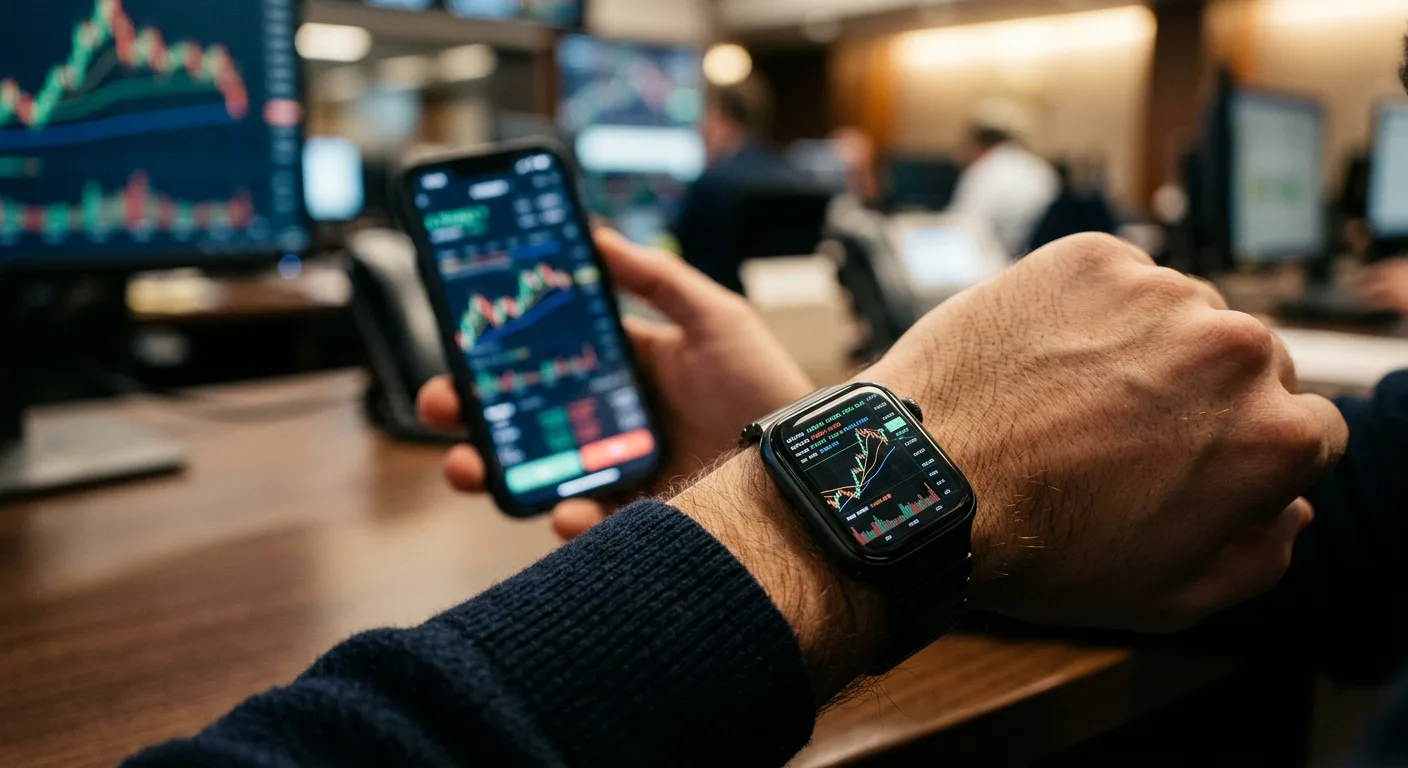
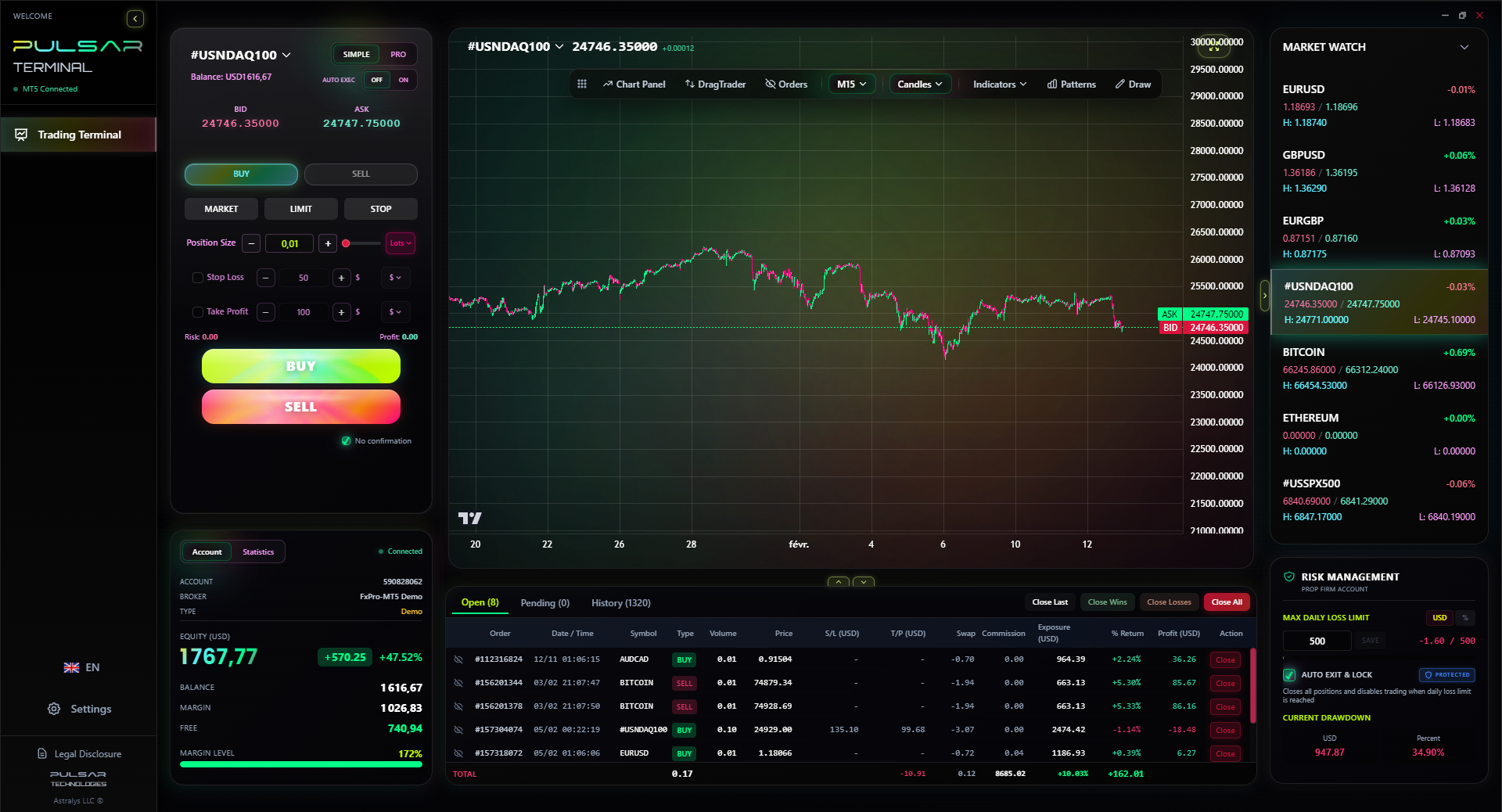
Seeing a price action setup is one thing; managing the trade with precision in a fast market is another, which is where tools like Pulsar Terminal automate complex order management directly on your MT5 platform.
FAQ
Q1Where can I find a free price action trading strategies pdf for Indian markets?
Honestly, I'd advise against it. Most free PDFs are generic, outdated, or lead magnets for expensive courses. Instead, use the free educational sections on Zerodha Varsity or Upstox Academy. They're tailored to the Indian context, cover regulations, and explain concepts with local examples. Building knowledge piece by piece from trusted, local sources is better than digesting a one-size-fits-all PDF.
Q2Is price action trading profitable in India given the high costs?
It can be, but the barrier is higher. The STT, GST, and brokerage mean your strategy needs a higher edge. You can't scalp for 5-10 point moves on Nifty and expect to be profitable after costs. Price action works best when applied to capture larger swings (50+ points on Nifty futures) or in longer-term swing trades where the impact of costs is diluted over a bigger percentage move. Profitability comes from combining clear price action signals with strict risk management and an understanding of sector rotation.
Q3What is the best timeframe for price action trading in India?
There's no single 'best,' but a multi-timeframe approach is crucial. For intraday, the 15-minute and 60-minute charts are workhorses for identifying intraday trends and key levels. The 5-minute chart can be useful for precise entry but is noisy. For swing trading, the daily and 4-hour charts are essential. Always align your trade with the next higher timeframe's trend for better odds.
Q4How do I practice price action trading without risking money?
Use your broker's historical data or a platform like TradingView. Go back in time on the Nifty chart. Move forward candle by candle, and practice identifying potential setups (inside bars, false breaks, pin bars) before the next candle forms. Write down what you would do: Enter, Stop Loss, Target. Then move forward to see what happened. This 'replay' mode is the single best way to train your eye without losing a single rupee.
Q5Do I need to use other indicators with price action?
Price action is the primary read, but I use one or two indicators for confluence, not for signals. A simple 20-period Exponential Moving Average (EMA) on the hourly chart helps define trend. The RSI indicator can help identify overbought/oversold conditions at key support/resistance levels. The goal is to keep your chart clean. If you have more than three things on your screen, you're overcomplicating it.
Q6How has SEBI's 2026 algo rule affected price action?
It's still early, but the intent is to reduce manipulative algo activity that creates false price spikes and erratic volatility. In theory, this should lead to cleaner, more reliable price action as predatory stop-hunting algos are forced to comply with stricter rules. For the discretionary price action trader, this is a potential long-term benefit, as the market's moves may better reflect genuine supply and demand.
प्रो. विंस्टन का पाठ
:
- ✓Net profit is gross profit minus STT, brokerage, and 18% GST.
- ✓Align every trade with the higher timeframe trend.
- ✓Master 2-3 setups, not 20. Depth beats breadth.
- ✓Risk a maximum of 0.5% of capital per trade, always.
- ✓The last hour of trading (3:00-3:30 PM) reveals the next day's bias.
यह लेख कितना उपयोगी था?
रेट करने के लिए स्टार पर क्लिक करें
साप्ताहिक ट्रेडिंग विश्लेषण
मुफ़्त साप्ताहिक विश्लेषण और रणनीतियाँ। कोई स्पैम नहीं।
लेखक के बारे में
Rajesh Sharma
वरिष्ठ फॉरेक्स विश्लेषक
भारतीय और दक्षिण एशियाई बाज़ारों में 10 साल से अधिक का ट्रेडिंग अनुभव। NSE करेंसी डेरिवेटिव्स से शुरुआत करके अंतरराष्ट्रीय फॉरेक्स में आए। USD/INR और इमर्जिंग मार्केट पेयर्स में विशेषज्ञता।
टिप्पणियाँ
आपको यह भी पसंद आ सकता है

Cara Trading Forex Sukses: 7 Prinsip dari Trader Profesional
Cara trading forex sukses dengan 7 prinsip trader pro: manajemen modal, disiplin, journal trading, backtest. Data nyata, bukan janji profit palsu.
Jam Trading Forex Terbaik untuk Trader Indonesia: Panduan Lengkap dengan Tabel Waktu
Panduan jam trading forex untuk trader Indonesia. Tabel 4 sesi dunia, jam emas 20:00-00:00, sesi mana yang harus dihindari. Data akurat + tips dari trader berpengalaman.
Top 5 Sàn Forex Uy Tín Nhất 2026: Review Jujur dari Trader Indonesia
Top 5 sàn forex uy tín 2026 untuk trader Indonesia. Review jujur: spread, deposit, withdraw, dukungan lokal. Exness, XM, IC Markets & lebih.
All these calculators are built into Pulsar Terminal with real-time data from your MT5 account. One-click position sizing, automatic risk management, and instant calculations.
