


Over 90% of prop firm traders fail their challenges.
James Mitchell
वरिष्ठ ट्रेडिंग विश्लेषक
☕ 10 मिनट पढ़ने
आप क्या सीखेंगे:
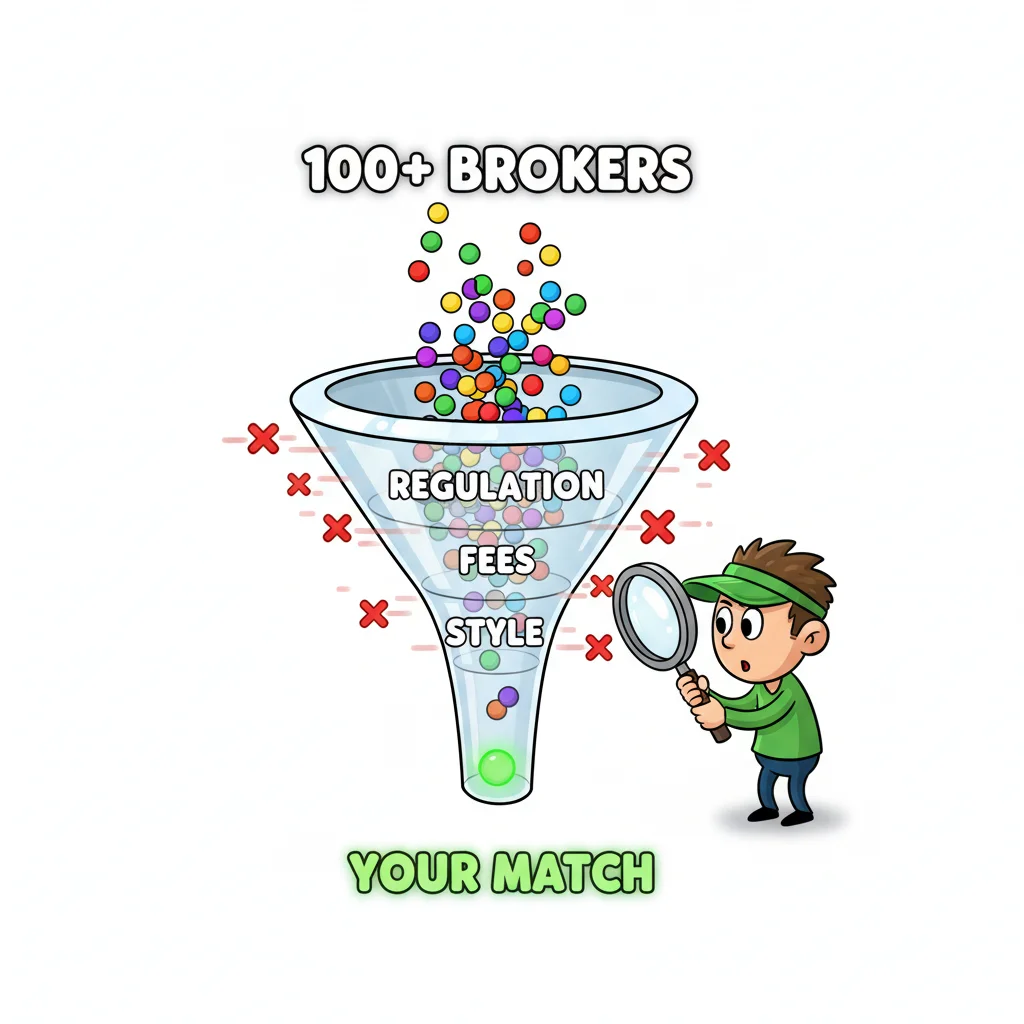
Over 90% of prop firm traders fail their challenges. For those who pass, a new statistic emerges: a significant portion never see a payout. Quant Tekel, also known as QT Funded, promises up to 90% profit splits and accounts starting under $20. But in the US, where prop firms operate in a regulatory twilight zone, the real question isn't about passing the test. It's about whether the firm will pay you when you win. I've seen too many traders get burned by the fine print. Let's cut through the marketing and look at what you're actually signing up for.
Quant Tekel isn't one simple company. It's a structure that, frankly, is designed to be confusing. You need to understand the two halves to see the whole picture.
First, there's Quant Tekel (Pty) Ltd, a brokerage regulated by South Africa's Financial Sector Conduct Authority (FSP 53227). This entity explicitly states it does not offer services to the United States. Its website, quanttekel.com, is for traders in Africa and Asia.
The second part is the prop firm side, QT Funded (QTFunded.com). This is the side that accepts US traders and runs the evaluation challenges. This operation is not a registered broker-dealer with the SEC or a Commodity Trading Advisor (CTA) with the CFTC. It's a UK-registered entity (Quant Tekel Ltd) that acts as a payment agent, collecting your challenge fee.
So, you're paying a UK company for the chance to trade a demo account, with the promise of a payout from a South African broker that says it doesn't serve your country. That's the first red flag. It's a jurisdictional shell game that makes it incredibly difficult to seek legal recourse if something goes wrong.

Warning: WikiFX, a major financial watchdog service, flags Quant Tekel's FSCA license as "unverified." They warn of potential license misuse or fraud. This isn't a minor detail; it's a glaring caution sign from a professional ratings agency.
The firm rebranded from Ascend X/Ascendix Capital in late 2023. Rebranding can be a legitimate business move, but in the prop world, it's also a common tactic to shed a negative online reputation. A quick search for the old names alongside "payout issues" is always a wise move.
“You're paying a UK company for the chance to trade a demo account, with the promise of a payout from a South African broker that says it doesn't serve your country.”
The pricing looks attractive on the surface. A $25,000 funded account challenge might cost you around $200. That's cheaper than many competitors. But the cost of entry is the least of your worries. The real cost is in the rules designed to make consistent profitability nearly impossible and payouts elusive.
Here are the specific numbers you're fighting against:
| Rule | QT Advance (2-Step) | Standard Account |
|---|---|---|
| Profit Target | Step 1: 7%, Step 2: 5% | Varies by account size |
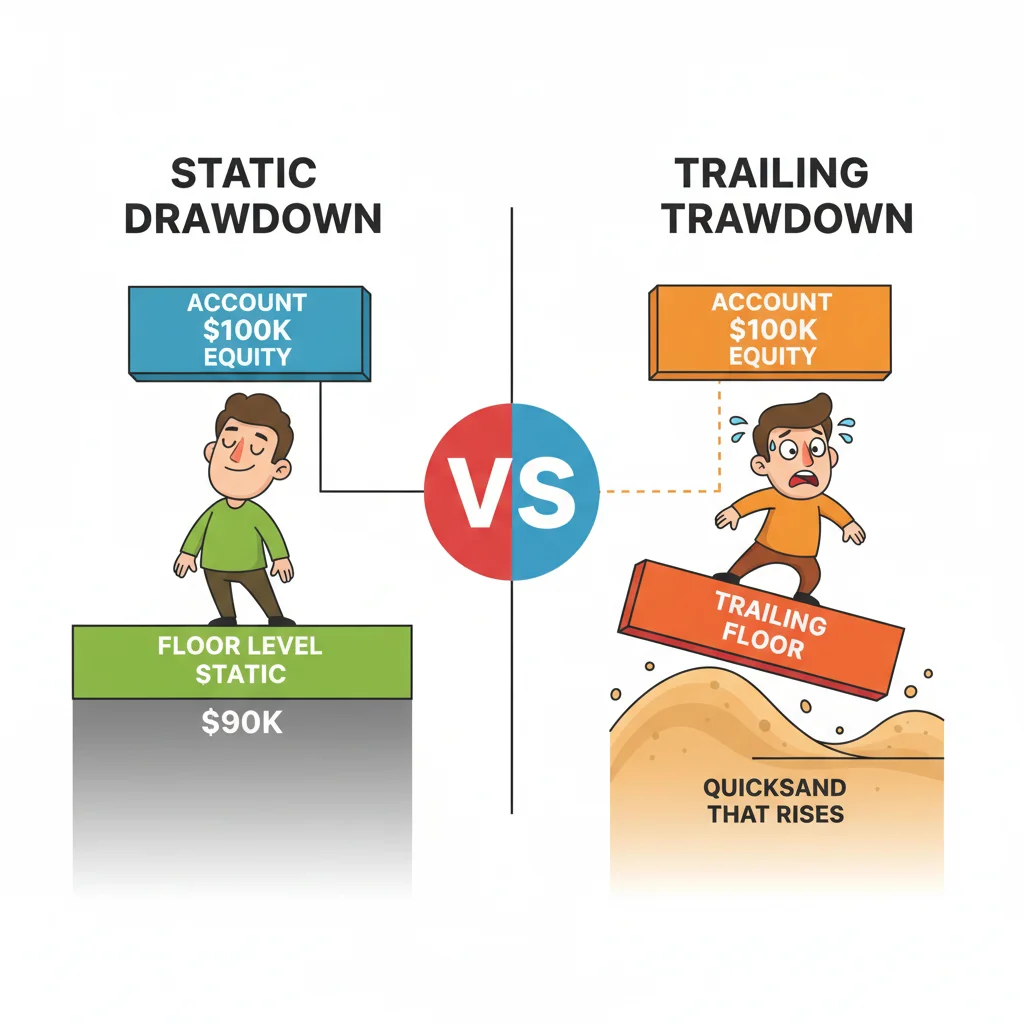
| Max Daily Loss | 4% | Typically 3% |
| Max Total Loss | 10% | Typically 6% |
| Minimum Withdrawal | After passing, target is 5% | 5% profit target |
The Hidden Hurdles
The 5% minimum withdrawal sounds straightforward. But I've seen user reports stating there's an additional, unofficial "3% safety buffer." This means you might need to hit 8% in profits before you can withdraw, and only 5% of that is considered for the split. If true, this effectively raises your target by 60% before you see a dime.
Then there's the consistency rule. You must have at least 25% of your total profits come from trades that are not your single largest winning trade. This rule is a killer for certain strategies, like swing trading where you might ride one major trend. It forces you to take smaller, more frequent trades, which increases your exposure to spreads, commissions, and random market noise.
Let me give you a personal example from a different firm with a similar rule. I once nailed a perfect XAU/USD swing, catching a $4,000 move. It made up 80% of my account's profit for the month. Despite being a valid, rule-abiding trade, I violated the "consistency" clause. The profit from that entire trade was disqualified. I learned the hard way that prop firm rules aren't about fair trading; they're about statistical attrition.

Example: You buy a $100,000 account challenge. Your max daily loss is $3,000 (3%). One bad EUR/USD move of 30 pips with a standard lot costs you $300. Ten lots? That's $3,000 - you've just hit your daily limit and the challenge is over. This is why a position size calculator isn't a suggestion; it's your lifeline.

💡 विंस्टन की सलाह
A prop firm's rulebook isn't a guide to fair play; it's a legal document outlining all the ways they can say 'no' to your withdrawal. Read it like a prosecutor.
“The real cost is in the rules designed to make consistent profitability nearly impossible and payouts elusive.”
This is the most critical section for any American trader. Quant Tekel, and nearly all retail prop firms serving the US, exist in a legal loophole. They are not your broker.
Traditional brokers like Pepperstone or IC Markets are regulated entities that hold your funds, execute live market orders, and are subject to strict capital requirements. Prop firms avoid this by structuring their model as an "evaluation service." You pay a fee to trade a simulated (demo) account. If you pass, they may give you a live account with their capital. Your fee is for the test, not for investment management.
This loophole is closing. Regulators have woken up.
- The CFTC's Move: Look at the 2023 case against My Forex Funds. The CFTC alleged it was a fraud, accusing the firm of running a demo account scheme and making money primarily from trader fees, not successful trading. The message is clear: the CFTC is looking at whether these firms are actually CTAs and need to register.
- The SEC's Amendments: New rules (3a5-4, 3a44-2) are broadening the definition of "dealer." This could force prop firms trading securities to register with the SEC and FINRA, facing real oversight and capital rules.
The impact? Major firms like FTMO have stopped serving US clients. Others, like SurgeTrader, have shut down entirely. This isn't theoretical. The landscape is actively crumbling.
Where does this leave Quant Tekel? Their workaround for US clients is to offer the TradeLocker platform instead of MT5. But swapping platforms doesn't change the fundamental regulatory risk. If the CFTC or SEC decides to act, the firm could freeze withdrawals or exit the US market overnight, leaving funded traders high and dry. Your contract with them is likely not worth the paper it's printed on in a US court.

Pro Tip: Never, ever think of a prop firm challenge fee as an investment. It's a non-refundable tuition fee for a very difficult test where the final exam (the payout) can be arbitrarily graded by the professor.
“Your evidence is your only use.”
Quant Tekel claims "institutional-grade spreads from 0.0 pips." In my experience, you should treat such claims with extreme skepticism. User reviews tell a different story, mentioning GBP/USD and EUR/USD spreads around 0.6-0.7 pips during the London session. That's not terrible, but it's not "institutional-grade" and is higher than true ECN brokers.
For a scalping strategy, these spreads matter. A 0.7 pip spread on EUR/USD means you're down $7 per standard lot before the trade even moves. Your strategy needs to overcome that friction on every single trade.
use is up to 1:100. This is a double-edged sword. While it amplifies gains, it's the fastest route to a margin call. With a 3% daily loss limit on a standard account, 1:100 use means a mere 30-pip move against you on a full position will blow your daily drawdown.
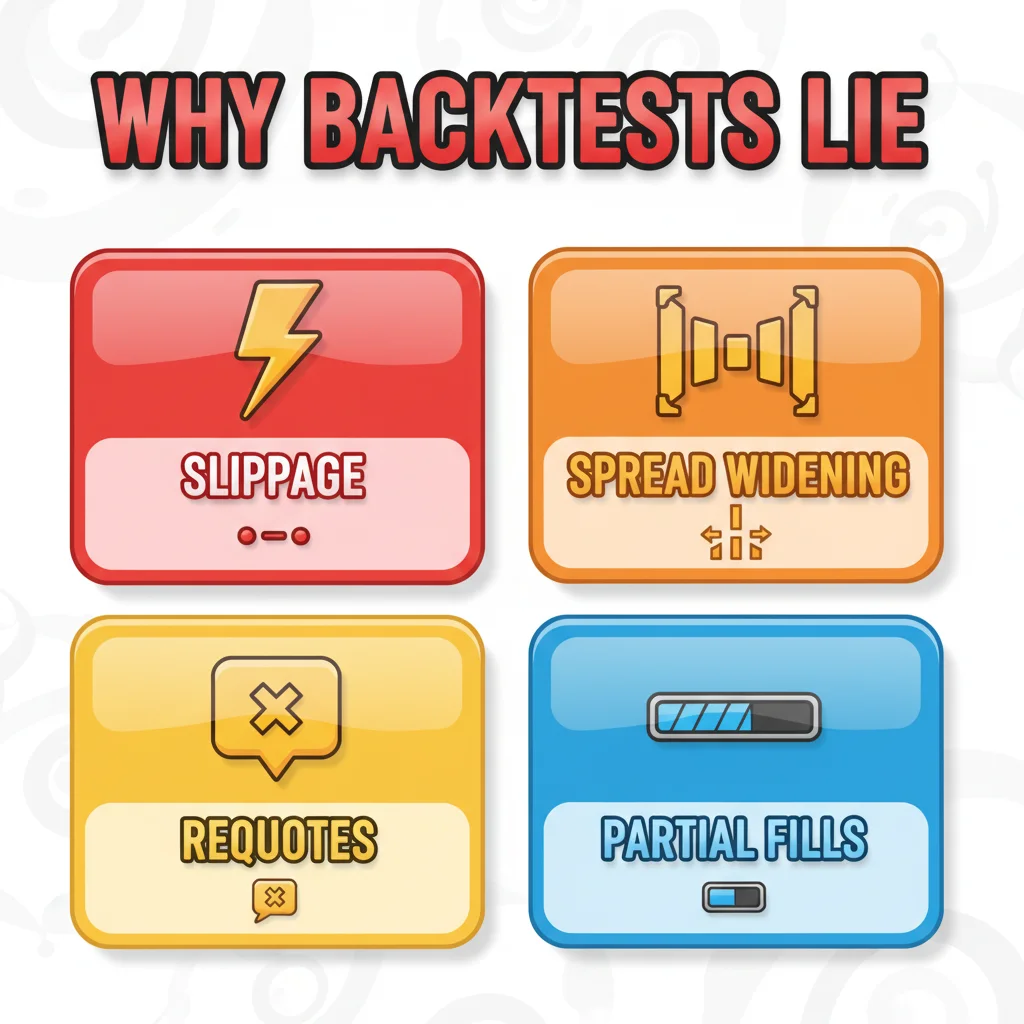
The real issue with conditions in prop firms isn't the listed spreads or use. It's the potential for slippage and order execution during news events. Since you're likely on a simulated account during the challenge, the firm's risk management system can introduce artificial slippage or reject orders to protect their simulated capital. I've had trades during a Fed announcement on a prop account get filled 5 pips away from my requested price, while my personal account with Exness got filled instantly at the quoted price. That kind of slippage turns winning strategies into losers.
They offer crypto trading 24/7, which is a plus. But crypto's volatility is a nightmare for drawdown rules. A 4% daily drawdown can be wiped out in a single 5-minute Bitcoin candle.
💡 विंस्टन की सलाह
Your challenge fee is a sunk cost. The moment you pay it, write it off mentally. Trading to 'get your fee back' is a guaranteed path to breaking your own rules.
“Your evidence is your only use.”
Let's talk about the only metric that matters: getting paid. Quant Tekel claims over $8 million in payouts. I don't doubt some traders have been paid. The business model relies on a few success stories for marketing.
But look at the independent feedback. Their Trustpilot score for the prop firm is a devastating 1.7 out of 5. Read the negative reviews from late 2024 and 2025. The stories are consistent:
- Payout Denials on Technicalities: Traders reporting denied withdrawals for alleged "reverse trades" or trading during "Trump speeches" (a market event not explicitly forbidden in many written rules).
- Vanishing Support: After passing the challenge, communication slows or stops when withdrawal is requested.
- Opaque Rule Enforcement: The "consistency rule" and "minimum trading days" are applied retroactively to disqualify profits.
I passed a challenge with a different firm years ago. My first withdrawal request for $1,850 was delayed for "verification" for 45 days. After weekly emails, they finally paid, but the stress was immense. My second withdrawal was denied because I had two winning trades in a single day that they claimed "correlated too highly" - a rule not in the handbook. I never traded with them again. The psychological toll isn't worth it.
A prop firm's profitability depends on challenge fees and minimizing live payouts. Their incentives are not aligned with yours. Every dollar they pay you is a dollar less in their pocket. This fundamental conflict of interest is why the payout process is often the hardest part of the journey.
Warning: If you pursue this, document everything. Screen-record your trade executions, save all chat logs with support, and archive the rulebook from the day you start. Your evidence is your only use.
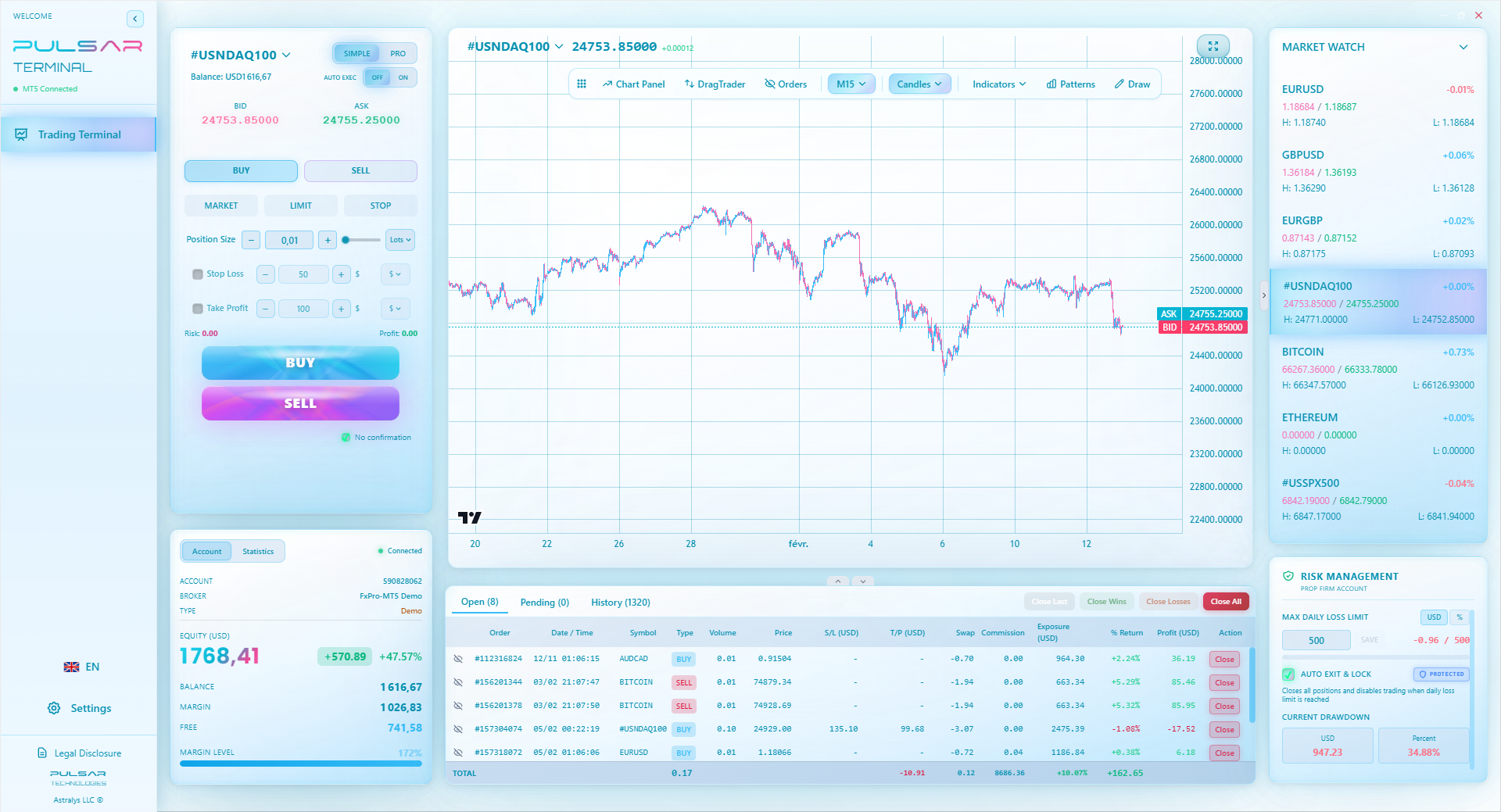
Managing the complex drawdown and consistency rules of a prop firm challenge is nearly impossible manually; Pulsar Terminal automates this with prop firm daily loss protection and multi-TP/SL tools directly on your MT5 chart.
“The dream of trading with 'someone else's money' is seductive. But you're paying for the privilege of jumping through hoops.”
So, should a US trader try the Quant Tekel prop firm in 2026?
My advice is no, not with real money you can't afford to lose.
The regulatory risk is too high, the Trustpilot reviews are too damning, and the rule structure is designed for you to fail the payout phase, not just the challenge. That $200 challenge fee is better spent on education, better charting software, or simply added to your own personal trading account.
What Should You Do Instead?
- Trade Your Own Capital: Start small. A $500 account with a reputable, well-regulated broker like XM or IC Markets is a real education. Every loss and win is yours, with no hidden rules. The psychological lessons are pure. Use a proper position size calculator.
- Consider a True Proprietary Trading Firm: These are physical firms in major cities that hire traders, provide training, and give you a desk. You're an employee, not a customer paying for a test. The barrier to entry is higher, but the model is legitimate.
- Master One Strategy on Demo: Instead of paying for a prop challenge, spend 6 months mastering a single strategy on a free demo account. Use the MACD indicator or RSI indicator in a clear, back-tested way. Then, transition to a micro account.
- If You Insist on Prop Firms: Wait. The regulatory shakeout in the US is ongoing. In a year, the landscape will be clearer. Only consider firms that are actively seeking or have obtained regulatory clarity, even if their challenges are more expensive. The fee is your insurance policy.
The dream of trading with "someone else's money" is seductive. But in the current US environment, with firms like Quant Tekel, you're not trading their money. You're paying for the privilege of jumping through hoops, with a high probability the final hoop will be moved just as you jump.
💡 विंस्टन की सलाह
The only use that matters isn't 1:100 on a trade. It's the use of walking away from a firm with poor payout reviews. Your capital and skill are your power, not their branded account.
FAQ
Q1Is Quant Tekel legit and regulated in the USA?
No. Its brokerage arm is regulated in South Africa but explicitly does not serve the US. Its prop firm operation (QT Funded) is not registered with the SEC or CFTC as a broker or Commodity Trading Advisor. It operates in a regulatory gray area that is currently under scrutiny by US authorities.
Q2What is the minimum withdrawal amount for Quant Tekel?
The stated rule is a 5% profit target on your funded account before you can withdraw. However, user reports suggest an effective target of 8% due to an unofficial "3% safety buffer," with only 5% being eligible for the profit split. Always confirm the exact terms in your contract.
Q3Can US traders use MetaTrader 5 with Quant Tekel?
No. Quant Tekel states that MetaQuotes-based platforms (like MT5) are not available to US residents due to licensing. US clients are directed to use alternative platforms like TradeLocker.
Q4What is the consistency rule?
This rule requires that at least 25% of your total profits must come from trades other than your single largest winning trade. It's designed to prevent traders from passing challenges with one lucky trade and forces a style of trading that may not suit swing or trend-following strategies.
Q5How much does a Quant Tekel challenge cost?
Challenges are marketed as affordable. A $25,000 account challenge can cost around $200, while a $100,000 account might be approximately $370 with discounts. Remember, this is a non-refundable fee for a simulated account.
Q6Has Quant Tekel had payout issues?
Yes, there are numerous user reports from 2024 and 2025 on Trustpilot and other forums detailing payout denials, often based on retroactive application of rules or vague violations like "reverse trades." Their low Trustpilot score (1.7/5) reflects significant user dissatisfaction with the payout process.
Q7What happens if US regulators crack down on prop firms?
If the CFTC or SEC takes action, firms like Quant Tekel could immediately suspend services for US traders, freeze withdrawals, or shut down. Funded traders would likely have little to no recourse, as their contracts may not be enforceable in US courts. This is a real and present risk.
प्रो. विंस्टन का पाठ
:
- ✓Treat prop firm fees as tuition, not investment.
- ✓A 3% daily loss limit is erased by a 30-pip move at 1:100 use.
- ✓Trustpilot scores below 2.0 signal systemic payout problems.
- ✓US prop firm regulation is collapsing; choose platforms accordingly.
यह लेख कितना उपयोगी था?
रेट करने के लिए स्टार पर क्लिक करें
साप्ताहिक ट्रेडिंग विश्लेषण
मुफ़्त साप्ताहिक विश्लेषण और रणनीतियाँ। कोई स्पैम नहीं।
लेखक के बारे में
James Mitchell
वरिष्ठ ट्रेडिंग विश्लेषक
न्यूयॉर्क में स्थित, 9 साल से अधिक का ट्रेडिंग अनुभव। प्रमुख USD पेयर्स, प्रॉप फर्म चैलेंजेज और अमेरिकी नियामक परिदृश्य पर फोकस।
टिप्पणियाँ
आपको यह भी पसंद आ सकता है

Cara Trading Forex Sukses: 7 Prinsip dari Trader Profesional
Cara trading forex sukses dengan 7 prinsip trader pro: manajemen modal, disiplin, journal trading, backtest. Data nyata, bukan janji profit palsu.
Jam Trading Forex Terbaik untuk Trader Indonesia: Panduan Lengkap dengan Tabel Waktu
Panduan jam trading forex untuk trader Indonesia. Tabel 4 sesi dunia, jam emas 20:00-00:00, sesi mana yang harus dihindari. Data akurat + tips dari trader berpengalaman.
Top 5 Sàn Forex Uy Tín Nhất 2026: Review Jujur dari Trader Indonesia
Top 5 sàn forex uy tín 2026 untuk trader Indonesia. Review jujur: spread, deposit, withdraw, dukungan lokal. Exness, XM, IC Markets & lebih.
All these calculators are built into Pulsar Terminal with real-time data from your MT5 account. One-click position sizing, automatic risk management, and instant calculations.
