


Thinking about parking some money in gold but don't want the hassle of a locker? The SBI Gold Exchange Traded Scheme (ETF) probably popped up on your radar.

Rajesh Sharma
वरिष्ठ फॉरेक्स विश्लेषक ·  India
India
☕ 10 मिनट पढ़ने
आप क्या सीखेंगे:
- 1What Exactly Is the SBI Gold ETF?
- 2The Real Cost of Owning It
- 3Performance: The Stunning (and Misleading) Numbers
- 4The Big Change: SEBI's New Valuation Rules (2026)
- 5How to Actually Trade the SBI Gold ETF
- 6Taxes: The Government's Cut
- 7SBI Gold ETF vs. Other Ways to Play Gold
- 8Final Verdict: Who Should (and Shouldn't) Buy It?

Thinking about parking some money in gold but don't want the hassle of a locker? The SBI Gold Exchange Traded Scheme (ETF) probably popped up on your radar. It's one of the oldest and biggest in India. But is it a smart trade, or just a safe-haven parking spot? I've held it, traded around it, and watched its moves for years. Let's cut through the marketing and look at what this fund actually does for your portfolio, especially with the big SEBI rule changes that just kicked in.
Forget the fancy name. The SBI Gold Exchange Traded Scheme is basically a mutual fund that buys physical gold for you. You buy units on the stock exchange (NSE or BSE), and each unit represents a tiny fraction of actual gold bars sitting in a vault. It launched way back in 2009, so it's been through a few cycles.
The core idea is simple: the fund's value should move almost exactly with the price of gold in India. As of February 2026, it had nearly ₹25,000 crore in assets, with over 98% of that in physical gold. The rest is cash. It's not trying to beat gold's price; it's trying to be it.

Warning: Don't confuse this with trading gold futures or CFDs on an international broker. This is a domestic, rupee-denominated security. Your profit or loss comes from the change in the ETF's NAV, which tracks domestic gold prices, not directly from the international XAU/USD spot price. There's a correlation, but taxes and local demand create a gap.
You need a demat and trading account to buy and sell it, just like any stock. The minimum investment is ₹5,000 for a lump sum, but you can start an SIP with any amount. I like that flexibility for building a position slowly.
This is where most investors get tripped up. You're not just paying brokerage. The fund charges an expense ratio to manage everything - storage, insurance, administration. For the Regular plan, that's 0.70% per year. It doesn't sound like much, but it's a constant drag.
Let me give you a real example from my own book. In early 2023, I allocated a chunk of a client's conservative portfolio to this ETF as a hedge. We bought at an NAV of around ₹52. By holding for over a year, we avoided short-term taxes, but that 0.70% fee quietly chipped away. If you're in the Direct plan (bought directly from the fund house, not through a distributor), the expense ratio has been 0%. That's a massive difference over time. Always, always check if you're buying the Regular or Direct unit.
There's also the spread - the difference between the buy and sell price on the exchange. On a typical day, it can be around 0.5%. That's your immediate "cost" to enter or exit a trade. No exit load is a plus, though.
The Brokerage Layer
On top of the fund's fees, your broker will charge you. This could be a flat fee per trade or a percentage. If you're scalping this thing (which I don't recommend), those fees will kill you. It's much better suited for a swing trading or long-term hold approach where you're making fewer, larger moves.

Example: You invest ₹1,00,000 in the Regular plan. In one year, if the gold price does nothing, you'd still pay about ₹700 in expenses (0.70%). If the spread is 0.5% when you sell, that's another ₹500 gone. Your gold price needs to rise at least 1.2% just for you to break even. This is why holding periods matter.

💡 विंस्टन की सलाह
The expense ratio is a silent leak in your boat. A 0.70% annual fee means you lose 7% of your capital to costs every decade, even if the gold price goes nowhere. Always opt for the Direct plan.
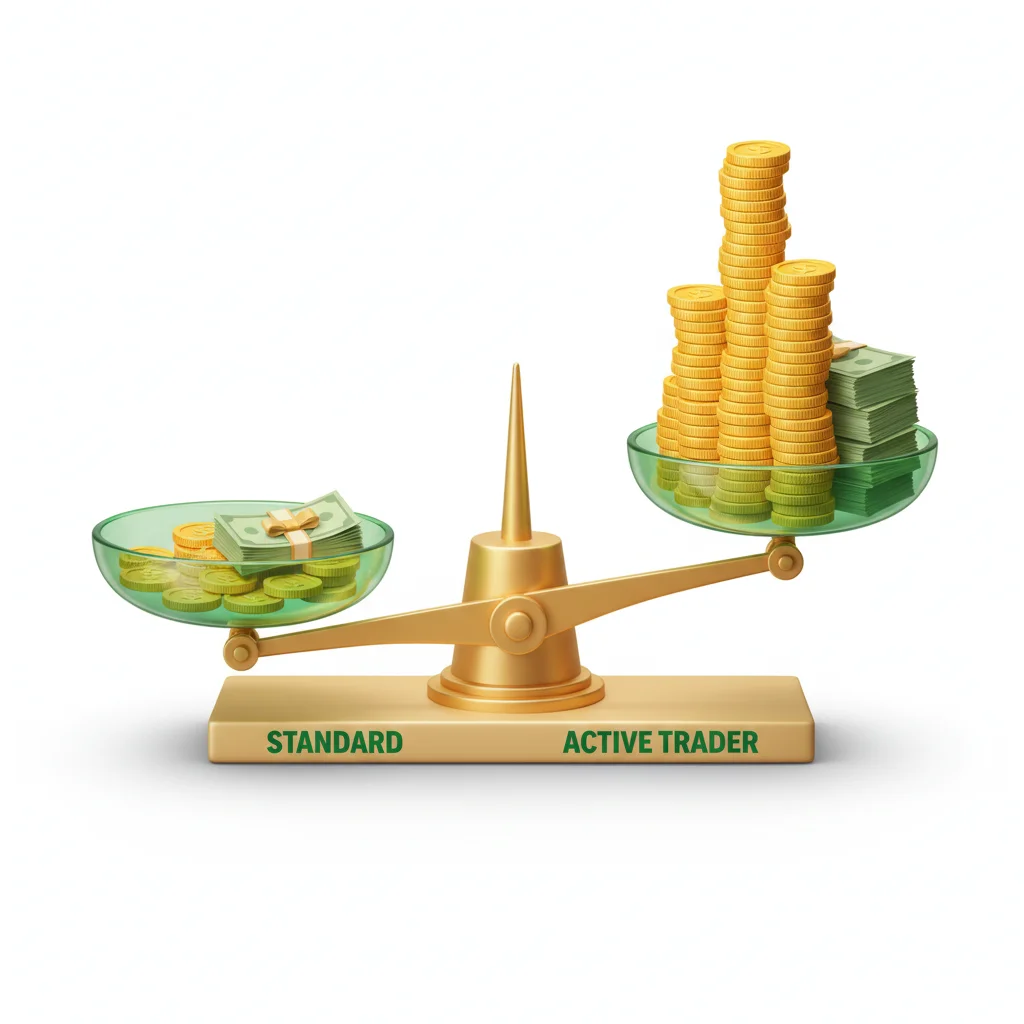
“Gold ETFs get a raw deal on taxes. It makes short-term trading almost pointless unless you're catching a massive move.”
Look at the recent returns and your eyes might pop out. 58% over one year? 212% over five years? That's insane. But context is everything. Gold has been in a historic bull run, especially in rupee terms. The ETF has simply tracked that.
Those returns are trailing, meaning they look backward. The 5-year return of 25.38% annualized (as of early April 2026) is fantastic, but it includes a period of explosive growth that may not repeat. The since-launch CAGR of about 13.5% is a more sobering, and probably more realistic, long-term figure.
Here's my personal experience. I used a small portion of the ETF as a hedge during the 2020 market crash. It worked. While my equity positions bled, the gold holding went up. But I made a classic mistake: I got greedy. I held the hedge for too long after the crisis eased, and gave back a chunk of those gains when gold corrected. The lesson? Have a clear plan for why you own it. Is it a permanent portfolio allocation (5-10%), or a tactical hedge for a specific event? Don't let a winning trade turn into a "forever hold" just because you're scared to book profits.
The fund's low turnover ratio (12%) tells you they're not trading much. They're just buying and holding gold, which is what you want. You're not paying for some star fund manager's genius guesses.
This is critical and most articles won't explain why it matters to you, the trader. Until March 31, 2026, Gold ETFs like SBI's valued their gold using the London Bullion Market Association (LBMA) price. From April 1, 2026, SEBI says they must use a polled spot price from Indian exchanges like the MCX.
Why should you care? Two reasons. First, transparency. The NAV now reflects the price you can actually get in the Indian market, not a London benchmark that might not match local supply and demand. Second, it could reduce tracking error. If there's a sudden duty change or local demand spike, the ETF's price should reflect it faster.
There's another sneaky change. Since June 2024, SEBI has allowed these funds to put up to 50% of their assets into gold-related instruments like the Gold Deposit Scheme or, importantly, gold futures contracts (ETCDs). HDFC's fund is already doing this. This means fund managers can potentially earn a little extra yield (from futures rollovers) instead of just paying for storage. For SBI's fund, this could slightly improve returns or lower costs in the future. Watch the portfolio disclosures.

Pro Tip: After this rule change, keep an eye on the discount/premium to NAV. If the new valuation method causes any initial confusion in the market, the ETF might trade at a slight discount, which could be a short-term buying opportunity for the patient trader.
💡 विंस्टन की सलाह
New SEBI valuation rules mean the ETF's NAV now reflects the Indian market's price for gold. Watch for a widening gap between the ETF price and the international spot price - it could signal a local supply crunch or a trading opportunity.
“The 0.70% expense ratio doesn't sound like much, but it's a constant drag on your returns, year after year.”
This isn't a typical forex pair. You need a different mindset.
For the Long-Term Holder
You're using it as a savings plan or inflation hedge. Set up an SIP and forget it. The key here is consistency and ignoring the short-term noise. Use the Direct plan to minimize costs. This is a "set and forget" part of your portfolio. A position size calculator is still useful here to determine what percentage of your total capital this should be.
For the Active Trader
You're looking at chart patterns, momentum, and macroeconomic cues. You can use technical analysis on the ETF's price chart just like a stock. Look for support/resistance levels, and use indicators like the RSI indicator to spot overbought or oversold conditions in the Indian gold market.
My method? I watch for periods where the rupee strengthens dramatically against the dollar. Often, this temporarily suppresses rupee-denominated gold prices, even if international gold is flat. That can be a good entry point. I also watch the MACD indicator on the weekly chart for trend changes. In 2024, a bullish crossover on the weekly MACD gave a great signal for the next leg up.
Remember the spread definition. Don't jump in and out. Plan your trades for a 3-6 month horizon minimum to overcome the friction of fees and spreads. And always, always factor in the tax man.
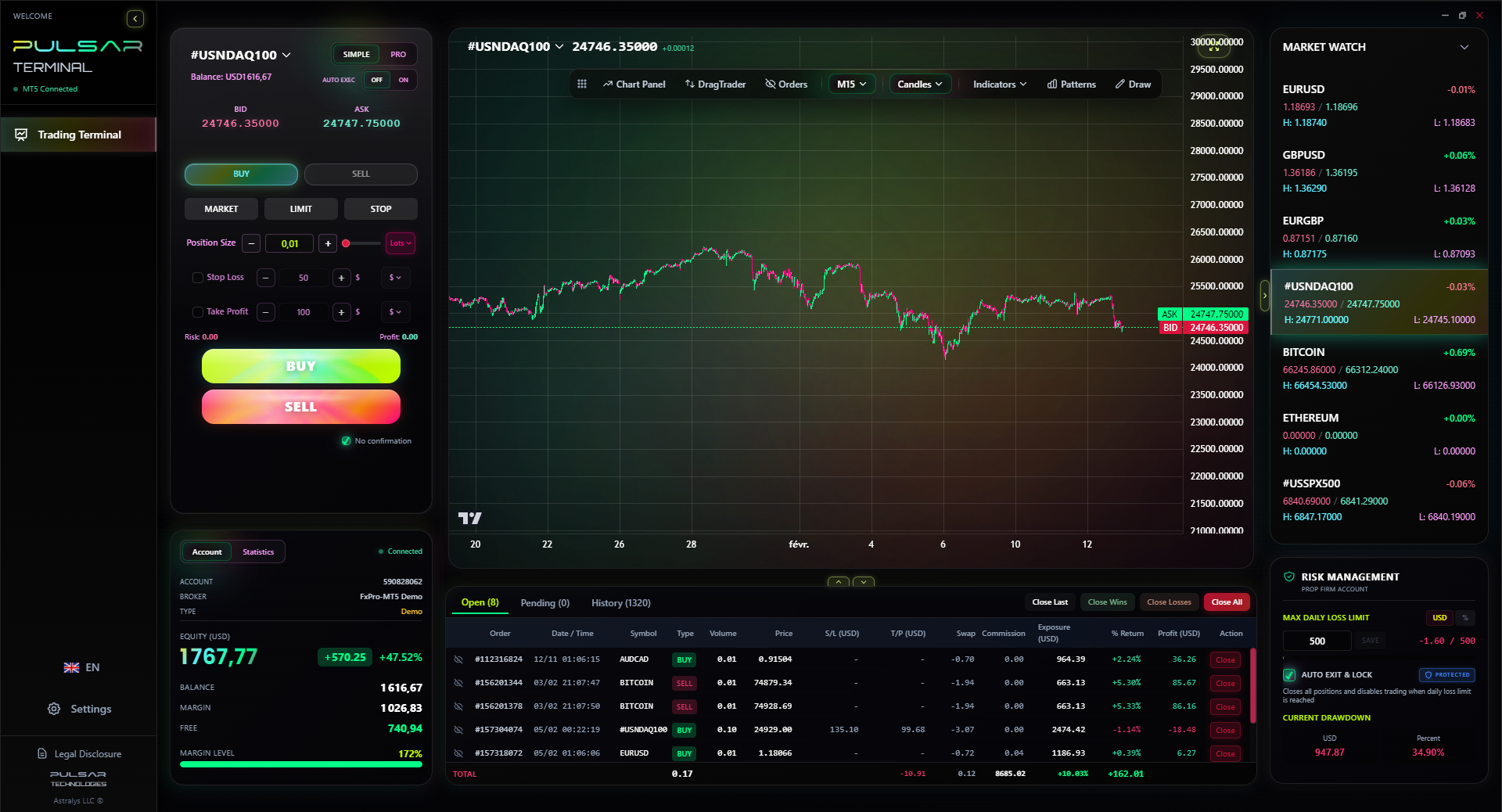
When building a long-term position in an ETF like this, setting multiple take-profit levels for partial closures helps lock in gains at different targets, a feature Pulsar Terminal makes simple on your MT5 platform.
This is the part that hurts. The Union Budget 2026 kept the tax structure simple but harsh for Gold ETFs.
- Short-Term Capital Gains (STCG): Sell within 12 months? Your entire profit gets added to your income and taxed at your normal income tax slab rate. If you're in the 30% slab, that's a 30% haircut immediately.
- Long-Term Capital Gains (LTCG): Hold for more than 12 months? Your gain is taxed at a flat 12.5%. There's no indexation benefit to adjust for inflation.
Let's compare. If you'd held a property or debt fund for years, you'd get indexation, which drastically lowers your taxable profit. Not here. Gold ETFs get a raw deal.
This tax rule completely changes your strategy. It makes short-term trading almost pointless unless you're catching a massive move. It strongly incentivizes you to hold for over a year. In my trading, this means I size my Gold ETF positions as longer-term core holdings. I might trade futures or other instruments for short-term gold views, but the ETF is for the multi-quarter or multi-year thesis.
Before you calculate your potential profit, calculate your post-tax profit. It's a sobering exercise.
💡 विंस्टन की सलाह
The 12.5% LTCG tax with no indexation is a brutal design flaw for a long-term inflation hedge. Factor it into every expected return calculation. It often makes holding physical gold or SGBs more tax-efficient for very long horizons.
“For the average person looking to diversify, it's a perfect tool. For the active trader, it's a useful, low-drama instrument.”
This isn't your only option. Here’s a quick trader’s comparison.
| Instrument | Pros (Trader's View) | Cons (Trader's View) | Best For... |
|---|---|---|---|
| SBI Gold ETF | Easy access, no storage, high liquidity on NSE/BSE. | LTCG tax of 12.5% (no indexation), expense ratio, tracking error. | Long-term Indian investors, SIPs, core portfolio hedge. |
| Physical Gold (Bars/Coins) | Tangible asset, no counter-party risk. | Making charges, storage risk, illiquid to sell in a pinch, purity concerns. | Those who want physical possession, not traders. |
| Sovereign Gold Bonds (SGBs) | 2.5% annual interest, no storage, LTCG tax-free if held to maturity (8 yrs). | Lock-in period (5 yrs for early exit), limited liquidity on secondary market. | Very long-term (8-year) buy-and-hold investors. |
| Gold Futures (MCX) | High use, pure price play, lower transaction costs for size. | High risk (margin call danger), complex for beginners, short-term trading only. | Experienced traders with strong risk management. |
| International Gold CFDs | Trade 24/5, high use, access to global price action. | Currency risk (INR-USD), not regulated by Indian authorities, requires an international broker like Exness or IC Markets. | Sophisticated traders wanting direct XAU/USD exposure. |
For most Indian traders starting out, the SBI Gold Exchange Traded Scheme or its peers are the most sensible middle ground. You get the exposure without the extreme use or complexity of futures.

After all this, is the SBI Gold Exchange Traded Scheme a good buy?
Yes, if:
- You want a simple, regulated way to add gold to your portfolio for the long term (5+ years).
- You're setting up an SIP to build gold exposure gradually.
- You're an investor who gets nervous about use and wants a "pure" gold play without the complexities of futures.
- You believe in the long-term story of gold as a hedge against rupee depreciation or global uncertainty.
No, if:
- You're a short-term trader looking for quick profits. The taxes and costs will eat you alive.
- You're trying to actively scalp the market. The liquidity is good, but not that good.
- You're comfortable with use and have the discipline for futures trading.
- You have a time horizon of less than a year. The tax hit makes it inefficient.
My take? It's a solid financial product. It does what it says on the tin. For the average person looking to diversify away from stocks and real estate, it's a perfect tool. For the active trader, it's a useful, low-drama instrument for expressing a long-term view on gold without having to worry about the pip definition or overnight swaps. Just go in with your eyes open about the costs and the tax man waiting for his share. Buy the Direct plan, hold for the long term, and use it as one piece of a bigger puzzle.
FAQ
Q1What is the minimum investment for SBI Gold ETF?
The minimum lump sum investment is ₹5,000. There is no minimum for additional investments or for starting a Systematic Investment Plan (SIP), so you can start with very small amounts regularly.
Q2How is the SBI Gold ETF taxed?
If you sell units within 12 months of purchase, profits are taxed as Short-Term Capital Gains (STCG) at your applicable income tax slab rate. If held for more than 12 months, profits are taxed as Long-Term Capital Gains (LTCG) at a flat rate of 12.5%. There is no benefit of indexation for inflation adjustment.
Q3What is the expense ratio for SBI Gold ETF?
For the Regular plan (typically bought through a broker or distributor), the expense ratio is 0.70% per annum as of March/April 2026. For the Direct plan (bought directly from the fund house), the expense ratio has been 0%. Always confirm you are selecting the Direct option to save on costs.
Q4What are the new SEBI rules for Gold ETFs in 2026?
Effective April 1, 2026, SEBI mandates that Gold ETFs must value their physical gold holdings using polled spot prices from Indian stock exchanges (like MCX) instead of the international LBMA benchmark. This aims for better transparency and alignment with domestic market prices.
Q5Can I trade SBI Gold ETF intraday?
Technically, yes, as it trades on the stock exchange like a share. However, it is not advisable for intraday trading due to the relatively lower liquidity compared to large-cap stocks, the bid-ask spread cost, and the punitive short-term capital gains tax that applies to any profit held for less than a year.
Q6Do I need a demat account to invest?
Yes, absolutely. Since the SBI Gold Exchange Traded Scheme is an ETF listed on the NSE and BSE, you must have a demat account and a trading account with a registered broker (like Zerodha, ICICI Direct, Groww, etc.) to buy and sell units.
Q7How does it differ from Sovereign Gold Bonds (SGBs)?
SGBs are government securities denominated in grams of gold. They pay 2.5% annual interest and have an 8-year maturity. If held to maturity, the capital gains are completely tax-free. The SBI Gold ETF is a mutual fund unit that trades on an exchange, has no interest, and is always subject to capital gains tax. SGBs are for very long-term holding, while the ETF offers more liquidity and flexibility.
प्रो. विंस्टन का पाठ
:
- ✓Always buy the Direct plan to avoid the 0.70% expense ratio.
- ✓Hold for over 12 months to avoid slab-rate STCG tax.
- ✓Post-tax LTCG is 12.5%; factor this into all profit targets.
- ✓Use it for long-term allocation, not short-term speculation.
यह लेख कितना उपयोगी था?
रेट करने के लिए स्टार पर क्लिक करें
साप्ताहिक ट्रेडिंग विश्लेषण
मुफ़्त साप्ताहिक विश्लेषण और रणनीतियाँ। कोई स्पैम नहीं।
लेखक के बारे में
Rajesh Sharma
वरिष्ठ फॉरेक्स विश्लेषक
भारतीय और दक्षिण एशियाई बाज़ारों में 10 साल से अधिक का ट्रेडिंग अनुभव। NSE करेंसी डेरिवेटिव्स से शुरुआत करके अंतरराष्ट्रीय फॉरेक्स में आए। USD/INR और इमर्जिंग मार्केट पेयर्स में विशेषज्ञता।
टिप्पणियाँ
आपको यह भी पसंद आ सकता है

Cara Trading Forex Sukses: 7 Prinsip dari Trader Profesional
Cara trading forex sukses dengan 7 prinsip trader pro: manajemen modal, disiplin, journal trading, backtest. Data nyata, bukan janji profit palsu.
Jam Trading Forex Terbaik untuk Trader Indonesia: Panduan Lengkap dengan Tabel Waktu
Panduan jam trading forex untuk trader Indonesia. Tabel 4 sesi dunia, jam emas 20:00-00:00, sesi mana yang harus dihindari. Data akurat + tips dari trader berpengalaman.
Top 5 Sàn Forex Uy Tín Nhất 2026: Review Jujur dari Trader Indonesia
Top 5 sàn forex uy tín 2026 untuk trader Indonesia. Review jujur: spread, deposit, withdraw, dukungan lokal. Exness, XM, IC Markets & lebih.
All these calculators are built into Pulsar Terminal with real-time data from your MT5 account. One-click position sizing, automatic risk management, and instant calculations.
