


Most new traders I meet in Lagos focus entirely on spreads and commissions.

Olumide Adeyemi
पश्चिम अफ्रीकी ट्रेडिंग अग्रणी ·  Nigeria
☕ 9 मिनट पढ़ने
आप क्या सीखेंगे:
- 1What Exactly Are Swap Fees?
- 2How Swap Fees Are Calculated (With Real Numbers)
- 3The Wednesday Triple Swap Trap
- 4Swap Fees with Nigerian Brokers: What to Expect
- 5Practical Strategies to Manage Swap Costs
- 6Swap Fees vs. Spreads, Commissions & Nigerian Taxes
- 7Common Swap Fee Mistakes (I've Made Them All)
- 8When Do Swap Fees Really Matter?
Most new traders I meet in Lagos focus entirely on spreads and commissions. They'll hunt for the lowest pip cost, then get blindsided a week later by a nasty charge on their account statement. I made this exact mistake. I once held a GBP/USD trade for five days, convinced my analysis was perfect, only to watch my entire planned profit get eaten by something called a 'swap.' Let's set the record straight on swap fees in forex. They're not a hidden trick; they're a fundamental cost of doing business, and understanding them is what separates the amateurs from the professionals.
Swap fees, sometimes called rollover or overnight interest, are the cost (or credit) for holding a leveraged forex position past the daily cut-off time. It's not a broker fee in the traditional sense. Think of it as interest on the loan your broker gives you to trade with use.
When you buy EUR/USD, you're borrowing US Dollars to buy Euros. The swap fee is the difference between the interest rate you'd earn on the Euros and the interest rate you'd pay on the borrowed Dollars. If the Eurozone has a higher interest rate than the US, you might get paid a small credit for holding the position overnight. If it's lower, you pay.

Warning: Don't confuse swap with spread. The spread is the instant cost of entering the trade. The swap is the ongoing cost of keeping it open. Both will hit your bottom line.
The cut-off time is usually 00:00 server time, which is often 11:00 PM or midnight Nigerian time depending on the broker's location. Miss that, and the swap gets applied.
Brokers publish swap rates in a table, usually shown as a credit or debit per lot per night. The formula they use is based on the interbank interest rates of the two currencies, plus a small markup.
Let me give you a real example from a trade I took last year. I was short USD/JPY (selling Dollars, buying Yen) when the Bank of Japan was holding rates negative. The swap table showed -$0.85 for a short position on a standard lot (100,000 units). I held that trade for 8 days.
The math:
- Daily swap: -$0.85
- Days held: 8
- Total swap cost: -$6.80
That doesn't sound like much, right? But I was trading 3 lots. So my total swap cost was $20.40. My profit on the trade was $210. The swap fees ate nearly 10% of my profit. I learned then that for a scalping strategy where profits are small, swap can be a killer. For a swing trading position held for weeks, you must factor it into your risk/reward from the start.

Example: Check your broker's specification table. For USD/JPY, you might see:
- Long (Buy): -$2.50
- Short (Sell): +$1.20 This means if you buy USD/JPY, you pay $2.50 per lot per night. If you sell it, you earn $1.20 credit.

💡 विंस्टन की सलाह
Treat swap like a hotel nightly rate. You wouldn't book a room without checking the cost per night. Don't hold a trade without knowing its daily swap.
“Never let a small daily swap credit convince you to take a trade your analysis doesn't support.”
This is the single biggest shock for new traders. On Wednesday night (platform time), you get charged or credited a triple swap.
Why? In the forex market, a trade has a two-day settlement period (T+2). If you open a trade on Wednesday, it would normally settle on Friday. But since banks are closed over the weekend, the settlement gets pushed to Monday. Holding a position from Wednesday to Thursday means you're technically holding it over Saturday and Sunday, so you pay interest for three days instead of one.
I got caught by this early on. I opened a long AUD/USD trade on a Tuesday, planning to hold for a few days. I calculated my daily swap cost. Come Thursday morning, my account was down three times what I expected. I thought it was a broker error until I dug into the statement. It wasn't an error; it was my own ignorance.
The rule is simple: Any position open at the swap cut-off time on Wednesday will incur triple the normal swap amount. Plan for it. If you're in a trade that has a heavy negative swap, consider whether holding past Wednesday is worth the extra cost.
Most Nigerian traders use international brokers like Exness, IC Markets, or XM. Their swap rates are determined by global interbank rates, not local Nigerian rates. However, your experience can differ based on your account type.
Standard vs. Islamic Accounts: Nearly every broker offers an Islamic or swap-free account option. These accounts don't charge or credit overnight swap fees, making them popular in Nigeria. But there's a catch. Brokers usually offset this by widening the spreads slightly or charging a fixed administrative fee per day or per week that the position is held open. It's not truly 'free'; the cost is just packaged differently.
My advice: Don't automatically choose a swap-free account. Do the math. If you're a day trader who never holds overnight, a standard account with tighter spreads is better. If you're a long-term position trader on a pair with a heavy negative swap (like going long on a currency with a very low interest rate), then the swap-free account might save you money, even with the wider spread.
Also, note that some brokers have different swap rates for standard and commission-based accounts (like RAW or ECN accounts). Always check the specifics in your client area.
💡 विंस्टन की सलाह
Wednesday isn't just hump day; it's triple-swap day. Mark it on your calendar in red. A forgotten triple charge can wreck a week's careful planning.
“Understanding swap is what separates the amateurs from the professionals.”
You can't avoid swap fees entirely if you hold trades overnight, but you can manage their impact.
1. Factor Swap into Your Trade Plan
Before you enter a swing trade, check the swap rate. Use a position size calculator that includes an estimated swap cost over your planned holding period. If the swap cost would consume 20% of your target profit, maybe the trade isn't as good as you thought.
2. Consider the Trade Direction
Sometimes, simply flipping your bias can turn a cost into a credit. In 2022, when the US Federal Reserve was hiking rates aggressively, holding long positions on USD pairs (like EUR/USD) often paid a positive swap. Being short meant you paid. Your analysis should come first, but if you're neutral on direction, the swap could be the tie-breaker.
3. Use a Trading Calendar
Mark the Wednesday triple swap on your calendar. If you're in a trade with a large negative swap, decide in advance: will you close before Wednesday cut-off, or accept the triple charge as part of the cost?
4. Hedge with Swap-Free Accounts (Advanced)
Some sophisticated traders use two accounts: a standard account for day trading and a swap-free account for longer-term holds. This requires careful capital management and isn't for beginners.

Pro Tip: The highest swap costs often come from trading exotic pairs or pairs where there's a huge interest rate differential (like XAU/USD – gold doesn't pay interest!). Stick to majors for lower, more predictable swap rates when you're starting out.
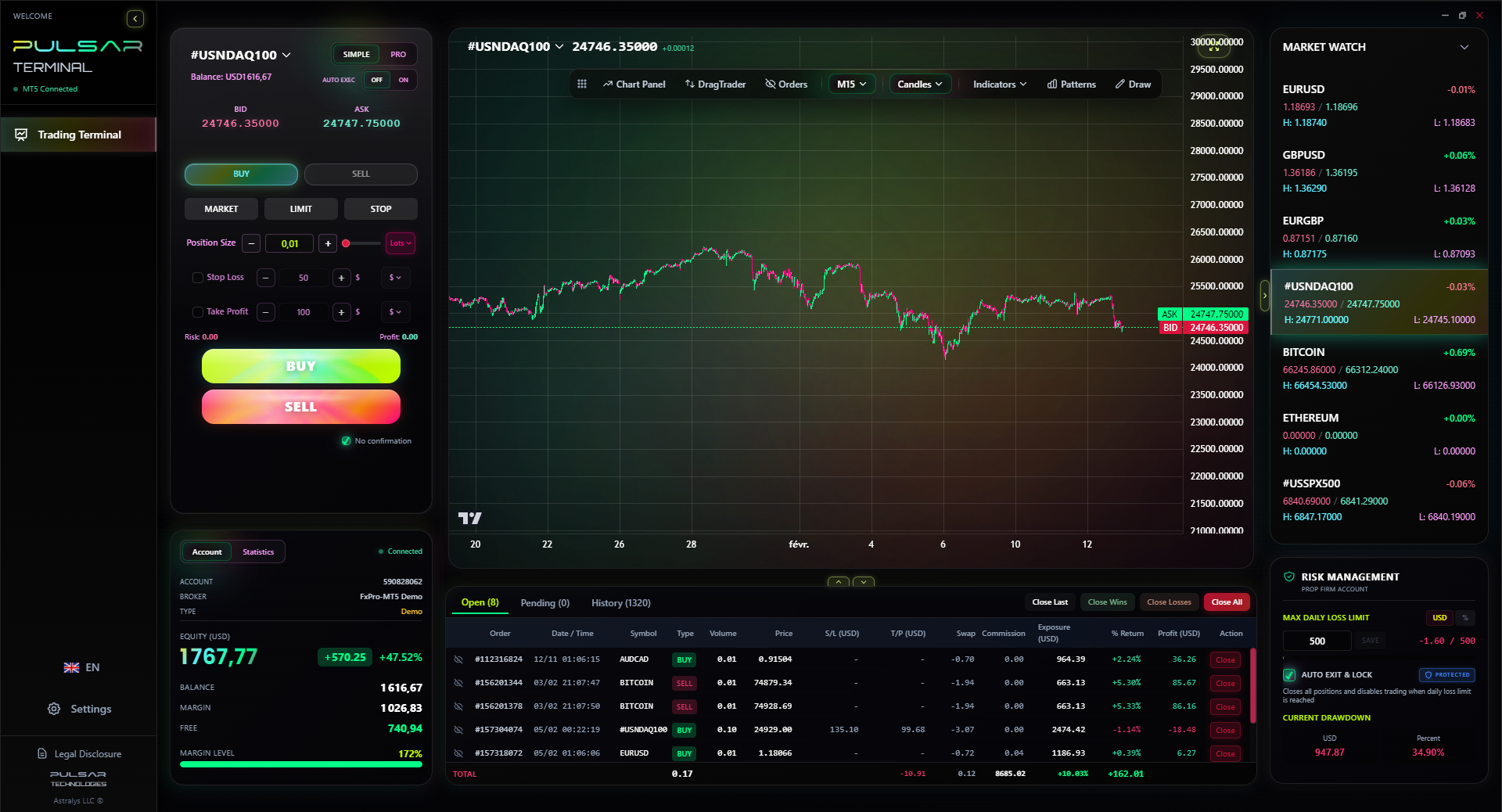
Managing multiple trades with different holding periods and swap costs is complex, but tools like Pulsar Terminal let you set individual trade notes and auto-close rules directly on your MT5 chart to keep track of it all.
To see the full picture, you have to stack swap against all your other costs.
| Cost Type | When It's Charged | How It Affects You |
|---|---|---|
| Spread | Instantly, on entry & exit | Your trade starts in a slight loss. The main cost for day traders. |
| Commission | Per trade, usually per lot | A fixed cost. Common on ECN/Raw accounts with low spreads. |
| Swap Fee | Daily, at rollover time | The cost of time. The main cost for long-term holders. |
| Capital Gains Tax | On net profit, per financial year | 10% of your gross profits in Nigeria. A success fee! |
Here's the reality check. For a Nigerian trader, that 10% capital gains tax is often the largest single 'fee' you'll pay. But you only pay it if you're profitable, so it's a good problem to have.
I once optimized everything for the lowest spread and swap, only to realize my sloppy risk management leading to a margin call was costing me 100 times more. Don't get so focused on micro-costs that you ignore the macro-risks. A good trade with a slightly higher swap is better than a bad trade with no swap at all.
“A good trade with a slightly higher swap is better than a bad trade with no swap at all.”
Let me save you some money and frustration.
Mistake 1: Ignoring Swap in Backtests. You build a brilliant strategy that shows 20% monthly returns in a backtest. You run it live and get 5%. Why? Your backtest software didn't account for swap fees. Always enable 'account for swap' in your testing.
Mistake 2: Chasing Swap Credits. I once entered trades purely because they paid a positive swap, twisting my analysis to fit. It's free money, right? Wrong. The swap credit was $3 per day. The trade went against me and I lost $300. Never let the tail wag the dog.
Mistake 3: Not Knowing Your Broker's Cut-Off Time. Is it 11 PM Nigerian time? Midnight? 1 AM? If you don't know, you can't plan. I missed closing a trade by 15 minutes once and got slapped with a full day's swap. Now I have the cut-off time as an alert on my phone.
Mistake 4: Forgetting About Holidays. Some brokers adjust swap for bank holidays in the currencies' home countries. A triple swap might happen on a Tuesday if there's a US holiday on Wednesday. It's rare, but it can happen. Just be aware.
💡 विंस्टन की सलाह
If you're constantly worried about swap fees, your position size is too big. Proper sizing makes swap a manageable business expense, not an account killer.
Swap fees aren't always a big deal. Context is everything.
They Matter LESS if:
- You're a pure day trader and close all positions by 5 PM Lagos time.
- You're trading very short-term, like holding for 1-2 days.
- The swap rate for your pair is very small (like +/- $0.50 per lot).
- Your profit target is hundreds of pips; a few dollars in swap is noise.
They Matter MORE if:
- You're a long-term position trader holding for weeks or months.
- You're trading high-lot sizes. A $2 swap on 10 lots is $20 per night.
- You're trading exotics or pairs with extreme interest rate differences.
- You're using a high-frequency grid or martingale system that leaves multiple orders open for long periods.
The bottom line? Swap fees in forex are a tool for cost management, not a mystery to be feared. Look them up, calculate them, and include them in your plan. That's what professional traders do.
FAQ
Q1Can I avoid swap fees completely?
Yes, by using an Islamic or swap-free account offered by most brokers. However, brokers typically recover this cost through wider spreads or a fixed daily administration fee. Also, if you close all positions before the daily rollover time (usually around 11 PM - 1 AM Nigerian time), you won't incur any swap.
Q2Why was I charged swap even though I closed my trade the same day?
You likely closed it after the broker's daily swap cut-off time. If your trade was open at that precise moment (even for a second), the overnight swap fee is applied. Always know your broker's specific cut-off time.
Q3Do I get paid swap fees?
Absolutely. If you hold a position where the currency you're buying has a higher interest rate than the one you're selling, you will receive a credit. For example, during periods of high US interest rates, holding a long USD/JPY position often pays a positive swap.
Q4How does the new Nigerian ISA 2025 law affect swap fees?
The Investments and Securities Act 2025 mandates registration for forex platforms operating in Nigeria. For you as a trader, it shouldn't directly change swap fees, which are based on global interest rates. However, it may lead to more locally registered brokers offering services with clearer fee disclosures, including swap.
Q5Is the swap fee the same on MT4 and MT5?
It should be identical for the same account with the same broker, as the swap rate is set by the broker, not the platform. However, always double-check your broker's website for the official swap rate table, as it's the definitive source.
Q6How do I find my broker's swap rates?
Log into your trading account (MT4/MT5), right-click on a currency pair in the 'Market Watch' window, select 'Specification', and look for 'Swap Long' and 'Swap Short'. You can also always find this information on your broker's website, usually under 'Contract Specifications' or 'Trading Conditions'.
प्रो. विंस्टन का पाठ
:
- ✓Always check swap rates before a multi-day hold.
- ✓Factor triple Wednesday swap into your weekly plan.
- ✓Swap-free accounts often have hidden costs in wider spreads.
- ✓10% Nigerian capital gains tax will cost more than swap if you're profitable.
यह लेख कितना उपयोगी था?
रेट करने के लिए स्टार पर क्लिक करें
साप्ताहिक ट्रेडिंग विश्लेषण
मुफ़्त साप्ताहिक विश्लेषण और रणनीतियाँ। कोई स्पैम नहीं।
लेखक के बारे में
Olumide Adeyemi
पश्चिम अफ्रीकी ट्रेडिंग अग्रणी
नाइजीरिया के सबसे सक्रिय फॉरेक्स ट्रेडिंग एजुकेटर्स में से एक। लागोस से 8 साल का ट्रेडिंग अनुभव। अफ्रीकी ट्रेडर्स के लिए लो-कैपिटल स्ट्रैटेजीज और प्रॉप फर्म चैलेंजेज में विशेषज्ञ।
टिप्पणियाँ
आपको यह भी पसंद आ सकता है

Cara Trading Forex Sukses: 7 Prinsip dari Trader Profesional
Cara trading forex sukses dengan 7 prinsip trader pro: manajemen modal, disiplin, journal trading, backtest. Data nyata, bukan janji profit palsu.
Jam Trading Forex Terbaik untuk Trader Indonesia: Panduan Lengkap dengan Tabel Waktu
Panduan jam trading forex untuk trader Indonesia. Tabel 4 sesi dunia, jam emas 20:00-00:00, sesi mana yang harus dihindari. Data akurat + tips dari trader berpengalaman.
Top 5 Sàn Forex Uy Tín Nhất 2026: Review Jujur dari Trader Indonesia
Top 5 sàn forex uy tín 2026 untuk trader Indonesia. Review jujur: spread, deposit, withdraw, dukungan lokal. Exness, XM, IC Markets & lebih.
All these calculators are built into Pulsar Terminal with real-time data from your MT5 account. One-click position sizing, automatic risk management, and instant calculations.
