


You're standing in a bookstore or scrolling through Amazon, looking at a wall of trading books.

David van der Merwe
Trader Pasar Berkembang ·  South Africa
☕ 11 mnt baca
Yang akan Anda pelajari:
You're standing in a bookstore or scrolling through Amazon, looking at a wall of trading books. Which ones are actually worth your time and money? I've been there, bought the duds, and found the gems. The truth is, most 'best selling forex trading books' aren't written with our unique South African context in mind. They talk about the S&P 500 when we're watching the JSE, or assume you're trading with 100:1 use when our FSCA caps it at 30:1. Let's cut through the noise. I've traded through rand crashes, load-shedding volatility, and everything in between. Here's my honest take on which books will actually make you a better trader here in SA.
Here's the thing they don't tell you in the intro chapters: a huge chunk of the world's best selling forex trading books are written by Americans for Americans. That's not inherently bad, but it creates blind spots for us.
Take use, for example. You'll read strategies in older books that assume you can get 100:1 or even 500:1 use. They'll structure position sizes and risk around that. But since 2021, our Financial Sector Conduct Authority (FSCA) has capped retail use at 30:1. A strategy built for 100:1 will blow up your account twice as fast under our rules if you don't adjust it. I learned this the hard way early on, following a popular scalping method to the letter and getting a margin call way sooner than expected.
Then there's the currency focus. We naturally look at USD/ZAR, EUR/ZAR, and GBP/ZAR. These pairs have different liquidity and volatility profiles compared to the EUR/USD or GBP/USD that dominate most books. The rand can be a wild animal, especially during local political announcements or when the US dollar has a strong rally. A book that only teaches you to trade the majors is giving you a map of Europe when you're hiking in the Drakensberg.

Warning: Be very skeptical of any trading book that doesn't explicitly discuss how economic conditions in your home country affect your base currency. For us, that means understanding how SA inflation, SARB interest rate decisions, and local politics move the rand.
Finally, there's the cost structure. Many strategies, especially high-frequency scalping, are built on the assumption of ultra-low spreads. While we have good brokers here, you still need to factor in the wider spreads on ZAR pairs and sometimes higher bank fees for funding. A strategy that needs a 0.2 pip spread on EUR/USD to be profitable might be a money-loser on a 2.0 pip spread for USD/ZAR during off-peak hours.
“A strategy built for 100:1 use will blow up your account twice as fast under South Africa's 30:1 FSCA cap.”
These are the timeless ones. They don't teach you a specific 'system' for trading USD/JPY. They teach you how to think, how to manage risk, and how markets behave. Consider this your trading matric certificate.
1. Trading in the Zone by Mark Douglas This isn't a strategy book. It's a psychology book, and it's the most important one you'll ever read. Douglas breaks down why you sabotage yourself, why you overtrade, and why you can know a strategy perfectly but still fail. He introduces the concept of 'probabilistic thinking' – accepting that any single trade can be a loss, but your edge plays out over a series of trades. This mindset is crucial for surviving the volatility of pairs like USD/ZAR. I re-read chapters of this book every few months, especially after a bad week.
2. Market Wizards Series by Jack D. Schwager Forget the gurus on YouTube. This series interviews the actual legends – Paul Tudor Jones, Bruce Kovner, Ed Seykota. You hear their real stories, their colossal losses, and their philosophies. The key takeaway? There are a million ways to make money, but they all share ruthless discipline and risk management. It’s incredibly motivating and grounds you in reality.
3. The Disciplined Trader by Mark Douglas Yes, Douglas again. This is the practical companion to 'Trading in the Zone'. It gives you frameworks for building the mental habits you need. If you only read one book on this list, make it a Mark Douglas book. Your future self will thank you.

Pro Tip: Don't just read these. Get a notebook and write down the 3-5 biggest lessons from each book that apply to YOU. How will you change your trading tomorrow based on what you learned?

💡 Tips Winston
A book is a mentor you can access at 2 a.m. after a bad trade. But like any mentor, you must question its advice and see if it fits your reality. Don't follow it blindly.
“The rand can be a wild animal, especially during local political announcements or when the US dollar has a strong rally.”
This is where the rubber meets the road. You need to read charts. But which methods hold up on the SA broker platforms we use?
Technical Analysis of the Financial Markets by John J. Murphy This is the bible. It's thick, it's complete, and it covers everything from basic chart patterns to intermarket analysis. Murphy doesn't push a single magic indicator. He gives you the entire toolbox. This is the book you use to understand why a support level on the USD/ZAR weekly chart matters, or how gold (XAU/USD) can sometimes lead the rand. It's essential background before you dive into more specific strategies.
Japanese Candlestick Charting Techniques by Steve Nison Candlesticks are the standard for a reason. They pack open, high, low, and close data into a visual format that shows market sentiment and potential reversal points. Nison is the guy who introduced this to the Western world. Learning to spot a bullish engulfing pattern after a long downtrend on EUR/ZAR, or a doji at a key resistance level, is a fundamental skill. It’s far more actionable than just looking at a line chart.
A Word on Indicators
You'll notice I haven't listed a book dedicated to the RSI indicator or the MACD indicator. That's because most platform guides and online resources cover these sufficiently. The real skill isn't knowing the formula for the MACD; it's knowing when to ignore it. Murphy's book gives you that context.
My own experience? I spent my first year obsessed with loading 10+ indicators on my chart, convinced the secret was in the perfect combination. All it did was create confusion and lag. I lost about R15,000 before I stripped it back to just price action, support/resistance, and one or two indicators for confirmation. The books above teach you the 'why' behind the price movement, not just how to configure a stochastic.
“The rand can be a wild animal, especially during local political announcements or when the US dollar has a strong rally.”
This is the section that makes or breaks you. You can have a mediocre strategy with brilliant risk management and survive. A brilliant strategy with poor risk management will bankrupt you. For South Africans, this is doubly important because our trading capital often feels harder to come by.
The Universal Principle: Never Risk More Than 1-2% Per Trade Every good book preaches this. Let's make it real for SA. If you have a R20,000 account, 1% is R200. That's your maximum loss on a single trade. This dictates your position size calculator inputs. If your stop-loss is 50 pips away on USD/ZAR, you can only afford a position size that loses R200 if those 50 pips hit. This simple rule is the number one thing that kept me in the game after my early mistakes.
Trade Your Way to Financial Freedom by Van K. Tharp Tharp is the king of system development and position sizing. He introduces the concept of 'R-multiples' – measuring everything in terms of your initial risk (1R). A great trade isn't one that made R1000; it's one that made 5R (if you risked R200). This mindset separates your ego from the money. It forces you to focus on the process. He also has fantastic exercises for determining your personal psychological profile, which affects what kind of trading (scalping vs. swing trading) you're suited for.

Example: Let's say you're trading GBP/ZAR. Your analysis says buy at R23.50 with a stop loss at R23.30. That's a 20-pip risk. Your account is R50,000, and you risk 1% (R500). The pip value for GBP/ZAR is roughly R0.83 per pip on a standard lot (check your broker's specs!). To find your position size: R500 risk / (20 pips * R0.83 per pip) ≈ 30 mini lots. This precise calculation is non-negotiable.
Local broker platforms like those from Exness or IC Markets have good tools, but the discipline has to come from you. A book like Tharp's builds that discipline into your bones.
💡 Tips Winston
The most expensive book is the one you buy but don't apply. If you read a chapter on risk management, implement one rule from it the very next day, even on a demo account.
“You can have a mediocre strategy with brilliant risk management and survive. A brilliant strategy with poor risk management will bankrupt you.”
Okay, you've read the theory. Now, how do you take a strategy from a book and make it work for USD/ZAR? Here's my practical guide.
Volatility Adjustment: ZAR pairs are generally more volatile than EUR/USD. A strategy that uses a 100-pip stop on the euro might need to be widened to 150-200 pips on the rand to avoid being stopped out by normal noise. Conversely, your profit targets might also need to be larger to justify the risk.
Session Timing is Key: The books talk about the London-New York overlap being the most liquid. That's true. But for ZAR pairs, liquidity also spikes when the JSE is open (9am-5pm SAST). The most dangerous time is often between the NY close and the Asian open, when liquidity dries up and spreads can widen dramatically. I got caught in a nasty spread widening event on a Sunday night once, adding an unexpected R40 cost to a trade before it even moved.
Fundamental Overlay: You must layer local fundamentals onto any technical strategy. A perfect bullish setup on USD/ZAR will get demolished if the SARB unexpectedly cuts interest rates. You need to be aware of the SA economic calendar – CPI data, budget speeches, credit rating announcements. No international book will teach you that.
Let me give you a real example from my logs. I read about a specific swing trading breakout strategy in a popular book. It worked nicely on paper for AUD/USD. I tried it on USD/ZAR. The first two trades were small winners. The third was a breakout following a better-than-expected US jobs report. The book didn't account for the fact that during major US news, liquidity providers for exotic pairs like ZAR can momentarily pull back, creating massive, irrational spikes. My stop-loss was hit, the price immediately reversed, and the trade would have been a winner. I lost R750 (1.5% of my account at the time) in 30 seconds. The lesson? With our pairs, you sometimes need to use mental stops or wider stops around major overseas news events, even if the book says otherwise.
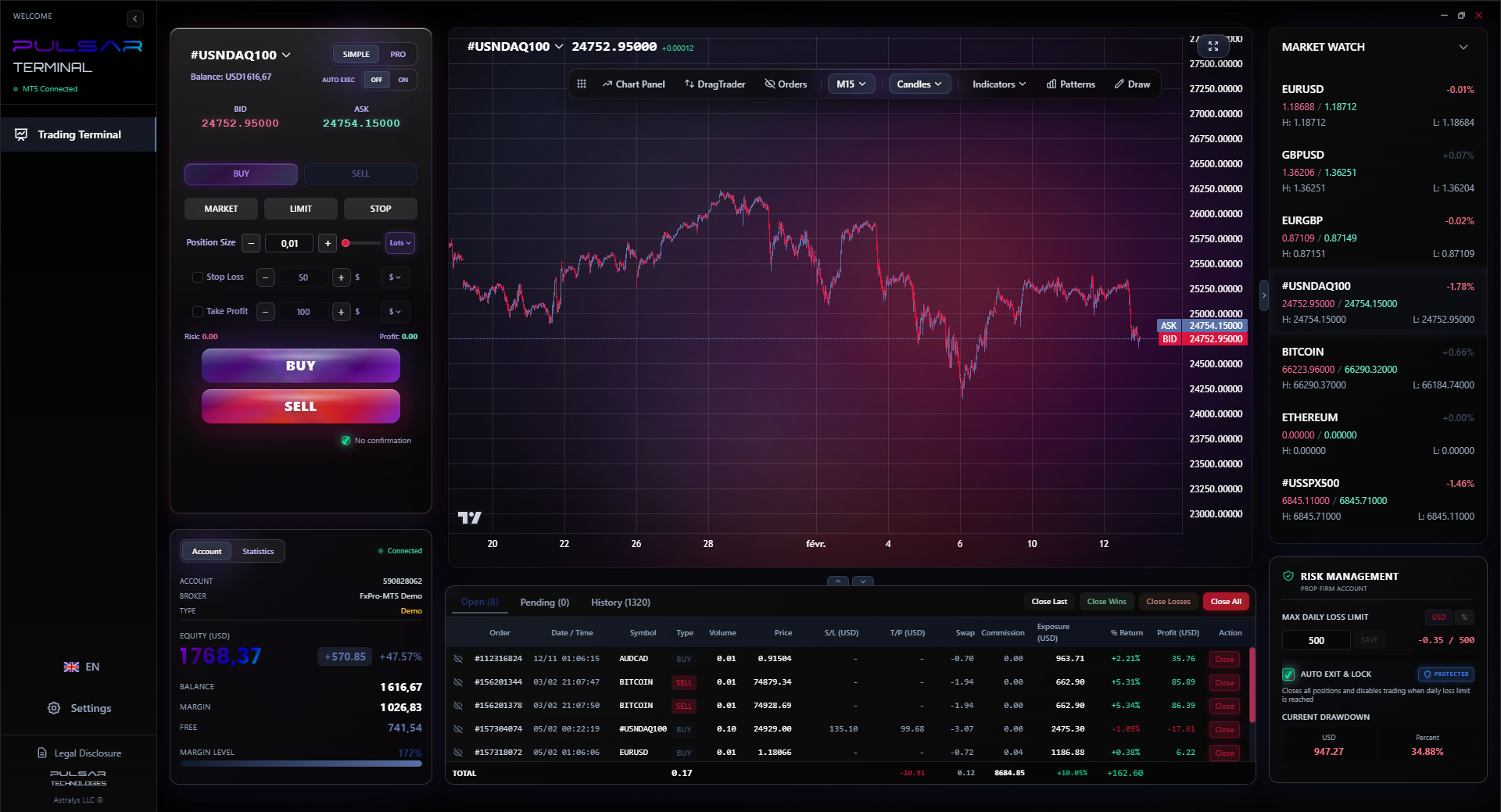
Applying complex strategies from books is easier when you have tools that let you manage risk and entries precisely, like setting multiple take-profit levels and automated trailing stops directly on your MT5 charts.
Pulsar Terminal
Alat MT5 all-in-one: order drag-and-drop, multi-TP/SL, trailing stop, grid trading, Volume Profile, dan perlindungan prop firm. Digunakan 1.000+ trader setiap hari.
“You can have a mediocre strategy with brilliant risk management and survive. A brilliant strategy with poor risk management will bankrupt you.”
Not all bestsellers are good for you. Here's my blunt assessment.
Avoid 'Get Rich Quick' and 'Secret System' Books: If the title promises you'll make 50% a month with no effort, throw it in the bin. These are fantasies that prey on desperation. The math never works in the long run.
Be Wary of Extremely Complex Systems: Some books sell you on a system requiring 15 simultaneous charts, custom indicators you have to buy, and trades that last 3 minutes. Complexity is not sophistication. It's often a smokescreen. The more moving parts, the more that can go wrong, especially with potential internet lag or platform issues during load-shedding.
Outdated Books on 'Tape Reading' or Floor Trading: The world has changed. While the psychology is timeless, the specific mechanics of how orders hit the market in the digital age are different. A book focused on the NYSE trading floor in the 80s has limited application to forex ECNs.
My Biggest Regret: I once spent R800 on a fancy imported book about a proprietary 'harmonic pattern' system. The patterns were so subjective I could never consistently identify them. The author made money selling the book and courses, not from trading. I wasted months and about R5000 in live market losses trying to make it work before abandoning it. Stick to the timeless principles, not the latest fad.
💡 Tips Winston
Build a 'mistakes journal' alongside your reading. When a book explains a common error, write down a time you made it. This personal connection accelerates learning far more than passive reading.
“Complexity is not sophistication. It's often a smokescreen for a lack of edge.”
You don't need to buy every book. Start with this curated list and build from there.
Phase 1: The Mindset & Foundation (Months 1-3)
- Trading in the Zone by Mark Douglas
- Market Wizards by Jack Schwager
Phase 2: The Toolkit (Months 4-6) 3. Technical Analysis of the Financial Markets by John Murphy 4. Trade Your Way to Financial Freedom by Van K. Tharp
Phase 3: Specialization & Refinement (Ongoing) 5. Japanese Candlestick Charting Techniques by Steve Nison 6. The Disciplined Trader by Mark Douglas (if you need more psychology work).
Consider getting these in digital format (Kindle/PDF) for quick searches. But for the core mindset books, I recommend physical copies you can highlight and scribble in.
Beyond books, your education should include:
- The FSCA website: Understand your rights and check your broker's license.
- The SARB monetary policy statements.
- A demo account with a reputable FSCA-regulated broker like Pepperstone or XM to test everything you learn risk-free.
Remember, reading a book doesn't make you a trader any more than reading a cookbook makes you a chef. You have to practice, make mistakes, and learn your own lessons. But starting with the right books gives you the best possible map for the journey ahead.
FAQ
Q1What is the single best forex trading book for a complete beginner in South Africa?
Hands down, 'Trading in the Zone' by Mark Douglas. Before you learn a single chart pattern, you need to build the right mindset. This book tackles the psychological hurdles - fear, greed, overtrading - that destroy most new traders. It's more valuable than any strategy book because it prepares you to handle the volatility of pairs like USD/ZAR without panicking.
Q2Are the trading strategies in these books still relevant with FSCA's 30:1 use limit?
The core principles are, but you must adapt them. Books written before 2021 (or for other regions) often assume higher use. This means you cannot copy their position sizing examples directly. The strategies focusing on risk management, probability, and psychology are 100% relevant. You just need to use a position size calculator to adjust trade sizes for our 30:1 cap, which actually forces healthier, more sustainable trading habits.
Q3Should I buy books that focus on forex specifically, or are general trading books okay?
Start with general trading books. The best ones are about the universal truths of markets: psychology, risk, and probability. These apply to forex, stocks, and crypto. Once you have that foundation, then get a complete technical analysis book (like Murphy's) and a book on money management (like Tharp's). A 'forex-specific' book is often just a general book with forex examples slapped in.
Q4How do I apply candlestick patterns from a book to a volatile pair like USD/ZAR?
You need to adjust for scale and confirmation. A doji or engulfing pattern on USD/ZAR might be larger in terms of pips than on EUR/USD. The key is to look for these patterns at significant support or resistance levels (weekly highs/lows, psychological numbers) rather than in the middle of nowhere. Also, wait for the candle to close. During high volatility, candles can form long wicks that look like reversal signals but then close strongly in the original direction.
Q5Is it worth buying the latest edition of a classic trading book?
Usually, yes for technical books like Murphy's. Newer editions might include updated chart examples or sections on modern market structure. For psychology books like Douglas's, the original edition is perfectly fine - human nature doesn't get new editions. Check the publication date; if it's within the last 10-15 years for a core text, you're probably good.
Q6Can I succeed just by reading these books?
No. Reading is the theory. Trading is the practical. Think of it like getting your driver's license. The book teaches you the rules of the road. But you only learn to drive by getting behind the wheel in a parking lot (demo account), then on quiet streets (small live trades), and eventually on the highway. The books give you the map and warn you about potholes, but you still have to steer the car.
Pelajaran Prof. Winston
Poin Penting:
- ✓Prioritize trading psychology books over strategy books in your first year.
- ✓Always adjust global strategies for ZAR pair volatility and local news.
- ✓Never risk more than 1-2% of your capital on a single trade.
- ✓Use a position size calculator for every entry, without exception.
Seberapa bermanfaat artikel ini?
Klik bintang untuk menilai
Wawasan Trading Mingguan
Analisis & strategi mingguan gratis. Tanpa spam.
Tentang Penulis
David van der Merwe
Trader Pasar Berkembang
Trader berbasis Johannesburg dengan 11 tahun di mata uang pasar berkembang. Spesialis pasangan ZAR, trading berregulasi FSCA, dan analisis pasar Afrika Selatan.
Komentar
Peringatan Risiko
Perdagangan instrumen keuangan mengandung risiko signifikan dan mungkin tidak cocok untuk semua investor. Kinerja masa lalu tidak menjamin hasil di masa depan. Konten ini hanya untuk tujuan edukasi dan tidak boleh dianggap sebagai nasihat investasi. Selalu lakukan riset Anda sendiri sebelum trading.
Anda mungkin juga suka

Cara Trading Forex Sukses: 7 Prinsip dari Trader Profesional
Cara trading forex sukses dengan 7 prinsip trader pro: manajemen modal, disiplin, journal trading, backtest. Data nyata, bukan janji profit palsu.
Jam Trading Forex Terbaik untuk Trader Indonesia: Panduan Lengkap dengan Tabel Waktu
Panduan jam trading forex untuk trader Indonesia. Tabel 4 sesi dunia, jam emas 20:00-00:00, sesi mana yang harus dihindari. Data akurat + tips dari trader berpengalaman.
Top 5 Sàn Forex Uy Tín Nhất 2026: Review Jujur dari Trader Indonesia
Top 5 sàn forex uy tín 2026 untuk trader Indonesia. Review jujur: spread, deposit, withdraw, dukungan lokal. Exness, XM, IC Markets & lebih.
Dapatkan Pulsar Terminal
Semua kalkulator ini terintegrasi dalam Pulsar Terminal dengan data real-time dari akun MT5 Anda.
Dapatkan Pulsar Terminal