


If you've ever read a trading article and felt like you needed another dictionary just to understand the dictionary, you're not alone.

Olumide Adeyemi
Pelopor Trading Afrika Barat ·  Nigeria
☕ 11 mnt baca
Yang akan Anda pelajari:

If you've ever read a trading article and felt like you needed another dictionary just to understand the dictionary, you're not alone. The forex world loves its jargon, and half the time it feels like it's designed to confuse you, not teach you. I remember staring at my first broker platform, seeing 'bid,' 'ask,' and 'spread,' and having absolutely no idea what I was looking at. Let's cut through the nonsense. This isn't a textbook definition list. This is a plain-English, Naira-and-kobo forex dictionary written for the Nigerian trader who's tired of the fluff.
Forget everything else for a second. If you don't get these three, you can't place a smart trade. They're the ABCs, and I see new traders mess them up all the time.
Pip: Stands for 'Percentage in Point.' It's how we measure price movement. For most pairs like EUR/USD, a pip is 0.0001. If EUR/USD moves from 1.0850 to 1.0851, that's one pip. For pairs with the JPY, like USD/JPY, a pip is 0.01. Simple, right? The confusion starts when people try to calculate its value in Naira. The value of a pip depends on your trade size (lot size). A standard lot (100,000 units) means one pip is roughly $10. A mini lot (10,000 units) is about $1 per pip. When the Naira is at say ₦1,450/$, that $1 pip is about ₦1,450. This is why using a position size calculator before every trade isn't just advice, it's a survival skill.
Lot Size: This is your trade volume. Think of it as the 'quantity' you're buying or selling.
| Lot Type | Units of Base Currency | Typical Pip Value (EUR/USD) | Approx. in Naira (₦1,450/$) |
|---|---|---|---|
| Standard | 100,000 | ~$10 | ~₦14,500 |
| Mini | 10,000 | ~$1 | ~₦1,450 |
| Micro | 1,000 | ~$0.10 | ~₦145 |
Starting with micro lots is the smartest move you can make. I learned this the hard way. Early on, I got cocky after a few wins and jumped into a mini lot trade on GBP/USD without a solid stop loss. A 50-pip move against me wiped out ₦72,500 in minutes. That stung. It taught me that lot size controls your risk more than anything else.
Spread: This is the broker's cut. It's the difference between the buy price (ask) and the sell price (bid). If EUR/USD is quoted as 1.0850 / 1.0852, the spread is 2 pips. You 'pay' this spread when you enter a trade. A buy order starts at a slight loss (the spread), and a sell order does the same. This is a cost of doing business. Brokers like IC Markets and Pepperstone are popular here because they offer consistently low spreads, which is crucial for a scalping strategy where you're targeting small moves.

Warning: Never ignore the spread. A '5-pip stop loss' with a 3-pip spread means the market only needs to move 2 pips against you to hit your stop. Your real risk is the stop loss PLUS the spread.
Placing an order isn't just 'buy' or 'sell.' How you do it can save you money or blow up your account.
Market Order: 'Buy/Sell right now at the best available price.' It's instant but you surrender control over the exact entry price. Fine for calm markets, risky during news events.
Pending Orders: These are instructions to your broker to execute a trade if the price reaches a certain level.
- Limit Order: Buy below the current market price or sell above it. You're betting on a pullback. Example: EUR/USD is at 1.0900. You set a Buy Limit at 1.0880, hoping it dips there and then rallies.
- Stop Order: Buy above the current market price or sell below it. You're betting on a breakout. Example: EUR/USD is at 1.0900. You set a Buy Stop at 1.0920, expecting it to blast through that level and keep going.
Stop Loss (SL) & Take Profit (TP): Your pre-set exit points. The SL is your 'I was wrong' exit. The TP is your 'I was right' exit. Not using these is a recipe for emotional disaster. I once held a losing USD/JPY trade for days, refusing to use a stop loss, hoping it would come back. It didn't. I turned a potential ₦20,000 loss into a ₦85,000 nightmare. Always, always set them.
The Reality of Slippage
Slippage is when your order gets filled at a worse price than you requested. It happens during high volatility - like when the US Non-Farm Payrolls data drops or when there's sudden CBN news. Your stop loss at 1.0850 might get filled at 1.0842. That's 8 pips of slippage. On a mini lot, that's an extra ₦11,600 loss you didn't plan for. There's no way to avoid it completely, but you can manage it by widening your stops around major news or trading less volatile pairs.

Pro Tip: Use a 'trailing stop loss.' It's a stop loss that automatically moves up (for a buy trade) as the price moves in your favor, locking in profit. It's a set-and-forget way to let winners run without babysitting the chart all day.

💡 Tips Winston
When you see a new term, don't just memorize the definition. Ask: 'How does this cost me money or help me make money?' That's the only definition that matters.
“Indicators tell you what has happened, not what will happen. Price is the ultimate truth.”
This is where most Nigerian traders get into trouble. The allure of 500:1 use is strong, but it's a trap if you don't understand the mechanics.
use is borrowed capital from your broker to control a larger position. With 100:1 use, you can control a $10,000 position with only $100 of your own money (your 'margin').
Margin is the amount of your own money you must put up to open and hold a leveraged position. It's your skin in the game.
Margin Call is the broker's warning that your account equity (balance + floating P/L) is getting too low to support your open positions. If you don't add funds or close positions, the next step is a 'Stop Out,' where the broker automatically closes your worst-performing trade to free up margin. This is the killer.
Let me give you a real example from my early days. I deposited ₦100,000 with a broker offering 500:1 use. I got greedy. I opened a 1 standard lot (100k units) position on Gold (XAU/USD), which is volatile. My required margin was tiny, maybe ₦15,000. Gold moved against me by about $15 (150 pips). On a standard lot, that's a $1,500 loss. At ₦1,450/$, that was a ₦2,175,000 loss on a ₦100,000 account. My broker's system issued a margin call and then stopped me out long before I could even process what happened. I was liquidated. Poof. Account gone.
That painful lesson taught me that use doesn't change your odds of winning; it only magnifies the consequences of both wins and losses. High use on a small account is a shortcut to a zero balance. Regulators in some countries cap use for a reason. While brokers like Exness still offer high use here, it's your responsibility to use it wisely. Treat 100:1 as a maximum, not a target.
Technical analysis has its own language. Here’s what they really mean.
Support & Resistance: Support is a price level where buying interest is strong enough to stop a decline. Resistance is where selling pressure stops a rally. They are zones, not exact lines. Price will test them multiple times. The more tests, the more significant the level.
Trend: The general direction. Up (higher highs, higher lows), Down (lower highs, lower lows), or Range (bouncing between support and resistance). Don't fight the trend. My most consistent profits in EUR/USD have come from simple swing trading in the direction of the daily chart trend.
Indicators: Math formulas plotted on your chart. They are lagging - they tell you what has happened, not what will happen.
- RSI (Relative Strength Index): Measures momentum on a scale of 0-100. Above 70 = potentially overbought (but can stay there in a strong trend!). Below 30 = potentially oversold. I use it to spot divergences - when price makes a new high but RSI makes a lower high. That's often a warning sign a trend is weakening.
- MACD (Moving Average Convergence Divergence): Shows the relationship between two moving averages. The crossover of the MACD line and the signal line can suggest a change in momentum. It's good for confirming trends.
Candlestick: A single bar showing the open, high, low, and close for a period. A long green candle shows strong buying pressure. A long red candle shows strong selling. A 'Doji' (open and close are nearly the same) shows indecision. Reading candlesticks is a foundational skill.

Example: You see EUR/USD in a clear uptrend on the 4-hour chart. It pulls back to a previous support level that also lines up with the 50-period moving average. The RSI dips to 35 (oversold but not extreme) and starts turning up. That's a confluence of signals - trend, support, and momentum - that makes for a higher-probability buy setup than just guessing.
💡 Tips Winston
Your first ₦100,000 account isn't for making money. It's for paying tuition to the market. The terms you learn from losing it wisely are worth more than the capital.
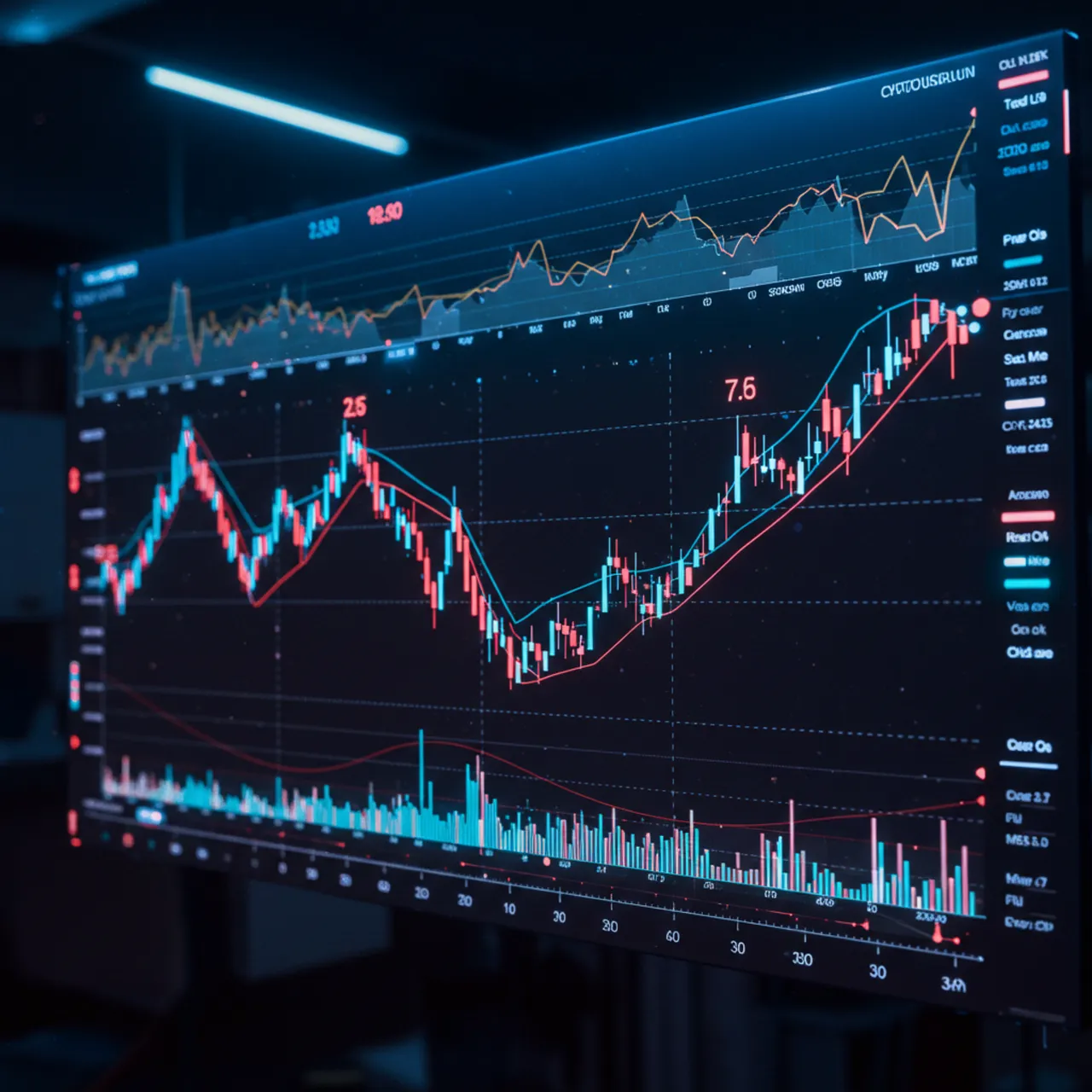
“The most important term in your personal forex dictionary should be Discipline.”
Knowing who you're up against changes how you see price action.
Liquidity: The ease with which an asset can be bought or sold without affecting its price. Major pairs like EUR/USD have huge liquidity. Exotic pairs (like USD/NGN in the official market) have much less, leading to wider spreads and more slippage.
Central Banks: The biggest players. The US Federal Reserve (Fed), European Central Bank (ECB), and our own Central Bank of Nigeria (CBN). Their interest rate decisions and monetary policy statements cause massive volatility. Trading around these events is high-risk, high-reward.
Institutional Banks & Hedge Funds: They move billions. Their order flow is what creates the major trends and support/resistance levels we retail traders follow.
Retail Traders (That's us): We're the smallest fish. Our collective actions can sometimes cause short-term moves, but we are largely reacting to the waves made by the big players. The key is to learn to read their footprints (through volume and price action) and follow, not lead.
Prop Firms (Proprietary Trading Firms): These are companies that give you their capital to trade in exchange for a share of the profits. You usually have to pass a challenge (e.g., make 10% profit in a month with a max 5% loss). They've become huge in Nigeria. They're a legitimate way to access larger capital without risking your own life savings, but their rules are strict. Hitting a daily loss limit can shut you down fast, which is why rock-solid risk management is non-negotiable.
Managing multiple trades and strict prop firm rules by hand is stressful; Pulsar Terminal automates partial closures, trailing stops, and daily loss protection directly on your MT5 charts.
Pulsar Terminal
Alat MT5 all-in-one: order drag-and-drop, multi-TP/SL, trailing stop, grid trading, Volume Profile, dan perlindungan prop firm. Digunakan 1.000+ trader setiap hari.

Trading is 80% psychology. These terms define your internal battle.
Risk-Reward Ratio (RRR): The potential profit of a trade compared to its potential loss. A 1:3 RRR means you're risking 1 unit (e.g., ₦5,000) to make 3 units (₦15,000). You can be wrong more than half the time and still be profitable if your RRR is good. I aim for nothing less than 1:2.
Drawdown: The peak-to-trough decline in your account balance. It's a measure of loss from a previous high. A 20% drawdown means your ₦500,000 account dropped to ₦400,000. Managing drawdown is about survival.
Hedging: Opening a position to reduce the risk of an adverse move in an existing position. For example, holding a long position in USD/NGN futures and a short position in the spot market. It's complex and often incurs extra costs (like swap fees).
FOMO (Fear Of Missing Out): The anxiety that drives you to jump into a trade that's already run far without a plan. It's a guaranteed way to buy at the top. I've done it chasing a runaway Bitcoin move and got burned every single time.
Revenge Trading: Trying to immediately win back losses by taking impulsive, larger trades. It's emotional, not analytical. It's the fastest path from a bad day to a blown account. After that big Gold loss I mentioned, I revenge traded for a week and lost another ₦50,000. I had to step away for a month to reset.
The most important term in your personal forex dictionary should be Discipline. It's the only thing that ties all this knowledge together into consistent action.
FAQ
Q1What is the most important term for a beginner Nigerian trader to understand first?
Without a doubt, it's use and Margin. Misunderstanding these is the number one reason new traders lose their deposits. Before you even think about pips or profits, know exactly how much of your own Naira is at risk on every single trade you place. A high use offer is not a benefit; it's a test of your risk management.
Q2Is slippage always bad? Can it work in my favor?
It's mostly bad for stop losses, but yes, slippage can be positive. If you have a buy limit order waiting below the market and price gaps down through it on news, your order could get filled at an even better (lower) price than you asked for. This is 'positive slippage.' However, you should never rely on it. Plan for negative slippage, especially around volatile events.
Q3What's the difference between a Margin Call and a Stop Out?
A Margin Call is a warning. It's your broker saying, 'Your account equity is getting low relative to your used margin. Add funds or close some trades.' A Stop Out is the consequence. If you ignore the warning and losses continue, the broker's system will automatically start closing your positions (usually starting with the biggest loser) until your equity is back above the required margin level. The Stop Out level is a specific percentage set by your broker.
Q4Why do my pending orders sometimes not get triggered?
This usually happens with Limit orders during fast-moving markets. If the price jumps from 1.0800 to 1.0820 instantly, it may have 'gapped' over your Buy Limit at 1.0810. The price never actually traded at 1.0810, so your order wasn't triggered. This is common during market opens or after major news releases.
Q5What does 'Going Long' or 'Going Short' mean?
It's trader slang for your trade direction. 'Going Long' means you are buying, expecting the price to rise. 'Going Short' means you are selling, expecting the price to fall. In forex, you are always trading one currency against another, so selling EUR/USD means you are 'short Euros and long US Dollars.'
Q6Are prop firms a good way to start trading in Nigeria?
They can be, but with major caveats. They provide capital, which is great if you have a proven strategy but lack funds. However, their evaluation challenges have strict, often unforgiving rules (daily loss limits, no-news trading periods). They are best for traders who already have a disciplined, rule-based system. Using your own small capital in a demo or micro account to develop that discipline first is a safer and cheaper learning path.
Pelajaran Prof. Winston
Poin Penting:
- ✓A pip's value in Naira depends on your lot size and the USD/NGN rate.
- ✓Your real risk is your stop loss distance PLUS the spread.
- ✓use magnifies losses faster than it magnifies gains.
- ✓A 1:3 risk-reward ratio lets you be wrong 70% of the time and still break even.
Seberapa bermanfaat artikel ini?
Klik bintang untuk menilai
Wawasan Trading Mingguan
Analisis & strategi mingguan gratis. Tanpa spam.
Tentang Penulis
Olumide Adeyemi
Pelopor Trading Afrika Barat
Salah satu edukator trading forex paling aktif di Nigeria. 8 tahun pengalaman trading dari Lagos. Spesialis strategi modal rendah dan tantangan prop firm untuk trader Afrika.
Komentar
Peringatan Risiko
Perdagangan instrumen keuangan mengandung risiko signifikan dan mungkin tidak cocok untuk semua investor. Kinerja masa lalu tidak menjamin hasil di masa depan. Konten ini hanya untuk tujuan edukasi dan tidak boleh dianggap sebagai nasihat investasi. Selalu lakukan riset Anda sendiri sebelum trading.
Anda mungkin juga suka

Cara Trading Forex Sukses: 7 Prinsip dari Trader Profesional
Cara trading forex sukses dengan 7 prinsip trader pro: manajemen modal, disiplin, journal trading, backtest. Data nyata, bukan janji profit palsu.
Jam Trading Forex Terbaik untuk Trader Indonesia: Panduan Lengkap dengan Tabel Waktu
Panduan jam trading forex untuk trader Indonesia. Tabel 4 sesi dunia, jam emas 20:00-00:00, sesi mana yang harus dihindari. Data akurat + tips dari trader berpengalaman.
Top 5 Sàn Forex Uy Tín Nhất 2026: Review Jujur dari Trader Indonesia
Top 5 sàn forex uy tín 2026 untuk trader Indonesia. Review jujur: spread, deposit, withdraw, dukungan lokal. Exness, XM, IC Markets & lebih.
Dapatkan Pulsar Terminal
Semua kalkulator ini terintegrasi dalam Pulsar Terminal dengan data real-time dari akun MT5 Anda.
Dapatkan Pulsar Terminal