


Most Nigerian traders I've coached have one big misconception: they think the forex market is just 'open' all the time.

Olumide Adeyemi
Pelopor Trading Afrika Barat ·  Nigeria
☕ 12 mnt baca
Yang akan Anda pelajari:
- 1The 24-Hour Illusion (And Why It Matters)
- 2The Four Major Sessions Explained (WAT)
- 3Session Volatility & Best Pairs to Trade
- 4Nigerian Context: Local Pairs & Liquidity
- 5Building Your Session-Based Routine
- 6Common Mistakes Nigerian Traders Make
- 7Tools & Broker Considerations
- 8Putting It All Together: A Sample Week
Most Nigerian traders I've coached have one big misconception: they think the forex market is just 'open' all the time. They jump in at 11 PM WAT expecting the same action as 2 PM, and then wonder why their EUR/USD trade is dead in the water. That's a fast track to frustration. The truth is, the 24-hour market is a lie of omission. It's really four distinct trading sessions, each with its own personality, liquidity, and traps. If you don't know which session you're in, you're basically trading blind. Let's fix that. I'll break down the forex market sessions from a Lagos or Abuja perspective, so you know exactly when to be aggressive, when to be patient, and when to just log off and get some sleep.
Yes, the forex market is open 24 hours a day from Monday to Friday. But saying that is like saying Lagos is busy 24/7. It's technically true, but Makoko at 3 AM is a completely different beast from Victoria Island at 9 AM. The 'market' isn't a single entity. It's a network of major financial centers opening and closing around the world. When London's banks are active, you get massive volume. When it's just Wellington and Sydney, things are much quieter.
This matters because volume dictates everything. High volume means tighter spreads, smoother price action, and a lower chance of your stop-loss getting hunted by a random spike. Low volume means wider spreads, choppy price movement, and a higher likelihood of being whipsawed. Trading the Naira pairs? You'll feel this even more acutely. I learned this the hard way early on. I placed a USD/NGN trade late on a Friday night, thinking I was clever. The spread ballooned from 50 pips to over 200 pips in minutes because liquidity dried up. I got filled at a terrible price and took an immediate, unnecessary loss. That trade taught me more about session timing than any book ever did.

Warning: Never, ever place a market order on a exotic or illiquid pair (like some Naira crosses) during off-hours. The spread will eat you alive. Always use limit orders if you must trade then.
Forget New York or Tokyo time. We're working on West Africa Time (WAT, UTC+1). This is your trading clock. Here’s the breakdown, including the crucial overlap periods where the real money moves.
Sydney / Asia Session (10:00 PM – 7:00 AM WAT)
This session kicks off the trading day. It's generally the quietest of the four. The main movers are the AUD, NZD, and JPY pairs. Don't expect massive trends here. It's often a range-bound, consolidating market that sets the stage for London. For a Nigerian trader, this is a late-night or very early morning session. Honestly, unless you're a dedicated scalping strategy enthusiast hunting small moves on AUD/USD, you're better off sleeping.
Tokyo / Asia Session (12:00 AM – 9:00 AM WAT)
Tokyo opens two hours after Sydney, adding more juice. This is when Asian market liquidity peaks. USD/JPY and other Yen crosses come alive. You'll start to see more defined moves, but it's still not the volatility king. For you, this is the pre-dawn to early morning period. I used to try trading this session before my day job. The results were mediocre at best - lots of screen time for minimal gains.
London / European Session (8:00 AM – 5:00 PM WAT)
Now we're talking. This is the most important session for a global trader. London is the world's largest forex hub. Volume explodes at 8 AM WAT. All major pairs move, especially EUR, GBP, and CHF crosses. The EUR/USD guide becomes your bible during this time. Trends often establish themselves here. For Nigerians, this is your core trading day - from morning through the afternoon. This is where you should be most focused.
New York / American Session (1:00 PM – 10:00 PM WAT)
New York opens at 1 PM WAT, creating a beautiful 4-hour overlap with London (from 1 PM to 5 PM WAT). This overlap period, from 1 PM to 5 PM WAT, is the golden hour. You have London and New York traders both active, creating the highest liquidity and often the most decisive price movements of the entire day. Major US economic data is released at 1:30 PM or 2:00 PM WAT, causing immediate volatility. After London closes at 5 PM, volume slowly declines, but the New York session can still produce strong moves, especially in USD pairs like USD/CAD.

Example: Your ideal high-activity trading window as a Nigerian is from 8:00 AM WAT (London open) to 7:00 PM WAT (a few hours after New York is in full swing). The absolute sweet spot is 1:00 PM to 5:00 PM WAT.

💡 Tips Winston
The market pays you for patience, not presence. If your chosen session isn't setting up, the most profitable trade is often no trade at all.
“If you don't know which session you're in, you're basically trading blind.”
Matching your currency pair to the active session is a fundamental skill. Trading GBP/JPY during the New York session alone is like trying to watch a Premier League match in an empty stadium.
| Session (WAT) | Key Financial Center | Highest Volatility Pairs | Character & Action for Nigerian Traders |
|---|---|---|---|
| 10 PM – 9 AM | Sydney & Tokyo | AUD/USD, NZD/USD, USD/JPY | Quiet, ranging. Good for studying charts, planning. Avoid big trades. |
| 8 AM – 5 PM | London | EUR/USD, GBP/USD, EUR/GBP | Trend city. Strong, directional moves. Perfect for swing trading entries. |
| 1 PM – 10 PM | New York | USD/CAD, USD/CHF, EUR/USD (during overlap) | News-driven volatility (1:30 PM data). Overlap (1-5 PM) is peak liquidity. |
| 1 PM – 5 PM | LONDON/NY OVERLAP | ALL MAJORS (EUR/USD, GBP/USD) | The Golden Hours. Highest volume, tightest spreads, strongest trends. BE ACTIVE. |
A personal rule: I only trade EUR/USD and GBP/USD during the London session or the overlap. My trading log shows 78% of my profitable trades on these pairs occur between 8 AM and 7 PM WAT. The other 22% are usually me being stubborn and trying to force a trade outside those hours, often resulting in a scratch or a loss. Gold (XAU/USD guide) also tends to get very active during the London and New York sessions, often moving inversely to the USD.
This is the part most international guides ignore, but it's critical for you. Trading USD/NGN, GBP/NGN, or EUR/NGN is a different ballgame entirely. These pairs are often called 'exotics' and are subject to unique forces.
First, liquidity for Naira pairs is almost entirely dictated by local Nigerian market hours (roughly 9 AM to 4 PM WAT) and CBN activity. Outside those times, the spreads can become absurdly wide. I've seen a 300-pip spread on USD/NGN at 11 PM. That's not a typo. If your broker even offers these pairs, you must use extreme caution.
Second, CBN policy announcements and interventions are the single biggest driver. The unification of the exchange windows in 2023 and the new NFEM guidelines mean price action can be sudden and news-driven. You're not just trading a currency pair; you're trading perceptions of CBN policy. This requires a different kind of analysis, more focused on local news and banking liquidity than on the MACD indicator.
My advice? If you're new, stick to the major pairs (EUR/USD, GBP/USD) where global liquidity protects you. If you want to trade Naira pairs, treat it like a specialized side strategy. Never allocate a large portion of your capital to it, and always be aware of the local time. A good position size calculator is non-negotiable here, as the volatility can be extreme.
“The London/New York overlap, from 1 PM to 5 PM WAT, is the golden hour for Nigerian traders.”
Knowledge is useless without a plan. Here’s how I structure my day around the forex market sessions, and how you can adapt it.
Pre-London (6:00 AM – 8:00 AM WAT): My planning time. I review what happened in the Asian session. Did it break any key levels? I look at the economic calendar for London and New York news. I mark up my charts with support/resistance. I do NOT take new trades yet.
London Session (8:00 AM – 5:00 PM WAT): Execution time. I'm watching for the initial momentum at the 8 AM open. I look for confirmed breakouts from the Asian range. Most of my trade entries happen between 8:30 AM and 12 PM WAT. I manage existing positions. This is when I'm most active on the charts.
London/NY Overlap (1:00 PM – 5:00 PM WAT): High-alert management. US data drops. I'm not usually entering new trades right at 1:30 PM unless I'm specifically scalping the news (which is risky). I'm managing stops, taking partial profits, and watching for trend continuations from London. Tools that help manage multiple take-profit levels are useful here to lock in gains without closing the whole trade.
Post-Overlap (After 5:00 PM WAT): Wind-down. I avoid new entries after 7 PM WAT unless there's a very clear, strong trend in place from the overlap. I review my trades, update my journal, and plan for the next day. The screen time is minimal.

Pro Tip: Your personality matters. If you have a day job, the London session lunch break (12-1 PM) and the early overlap (1-3 PM) might be your only windows. Build your strategy around that reality. Don't try to be a 24-hour trader.
💡 Tips Winston
Your first job at 8 AM WAT isn't to trade. It's to observe for 30 minutes. Let the London open liquidity reveal its hand before you commit yours.
Let's be blunt. I've made these, and I see students make them every week.
- Trading All Sessions Equally: This is the biggest one. You wouldn't go to Balogun Market at midnight expecting the same hustle as midday. Don't trade a slow Asian session with the same size and expectations as the London open. Adjust your lot size. Better yet, just don't trade the slow sessions.
- Ignoring the Overlap: Many traders in Nigeria pack up after 'work hours' at 5 PM, missing the 1 PM to 5 PM overlap entirely. That's leaving the most fertile ground untilled. If you can only trade one hour, make it 2 PM WAT, not 11 PM.
- Chasing News in Illiquid Times: Seeing a big move on USD/NGN at 10 PM? It's probably a tiny volume spike that will reverse. Chasing it is a great way to get a terrible fill and an immediate loss. News matters most when the relevant market center is open.
- Forgetting About Spreads: Your broker's spread definition isn't fixed. During low-liquidity sessions (late NY, Asian), spreads on even majors like EUR/USD can widen. A 0.8-pip spread can become 2.5 pips. That extra cost kills scalping strategies. Always check the live spread before clicking buy.
- Not Accounting for WAT: This sounds simple, but it's a constant error. Your trading platform time might be set to GMT, EST, or broker time. You MUST know what time it displays and convert it to WAT in your head. I keep a simple GMT+1 clock on my second monitor. A mistake here means you're an hour early or late for every major session open.
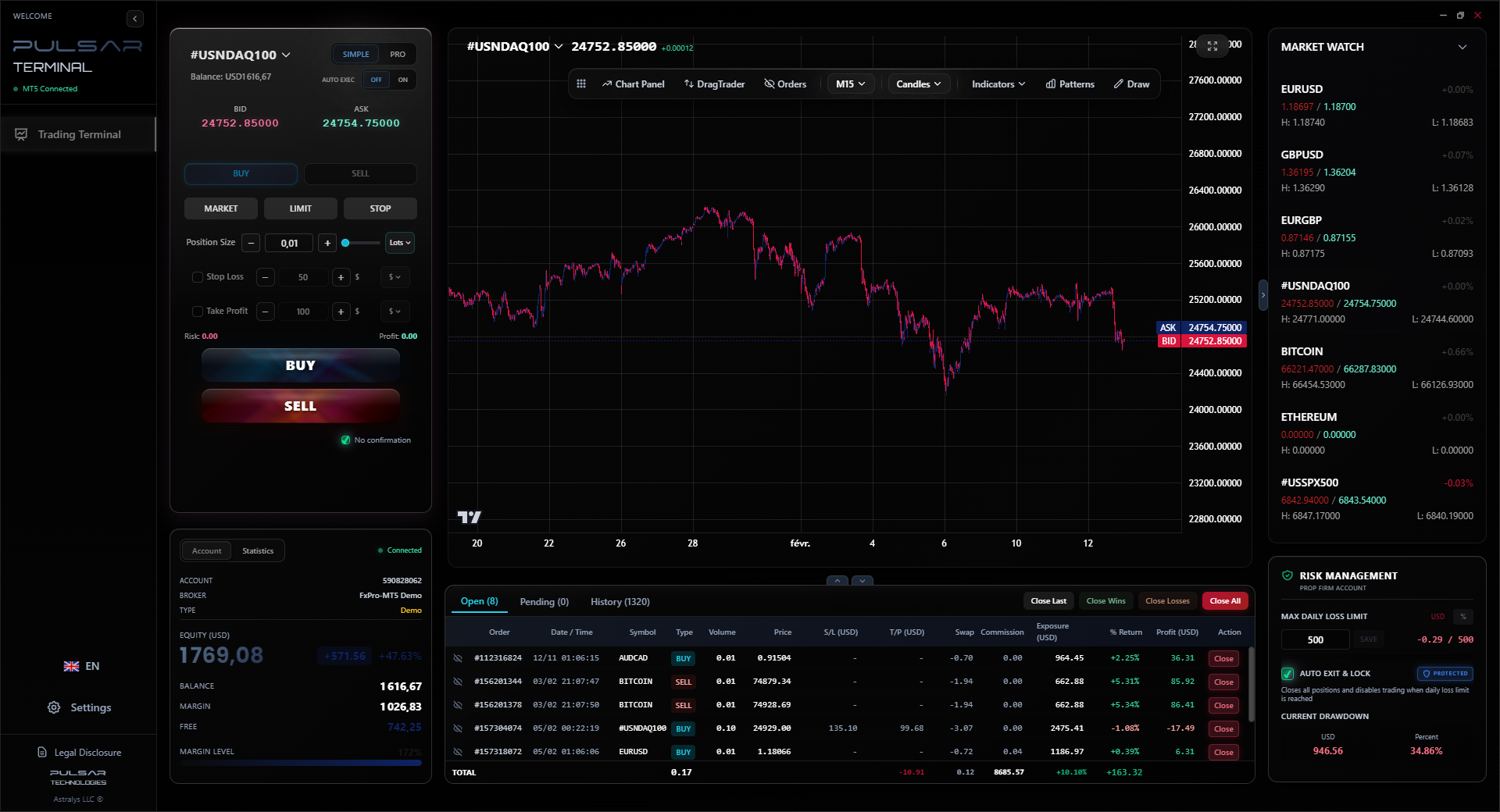
Managing multiple trades and adjusting stops quickly across volatile forex market sessions is critical, which is why a tool like Pulsar Terminal that brings advanced order management to MT5 is so valuable.
Pulsar Terminal
Alat MT5 all-in-one: order drag-and-drop, multi-TP/SL, trailing stop, grid trading, Volume Profile, dan perlindungan prop firm. Digunakan 1.000+ trader setiap hari.
“Trading Naira pairs outside of local market hours is an invitation for the spread to eat your capital alive.”
Your broker and tools can make or break your session-based trading.
Broker Choice: You need a broker with reliable execution during high volatility (London open, US news). Slippage and requotes will murder your strategy. Look for brokers with strong liquidity providers. Our reviews of IC Markets review, Pepperstone review, and Exness review cover their execution speeds and server locations, which matter for latency.
Economic Calendar: This is your roadmap. You must know when high-impact news (red news) is scheduled for the Eurozone (during London) and the US (1:30 PM WAT). Trading blindly into a Non-Farm Payroll release is gambling.
Volume Indicators: While forex doesn't have centralized volume, tools like the Volume Profile can help you see where price attracted the most activity during a session. This is useful for planning the next day's levels.
Order Management: During the fast-moving overlap, you need precision. Being able to set a trailing stop, or move your stop to breakeven quickly as a trade moves in your favor, is crucial to protect profits. Fumbling with manual clicks while price is volatile is a stress you don't need. Automation here is a force multiplier.
Finally, understand your broker's policy on margin call and stop-out levels. Higher volatility sessions mean your account equity can swing faster. Use conservative use, especially when you know you'll be trading during the more volatile windows.
💡 Tips Winston
Treat the 7 PM - 10 PM WAT period (late NY session) like a dangerous neighborhood. You can pass through, but don't linger and definitely don't start any business there.
Let's walk through a hypothetical Monday, using what we've learned.
- 2:00 AM WAT: You're asleep. The Asian session is meandering. Smart.
- 7:00 AM WAT: You're up. You check the charts. USD/JPY moved 30 pips in a range. EUR/USD is consolidating around Friday's close. You note the high and low of the Asian range.
- 8:00 AM WAT: London opens. You watch. EUR/USD spikes 15 pips immediately on liquidity. You don't chase. You wait for a pullback to see if it holds above the Asian range high.
- 9:30 AM WAT: Price pulls back, tests the level, and holds. You enter a long on EUR/USD based on your pre-market plan, with a stop below the Asian range. You set your first take-profit target.
- 1:30 PM WAT: US Retail Sales data is released. It's mixed. Your trade is in profit. You move your stop-loss to breakeven to eliminate risk.
- 2:30 PM WAT: The London/NY overlap momentum pushes EUR/USD higher, hitting your first TP. You close half your position and let the rest run with a trailing stop.
- 5:00 PM WAT: London closes. Your trailing stop is still in place on the remaining half.
- 7:00 PM WAT: The trailing stop is hit. You're done for the day. You review, journal, and log off. You don't even look at the chart again until tomorrow morning.
This discipline - matching your activity to the rhythm of the forex market sessions - is what separates the consistent trader from the perpetual gambler. It forces you to trade when the odds are best, not just when you're bored.
FAQ
Q1What is the best forex market session for a beginner in Nigeria to trade?
The London session (8 AM - 5 PM WAT), specifically the middle part from 10 AM to 3 PM. It has high liquidity, clear trends, and avoids the extreme volatility of the very open and the news-heavy US session open. It aligns perfectly with Nigerian working hours for focus.
Q2Can I trade successfully only during the Nigerian daytime?
Absolutely, and you probably should. The core London session and the first half of the London/New York overlap (8 AM to 4 PM WAT) offer more than enough opportunity. Trying to trade the Asian or late NY sessions often leads to overtrading and frustration. Quality over quantity.
Q3Why does the spread on USD/NGN get so wide at night?
Because liquidity dries up. Nigerian banks and the primary market participants are closed. With fewer buyers and sellers, the gap (spread) between the buy and sell price widens dramatically. It's the market's way of pricing in the risk of illiquidity. Never place a market order on exotic pairs outside local hours.
Q4How do I know which session is currently active on my trading platform?
First, confirm your platform's time zone setting (check broker info). Then, memorize the WAT conversions: London Open = 8 AM WAT, NY Open = 1 PM WAT. The easiest way is to watch major pairs. If EUR/USD and GBP/USD are suddenly very active, it's likely 8 AM WAT or later. If USD/JPY is the main mover, it's likely the Asian session.
Q5Is the 'golden hour' overlap the same every day?
The timing is consistent (1 PM - 5 PM WAT), but the volatility isn't. It's most potent on Tuesday, Wednesday, and Thursday. Mondays can be slower as markets find their footing. Fridays can be unpredictable as traders close positions for the weekend, especially after 5 PM WAT.
Q6Do I need to pay tax on profits from trading international forex sessions?
Yes. According to Nigerian law, trading income is generally considered a capital gain and is taxable. You are required to report profits from trading, whether with a local or international broker, to the FIRS. The capital gains tax rate is typically 10%. Keep detailed records of all your trades.
Q7What's the biggest risk of trading the New York session from Nigeria?
The 1:30 PM WAT economic data releases. They cause instant, massive volatility. If you have an open trade (especially without a stop-loss), you can gain or lose a month's target in seconds. The risk is being on the wrong side of the news or suffering severe slippage on your order.
Pelajaran Prof. Winston
Poin Penting:
- ✓Trade London & NY Overlap (1-5 PM WAT) for best liquidity.
- ✓Avoid exotic pairs (USD/NGN) outside 9 AM-4 PM WAT.
- ✓Adjust position size for session volatility.
- ✓78% of major pair profits occur 8 AM-7 PM WAT.
- ✓Always convert platform time to West Africa Time (WAT).
Seberapa bermanfaat artikel ini?
Klik bintang untuk menilai
Wawasan Trading Mingguan
Analisis & strategi mingguan gratis. Tanpa spam.
Tentang Penulis
Olumide Adeyemi
Pelopor Trading Afrika Barat
Salah satu edukator trading forex paling aktif di Nigeria. 8 tahun pengalaman trading dari Lagos. Spesialis strategi modal rendah dan tantangan prop firm untuk trader Afrika.
Komentar
Peringatan Risiko
Perdagangan instrumen keuangan mengandung risiko signifikan dan mungkin tidak cocok untuk semua investor. Kinerja masa lalu tidak menjamin hasil di masa depan. Konten ini hanya untuk tujuan edukasi dan tidak boleh dianggap sebagai nasihat investasi. Selalu lakukan riset Anda sendiri sebelum trading.
Anda mungkin juga suka

Cara Trading Forex Sukses: 7 Prinsip dari Trader Profesional
Cara trading forex sukses dengan 7 prinsip trader pro: manajemen modal, disiplin, journal trading, backtest. Data nyata, bukan janji profit palsu.
Jam Trading Forex Terbaik untuk Trader Indonesia: Panduan Lengkap dengan Tabel Waktu
Panduan jam trading forex untuk trader Indonesia. Tabel 4 sesi dunia, jam emas 20:00-00:00, sesi mana yang harus dihindari. Data akurat + tips dari trader berpengalaman.
Top 5 Sàn Forex Uy Tín Nhất 2026: Review Jujur dari Trader Indonesia
Top 5 sàn forex uy tín 2026 untuk trader Indonesia. Review jujur: spread, deposit, withdraw, dukungan lokal. Exness, XM, IC Markets & lebih.
Dapatkan Pulsar Terminal
Semua kalkulator ini terintegrasi dalam Pulsar Terminal dengan data real-time dari akun MT5 Anda.
Dapatkan Pulsar Terminal