


I remember staring at my screen in my Dhaka apartment, watching my account bleed.

Daniel Harrington
Kepala Konten
☕ 12 mnt baca
Yang akan Anda pelajari:
- 1The Legal Landscape: What You Can and Cannot Do
- 2Funding Your Account: Getting Your Taka into the Market
- 3Choosing Your Broker: The Critical First Step
- 4Trading Strategies That Work With Our Constraints
- 5Risk Management: Thinking in Taka, Not Just Pips
- 6The Psychology: Fighting Local Biases
- 7Essential Tools and Tech Setup
- 8Your First Steps: A Practical Checklist

I remember staring at my screen in my Dhaka apartment, watching my account bleed. I'd just lost ৳25,000 on a single EUR/USD trade. The chart had looked perfect, the news was good, but I'd completely ignored the time. It was 2 AM in New York, liquidity was thin, and the market moved against me in a wild, unpredictable spike. That loss, paid for in Taka from my local bank account, taught me the first brutal lesson of forex trading in Bangladesh: the global market doesn't care about your local context, but your success depends entirely on understanding it. This guide is what I wish I'd had back then.
Let's get the most important thing out of the way first. Trading forex in Bangladesh operates in a grey area, and you need to know the boundaries to protect yourself and your capital.
The Bangladesh Bank (BB) and the Bangladesh Securities and Exchange Commission (BSEC) are the main regulators. Officially, trading on international forex markets with use through offshore brokers is not explicitly endorsed. The local capital market is for stocks and bonds. However, thousands of Bangladeshis trade forex every day using internationally regulated brokers.
The key is the funding method. You'll be using international payment gateways or bank transfers to deposit to your broker. I've used my local bank cards for years. While the transactions go through, always keep records. Declare the source of your funds if asked. Trading itself isn't illegal, but moving money out for 'speculative' purposes can raise eyebrows. Be smart, be discreet, and never brag about your trades on social media.

Warning: Any 'broker' or 'investment manager' operating physically within Bangladesh and offering guaranteed forex returns is almost certainly a scam. Real brokers are online, internationally regulated, and do not make profit promises.
Your safety net is choosing a broker with a strong international license (like ASIC or FCA). If something goes wrong, you appeal to that foreign regulator, not a local one. I learned this the hard way after a sketchy 'broker' based in Cyprus vanished with a $500 deposit of mine. Now, I only use well-reviewed firms like IC Markets or Pepperstone.

This is where theory meets reality. You have ৳100,000 you want to trade with. How does it actually get to your trading platform?
You cannot directly deposit Taka. Your broker will accept USD, EUR, or other major currencies. When you initiate a deposit, your bank will convert your Taka to the required currency at their exchange rate, plus a fee. The rates are never in your favor. I've seen spreads of 1-2 BDT per USD on top of the interbank rate, plus a flat transaction fee of ৳500-৳2000.
The Cost of Conversion
Let's do the math with a real example from last month. I wanted to deposit $1,000.
- Interbank USD/BDT rate: ~118
- My bank's offered rate: 119.5
- Cost: (119.5 - 118) * 1000 = ৳1,500 lost in the spread.
- Plus, a telegraphic transfer (TT) fee of ৳1,200.
- Total cost to send $1,000: ৳2,700. That's a 2.3% loss before I even place a trade.
Smarter Funding Methods
Over time, I switched to using international debit/credit cards (Visa/Mastercard) linked to my Bangladeshi bank account. The fees are often lower, and the conversion is sometimes better. Some brokers also accept e-wallets like Skrill or Neteller, which can be funded via local banks. The process is faster, often instant versus 2-5 banking days for a TT.
Withdrawals are the reverse. The money comes back in USD, your bank converts it to Taka (again, at their rate), and it lands in your account. Factor these costs into your profit calculations. A 5% gain on a trade can be completely wiped out by deposit and withdrawal fees if you're not careful. Always use a position size calculator that starts with your true invested capital, after fees.

💡 Tips Winston
Your first 100 trades are for data collection, not profit. Journal every single one, especially the losers. The pattern of your mistakes is your real teacher.

“A 5% gain on a trade can be completely wiped out by deposit and withdrawal fees if you're not careful.”
Your broker is your gateway. A bad choice here can lead to requotes, slippage, sudden widenings of the spread, or worse, difficulty withdrawing your money. For a Bangladeshi trader, three things are non-negotiable.
1. International Regulation: This is your primary protection. Look for brokers licensed by the Australian Securities and Investments Commission (ASIC), the UK's Financial Conduct Authority (FCA), or the Cyprus Securities and Exchange Commission (CySEC). These are strict. I trust my money with ASIC-regulated brokers because their client money segregation rules are strong.
2. Low Latency and Reliable Platforms: The distance from Bangladesh to broker servers (often in London or New York) adds latency. You need a broker known for stable technology. A platform freeze during a news event cost me dearly once. Brokers like Exness and XM have invested heavily in server infrastructure that works well from our region.
3. Realistic Minimums and use: You'll see ads offering 1:1000 use. It's a trap. For a beginner, even 1:50 is extremely high. Start with a broker that allows small cent accounts or nano lots. You can trade with $10 to learn. My biggest mistake was starting with a standard lot on high use. I blew a $2000 account in a week. Start small. A good scalping strategy can be practiced on a cent account with minimal risk.
| Consideration | Why It Matters for Bangladesh |
|---|---|
| Deposit Methods | Must accept Visa/Mastercard from BD banks or local bank transfer. |
| Customer Support | 24/5 support with live chat. You don't want to wait 24 hours for an email reply. |
| Spread on Major Pairs | Look for tight spreads on EUR/USD. A 3-pip spread vs. a 0.8-pip spread makes a huge difference to your costs. |
Check our detailed broker reviews for side-by-side comparisons on these points.
You can't just copy a strategy from a trader in New York. Our internet can be unstable, we have power cuts, and we're trading during odd hours relative to the market's peak liquidity. Your strategy must be resilient.
Avoid High-Frequency Trading (HFT): Forget about algorithms that execute hundreds of trades a second. The latency will kill you. I tried it with a VPS, and the delay was just enough to turn winning trades into losers.
Focus on Higher Timeframes: This was my game-changer. I moved from 5-minute charts to 4-hour and daily charts. Why? Fewer signals, less screen time, and they are less affected by minor latency spikes. A trend on the 4H chart is powerful. I use the MACD indicator on the daily chart to gauge momentum and the RSI indicator on the 4H for entry timing. A classic swing trading approach fits our lifestyle better.
Trade the London-New York Overlap: This is the most liquid 4-hour window (8 PM to 12 AM Bangladesh Time). The spreads are tightest, and moves are strong and clean. I plan my day around this window. It's when I take most of my serious trades.
Example Trade - USD/JPY Swing: In January, I saw USD/JPY bouncing off a key daily support level. The 4H RSI was oversold and turning up. I entered a buy at 147.50 at 9 PM BST. I set a stop loss at 146.90 (60 pips risk). My first take-profit was at 148.50 (100 pips), and I trailed the rest. The trade ran for two days, and I closed the final position at 149.80 for a total gain of 230 pips. Because I was on a higher timeframe, a brief internet outage during the day didn't panic me.

Pro Tip: If you have an unstable connection, always use stop-loss and take-profit orders the moment you enter a trade. Never rely on manually closing it. A ‘load-shedding’ moment can wipe you out.
“Forex is a marathon, not a sprint. I learned that after trying to turn ৳50,000 into ৳500,000 in a month.”
This is the most important section. You must internalize this. A pip in EUR/USD is worth roughly $10 on a standard lot. But you need to translate that to the Taka in your bank account, after all costs.
The 1% Rule is Your Lifeline: Never risk more than 1% of your trading capital on a single trade. If your account is $1,000 (roughly ৳118,000), your max risk per trade is $10 (৳1,180). This seems tiny. It is. It's designed to keep you in the game after a string of losses. I violated this early on, risking 5% per trade. Five losing trades later, I was down 25%. It took months to climb back.
Calculate Your Position Size Properly: Let's say you're trading GBP/USD. Your analysis says your stop loss should be 50 pips away from entry. Your max risk is $10.
- Pip value for a standard lot in GBP/USD: ~$10.
- Risk in $ / (Stop Loss in Pips * Pip Value) = Position Size.
- $10 / (50 * $10) = 0.02 lots.
So, you should only trade 0.02 lots (2 micro lots). This precise calculation is why a position size calculator is essential. Do not guess.
Account for the ‘Taka Drain’: Remember the funding fees? And the spread? If your broker's spread on EUR/USD is 2 pips, that's a $20 cost on a standard lot the moment you enter. On a 0.1 lot, it's $2. Your trade needs to move 2 pips in your favor just to break even on the spread. This is why a low-spread broker is critical. A wide spread is like a hidden tax on every trade you make. Understand what a pip and the spread truly cost you.
💡 Tips Winston
If you feel excited or scared about a trade, your position size is too large. Reduce it until the emotion is gone. You should feel boredly disciplined.
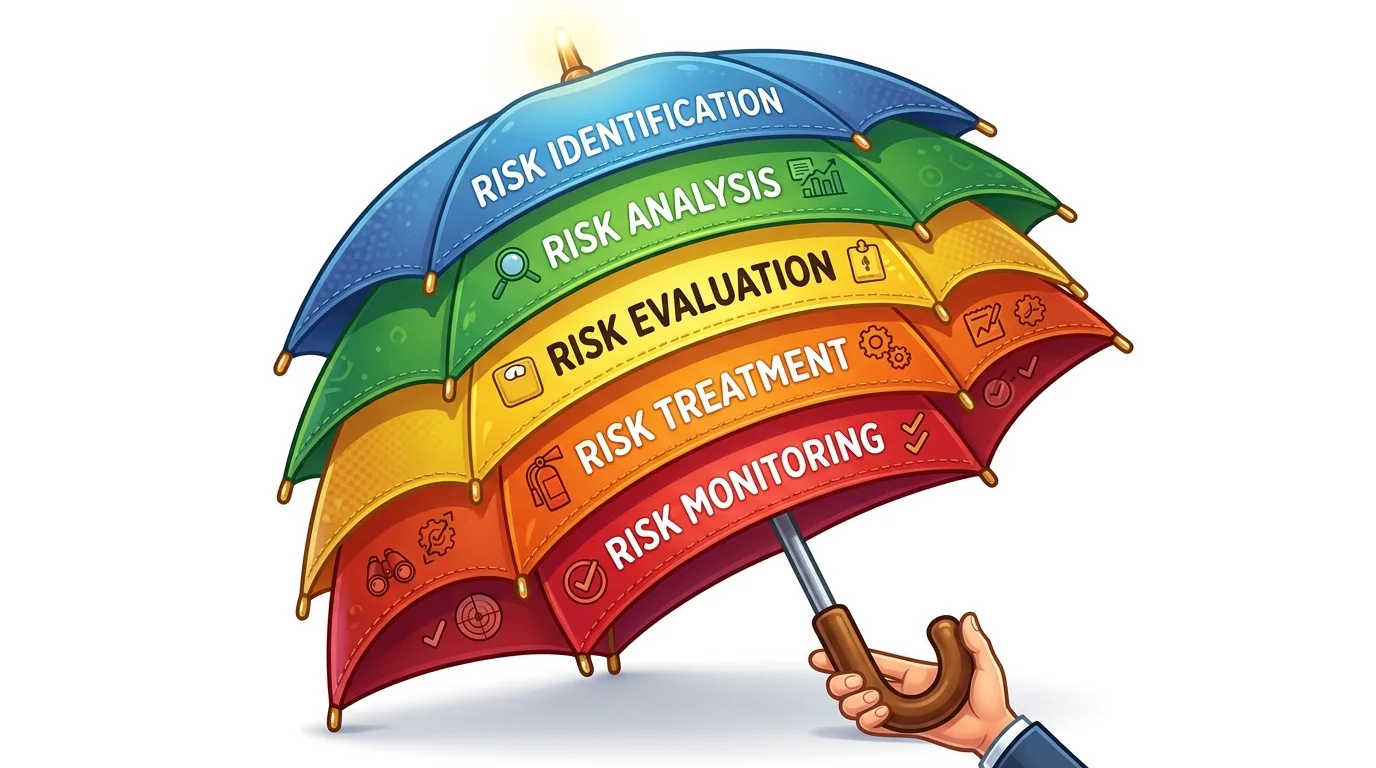
Trading psychology is universal, but some biases are amplified in our context.
The ‘Get-Rich-Quick’ Mirage: In an economy with inflation and currency depreciation, the desire for a quick forex windfall is strong. Social media is flooded with ‘proof’ of profits. This leads to over-leveraging. I fell for it. I took a trade with 1:200 use, trying to turn ৳50,000 into ৳500,000 in a month. I lost ৳30,000 in two days. Forex is a marathon, not a sprint.
The Fear of ‘Nogod’ (Loss): Culturally, we are often risk-averse. A small loss can feel like a personal failure, leading to holding losing trades hoping they'll come back (they usually don't). You must accept that losses are part of the business. A good trade is one with a sound strategy and managed risk, not necessarily a winning one.
Trading in Isolation: Many of us trade alone, without a community of experienced traders. This leads to reinforcing bad habits. Find a serious online community (not a signal-selling group) where you can discuss charts and psychology. It helps to know others face the same struggles.
My turning point was keeping a detailed trading journal. I wrote down not just entry and exit, but my emotional state. ‘Felt greedy after two wins, took a too-large position.’ ‘Felt scared after news, exited a good trade early.’ Over time, I saw my patterns and could correct them.
“A good trade is one with a sound strategy and managed risk, not necessarily a winning one.”
You don't need a Bloomberg terminal. But you do need a reliable setup.
Hardware: A decent laptop and a backup power solution. An Uninterruptible Power Supply (UPS) is a must. I lost a trade during a power outage before I got one. A second monitor is a huge productivity boost for charting.
Internet: A stable, low-latency connection. If possible, have a mobile broadband dongle as a backup. Test your ping to your broker's servers.
Software:
- Trading Platform: MT4 or MT5 are the standards. Learn one inside out.
- Economic Calendar: I use Forex Factory. Know when major news (NFP, CPI, Central Bank rates) is due. Avoid trading during high-impact news if you're a beginner. The volatility is a killer.
- Charting Tools: Beyond the basic indicators, learn about support/resistance, and trend lines. Tools that help visualize market structure are useful.
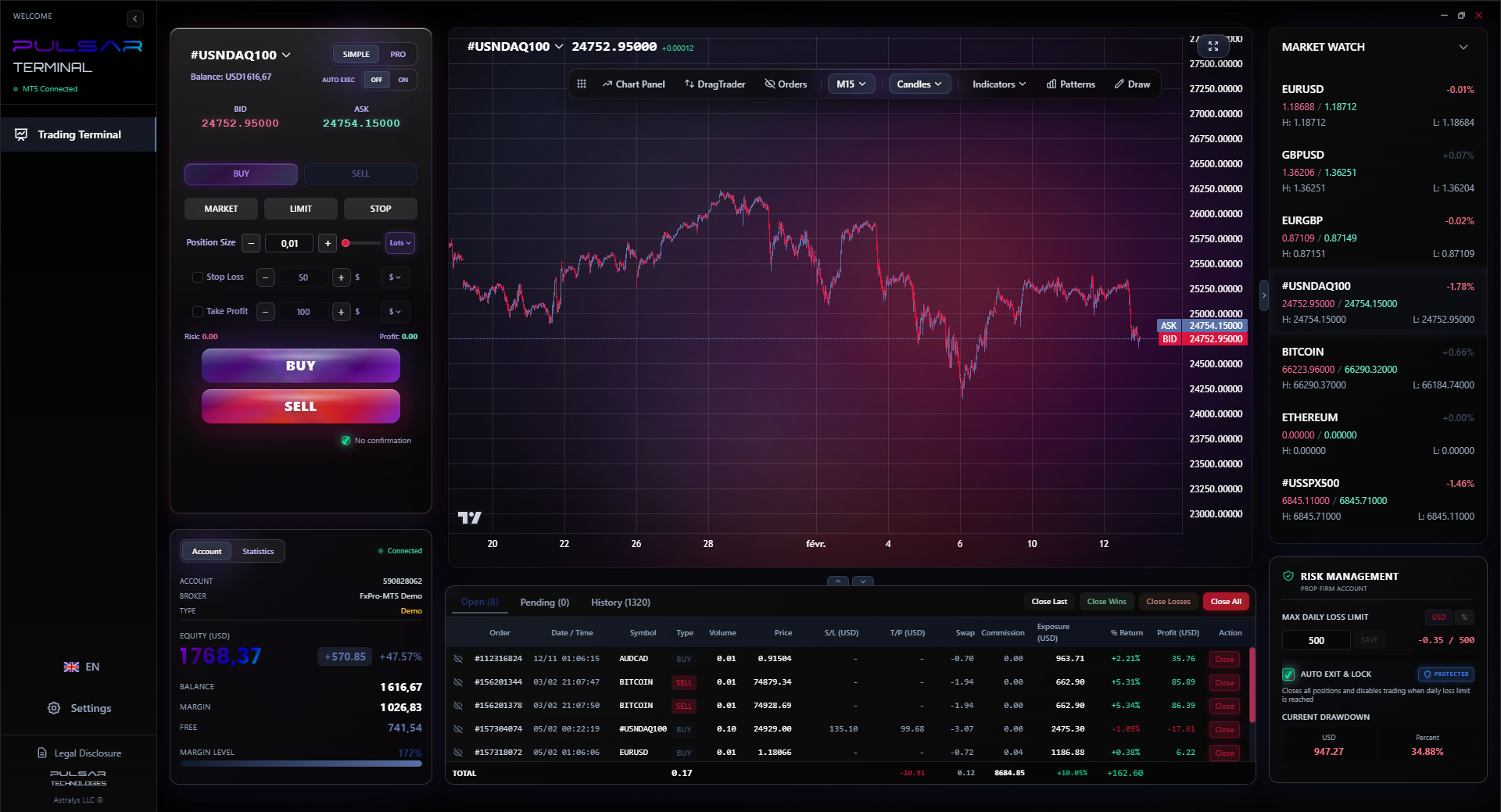
This is where advanced tools can give you an edge. For example, managing multiple take-profit levels and moving stops to breakeven manually is stressful and error-prone.

Example: On a winning trade, you might want to close half at a 1:1 risk-reward ratio, move your stop to breakeven, and let the rest run. Doing this manually while watching the chart is tough. Automation helps remove emotion.

Manually moving stops to breakeven and managing partial closures is where most emotional mistakes happen; Pulsar Terminal automates these rules directly on your MT5 chart.
Pulsar Terminal
Alat MT5 all-in-one: order drag-and-drop, multi-TP/SL, trailing stop, grid trading, Volume Profile, dan perlindungan prop firm. Digunakan 1.000+ trader setiap hari.
Here’s how to start, in order:
- Education First: Spend a month learning. Understand currency pairs, what moves them, what a candlestick is, and basic risk management. Don't deposit a single Taka yet.
- Open a Demo Account: Choose a reputable broker from our reviews and open a demo account. Trade with virtual money for at least 2-3 months. Try to be consistently profitable on demo. It's harder than it sounds.
- Develop a Simple Plan: Write down a one-page trading plan. What pairs will you trade? What timeframe? What is your entry criteria? What is your exit (stop loss and take profit) criteria? What is your 1% risk rule?
- Start Small Live: Deposit the minimum amount possible, maybe $50-100. Your goal is not to make money, but to execute 50 trades according to your plan without breaking your rules. The psychological pressure with real money is different.
- Review and Scale: After those 50 trades, review your journal. Only if you were disciplined and profitable or break-even should you consider adding more capital.
Forex trading in Bangladesh is a challenging but viable path. It demands respect, discipline, and a relentless focus on learning from your mistakes, not just your wins. I've made most of the mistakes so you don't have to. Good luck, and trade safe.
FAQ
Q1Is forex trading legal in Bangladesh?
It operates in a regulatory grey area. Trading with international brokers is common, but it's not officially regulated by Bangladesh Bank for speculative retail trading. The key is using a properly licensed offshore broker and being transparent with your bank about the purpose of international transactions.
Q2What is the minimum amount in Taka needed to start forex trading?
You can start with a very small amount. Many brokers offer cent accounts where $10 (approx. ৳1,180) is enough to begin learning with micro-lots. However, after factoring in bank transfer fees (৳1,500+), a more practical starting amount is $100-200 (৳12,000-৳24,000) to have meaningful capital after costs.
Q3Which broker is best for Bangladeshi traders?
There's no single 'best' broker. Look for brokers with strong international regulation (ASIC, FCA), low and stable spreads, reliable trading platforms (MT4/MT5), and acceptance of deposits from Bangladeshi bank cards. Brokers like IC Markets, Exness, and Pepperstone are frequently used due to their global reputation and technology.
Q4How do I withdraw profits in Taka?
You request a withdrawal in USD (or your account currency) from your broker to the same method you deposited (e.g., your Visa card). Your local bank will convert the USD to Taka at their buying rate and deposit the Taka into your account, minus any conversion or processing fees. The process usually takes 1-5 business days.
Q5What is the biggest mistake new Bangladeshi forex traders make?
Over-leveraging with the hope of making life-changing money quickly. They see a small account, use 1:500 use, and a normal 20-pip move against them wipes out their capital. The second biggest mistake is not accounting for the high cost of depositing and withdrawing Taka, which eats into their profits.
Q6Can I trade forex part-time from Bangladesh?
Absolutely, and I recommend it. The most liquid trading session (London-New York overlap) is from 8 PM to 12 AM Bangladesh Time, which is manageable after work. Focusing on higher timeframes (4-hour or daily charts) is perfect for part-time traders as it requires less screen time.
Pelajaran Prof. Winston
Poin Penting:
- ✓Risk a maximum of 1% per trade, no exceptions.
- ✓Factor in the 2-3% Taka drain from bank fees.
- ✓Trade the 8 PM - 12 AM BST window for best liquidity.
- ✓Use higher timeframes (4H/Daily) to combat latency.
- ✓A demo account is for practice, not for fantasy.
Seberapa bermanfaat artikel ini?
Klik bintang untuk menilai
Wawasan Trading Mingguan
Analisis & strategi mingguan gratis. Tanpa spam.
Tentang Penulis
Daniel Harrington
Kepala Konten
Kepala konten di The Trading Mentor. Trader berpengalaman yang bersemangat membuat konsep trading kompleks mudah dipahami. Mencakup topik global, strategi, dan panduan platform.
Komentar
Peringatan Risiko
Perdagangan instrumen keuangan mengandung risiko signifikan dan mungkin tidak cocok untuk semua investor. Kinerja masa lalu tidak menjamin hasil di masa depan. Konten ini hanya untuk tujuan edukasi dan tidak boleh dianggap sebagai nasihat investasi. Selalu lakukan riset Anda sendiri sebelum trading.
Anda mungkin juga suka

Cara Trading Forex Sukses: 7 Prinsip dari Trader Profesional
Cara trading forex sukses dengan 7 prinsip trader pro: manajemen modal, disiplin, journal trading, backtest. Data nyata, bukan janji profit palsu.
Jam Trading Forex Terbaik untuk Trader Indonesia: Panduan Lengkap dengan Tabel Waktu
Panduan jam trading forex untuk trader Indonesia. Tabel 4 sesi dunia, jam emas 20:00-00:00, sesi mana yang harus dihindari. Data akurat + tips dari trader berpengalaman.
Top 5 Sàn Forex Uy Tín Nhất 2026: Review Jujur dari Trader Indonesia
Top 5 sàn forex uy tín 2026 untuk trader Indonesia. Review jujur: spread, deposit, withdraw, dukungan lokal. Exness, XM, IC Markets & lebih.
Dapatkan Pulsar Terminal
Semua kalkulator ini terintegrasi dalam Pulsar Terminal dengan data real-time dari akun MT5 Anda.
Dapatkan Pulsar Terminal