


I blew $3,500 on a 'premium' forex trading class back in 2016.
James Mitchell
Analis Trading Senior ·  Canada
☕ 10 mnt baca
Yang akan Anda pelajari:

I blew $3,500 on a 'premium' forex trading class back in 2016. The sales page promised a 'proprietary system' and live mentorship. What I got was a repackaged moving average crossover strategy and a guy who took 48 hours to answer my emails. The worst part? I still lost money on my next five trades. That experience taught me a brutal lesson: in Canada's regulated but tricky forex scene, knowing how to spot real education from marketing fluff is your first, and maybe most important, trade. Let's talk about what forex trading classes can actually do for you, and how to find the good ones without getting rinsed.
When someone in Canada sells you a 'forex trading class,' they're usually selling one of three things: information, a system, or community. Most of the time, it's a mix.
Information-based classes are the most common. They teach you the basics: what a pip definition is, how to read a candlestick, what the MACD indicator does. This is foundational stuff, and frankly, you can find 90% of it for free from your broker's education hub or reputable sites. A good class should structure it well and answer your specific questions, but be wary of paying thousands for what's Forex 101.
System-based classes promise a specific, repeatable method. 'Here's our exact entry, stop loss, and take profit rules for trading USD/CAD.' This is where the big promises happen, and also where most of the scams live. No system works forever in all market conditions. I learned this the hard way trying to apply a London Breakout system during low-volatility summer sessions; it was a quick way to watch my account bleed.
Community/mentorship classes are about access. You're paying to be in a Discord server with the 'guru' and other students, get your charts reviewed, etc. This can have value if the mentor is genuinely transparent and engaged. But ask yourself: if they're such a profitable trader, why are they spending 40 hours a week managing a Discord server instead of trading?

Warning: Any class that guarantees profits, shows only winning trades, or uses luxury cars and watches as its primary marketing is a massive red flag. In Canada, CIRO and the provincial regulators like the OSC are constantly warning about these schemes.

💡 Tips Winston
The market's most expensive lessons are taught in red. A demo account lets you fail for free. Log 100 hours on it before risking a single loonie.
Here's a key thing most class sellers won't tell you: Canada has one of the more protective retail trading environments globally, thanks to the Canadian Investment Regulatory Organization (CIRO). This changes the game for your education.
First, use is capped. You're not getting 1:500 like you might offshore. It's 1:50 on majors and 1:20 on minors. Any class teaching a high-frequency scalping strategy that relies on insane use to make micro-moves profitable is immediately irrelevant to you. A good class for Canadians will teach position sizing and strategy within our use limits.
Second, your broker matters. You should only be with a CIRO-regulated dealer like the ones listed in our Interactive Brokers review or FOREX.com review. Their platforms (MT4, MT5, proprietary ones) are what you'll use. A class that teaches you a complex strategy on a platform you can't even access in Canada is useless.
Finally, understand the safety nets. Client funds are segregated, and there's the CIPF protection up to $1 million. This is huge for peace of mind. Your education should include how to verify your broker's registration using CIRO's AdvisorReport tool – a legit educator will tell you this, a scammer will try to steer you to an unregulated offshore broker where they get a kickback.
The Tax Talk No One Wants to Have
A truly valuable Canadian-focused class will at least mention taxes. Is your trading going to be considered capital gains (50% taxable) or business income (100% taxable) by the CRA? Your trading frequency and methodology matter. I didn't think about this early on, and it made for a fun chat with my accountant. Plan for it from the start.
“In Canada's regulated market, a class teaching strategies that need 1:500 use isn't just useless, it's dangerous.”
Let's get practical. What can you get for free, and when should you consider opening your wallet?
The Free Toolkit (Start Here):
- Broker Education: CIRO-regulated brokers like OANDA, CMC, and Questrade have extensive, free learning centers. Videos, articles, webinars. It's in their interest to have educated clients who don't blow up accounts instantly.
- Platform Demos: Every major platform offers a free demo. Spend 100 hours on MetaTrader 4 or 5 before paying for a class on how to use it. Learn where the buttons are.
- Core Concepts: Supply/demand, support/resistance, basic risk management (like using a position size calculator). This is all free online from reputable sources.
When Paid Might Make Sense:
- You're Stuck in a Cycle: You know the basics but keep making the same mistakes. A structured course or a coach can provide accountability and spot your blind spots. I paid for a psychology coach after a bad loss streak, and it was worth every penny for breaking my revenge-trading habit.
- Niche Strategy Deep Dive: You want to master a specific approach, like using Volume Profile or order flow. A quality, focused course can shortcut months of trial and error.
- Community for a Specific Market: Finding other Canadians trading the same sessions (Asian, London, New York) and the same pairs (like USD/CAD) can be useful. A paid community focused on this can filter out the noise.

Pro Tip: Before paying for any class, ask the creator for a verified, multi-year track record (not just screenshots). Ask if their strategies work within Canadian use limits. If they get defensive, walk away.
The forex 'education' space is riddled with predators. Here’s what to run from, especially as a Canadian.
The 'Prop Firm Challenge' Bait-and-Switch: This is huge right now. A 'guru' sells a class on how to pass prop firm challenges. The hidden catch? They often have affiliate links to the prop firm, so they get paid when you buy the challenge. Their strategy might be overly aggressive, leading you to fail and rebuy. If you're exploring this path, tools that help with strict risk management are key. Managing a prop firm's daily loss limit is a specific skill.
The Offshore Broker Pusher: If a course strongly recommends a specific offshore broker you've never heard of, they're likely getting a commission on your deposits and your losses (via a dealing desk model). Stick to CIRO-regulated brokers. Your money is safer, even if spreads are slightly higher.
The 'Signal Service' in Disguise: Many 'classes' are just a front to sell you monthly trading signals. The education is thin, but the signal upsell is constant. Remember, if their signals were so good, they'd be trading them, not selling them.
The Live Account 'Demo': Be wary of 'live trading' sessions where they trade a tiny account size with huge use to show massive percentage gains. A $500 account making 50% looks like $250, but it's reckless risk. Ask them to do the same trade with a realistic 1-2% risk model on a $10,000 account. The silence will be deafening.
I fell for the 'limited time offer' pressure tactic years ago. A true professional educator doesn't need fake urgency. They have a product that sells itself based on value.
💡 Tips Winston
If an educator's website has more pictures of Lamborghinis than charts with clear entry/exit logic, close the tab. Your goal is clarity, not clout.
“Your first investment should be time, not money. The market charges tuition in losses; a good class just makes those fees smaller.”
Forget the fancy sales pages. Here’s a down-to-earth, self-directed learning path I wish I’d followed.
Phase 1: The Absolute Basics (2-4 Weeks)
- Learn the jargon: pip, spread, lot size, long/short.
- Understand how a CIRO-regulated broker works (segregated funds, CIPF).
- Open a demo account with a broker like Pepperstone or XM (their global entities have great demos) and learn to place market, limit, and stop orders.
- Master the position size calculator. Risk 1% per trade on your demo, no exceptions.
Phase 2: Market Mechanics & Analysis (1-2 Months)
- Learn price action: support/resistance, trend lines, basic candlestick patterns.
- Pick TWO indicators to study deeply. I'd suggest the RSI indicator for momentum and the MACD indicator for trend confirmation. Don't collect 20 of them.
- Start a trading journal. Log every demo trade: reason for entry, emotion, outcome.
- Study the specific behavior of USD/CAD. It's your home pair, and it moves with oil prices and US economic data.
Phase 3: Strategy & Psychology (Ongoing)
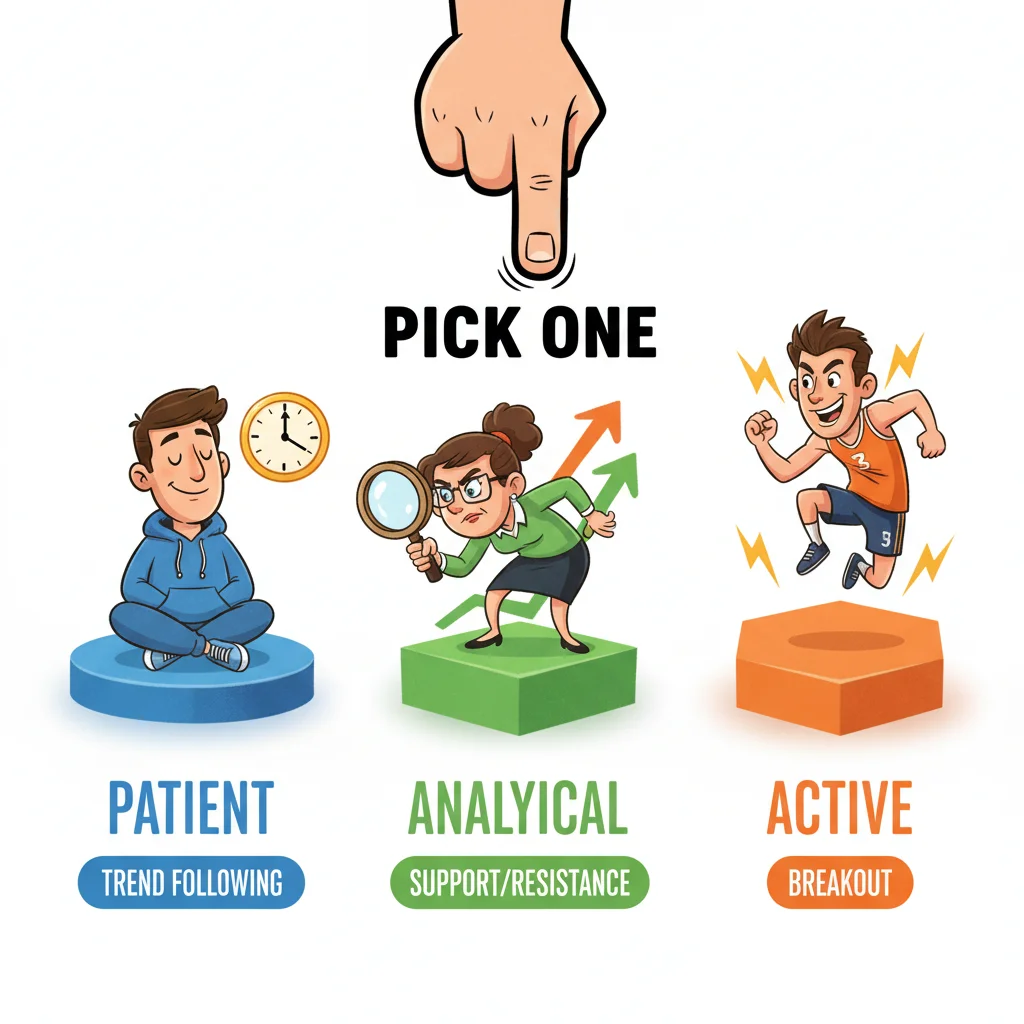
- Choose a primary style. Are you a scalping strategy person (fast, intense) or more suited to swing trading (slower, requires more patience)?
- Backtest your chosen strategy on your demo account for at least 50 trades. Record the win rate and average win/loss.
- Work on your mindset. This is where a paid coach or a quality book can be worth it. Learn about fear, greed, and confirmation bias.
- Move to a live account with minimal capital. The goal is to feel the real emotional pressure, not to get rich. Keep using your 1% risk rule religiously to avoid a margin call.
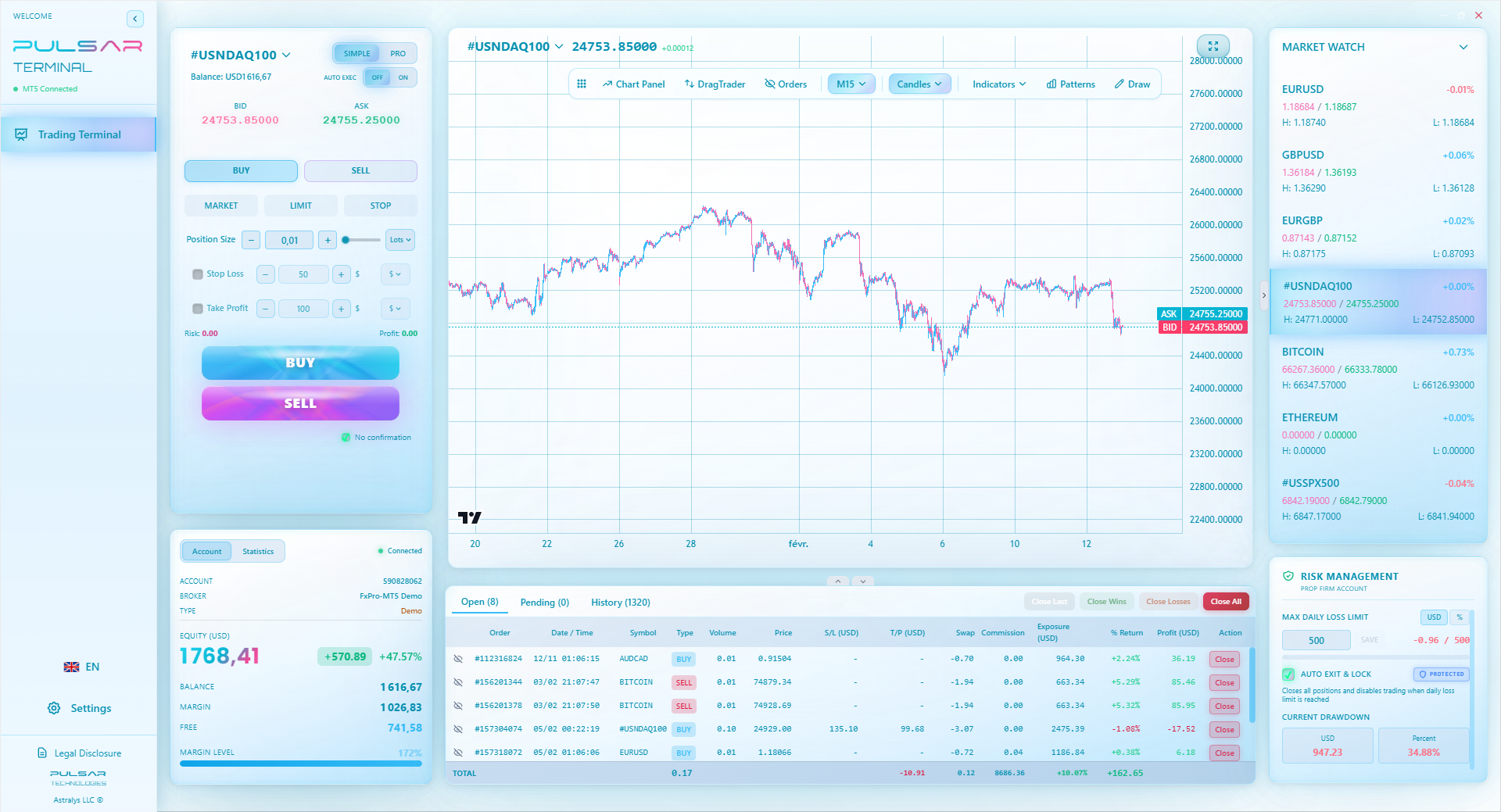
Once you have a strategy, executing it consistently without emotional interference is the next hurdle. A tool like Pulsar Terminal can automate complex order management, like setting multiple take-profits or a trailing stop, directly on your MT5 platform, so you stick to your plan.
Pulsar Terminal
Alat MT5 all-in-one: order drag-and-drop, multi-TP/SL, trailing stop, grid trading, Volume Profile, dan perlindungan prop firm. Digunakan 1.000+ trader setiap hari.
Instead of vague advice, here are specific things that helped me, with Canadian context.
For Charting & Platform Skills:
- TradingView: Their free plan is excellent for practicing analysis. Learn their drawing tools. Many Canadian brokers offer integration.
- MetaTrader 4/5 Platform Manuals: Boring but essential. Know how to set a trailing stop, a breakeven stop, multiple take-profits. Manual order management is a core skill. Automating this can save you from emotional mistakes.
For Canadian Market Context:
- Bank of Canada & Statistics Canada Websites: You need to understand what drives the loonie. Their statements and data releases (CPI, employment) are the source material.
- The "Financial Post" Markets Section: Good for local financial sentiment.
For Paid Education (Vetted):
- Trading Psychology Coaches: Look for accredited professionals (real psychologists) who work with traders, not just traders who call themselves coaches.
- Platform-Specific Courses: If you choose to use a powerful platform toolset that enhances MT4/MT5, it's worth learning its advanced features properly. The efficiency gain can be substantial.
- Specialized Books: Look for classics like "Trading in the Zone" by Mark Douglas (psychology) or "The Daily Trading Coach" by Brett Steenbarger. Buy the book, not the $2,000 seminar from someone summarizing it.
Remember, the best resource is your own trading journal. Review it weekly. Your repeated mistakes are your personal curriculum.
💡 Tips Winston
Your trading journal is your true mentor. It doesn't lie, doesn't have an affiliate link, and its lessons are tailored 100% to you. Review it more than you review new strategy videos.
“No one sells a trading 'secret' that actually works. If it printed money reliably, they'd keep it to themselves.”
So, after 12 years and that initial $3,500 mistake, what's my verdict?
For a complete beginner, a complete, paid forex trading class is usually an expensive shortcut for information you can get for free. Your early investment should be time, not money. Use your broker's resources, demo trade relentlessly, and learn the hard way on pretend money.
For an intermediate trader who's plateaued, a targeted, paid course or coaching can be useful if you choose correctly. It can break bad habits, introduce a new perspective, or provide much-needed accountability. The key is specificity. Don't buy "Learn Forex." Buy "Learn to Trade Pullbacks in Trending Markets" or "Master Risk Management for Prop Firm Challenges."
, no class can give you discipline or emotional control. That comes from within, forged by placing real trades and managing real risk. The market is the ultimate teacher, and it charges tuition in the form of losses. A good class might just help make those tuition fees a bit smaller.
Start with the free stuff. Be brutally honest with your demo results. Only pay for education when you can clearly articulate the exact gap in your knowledge it will fill. And for the love of the loonie, stick with CIRO-regulated brokers. That's one lesson you don't want to learn the hard way.

FAQ
Q1Are free forex trading classes from brokers any good?
Yes, often they're very good for the basics. CIRO-regulated brokers like Interactive Brokers, FOREX.com, and OANDA have strong, free education centers. They cover everything from platform tutorials to fundamental analysis. It's in their interest to have knowledgeable clients. Start here before spending a dime elsewhere.
Q2What is the most important thing to learn in any forex class?
Risk management. Full stop. Any class that jumps straight to 'secret indicators' without drilling position sizing, stop-loss placement, and the 1% risk rule is dangerous. Your first goal isn't to make money; it's to not lose your capital. Learn to use a position size calculator until it's second nature.
Q3How can I verify if a forex trading educator is legitimate in Canada?
First, check if they're registered with a provincial securities commission (like the OSC or BCSC) as an advising representative, if they give specific trade advice. Most aren't. More importantly, scrutinize their claims. Demand verified track records, ask how their strategies adapt to CIRO's 1:50 use cap, and see if they transparently discuss both wins and losses. Legit educators warn you about risks; scammers only talk about rewards.
Q4Can I get a refund if a forex trading class is a scam?
It's very difficult. These operations often use fine-print disclaimers ('results not typical') and are structured as 'digital product' sales with no-refund policies. Your best protection is due diligence before buying. Use a credit card, as you may have some recourse through your card issuer for services not delivered as advertised, but don't count on it. Prevention is key.
Q5Should I learn a specific trading strategy from a class?
It can help, but don't treat it as a holy grail. A class can teach you a scalping strategy or a swing trading method, but you must then practice and adapt it to your own psychology and the current market. I bought a mean reversion system that worked great in ranging markets but blew up my account when a strong trend started. The class didn't teach me how to identify when not to use the system.
Q6Is mentorship better than a pre-recorded online class?
It depends on you. Mentorship (if genuine) provides feedback and accountability, which is priceless. A pre-recorded class provides structure and reference material. A good combo is a recorded course for the core material, plus a community or coaching option for Q&A. Avoid 'mentors' who have 500 mentees; you'll get no individual attention.
Q7How long does it take to become profitable after taking classes?
There's no guarantee any class makes you profitable. Trading is a skill, like learning an instrument. You might understand music theory (the class) in 3 months, but becoming a proficient player takes years of practice. Expect at least 1-2 years of dedicated screen time, journaling, and live trading with small amounts before you see consistent results. Anyone promising faster results is selling a fantasy.
Pelajaran Prof. Winston
Poin Penting:
- ✓Start with free broker education & a demo account
- ✓Master risk management before any 'secret' strategy
- ✓Verify brokers through CIRO, not guru recommendations
- ✓A trading journal is your most valuable learning tool
Seberapa bermanfaat artikel ini?
Klik bintang untuk menilai
Wawasan Trading Mingguan
Analisis & strategi mingguan gratis. Tanpa spam.
Tentang Penulis
James Mitchell
Analis Trading Senior
Berbasis di New York dengan lebih dari 9 tahun pengalaman trading. Fokus pada pasangan USD utama, tantangan prop firm, dan lanskap regulasi AS.
Komentar
Peringatan Risiko
Perdagangan instrumen keuangan mengandung risiko signifikan dan mungkin tidak cocok untuk semua investor. Kinerja masa lalu tidak menjamin hasil di masa depan. Konten ini hanya untuk tujuan edukasi dan tidak boleh dianggap sebagai nasihat investasi. Selalu lakukan riset Anda sendiri sebelum trading.
Anda mungkin juga suka

Cara Trading Forex Sukses: 7 Prinsip dari Trader Profesional
Cara trading forex sukses dengan 7 prinsip trader pro: manajemen modal, disiplin, journal trading, backtest. Data nyata, bukan janji profit palsu.
Jam Trading Forex Terbaik untuk Trader Indonesia: Panduan Lengkap dengan Tabel Waktu
Panduan jam trading forex untuk trader Indonesia. Tabel 4 sesi dunia, jam emas 20:00-00:00, sesi mana yang harus dihindari. Data akurat + tips dari trader berpengalaman.
Top 5 Sàn Forex Uy Tín Nhất 2026: Review Jujur dari Trader Indonesia
Top 5 sàn forex uy tín 2026 untuk trader Indonesia. Review jujur: spread, deposit, withdraw, dukungan lokal. Exness, XM, IC Markets & lebih.
Dapatkan Pulsar Terminal
Semua kalkulator ini terintegrasi dalam Pulsar Terminal dengan data real-time dari akun MT5 Anda.
Dapatkan Pulsar Terminal