


Let's cut through the noise.

Daniel Harrington
Kepala Konten
☕ 9 mnt baca
Yang akan Anda pelajari:
- 1The Official Stance: What Bangladesh Bank Actually Says
- 2The Underground Economy: How Traders Actually Fund Accounts
- 3Choosing a Broker: Who Accepts Bangladeshi Traders?
- 4The Tax Nightmare: Reporting and Legal Income
- 5A Practical Survival Guide for the Bangladeshi Trader
- 6Legal Alternatives: What Can You Do Officially?
- 7Will It Ever Change? The Future Outlook
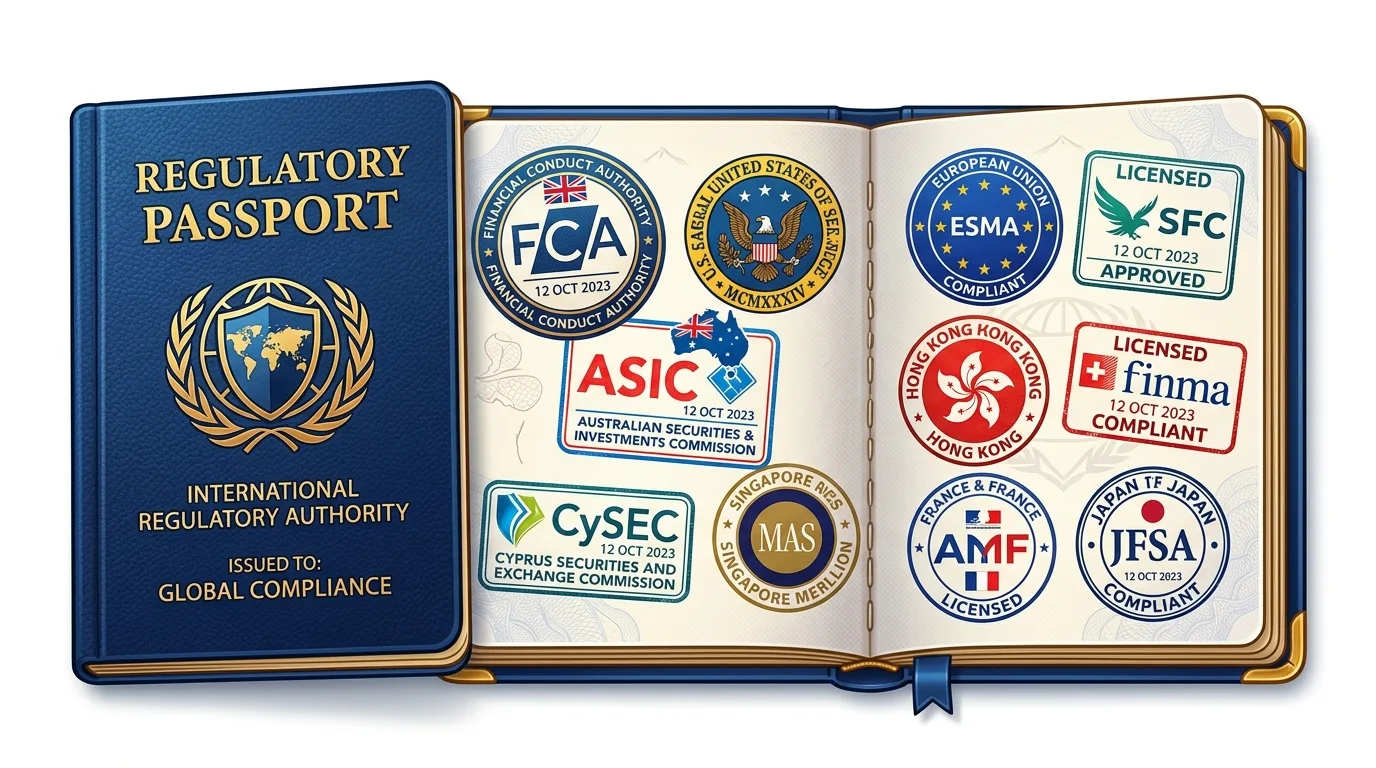
Let's cut through the noise. Asking if forex trading is legal in Bangladesh is like asking if you can breathe underwater. The official answer is a resounding 'no,' but everyone knows people are doing it. The real question isn't about black-and-white legality, it's about navigating a regulatory grey zone without getting your capital seized or your bank account frozen. I've seen traders in Dhaka and Chittagong make fortunes and lose everything, often based on a single misunderstanding of the rules. This guide isn't legal advice, but it's the street-smart, practical breakdown you need to operate with your eyes wide open.
Bangladesh Bank, the central bank, is crystal clear. Trading on the international foreign exchange market for speculative purposes is not permitted for residents. You cannot send money abroad through official banking channels (like your Sonali or Dutch-Bangla Bank account) with the stated purpose of forex trading. The Foreign Exchange Regulation Act is the hammer they can use.
Why? It's about capital control. The Taka (BDT) is a managed currency. The central bank wants to prevent large, volatile flows of money leaving the country, which could destabilize the local economy. They see retail forex speculation as a risky drain on foreign reserves.
However, and this is the critical loophole everyone uses, there's no law against you having an account with an overseas broker. The illegality comes from how you fund it. If you use an unofficial channel (more on that later), you're breaking the rules on fund transfer, not necessarily on the act of trading itself. It's a distinction without a difference if you get caught, but it explains the environment.

Warning: Never, ever tell your local bank you are sending money for forex trading. Your remittance request will be denied instantly, and your account might be flagged for closer scrutiny.
“The illegality comes from how you fund it, not necessarily from the act of trading itself.”
This is where theory meets the messy street reality. Since you can't wire BDT to Exness or IC Markets directly, alternative systems have evolved. I've spoken with dozens of traders in Bangladesh, and the methods are consistent.
The Primary Method: Payment Gateways & Agents You deposit BDT into a local payment service (like bKash, Nagad, or Rocket) or to a local agent. That agent, who has access to overseas funds (often from export businesses or migrant workers), then credits the equivalent USD amount to your broker account. The broker sees a deposit from a payment processor, not from Bangladesh. The spreads on these exchanges are terrible, often 3-5% above the market rate. You're paying a hefty premium for access.
The Withdrawal Problem This gets trickier. Getting profits back is the real hurdle. The process often reverses: your broker sends USD to the agent's overseas account, and the agent gives you BDT locally. This creates massive counterparty risk. What if the agent vanishes with your $5,000 profit? I know a trader in Sylhet who lost $2,700 this way. The agent just stopped answering his phone.
A Personal Experience with Cost In 2021, I helped a colleague in Dhaka test this. To deposit $500, he paid 32,500 BDT via bKash to an agent. The official rate was about 85 BDT/USD, so $500 should cost 42,500 BDT. The agent's rate? 65 BDT/USD. Seems great, right? But when he withdrew $600 in profit, the agent only gave him 78 BDT/USD, skimming a huge chunk. His net return was slashed by nearly 15% from these hidden fees. Always, always factor in these double-ended costs before you even think about your trading position size calculator.

💡 Tips Winston
Your first profit target should always be 'successful withdrawal.' If you can't get your money back, the P&L on your screen is just a fantasy.

“You're paying a hefty premium for access, and that's before you've even placed a single trade.”
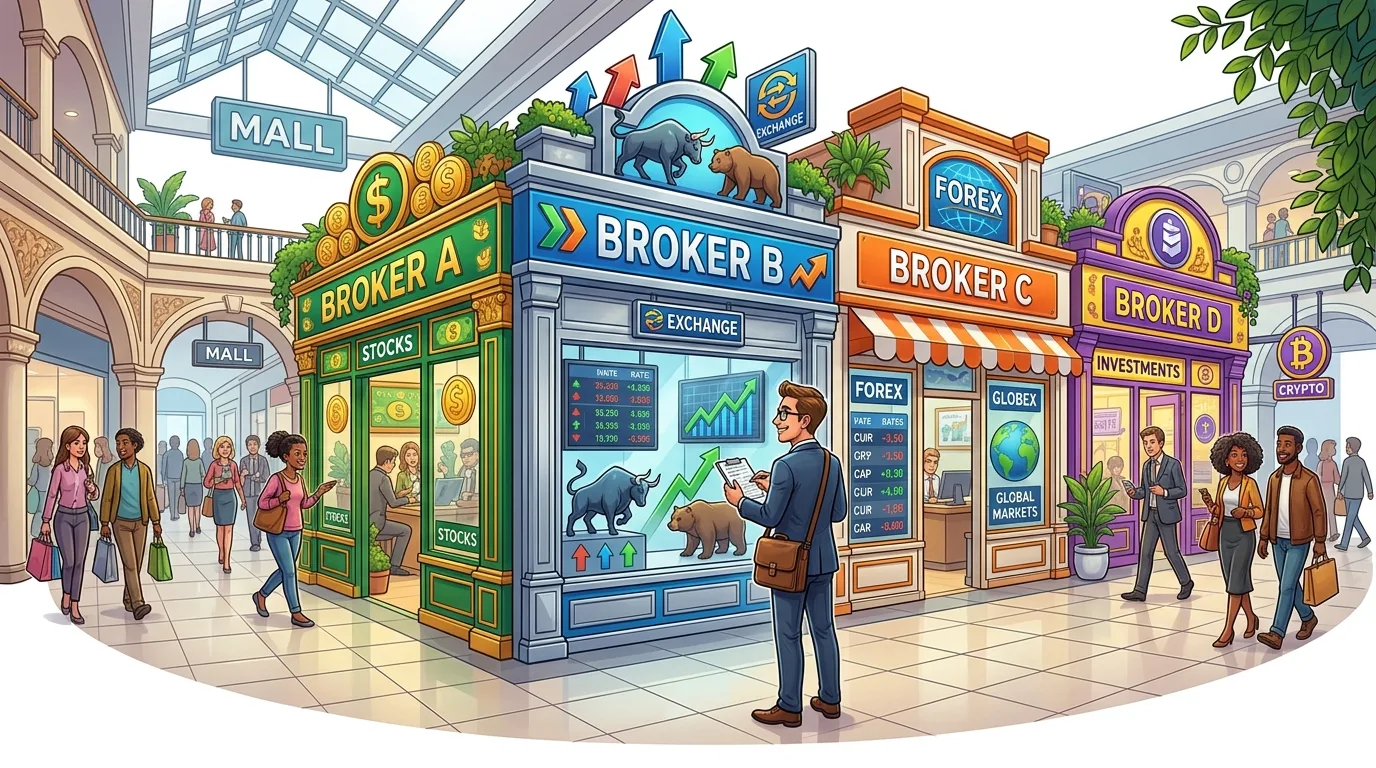
Most international brokers will happily open an account for you. Your residency isn't the issue; your method of deposit is. They operate under their own licenses (CySEC, ASIC, FCA) and aren't breaking Bangladeshi law by having you as a client. Your choice of broker is critical for safety.
What to Look For (And Avoid) You need a broker with a wide array of alternative payment methods. Think Skrill, Neteller, Fasapay, Sticpay, and Crypto (USDT). These act as buffers. You fund your e-wallet through an agent, then move money from the e-wallet to the broker. It adds a step but can feel safer.
Avoid brokers that only take bank wires. They're useless to you. Also, be wary of any "broker" that approaches you directly on Facebook or WhatsApp offering "special deals for Bangladeshi traders." These are almost always outright scams or unregulated bucket shops.
My Shortlist Based on Community Feedback From constant chatter in trading groups, these are the most commonly used:
- Exness: Hugely popular here due to its vast array of local payment partners and crypto options. Their raw spread accounts can be good for scalping strategy.
- IC Markets: Favored by more serious traders for its true ECN execution. Funding is trickier but doable via crypto or specific e-wallets.
- XM & Pepperstone: Also have strong followings with multiple deposit avenues.

Pro Tip: Before funding a live account, open a demo and test the broker's platform, execution speed, and spreads on the EUR/USD guide and XAU/USD guide during your local market hours. Latency can be a killer.
“You're paying a hefty premium for access, and that's before you've even placed a single trade.”
Here's the beautiful, ironic headache. You've navigated the illegal deposit, traded profitably, and gotten your money back via an agent. Now you have a pile of cash. How do you make it legal in the eyes of the National Board of Revenue (NBR)?
You can't declare it as forex trading income. Full stop. That's an admission of breaking foreign exchange rules. So, traders get creative, and you should understand the risks.
Common "Legalization" Methods
- Business Income: You show it as income from a consulting service, freelance IT work, or online business. You need invoices and a plausible story.
- Gift: Some claim it as a gift from a relative abroad. There are limits to this before it raises eyebrows.
- Just Keep It Quiet: For smaller amounts, many just keep the cash and spend it gradually, never declaring it. This works until you want to buy a car or property, and the bank asks for the source of funds.
The Big Risk If the NBR audits you and digs into the source, and traces it back to forex trading, you could face penalties for tax evasion on top of potential foreign exchange violations. The tax liability could be 100% of the profit or more.
I knew a trader who made about $20,000 over two years. He bought a plot of land. The bank's anti-money laundering check asked for his source. His story was weak, the transaction was frozen for months, and he ended up paying a significant "settlement" to get it cleared. The profit wasn't worth the legal hassle.
💡 Tips Winston
Treat your agent like a volatile currency pair. They are a counterparty risk, not a bank. Diversify your relationships and never let too much money be in their pipeline at once.
“Your real profit is often half what the trading platform shows you.”
Assuming you understand the risks and are proceeding, here’s how to stack the odds in your favor.
Start Smaller Than You Think
Your first goal isn't to get rich. It's to prove you can navigate the entire cycle: deposit, trade, withdraw, and convert to clean money. Start with an amount you can afford to lose to the system itself, not just the markets. $200-$500 is a sane test batch.
Document Everything
Keep careful records. Screenshots of every transfer to the agent, their confirmation, the broker deposit, every trade, the withdrawal request, and the final BDT receipt. If you ever need to explain anything (to an accountant, lawyer, or yourself), this log is gold.
Master Risk Management Like Your Life Depends On It
You have enough systemic risk. Don't add market risk on top. Use tight stop-losses. Never risk more than 1-2% of your capital on a single trade. The last thing you need is a margin call forcing you to scramble for more deposits through shady channels. A swing trading approach with clear levels might suit this environment better than frantic scalping.
Keep Your Mouth Shut
Don't brag on social media. Don't tell your cousin's friend. The fewer people who know your business, the better. This isn't just about envy; it's about drawing unnecessary attention.
Plan Your Exit Before You Enter
Before you place trade #1, know exactly how you will withdraw. Which agent? What are their rates and terms? What's the timeline? If you can't answer this, you're not ready to trade.

Example: You have 50,000 BDT ($588 at 85 BDT/USD). Agent deposit fee: 4%. So you get ~$565 to trade. You aim for a 10% profit ($56.5). Agent withdrawal fee: 5%. You get back ~$537. Converted at a poor rate of 82 BDT/USD = 44,034 BDT. You started with 50,000 BDT. You need a 13.5% net profit just to break even. This is your real hurdle.

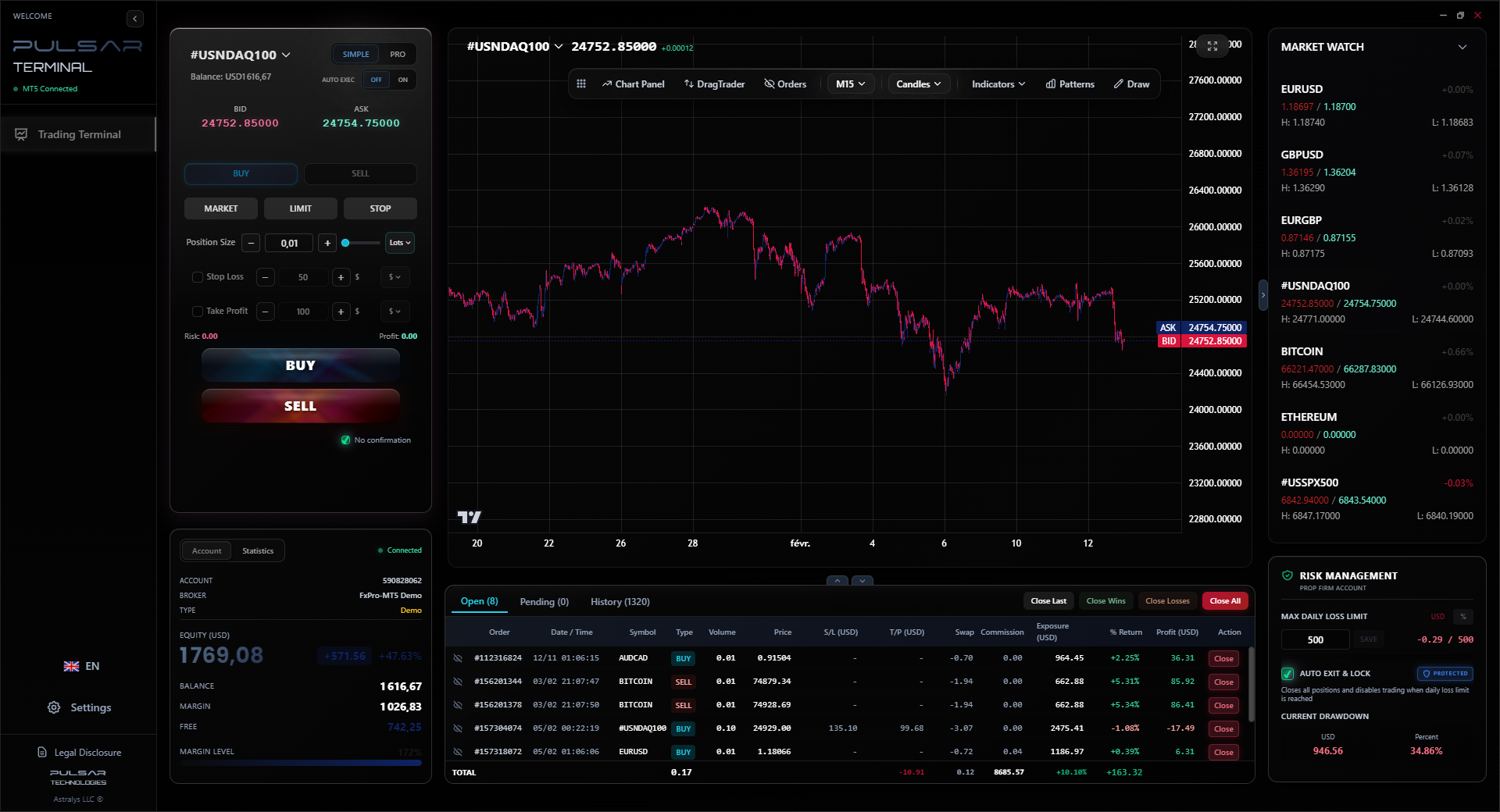
Managing complex trades and strict prop firm rules from Bangladesh requires precision; Pulsar Terminal's drag-and-drop orders and automated daily loss protection handle this directly on your MT5 platform.
Pulsar Terminal
Alat MT5 all-in-one: order drag-and-drop, multi-TP/SL, trailing stop, grid trading, Volume Profile, dan perlindungan prop firm. Digunakan 1.000+ trader setiap hari.
“Your real profit is often half what the trading platform shows you.”
Frustrated by the grey market? There are completely legal options, though they're different beasts.
The Local Stock Market (DSE & CSE) Trading stocks on the Dhaka or Chittagong Stock Exchange is 100% legal, regulated, and you can fund it directly from your bank. The downside? It's a different skill set, less liquid, and highly influenced by local politics and rumors.
Mutual Funds (MFS) Let professional managers handle asset allocation. Boring, but safe and legal.
International Stock Investing (With Limits) Some local brokers offer access to international markets (like US stocks), but your investment limit is capped by your Foreign Currency Account (RFCD/NFCD) balance, which is limited to $5,000-$10,000 per year from legitimate sources like export earnings or remittances. Not for speculative day trading.
The Bottom Line These alternatives don't offer the 24/5 use and speed of forex. But they offer something priceless: peace of mind and the ability to sleep at night without worrying about a knock on the door. For many, that's the better trade.
💡 Tips Winston
The best indicator for trading in Bangladesh isn't the [RSI indicator](/en/indicators/rsi) or [MACD indicator](/en/indicators/macd). It's your own detailed logbook of every deposit and withdrawal. That's your true equity curve.
“The most likely 'change' is a crackdown that freezes the entire underground system overnight.”
I'm not holding my breath. The government's priority is economic stability and protecting the Taka. Retail forex trading, with its reputation for high use and high losses, is seen as a threat, not an opportunity for financial inclusion.
Change would require a massive shift in policy: a fully convertible Taka, a strong local regulatory framework for brokers (like India's SEBI), and licensed entities. We're decades away from that, if it ever happens.
The grey market will persist because the demand is there. It will evolve, with crypto becoming a bigger part of the funding puzzle. But the core risks - counterparty, legal, and financial - will remain. Your job as a trader is to manage those risks as ruthlessly as you manage your stop-losses.
The most likely "change" is a crackdown. If Bangladesh Bank decides to make an example by targeting a few big agents or tracing large transactions, the entire underground system could freeze up overnight. Your capital could be stuck in a broker account with no way to get it home. That's the Sword of Damocles hanging over every trader's head here.

FAQ
Q1Can I go to jail for forex trading in Bangladesh?
For the average retail trader moving small amounts, jail is extremely unlikely. The authorities are more concerned with large-scale money laundering or capital flight. However, you could face heavy fines, have your bank accounts frozen, or be forced to forfeit funds. The legal risk is financial, not typically custodial, for small-time speculators.
Q2What is the best payment method for funding from Bangladesh?
There is no single 'best' method, only trade-offs. Crypto (USDT) is becoming popular due to its lower cost and direct control, but it's volatile. E-wallets like Skrill/Neteller funded through agents offer a buffer. Direct agent-to-broker is fastest but has the highest counterparty risk. You must test small amounts with any method first.
Q3Do I have to pay tax on my forex trading profits?
According to the law, yes, all income is taxable. But declaring it directly as forex profit is an admission of breaking exchange controls. In practice, most traders either don't declare small amounts or legitimize the funds through other declared income sources (freelancing, business). This carries its own risk of tax evasion penalties if discovered.
Q4Is metatrader 4/5 legal to use in Bangladesh?
The MetaTrader software itself is just a tool. Downloading and using MT4 or MT5 on your computer is not illegal. The illegality stems from the funding of live trading accounts and the speculative activity itself. Using MT5 for chart analysis or trading a demo account is perfectly fine.
Q5Are prop firm challenges a good option for Bangladeshi traders?
They are a double-edged sword. They let you trade large capital with only a small challenge fee (which you can often fund via crypto). However, passing the challenge requires extreme discipline and strict adherence to their rules (like daily loss limits). A tool that automates rule enforcement could be the difference between passing and blowing the account. If you pass, the profit split is a cleaner form of 'income' you might explain as a performance bonus.
Q6What's the biggest mistake Bangladeshi forex traders make?
Ignoring the total cost of the environment. They see a 50-pip win on EUR/USD guide and think they're profitable. They forget the 4% deposit fee, the 5% withdrawal fee, and the terrible exchange rate from the agent. Their real profit is often half what the platform shows. Not using a strict position size calculator that accounts for this is a recipe for slow ruin.
Pelajaran Prof. Winston
Poin Penting:
- ✓Legal risk is financial, not jail time, for small traders.
- ✓Factor in a 10-15% system cost before calculating real profit.
- ✓Document every single transaction with screenshots.
- ✓Have a withdrawal plan before you deposit a single taka.
Seberapa bermanfaat artikel ini?
Klik bintang untuk menilai
Wawasan Trading Mingguan
Analisis & strategi mingguan gratis. Tanpa spam.
Tentang Penulis
Daniel Harrington
Kepala Konten
Kepala konten di The Trading Mentor. Trader berpengalaman yang bersemangat membuat konsep trading kompleks mudah dipahami. Mencakup topik global, strategi, dan panduan platform.
Komentar
Peringatan Risiko
Perdagangan instrumen keuangan mengandung risiko signifikan dan mungkin tidak cocok untuk semua investor. Kinerja masa lalu tidak menjamin hasil di masa depan. Konten ini hanya untuk tujuan edukasi dan tidak boleh dianggap sebagai nasihat investasi. Selalu lakukan riset Anda sendiri sebelum trading.
Anda mungkin juga suka

Cara Trading Forex Sukses: 7 Prinsip dari Trader Profesional
Cara trading forex sukses dengan 7 prinsip trader pro: manajemen modal, disiplin, journal trading, backtest. Data nyata, bukan janji profit palsu.
Jam Trading Forex Terbaik untuk Trader Indonesia: Panduan Lengkap dengan Tabel Waktu
Panduan jam trading forex untuk trader Indonesia. Tabel 4 sesi dunia, jam emas 20:00-00:00, sesi mana yang harus dihindari. Data akurat + tips dari trader berpengalaman.
Top 5 Sàn Forex Uy Tín Nhất 2026: Review Jujur dari Trader Indonesia
Top 5 sàn forex uy tín 2026 untuk trader Indonesia. Review jujur: spread, deposit, withdraw, dukungan lokal. Exness, XM, IC Markets & lebih.
Dapatkan Pulsar Terminal
Semua kalkulator ini terintegrasi dalam Pulsar Terminal dengan data real-time dari akun MT5 Anda.
Dapatkan Pulsar Terminal