


I lost $8,500 in 2014.
James Mitchell
Analis Trading Senior
☕ 12 mnt baca
Yang akan Anda pelajari:
- 1What a Forex Trading License Actually Is (And Isn't)
- 2Why a License is Non-Negotiable for Your Survival
- 3The Heavy Hitters: A Comparison of Major Regulators
- 4How to Verify a Broker's License (The Right Way)
- 5The Siren Song of Offshore (Unlicensed) Brokers
- 6How Your Broker's License Directly Impacts Your Trading
- 7A Special Note: Prop Firms and Licensing
- 8Putting It All Together: Making Your Licensed Choice
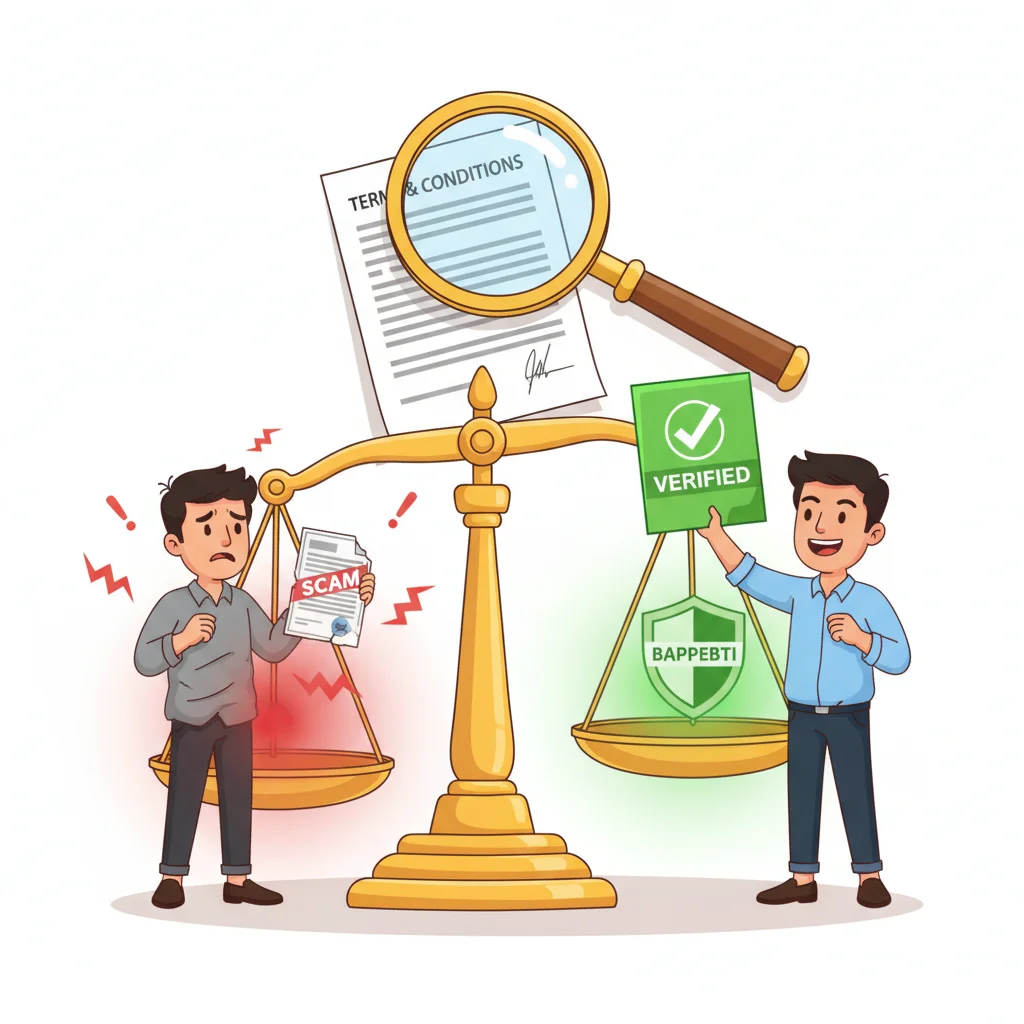
I lost $8,500 in 2014. Not to a bad trade, but to a slick website with fake promises and zero regulation. They called themselves 'GlobalFXPro,' offered insane use like 1:1000, and my deposit vanished after my first profitable week. The support line went dead. That was the day I learned the hard way that a legitimate forex trading license isn't just paperwork, it's the only thing standing between your capital and a black hole. If you're trading with an unlicensed broker, you're not trading, you're donating.
Let's cut through the marketing. A forex trading license is a regulatory authorization granted by a government agency to a brokerage firm, allowing it to offer foreign exchange trading services to retail clients. It's not a membership to a fancy club. It's a legally enforceable set of rules the broker must follow.
Think of it as a rulebook designed to protect you, the trader. This rulebook covers everything from how the broker holds your client funds (segregated accounts are mandatory with top regulators) to the maximum use they can offer you. It dictates their capital requirements, their reporting standards, and provides you with a formal channel for complaints.

Warning: A broker saying they are 'registered' in an offshore zone like St. Vincent or the Marshall Islands is not the same as being 'licensed' by a major regulator. Registration is often just a business filing, with little to no client protection.
The license itself is a specific reference number. For a US broker, you'd look for registration with the Commodity Futures Trading Commission (CFTC) and membership in the National Futures Association (NFA). In the UK or Europe, it's a Financial Conduct Authority (FCA) number. In Australia, it's an Australian Securities and Investments Commission (ASIC) license. You can and must verify this number on the regulator's official website. Don't just trust the badge on the broker's homepage. I've seen those faked more times than I can count.
A real license means the broker has skin in the game. They've put up significant capital to get it, and they risk losing it all if they screw over their clients. That's the incentive structure you want on your side.

💡 Tips Winston
A regulator's name on a website is just text. The license number and its status on the official register are the only truths that matter. Verify, then verify again.
You might think, 'I'm just a small trader, why does this matter to me?' Here's the brutal truth: the forex market is the wild west for scammers. An unlicensed broker is free to operate against you. They can manipulate prices on their platform (a practice called 'bucket shop'), refuse your withdrawals, or simply disappear with your money. With a licensed broker, these actions would lead to massive fines and the revocation of their license - their entire business.
Your Money Isn't Safe
Without a license, there's no guarantee your funds are held in a separate bank account from the broker's operating funds. If the broker goes bankrupt, your money becomes part of their assets to pay off creditors. You're last in line. Regulators like the FCA and ASIC mandate client money segregation. This means your funds are held in trust accounts, separate from the company's money. If the broker collapses, your money should be returned to you, not used to pay their bills.
No use Limits, No Life Raft
Unlicensed brokers often lure traders with insane use like 1:500 or 1:1000. It sounds great until you realize it's a one-way ticket to a margin call. Major regulators cap use to protect you from yourself. The CFTC/NFA caps it at 1:50 for major pairs for US retail clients. The FCA and ASIC cap it at 1:30. These caps force you to use proper position size and manage risk. They save more accounts than any trading strategy ever will.
You Have Nowhere to Complain
When my $8,500 vanished, I had zero recourse. No ombudsman, no compensation scheme, nothing. A licensed broker is answerable to its regulator. If you have a dispute you can't resolve, you can file a formal complaint. In jurisdictions like the UK, you may even be covered by a financial services compensation scheme (FSCS) that can pay out if the broker fails. That's the safety net you pay for by choosing a regulated entity.
I made my peace with that $8,500 loss. I treat it as the most expensive tuition I ever paid. It taught me to always, always start my broker research on the regulator's website, not on a 'Top 10 Brokers' list. Those lists are often just paid advertisements.

“If you're trading with an unlicensed broker, you're not trading, you're donating.”
Not all licenses are created equal. The strength of your protection depends entirely on the regulator behind the license. Here’s a breakdown of the key players you should care about.
| Regulator (Country) | Key Strength | Max Retail use (Forex) | Compensation Scheme? | Capital Requirement for Brokers |
|---|---|---|---|---|
| FCA (UK) | Strong client money rules, FSCS protection up to £85,000. | 1:30 | Yes (FSCS) | €730,000+ |
| ASIC (Australia) | strong enforcement, strict operational standards. | 1:30 | No (but strong segregation rules) | AUD $1 million+ |
| CFTC/NFA (USA) | Very strict rules, but limits like no hedging. | 1:50 (major pairs) | No (but segregation required) | Varies, but substantial |
| CySEC (Cyprus/EU) | EU passport allows operation across Europe. | 1:30 (under ESMA rules) | Yes (up to €20,000) | €730,000 |
| MAS (Singapore) | Highly reputable, stable financial hub. | 1:20 (for retail) | No | SGD $1 million |
The US (CFTC/NFA): The toughest playground. Rules are strict: no hedging (FIFO rule), lower use, and only US-regulated brokers can accept US clients. This limits your choice but maximizes protection. I've traded with a NFA broker, and while the rules feel restrictive, they stop you from doing monumentally stupid things.
The UK (FCA) & Australia (ASIC): These are the gold standards for most international traders. They offer strong protection without some of the US restrictions. Brokers like Pepperstone (ASIC) and many others hold these licenses. The FCA's FSCS scheme is a huge plus.
CySEC (Cyprus): This is the most common license for brokers targeting the European market. It's a solid, EU-wide license. The compensation scheme is lower, but the core protections (segregation, use caps) are enforced. Many global brokers you've heard of operate under CySEC regulation for their EU clients.

Pro Tip: If a broker offers you an 'global' account under a different entity (like in the Seychelles), understand you are opting out of the stronger regulatory protection. Your money, your choice. I only use my 'global' accounts for tiny, experimental trades.
This takes five minutes and is the most important research you'll do. Don't skip it.
- Find the Regulatory Entity: Go to the broker's 'About Us' or 'Legal' page. They must disclose their regulating body and license number. For example, it should say 'Authorised and regulated by the Financial Conduct Authority (FRN: 123456).'
- Go to the Source: Open a new browser tab. Google "FCA register," "ASIC connect," or "CySEC register." Go to the official government regulator website.
- Search the Register: Use the license/registration number you found. Do not search by the broker's trading name alone, as they often have multiple legal entities.
- Check the Details: The register will show the legal company name, status (should be 'Authorised' or 'Active'), the permissions it has (must include dealing on own account/CFDs), and any past disciplinary actions. Match the legal name exactly to the one on the broker's site.
Here's a real check I did recently. A broker advertised as 'XYZ Markets, regulated by ASIC.' I found their ACN number. On the ASIC Connect website, the search revealed the company was actually named 'XYZ Holdings Pty Ltd' and its permission was only for 'general financial advice,' not for 'operating a managed investment scheme' or 'dealing in derivatives.' That meant they were not licensed to run a forex brokerage! Red flag city.
If any of this information is missing, hard to find, or doesn't match, walk away. It's not worth the risk. This simple check would have saved me my $8,500.
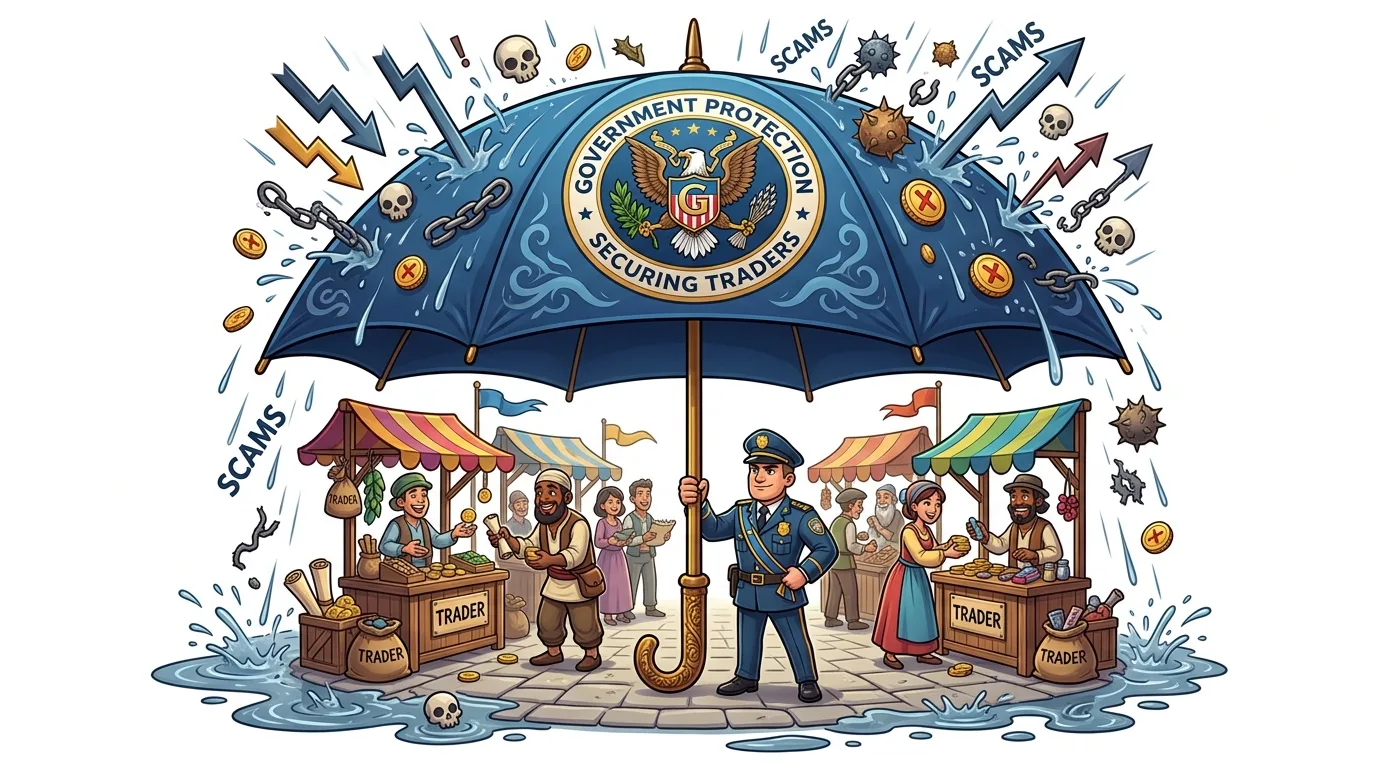
“The license isn't just about safety, it shapes your entire trading environment.”
They promise the world: 1:1000 use, massive bonuses, no 'restrictive' rules. It's a trap designed for greedy beginners and desperate gamblers. I get the appeal. When you start, you want all the firepower you can get. But here's what they don't tell you.
You are the product. An unlicensed offshore broker often makes money when you lose. Your trade doesn't go to the real market; it's booked internally against you. They have every incentive for you to blow up. Their price feeds can have 'slippage' only on your stops, or freeze during volatility. I've seen it on demo accounts they let me test.
Withdrawals are a battle. This is the most common horror story. You make a profit, request a withdrawal, and suddenly you need to verify 10 different documents you already submitted. Or they hit you with hidden fees. Or they just ignore you. With a licensed broker, while delays can happen, the regulator ensures there is a clear process.
No legal recourse. Let's say you miraculously turn $500 into $50,000 with an offshore broker in Vanuatu. They refuse to pay. What are you going to do? Hire a lawyer in the South Pacific? The cost and hassle make it impossible. Your money is gone.
I tried one years ago for a $500 'test' account. Made 30% in a week using a simple scalping strategy. The withdrawal request triggered a demand to trade 100 times the bonus amount (a bonus I never asked for) before any funds could be removed. I wrote off the $500 as another lesson. The use was fun, but it was a video game, not trading.
💡 Tips Winston
High use from an unlicensed broker isn't a gift, it's a weapon they hand you to destroy your own account. True edge comes from precision, not power.

The license isn't just about safety, it shapes your entire trading environment.
use and Margin: This is the most direct impact. A 1:30 use cap (FCA/ASIC) versus 1:500 (offshore) forces a completely different approach. At 1:30, a 3% move against you will wipe you out if you're maxed out. At 1:500, that same move happens in a blink. The lower cap from a real license forces discipline. You have to be more selective with your trades and use a proper position size calculator. It literally saves you from yourself.
Available Instruments and Rules: US-regulated brokers, due to NFA rules, don't allow hedging (you can't hold long and short positions on the same pair simultaneously). This affects strategies like grid trading. Other regulators allow it. This matters when you're choosing a swing trading or longer-term approach.
Execution and Spreads: Generally, brokers under top-tier regulators use better, more transparent liquidity providers. You're less likely to see ridiculous spreads widening during news events compared to an offshore bucket shop. Your stop-losses are more likely to be respected. Check reviews for execution quality on brokers like IC Markets or XM, which hold top-tier licenses, to see what good execution looks like.
Tax Implications: In some countries, trading with a regulator-recognized broker simplifies your tax reporting. Your annual statements are in a standard format that accountants understand. Try getting a coherent statement from an offshore entity - it's a nightmare.

“Without a license, there's no guarantee your funds are held in a separate bank account from the broker's operating funds.”
The rise of proprietary trading firms (like FTMO, The5%ers) adds a twist. You're not depositing money with a broker; you're taking a challenge to trade the firm's capital.
Here's the critical point: The prop firm itself is not your forex broker. They are a funding company. The actual trading is done through a separate, real brokerage account that they control. You should ask: which broker holds the live account? Is that broker properly licensed?
A reputable prop firm will partner with a well-regulated, known broker (often an institutional-grade one). This is for their own protection as much as yours. They need to ensure the market execution is fair and their capital is safe. If a prop firm is vague about who their broker is or uses an obscure, unregulated entity, that's a major red flag. You could pass the challenge, but then your payouts depend on the financial health of a shady broker.
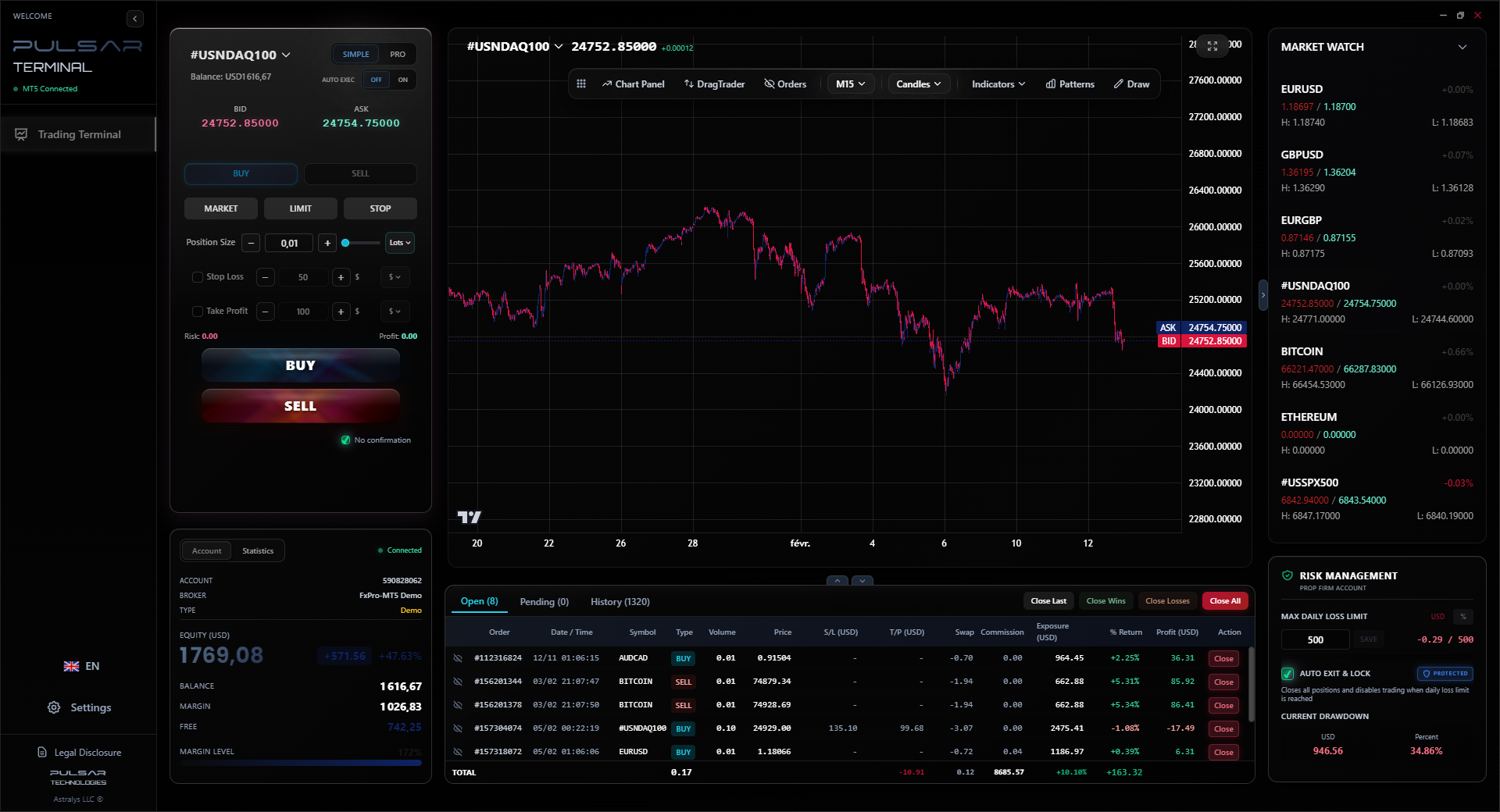
When evaluating a prop firm, add this to your checklist: 'Who is your executing broker, and what is their license number?' If they won't tell you, move on. Managing the strict daily loss limits of a prop challenge is hard enough without worrying about broker solvency. Tools that help automate risk, like setting hard daily stop-outs, become essential in this space.
Managing the strict risk parameters of a prop firm challenge or any disciplined strategy requires tools that automate stops and targets, a core function of Pulsar Terminal on MT5.
Pulsar Terminal
Alat MT5 all-in-one: order drag-and-drop, multi-TP/SL, trailing stop, grid trading, Volume Profile, dan perlindungan prop firm. Digunakan 1.000+ trader setiap hari.
So, you're convinced. You want a licensed broker. Here's your action plan.
- Decide on Your Regulatory Preference: Are you in the US? Your choice is limited to CFTC/NFA brokers. Based elsewhere? Prioritize FCA or ASIC regulation for the strongest protection. CySEC is a solid EU alternative.
- Shortlist Licensed Brokers: Use trusted, independent comparison sites (look for sites that disclose how they make money). Create a list of 3-5 brokers that hold the license you want. Names like Exness (for certain regions), Pepperstone, and IC Markets frequently come up for good reason.
- Verify Each One Individually: Do the regulator website check for every single broker on your list. Don't assume.
- Compare Trading Conditions: Now, look at the practical differences: spreads on the pairs you trade (like EUR/USD or XAU/USD), commission structures, platform availability (MT4/MT5), and deposit/withdrawal methods.
- Open a Demo Account: Test their platform execution during volatile periods. See how your stops are hit. Get a feel for it.
Your broker is your business partner. You wouldn't go into business with someone who has a fake ID and operates out of a PO box. Don't do it with your trading capital. The right forex trading license is the foundation of everything. It's the first, and most important, trade you'll ever make - the trade for your own security.

FAQ
Q1Is it illegal to use an unlicensed forex broker?
For the trader, it's usually not illegal, but it's incredibly risky. You have no legal protection. For the broker, it is illegal to solicit clients in a jurisdiction where they are not licensed (like a non-NFA broker taking US clients). You're operating in a gray area with zero safety nets.
Q2Can a broker have multiple licenses?
Yes, and the good ones do. A large international broker might have an FCA license for UK clients, an ASIC license for Australian clients, and a CySEC license for EU clients. They route clients to the appropriate legal entity based on their residence. Always check which specific entity you are signing up with.
Q3What's the difference between regulation and registration?
Registration is often just a business filing with a local authority (like in offshore zones). It carries minimal obligations. Regulation involves a rigorous application process, ongoing capital requirements, strict operational rules, and active supervision by a financial authority. You want a regulated broker, not just a registered one.
Q4Do I need a license to trade forex myself?
No. Individual retail traders do not need a personal license. The license requirement applies to the brokerage firm that provides you with the trading platform and holds your funds. You are their client.
Q5What if my broker's license is suspended?
If a regulator suspends a license, it's a serious event. The broker is typically ordered to cease all regulated activities. You should immediately stop trading, attempt to withdraw your funds, and follow instructions from the regulator. This is why you should occasionally re-verify your broker's status.
Q6Are there any good unlicensed brokers?
Even if one existed (which is doubtful), 'good' is irrelevant if there's no framework to enforce that goodness. The system of regulation exists precisely because you cannot rely on a broker's goodwill. Without a license, you have no guarantee they will remain 'good' tomorrow, especially when your profitable withdrawal request hits their desk.
Pelajaran Prof. Winston
Poin Penting:
- ✓Verify the license number on the official regulator website. Every time.
- ✓Client fund segregation is your #1 protection. Demand it.
- ✓use caps from top regulators (1:30, 1:50) are risk management tools.
- ✓Offshore promises are traps. Your profit is their loss.
- ✓Your broker's license dictates your available strategies and risk.
Seberapa bermanfaat artikel ini?
Klik bintang untuk menilai
Wawasan Trading Mingguan
Analisis & strategi mingguan gratis. Tanpa spam.
Tentang Penulis
James Mitchell
Analis Trading Senior
Berbasis di New York dengan lebih dari 9 tahun pengalaman trading. Fokus pada pasangan USD utama, tantangan prop firm, dan lanskap regulasi AS.
Komentar
Peringatan Risiko
Perdagangan instrumen keuangan mengandung risiko signifikan dan mungkin tidak cocok untuk semua investor. Kinerja masa lalu tidak menjamin hasil di masa depan. Konten ini hanya untuk tujuan edukasi dan tidak boleh dianggap sebagai nasihat investasi. Selalu lakukan riset Anda sendiri sebelum trading.
Anda mungkin juga suka

Cara Trading Forex Sukses: 7 Prinsip dari Trader Profesional
Cara trading forex sukses dengan 7 prinsip trader pro: manajemen modal, disiplin, journal trading, backtest. Data nyata, bukan janji profit palsu.
Jam Trading Forex Terbaik untuk Trader Indonesia: Panduan Lengkap dengan Tabel Waktu
Panduan jam trading forex untuk trader Indonesia. Tabel 4 sesi dunia, jam emas 20:00-00:00, sesi mana yang harus dihindari. Data akurat + tips dari trader berpengalaman.
Top 5 Sàn Forex Uy Tín Nhất 2026: Review Jujur dari Trader Indonesia
Top 5 sàn forex uy tín 2026 untuk trader Indonesia. Review jujur: spread, deposit, withdraw, dukungan lokal. Exness, XM, IC Markets & lebih.
Dapatkan Pulsar Terminal
Semua kalkulator ini terintegrasi dalam Pulsar Terminal dengan data real-time dari akun MT5 Anda.
Dapatkan Pulsar Terminal