


I lost $420 on a GBP/USD trade in 2018 because I got the session timing completely wrong.

Olumide Adeyemi
Pelopor Trading Afrika Barat ·  Nigeria
☕ 9 mnt baca
Yang akan Anda pelajari:
- 1Why Sessions Matter (Especially for Nigerian Traders)
- 2The Global Sessions (Converted to Lagos Time)
- 3Matching Your Strategy to Nigeria Market Hours
- 4Local Nigerian Factors You Can't Ignore
- 5My Personal Trading Schedule (From Lagos)
- 6Tools to Track Sessions Effectively
- 7Common Mistakes to Avoid (I Made #3)
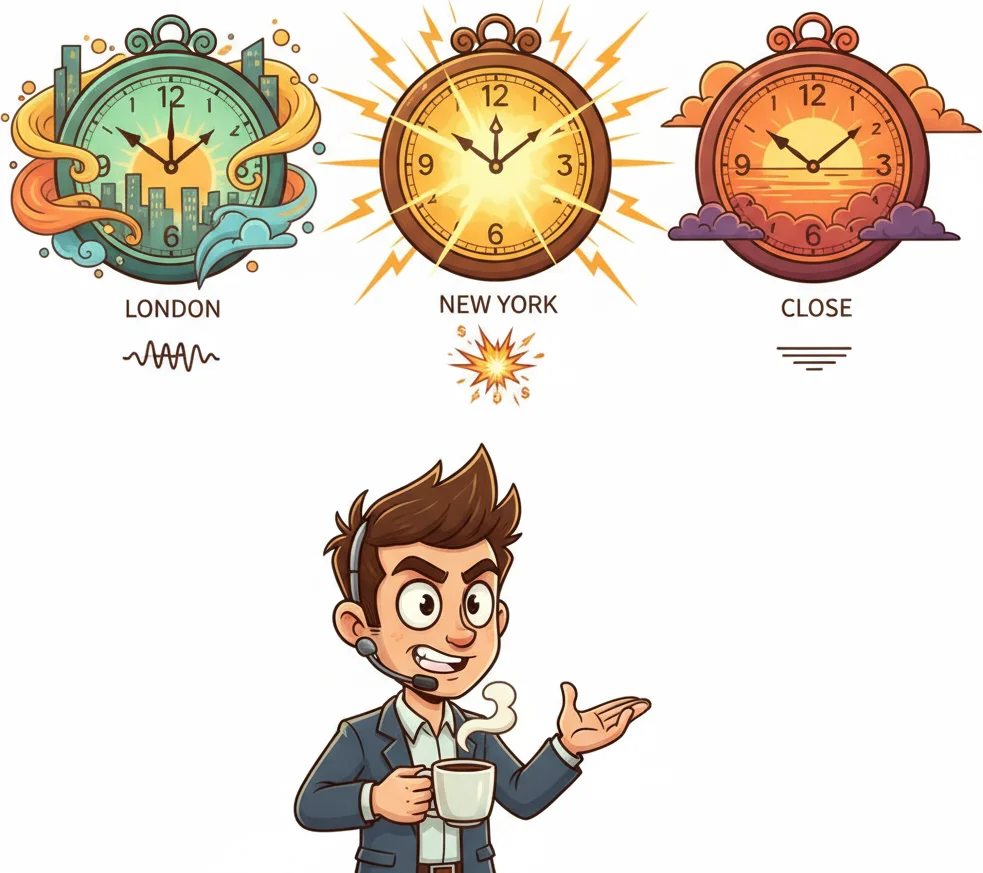
I lost $420 on a GBP/USD trade in 2018 because I got the session timing completely wrong. It was 2:30 AM Lagos time, and I thought the London session was starting. The spread was 5 pips wide, my order filled poorly, and price just chopped sideways for hours before reversing on me. I was tired, confused, and broke. That trade taught me that knowing the exact forex trading sessions in Nigeria time isn't just theory, it's the difference between catching a real move and donating your capital to the market's midnight boredom.
If you're trading from Lagos, Abuja, or Port Harcourt, you're not on Wall Street's doorstep. Your edge comes from timing, not location. The forex market is a 24-hour beast, but it doesn't move with the same intensity all day. It breathes in and out with the major financial centers: Sydney, Tokyo, London, and New York.
For us, the most critical fact is this: the London session overlaps with our afternoon. That's when the magic happens. Volume spikes, spreads tighten, and trends often establish themselves. I've seen more reliable moves between 1 PM and 4 PM Lagos time than in any other window. Trading outside the active sessions is like trying to play football in a swamp. You might move, but it's slow, messy, and you'll likely get stuck.
Another local reality? Our internet can be... temperamental. You don't want to be executing a complex scalping strategy during peak volatility if your data is about to drop. Aligning your trading with the high-liquidity sessions means your orders get filled faster and at better prices, which is a non-negotiable advantage when every pip counts.

Warning: Trading the Asian session from Nigeria (late night to early morning) often means wider spreads on EUR/USD and GBP/USD. I've been quoted 3-4 pips during thin liquidity. That's a huge cost before your trade even starts.
“The London-New York overlap from 1 PM to 5 PM Lagos time is where the market actually decides where it's going.”
Forget New York or Tokyo time. You need this schedule in West Africa Time (WAT), which is GMT+1. Nigeria does not observe daylight saving time, so this schedule is fixed year-round.
| Session | Major Financial Center | Lagos Time (WAT) | Key Characteristics |
|---|---|---|---|
| Sydney Session | Sydney, Australia | 10:00 PM - 7:00 AM | Very quiet. Mostly AUD and NZD pairs. Often just a continuation of late NY moves. |
| Tokyo Session | Tokyo, Japan | 12:00 AM - 9:00 AM | Asian market focus. JPY pairs (like USD/JPY) become active. Can see some breakout moves. |
| London Session | London, UK | 8:00 AM - 5:00 PM | THE MAIN EVENT. Highest volume. All majors are liquid. Best time for trend-following. |
| New York Session | New York, USA | 1:00 PM - 10:00 PM | High volume, especially at the open (1 PM WAT). Overlaps with London for 4 hours (1 PM - 5 PM WAT). |
The Golden Overlap: London & New York
The single most important period in your trading day is from 1:00 PM to 5:00 PM WAT. This is when both London and New York are open. Liquidity is at its absolute peak. This is where I place 80% of my trades. The spreads on something like the EUR/USD guide can tighten to just 0.1-0.3 pips on a good ECN account. News releases often happen here, and breakouts tend to have follow-through.
The Dead Zone
Be careful between 10:00 PM and 12:00 AM WAT. The New York session is winding down, and Sydney hasn't really started. Price action can become erratic and prone to false breaks. I avoid entering new positions during this window.

💡 Tips Winston
Your first rule: never trade the first 30 minutes of the London open (8-8:30 AM WAT). Let the institutional orders settle. The fake-out moves there have burned more retail accounts than any news event.
“Trading outside the active sessions is like trying to play football in a swamp.”
Your strategy must fit the session's personality. Here’s how I break it down.
For Scalpers (Like me in my early days): You live for the London-New York overlap (1 PM - 5 PM WAT). This is when you get clean, fast moves with tight spreads. Trying to scalp during the Sydney session is a recipe for frustration and losses from spread costs alone. A good scalping strategy needs this liquidity to work.
For Swing Traders: You have more flexibility. You can analyze and place orders during the quieter Tokyo or early London session (8 AM - 12 PM WAT). Your stop losses need to be wider to account for the lower liquidity before the big players arrive. This approach is less stressful and aligns well with a full-time job. Learn more about the mindset in our guide to swing trading.
For News Traders: You are a session hostage. Major economic data (US Non-Farm Payrolls, ECB decisions) usually drops during the London or New York sessions. You must know the exact Lagos time of the release. Being 5 minutes late can mean missing the entire move. Set alarms.

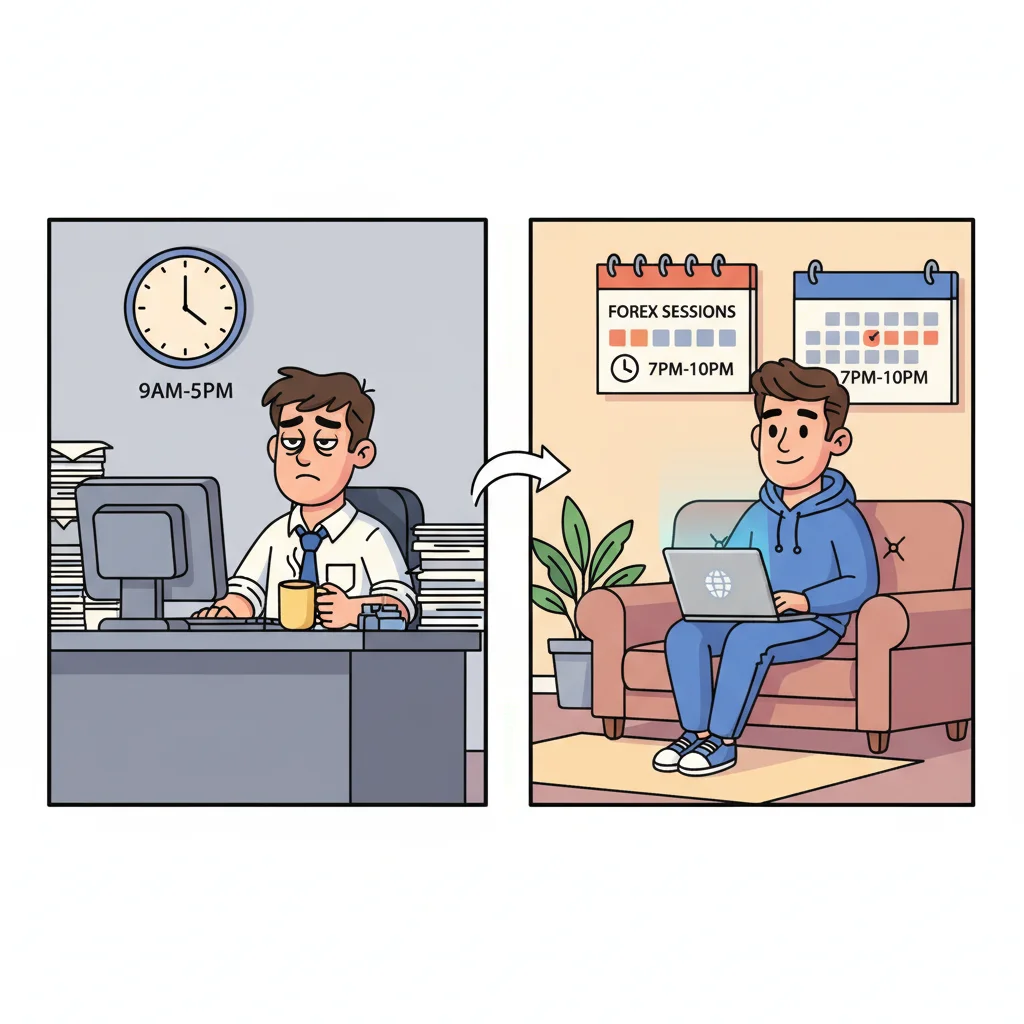
Pro Tip: If you have a day job, structure your trading around the London open (8 AM WAT). Do your analysis before work, set alerts, and manage trades on your phone during breaks. The core London moves often happen by midday.
“Trading outside the active sessions is like trying to play football in a swamp.”
Trading theory meets Nigerian reality. Here’s what they don’t tell you in the generic guides.
Internet & Power: The most advanced trading plan fails during a blackout. Your active trading hours should coincide with your most reliable power and internet access. For many, that’s the daytime (London session). Don’t plan critical trades for 2 AM if your generator fuel runs out at midnight.
Funding Your Account: This is a major hurdle. The CBN's restrictions mean funding an international broker with your Naira card is a battle. Limits are often $20-$50 per month. Brokers like Exness review and XM review have local deposit options through partners, which is a lifesaver. Factor in that your profits are subject to a 10% Capital Gains Tax. Keep clean records.
Broker Choice: You need a broker that accepts Nigerian clients and offers reliable execution during your trading hours. Check their server locations. I prefer brokers with servers in London for the session overlap. Low latency matters. I’ve had good experiences with the raw spreads from brokers like IC Markets review during peak hours.
Mental Fatigue: Trading the London session (8 AM - 5 PM) and then the New York open (1 PM) means you’re in the zone during normal waking hours. Trying to trade the Tokyo session (12 AM - 9 AM) ruins your sleep and your judgment. I’ve made my worst revenge trades at 3 AM. Protect your sleep schedule like it’s part of your capital.
💡 Tips Winston
If you must trade outside London hours, only trade the currency of the active session center. AUD/USD in Sydney, USD/JPY in Tokyo. Everything else is noise you're paying to listen to.
“Your edge as a Nigerian trader comes from timing, not location.”
Here’s exactly what my week looks like. This evolved after years of trial and error.
6:45 AM - 7:30 AM WAT: Wake up, check overnight price action on my phone. Did the Asian session reverse or confirm my bias? I glance at the MACD indicator and RSI indicator on the H4 chart. No trading. Just observation.
7:30 AM - 8:00 AM WAT: Proper analysis at my desk. I mark key support/resistance levels from the daily and H4 charts. I plan. What’s the economic calendar look like? I identify 2-3 potential setups for the London open.
8:00 AM - 10:00 AM WAT (London Open): I’m watching, not chasing. The first hour can be jumpy. I wait for the initial volatility to settle. I might enter a trade if my setup triggers cleanly.
1:00 PM - 4:00 PM WAT (London-New York Overlap): This is my active trading window. I am focused. Laptop only, phone on silent. This is when I manage existing positions and look for new, high-conviction entries. For example, last Tuesday, I took a short on GBP/USD at 1.2680 at 1:30 PM WAT, right as New York volume came in and rejected a key level. I took half off at 1.2640 (+40 pips) and let the rest run.
After 5:00 PM WAT: I close all discretionary day trades. I might have a swing trading position left running with a wide stop, but I’m not monitoring it actively. The market’s character changes. My edge diminishes.
This schedule keeps me sane and profitable. It aligns with high liquidity and protects my personal time.

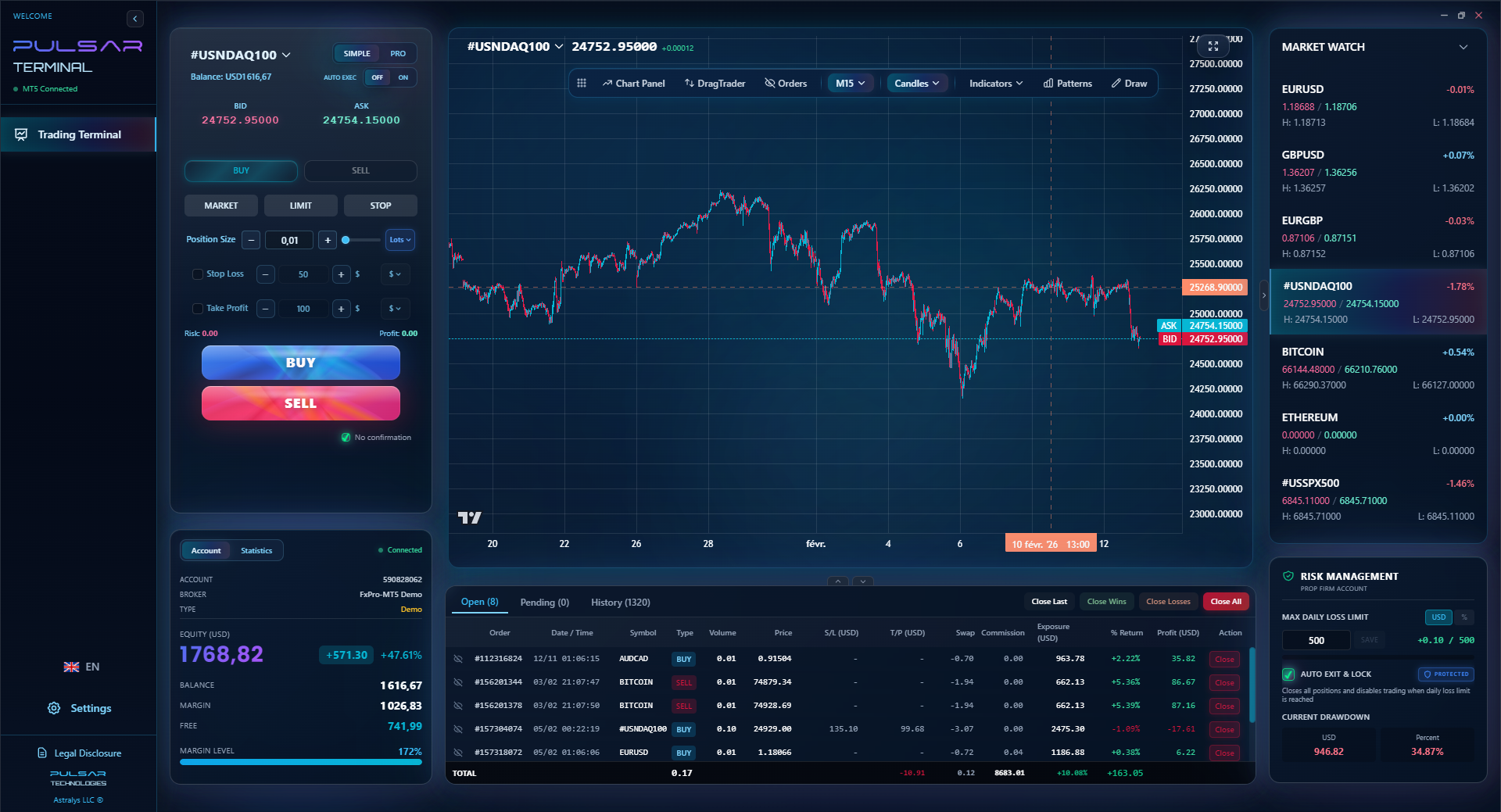
Sticking to a disciplined trading schedule is one thing, but managing multiple trades and stops across sessions is another. Pulsar Terminal automates this with drag-and-drop orders and multi-TP/SL management directly on your MT5.
Pulsar Terminal
Alat MT5 all-in-one: order drag-and-drop, multi-TP/SL, trailing stop, grid trading, Volume Profile, dan perlindungan prop firm. Digunakan 1.000+ trader setiap hari.
“Your edge as a Nigerian trader comes from timing, not location.”
You don't need to memorize times. Use technology.
Economic Calendars: Every major broker has one. Set the calendar's time zone to ‘GMT+1’ or ‘Lagos.’ Now every news event is in your time. This is basic but 90% of traders get it wrong initially.
Session Indicator Scripts: In MT4/MT5, you can download free ‘Session Indicator’ scripts that shade the chart background for each session. Seeing the London box turn blue at 8 AM WAT gives you a visual cue.
Alarms: Use phone alarms for session opens, especially London (8 AM) and New York (1 PM). Don’t rely on memory.
Broker Tools: Some platforms, like the tools found in a Pepperstone review, have built-in market heat maps that show when volatility is spiking. Use them.
The goal is to automate the basics so your brainpower is spent on analysis and execution, not time-zone math.
💡 Tips Winston
Set a hard daily stop time. Mine is 5:30 PM WAT. When London closes, I close my charts. Chasing the New York afternoon is how you turn a good day into a break-even one.
“I've made my worst revenge trades at 3 AM. Protect your sleep schedule like it's part of your capital.”
Let's learn from my losses so you don't pay for them.
- Trading the Wrong Pairs in a Session: Trading EUR/JPY during the Sydney session is silly. The spread will eat you. Match your pair to the active center: EUR/USD for London/NY, AUD/USD for Sydney, USD/JPY for Tokyo.
- Ignoring the Spread: Always check the live spread before clicking buy. That 4-pip spread at 11 PM WAT means your trade is already down $40 on a standard lot. Use a broker with transparent pricing.
- Overtrading the ‘Dead’ Time: This was my killer. After a losing day, I’d sit up past midnight trying to ‘make it back’ in the thin Tokyo session. The result? More losses from whipsaws and frustration. If you miss the London move, wait for the next day. The market will be there tomorrow.
- Forgetting About Fridays: The New York session close on Friday (around 10 PM WAT) can see unexpected volatility as positions are closed for the weekend. Don't hold risky, tight-stop trades into this close unless you know what you're doing.

Example: A $10,000 account. You risk 1% ($100) per trade. A bad fill during low liquidity costs you an extra 3 pips on EUR/USD. That’s $30 gone (3 pips x $10 per pip on a mini lot). You’ve lost 30% of your risk budget before the trade even moves. Session timing directly impacts your bottom line.
FAQ
Q1What is the best forex trading session in Nigeria?
The absolute best time is the London-New York overlap from 1:00 PM to 5:00 PM Lagos time (WAT). This 4-hour window has the highest liquidity and volatility, providing the best trading conditions for most strategies, especially for pairs like EUR/USD and GBP/USD.
Q2Can I trade forex at night in Nigeria?
You can, but you shouldn't trade most major pairs. The period from 10:00 PM to about 12:00 AM WAT is a low-liquidity 'dead zone.' The Asian session (12:00 AM - 9:00 AM WAT) is active for JPY and AUD pairs, but spreads on EUR/USD are wider. It's generally less optimal and can disrupt your sleep schedule.
Q3What time does the London session open in Nigeria?
The London forex session opens at 8:00 AM and closes at 5:00 PM West Africa Time (WAT, GMT+1). This is the core trading day for Nigerian traders.
Q4Is forex trading legal in Nigeria?
Yes, forex trading is legal for individuals using their personal funds. However, the retail forex market is lightly regulated locally. The Central Bank of Nigeria (CBN) imposes capital controls, making it difficult to fund international brokers directly with Naira cards. Most Nigerian traders use internationally regulated brokers. Profits are subject to a 10% capital gains tax.
Q5How do I manage risk with the time difference?
Use stop-loss orders on every trade. If you're holding a swing trade overnight, use a wider stop to account for lower liquidity in off-hours. Consider using a position size calculator to ensure your risk is fixed regardless of when you trade. Never leave a highly leveraged trade unattended during a session close.
Q6What broker features are important for Nigerian traders?
Look for: 1) Local deposit/withdrawal options (to bypass CBN restrictions), 2) Low and stable spreads during the London session, 3) Reliable execution with servers in London or New York, and 4) A platform that remains stable with occasional internet hiccups. Brokers like Exness and XM are popular for these reasons.
Pelajaran Prof. Winston
Poin Penting:
- ✓Trade the London-New York overlap (1-5 PM WAT) for 80% of your volume.
- ✓Avoid EUR/USD between 10 PM-12 AM WAT; spreads are toxic.
- ✓Widen stops for swing trades held through low-liquidity sessions.
- ✓Always set your economic calendar to GMT+1 (Lagos time).
Seberapa bermanfaat artikel ini?
Klik bintang untuk menilai
Wawasan Trading Mingguan
Analisis & strategi mingguan gratis. Tanpa spam.
Tentang Penulis
Olumide Adeyemi
Pelopor Trading Afrika Barat
Salah satu edukator trading forex paling aktif di Nigeria. 8 tahun pengalaman trading dari Lagos. Spesialis strategi modal rendah dan tantangan prop firm untuk trader Afrika.
Komentar
Peringatan Risiko
Perdagangan instrumen keuangan mengandung risiko signifikan dan mungkin tidak cocok untuk semua investor. Kinerja masa lalu tidak menjamin hasil di masa depan. Konten ini hanya untuk tujuan edukasi dan tidak boleh dianggap sebagai nasihat investasi. Selalu lakukan riset Anda sendiri sebelum trading.
Anda mungkin juga suka

Cara Trading Forex Sukses: 7 Prinsip dari Trader Profesional
Cara trading forex sukses dengan 7 prinsip trader pro: manajemen modal, disiplin, journal trading, backtest. Data nyata, bukan janji profit palsu.
Jam Trading Forex Terbaik untuk Trader Indonesia: Panduan Lengkap dengan Tabel Waktu
Panduan jam trading forex untuk trader Indonesia. Tabel 4 sesi dunia, jam emas 20:00-00:00, sesi mana yang harus dihindari. Data akurat + tips dari trader berpengalaman.
Top 5 Sàn Forex Uy Tín Nhất 2026: Review Jujur dari Trader Indonesia
Top 5 sàn forex uy tín 2026 untuk trader Indonesia. Review jujur: spread, deposit, withdraw, dukungan lokal. Exness, XM, IC Markets & lebih.
Dapatkan Pulsar Terminal
Semua kalkulator ini terintegrasi dalam Pulsar Terminal dengan data real-time dari akun MT5 Anda.
Dapatkan Pulsar Terminal