


Let's cut through the noise.

David van der Merwe
Trader Pasar Berkembang ·  South Africa
☕ 10 mnt baca
Yang akan Anda pelajari:
- 1The South African Forex Reality: Rules, Rand, and Real Talk
- 2Breaking Down the Numbers: What 'Profitable' Actually Looks Like
- 3The Hidden Costs That Kill Profit (Before You Even Start)
- 4My Biggest Profit Killers (And What I Learned)
- 5Building a South African-Profitable System
- 6Tax and Practicalities: Keeping What You Earn
- 7The Psychological Edge: The Real Source of Profit
Let's cut through the noise. The most common statistic you'll hear is that only about 30% of forex traders are consistently profitable. In my 12 years trading from Johannesburg, I've found that number to be generous. The real question isn't just 'how profitable is forex trading,' but 'how profitable can you be, given the South African market's unique rules, costs, and psychology?' I've blown up accounts, celebrated six-figure months, and learned that profitability here is less about secret strategies and more about navigating FSCA use limits, ZAR volatility, and your own worst impulses.
Trading from SA isn't the same as trading from London or New York. Our regulatory environment, currency, and even our banking hours shape everything. The Financial Sector Conduct Authority (FSCA) is the main player. They set the rules, and the biggest one for retail traders is the 30:1 use cap. Coming from a background where I'd foolishly used 500:1 offshore, this felt restrictive at first. Now, I see it as a forced safety net. It probably saved me from myself more than once.
Then there's the Rand. Pairs like USD/ZAR and EUR/ZAR are where many locals start, drawn to trading what they know. It's a trap, honestly. These are exotic pairs. The spreads are wide - think 5 pips on USD/ZAR and 14+ on EUR/ZAR at a good broker like Pepperstone. That's a huge hurdle to overcome before you even start making a profit. I learned this the hard way, scalping the ZAR and watching my tiny gains get eaten by costs. Your trading edge gets swallowed before the trade even moves.

Warning: Don't let patriotism guide your trading. Just because you live in rands doesn't mean USD/ZAR is a good pair to learn on. The wide spreads and volatile, news-driven moves make it a difficult playground for beginners.
Our time zone, though, is a secret weapon. Being 2 hours ahead of the UK in winter means the London open hits at 10:00 AM our time. You're fully awake, coffee in hand, ready for the day's biggest surge in liquidity. The overlap with New York later in the afternoon is also prime time. I structure my entire day around these windows; everything else is just preparation or analysis.
“Profitability here is less about secret strategies and more about navigating FSCA use limits, ZAR volatility, and your own worst impulses.”
Forget the Lamborghini ads. Let's talk real, sustainable monthly returns. These figures assume you're trading with a proper position size calculator and risking no more than 1-2% of your capital per trade.
Beginner Phase (First 1-2 Years): If you're in the green at all, you're ahead of the curve. Realistic monthly earnings might range from covering your data bill to a decent grocery shop: think R1,000 to R10,000. The goal here isn't wealth; it's consistency and survival. I remember my first profitable month was R2,800. I was ecstatic. Then I gave it all back the next week trying to double it.
Intermediate Grind (Years 2-5): This is where discipline starts paying off. You've survived the initial wipeouts. Your system is clearer. Monthly returns of R10,000 to R50,000 become a realistic target for someone trading a R50,000 to R200,000 account. This is life-changing supplementary income. I hit a stride here where I was pulling a consistent R25k-R35k a month, which completely changed my family's financial flexibility.
Professional Execution (5+ Years): This isn't about working harder, but smarter with larger, well-managed capital. A professional with a R500,000+ account might aim for 5-15% monthly returns. That's R25,000 to R75,000+ on a good day, or R50,000 to R300,000+ in a solid month. I've had months in this range, but they're never linear. A R280k month in 2022 was followed by a R40k month. The key is the annual net, not the monthly peak.

Example: Let's say you have a R100,000 account. A 10% monthly return is R10,000. That requires a series of successful trades, not a single home run. If you risk 2% per trade (R2,000), you need a net gain of just 5 successful trades' worth of risk. It's a marathon of smart, small decisions.

💡 Tips Winston
Your first R100,000 in trading isn't money. It's tuition. Pay it, learn the lessons, and don't rush to get it back.
“I've thrown away more money on three emotional trades than I have on a year's worth of spreads and commissions.”
Your broker isn't a charity. They make money from you, and if you don't understand how, it'll bleed your account dry. The spread is the most obvious cost. On major pairs like the EUR/USD, it can be razor-thin (0.0 pips on an IC Markets ECN account). But on our local ZAR pairs, it's a different story. Paying 14 pips to enter and exit a EUR/ZAR trade means the market needs to move 14 pips just for you to break even. That's a massive headwind.
Then there's the commission. Raw or ECN accounts often have tiny spreads but charge a commission per lot. It might be $3.50 per side per 100k lot. Do the math on your trading volume - it adds up fast. Overnight financing (swap rates) is another silent killer, especially if you're a swing trading enthusiast holding positions for weeks. Holding a ZAR pair can incur hefty daily charges depending on the interest rate differential.
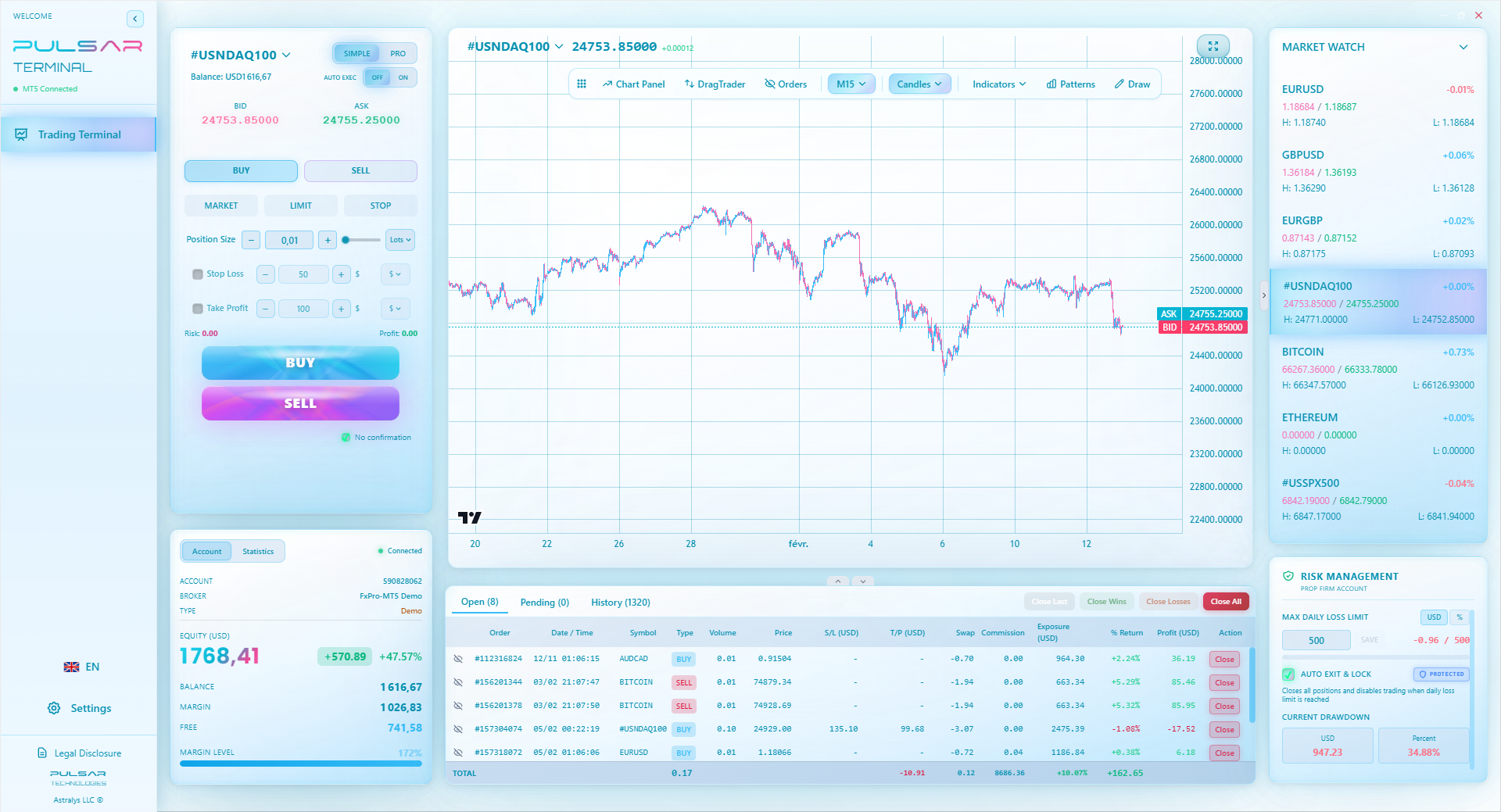
But the biggest cost? The one nobody talks about? Bad psychology. Revenge trading after a loss. Moving your stop-loss further away because 'it'll come back.' I've thrown away more money on three emotional trades than I have on a year's worth of spreads and commissions. A tool that helped me automate discipline was using a platform like Pulsar Terminal to set my stops and targets mechanically, so my shaky hands couldn't interfere.
“I've thrown away more money on three emotional trades than I have on a year's worth of spreads and commissions.”
I want to be brutally honest about where my money went, so yours doesn't follow.
The Prop Firm Obsession: A few years back, I became obsessed with passing prop firm challenges. I'd trade a 10% drawdown limit like it was a target, not a cliff edge. I blew a $100,000 challenge account on a single USD/JPY trade, ignoring my own rules because I was 'so close' to the payout. The lesson? The rules in a challenge are your primary trading parameters. Tools that can automate daily loss limits, like some features in prop-focused platforms, are useful. I wish I'd had that guardrail.
Over-trading the ZAR: In 2019, I thought being South African gave me an edge on the Rand. I'd watch the news, listen to political commentary, and take trades based on 'gut feel' about the ZAR's direction. I was wrong more than I was right. The market had already priced in the news. I lost R18,000 in two weeks trading USD/ZAR based on headlines, not charts. The lesson? Trade the price action, not the news story. Use your MACD indicator or RSI indicator on the chart, not your opinion from the radio.
Ignoring the 'Boring' Majors: While I was losing money on exotics, I was ignoring the steady, liquid, tight-spread movements of EUR/USD and XAU/USD (gold). When I finally switched my focus, my consistency improved overnight. The liquidity meant my orders were filled at the price I wanted, not 3 pips away. It was like trading on easy mode compared to the ZAR rollercoaster.
💡 Tips Winston
The most important line on your chart isn't a trendline. It's the one marking your stop-loss. Honour it like a contract with your future self.
“A stopped-out trade is the fee you pay to participate in the market. It's not a failure.”
Start with the Right Broker
This is non-negotiable. You need an FSCA-regulated broker for safety, but also one with conditions that suit your style. For scalping tight spreads, look at IC Markets or Pepperstone. For a user-friendly start, maybe XM. Do your research. I've used Exness for their flexible accounts and IC Markets for raw ECN pricing. Always check their specific ZAR pair spreads and deposit/withdrawal fees in rands.
Master Your One Strategy
You don't need ten strategies. You need one, mastered. For me, it was price action rejection at key support and resistance levels, confirmed with a 4-hour trend. I practiced it on a demo account until I could draw the levels in my sleep. Then I traded it with real money, but tiny size. Whether you choose scalping or swing trading, commit to it for at least 100 trades before you judge it.
Risk Management is Your Salary
Your risk per trade determines your survival. 1% of your account is the golden rule. On a R20,000 account, that's R200 risk per trade. If your stop-loss is 20 pips away, your position size must be calculated so that a 20-pip loss equals R200. This is where a position size calculator is your best friend. Never, ever gamble with a 'sure thing' and throw this out the window. A margin call is a professional embarrassment.
Keep a Trading Journal
Not just 'bought EUR/USD.' Write down your reasoning, your emotional state, the time of day. Review it weekly. I found that 80% of my losses came from trades I took after 3 PM, when I was tired. So I made a rule: no new entries after 3. My profitability jumped. Your journal will tell you your personal profit-killers.
When building your system, automating your risk rules—like setting a strict daily loss limit—is what separates hopeful traders from consistent performers. Pulsar Terminal can enforce these rules directly on your MT5 platform, acting as your automated discipline coach.
Pulsar Terminal
Alat MT5 all-in-one: order drag-and-drop, multi-TP/SL, trailing stop, grid trading, Volume Profile, dan perlindungan prop firm. Digunakan 1.000+ trader setiap hari.
“A stopped-out trade is the fee you pay to participate in the market. It's not a failure.”
SARS is your silent trading partner. They want their share, and forex trading profits are viewed as income, not capital gains. That means it's added to your salary and taxed at your marginal rate (which can be up to 45%).
You must keep impeccable records: every trade statement from your broker (Exness, IC Markets, etc., all provide these), all bank statements showing deposits and withdrawals. I use a simple spreadsheet: date, pair, P/L in USD, exchange rate for the day, P/L in ZAR. At the end of the tax year, I tally the total ZAR profit.
You can deduct certain expenses directly related to generating that income. Think: data costs, trading platform subscription fees (like certain advanced tools), a portion of your home office if you trade professionally, and even the fees for educational courses. Talk to an accountant who understands trading. The R5,000 I spend annually on mine saves me tens of thousands in correct filings and deductions.

Pro Tip: Open a separate bank account just for trading. Deposit your capital there, and only withdraw profits to your main account. This makes tracking your trading capital and tax calculations infinitely easier. It also creates a psychological barrier between your 'life money' and your 'trading money'.
💡 Tips Winston
If you can't explain your trade's reason for existing in one clear sentence, you don't have a reason. Close it.
“The path to answering 'how profitable is forex trading' starts and ends between your ears.”
After a decade, I'm convinced psychology is 80% of the game. The best strategy in the world fails with a scared or greedy mind. Here's what finally worked for me:
Accept Losses as a Fee: You don't get angry paying for electricity. You need it to run your business. A stopped-out trade is the fee you pay to participate in the market. It's not a failure. The moment I reframed losses this way, I stopped revenge trading.
Define Your 'Enough': Having a daily profit target can make you overtrade. Having a daily loss limit saves you. My rule is: if I lose 3% of my account in a day, I walk away. No arguments. I shut the laptop. This has saved me from turning a bad day into a catastrophic week more times than I can count.
Routine Over Motivation: Don't trade when you 'feel like it.' Trade when your system says to. I have a pre-market checklist: review news, mark key levels on the chart, check my economic calendar. No checklist, no trading. It removes emotion from the decision to hit 'buy.'
The path to answering 'how profitable is forex trading' starts and ends between your ears. The market doesn't care about your goals. It just is. Your job is to build a system that interacts with it calmly, consistently, and with controlled risk. That's where the real profit lives.
FAQ
Q1Can I realistically make a living from forex trading in South Africa?
Yes, but it's a long, hard road. Don't expect to quit your job in 6 months. Realistically, it takes 2-5 years of dedicated learning, losing, and refining to build the skill and discipline needed for consistent income. You'll need significant starting capital (ideally R50,000+) to generate meaningful monthly returns without excessive risk. Most successful traders I know treat it as a serious secondary income for years before even considering it as a sole profession.
Q2What is the best forex broker for South African traders?
There's no single 'best' broker. It depends on your style. For tight spreads on major pairs, IC Markets or Pepperstone are excellent. For lower minimum deposits and local support, Exness or XM are popular. The critical factor is FSCA regulation. Always verify the broker's license number on the FSCA's website. Using an unregulated offshore broker might offer higher use, but you have zero protection if something goes wrong.
Q3How are my forex trading profits taxed by SARS?
SARS treats frequent forex trading profits as ordinary revenue income, not capital gains. This means your net annual profit (after deducting allowable expenses like platform fees, data, education) is added to your other income (like your salary) and taxed at your marginal tax rate. You must declare this income on your annual tax return (ITR12). Keep detailed records of every trade, deposit, and withdrawal.
Q4Why should I avoid trading USD/ZAR as a beginner?
USD/ZAR and other ZAR pairs are exotic currencies. They typically have much wider spreads (often 5+ pips) compared to majors like EUR/USD (often under 1 pip). This means the market has to move significantly just for you to break even. They are also more susceptible to sudden, volatile moves based on local political or economic news, making them harder to manage for a new trader still learning risk management.
Q5Is the 30:1 use limit from the FSCA a good thing?
Absolutely, especially for beginners. While it feels restrictive if you're chasing huge returns from a small account, it's a lifesaver. High use (like 500:1) amplifies both profits AND losses. It allows you to lose your entire account in minutes with a small move against you. The 30:1 cap forces you to trade with more sensible position sizes, which is the foundation of long-term survival and profitability. I view it as a protective barrier.
Q6How much money do I need to start forex trading in South Africa?
Technically, you can start with $10 or $100 at many brokers. But to trade properly and survive the inevitable losses while you learn, a more realistic figure is R5,000 to R20,000. With R5,000, risking 1% per trade gives you a R50 risk allowance. This allows you to practice real trading with real emotions, without one bad trade wiping you out. Starting with too little often leads to taking excessive risk just to try and make meaningful money, which is a sure path to failure.
Pelajaran Prof. Winston
Poin Penting:
- ✓30:1 use is a protective gift, not a restriction.
- ✓Trade majors (EUR/USD) to learn, not exotic ZAR pairs.
- ✓Risk 1% per trade. No exceptions, no 'sure things'.
- ✓Your trading journal is your most valuable indicator.
- ✓Profits are income. SARS is your silent partner. Keep records.
Seberapa bermanfaat artikel ini?
Klik bintang untuk menilai
Wawasan Trading Mingguan
Analisis & strategi mingguan gratis. Tanpa spam.
Tentang Penulis
David van der Merwe
Trader Pasar Berkembang
Trader berbasis Johannesburg dengan 11 tahun di mata uang pasar berkembang. Spesialis pasangan ZAR, trading berregulasi FSCA, dan analisis pasar Afrika Selatan.
Komentar
Peringatan Risiko
Perdagangan instrumen keuangan mengandung risiko signifikan dan mungkin tidak cocok untuk semua investor. Kinerja masa lalu tidak menjamin hasil di masa depan. Konten ini hanya untuk tujuan edukasi dan tidak boleh dianggap sebagai nasihat investasi. Selalu lakukan riset Anda sendiri sebelum trading.
Anda mungkin juga suka

Cara Trading Forex Sukses: 7 Prinsip dari Trader Profesional
Cara trading forex sukses dengan 7 prinsip trader pro: manajemen modal, disiplin, journal trading, backtest. Data nyata, bukan janji profit palsu.
Jam Trading Forex Terbaik untuk Trader Indonesia: Panduan Lengkap dengan Tabel Waktu
Panduan jam trading forex untuk trader Indonesia. Tabel 4 sesi dunia, jam emas 20:00-00:00, sesi mana yang harus dihindari. Data akurat + tips dari trader berpengalaman.
Top 5 Sàn Forex Uy Tín Nhất 2026: Review Jujur dari Trader Indonesia
Top 5 sàn forex uy tín 2026 untuk trader Indonesia. Review jujur: spread, deposit, withdraw, dukungan lokal. Exness, XM, IC Markets & lebih.
Dapatkan Pulsar Terminal
Semua kalkulator ini terintegrasi dalam Pulsar Terminal dengan data real-time dari akun MT5 Anda.
Dapatkan Pulsar Terminal