


Are you searching for a US forex brokers list, hoping to find the ultimate safe haven for your trading capital? I did the same thing when I started.

Olumide Adeyemi
Pelopor Trading Afrika Barat ·  Nigeria
☕ 11 mnt baca
Yang akan Anda pelajari:
- 1Why a US Forex Brokers List is a Dead End for Nigerians
- 2The Real List: International Brokers That Welcome Nigerian Traders
- 3Nigerian Rules You Must Know: Taxes and Legal Reality
- 4Funding Your Account: Naira, Cards, and Crypto
- 5How to Actually Choose: Your Nigerian Trader Checklist
- 6Trading in a Volatile Naira Environment
- 7The Future: Stricter Rules and How to Stay Ahead
Are you searching for a US forex brokers list, hoping to find the ultimate safe haven for your trading capital? I did the same thing when I started. I spent weeks comparing NFA-regulated brokers, only to hit a brick wall. Here’s the hard truth I learned: for a Nigerian trader, a list of US-regulated brokers is about as useful as a snowplow in Lagos. The regulatory landscape forces us down a different path. Let me walk you through why that is, and more importantly, show you the practical, profitable alternatives we actually have access to.
Let's clear this up first. US forex brokers are regulated by two heavyweights: the Commodity Futures Trading Commission (CFTC) and the National Futures Association (NFA). Their rules are the strictest in the world. They cap use at a maximum of 1:50 for major pairs (often lower), have stringent capital requirements for brokers, and enforce rigid client protection rules.
This sounds great for safety, right? It is. But there's a catch. Compliance with these rules is so complex and costly that most US-regulated brokers simply don't bother opening their doors to clients outside the United States. The regulatory burden of onboarding international clients, especially from jurisdictions with their own evolving rules like Nigeria, is too high. They just say no.
I learned this the expensive way. Back in 2018, I was determined to trade with a 'top-tier' US broker. After days of form-filling and providing documents, I got a polite email: "We regret to inform you we cannot onboard clients from your region." My search for a US forex brokers list was a complete waste of time. Our market, while growing rapidly, isn't on their radar. So, we must look elsewhere.

Warning: Any website offering you a 'US forex brokers list' that accepts Nigerians is likely misleading you. Always check the broker's official website for its country restrictions before you start any application.
Forget New York or Chicago. Our trading hubs are in places like Cyprus, Australia, Seychelles, and South Africa. These jurisdictions host international brokers with global client bases. Their regulations (from bodies like CySEC, ASIC, or FSCA) are still strong, but they allow the brokers to offer services worldwide, including to us.
Here’s a breakdown of the major players you'll actually encounter, based on my 12 years of trading and helping others here. This isn't about who's 'best,' but who offers what.
| Broker | Key Regulation | Min. Deposit (Approx.) | Notable Feature for Nigerians |
|---|---|---|---|
| Exness | CySEC, FCA, FSCA | $10 (varies) | Renowned for instant withdrawals. Huge popularity here. |
| XM | CySEC, ASIC, IFSC | $5 | Very low minimum deposit, good educational resources. |
| IC Markets | ASIC, CySEC | $200 | True ECN raw spreads, favorite for scalping strategy. |
| HF Markets (HotForex) | FCA, FSCA, CySEC | $5 | Strong local support and community presence. |
| FXTM | CySEC, FSCA | $10 | Has a physical office in Lagos, offers local seminars. |
| AvaTrade | ASIC, FSCA, CBI | $100 | Offers fixed spreads, good for beginners who hate variable costs. |
| FBS | FSC (Belize) | $5 | Aggressive marketing, very low entry point. |
My primary broker for the last 5 years has been IC Markets. Why? Their raw spreads on the EUR/USD often hit 0.0 pips during London/NY overlap. For a scalper, that's gold. I remember a specific day trading the XAU/USD guide strategy; the spread was consistently under 30 cents, which made managing my tight stops less painful. But I also keep an account with Exness for its flawless withdrawal process - I’ve had Naira in my bank account in under 15 minutes.

Pro Tip: Don't get hung up on one broker. It's smart to have a main account and a secondary one. If one platform has a technical issue during a key news event (like NFP), you need a backup. I learned this after missing a GBP volatility spike because my primary broker's server lagged.

💡 Tips Winston
Your broker is a utility, not a partner. Choose the one with the cleanest execution and easiest withdrawals, not the flashiest bonuses.
“For a Nigerian trader, a list of US-regulated brokers is about as useful as a snowplow in Lagos.”
Just because we use international brokers doesn't mean we operate in a legal vacuum. The Central Bank of Nigeria (CBN) and the Securities and Exchange Commission (SEC) are the main authorities. While they haven't built a detailed rulebook for online retail forex trading (yet), they govern the broader financial system we operate within.
The most concrete rule that hits your pocket is tax. The Federal Inland Revenue Service (FIRS) views forex trading profits as capital gains. That means you're liable for a 10% Capital Gains Tax on your gross profits. Let me be blunt: many traders ignore this, but it's the law. I set aside 10% of every profitable quarter. It’s not fun, but getting a surprise tax bill is worse.
The New FX Code and What It Means
In late 2024/early 2025, the CBN introduced the Nigerian Foreign Exchange (FX) Code. This is a big deal for the wholesale market - banks and authorized dealers. It aims to bring transparency and ethics to the institutional level.
For us retail traders, the indirect effect is positive. A more stable, transparent official market can reduce wild Naira volatility. Remember November 2024 when USD/NGN shot to ₦1717? That kind of move wrecks local business plans and can spill into broader market sentiment. The new code, along with reforms like re-admitting BDCs in 2026, aims to smooth that out. While it doesn't regulate your Exness account, a healthier national FX market is good for everyone.

Example: You make a gross profit of ₦500,000 in a year from trading. Your capital gains tax liability is 10% of that: ₦50,000. This is payable regardless of whether your broker is in Cyprus or your money is in a USD account. Plan for it.
This is where the rubber meets the road. You can have the best broker in the world, but if you can't get money in and out easily, it's pointless. Nigerian traders have gotten creative out of necessity.
Standard Methods:
- Bank Transfer: The old faithful. Can be slow (hours to days) and sometimes attracts questions from your bank. Always use the same account for deposits and withdrawals to avoid anti-money laundering flags.
- Debit/Credit Cards (Visa/Mastercard): Instant deposits, usually. Withdrawals back to the card can take 2-7 business days. Some banks block international merchant payments for forex brokers, so you might need to call and authorize it.
- E-wallets (Skrill, Neteller): These are my preferred middlemen. Deposit Naira to a local e-wallet provider, convert to USD within the e-wallet, then send to the broker. Withdrawals reverse the process. It adds a small fee layer but is incredibly reliable.
Local & Emerging Methods:
- Cryptocurrency (USDT): Becoming massively popular. You buy USDT from a local P2P platform, send it to your broker's crypto wallet address (if they support it), and it's converted to trading capital. Withdrawals are the reverse. It's fast and bypasses traditional banking hurdles. Just be aware of P2P scam risks.
- Virtual Accounts (Grey, Payoneer): These services give you a foreign bank account number (USD, EUR). You can fund it via various means, then transfer to your broker. Useful for receiving affiliate payments or freelance income too.
A painful lesson: In 2020, I tried to make a large withdrawal back to my Nigerian bank card. It got stuck for three weeks in a compliance review because the transaction name didn't perfectly match my bank record. Now, I use Skrill for all withdrawals under $2,000. For larger amounts, I use a virtual account and then a slower bank transfer, documenting everything. The key is to test the withdrawal process with a small amount first. Don't assume it will work.
💡 Tips Winston
Set aside 10% of every withdrawal for taxes immediately. It's not your money anymore. This habit saves immense future stress.
“My search for a US forex brokers list was a complete waste of time. Our market isn't on their radar.”
Forget generic reviews. Use this checklist based on our specific needs:
- Regulation (The Non-US Kind): Confirm they are regulated by a reputable body like ASIC, CySEC, or FSCA. This info is at the bottom of their website. It's your first safety net.
- Naira-Friendly Payments: Do they accept deposits via methods you actually use? Check their payment page for local bank transfer options, card processors, or e-wallets you recognize.
- Spread & Commission on YOUR Pairs: Don't just look at EUR/USD. If you trade GBP/JPY or USD/NGN CFDs, check the spreads there. Use a demo account to see real-time costs during your trading hours (London session is key).
- use Offered: While high use is risky, it's a tool. Nigerian traders often seek it. Does the broker offer 1:500, 1:1000, or more? Understand that higher use means a smaller margin for error - a margin call comes faster.
- Platform & Tools: MT4/MT5 is standard. But does the broker offer additional tools? For instance, a good position size calculator on their site? Can you set advanced order types? This is where tools like Pulsar Terminal shine, adding functionality to MT5 that many brokers lack.
- Customer Support: Test them. Send a question via live chat or email. Ask about withdrawal processing times for Nigeria. If they're slow or unhelpful now, imagine when you have a real problem.
My biggest mistake was choosing a broker based solely on a bonus offer. The spreads were terrible, and the bonus terms made withdrawals a nightmare. I ended up losing more to the wide spreads than the bonus was worth. Now, I prioritize execution quality above all else.
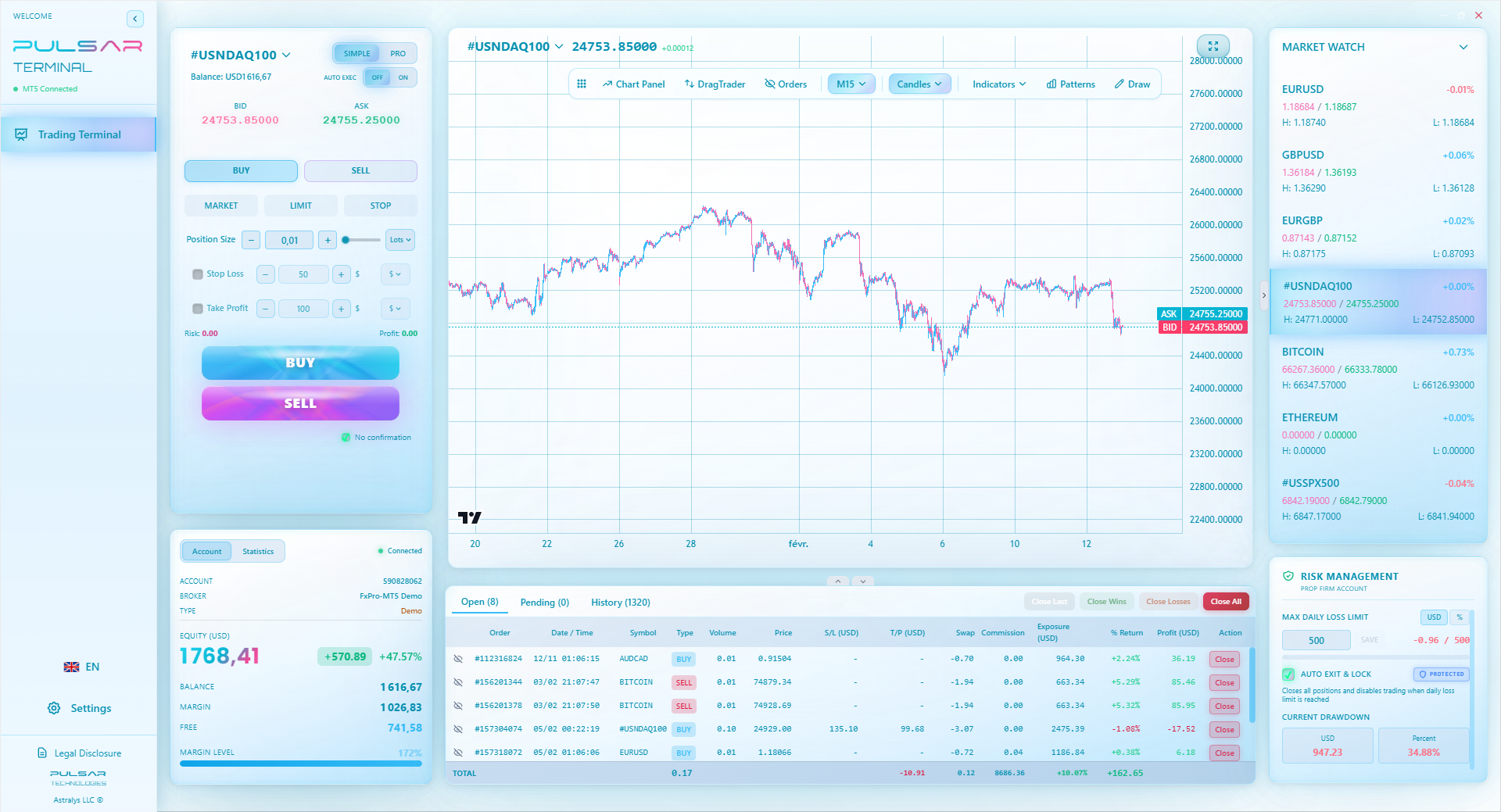
When choosing a broker, execution and order management are key. Pulsar Terminal supercharges MT5 with drag-and-drop orders and multi-take-profit levels, giving you the professional tools to manage risk on any international broker's platform.
Pulsar Terminal
Alat MT5 all-in-one: order drag-and-drop, multi-TP/SL, trailing stop, grid trading, Volume Profile, dan perlindungan prop firm. Digunakan 1.000+ trader setiap hari.
The Naira's volatility isn't just news; it's a trading factor. Many brokers offer USD/NGN as a CFD. Trading it directly is extremely high-risk due to potential gaps and CBN interventions. I don't recommend it for beginners.
However, Naira volatility affects your psychology and your real profits. When the Naira weakens sharply, your USD-denominated profits are worth more in Naira terms. That feels great. But the reverse is also true. I've had profitable months in USD that translated to minimal Naira gains because the currency strengthened.
A Strategy That Worked for Me
During periods of intense Naira pressure (like in 2024), I noticed a correlation. High USD/NGN volatility often coincided with risk-off sentiment in global markets. Commodities like Gold (XAU/USD) would sometimes spike as a safe-haven play. Instead of trading the Naira directly, I used the local volatility as a sentiment indicator for my XAU/USD guide trades. It wasn't a perfect signal, but it added context.
More importantly, consider your profit conversion strategy. Don't convert all your USD profits to Naira at once if you think the Naira might weaken further. Sometimes, leaving profits in USD (within your broker account or a virtual account) is a hedge itself. This is a form of macro thinking that goes beyond just the MACD indicator on your chart.
Pro Tip: Keep a simple spreadsheet. Track your trading profits in USD, and note the USD/NGN rate when you convert. Over time, you'll see the real impact of currency moves on your bottom line. It turns an abstract concept into hard numbers.
💡 Tips Winston
Test a broker's withdrawal system with $50 before you fund it with $5,000. The true test of a broker is how easily they give your money back.
“The days of moving large sums without questions are fading. Document everything, pay your taxes, and trade like a professional business.”
The direction is clear. The CBN's new FX Code, electronic trading systems (EFEMS), and the re-admission of BDCs all point to one thing: increased transparency and scrutiny.
While these reforms target the institutional wholesale market today, the focus on proper documentation and legitimate fund flows will eventually trickle down. The days of moving large sums in and out of the country without questions are fading.
What this means for you:
- Document Everything: Keep records of all your deposits and withdrawals. Bank statements, e-wallet receipts, broker statements. If anyone ever asks, you can show a clear paper trail from your Nigerian account to your regulated broker and back.
- Pay Your Taxes: This is the biggest compliance step you can take. Filing and paying your 10% capital gains tax legitimizes your trading activity in the eyes of the system.
- Expect Broker Scrutiny: Reputable international brokers are also tightening their KYC (Know Your Customer). They may ask for more documents than before. Cooperate promptly; it's for the health of the entire environment.
- Stay Informed: Follow CBN circulars and financial news. A policy shift like the BDC re-admission can affect liquidity and the parallel market rate, which indirectly affects your life as a trader.
Trading from Nigeria is a fantastic opportunity, but it's not a lawless frontier. The smart trader builds a sustainable, compliant business. That's how you last for decades, not just for a few volatile months.
FAQ
Q1Can I legally use a US-regulated forex broker in Nigeria?
In practice, no. Almost all brokers regulated by the US CFTC and NFA restrict their services to residents of the United States due to complex compliance requirements. They will not open accounts for Nigerian residents.
Q2What is the best forex broker for beginners in Nigeria?
There's no single 'best.' For a complete beginner, look for a broker with a very low minimum deposit ($5-$10), strong educational resources, and excellent customer support. XM and Exness are often cited as good starting points due to their low barriers to entry and local recognition. Always start with a demo account first.
Q3How do I pay taxes on my forex trading profits in Nigeria?
Forex trading profits are subject to a 10% Capital Gains Tax. You are responsible for declaring this income and paying the tax to the Federal Inland Revenue Service (FIRS). Keep detailed records of all your trades and withdrawals to calculate your gross profit accurately.
Q4Is my money safe with an international broker not regulated in Nigeria?
Safety comes from the broker's international regulation (e.g., ASIC, CySEC, FSCA), not its location. These regulators enforce client fund segregation, meaning your money is held in separate bank accounts from the broker's operating funds. Always verify the broker's regulatory license on the official regulator's website.
Q5What is the fastest way to withdraw profits to my Nigerian bank account?
Using e-wallets like Skrill or Neteller is typically the fastest, often within minutes to a few hours. Cryptocurrency (USDT) withdrawals to a local P2P platform can also be very quick. Direct bank card or transfer withdrawals usually take 2-7 business days.
Q6Will the new Nigerian FX Code affect my personal trading?
Not directly. The code targets authorized dealers (banks) and the wholesale FX market. Indirectly, it aims to create a more stable and transparent official FX market, which could reduce extreme Naira volatility, creating a better economic environment for all businesses, including traders.
Q7Can I trade the Naira (USD/NGN) directly?
Some international brokers offer USD/NGN as a CFD (Contract for Difference). However, it is an extremely volatile instrument prone to gaps, especially around CBN policy announcements. It carries very high risk and is not suitable for inexperienced traders.
Pelajaran Prof. Winston
Poin Penting:
- ✓US brokers don't accept Nigerian clients. Focus on ASIC, CySEC, FSCA-regulated firms.
- ✓You owe 10% Capital Gains Tax on gross forex profits. Plan for it.
- ✓Test withdrawal speed with a small amount before making a large deposit.
- ✓Naira volatility is a real P&L factor. Track profits in both USD and NGN.
Seberapa bermanfaat artikel ini?
Klik bintang untuk menilai
Wawasan Trading Mingguan
Analisis & strategi mingguan gratis. Tanpa spam.
Tentang Penulis
Olumide Adeyemi
Pelopor Trading Afrika Barat
Salah satu edukator trading forex paling aktif di Nigeria. 8 tahun pengalaman trading dari Lagos. Spesialis strategi modal rendah dan tantangan prop firm untuk trader Afrika.
Komentar
Peringatan Risiko
Perdagangan instrumen keuangan mengandung risiko signifikan dan mungkin tidak cocok untuk semua investor. Kinerja masa lalu tidak menjamin hasil di masa depan. Konten ini hanya untuk tujuan edukasi dan tidak boleh dianggap sebagai nasihat investasi. Selalu lakukan riset Anda sendiri sebelum trading.
Anda mungkin juga suka

Cara Trading Forex Sukses: 7 Prinsip dari Trader Profesional
Cara trading forex sukses dengan 7 prinsip trader pro: manajemen modal, disiplin, journal trading, backtest. Data nyata, bukan janji profit palsu.
Jam Trading Forex Terbaik untuk Trader Indonesia: Panduan Lengkap dengan Tabel Waktu
Panduan jam trading forex untuk trader Indonesia. Tabel 4 sesi dunia, jam emas 20:00-00:00, sesi mana yang harus dihindari. Data akurat + tips dari trader berpengalaman.
Top 5 Sàn Forex Uy Tín Nhất 2026: Review Jujur dari Trader Indonesia
Top 5 sàn forex uy tín 2026 untuk trader Indonesia. Review jujur: spread, deposit, withdraw, dukungan lokal. Exness, XM, IC Markets & lebih.
Dapatkan Pulsar Terminal
Semua kalkulator ini terintegrasi dalam Pulsar Terminal dengan data real-time dari akun MT5 Anda.
Dapatkan Pulsar Terminal