


Here's a hard truth most 'gurus' won't tell you: over 80% of new forex traders in Nigeria lose their first deposit within six months.

Olumide Adeyemi
Pioniere del Trading in Africa Occidentale ·  Nigeria
☕ 10 min di lettura
Cosa imparerai:
- 1What Is Forex, Really? (Beyond the Hype)
- 2Setting Up Your Shop: Broker & Platform
- 3Understanding Price Movement: The Bare Basics
- 4Your First Trade: It's All About Risk Management
- 5Developing a Simple Starting Strategy
- 6Common Pitfalls for Nigerian Beginners (Avoid These!)
- 7The Path Forward: Practice and Patience
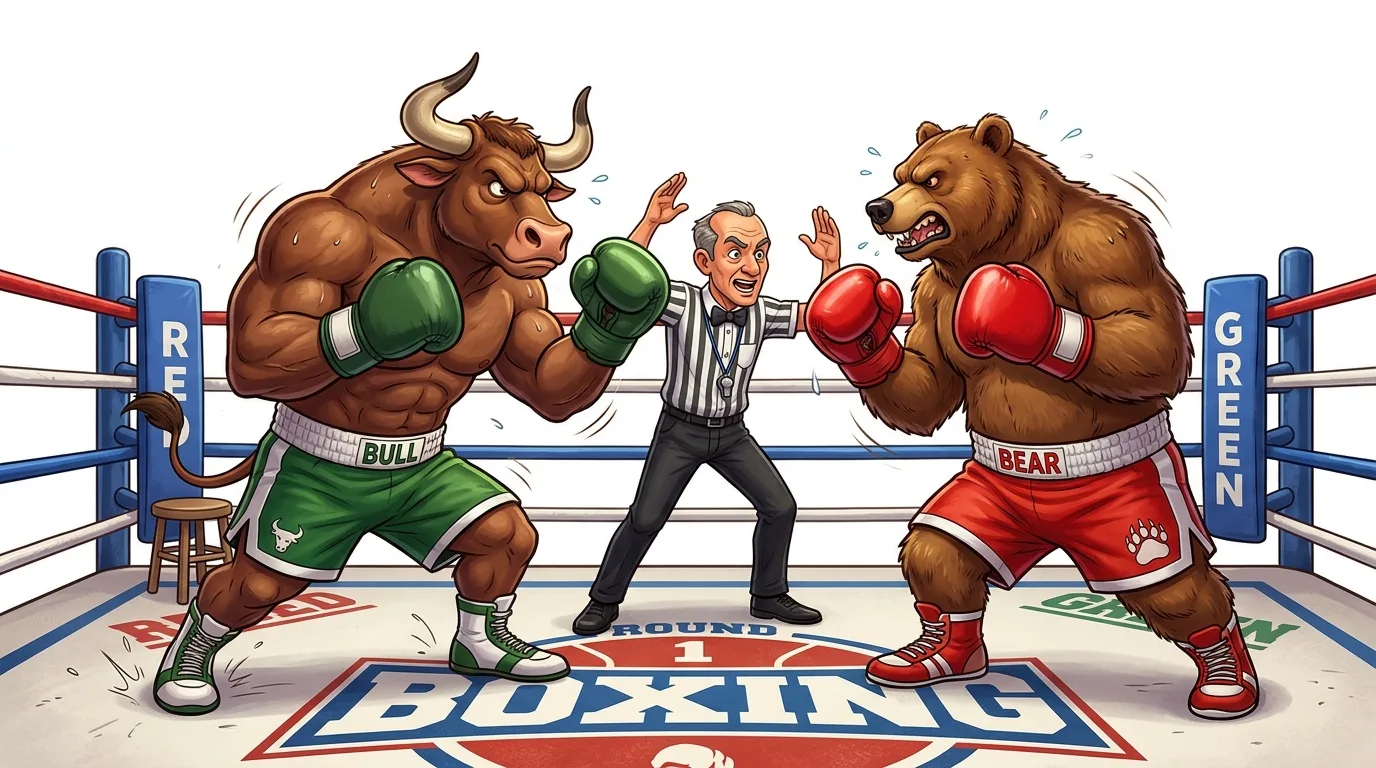
Here's a hard truth most 'gurus' won't tell you: over 80% of new forex traders in Nigeria lose their first deposit within six months. It's not because the market is rigged against you. It's because they jump in without a map, chasing quick 'alert' money. This isn't a get-rich-quick scheme. It's a skill. And like learning any skill - from coding to driving a danfo - you need the right foundation. This guide is that foundation. We'll walk through what forex actually is, how to pick a broker that won't disappear with your money, and the first strategies to practice before you risk a single naira.
Forex, or foreign exchange, is simply the global marketplace where one currency is traded for another. It's the reason your bureau de exchange gives you a rate for dollars or pounds. The scale is mind-boggling. Trillions of dollars are traded every single day. That's more than all the world's stock markets combined.
For you, the retail trader, it means speculating on whether one currency will go up or down against another. These are called 'pairs', like EUR/USD (Euro vs. US Dollar) or GBP/NGN (British Pound vs. Nigerian Naira, though these are less common). The price movement is measured in pips, which is usually the fourth decimal place (0.0001). A move from 1.1050 to 1.1051 on EUR/USD is one pip.

Warning: The biggest misconception in Nigeria is that forex is a secret society for making millions overnight. It's not. It's a decentralized, highly liquid market driven by global economics, interest rates, and geopolitics. Treating it like a casino is the fastest way to an empty account.
Your goal isn't to predict every move. It's to find edges where the probability is in your favor, manage your risk ruthlessly, and execute consistently. That's the core of any legitimate beginners guide to forex trading.
“Over 80% of new forex traders in Nigeria lose their first deposit within six months.”
Your broker is your gateway to the market. In Nigeria, you have a choice: international brokers or local platforms. Each has pros and cons.
Choosing a Broker: The Non-Negotiables
- Regulation: This is your first filter. Is the broker regulated by a reputable authority like the FCA (UK), ASIC (Australia), or CySEC (Cyprus)? This offers a layer of protection. Many popular international brokers like Exness, IC Markets, and XM accept Nigerian clients. They are regulated elsewhere but operate here.
- Deposit & Withdrawal: Can you fund your account easily? Look for brokers that support local bank transfers, USSD, or popular fintechs like Flutterwave or Paystack. Withdrawal speed and fees are critical. Test with a small amount first.
- Spreads & Commissions: The spread is the difference between the buy and sell price. It's your primary trading cost. A tight spread on major pairs like EUR/USD (often under 1.0 pip on ECN accounts) is ideal. Some brokers charge a commission instead of, or on top of, a spread.
I made a mistake early on. I was seduced by a 'local' platform offering insane use and bonuses. The withdrawals were a nightmare of endless 'verification'. I lost about ₦150,000 before cutting my losses and moving to a regulated international broker. The peace of mind is worth it.
The Trading Platform: MT5 is King
MetaTrader 5 (MT5) is the industry standard. It's free, powerful, and where you'll execute your trades. Your broker will give you login credentials for their MT5 server. Spend your first week just learning how to place orders, set stop-losses, and read the charts. Don't even think about real money yet.

Pro Tip: Before depositing, open a demo account with 2-3 different brokers. Test their platform speed, execution, and customer support. A demo account is play money, but it reveals a lot about a broker's real service.

💡 Consiglio di Winston
Your first 100 trades should be on demo. Your goal isn't profit, it's to make every mistake in the book with fake money.
“Your trading strategy determines how you make money. Your risk management determines whether you keep it.”
Prices move for three main reasons: economic data, central bank policy, and market sentiment. In Nigeria, we feel this when CBN announces a new dollar policy and the black-market rate jumps.
On your chart, price movement creates trends and ranges. A trend is when price consistently makes higher highs and higher lows (uptrend) or lower highs and lower lows (downtrend). A range is when price bounces between a clear support (floor) and resistance (ceiling).
Your first job is to learn to identify these. Is EUR/USD in an uptrend on the daily chart? Then, as a beginner, you should only look for opportunities to buy ('go long') on smaller time frames, not sell. Trading with the trend is like swimming with the current, not against it.
You'll hear about 'fundamental' and 'technical' analysis. Fundamentals are the big-picture economic reasons (like US inflation data). Technical analysis is using the chart itself - patterns and indicators - to find entry and exit points. As a beginner, start with technicals. They give you clear rules. A simple tool like the RSI indicator can help spot when a market is overbought or oversold within a trend.
Here’s a simple framework I used for my first profitable year:
- Identify the trend on the 1-hour or 4-hour chart.
- Wait for price to pull back to a key support (in an uptrend) or resistance (in a downtrend).
- Look for a small reversal pattern (like a pin bar) to signal the pullback is ending.
- Enter in the direction of the main trend, with a stop-loss just beyond the pullback.
It sounds simple. The discipline to wait for this setup is the hard part.

“Your trading strategy determines how you make money. Your risk management determines whether you keep it.”
This is the most important section in this entire beginners guide to forex trading. Your trading strategy determines how you make money. Your risk management determines whether you keep it.
The Golden Rule: The 1% Risk Rule
Never, ever risk more than 1% of your trading account on a single trade. If you have a ₦100,000 account, your maximum risk per trade is ₦1,000. This isn't your position size, it's your potential loss if your stop-loss is hit.
Let me show you with a real, early trade I took on GBP/USD. My account was $1,000. 1% risk = $10.
- I planned to buy at 1.3200 with a stop-loss at 1.3170. That's a 30-pip risk.
- To calculate my position size: $10 risk / (30 pips * $0.10 per pip per micro lot) = 3.33 micro lots.
- I rounded down to 3 micro lots (0.03 standard lots).
The trade went my way and I took profit at 1.3270 for a 70-pip gain. 70 pips * $0.10 per pip * 3 micro lots = $21 profit. A 2.1% gain on the account. Not explosive, but sustainable. I used a position size calculator to get this right every time.
Stop-Loss and Take-Profit: Your Best Friends
A stop-loss (SL) is a pre-set order that closes your trade at a loss to prevent a small loss from becoming a disaster. A take-profit (TP) does the opposite, locking in profit when a target is hit. You must decide these BEFORE you enter the trade. Emotion has no place here.

Example: If you buy EUR/USD at 1.1050, you might place your SL at 1.1020 (30 pips risk) and your TP at 1.1100 (50 pips reward). This is a 1:1.67 risk-to-reward ratio. You're aiming to gain more than you risk.
Ignoring this is how accounts blow up. I learned this the hard way in 2015. I entered a USD/CHF trade without a stop-loss, convinced I was right. A surprise Swiss National Bank announcement caused a 40% move in minutes. I watched my account evaporate, losing over $2,500 in seconds. That lesson was more expensive than any course.
💡 Consiglio di Winston
If you can't explain your trade setup in one simple sentence, you don't have a strategy. You have a hope.
“Never trade with rent money, school fees, or capital for your business. The psychological pressure will ruin your decisions.”
You need a repeatable process. Don't try to learn 10 strategies at once. Master one. I recommend beginners start with either swing trading or a very simple form of day trading, but avoid scalping strategy initially - it's fast, stressful, and requires razor-sharp execution.
Swing Trading for Beginners: This involves holding trades for several days to weeks, capturing larger market moves. You analyse the daily or 4-hour charts. It's less time-intensive and gives you room to breathe.
- Tools: A trend indicator (like a moving average) and the MACD indicator to gauge momentum.
- Process: Find a currency pair in a clear trend on the daily chart. Wait for it to pull back to a key moving average (like the 50-period EMA). Look for the MACD to start turning back up (in an uptrend). Enter with your stop-loss below the recent swing low.
This is the core of many successful swing trading approaches. It forces you to be patient and trade with the higher-time-frame flow.
Your Trading Journal: This is non-negotiable. For every trade, write down:
- Currency pair, entry/exit prices, date/time
- Reason for the trade (e.g., "Price bounced off 50 EMA on daily chart")
- Your emotional state (Confident? Nervous?)
- Outcome and lessons learned
Review this weekly. Your journal will tell you what you're actually doing, not what you think you're doing.
“Never trade with rent money, school fees, or capital for your business. The psychological pressure will ruin your decisions.”
We have a unique environment here, and some traps are specific to us.
- Trading Naira Pairs with High Spreads: Some brokers offer GBP/NGN or USD/NGN. The spreads can be enormous - sometimes 500 pips or more. This means the price has to move massively just for you to break even. Stick to major forex pairs like EUR/USD, GBP/USD, or USD/JPY where spreads are tight (often under 1 pip).
- Overleveraging: use lets you control a large position with a small deposit. Nigerian brokers often offer 1:500 or even 1:1000. This is a double-edged sword. While it can magnify gains, it magnifies losses even faster. With high use, a 20-pip move against you can wipe out 50% of your margin. I suggest beginners use no more than 1:10 or 1:20 use until you're consistently profitable. A margin call comes quickly when you're over-leveraged.
- Following 'Signal Sellers' on WhatsApp/Telegram: If someone's strategy is so good, why are they selling it for ₦5,000 instead of trading it? These signals often come with no context, no risk management, and arrive too late. You are responsible for your own money.
- Funding Your Account with Money You Can't Afford to Lose: Never trade with rent money, school fees, or capital for your business. Trade only with dedicated risk capital. The psychological pressure will ruin your decisions.
💡 Consiglio di Winston
The market's job is to make you feel stupid, greedy, and scared. Your job is to follow your plan anyway.
“Your first goal is not profitability. Your first goal is survival and consistency.”
Your first goal is not profitability. Your first goal is survival and consistency.
- Demo Trade for 3 Months Minimum: Practice your one strategy on a demo account until you can execute it mechanically, without hesitation. Aim for a consistent, small profit over 50-100 trades. This proves your edge exists in theory.
- Go Live Small: Start with the smallest possible live account. Many brokers allow you to start with $10 or $100. The goal here is to transition from demo psychology to real-money psychology. The fear and greed are real, even with $50.
- Scale Gradually: Only add more capital to your account from your trading profits, not from your pocket. If you grow a $100 account to $150 through trading, you've proven you can grow capital. Then consider adding more.
Forex trading is a marathon, not a sprint. It took me 18 months of consistent study, demo trading, and small live losses before I had my first profitable quarter. The market isn't going anywhere. It will be here tomorrow, next week, and next year. Your job is to be here with it, with your capital intact, ready to take the opportunities your strategy presents.
Finally, keep learning. Once you've mastered the basics of your strategy, explore tools that can help you manage trades more precisely. For example, setting multiple take-profit levels or using a trailing stop can help you capture more of a trend. Some advanced platforms offer tools to automate these mechanics directly on your MT5 chart, turning complex trade management into a simple drag-and-drop task. The right tools don't replace skill, but they can help you execute your plan without error.
Once you've mastered the basics, tools that automate complex trade management—like setting multiple take-profit levels or a trailing stop—can help you execute your plan flawlessly on MT5.
Pulsar Terminal
Lo strumento MT5 tutto-in-uno: ordini drag-and-drop, multi-TP/SL, trailing stop, grid trading, Volume Profile e protezione prop firm. Usato da oltre 1.000 trader ogni giorno.

FAQ
Q1How much money do I need to start forex trading in Nigeria?
Technically, you can start with as little as $10 (about ₦15,000) on a micro account. But realistically, I'd suggest a minimum of $100-$200 (₦150,000-₦300,000). This allows for proper position sizing and risk management without being wiped out by a single 20-pip loss. Start with what you can truly afford to lose.
Q2Is forex trading legal in Nigeria?
Yes, trading forex through licensed international brokers is legal for individuals. The Central Bank of Nigeria (CBN) regulates the official forex market but does not license or regulate retail forex brokers. Nigerians legally trade by opening accounts with brokers regulated in other jurisdictions (like the UK, Australia, or Cyprus).
Q3What is the best time to trade forex in Nigeria?
The most liquid and volatile sessions overlap from 9 AM to 12 PM Nigerian time. This is when the London session is fully open and the US session is beginning. Major economic data is often released during this window, creating good trading opportunities. The Asian session (2 AM - 8 AM Nigerian time) is typically quieter.
Q4Can I trade forex on my phone in Nigeria?
Absolutely. Most brokers offer full-featured MT4 or MT5 mobile apps. You can analyse charts, place trades, and manage your account from your smartphone. It's convenient, but for serious analysis, a computer with a larger screen is still recommended.
Q5What's the difference between a pip and a spread?
A pip definition is the smallest price move a currency pair can make, usually 0.0001. The spread definition is the difference between the buy (ask) and sell (bid) price quoted by your broker. It's measured in pips and is your immediate cost to enter a trade. A tight spread (e.g., 0.8 pips on EUR/USD) is better than a wide spread (e.g., 3.0 pips).
Q6How do I withdraw my profits from my forex broker in Nigeria?
Reputable brokers offer multiple withdrawal methods. The most common for Nigerians are bank wire transfers (which can take 2-5 business days) or withdrawals to fintech wallets. Always check the broker's website for specific options and any fees. Withdrawing should be as easy as depositing.
Q7Should I trade gold (XAU/USD) as a beginner?
Gold can be tempting, but I'd advise against it initially. It's highly volatile, often has higher spreads, and can gap significantly when markets open. It reacts strongly to global fear and dollar strength. Stick to major forex pairs first. Once you're comfortable, you can explore our dedicated XAU/USD guide for specifics on trading gold.
Lezione del Prof. Winston
Punti chiave:
- ✓Risk max 1% of your account per trade. No exceptions.
- ✓Demo trade for 3 months minimum before using real money.
- ✓Master one simple strategy before learning a second.
- ✓Use tight spreads on major pairs, avoid exotic/NGN pairs.
- ✓A trading journal is your most important tool.
Quanto è stato utile questo articolo?
Clicca su una stella
Analisi Trading Settimanali
Analisi e strategie settimanali gratuite. Nessuno spam.
Sull'autore
Olumide Adeyemi
Pioniere del Trading in Africa Occidentale
Uno degli educatori di trading forex più attivi in Nigeria. 8 anni di esperienza di trading da Lagos. Specializzato in strategie a basso capitale e sfide prop firm per trader africani.
Commenti
Avviso di rischio
Il trading di strumenti finanziari comporta rischi significativi e potrebbe non essere adatto a tutti gli investitori. Le performance passate non garantiscono risultati futuri. Questo contenuto è fornito solo a scopo educativo e non deve essere considerato un consiglio di investimento. Conduci sempre le tue ricerche prima di fare trading.
Potrebbe interessarti anche

Cara Trading Forex Sukses: 7 Prinsip dari Trader Profesional
Cara trading forex sukses dengan 7 prinsip trader pro: manajemen modal, disiplin, journal trading, backtest. Data nyata, bukan janji profit palsu.
Jam Trading Forex Terbaik untuk Trader Indonesia: Panduan Lengkap dengan Tabel Waktu
Panduan jam trading forex untuk trader Indonesia. Tabel 4 sesi dunia, jam emas 20:00-00:00, sesi mana yang harus dihindari. Data akurat + tips dari trader berpengalaman.
Top 5 Sàn Forex Uy Tín Nhất 2026: Review Jujur dari Trader Indonesia
Top 5 sàn forex uy tín 2026 untuk trader Indonesia. Review jujur: spread, deposit, withdraw, dukungan lokal. Exness, XM, IC Markets & lebih.
Scarica Pulsar Terminal
Tutti questi calcolatori sono integrati in Pulsar Terminal con dati in tempo reale dal tuo conto MT5.
Scarica Pulsar Terminal