


I was staring at my screen, coffee cold, at 2 AM.

David van der Merwe
Trader dei Mercati Emergenti ·  South Africa
☕ 11 min di lettura
Cosa imparerai:
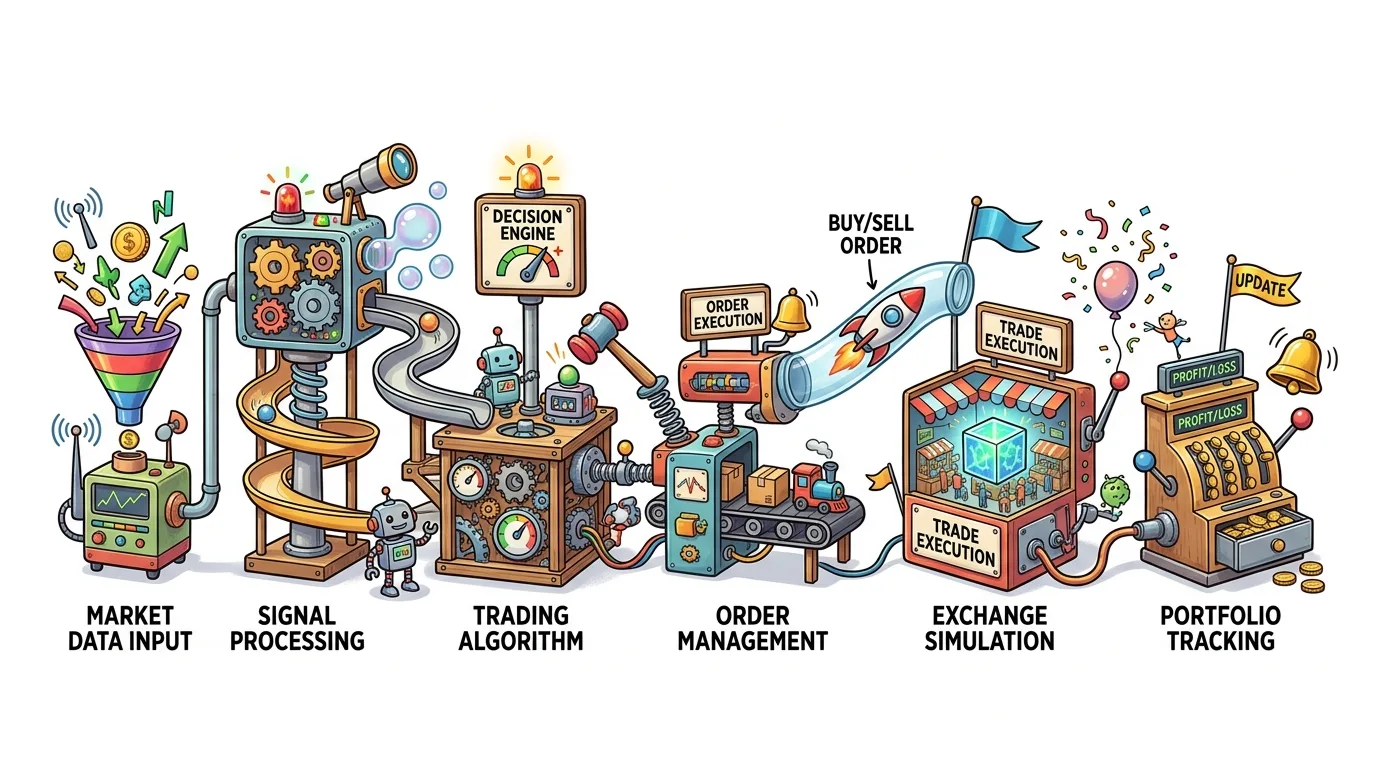
I was staring at my screen, coffee cold, at 2 AM. My EA had just opened its 14th consecutive losing trade on USD/ZAR. The drawdown was sitting at 23% of my account. That was the moment I realized forex algo trading isn't about setting a robot loose and going to the beach. It's a different kind of work. For us trading in South Africa, with our unique market hours, currency volatility, and the FSCA watching, it's a whole other ball game. This guide is what I wish I'd had before I blew up that first account.
Let's cut through the marketing. Forex algo trading, or automated trading, is just a set of rules you code into software that tells it when to buy, sell, and manage trades. You're not buying a money printer. You're hiring a tireless, emotionless intern who will follow your instructions perfectly, even when those instructions are stupid.
In South Africa, you'll hear it called a 'robot', 'Expert Advisor' (EA on MetaTrader), or a 'bot'. The core idea is simple: remove human fear and greed from the equation. The hard part is that you have to teach the robot what to do, and the market loves to change the rules.

Warning: The biggest myth is that a successful algo works forever. It doesn't. Market conditions shift - liquidity changes, global events happen, the SARB makes a surprise move. Your algo needs maintenance, just like a car.
The most common platforms here are MetaTrader 4 and MetaTrader 5, where you use the MQL4/MQL5 language to build EAs. Some local brokers also offer their own proprietary builders with drag-and-drop features, which can be a gentler start. The key is understanding that you are the strategist. The algo is just the executor. If your strategy is flawed, the bot will lose money faster and more efficiently than you ever could manually.
I learned this the hard way with my first 'grid trader' EA. It worked beautifully in a ranging market for two months, netting about 8% . Then USD/ZAR broke out of its range on a major US inflation report. The EA kept placing orders against the trend, doubling down as it went. I lost 15% in a single afternoon before I manually stepped in and shut it off. The bot did exactly what I programmed. I just programmed a bad idea.

💡 Consiglio di Winston
Your first algo should be painfully simple. A single indicator, clear rules. Complexity is the enemy of reliability. Test the core idea, not the fancy features.
“Algo trading isn't about setting a robot loose and going to the beach. It's a different kind of work.”
Trading in South Africa isn't the wild west. The Financial Sector Conduct Authority (FSCA) is the main watchdog. While they don't have a specific rulebook titled 'Algorithmic Trading for Dummies', their general conduct rules absolutely apply to you when you're running an EA.
Broker Regulation is Non-Negotiable
Your first and most important job is to only use an FSCA-regulated broker. This isn't just a suggestion. An FSCA-licensed broker must adhere to strict client fund segregation, reporting, and fair pricing rules. If you're trading with an offshore broker that isn't registered here, you have virtually no recourse if something goes wrong. I only trust my capital with brokers who have a clear FSCA registration number on their South African website. You can verify any broker directly on the FSCA's website.
Tax Implications for Automated Profits
Here's where many algo traders get a nasty surprise. SARS doesn't care if a human or a robot made the profit. Forex trading profits are generally considered taxable income under 'gross income' in South Africa. If you're trading frequently (which an algo does by definition), it's unlikely to be seen as capital growth. You need to keep careful records of all your trades - your trading platform statements are crucial. I work with an accountant who understands trading, and I set aside about 30% of my net profits for tax. Trying to explain your MetaTrader statement to a confused SARS auditor is not a position you want to be in.
The 'Black Box' Problem
The FSCA is increasingly wary of complex financial products sold to the public. If you were to sell your trading algorithm as a financial product or service, you'd likely need a license. For your own personal use, you're in the clear. But this highlights a key point: you must understand how your own algo works. Buying a 'black box' EA from some online guru without understanding its logic is a massive regulatory (and financial) risk. If you can't explain its risk management rules to a friend, you shouldn't be running it with real money.
“If you can't explain your algo's risk management rules to a friend, you shouldn't be running it with real money.”
Forget the 'start with $100' ads. Algo trading has unique costs that can eat a small account alive. Let's talk Rands and cents.
The Hidden Fee: Spreads & Slippage
Your algo might be triggered by a precise price. But if the spread (the difference between buy and sell price) is wide, your entry is immediately in the red. South African brokers often have wider spreads on ZAR pairs, especially outside major London or New York sessions. A scalping strategy that works on EUR/USD with a 0.8 pip spread might fail on USD/ZAR with a 15-pip spread. You must test your algo with the actual spreads your broker offers.
Slippage is another killer. This is when your order fills at a worse price than expected due to fast markets. During SARB interest rate announcements, slippage on ZAR pairs can be enormous. A good broker with strong liquidity partners minimizes this.
Broker Comparison for Algo Traders
You need a broker that's not just regulated, but algo-friendly. Here’s what I look at:
| Feature | Why It Matters for Algos | What to Look For (SA Context) |
|---|---|---|
| Execution Speed | Slow orders ruin strategy logic. | Low-latency servers, preferably with a local node in Johannesburg or Cape Town. |
| Minimum Deposit | You need enough to withstand drawdown. | R500 - R2000 is common. Start with an amount you can afford to lose. |
| Spreads on Majors & USD/ZAR | Directly impacts profitability. | Consistent spreads, even during volatile SA market open (9am SAST). |
| Platform | Must support strong automation. | MT4/MT5 is the standard. Check if they allow unlimited EAs on your account. |
| Swap/Rollover Fees | Affects long-term holding strategies. | Know the costs for holding ZAR pairs overnight. |
Based on my experience and that of local trading buddies, brokers like IC Markets and Pepperstone are popular for their raw spreads and excellent MT4/5 support, though they are international brokers with FSCA registration. Always check their specific South African offering.

Pro Tip: Before going live, run your algo on a demo account for a full month. But don't use the default 'ideal' demo spreads. Ask your broker for a demo account that replicates their real live account spreads and latency. This is the only way to get a true test.
My own cost lesson? I built a mean-reversion EA for GBP/ZAR. On demo with perfect execution, it was up 12% in a month. On a live account with wider spreads and occasional slippage, it barely broke even. The spread was the silent partner taking half my profits. That's when I truly learned the value of a tight spread definition.
💡 Consiglio di Winston
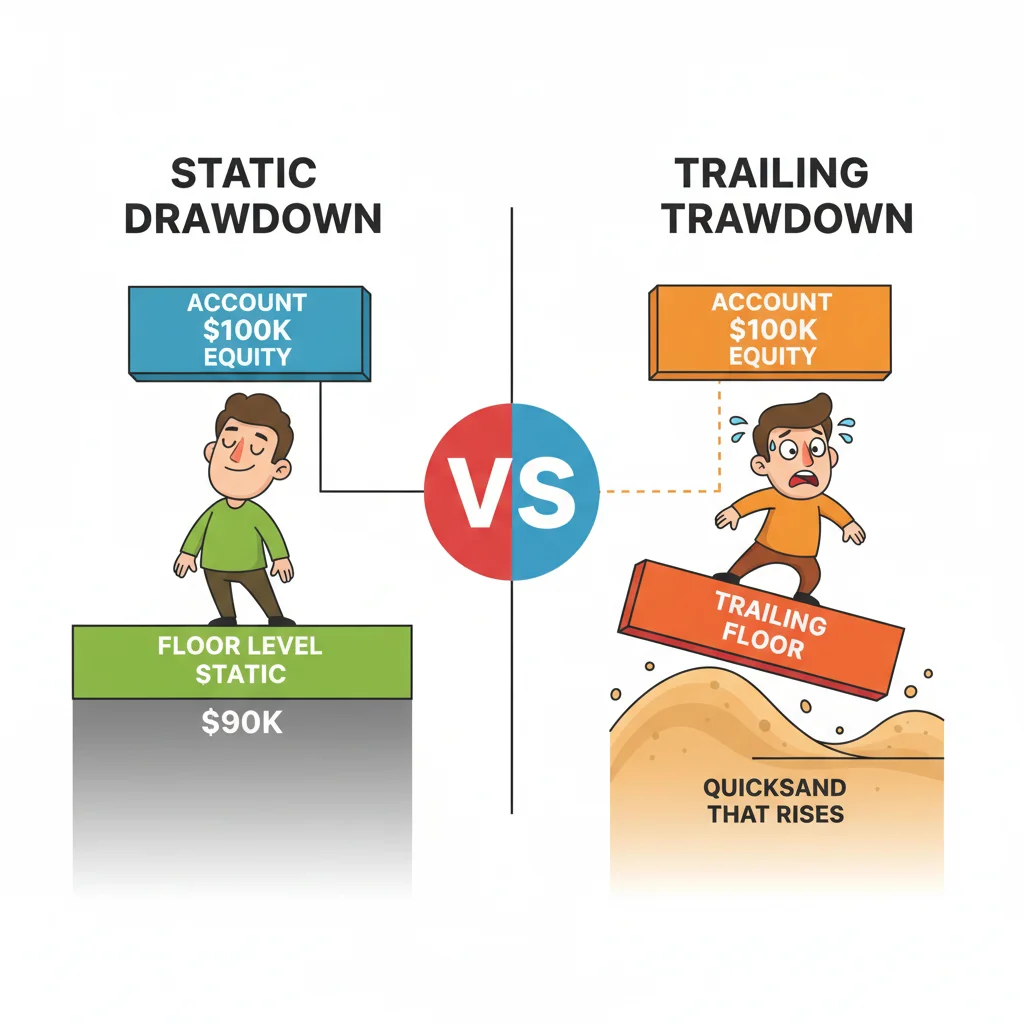
Always know your 'kill switch'. Have a pre-defined maximum daily or weekly loss limit for the algo, and a physical plan for how you'll shut it down if that limit is hit. No exceptions.

“The spread was the silent partner taking half my profits.”
You don't need a computer science degree. You need a clear, simple trading idea and the patience to test it. Here's a simplified process I follow.
Step 1: Start with a Manual Strategy
Never code a strategy you haven't traded manually. Pick one simple concept. For example: "Buy USD/ZAR when the RSI indicator on the 1-hour chart drops below 30 and the price is above the 50-day moving average." Trade this on a demo account for 20-30 trades. Keep a journal. Does it work? What's the average win vs. average loss?
Step 2: Define EVERY Rule
This is where you become a programmer. Your manual idea needs to become absolute logic.
- Entry Rule: IF RSI(14) < 30 AND Price > MovingAverage(50) THEN BUY at Market.
- Stop Loss Rule: Set stop loss at 2x the Average True Range (ATR) below entry.
- Take Profit Rule: Set take profit at 1.5x the ATR above entry.
- Exit Rule: IF RSI(14) > 70 THEN CLOSE trade.
- Risk Management: Never risk more than 1% of account balance on any single trade. You can use a position size calculator to code this in.
Step 3: Choose Your Tools
For most South Africans, MT4/MT5 is the way. You can hire a coder on platforms like MQL5.com to code it for you (cost: R1500 - R5000+). Or, use a visual strategy builder like MT5's Strategy Tester or a third-party tool. Building it yourself forces you to understand every nut and bolt.
Step 4: Backtest and Forward Test
Backtesting runs your algo on historical data. It's useful but can be misleading due to 'curve-fitting' - making a strategy that's perfect for the past but useless for the future. The golden step is forward testing (sometimes called 'paper trading'). Run your algo on a demo account in real-time, but with simulated money. Do this for at least 100 trades, or 2-3 months. This accounts for real spread, slippage, and current market conditions.
I once spent three months perfecting a MACD indicator crossover EA. It had a 95% win rate in backtests. In forward testing, it hit 52%. The difference? The backtest assumed instant execution at the candle close price, which is impossible in the real world. That forward test saved me a lot of money.
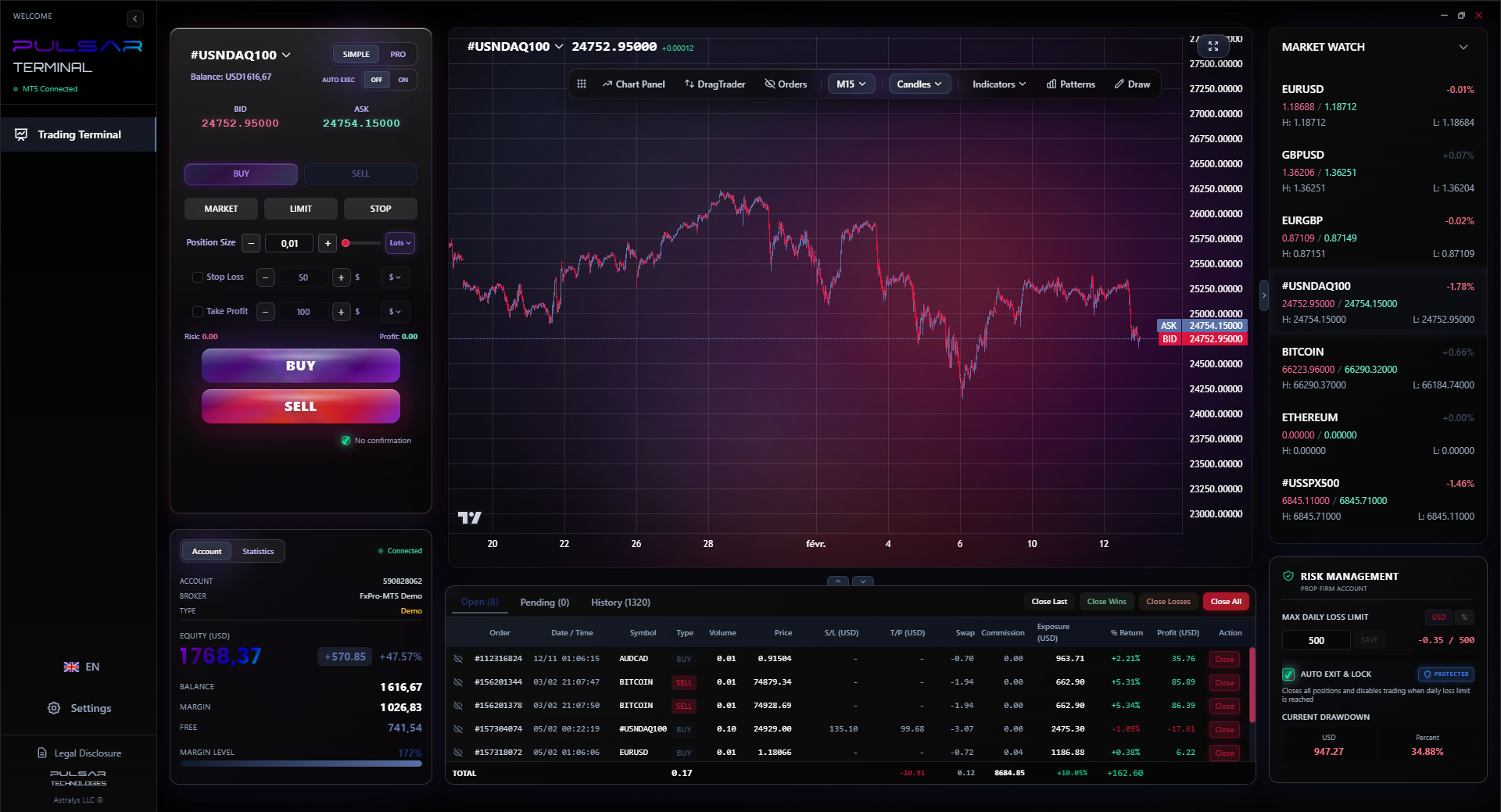
When building and testing your algo, managing complex order types like multi-level take profits and trailing stops manually is a headache; Pulsar Terminal automates this directly on your MT5 chart.
Pulsar Terminal
Lo strumento MT5 tutto-in-uno: ordini drag-and-drop, multi-TP/SL, trailing stop, grid trading, Volume Profile e protezione prop firm. Usato da oltre 1.000 trader ogni giorno.
“The spread was the silent partner taking half my profits.”
Let's get real. You will make mistakes. Here are the expensive ones.
Over-optimization: This is the #1 killer. You tweak your algo so much to fit historical data that it becomes useless for the future. My rule? If I'm adjusting a parameter by less than 5% to improve results, I'm probably overfitting. A strong strategy should work across a range of settings.
Ignoring ZAR-Specific Volatility: The Rand can be wild. News from Eskom, political statements, or commodity price swings can cause gaps. Your algo must have a stop loss that accounts for this, or you risk a margin call. A 50-pip stop might work on EUR/USD; on USD/ZAR, you might need 80-100 pips during volatile periods.
Setting and Forgetting: The biggest lie in algo trading. You must monitor performance weekly. Is the win rate dropping? Is the average loss getting larger? I schedule a Sunday evening review to check my algo's stats. One time, I noticed the profit factor had slowly declined for four weeks. I pulled it offline, re-tested, and found a fundamental shift in market correlation had broken its logic.
Underestimating Technology Costs: A reliable internet connection and a stable VPS (Virtual Private Server) are not optional if you're running 24/5 strategies. A power outage in your suburb shouldn't stop your bot. I use a local VPS provider with servers in Johannesburg, costing me about R250 per month. It's a business expense.

Example: My failed 'News Scalper' EA. It was designed to trade the 5-minute window after high-impact US news. It lost money for 6 weeks straight. Why? The model was based on data from 2022-2023. In 2024, the market's reaction pattern to news changed - it became more erratic with faster reversals. The algo's 90-second entry delay was now too slow. The market evolved; my algo didn't.
💡 Consiglio di Winston
Spend 80% of your time on risk management code - position sizing, stop losses, maximum open trades. The entry signal is only 20% of the battle. A bad entry with great risk management loses small. A great entry with bad risk management can blow up your account.
“The real edge in algo trading comes from your own unique market insight, coded into a system that can execute without hesitation.”
Algo trading isn't a passive income scheme. It's active strategy management. Ask yourself these questions:
- Are you a disciplined, patient person? Building and testing takes months before you see a cent.
- Do you enjoy problem-solving and tinkering? You'll be part-trader, part-data-analyst, part-tech-support.
- Can you handle drawdowns emotionally? Seeing a system you built lose money for weeks is a special kind of stress, even if you trust the logic.
If you answered yes, it can be incredibly rewarding. It forces absolute discipline and can free up your time. My successful swing trading algo now manages a portion of my capital, executing trades I'd otherwise miss while I'm asleep or at work.
But if you're looking for a 'get-rich-quick' solution, save your money. The market is full of people selling expensive 'winning robots' that are just overfitted scripts. The real edge in algo trading comes from your own unique market insight, coded into a system that can execute without hesitation. That's something no one can sell you. You have to build it.
Start small. Take a simple idea from your manual trading. Code it, or have it coded. Test it relentlessly on demo. Risk tiny amounts in live trading. Treat it like a science experiment, not a lottery ticket. That's the only path that has a chance of working long-term for us here in South Africa.
FAQ
Q1Do I need to be a programmer to start forex algo trading in South Africa?
Not at all. While knowing how to code (especially MQL4/5) gives you full control, many South African traders start with visual strategy builders on MT4/MT5 or hire freelance coders for a few thousand Rand. The crucial skill isn't programming, it's having a clear, testable trading strategy to begin with.
Q2How much money do I need to start algo trading with a South African broker?
You can open an account with as little as R500-R1000 with some FSCA-regulated brokers. However, for serious algo trading that can withstand normal drawdowns, I'd recommend a minimum of R10,000. This allows for proper position sizing and risk management without your account being too sensitive to broker fees and spreads.
Q3Is algorithmic trading legal and allowed by the FSCA?
Yes, using algorithmic trading software for your own personal account is perfectly legal. The FSCA's rules apply to the brokers you use - they must be licensed. The key is that you are responsible for the actions of your algorithm. You cannot sell an unlicensed algo as a financial product to others.
Q4What's the best trading platform for algo trading in SA?
MetaTrader 4 (MT4) and MetaTrader 5 (MT5) are the undisputed standards. Nearly every major international and local broker supports them, and they have the largest community, most educational resources, and most freelance coders familiar with their MQL language. They are the safest choice for a beginner.
Q5Can I run my forex algo on my phone?
Technically, yes, if you use a VPS (Virtual Private Server). You should never run a 24/5 trading algorithm on your personal phone or laptop due to internet/power instability. You rent a VPS (costing ~R200-R400/month), install MT4/5 there, and run your EA from that always-on server. You can then monitor it from your phone.
Q6How are profits from algo trading taxed in South Africa?
SARS typically views frequent trading profits as income, not capital gains. This means your net profit (after deducting allowable expenses like platform fees, VPS costs, and data subscriptions) is added to your other income and taxed at your marginal rate. Keep detailed records of all trades and expenses from day one.
Q7What's a realistic profit expectation from a good forex algo?
Anyone promising monthly returns above 5-10% is likely taking huge risks. A well-designed, strong algo might aim for 1-3% per month on average, with periods of drawdown. My own best-performing algo averages about 2.2% monthly over 18 months, but it had a 4-month period where it was flat. Consistency and risk-adjusted returns are the real goals, not explosive growth.
Lezione del Prof. Winston
Punti chiave:
- ✓Regulation first: Only use FSCA-licensed brokers.
- ✓Test with real spreads, not ideal demo conditions.
- ✓Over-optimization is the #1 killer of trading algorithms.
- ✓Allocate 30% of net profits for SARS from day one.
- ✓A VPS is non-optional for 24/5 trading.
Quanto è stato utile questo articolo?
Clicca su una stella
Analisi Trading Settimanali
Analisi e strategie settimanali gratuite. Nessuno spam.
Sull'autore
David van der Merwe
Trader dei Mercati Emergenti
Trader con base a Johannesburg con 11 anni di esperienza nelle valute dei mercati emergenti. Specializzato in coppie ZAR, trading regolamentato dalla FSCA e analisi del mercato sudafricano.
Commenti
Avviso di rischio
Il trading di strumenti finanziari comporta rischi significativi e potrebbe non essere adatto a tutti gli investitori. Le performance passate non garantiscono risultati futuri. Questo contenuto è fornito solo a scopo educativo e non deve essere considerato un consiglio di investimento. Conduci sempre le tue ricerche prima di fare trading.
Potrebbe interessarti anche

Cara Trading Forex Sukses: 7 Prinsip dari Trader Profesional
Cara trading forex sukses dengan 7 prinsip trader pro: manajemen modal, disiplin, journal trading, backtest. Data nyata, bukan janji profit palsu.
Jam Trading Forex Terbaik untuk Trader Indonesia: Panduan Lengkap dengan Tabel Waktu
Panduan jam trading forex untuk trader Indonesia. Tabel 4 sesi dunia, jam emas 20:00-00:00, sesi mana yang harus dihindari. Data akurat + tips dari trader berpengalaman.
Top 5 Sàn Forex Uy Tín Nhất 2026: Review Jujur dari Trader Indonesia
Top 5 sàn forex uy tín 2026 untuk trader Indonesia. Review jujur: spread, deposit, withdraw, dukungan lokal. Exness, XM, IC Markets & lebih.
Scarica Pulsar Terminal
Tutti questi calcolatori sono integrati in Pulsar Terminal con dati in tempo reale dal tuo conto MT5.
Scarica Pulsar Terminal