


Here's a stat that should make you pause: over 80% of new traders in South Africa pick their first broker based on an ad, a friend's tip, or who's sponsoring their favourite rugby team.

David van der Merwe
Trader dei Mercati Emergenti ·  South Africa
☕ 9 min di lettura
Cosa imparerai:
Here's a stat that should make you pause: over 80% of new traders in South Africa pick their first broker based on an ad, a friend's tip, or who's sponsoring their favourite rugby team. That's a surefire way to get your account drained before you even understand what a pip definition is. A proper forex brokers rating isn't about who has the flashiest website; it's about who won't disappear with your hard-earned Rand, who gives you a fair shot on the ZAR pairs, and who doesn't bleed you dry with hidden costs. Let's cut through the noise.
You wouldn't buy a used car without checking its history, right? Picking a broker is a hundred times more important. A good rating system looks past the 'Welcome Bonus' banner and asks the hard questions. Is the broker licensed by the Financial Sector Conduct Authority (FSCA)? That's your first and most critical filter. An FSCA license isn't just a sticker; it means they have to keep client funds in segregated accounts, report their finances, and follow some basic rules of conduct. It's not a guarantee against losses (you'll still make plenty of those), but it's a guarantee against outright theft.
I learned this the hard way early on. I funded an account with a 'broker' offering insane 500:1 use and promises of guaranteed returns. The platform was slick. Two weeks later, I tried to withdraw R5,000 of my initial deposit. Radio silence. Emails bounced. The website went offline. Poof. Gone. That was a R5,000 lesson in the importance of regulation. Never again.
A real forex brokers rating digs into the stuff that affects your P&L every single day. The average spread on USD/ZAR during London session. The swap rates if you hold a ZAR position overnight (they can be brutal). The actual fee for depositing via Instant EFT versus a credit card. This is the gritty detail that separates a professional setup from a gambling shop.

💡 Consiglio di Winston
A broker's true colours show when you withdraw, not when you deposit. Make your first withdrawal test a small, routine part of your onboarding.
“Over 80% of new traders in South Africa pick their first broker based on an ad, a friend's tip, or who's sponsoring their favourite rugby team.”
For us trading from SA, there are a few boxes that absolutely must be ticked. Ignore these at your peril.
Regulation: FSCA is King
Your broker must be FSCA-regulated. Full stop. Some international brokers also hold top-tier licenses from places like ASIC (Australia) or CySEC (Cyprus), which is a great bonus, but the FSCA link is crucial for local recourse. You can verify any broker's FSCA license number on the Authority's website yourself. Don't just take their word for it.
ZAR Accounts & Local Payments
You need to be able to deposit and withdraw in Rands without getting murdered on bank fees. Look for brokers offering local ZAR trading accounts. This means you deposit Rands, your profit and loss is calculated in Rands, and you withdraw Rands. It simplifies everything for tax time, too. Payment methods should include Instant EFT, Ozow, and maybe even SnapScan. If they only take international wire transfers that cost R200+ each way, they're not set up for you.
The USD/ZAR & Other Majors
You must have clean, liquid access to USD/ZAR with tight spreads. It's our home pair. But don't neglect the global majors like EUR/USD or GBP/USD. A good broker for South Africans gives you both: solid execution on ZAR pairs and competitive conditions on the majors you'll use for most of your swing trading or scalping strategy.

Warning: Some offshore brokers offer 'ZAR accounts' but then convert your deposit at a terrible rate behind the scenes. Always check the actual conversion rate used against the mid-market rate on Google. A difference of more than 0.5% is a red flag.
“A good forex brokers rating digs into the stuff that affects your P&L every single day.”
This is where brokers make their money, and where you need to be a detective. The 'no commission' claim is often the biggest lie in forex.
The Spread: This is the difference between the buy and sell price. It's how market makers and many brokers profit. On USD/ZAR, a good spread during active hours is 8-12 pips from a reputable broker. If you see 3 pips, be suspicious - there's probably a commission added. Check both.
Commission: ECN/STP brokers usually charge a commission per lot traded but offer razor-thin spreads. This can be cheaper overall for high-volume traders. It's transparent: you see the fee right on the ticket.
Swap Rates (Overnight Funding): Holding a position past 5 PM NY time (which is late for us) incurs a swap fee or credit. For ZAR pairs, these can be significant because of South Africa's interest rate. I once held a short USD/ZAR position for a week, thinking I was clever on the trend. The trend was right, but the swap charges ate nearly 40% of my paper profits. Always check the swap calculator on the broker's site before holding a ZAR trade for multiple days.
Inactivity & Withdrawal Fees: The quiet account killers. Some brokers charge a monthly fee if you don't trade. Others hit you with a fee for withdrawing your own money. Always read the 'Schedule of Fees' document.
| Cost Type | What to Look For | Red Flag |
|---|---|---|
| Spread | Consistency, widens during news? | Wild fluctuations, huge gaps on ZAR pairs. |
| Commission | Clear, per-lot structure. | Hidden, or a percentage of trade value. |
| Swap | Clear long/short rates published. | Extremely high rates on ZAR shorts. |
| Funding | Free local deposit methods. | Fees for Instant EFT or ZAR deposits. |
Using a position size calculator that incorporates both spread and commission is the only way to know your true break-even point.
💡 Consiglio di Winston
If you can't easily find the 'Schedule of Fees' or 'Client Agreement' on their website, that's your first and last warning sign. Walk away.
“The 'no commission' claim is often the biggest lie in forex.”
You can have the best broker in the world on paper, but if their platform is junk or your orders get slipped every time, you'll lose.
The Platform: MetaTrader 4/5 is the industry standard for a reason. It's stable, everyone knows it, and there are a million indicators and EAs for it. Some brokers have their own fancy platforms. Test them with a demo account first. Is it intuitive? Can you place a trade, set a stop-loss, and take-profit in under 10 seconds? If not, it'll cost you in a fast market.
Execution & Slippage: This is critical. Does the broker operate a 'dealing desk' (market maker) or are they an ECN/STP passing your orders to the market? There's no universally 'better' model, but you need to know. ECN models can have faster execution but occasionally more slippage on news. Market makers may re-quote you (change the price) instead of slipping. I prefer a bit of slippage to a re-quote - at least the trade goes through.
Tools: Does the broker provide decent built-in charting? Economic calendars? Reliable news feeds? While many of us use third-party tools for advanced analysis like the MACD indicator or RSI indicator, having a solid base platform is key. For managing trades, features like trailing stops are vital. Manually moving a stop-loss up is a pain and you'll miss levels.
“The 'no commission' claim is often the biggest lie in forex.”
This is the ultimate test of a broker's integrity. Anyone can take your money. Giving it back is the trick.
Deposits should be instant or within a few hours via local methods. Withdrawals are where you see the truth. A good, regulated broker processes withdrawal requests within 24-48 business hours. The money should be in your SA bank account within 1-3 business days after that.
My benchmark test with a new broker? I do a tiny deposit, say R500. I trade a bit on a demo, then maybe one micro-lot on the live account. Then I immediately request a withdrawal of the remaining balance. If that process is smooth, quick, and without hassle or 'verification' delays that weren't mentioned before, it's a good sign. If they start asking for utility bills and notarized passports for a R400 withdrawal, run.

Pro Tip: Always take screenshots of your withdrawal requests, including the confirmation page and any reference numbers. If there's a dispute, this is your evidence. A professional broker won't make you need it, but it's good practice.
This is also where reading real user reviews (not just on the broker's site!) helps. Search for '[Broker Name] withdrawal South Africa' and see what people are complaining about. One or two complaints might be user error. A consistent pattern of delays is a major red flag.
💡 Consiglio di Winston
Your broker is a utility, not a partner. Emotional loyalty to a platform has cost more traders money than any single bad trade.
Manually managing multiple trades and stop-losses on a volatile pair like USD/ZAR is a recipe for missed opportunities and sleepless nights.
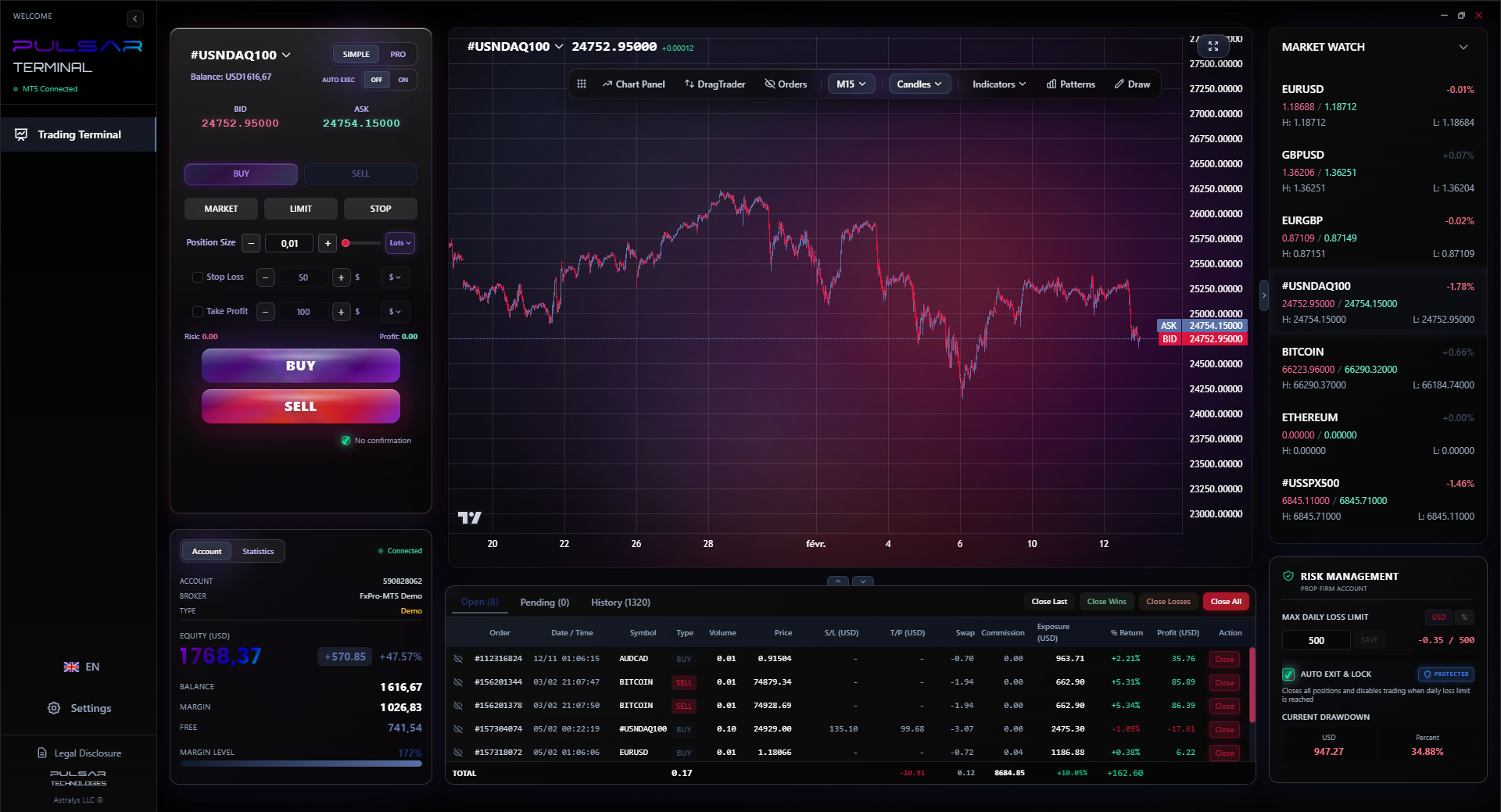
Pulsar Terminal
Lo strumento MT5 tutto-in-uno: ordini drag-and-drop, multi-TP/SL, trailing stop, grid trading, Volume Profile e protezione prop firm. Usato da oltre 1.000 trader ogni giorno.
“Anyone can take your money. Giving it back is the trick.”
So, how do you actually rate a broker? Don't just look at one 'Top 10' list. They're often affiliates getting paid for sign-ups. Do your own homework with this checklist.
- Regulation: FSCA license? Verify it. Top-tier international license as a bonus?
- ZAR Support: True ZAR account? Local payment methods (Instant EFT, Ozow)?
- Costs: What's the real cost of trading USD/ZAR? (Spread + any Commission). Check swap rates.
- Platform: MT4/5 or a stable alternative. Test execution on a demo during volatile times.
- Withdrawal: What's the published policy? Search for real user withdrawal experiences.
- Customer Support: Call them. Email them. Ask a technical question. Are they responsive and knowledgeable, or just reading a script?
Let's apply this. I've had accounts with several. For instance, my experience with IC Markets review was positive for raw spreads on majors, and their FSCA regulation gave comfort. Their ZAR funding was okay, but not as seamless as some. Conversely, a broker like XM review often scores well for beginner education and local support, which is a valid part of a rating for new traders.
Your personal rating will weight these factors differently. A scalping strategy demands the lowest possible costs and fastest execution. A long-term swing trader might care more about swap rates and platform stability. The key is to know what you need, then use a disciplined checklist to find it, ignoring the flashy bonuses. That's how you move from being a customer to being a client.
FAQ
Q1Is a bigger international broker always better than a local South African broker?
Not always. Big international brokers often have better technology and liquidity on major pairs like EUR/USD. However, a broker with a strong local presence (like an FSCA license, ZAR accounts, and local support) understands the specific needs and challenges of SA traders, like managing ZAR pairs and local banking. The ideal is often an international broker with a proper FSCA-regulated entity serving South Africa.
Q2What's more important, low spreads or no commission?
It's the total cost that matters. A 'no commission' account with a 15-pip spread on EUR/USD is far more expensive than a 0.1-pip spread with a $7 commission per lot. Always calculate the total cost per trade for your typical position size. Use a calculator that adds spread cost and commission cost to compare brokers fairly.
Q3Can I trust online forex broker rating websites?
Be very careful. Many are affiliate websites that earn money when you sign up through their links. This doesn't mean their information is wrong, but it can be biased. Use them for initial research and to compile a list of brokers, but then do your own verification on regulation, costs, and withdrawal policies. Look for sites that clearly explain their methodology.
Q4What happens if my forex broker goes bankrupt?
This is why regulation is critical. A properly regulated broker (like with the FSCA) is required to keep client funds in segregated accounts at top-tier banks. This means your money is separate from the company's operating funds. In a bankruptcy, client funds should be protected and returned, not used to pay the broker's debts. This is your primary safety net.
Q5Are demo accounts a reliable way to test a broker?
They're excellent for testing the platform, tools, and general feel. However, demo accounts often have perfect execution and no slippage, which isn't realistic. They won't reveal issues with withdrawal processes or how spreads widen during real market volatility. Use the demo to see if you like the interface, but rely on your checklist for the critical operational and financial checks.
Q6How much money do I need to start with a good rated broker?
You can start with very little. Many reputable brokers allow you to open a live account with $100 or even less. However, with a small account, your risk management is hyper-critical. A single bad trade can wipe you out. Start small to test the broker's real services - deposit, execution, withdrawal - but use proper position size so you can survive to learn.
Lezione del Prof. Winston
Punti chiave:
- ✓Verify FSCA license yourself; never trust a broker's claim.
- ✓Calculate total cost: Spread + Commission + Swap.
- ✓Test withdrawals early with a small amount.
- ✓ZAR accounts with local payments are non-negotiable for SA traders.
Quanto è stato utile questo articolo?
Clicca su una stella
Analisi Trading Settimanali
Analisi e strategie settimanali gratuite. Nessuno spam.
Sull'autore
David van der Merwe
Trader dei Mercati Emergenti
Trader con base a Johannesburg con 11 anni di esperienza nelle valute dei mercati emergenti. Specializzato in coppie ZAR, trading regolamentato dalla FSCA e analisi del mercato sudafricano.
Commenti
Avviso di rischio
Il trading di strumenti finanziari comporta rischi significativi e potrebbe non essere adatto a tutti gli investitori. Le performance passate non garantiscono risultati futuri. Questo contenuto è fornito solo a scopo educativo e non deve essere considerato un consiglio di investimento. Conduci sempre le tue ricerche prima di fare trading.
Potrebbe interessarti anche

Cara Trading Forex Sukses: 7 Prinsip dari Trader Profesional
Cara trading forex sukses dengan 7 prinsip trader pro: manajemen modal, disiplin, journal trading, backtest. Data nyata, bukan janji profit palsu.
Jam Trading Forex Terbaik untuk Trader Indonesia: Panduan Lengkap dengan Tabel Waktu
Panduan jam trading forex untuk trader Indonesia. Tabel 4 sesi dunia, jam emas 20:00-00:00, sesi mana yang harus dihindari. Data akurat + tips dari trader berpengalaman.
Top 5 Sàn Forex Uy Tín Nhất 2026: Review Jujur dari Trader Indonesia
Top 5 sàn forex uy tín 2026 untuk trader Indonesia. Review jujur: spread, deposit, withdraw, dukungan lokal. Exness, XM, IC Markets & lebih.
Scarica Pulsar Terminal
Tutti questi calcolatori sono integrati in Pulsar Terminal con dati in tempo reale dal tuo conto MT5.
Scarica Pulsar Terminal