


Let me be blunt: 90% of the forex trading courses sold in Nigeria are overpriced garbage designed to sell you a dream, not a skill.

Olumide Adeyemi
Pioniere del Trading in Africa Occidentale ·  Nigeria
☕ 11 min di lettura
Cosa imparerai:
- 1The Nigerian Forex Course Landscape: Dreams vs. Reality
- 2What a Real Forex Trading Course MUST Cover (The Syllabus Scams Skip)
- 3The Free & Cheap Self-Education Blueprint
- 4Red Flags: How to Spot a Scam Course a Mile Away
- 5When Does a Mentor Make Sense? (And When They Don't)
- 6The Final Exam: Building Your Trading Plan
- 7Your First Real Steps After the 'Course'
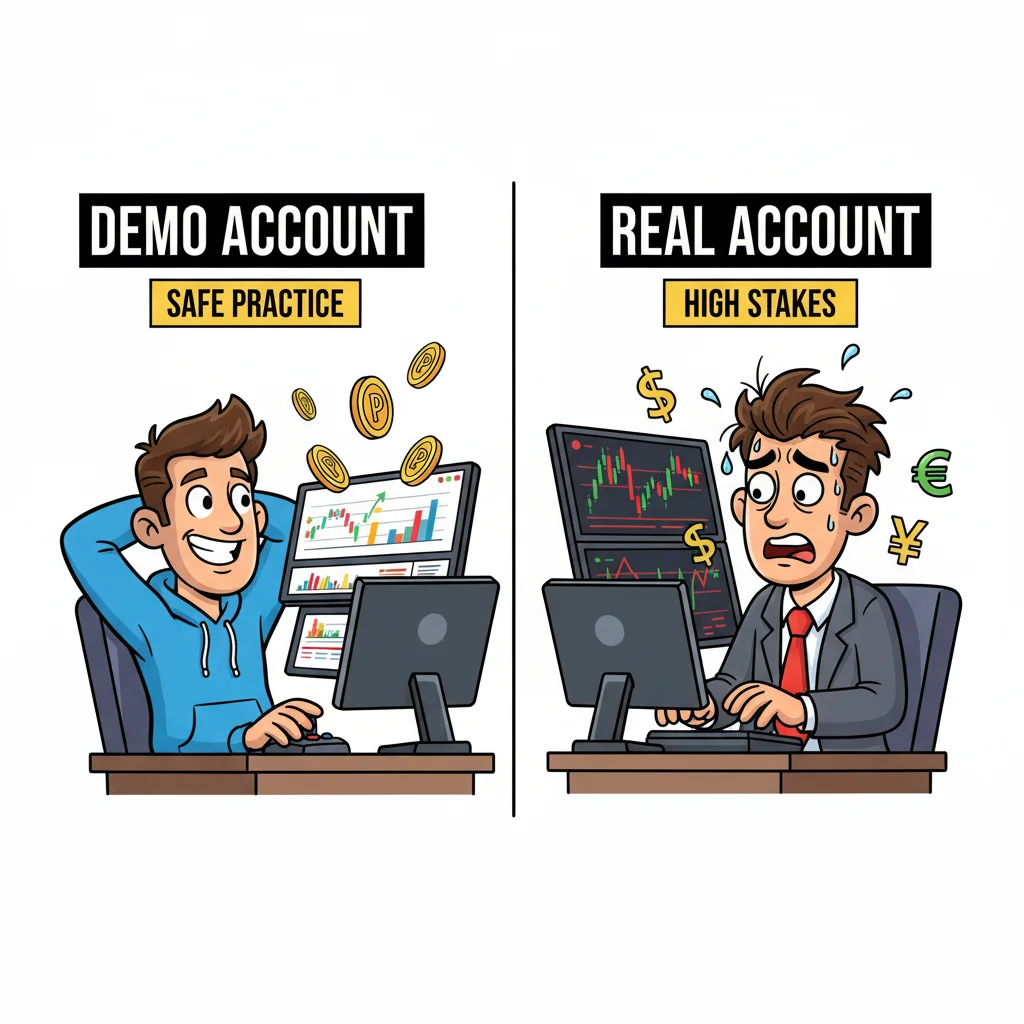
Let me be blunt: 90% of the forex trading courses sold in Nigeria are overpriced garbage designed to sell you a dream, not a skill. I've seen guys pay ₦300,000 for a 'mentorship' that's just recycled YouTube content and a Telegram signal group that blows up accounts. The real education isn't in a flashy PDF or a weekend seminar in Lagos. It's in understanding the market's mechanics, your own psychology, and having a plan that doesn't rely on some 'guru'. I'm going to show you exactly what a real forex trading course should teach you, how to spot the scams, and how to build your own education for next to nothing.
Walk around any major city in Nigeria, and you'll see the ads. 'From Zero to Hero in 30 Days!' 'Make $500 Daily with This Secret Strategy!' They're everywhere. The pricing is all over the place, and it tells you everything about the market's maturity (or lack thereof).
You've got the 'YouTube University' crew learning for free, which is a great start but often leads to a scattered, incomplete education. Then you hit the basic online courses for ₦10,000 to ₦50,000. These are a mixed bag - some are decent foundations, others are just glorified e-books.
The real danger zone starts around ₦50,000 and goes up to ₦350,000 or more for 'professional mentorship'. I've reviewed the materials from some of these big-name academies in Lagos. One, charging ₦300,000 for general mentorship, provided a 'proprietary indicator' that was literally just a standard Moving Average Convergence Divergence (MACD) with the settings changed. Another's 'exclusive' ₦975,000 package promised direct access to the mentor, but he was just forwarding analysis from a paid service he subscribed to himself.
Here’s the uncomfortable truth they won't tell you: The CBN's guidelines, like the Revised NFEM rules from late 2024 and the FX Code launched in 2025, are aimed at banks and authorized dealers. They're not creating a framework to make your retail scalping strategy easier. In fact, the CBN explicitly calls using official FX windows to fund speculative trading 'economic sabotage'. Your legal path is through international brokers, and no course can magically bypass that reality.

Warning: Any course that guarantees income, shows off luxury cars as 'proof', or pressures you with 'limited-time offers' is selling motivation, not market knowledge. Your goal is education, not inspiration.
If you're paying for education, it needs to cover the unsexy fundamentals. Anyone can teach you to draw a trendline. A real mentor makes sure you understand what's holding it up and what will make it snap.
Market Mechanics & Execution
This is non-negotiable. You need to understand what a spread is, how it eats into your profits on every trade, and why brokers like IC Markets or Pepperstone with tight spreads matter for certain strategies. You must know what a pip is, how to calculate its value for different pairs like EUR/USD or XAU/USD, and what a margin call actually looks like in your MT4 terminal. This is boring. This is essential.
Risk & Money Management
This is where I blew my first account. I put 10% of my ₦50,000 account on a 'sure thing' EUR/USD trade. A 100-pip move against me wiped out ₦5,000 in a day. A proper course drills into your head that no single trade should risk more than 1-2% of your capital. It should force you to use a position size calculator before every entry. It should teach you that preserving capital is job one; making profits is job two.
Strategy & Analysis
You need a framework. This doesn't mean buying a 'secret system'. It means understanding price action, support/resistance, and maybe one or two indicators deeply - like how the RSI indicator behaves at extremes, or what the MACD indicator divergence really signals. A good course teaches you how to backtest, how to define your entry, stop-loss, and take-profit rules with crystal clarity before you click 'buy'.
Trading Psychology
This is the most important module, and most cheap courses gloss over it. They'll say 'control your emotions'. Great, how? A real course discusses cognitive biases, the stress of a losing streak, the overconfidence of a winning streak, and practical routines to stay disciplined. It prepares you for the mental grind, because that's what breaks 80% of traders.

Example: Let's say you have a ₦100,000 account. A 2% risk per trade is ₦2,000. If your stop-loss on a USD/NGN trade is 50 pips, your position size must be calculated so that a 50-pip loss equals ₦2,000, not a guess. This math is survival.

💡 Consiglio di Winston
The cost of a course is irrelevant if it doesn't change your behavior. A free lesson on risk management you actually follow is worth more than a ₦300k 'secret system' you ignore when you're emotional.
“90% of the forex trading courses sold in Nigeria are overpriced garbage designed to sell you a dream, not a skill.”
You don't need to spend ₦200k to get started. Here's how I'd build a trader today with minimal cash outlay.
Phase 1: The Absolute Basics (Cost: ₦0) Start with BabyPips.com's 'School of Pipsology'. It's free, complete, and in plain English. It covers everything from what forex is to basic strategies. Supplement this with specific YouTube channels that focus on pure education - look for ones that explain economic calendars or chart patterns, not ones screaming about their Lamborghinis.
Phase 2: Practice & Paper Trading (Cost: ₦0) Open a demo account with a reputable international broker like XM or Exness. Don't just trade randomly. Treat it like real money. Test the concepts from BabyPips. Try to implement a 2% risk rule on your virtual capital. Your goal here isn't to make fake millions; it's to make every mistake in the book without losing a single naira.
Phase 3: Focused Skill Building (Cost: ₦5,000 - ₦30,000) Now, consider spending a little. But be surgical. Don't buy a 'complete course'. Identify your weakness. Are you terrible at identifying trends? Maybe buy one specific course or ebook on price action swing trading. Struggling with psychology? Get a well-reviewed book on trading mindset. This targeted approach is 10x more valuable than a generic 'masterclass'.
Phase 4: Live Micro-Account Trading (Cost: As low as $10 / ₦15,000) Once your demo trading shows consistency over 2-3 months, fund a live micro account with the smallest possible amount. The goal is to feel real emotional pressure. That ₦1,000 loss will teach you more about yourself than a ₦100,000 loss in demo. This is where theory meets the messy reality of slippage and your own heartbeat.
After 12 years, I can smell these from my desk. Here’s your checklist:
- The Income Guarantee: If it's guaranteed, why are they teaching? They'd just trade and be billionaires. The market offers no guarantees.
- The 'Proprietary Indicator' Mystery Box: They show you lines that 'predict' turns but never explain the logic. It's always a secret. Usually, it's a common indicator with fancy colors. A real educator explains the 'why'.
- Lifestyle Marketing Over Education: The sales page is 80% pictures of cars, watches, and stacks of cash, 20% vague promises. This appeals to greed, not your intellect.
- Pressure Tactics: 'Offer expires tonight!' 'Only 5 spots left!' Legitimate education is always available. Scarcity is a sales trick.
- Vague Syllabus: If the course outline says things like 'Master the Markets' or 'Advanced Wealth Secrets' without listing concrete modules like 'Risk Management Calculations' or 'Backtesting Your Strategy', run.
- They Operate a Signal Service: Huge conflict of interest. Their goal becomes keeping you subscribed to signals, not making you an independent trader. I've seen mentors intentionally give complex analysis so students feel they 'need' the signals.
My rule? If the sales pitch focuses more on the money you'll make than the skills you'll learn, close the tab.
💡 Consiglio di Winston
Your trading plan isn't a suggestion. It's the law. If you find yourself consistently breaking your own rules, the problem isn't discipline - it's that your plan doesn't fit your psychology. Redraft it.
“Your goal is education, not inspiration.”
A true mentor is not a course vendor. They are a guide who has navigated the path you're on. They are valuable, but only at the right stage.
You are NOT ready for a mentor if:
- You don't know what a pip is.
- You haven't traded a demo account for at least a month.
- You're looking for someone to tell you exactly when to buy and sell.
At this stage, a mentor is a crutch, and an expensive one. You need the basic education first.
A mentor might be worth the investment (like a targeted ₦150k) if:
- You have a solid foundation and a trading journal.
- You're consistently almost profitable but keep making one or two repeating mistakes (overtrading, moving stop-losses, etc.).
- You need an experienced eye to review your strategy and point out flaws in your logic or execution.
A good mentor acts like a coach. They don't give you a playbook; they watch you run your plays and tell you how to improve your form. They should be transparent about their own trading, willing to discuss their losses, and focused on making you self-sufficient. The moment they try to sell you their 'special signals', the mentorship is over.

Pro Tip: Before paying any mentor, ask for a 15-minute call. Ask them about their biggest trading loss and what they learned. If they can't or won't discuss a specific, painful loss with numbers, they're not a real trader. They're a marketer.
The ultimate output of any forex trading course, paid or free, should be a written trading plan. This is your business plan. If your 'education' doesn't culminate in this, it failed. Here's what's in mine:
- Markets I Trade: I only trade EUR/USD and XAU/USD. I know their spreads, their session behaviors, and their news sensitivities.
- My Strategy: I use a combination of price action at key levels and confirmation from the RSI indicator. My rules for entry are written down. Example: 'Buy only if price bounces off confirmed support with RSI > 30 and turning up.'
- Risk Management: I never risk more than 1.5% of my account per trade. I use my position size calculator every single time. My stop-loss is always placed at a logical level where my analysis is proven wrong.
- Daily Routine: I check the economic calendar at 7 AM WAT. I analyze charts before the London open. I do not take trades after 2 PM WAT unless I'm managing an existing one.
- Journaling: I record every trade: entry, exit, P&L, and most importantly, the reason for the trade and my emotional state.
I built this plan after a brutal loss in 2017. I got emotional on a GBP/USD news spike, ignored my stop, and watched a ₦80,000 loss turn into a ₦220,000 loss. That was my final, expensive lesson in the need for a plan. Your plan is your anchor. Write it down.
💡 Consiglio di Winston
The market doesn't care what you paid for your education. A ₦500,000 mentorship certificate won't stop a losing trade. Only your stop-loss will.
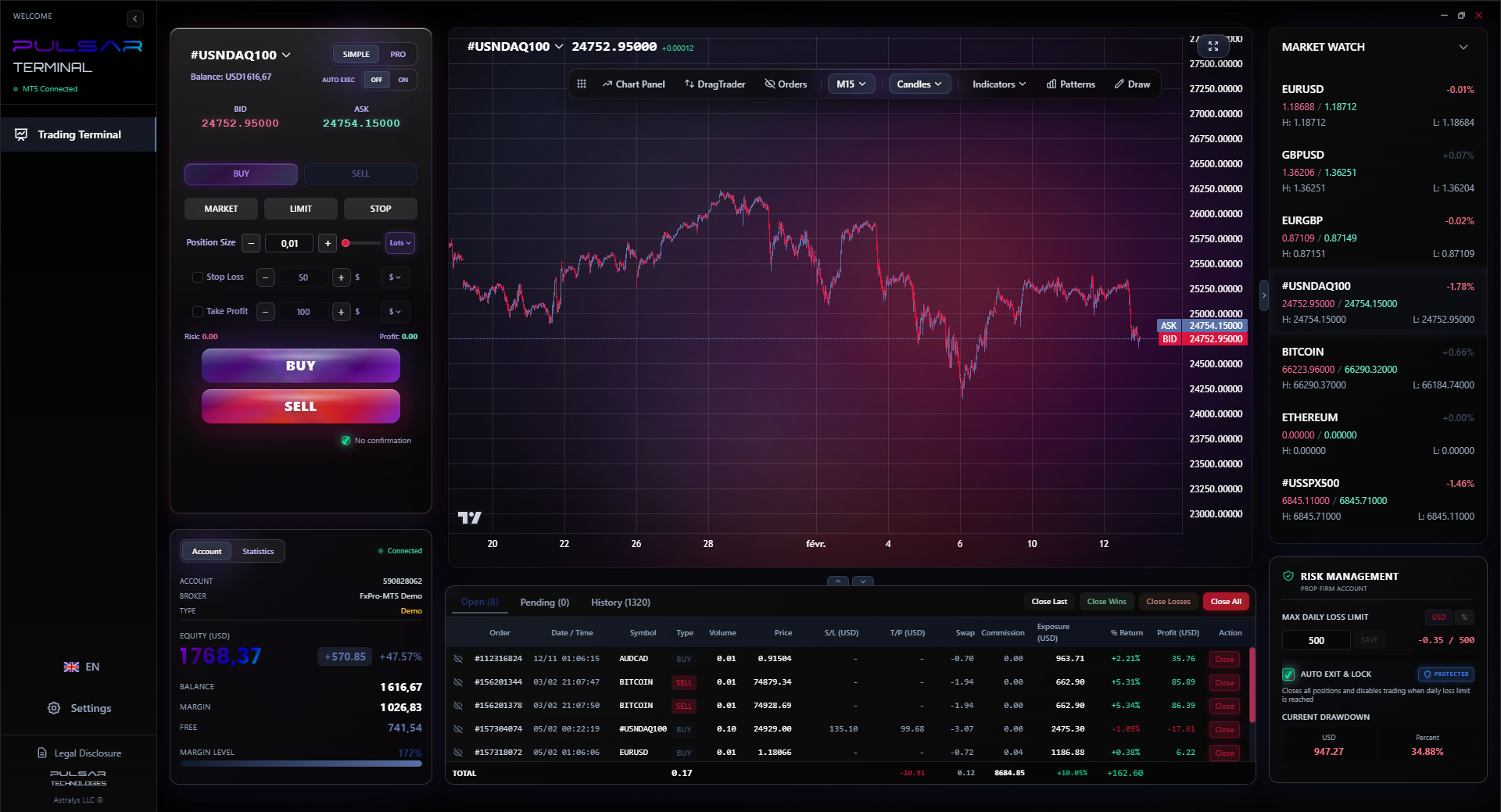
Executing a precise trading plan requires tools that remove emotion and manual error, which is where a platform like Pulsar Terminal, with its drag-and-drop orders and automated trade management for MT5, becomes a professional's secret weapon.
Pulsar Terminal
Lo strumento MT5 tutto-in-uno: ordini drag-and-drop, multi-TP/SL, trailing stop, grid trading, Volume Profile e protezione prop firm. Usato da oltre 1.000 trader ogni giorno.
“The market is the only teacher that matters in the end.”
So you've consumed the knowledge, built your plan, and practiced on demo. Now what?
- Choose a Broker Carefully: This is critical. You need a broker that is reliable, regulated, and suited to your style. For many Nigerian traders, international brokers with strong regulation are the go-to. Do your due diligence. Read detailed reviews on their execution, deposit/withdrawal processes for Nigeria, and customer service. Don't just go for the one with the biggest bonus offer.
- Start Absurdly Small: Fund your live account with an amount you can afford to lose 100% of without it affecting your life. I'm talking ₦20,000, ₦50,000 max for your first go. The mission is not to get rich. The mission is to execute your plan under real pressure for 3 months without blowing up.
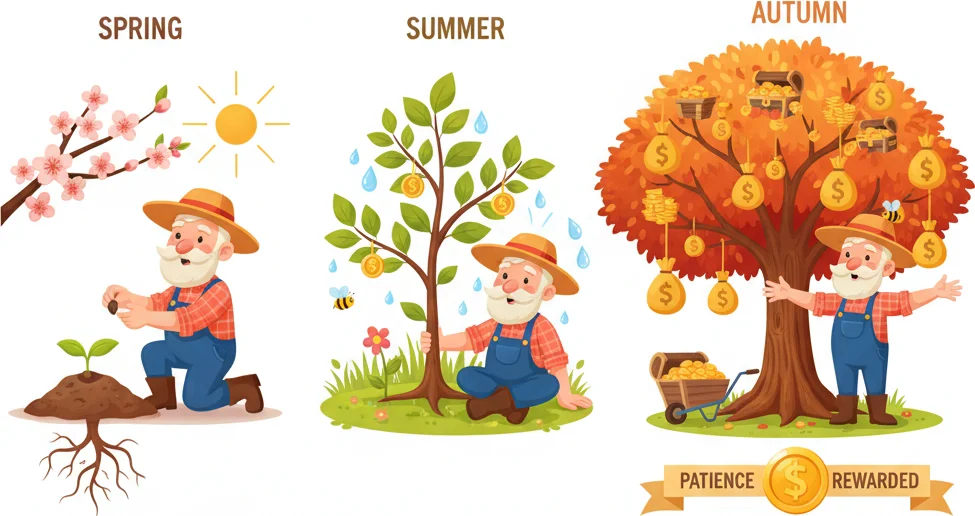
- Embrace the Grind: Your first six months of live trading will be about survival and consistency, not spectacular profits. If you can end that period with your initial capital mostly intact and a journal full of lessons, you're ahead of 95% of people who take a 'forex trading course'.
- Iterate, Don't Revolve: As you trade, you'll find parts of your plan that don't work. Maybe your stop-losses are too tight. Adjust them based on data from your journal. Don't scrap your whole strategy every week. Refine it slowly.
The market is the only teacher that matters in the end. Your course, your mentor, your books - they're just giving you the language and tools to understand what the market is already saying. Listen to it, respect it, and manage your risk like your financial life depends on it. Because it does.
FAQ
Q1Is forex trading legal in Nigeria?
Yes, forex trading is legal for individuals in Nigeria. The Central Bank of Nigeria (CBN) and SEC oversee the financial markets. However, you'll likely use international brokers regulated abroad (like FCA or ASIC). The CBN's rules, like the 2024 NFEM guidelines, mainly target banks and official FX windows, not retail traders directly. Just remember, you must report any income for tax purposes.
Q2What is a reasonable amount to pay for a forex trading course in Nigeria?
For a structured beginner course, between ₦10,000 and ₦50,000 is plausible for digital materials. Anything charging ₦150,000+ for 'basic mentorship' is immediately suspect. You can get a world-class foundation for free (BabyPips) and under ₦30,000 by piecing together specific, targeted resources. The high-price tag is often for hype, not quality content.
Q3Can I really learn forex trading for free?
Absolutely. The core knowledge - what forex is, what a pip is, basic technical analysis, risk management principles - is all available for free on sites like BabyPips and reputable YouTube channels. The 'cost' isn't money; it's your time, discipline, and the emotional toll of learning through demo and small live account losses. Free education requires more self-direction.
Q4What is the most important thing to learn in a forex course?
Risk and money management. Period. Anyone can stumble into a winning trade. Professionals survive because they know how to size their positions and limit losses. A course that doesn't drill position sizing, the 1-2% risk rule, and stop-loss discipline into you is failing its primary duty. This is more important than any indicator.
Q5How long does it take to become a profitable trader after a course?
Throw out any course that promises profitability in weeks or even a few months. A realistic timeline is 6 to 18 months of consistent study, demo trading, and small-live account practice. The first year is about learning not to lose money consistently. Becoming consistently profitable takes even longer. This is a skill, like learning a trade or a profession.
Q6Should I join a Telegram signal group instead of taking a course?
No. This is the worst thing you can do as a beginner. You learn nothing, become dependent, and have no understanding of the risk behind the signals. Most signal providers have no accountability. A real course aims to make you independent. Signals keep you a perpetual customer. Use your own brain.
Q7What should I look for in a forex trading mentor?
Look for transparency, a focus on psychology and risk management, and a desire to make you self-sufficient. They should readily discuss their own losses and lessons. Avoid anyone who is secretive about their methods, pressures you to invest more, or tries to sell you additional services like signals. A true mentor's success is measured by your independence.
Lezione del Prof. Winston
Punti chiave:
- ✓Risk management is 80% of the game; a course that glosses over it is worthless.
- ✓Never risk more than 1-2% of your capital on a single trade.
- ✓A written trading plan is your non-negotiable final exam.
- ✓Start with a live account so small that losing it feels like a tuition fee, not a catastrophe.
Quanto è stato utile questo articolo?
Clicca su una stella
Analisi Trading Settimanali
Analisi e strategie settimanali gratuite. Nessuno spam.
Sull'autore
Olumide Adeyemi
Pioniere del Trading in Africa Occidentale
Uno degli educatori di trading forex più attivi in Nigeria. 8 anni di esperienza di trading da Lagos. Specializzato in strategie a basso capitale e sfide prop firm per trader africani.
Commenti
Avviso di rischio
Il trading di strumenti finanziari comporta rischi significativi e potrebbe non essere adatto a tutti gli investitori. Le performance passate non garantiscono risultati futuri. Questo contenuto è fornito solo a scopo educativo e non deve essere considerato un consiglio di investimento. Conduci sempre le tue ricerche prima di fare trading.
Potrebbe interessarti anche

Cara Trading Forex Sukses: 7 Prinsip dari Trader Profesional
Cara trading forex sukses dengan 7 prinsip trader pro: manajemen modal, disiplin, journal trading, backtest. Data nyata, bukan janji profit palsu.
Jam Trading Forex Terbaik untuk Trader Indonesia: Panduan Lengkap dengan Tabel Waktu
Panduan jam trading forex untuk trader Indonesia. Tabel 4 sesi dunia, jam emas 20:00-00:00, sesi mana yang harus dihindari. Data akurat + tips dari trader berpengalaman.
Top 5 Sàn Forex Uy Tín Nhất 2026: Review Jujur dari Trader Indonesia
Top 5 sàn forex uy tín 2026 untuk trader Indonesia. Review jujur: spread, deposit, withdraw, dukungan lokal. Exness, XM, IC Markets & lebih.
Scarica Pulsar Terminal
Tutti questi calcolatori sono integrati in Pulsar Terminal con dati in tempo reale dal tuo conto MT5.
Scarica Pulsar Terminal