


I lost NGN 450,000 in a single week back in 2017 trying to trade Nigerian bank stocks like they were currency pairs.

Olumide Adeyemi
西アフリカ・トレーディングの先駆者 ·  Nigeria
☕ 11 分で読める
学べること:
- 1The Core Game: Ownership vs. Speculation
- 2Market Structure & Trading Hours: The 24/7 Grind vs. The 9-to-5
- 3Costs, use & Capital: The Nigerian Reality Check
- 4What Moves the Prices? Company Reports vs. Economic Firehoses
- 5Regulatory Jungle: SEC Nigeria vs. Offshore Waters
- 6So, Which One is Right for YOU in Nigeria?
- 7Pitfalls I've Fallen Into (So You Don't Have To)
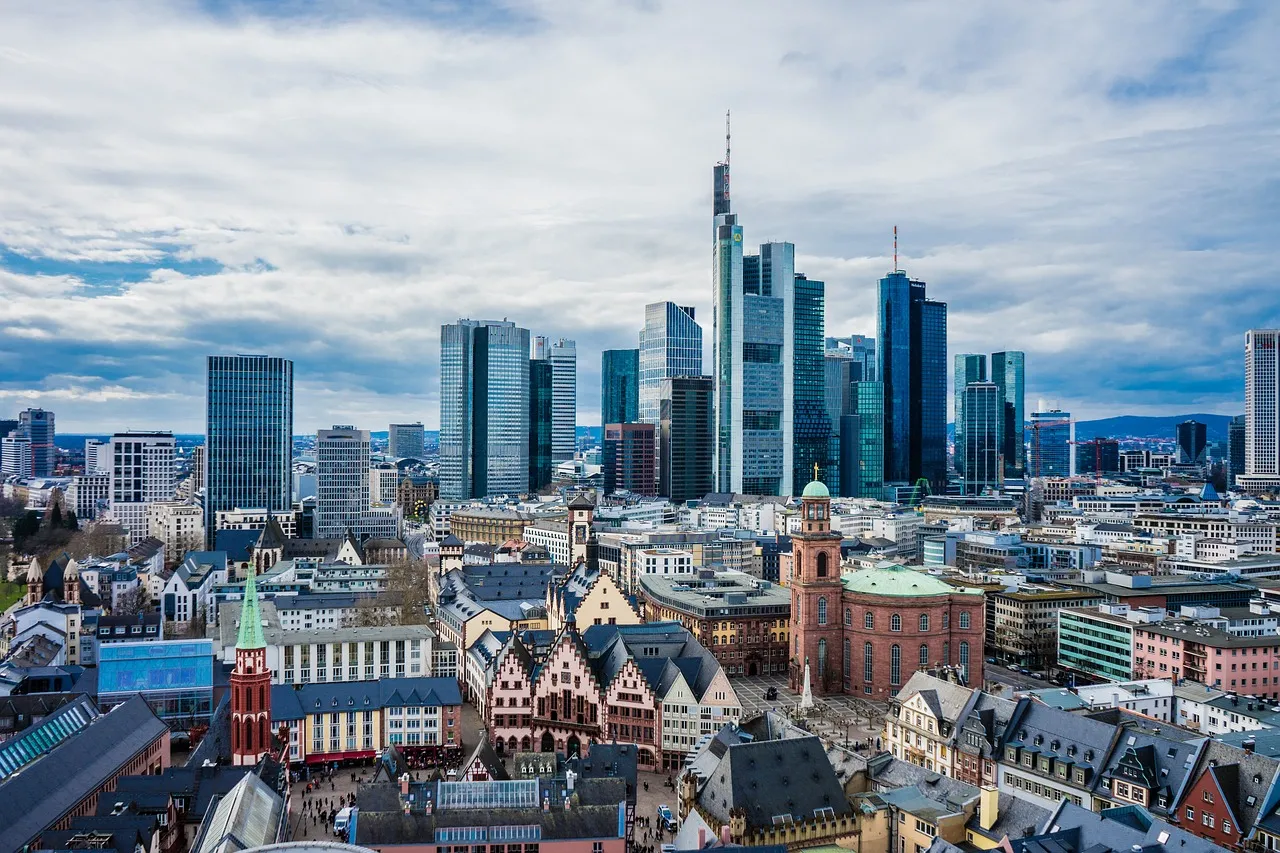
I lost NGN 450,000 in a single week back in 2017 trying to trade Nigerian bank stocks like they were currency pairs. I was buying Access Bank and Zenith Bank, watching the ticker move in kobo, and getting absolutely wrecked by brokerage fees and stamp duty. My mistake? I didn't understand the fundamental difference between stock and forex trading. I was using forex tactics - scalping, high use mentality - on an equity market that operates on a completely different set of rules. That painful lesson cost me real money, and it's exactly why you need to know this stuff cold before you place a single trade.
This is the bedrock. Get this wrong, and everything else falls apart.
When you buy a stock on the Nigerian Exchange (NGX), you're buying a tiny piece of a real company. You own a share of Dangote Cement, MTN Nigeria, or Zenith Bank. Your profit comes from two places: the share price going up, or the company paying you a dividend (a slice of their profits). You're an investor, even if a very small one. Your success is tied to that company's performance, the sector's health, and overall Nigerian economic sentiment.
Forex is pure speculation. You don't own anything tangible. When you trade USD/NGN, you're betting on the value of the US Dollar against the Nigerian Naira. You're predicting price movement based on interest rates, inflation data, political stability, and pure market sentiment. There's no dividend, no shareholder meeting. It's a zero-sum game; for you to win, someone else on the other side of that trade has to lose.

Warning: Don't fall for the 'I'm investing in forex' line. You're not. You're speculating. Calling it investing is a fast track to misunderstanding risk and blowing up your account. Trading currencies requires a different, often more disciplined, psychology than buying and holding quality stocks.
I learned this the hard way. I held a position in GTCO (Guaranty Trust Holding Company) during a quarterly earnings slump, thinking 'it's a great company, it'll bounce back.' Meanwhile, I was missing clear technical breakdowns because I was emotionally attached to 'my' company. In forex, there's no attachment. It's just charts and economics. That detachment can be a strength, but it can also make you reckless if you're not careful.

💡 ウィンストンのヒント
Your first ₦100,000 in the market isn't for making money. It's for buying experience. Expect to lose it learning the difference between a theory and a live trade.
“In forex, with high use, a 1% move against you can wipe out your entire account. That's a margin call waiting to happen.”
Where and When You Can Trade
Stock Market (NGX): This is a centralized exchange. All buy and sell orders for Nigerian stocks funnel through the Nigerian Exchange Group in Lagos. It has strict, limited trading hours:
- Pre-Open: 9:30 AM - 9:45 AM
- Open: 9:45 AM - 10:00 AM
- Continuous Trading: 10:00 AM - 2:30 PM
- Close: 2:30 PM - 2:45 PM That's it. Once it's 2:45 PM, the market is closed. No trading until 9:30 AM the next business day (Monday to Friday). If major news breaks overnight - say, a new CBN governor is appointed - you're stuck watching until the market opens. You can't react.
Forex Market: This is an over-the-counter (OTC) market. There's no single physical exchange. It's a global network of banks, institutions, and brokers like Exness or IC Markets. The key here? It's open 24 hours a day, 5.5 days a week. It starts Sunday evening (5 PM EST) with the Sydney session, moves to Tokyo, then London, and finally New York before closing on Friday evening. For you in Nigeria, this means you can trade major pairs like EUR/USD or GBP/USD when London opens (around 8 AM your time) through the US session (which runs into your evening).
Liquidity and Slippage
Liquidity is how easily you can buy or sell without moving the price. The forex market is the most liquid in the world, trading over $7 trillion daily. This means you can usually get in and out of standard lots in major pairs with minimal slippage (the difference between your requested price and your filled price).
The Nigerian stock market is less liquid. While top-tier stocks like MTNN and AIRTELAFRIC are fairly liquid, trying to move a large position in a mid or small-cap stock can be tricky. You might struggle to sell your entire position at the quoted price, ending up with a worse average exit price.
This structural difference between stock and forex trading dictates your entire strategy. Forex allows for scalping strategies at all hours. Stock trading, especially here, is more suited to swing trading or longer-term holds.
“Calling forex 'investing' is a fast track to misunderstanding risk and blowing up your account.”
This is where the rubber meets the road for most Nigerian traders. Your capital determines which game you can even afford to play.
| Cost Factor | Nigerian Stock Trading (NGX) | Forex Trading (International Brokers) |
|---|---|---|
| Minimum Capital | Can start with ~₦10,000 - ₦50,000 with some brokers. | Can start with as little as $10 (≈₦15,000) with micro accounts. |
| Brokerage Commission | Typically 1.0% - 1.5% of transaction value. This is huge. | No commission on standard accounts. Broker makes money from the spread (difference between buy/sell price). |
| Other Fees | SEC Fee (0.3%), NSE Fee (0.3%), Stamp Duty (0.075%), VAT on commissions. It adds up fast. | Usually just the spread. Swap/rollover fees for holding positions overnight. |
| use | Effectively 1:1. You can get margin loans, but they're restrictive and expensive. | Commonly 1:500, 1:1000, or even higher with offshore brokers. This is a double-edged sword. |
Let's talk about that use point, because it's the single biggest difference between stock and forex trading for a retail trader. In forex, with a $100 account and 1:500 use, you can control a $50,000 position. This means a 1% move in your favor doubles your money. The flip side? A 1% move against you wipes out your entire account. That's a margin call waiting to happen if you don't use a position size calculator.
In Nigerian stocks, you're mostly trading with your own cash. If you buy ₦100,000 worth of Seplat, the stock has to fall 100% for you to lose everything. In forex, with high use, that can happen in minutes.

Example:
- Stock Trade: Buy ₦200,000 of BUA Cement. Brokerage + fees could be ~₦3,500. Stock needs to rise ~1.75% just to break even.
- Forex Trade: Buy 0.01 lot (micro lot) of USD/NGN (if offered). Your cost is just the spread, maybe 50 pips (₦0.50). Price needs to move just 0.5% in your favor to cover costs.
The barrier to entry is lower in forex, but the risk of instant ruin is astronomically higher. I've seen guys turn $200 into $2,000 in a day, then lose it all in the next hour because they got greedy with use. Discipline isn't a suggestion in forex; it's the only thing standing between you and a zero balance.

“Calling forex 'investing' is a fast track to misunderstanding risk and blowing up your account.”
Your analysis needs to match the market.
Stock Analysis (Fundamental Heavy): To trade Nigerian stocks well, you need to become a part-time business analyst. You're watching for:
- Financial Results: Quarterly and annual reports from the NGX. Profitability, debt levels (use), revenue growth.
- Dividend Declarations: Announcement dates, amounts, and yield.
- Corporate Actions: Mergers, acquisitions, share buybacks (like the recent Nestle Nigeria buyback).
- Sector News: New government policies on cement, telecoms tariffs, oil production quotas.
- Macro-Economics: Broader Nigerian GDP growth, inflation (which has been brutal), and CBN interest rate decisions. Technical analysis works, but a fundamental shift (like a terrible earnings report) will blow through any chart support.
Forex Analysis (Macro & Technical): For major pairs like EUR/USD or GBP/USD, you're a global macro economist.
- Central Bank Policy: US Federal Reserve (Fed) vs. European Central Bank (ECB) interest rate decisions are king.
- Economic Data: US Non-Farm Payrolls, CPI inflation data from the UK/EU, GDP reports.
- Geopolitics: Wars, elections, trade deals.
- Pure Sentiment: Risk-on (buy stocks, sell JPY) vs. Risk-off (buy USD, gold). For a pair like XAU/USD (Gold), you're watching real yields, dollar strength, and safe-haven flows.
Technical analysis is often more reliable in forex due to the high liquidity and number of participants using it. Tools like the RSI indicator or MACD indicator are staples for a reason.
The key difference? A single company can have a scandal and crash 30% overnight (think of some banking stocks during the CBN governor shake-ups). A major currency like the Euro doesn't just crash 30% in a day based on one piece of news; the moves are generally slower and driven by a confluence of factors. Your stop-loss strategy has to account for this different volatility profile.
💡 ウィンストンのヒント
If you can't explain the three main reasons you're in a trade before you click 'buy', you're not trading. You're hoping. Hope is a terrible strategy.
“Your first ₦100,000 in the market isn't for making money. It's for buying experience.”
This is critical for your safety. Where is your money, really?
Nigerian Stocks: Heavily regulated by the Securities and Exchange Commission (SEC Nigeria) and the NGX. Your broker must be registered with both. Your shares are held in a Central Securities Clearing System (CSCS) account in your name. Even if your broker goes bust, your shares are still yours. The system is slow, sometimes archaic, but it offers a layer of protection. Fraud exists (remember the ridiculous 'wash trades' scandals?), but the framework is there.
Forex Trading: Here's the uncomfortable truth: most Nigerian traders use international, offshore brokers regulated by bodies like CySEC (Cyprus), ASIC (Australia), or the FSA (Seychelles). The Central Bank of Nigeria (CBN) does not license or regulate international forex brokers offering trading in USD/NGN or other pairs to Nigerian residents.
This means:
- Your funds are held in a foreign bank account, under a foreign regulator's jurisdiction.
- If you have a dispute with your broker, you're dealing with their overseas compliance team, not SEC Nigeria.
- You must do extreme due diligence. Check reviews like our XM review or Pepperstone review for real user experiences.
You're trading in a less protected space. The advantage is access to global markets, high use, and advanced platforms. The trade-off is you're on your own. Always start small, withdraw profits regularly to test the withdrawal process, and never keep more capital with a broker than you can afford to lose access to temporarily.
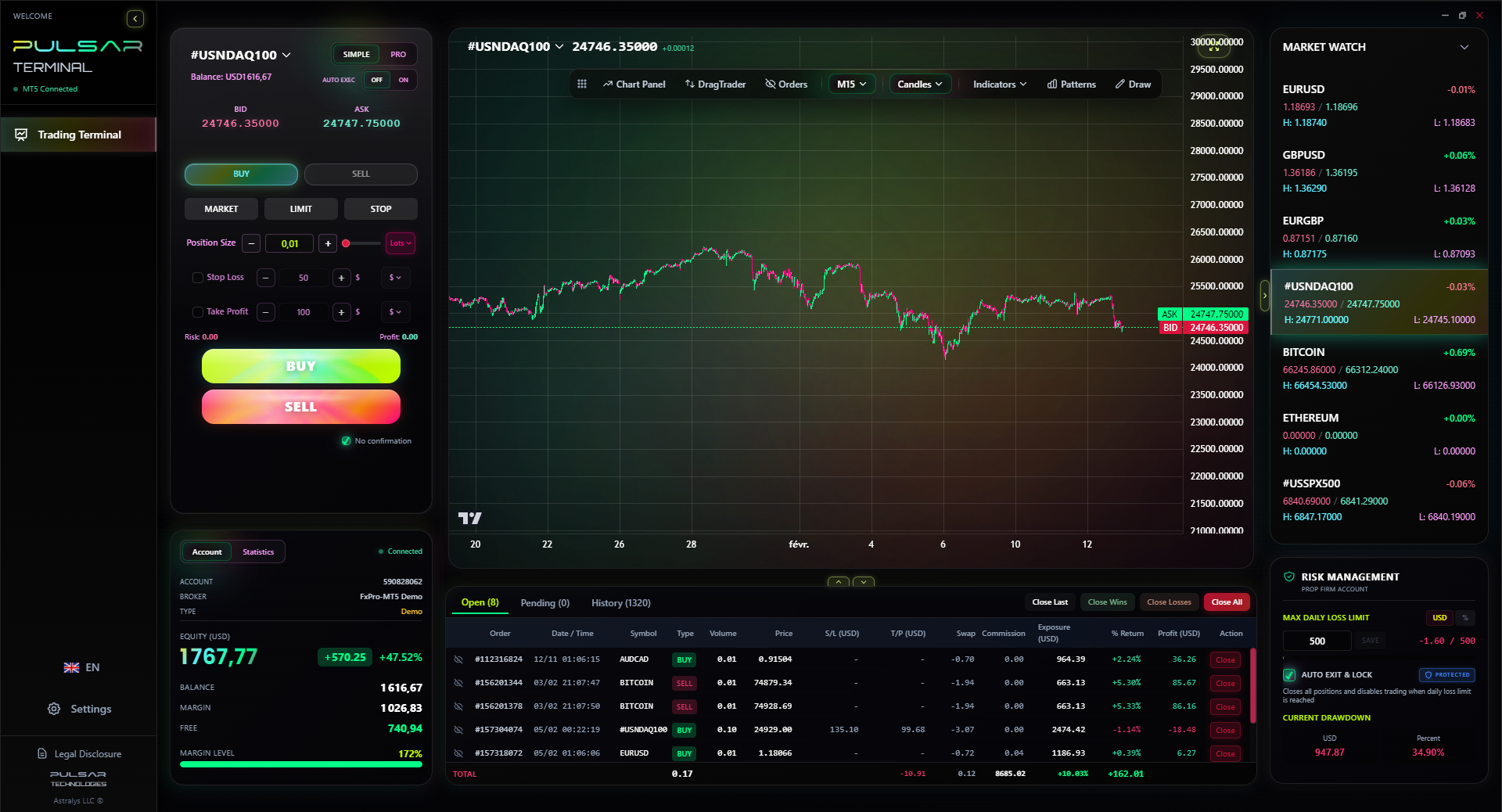
Managing multiple trades and strict risk limits across different markets is complex, which is why tools like Pulsar Terminal automate advanced order types and prop firm rules directly on your MT5 platform.
Pulsar Terminal
MT5オールインワンツール:ドラッグ&ドロップ注文、マルチTP/SL、トレーリングストップ、グリッドトレード、出来高プロファイル、プロップファーム保護。毎日1,000人以上のトレーダーが利用。
“Your first ₦100,000 in the market isn't for making money. It's for buying experience.”
Don't pick based on hype. Pick based on your personality, capital, and goals.
Choose Nigerian Stock Trading if:
- You have a longer-term horizon (months to years).
- You enjoy researching companies and industries.
- You have a larger starting capital (₦500,000+) to make the fees worthwhile.
- You want the psychological comfort of owning an asset and receiving dividends.
- You prefer lower, regulated use and slower-paced moves.
- You can't or don't want to monitor markets 24/7.
Choose Forex Trading if:
- You have limited starting capital (as low as $50/₦75,000).
- You are disciplined enough to handle extreme use without blowing up.
- You can dedicate time to analyze global economics and price charts.
- You want the flexibility to trade at any hour of the day or night.
- You're comfortable with higher short-term volatility and pure speculation.
- You're okay with the regulatory grey area of using international brokers.
You can do both. I do. I keep a long-term stock portfolio of solid Nigerian blue-chips for wealth building, and I use a separate, much smaller account for forex to scratch my tactical trading itch. They serve different purposes in my overall financial picture.

Pro Tip: Before you risk a naira, paper trade both markets for at least 3 months. Use a demo account for forex. Use a stock market simulator or simply track hypothetical trades in an Excel sheet for NGX stocks. You'll quickly discover which market 'clicks' with your brain and which one feels like a constant struggle.
💡 ウィンストンのヒント
The best traders I know have a 'purpose' for each account. One for slow stock investing, one for aggressive forex plays. Mixing goals in one account is a recipe for confusion and loss.
“The structural difference between stock and forex trading dictates your entire strategy.”
1. Using Forex Psychology in Stocks: My NGN 450,000 loss story. I was trying to scalp Nigerian stocks for 1-2% gains, but the brokerage fees ate all my profits on winning trades and amplified my losses. Stocks aren't for quick in-and-out trades unless you're moving huge volume.
2. Underestimating Forex Overnight Costs (Swap): Early on, I held a sell position on AUD/JPY (a pair with a big interest rate differential) for two weeks. I made 120 pips, but the daily negative swap fees totaled 85 pips. My 'big win' was actually a tiny profit. Always check the swap rates before holding a position for more than a day.
3. Changing Strategies Mid-Stream: In 2020, I had a great swing trading plan for USD/CAD based on oil price trends. I caught a 200-pip move. Then, I got bored and started scalping it on the 5-minute chart, gave back 150 pips in commission-like spreads and bad entries. Stick to your original plan.
4. Ignoring Liquidity in Stocks: I once tried to exit a full position in a small-cap industrial stock. The buy-side depth was pathetic. My market sell order filled at three different prices, averaging a 4% worse exit than the last traded price. For less liquid stocks, always use limit orders.
The difference between stock and forex trading isn't just academic. It's practical. It determines your daily routine, your stress levels, and , whether you keep your money or donate it to the market.
FAQ
Q1Can I trade forex legally in Nigeria?
Yes, you can legally trade forex with international brokers. However, it's crucial to understand that the CBN does not license these brokers to operate in Nigeria. You are using a service based overseas. The legality is on you as an individual accessing a global market, not on a locally regulated entity. Always use reputable, well-regulated offshore brokers.
Q2Which is more profitable, stocks or forex?
Neither is inherently more profitable. It depends entirely on the trader. Forex offers higher use, which can magnify profits (and losses) quickly from small price moves. Stocks generally require more capital to see significant returns but can offer compounding growth and dividends over time. Profitability comes from your skill, discipline, and risk management, not the market itself.
Q3Do I need a lot of money to start trading Nigerian stocks?
Not necessarily a lot, but enough to make the fees sensible. If you start with ₦20,000, a 1.5% brokerage fee is ₦300 per trade. You need the stock to move over 3% just to cover the round-trip buy/sell fees. Realistically, ₦100,000 is a more practical starting point to absorb costs and allow for sensible position sizing across a couple of stocks.
Q4What is a pip in forex, and what's the equivalent in stocks?
A pip is the smallest standard price move in forex, usually 0.0001 for pairs like EUR/USD. For USD/NGN, a pip might be ₦0.01. In stocks, the closest equivalent is simply the minimum price movement (tick size), which on the NGX is 1 kobo (₦0.01) for most stocks. The monetary value of a pip or a kobo move depends on your position size.
Q5Is forex trading just gambling?
It can be if you approach it without analysis, discipline, or risk management - then it's indistinguishable from gambling. Professional forex trading is based on analyzing economic data, geopolitical events, and price charts to make informed speculations. The use of high use is what often makes it feel like a casino. Treat it like a skilled profession, not a slot machine, and the distinction becomes clear.
Q6Can I trade US or UK stocks from Nigeria?
Yes, through many of the same international forex brokers (like IC Markets or Pepperstone) that offer Contracts for Difference (CFDs) on global stocks. You won't own the actual share or get dividends (CFDs may simulate dividends), but you can speculate on their price movements. Some international brokers also offer access to real share trading, but the process and minimums are higher.
ウィンストン教授のレッスン
重要ポイント:
- ✓Stocks mean ownership; Forex is pure speculation on price.
- ✓Forex use can annihilate a small account in minutes.
- ✓Nigerian stock fees require a 2-3% move just to break even.
- ✓Trade stocks for the long game, forex for the tactical play.
この記事はどれくらい役に立ちましたか?
星をクリックして評価
週刊トレーディングインサイト
無料の週刊分析&戦略。スパムなし。
著者について
Olumide Adeyemi
西アフリカ・トレーディングの先駆者
ナイジェリアで最もアクティブなFXトレーディング教育者の一人。ラゴスから8年のトレード経験。アフリカのトレーダー向けの少額資金戦略とプロップファームチャレンジを専門とする。
コメント
リスク警告
金融商品の取引には大きなリスクが伴い、すべての投資家に適しているわけではありません。過去の実績は将来の結果を保証するものではありません。本コンテンツは教育目的のみであり、投資助言として解釈すべきではありません。取引前に必ずご自身で調査を行ってください。
こちらもおすすめ

Cara Trading Forex Sukses: 7 Prinsip dari Trader Profesional
Cara trading forex sukses dengan 7 prinsip trader pro: manajemen modal, disiplin, journal trading, backtest. Data nyata, bukan janji profit palsu.
Jam Trading Forex Terbaik untuk Trader Indonesia: Panduan Lengkap dengan Tabel Waktu
Panduan jam trading forex untuk trader Indonesia. Tabel 4 sesi dunia, jam emas 20:00-00:00, sesi mana yang harus dihindari. Data akurat + tips dari trader berpengalaman.
Top 5 Sàn Forex Uy Tín Nhất 2026: Review Jujur dari Trader Indonesia
Top 5 sàn forex uy tín 2026 untuk trader Indonesia. Review jujur: spread, deposit, withdraw, dukungan lokal. Exness, XM, IC Markets & lebih.
