


Over 70% of Nigerian retail forex traders lose money.

Olumide Adeyemi
西アフリカ・トレーディングの先駆者 ·  Nigeria
☕ 10 分で読める
学べること:
Over 70% of Nigerian retail forex traders lose money. That's the brutal statistic from most international regulators. But here's the flip side I've seen in my 12 years: the 30% who succeed aren't just lucky. They understand the unique game of global forex from a Nigerian perspective. It's not just about charts; it's about navigating Naira funding, 10% capital gains tax, and choosing the right international broker when local regulation is thin. This guide cuts through the noise.
Let's get this straight first. Trading forex with your own money is completely legal in Nigeria. The panic you sometimes hear about it being banned? That usually refers to illegal bureau de change operations or pyramid schemes masquerading as forex. For you and me sitting at home with a laptop, we're in the clear.
The main players are the Central Bank of Nigeria (CBN) and the Securities and Exchange Commission (SEC). Their job is to oversee the big financial picture. However, and this is crucial, their direct, day-to-day oversight of online retail forex trading - the kind we do - is still developing. There's no Nigerian equivalent of the UK's FCA specifically breathing down the neck of every broker offering services here.
This creates a unique situation. Nigerian brokers offering forex need CBN authorization. But there's absolutely nothing stopping you from opening an account with a broker regulated in Australia, Cyprus, or South Africa. In fact, most serious Nigerian traders I know do exactly that. They're chasing the stronger investor protection and stricter operational standards of these foreign regulators.
Just remember one non-negotiable rule: any profit you make is subject to Nigerian law. That means declaring it and being ready for that 10% capital gains tax. The taxman doesn't care if your broker is in Lagos or London.

Warning: The legal grey area isn't about trading itself, but about which broker you trust. Because local oversight is light, choosing an internationally regulated broker isn't just an option; for safeguarding your capital, it's often a necessity.

💡 ウィンストンのヒント
Your first profit target should be to survive for 6 months. Consistency beats a lucky windfall every single time.
Forget the advertised 'zero spread' hype for a second. Your real cost of trading global forex from Nigeria has three big parts: what you pay the broker, what you pay the government, and what you lose to payment processing.
Broker Costs: It's Not Just the Spread
Spreads vary wildly. On a standard account, you might see EUR/USD at 1.4 pips. On a raw ECN account, it could be 0.0 pips, but then they hit you with a commission - usually $3 to $7 per standard lot traded. You need to do the math for your style. If you're a high-volume scalper, the ECN account is probably cheaper. If you place a few swing trades a week, a standard account with a slightly wider spread but no commission might be better. I made this mistake early on. I was scalping the EUR/USD guide on a standard account, paying 1.8 pips per trade. Switching to a raw spread account with a $5 commission saved me about 0.3 pips per trade, which added up to hundreds of dollars saved monthly.
The 10% You Can't Avoid
This is the big one. Nigeria charges a 10% Capital Gains Tax on your gross trading profits. Let's say you make a 500,000 Naira profit this year. You owe 50,000 Naira to the Federal Inland Revenue Service (FIRS). You are responsible for declaring this. Your international broker won't do it for you. Keep careful records of all your trades.
Funding Your Account
Funding in Naira often involves a conversion fee, either from your bank or the payment processor. Some brokers like HFM or Exness offer Naira-denominated accounts, which helps. Others require USD. I once lost about 2,500 Naira on a 100,000 Naira deposit just from a poor bank exchange rate and fees. It's a cost you must factor in.

Example:
- Trade Profit: $1,000 (≈ 1,450,000 Naira @ 1450/$)
- Broker Cost (ECN): $30 in commissions
- Net Before Tax: $970
- Capital Gains Tax (10% on Gross): $100 (on the original $1000 profit)
- Real Take-Home: $870 That tax is calculated on your gross profit, not after costs. It bites.
“High use is a tool, not a target. Using 1:500 on your whole account is a ticket to a zero balance.”
With hundreds of brokers out there, how do you choose? Don't just go for the one with the flashiest ads on Instagram. Here’s my practical checklist, forged from trial and error.
1. Regulation is Your Safety Net. This is non-negotiable. Look for brokers licensed by top-tier authorities like the UK's FCA, Australia's ASIC, or Cyprus's CySEC. Why? Because if the broker goes under, these regulators have compensation schemes. If they mess with your order execution, you have a serious body to complain to. I trust my funds with IC Markets review (regulated by ASIC) and Exness review (FCA, CySEC) for this reason.
2. Can You Deposit Naira Easily? Check their deposit methods. Do they accept direct Nigerian bank transfers, Naira cards, or popular fintech wallets? The smoother this process, the better. Long delays or crazy fees on deposits are a red flag.
3. use Offers – Be Careful. You'll see offers of 1:1000 or even ‘unlimited’ use. It's a double-edged sword. While it lets you control large positions with little capital, it also magnifies losses incredibly fast. I learned this the hard way in 2015. I used 1:500 use on a GBP/USD trade, a small 20-pip move against me wiped out 40% of my account. Now, I rarely go above 1:100, even if 1:500 is available. It’s a tool, not a target.
4. Platform and Tools. Most of us use MetaTrader 4 or 5. But does the broker offer stable, fast servers? Check reviews for complaints about requotes or slippage. Also, see if they support useful add-ons or have a good mobile app.
| Broker Consideration | What to Look For (Nigeria Focus) |
|---|---|
| Regulation | ASIC, FCA, CySEC, FSCA. Avoid unregulated ‘offshore-only’ licenses. |
| Naira Funding | Local bank transfer, Naira cards, low/no deposit fees. |
| use | Sensible options (e.g., 1:100-1:500). Don't just chase the highest number. |
| Costs | Compare spreads on your favorite pairs AND commission structure. Use a position size calculator to model true costs. |
Other solid, internationally-regulated options popular here include Pepperstone review and XM review. Do your own due diligence.
💡 ウィンストンのヒント
Treat that 10% tax not as a loss, but as the cost of running a profitable business. A business that doesn't pay tax isn't profitable for long.
Your strategy isn't just about indicators. It has to account for your internet stability (we've all had those ‘GoTV’ moments), your capital size, and the fact you might be trading after a day job.
Swing Trading is Your Friend. For most Nigerian traders starting out, swing trading makes the most sense. You hold trades for days or weeks. You don't need to stare at the screen all day. It's less stressful and doesn't require lightning-fast internet. You can analyze the XAU/USD guide for a gold setup in the evening, place the trade, set your stop loss and take profit, and check it the next day. This aligns perfectly with a full-time job.
Scalping? You Need an Edge. Scalping strategy is popular but brutal. To succeed, you need a rock-solid internet connection, a broker with ultra-low latency (like IC Markets), and the discipline to stick to tiny profit targets. The spreads and commissions will eat you alive if you're not careful. I tried scalping for three months. My win rate was 65%, but after all costs, I was barely breaking even. The spread definition became my enemy.
Use Technology to Manage Risk. This is where modern tools are a lifesaver. Since you can't watch the charts 24/7, use pending orders, stop losses, and take profits religiously. Never, ever leave a trade open without a stop loss. I've been saved from disaster countless times by a stop loss I set and forgot about. Also, understand what a margin call is and how to avoid it by not over-leveraging.

Pro Tip: Combine a core swing trading strategy with a strict 1% risk rule per trade. Use the RSI indicator for overbought/oversold levels on the daily chart and the MACD indicator for trend confirmation. This simple, mechanical approach removes emotion and works around our local constraints.
“The 10% capital gains tax is calculated on your gross profit, not after broker costs. It bites.”
Trading global forex from Nigeria can feel isolating. Your family might not get it. Your friends think it's gambling. This mental battle is half the fight.
You will have losing streaks. I once had 7 consecutive losses trying to trade news events. It felt like the market was personally against me. I broke my rules, doubled my position size on the 8th trade to 'make it back quickly,' and took my largest loss ever. That was a 30,000 Naira lesson in humility and discipline. The market doesn't know you exist. It doesn't care about your goals. Your job is to follow your plan, not your emotions.
Find a community, but be wary. Nigerian forex forums and Telegram groups are full of 'gurus' selling signals and courses. Most are scams. Look for communities focused on education and analysis, not someone shouting 'BUY GBPUSD NOW!!!'. A good community discusses risk management, shares broker experiences, and helps you stay accountable.
Remember why you started. Was it for financial independence? A side income? When the drawdown hits, go back to that 'why'. It's the anchor that will keep you from blowing up your account.
💡 ウィンストンのヒント
The most important chart you'll ever keep is your trading journal. It tells you who you are as a trader. The price chart just tells you what the market is.
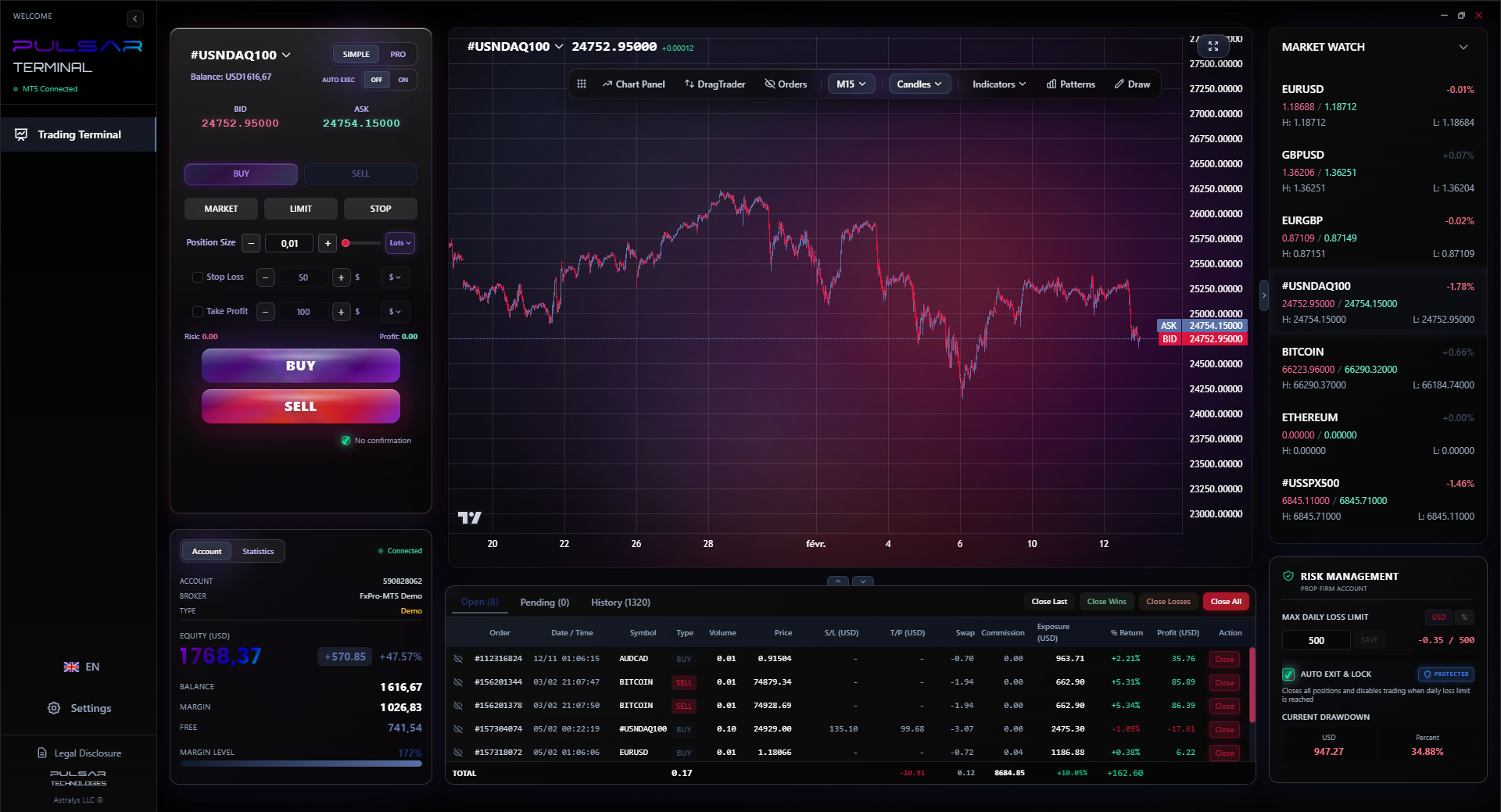
Managing risk when you can't watch the charts all day is tough, but tools like Pulsar Terminal let you set advanced stop-loss and take-profit orders directly on MT5, automating your protection.
Pulsar Terminal
MT5オールインワンツール:ドラッグ&ドロップ注文、マルチTP/SL、トレーリングストップ、グリッドトレード、出来高プロファイル、プロップファーム保護。毎日1,000人以上のトレーダーが利用。
Let's map this out practically.
Month 1: Education & Paper Trading. Don't deposit real money. Open a demo account with 2-3 brokers from our list above. Test their platforms. Practice your swing trading strategy on demo for a full month. Aim for consistency, not huge profits. Learn what a pip definition really means in Naira value.
Month 2: Start Small Live. Fund an account with the minimum amount - maybe $50 or 20,000 Naira. Your goal is not to get rich. Your goal is to execute 20-30 live trades with perfect risk management (1% risk per trade). The goal is to get used to the emotion of real money on the line. The profit/loss is irrelevant at this stage.
Month 3: Review & Scale. After 2-3 months, review your trading journal. What pairs did you trade best? What time of day? Did you follow your rules? Only then, consider adding more capital.
Pitfalls to Avoid:
- Chasing Losses: The fastest way to blow an account.
- Trading Without a Stop Loss: This is suicide.
- Over-leveraging: Using 1:1000 use on your entire account is a ticket to a zero balance.
- Ignoring Tax Obligations: Set aside 10% of every withdrawal you make. Create a separate savings pot for it.
The global forex market is the largest, most liquid market in the world. It's open 24/5. From Lagos to Port Harcourt, you have the same access as a trader in New York or London. Your edge isn't in secret indicators; it's in superior discipline, understanding your local costs, and choosing the right partners in the global arena.
FAQ
Q1Is forex trading taxable in Nigeria?
Yes, absolutely. All profits from forex trading are subject to a 10% Capital Gains Tax. You are responsible for declaring this income to the Federal Inland Revenue Service (FIRS), regardless of whether you use a local or international broker.
Q2Which international forex brokers are best for Nigerian traders?
Look for brokers with strong international regulation (like ASIC or FCA) that also support easy Naira deposits. Popular choices include Exness (offers Naira accounts), IC Markets, HFM, and Pepperstone. Always check their current deposit methods and fees for Nigeria specifically.
Q3What is a safe use to use?
There's no 'safe' use, only 'sensible' use. For most retail traders, especially beginners, use above 1:100 is extremely risky. I recommend starting with 1:10 or 1:20 to learn proper position sizing. High use (1:500+) amplifies losses as fast as it amplifies gains.
Q4Can I trade forex with just 20,000 Naira?
Technically, yes. Many brokers have minimum deposits around $10-$20. However, with a small account, you must be incredibly careful with position size. Trading a standard lot (100,000 units) with 20,000 Naira would require insane use and would likely lead to a margin call. Start on a cent account or micro lots to make the learning process affordable.
Q5How do I fund my international trading account?
Most brokers accepting Nigerian clients offer local bank transfers, Naira debit cards, and sometimes fintech wallets. The process usually involves depositing Naira, which the broker or its payment processor converts to USD. Always check for conversion fees and processing times before depositing.
Q6What's the biggest mistake new Nigerian forex traders make?
Two things: 1) Using excessive use because it's offered, leading to account blow-ups, and 2) following 'signal sellers' or gurus in Telegram groups without understanding the strategy. Focus on learning core concepts like risk management and developing your own simple plan.
ウィンストン教授のレッスン
重要ポイント:
- ✓Regulation is your primary safety net; prioritize it over flashy bonuses.
- ✓Always factor the 10% capital gains tax into your profit calculations.
- ✓Swing trading often fits Nigerian lifestyles better than frantic scalping.
- ✓Never trade a live account without a stop loss in place.
この記事はどれくらい役に立ちましたか?
星をクリックして評価
週刊トレーディングインサイト
無料の週刊分析&戦略。スパムなし。
著者について
Olumide Adeyemi
西アフリカ・トレーディングの先駆者
ナイジェリアで最もアクティブなFXトレーディング教育者の一人。ラゴスから8年のトレード経験。アフリカのトレーダー向けの少額資金戦略とプロップファームチャレンジを専門とする。
コメント
リスク警告
金融商品の取引には大きなリスクが伴い、すべての投資家に適しているわけではありません。過去の実績は将来の結果を保証するものではありません。本コンテンツは教育目的のみであり、投資助言として解釈すべきではありません。取引前に必ずご自身で調査を行ってください。
こちらもおすすめ

Cara Trading Forex Sukses: 7 Prinsip dari Trader Profesional
Cara trading forex sukses dengan 7 prinsip trader pro: manajemen modal, disiplin, journal trading, backtest. Data nyata, bukan janji profit palsu.
Jam Trading Forex Terbaik untuk Trader Indonesia: Panduan Lengkap dengan Tabel Waktu
Panduan jam trading forex untuk trader Indonesia. Tabel 4 sesi dunia, jam emas 20:00-00:00, sesi mana yang harus dihindari. Data akurat + tips dari trader berpengalaman.
Top 5 Sàn Forex Uy Tín Nhất 2026: Review Jujur dari Trader Indonesia
Top 5 sàn forex uy tín 2026 untuk trader Indonesia. Review jujur: spread, deposit, withdraw, dukungan lokal. Exness, XM, IC Markets & lebih.
