


You see him everywhere.

Olumide Adeyemi
西アフリカ・トレーディングの先駆者 ·  Nigeria
☕ 8 分で読める
学べること:
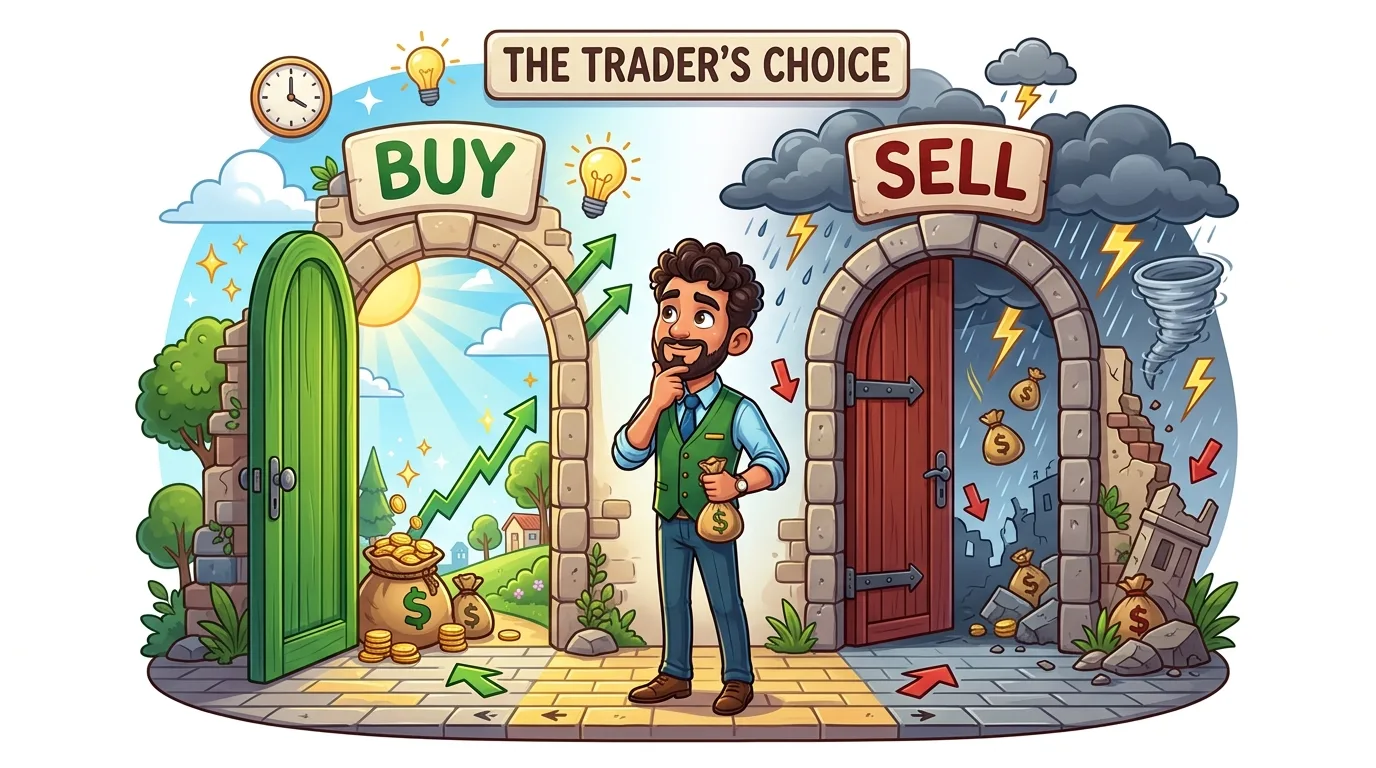
You see him everywhere. On Instagram, flexing a new car. On WhatsApp, posting screenshots of a 500-pip win. He's 'the forex guy.' But here's a number you don't see: for every one trader who makes it look easy, there are at least nine who quietly blow their accounts. The image is polished, but the reality of trading from Lagos, Abuja, or Port Harcourt is a grind. It's less about Lamborghinis and more about managing Naira volatility, dodgy internet, and your own psychology. Let's strip away the filter and talk about what it really takes.
The social media forex guy sells a dream. It's all signals, luxury tags, and ‘freedom.’ The algorithm loves it. What it doesn't show is the 4:30 AM wake-up to catch the London open before your 9-5, the frustration when your ISP drops during a crucial trade, or the sick feeling when a central bank announcement goes against you and wipes out a week's profit.
I remember early on, I got a tip from a popular ‘guru’ to buy GBP/JPY. I threw in 50,000 Naira, convinced it was my ticket. The trade went south fast. I didn't have a stop loss because ‘the forex guy’ said they were for amateurs. I watched it bleed down to 32,000 Naira before I panicked and closed. That loss stung for months. It taught me that blind following is a one-way ticket to a margin call.
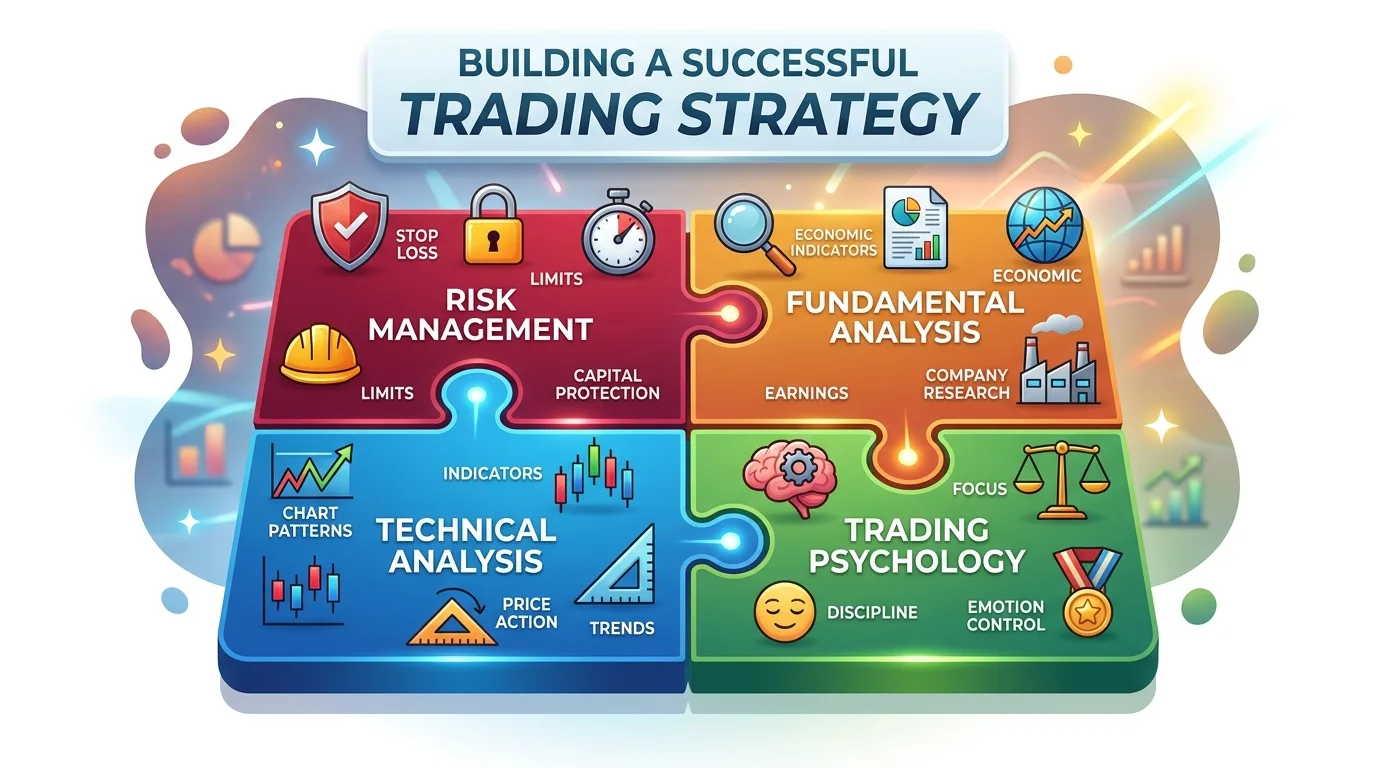
The real work is invisible. It's backtesting a scalping strategy for hours on historical data. It's learning to read an RSI indicator divergence instead of just waiting for a WhatsApp alert. It's the discipline to use a position size calculator for every single trade, no matter how ‘sure’ you are.

Warning: If a ‘guru’s’ main proof is lifestyle photos and not a verifiable, long-term track record, you're not a student. You're the product.
The reality is, sustainable trading is a business. You need a business plan, a risk management strategy, and to treat every Naira like capital, not lottery tickets.

💡 ウィンストンのヒント
A ‘guru’ who can't explain his losses in detail is selling you a fantasy, not an education.
To move from a wannabe to someone who actually knows what they're doing, you need to build specific muscles. This isn't about secret indicators, it's about foundational competence.
Understanding Your Instruments
You can't trade what you don't understand. For many of us, that starts with USD/NGN pairs, but the spreads can be wild. You need to branch out. Get intimately familiar with major pairs like EUR/USD. Know what moves them - interest rate differentials, economic data from the US and Eurozone. Commodities like XAU/USD (gold) are also popular as a hedge against Naira instability. Each instrument has its own personality; trade it on a demo account until its moves stop surprising you.
Technical Analysis is Your Blueprint
Forget magic bullets. Learn to read price action and a few key tools really well. I rely heavily on the MACD indicator for momentum and trend confirmation, but only alongside support and resistance levels. A common mistake is stacking ten indicators on a chart until it looks like a rainbow vomited. It creates confusion, not clarity. Pick two or three, understand their signals inside out, and stick with them.
Risk Management is Your Survival Kit
This is where the real forex guys separate themselves from the crowd. It's boring, but it's everything.
- Position Sizing: Never risk more than 1-2% of your account on a single trade. On a 100,000 Naira account, that's 1,000-2,000 Naira. Use a calculator. Every time.
- Stop-Loss Orders: Your trade is wrong until proven right. Place your stop-loss before you enter the trade, based on technical levels, not on how much you're willing to lose.
- Profit-Taking: Have a plan. Will you take profit at a 2:1 risk-reward ratio? Use a trailing stop? Deciding after you're in profit is a recipe for giving it all back.

Pro Tip: Your first profit target should often be to cover your risk. Move your stop-loss to breakeven once price moves in your favor by 1.5x your initial risk. This turns a risky bet into a free trade with upside.
“Your psychology will make or break you long before your strategy does.”
This is a major hurdle. You need a broker that accepts Nigerians, has reliable deposits/withdrawals in Naira or USD, and isn't going to disappear with your money. Regulation is key. Look for brokers regulated by top-tier authorities like ASIC (Australia) or FCA (UK). They offer more client protection.
I've tested a few. Exness is widely used here because of its local deposit options and sometimes tighter spreads. IC Markets is a favorite for raw spreads and execution speed, which is great for scalping. XM and Pepperstone also have strong reputations. But here's the catch: even the best international broker can have withdrawal delays when converting back to Naira through local payment processors. Always factor in liquidity time.
A critical thing to check is the spread on the pairs you trade. A broker might offer zero-commission but have a 3-pip spread on EUR/USD. That's a huge cost eating into your profits, especially if you're a scalping strategy trader. Compare spreads during the market sessions you trade most.

Example: If you trade 10 micro lots (a $1 move per pip) and the spread is 2 pips, you start each trade $20 in the hole. You need the market to move 2 pips just to break even. Over 100 trades, that's $2,000 in pure cost.
💡 ウィンストンのヒント
Your first 100 trades are for data collection, not profit. Journal every single one.

Markets don't care about your rent, your ego, or your need to prove you're ‘the forex guy.’ Your psychology will make or break you.
Fear & Greed: The classic duo. Fear makes you cut winners short. Greed makes you let losers run. I've broken my own rules out of greed. In early 2023, I had a perfect swing trading setup on AUD/USD. My plan was to take profit at 80 pips. It hit 75, then pulled back to 70. Greed whispered, ‘It's going to 100!’. I moved my target. It reversed and stopped me out at breakeven. I broke my plan for an extra 20 pips and got nothing. That lesson was cheaper than most.
Revenge Trading: You take a loss, your pride is hurt, and you jump right back in with a bigger size to ‘make it back fast.’ This is how accounts get obliterated in an afternoon. The only correct move after a bad loss is to walk away. Close the platform. Come back tomorrow.
Confirmation Bias: You want to go long, so you only see the analysis that supports going long. You ignore the clear resistance level overhead. You have to actively seek out reasons why your trade idea might be wrong. If you can't find a convincing counter-argument, your trade might be okay.
The best traders I know are boringly disciplined. They have a checklist. They follow it. Win or lose, they review. They leave their ego at the login screen.
“The true ‘forex guy’ is defined by resilience, not a single screenshot win.”
Your ‘edge’ is what gives you a statistical advantage over time. It's not a 100% win rate. It's a repeatable process that wins more than it loses, or wins bigger than it loses.
For some, that's a deep understanding of a specific session, like the London-New York overlap. For others, it's mastering a single pattern, like a bullish engulfing candle at a key support level on the 4-hour chart. My personal edge came from combining volume analysis with simple price action. I stopped trying to trade every little move and waited for high-probability setups that met three strict criteria.
This is where tools can help you execute your edge more efficiently. If your strategy involves complex order management with multiple take-profit levels, doing it manually on MT5 is clunky and error-prone.
Pro Tip: Backtest your supposed edge. Take your strategy and run it on at least a year of historical data, trade by trade. Be brutally honest with the entries and exits. If it wasn't profitable in the past, why would it be in the future?
💡 ウィンストンのヒント
If you can't articulate your edge in one sentence, you don't have one. Go back to the charts.
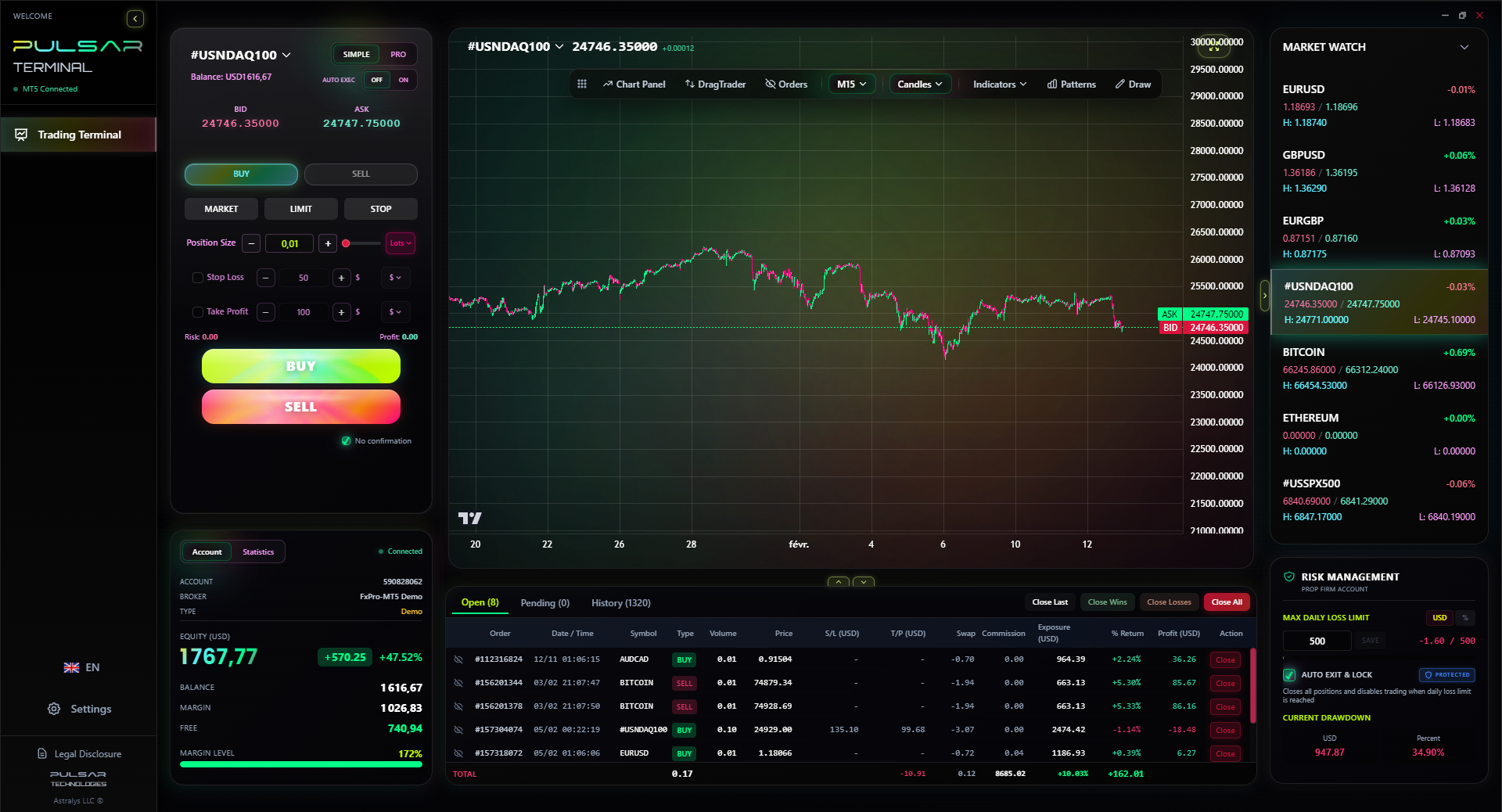
Manually managing multiple take-profit levels and trailing stops is where most execution errors happen, but tools like Pulsar Terminal automate this directly on your MT5 charts.
Pulsar Terminal
MT5オールインワンツール:ドラッグ&ドロップ注文、マルチTP/SL、トレーリングストップ、グリッドトレード、出来高プロファイル、プロップファーム保護。毎日1,000人以上のトレーダーが利用。
So, you want to be the real deal? Not the Instagram version, but the guy who consistently grows his account? Here's a blunt roadmap.
- Education First, Money Last. Spend 3-6 months on a demo account. Not a week. Months. Treat the virtual 100,000 Naira like it's real. Go through the emotional cycles of winning and losing with play money.
- Start Stupidly Small. When you go live, fund your account with money you can afford to lose completely. Your first live trades should be at the smallest possible lot size. The goal is to validate your process under real emotional pressure, not to get rich.
- Journal Religiously. For every trade, note: the setup, your entry/exit prices, your emotional state, and the outcome. Review weekly. Your journal will tell you your fatal flaws.
- Specialize. Don't trade 28 pairs and 5 timeframes. Pick one or two instruments and one or two timeframes. Become a master of that domain.
- Build a Community, Not an Audience. Find a few serious traders to talk shop with. Avoid the echo chambers of ‘to the moon!’ groups. Look for people who post their losses as openly as their wins.
The journey is long. There will be losing months. The true ‘forex guy’ isn't defined by a single win, but by the resilience to stick to a proven plan through all the market's noise. Focus on the process, and the profits become a byproduct. Now, go put in the work.
FAQ
Q1How much money do I need to start forex trading in Nigeria?
You can start with as little as $50 (about 70,000 Naira) with some brokers on a micro account. But realistically, I'd advise having at least $200-500 as a beginner. This allows for proper position sizing and withstands a few losses without blowing your account. Remember, the goal of your first deposit is to learn and survive, not to make life-changing money.
Q2Are there successful female forex traders in Nigeria?
Absolutely, and it's a shame the term 'forex guy' dominates. Some of the most disciplined and successful traders I know are women. The market doesn't care about your gender. This is about psychology, discipline, and skill. The community needs to move beyond the 'guy' stereotype and recognize successful traders, period.
Q3Can I rely on free forex signals from Telegram?
I wouldn't bet my money on it. At best, you'll break even after spreads. At worst, you're being led into a scam or used to pump a price for the signal provider's own gain. If you must use signals, use them as a learning tool. Analyze why the signal was given. But , you need to develop your own analysis skills. No one cares more about your money than you.
Q4What's better for a beginner: scalping or swing trading?
For most Nigerian beginners, swing trading on higher timeframes (like 4-hour or daily charts) is easier. It's less stressful, doesn't require glued-to-the-screen attention, and is more forgiving of slower internet. Scalping requires fast execution, low spreads, and intense focus, which is tough with our common infrastructure challenges. Start slow.
Q5How do I handle withdrawals from international brokers to my Nigerian bank?
It can be slow. Use the same method you deposited with (e.g., bank transfer, credit/debit card, or a trusted fintech gateway). Withdraw in USD if possible, as your bank will handle the conversion, often at a better rate than the broker's Naira quote. Always factor in 3-7 business days for the funds to clear. Keep all transaction records.
Q6Is forex trading taxable in Nigeria?
As of now, there is no specific capital gains tax on individual forex trading profits in Nigeria. However, tax laws change. If your trading grows into a significant, consistent income, it's wise to consult a local tax professional. The key is to keep clear records of all your trades, deposits, and withdrawals for any future reporting.
ウィンストン教授のレッスン
重要ポイント:
- ✓Risk max 2% per trade. Always.
- ✓Backtest for 100+ trades before going live.
- ✓Specialize in 1-2 instruments only.
- ✓A trade journal is non-negotiable.
この記事はどれくらい役に立ちましたか?
星をクリックして評価
週刊トレーディングインサイト
無料の週刊分析&戦略。スパムなし。
著者について
Olumide Adeyemi
西アフリカ・トレーディングの先駆者
ナイジェリアで最もアクティブなFXトレーディング教育者の一人。ラゴスから8年のトレード経験。アフリカのトレーダー向けの少額資金戦略とプロップファームチャレンジを専門とする。
コメント
リスク警告
金融商品の取引には大きなリスクが伴い、すべての投資家に適しているわけではありません。過去の実績は将来の結果を保証するものではありません。本コンテンツは教育目的のみであり、投資助言として解釈すべきではありません。取引前に必ずご自身で調査を行ってください。
こちらもおすすめ

Cara Trading Forex Sukses: 7 Prinsip dari Trader Profesional
Cara trading forex sukses dengan 7 prinsip trader pro: manajemen modal, disiplin, journal trading, backtest. Data nyata, bukan janji profit palsu.
Jam Trading Forex Terbaik untuk Trader Indonesia: Panduan Lengkap dengan Tabel Waktu
Panduan jam trading forex untuk trader Indonesia. Tabel 4 sesi dunia, jam emas 20:00-00:00, sesi mana yang harus dihindari. Data akurat + tips dari trader berpengalaman.
Top 5 Sàn Forex Uy Tín Nhất 2026: Review Jujur dari Trader Indonesia
Top 5 sàn forex uy tín 2026 untuk trader Indonesia. Review jujur: spread, deposit, withdraw, dukungan lokal. Exness, XM, IC Markets & lebih.
