


If you trade from Nigeria, you know the official CBN rate is a fantasy.

Olumide Adeyemi
서아프리카 트레이딩 선구자 ·  Nigeria
☕ 10 분 소요
배울 내용:
- 1What Exactly Is Aboki Forex?
- 2How the Parallel Market Dictates Your Trading Reality
- 3Trading with International Brokers: Your Safe Haven
- 4A Trader's Framework for Managing Naira Risk
- 5Pitfalls and Scams: What to Avoid at All Costs
- 6A Practical Funding and Withdrawal Strategy
- 7Building a Sustainable Trading Career in Nigeria
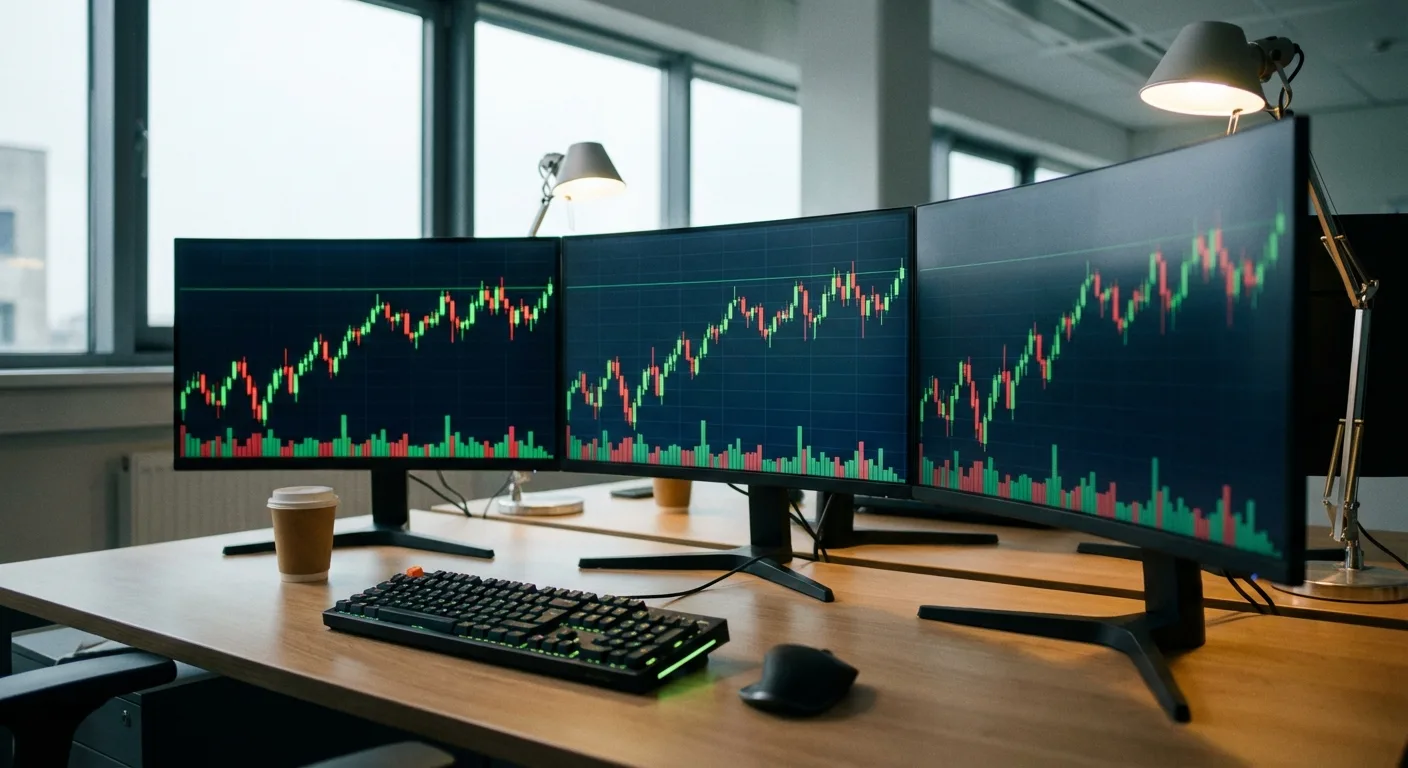
If you trade from Nigeria, you know the official CBN rate is a fantasy. The real price of the dollar is set on the streets, by the 'aboki'. This gap between the official and parallel market rate isn't just a news headline, it's the single biggest risk factor for your trading account. I've seen more accounts blown up by Naira volatility and poor currency conversion than by bad trade setups. This guide isn't about finding the best aboki, it's about building a fortress around your trading capital in a market where the ground is constantly shifting.
Let's cut through the noise. 'Aboki forex' is the local term for Nigeria's parallel foreign exchange market. It's where the real exchange rate between the Naira and currencies like the USD, GBP, and Euro is discovered, driven by pure demand and supply, not central bank policy.
The 'aboki' (a Hausa word for 'friend') is typically the street-side Bureau De Change (BDC) operator you meet in Lagos, Abuja, or Kano. But the system is bigger than one person. It's a vast, informal network that sets a benchmark rate, which often trades at a massive premium to the official CBN window. For you, the trader, this creates two distinct worlds: the official Nigeria and the real Nigeria where your trading funds live.
Why does this matter for trading? Simple. When you fund an international broker like Exness or IC Markets, you're converting Naira to USD at the parallel rate. Your profit, when you withdraw, gets converted back. That 20% or 30% premium you pay to get dollars eats directly into your starting capital and your returns. It's a hidden tax on every trade before you even place one.
“The gap between the official and parallel market rate is the single biggest risk factor for your trading account.”
You can't ignore the aboki forex rate. It's the bedrock of your financial reality as a Nigerian trader. Its volatility directly translates to your account's purchasing power.
The Funding Squeeze
Let me give you a real example from last year. The official rate was around ₦460/$, but to actually get dollars for my broker, I had to pay ₦740/$. I wanted to deposit $500. At the official rate, that's ₦230,000. In reality, it cost me ₦370,000. That's an extra ₦140,000 gone before I clicked 'buy' on EUR/USD. That premium means you start every trading journey in a hole. It forces you to either deposit more Naira than you planned or trade with a smaller dollar amount than your strategy might require.
The Withdrawal Rollercoaster
It works in reverse, too. Say you make a $1,000 profit. Fantastic. But when you convert it back to Naira, the rate could have moved dramatically. If the parallel rate weakens from ₦740 to ₦900/$, that $1,000 becomes ₦900,000 instead of ₦740,000. That's good. But if it strengthens to ₦650/$, your profit shrinks to ₦650,000. Your trading skill is only half the battle, the other half is currency timing.

Warning: Never calculate your returns based on the CBN rate. Always use the prevailing parallel market rate for your profit and loss calculations. Thinking you made ₦460,000 on that $1,000 profit is a dangerous illusion that will wreck your risk management.
This environment makes a solid position size calculator non-negotiable. You're not just calculating risk based on the pair's volatility, but also on the volatility of your own currency's value.

💡 윈스턴의 팁
Your first profit target should be to recover the premium you paid to convert Naira to USD. Until then, you're just working for the parallel market.
“You're not just calculating risk based on the pair's volatility, but also on the volatility of your own currency's value.”
Here's the critical part: the aboki is for currency exchange, not for speculative trading. For actual forex trading, you must use a reputable, internationally regulated broker. This separation is crucial for your safety and legality.
Brokers like Pepperstone or XM provide the platform (like MT4/MT5), use, and access to the global interbank market. Your interaction with the aboki market is a separate, offline step to acquire the foreign currency needed to fund that broker account.
Why does this matter?
- Regulation & Security: Your funds are held with a licensed entity under strict financial rules (like CySEC or ASIC), not in a street-side drawer.
- Fair Pricing: You get real market spreads and execution. The 'spread' an aboki gives you is built into his rate and is massive compared to the 0.1 pip you might get on EUR/USD with a good broker.
- Tools for Trading: You get charts, indicators like the RSI and MACD, and automated trading capabilities.
I learned this the hard way early on. I tried to 'negotiate' a better rate from a local facilitator promising 'direct broker access.' It was a sham platform with manipulated prices. I lost $300 before I realized the quotes didn't match the real market. The lesson? Keep the functions separate: use trusted brokers for trading, use the parallel market (carefully) for funding.
“You're not just calculating risk based on the pair's volatility, but also on the volatility of your own currency's value.”
You have to manage two volatilities: your trades and your currency. Here’s a practical framework.
1. Hedge Your Trading Currency: If your primary trading account is in USD, consider your Naira exposure. You can't easily short the Naira, but you can be strategic. When the parallel rate is particularly favorable (i.e., the Naira is weak and you get more Naira for your dollars), consider withdrawing profits, even if partially. Convert and hold some Naira when the conversion works for you.
2. Dollar-Cost Average Your Funding: Don't convert a large lump sum of Naira to USD at once when you need to top up your broker. The rate moves too much. If you plan to deposit $1000 over the next quarter, break it into four $250 conversions at different times. This smooths out the rate you pay, similar to the investment principle.
3. Maintain a Multi-Currency Buffer: If possible, keep a small reserve of physical USD from previous profitable withdrawals. This buffer allows you to fund your account quickly if you see a great trading opportunity, without being at the mercy of that day's parallel market rate.

Pro Tip: Track the parallel rate as diligently as you track your favorite currency pair. Note it in your trading journal. Over time, you'll see patterns that can inform your withdrawal and funding decisions, making you a trader in both the forex market and the Naira market.
The goal isn't to beat the parallel market, it's to insulate your trading strategy from its worst effects. This is where discipline from a swing trading mindset helps, thinking in terms of weeks and months, not just the rate today.
💡 윈스턴의 팁
Treat your physical USD cash with the same respect as your trading capital. Verifying notes isn't paranoia, it's part of the job.

“Never let the urgency to fund a trading idea override basic security. A missed trade is a missed opportunity. A scam is lost capital.”
The volatility and informal nature of the aboki forex environment make it a breeding ground for costly mistakes and outright fraud. Here’s what to run from.
The 'Managed Account' Aboki: Someone offers to not only give you dollars but also to trade for you, promising insane monthly returns. This is a double red flag. You're combining currency risk with handing over control to an unlicensed, unaccountable individual. I've had two clients lose everything this way. The 'aboki' and the 'account manager' disappear together.
The Fake Broker/Platform: These are sophisticated scams that mimic real brokers. They might even use local Naira bank accounts for 'easier' deposits. The platform looks real, but the trades aren't going to any real market. Your profits on screen are fiction, and when you try to withdraw, they demand insane fees or simply vanish. Always verify a broker's international regulation independently.
The Rate-Too-Good-To-Be-True: If an aboki's rate is significantly better than the widely known parallel rate on platforms like AbokiFX (a rate aggregation site, not a trader), it's a trap. Either the dollars are fake, the transaction will be 'interrupted' by police (a setup), or you'll be robbed.
Ignoring the Total Cost: Focusing only on the USD/NGN rate. Sometimes, an aboki offers a good rate but charges a huge fixed fee, or gives you older, less-accepted dollar bills. The total cost of acquisition is what matters.
The fundamental rule: Never let the urgency to fund a trading idea override basic security. A missed trade is a missed opportunity. A scam is a lost capital. One is recoverable, the other often isn't.

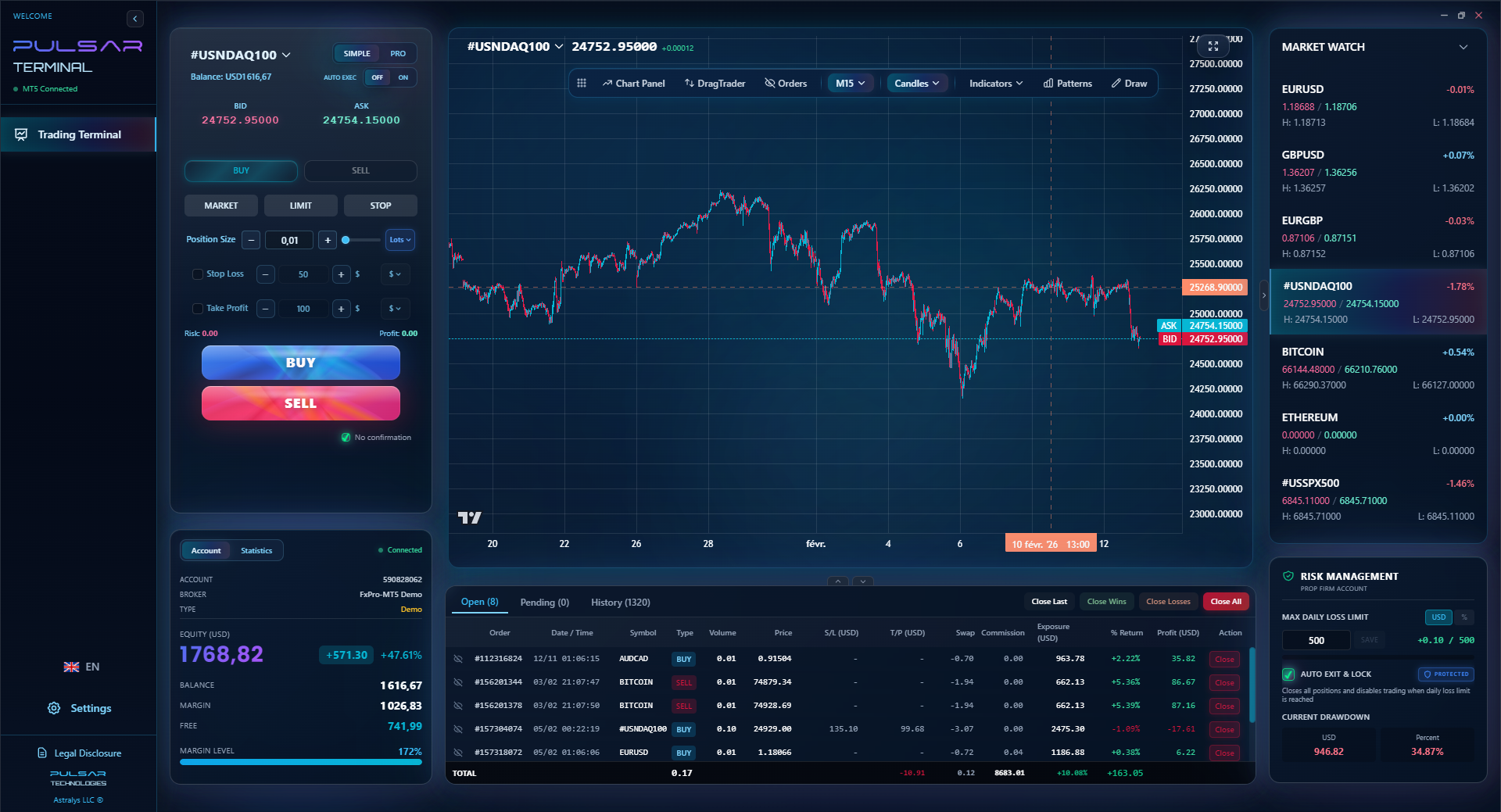
When managing complex trades across volatile markets, having precise control over your exits is non-negotiable, which is why tools like Pulsar Terminal that allow for multi-take-profit and trailing stop orders directly on MT5 are so valuable.
Pulsar Terminal
MT5 올인원 도구: 드래그앤드롭 주문, 다중 TP/SL, 트레일링 스톱, 그리드 트레이딩, 볼륨 프로파일, 프롭펌 보호. 매일 1,000명 이상의 트레이더가 사용.
“Never let the urgency to fund a trading idea override basic security. A missed trade is a missed opportunity. A scam is lost capital.”
Let's get tactical. Here is a step-by-step process I've refined over years of trading from Nigeria.
For Funding Your Account:
- Determine USD Need: Use your position size calculator and risk rules to decide how much capital you truly need in your trading account. Don't overfund 'just in case.'
- Source Relatively: Use a BDC or individual with a long-term physical location and references from people you trust. Relationships matter here.
- Verify Cash Meticiously: Check every note. Counterfeits are a real risk. Prefer newer series bills.
- Use Broker's Approved Methods: Deposit the physical USD into your local dollar account (if you have one), then use a card or electronic transfer to the broker. Or, some brokers accept third-party payment processors that may have local Naira options - but verify the final conversion rate and fees yourself.
For Withdrawing Profits:
- Have a Plan Before You Profit: Decide in advance what percentage of profits you will withdraw and what you'll compound in the account. I use a 50/50 rule: 50% withdrawn to realize gains in Naira, 50% left to grow the base account.
- Watch the Rate: Have a target parallel rate in mind for conversion. If the Naira weakens significantly (e.g., rate goes from ₦750 to ₦850), that's a strong signal to execute a withdrawal and convert.
- Reconvert Strategically: When you convert profits back to Naira, don't just spend it. Consider allocating a portion back into your 'trading fund' Naira account, ready for the next funding cycle when the rate might be better.
This isn't just trading, it's treasury management. The most successful Nigerian traders I know are experts at this dual-game.
💡 윈스턴의 팁
The day you feel clever trying to time the parallel market for a better rate is the day you get scammed. Stick to your trusted sources.
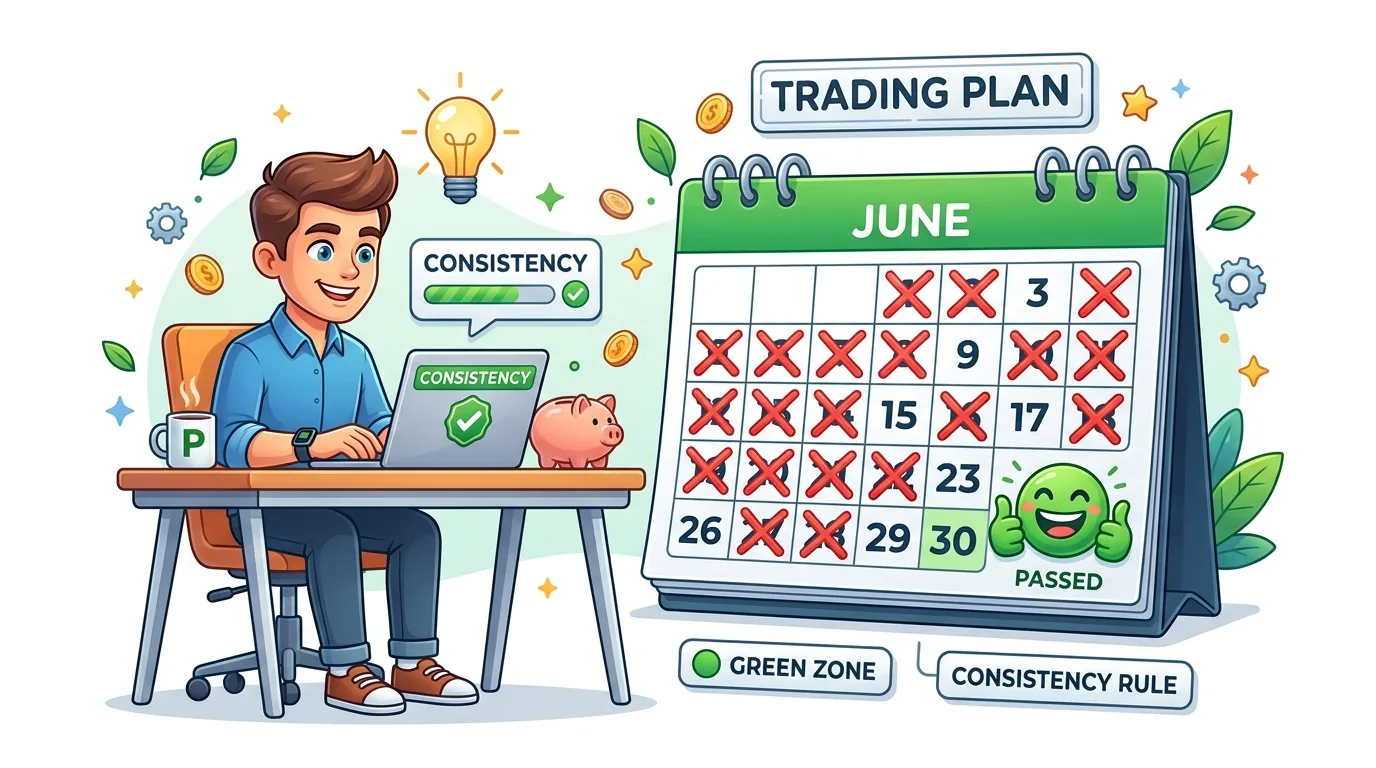
“Your greatest asset isn't a secret indicator, it's the forged-in-fire discipline that the aboki forex market demands.”
Surviving and thriving as a trader here requires a mindset shift. You're not just a forex trader, you're a currency arbitrageur and a risk manager for your own life savings.
Embrace the Volatility as Data: The widening gap between CBN and parallel rates isn't just noise, it's a signal of economic pressure. It can inform your broader market views. A crashing Naira might mean the Central Bank intervenes, impacting commodity pairs. I once caught a nice move on XAU/USD (gold) not from chart patterns, but from anticipating that Nigerian demand for safe-haven assets would increase during a period of intense Naira devaluation.
Focus on Absolute Dollar Returns: In your trading journal, track everything in USD. Your goal is to grow your dollar-denominated capital. Let the Naira value be a secondary calculation. This keeps your trading psychology clean and focused on the global market, not the local chaos.
Build Systems, Not Reactions: Automate what you can. Use stop-losses religiously to protect your dollar capital from market reversals. A margin call in your broker account because you didn't use a stop is a disaster made worse when you have to source new dollars at a worse rate to re-fund.
Finally, understand that your edge might come from this very hardship. The discipline you develop managing this complex environment can make you a more resilient, patient, and risk-aware trader than someone in a stable economy who takes easy funding for granted. Your greatest asset isn't a secret indicator, it's the forged-in-fire discipline that the aboki forex market demands every single day.

FAQ
Q1Is it illegal to use the aboki forex market?
Trading currency outside the official CBN window is against exchange control regulations. While the practice is widespread, it carries legal risk. The government periodically cracks down on parallel market operations. Your primary risk is financial (scams, robbery) and legal, not from the trading broker itself.
Q2Can I trade directly with an aboki?
No. An aboki or BDC is for physical currency exchange. They are not brokers for speculative forex trading on platforms like MT5. You use them to obtain foreign currency (USD), which you then deposit into your account with a regulated international forex broker.
Q3How do I know a good aboki forex rate?
Monitor reputable online platforms that aggregate parallel market rates from major hubs like Lagos and Abuja. These provide a benchmark. Never trust a rate that is dramatically better than this benchmark - it's almost certainly a scam. Remember, the rate differs for buying and selling dollars.
Q4Should I keep my trading profits in USD or convert to Naira?
A mix is safest. Convert a portion to Naira to realize profits and cover living expenses/business capital. Leave a portion in USD in your trading account to compound and act as a buffer against future Naira devaluation. This creates a personal currency hedge.
Q5What's the biggest mistake Nigerian traders make with aboki forex?
Funding their trading account with a large, one-time conversion when the Naira is strong (low parallel rate). They then watch their dollar capital shrink if the Naira weakens, putting psychological pressure on their trades and often leading to over-trading to 'make up' for the lost value on conversion.
Q6Can the CBN rate and parallel rate ever merge?
Policies aim for this, but sustained convergence is difficult due to structural demand issues. As a trader, you should operate on the assumption that a significant gap will persist. Basing your financial plans on a hypothetical unified rate is a strategic error.
윈스턴 교수의 수업
핵심 요약:
- ✓The parallel market premium is a hidden 20-30% tax on your capital.
- ✓Always calculate P&L using the parallel rate, never the CBN rate.
- ✓Use regulated international brokers for trading, not abokis.
- ✓Dollar-cost average your Naira-to-USD conversions over time.
- ✓Track the parallel rate as diligently as your main currency pair.
이 기사가 얼마나 유용했나요?
별을 클릭하여 평가
주간 트레이딩 인사이트
무료 주간 분석 & 전략. 스팸 없음.
저자 소개
Olumide Adeyemi
서아프리카 트레이딩 선구자
나이지리아에서 가장 활발한 외환 트레이딩 교육자 중 한 명. 라고스에서 8년간 트레이딩 경험. 아프리카 트레이더를 위한 소자본 전략과 프롭 펌 챌린지 전문.
댓글
위험 고지
금융 상품 거래에는 상당한 위험이 수반되며 모든 투자자에게 적합하지 않을 수 있습니다. 과거 성과가 미래 수익을 보장하지 않습니다. 이 콘텐츠는 교육 목적으로만 제공되며 투자 조언으로 간주되어서는 안 됩니다. 거래 전에 항상 직접 조사를 수행하십시오.
이 기사도 읽어보세요

Cara Trading Forex Sukses: 7 Prinsip dari Trader Profesional
Cara trading forex sukses dengan 7 prinsip trader pro: manajemen modal, disiplin, journal trading, backtest. Data nyata, bukan janji profit palsu.
Jam Trading Forex Terbaik untuk Trader Indonesia: Panduan Lengkap dengan Tabel Waktu
Panduan jam trading forex untuk trader Indonesia. Tabel 4 sesi dunia, jam emas 20:00-00:00, sesi mana yang harus dihindari. Data akurat + tips dari trader berpengalaman.
Top 5 Sàn Forex Uy Tín Nhất 2026: Review Jujur dari Trader Indonesia
Top 5 sàn forex uy tín 2026 untuk trader Indonesia. Review jujur: spread, deposit, withdraw, dukungan lokal. Exness, XM, IC Markets & lebih.
