


Most new traders in Nigeria think their account balance is the money they have to trade with.

Olumide Adeyemi
서아프리카 트레이딩 선구자 ·  Nigeria
☕ 9 분 소요
배울 내용:

Most new traders in Nigeria think their account balance is the money they have to trade with. They see a ₦500,000 deposit and start throwing around lots like a Big Boy at a Lagos club. That's a fast track to an empty account. Your balance is just a snapshot, a lie your broker tells you when the market is closed. The real number, the one that determines if you get a margin call and lose everything, is your equity. I'm going to set the record straight so you stop confusing the two and start protecting your capital.
Let's cut through the jargon. Your Balance is your net profit or loss from all closed trades. It's your historical scorecard. You deposit ₦200,000, make ₦50,000 on a closed trade, your balance is ₦250,000. Simple.
Your Equity is your real-time net worth. It's your balance plus the floating profit or loss from all your open trades. This is the number that matters every second the market is moving.
Here’s the trap: You look at your balance of ₦300,000 and feel rich. But you have three open trades that are currently down a combined ₦80,000. Your equity is actually ₦220,000. If your broker's margin requirement is based on equity (and it is), you're much closer to a margin call than you think.

Warning: Brokers don't margin call you based on your balance. They use your equity. Ignoring this is how you wake up to a closed account.
I learned this the hard way in 2017. I had a balance of $2,000 (roughly ₦720,000 at the time). I was short on GBP/JPY, feeling clever. The pair spiked 150 pips against me. My balance still said $2,000, but my equity had crashed to $1,200. I wasn't watching equity, only balance. The next spike triggered a margin call. Gone. Just like that. The balance was a comforting illusion.

💡 윈스턴의 팁
Your equity is your oxygen level in the market. If you don't know what it is right now, you're already suffocating.
For Nigerian traders, you need to think in your account currency, which is often USD, but let's make it real with Naira.
The Formula is Simple: Equity = Balance + Floating Profit (or – Floating Loss)
A Practical Lagos Example
Let's say Chinedu in Surulere has a USD account.
- Starting Balance: $1,000 (≈ ₦1,450,000)
- Open Trade 1: Buy EUR/USD. Currently +$50 profit.
- Open Trade 2: Sell XAU/USD (Gold). Currently -$120 loss.
Chinedu's Equity = $1,000 + $50 - $120 = $930 In Naira terms, that's roughly ₦1,348,500. His balance still shows ₦1.45M, but his actual usable capital is over ₦100,000 less.

Example: If Chinedu's broker requires 1% margin ($10 per mini lot), and he has 5 open lots, his used margin is $50. His Free Margin (Equity - Used Margin) is now $880. This free margin is what he has left to open new trades or absorb losses. If his floating loss grows so that his equity approaches his used margin, the alarm bells start ringing.
Always, always have your trading platform set to show the Equity column prominently. Don't make it a hidden metric you have to calculate. Your survival depends on seeing it.
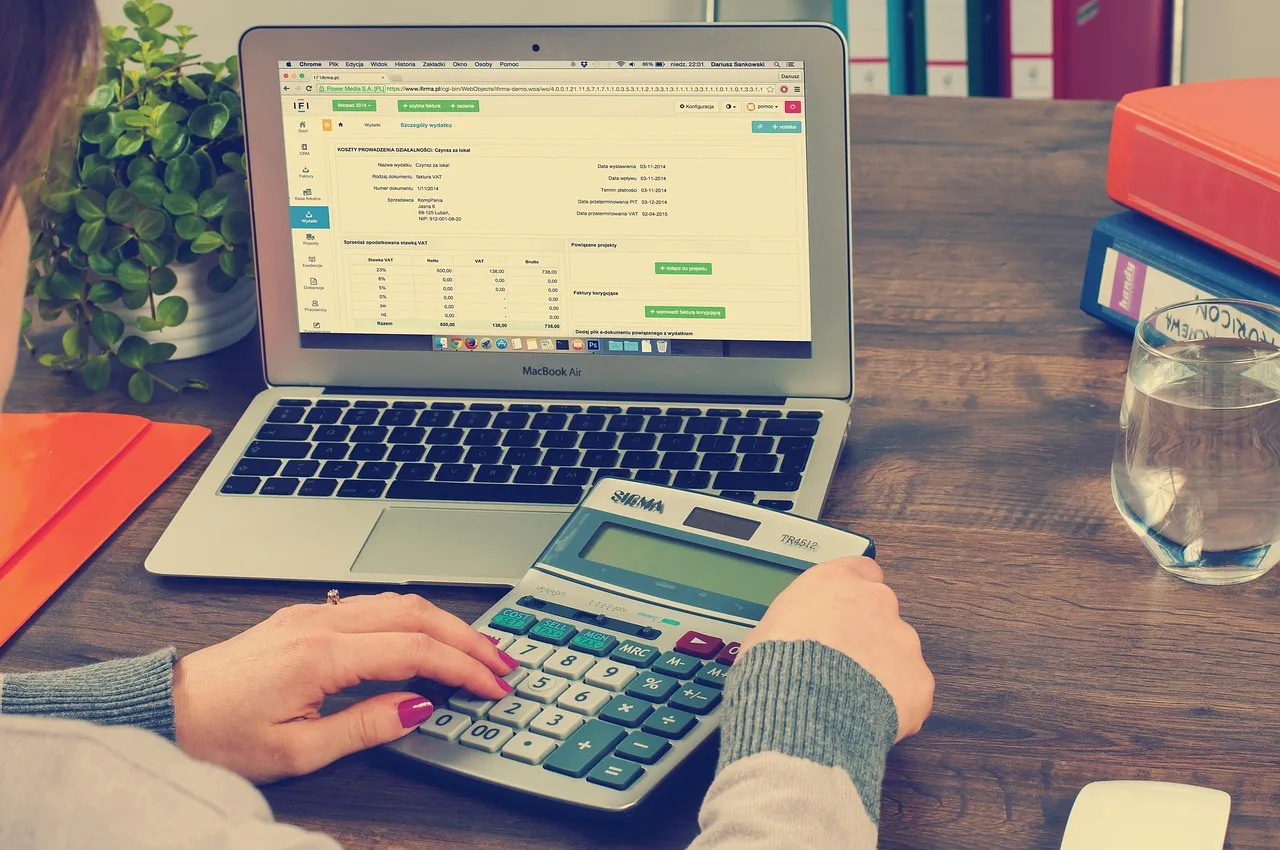
“Your balance is a comforting illusion. Your equity is the brutal truth.”
This is where the rubber meets the road. Your equity is the bedrock of your margin level.
Margin Level Formula: Margin Level = (Equity / Used Margin) x 100%
Brokers have specific thresholds. A common structure is:
- Margin Call Level (e.g., 100%): When your Equity equals your Used Margin. You get a warning. You can't open new positions, but existing ones remain open.
- Stop-Out Level (e.g., 50%): When your Equity falls to 50% of your Used Margin. The broker starts automatically closing your losing positions, starting with the biggest loser, until your margin level is back above the stop-out level. You don't get a choice.
Let's use a painful memory. I was testing a scalping strategy on EUR/JPY. Account: $5,000. Used margin on several trades: $1,000. My margin level was 500%. Safe, right? News hit, and my trades went south fast. I watched my equity plummet to $600. My margin level hit 60% ($600/$1000). Then it blew past the 50% stop-out. Bam. Platform automatically closed my biggest position at a massive loss. The equity was the trigger, not my stagnant balance.
Managing equity is managing your existence in the market. Tools like a good position size calculator are non-negotiable. They help ensure a few bad trades don't crater your equity.
That floating profit or loss attached to your equity is a psychological beast. Seeing a big floating profit can make you overconfident. Seeing a big floating loss can make you freeze or revenge trade.
Rule 1: A floating profit isn't yours until you close the trade. I've seen a ₦200,000 paper profit on gold turn into a ₦50,000 loss because I got greedy, didn't take partial profits, and didn't move my stop loss to breakeven.
Rule 2: A floating loss is a real loss to your equity and your risk capital. Pretending it isn't there is a form of self-deception. You must have a predefined point where you admit you're wrong - your stop loss.
Nigerian markets can be volatile around news like MPC meetings or oil price swings. If you're trading GBP/NGN or USD/NGN pairs (offered by some intl. brokers), the swings can be wild. Your equity will jump around. You need the discipline to not let a positive floating P&L change your entire risk plan for the day.

Pro Tip: Use the equity curve as a trading diary metric. If your equity is consistently making lower highs and lower lows over weeks, your strategy is broken. The balance might hide this if you have a few lucky wins, but the equity curve tells the brutal truth.
💡 윈스턴의 팁
A rising balance makes you feel smart. A rising equity curve makes you a professional. Focus on the curve.
“Brokers don't margin call you based on your balance. They use your equity. Ignoring this is how you wake up to a closed account.”
Theory is fine, but what do you actually do? Here’s a blunt plan.
1. The 2% Rule (On Equity, Not Balance!)
Never risk more than 2% of your current equity on a single trade. If your equity is ₦500,000, your max risk per trade is ₦10,000. If you take a loss and your equity drops to ₦480,000, your next trade's max risk drops to ₦9,600. This protects you from a death spiral.
2. The Equity Drawdown Limit
Set a hard weekly or monthly limit. Mine is 6%. If my equity drops 6% from its highest point in the period, I stop trading for the week. Full stop. Go watch Netflix. This prevents revenge trading after a few losses.
3. Use Technology
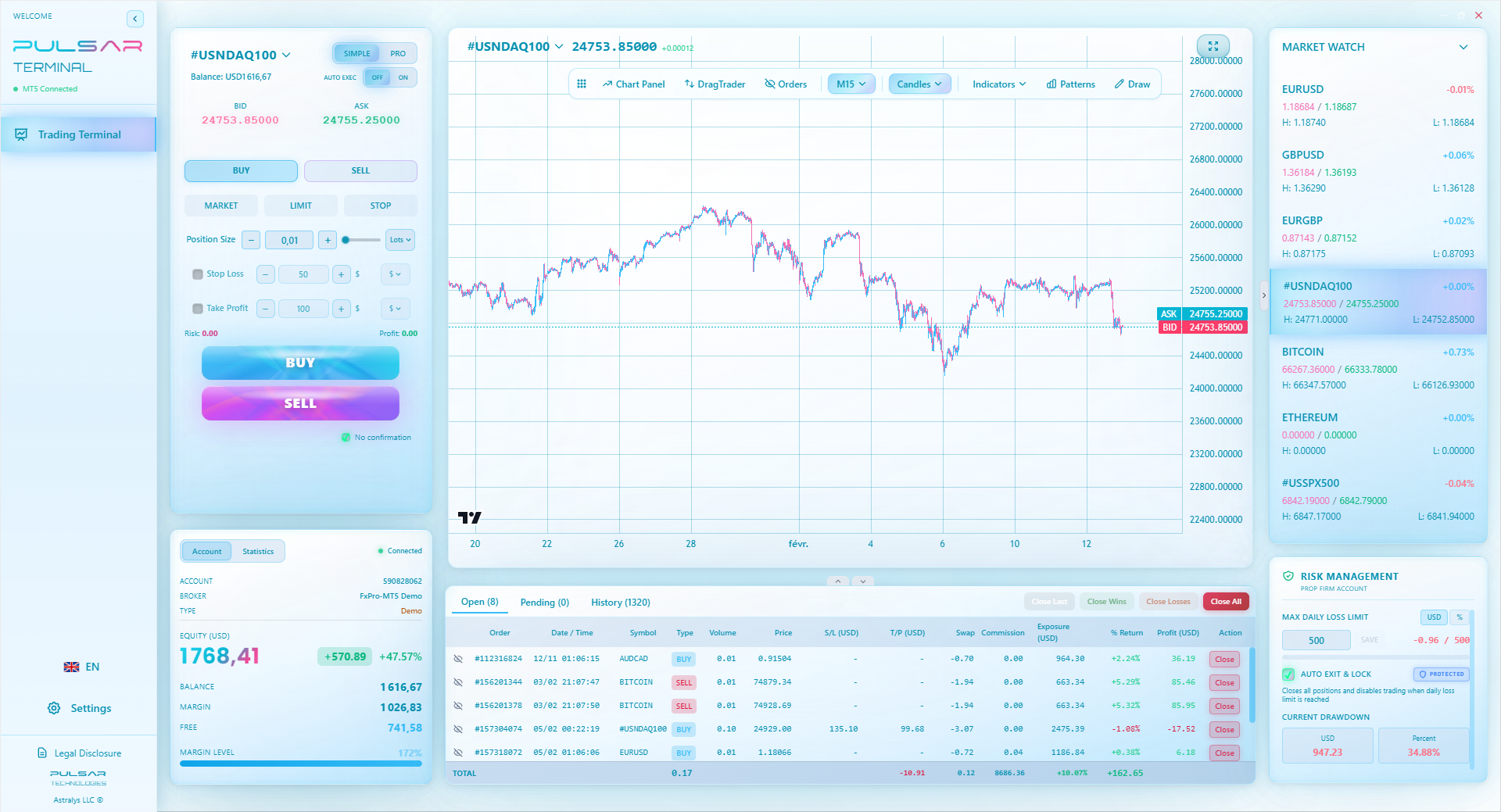
Modern tools aren't just for fancy charts. A platform like Pulsar Terminal for MT5 lets you set multi-level take-profits and trailing stops directly. Why is this an equity management tool? Because a trailing stop locks in profits as a trade moves in your favor, which directly raises your account equity and protects it from giving back gains. Automating this removes emotion.
4. Broker Choice Matters
Your broker's stop-out level is a key part of the equation. Some like IC Markets have a 50% stop-out, others like XM have 20%. A 20% stop-out gives you more cushion, but it also means you can lose more before they step in. Know your broker's rules inside out. Also, watch the spread on African pairs if you trade them; a wide spread instantly creates a floating loss the second you open a trade, hitting your equity.
Managing equity drawdown requires automating your exits, and Pulsar Terminal's trailing stop and breakeven functions do exactly that, locking in profits to protect your equity peak directly on your MT5 chart.
Pulsar Terminal
MT5 올인원 도구: 드래그앤드롭 주문, 다중 TP/SL, 트레일링 스톱, 그리드 트레이딩, 볼륨 프로파일, 프롭펌 보호. 매일 1,000명 이상의 트레이더가 사용.
Let me save you some pain and lost Naira.
Mistake 1: Adding to a Losing Position Because 'Balance is Still High'. This is the killer. Your equity is falling, but you see this big balance number and think you have ammunition. You're just throwing good money after bad and increasing your used margin, making a margin call more likely.
Mistake 2: Withdrawing Profits Based on Balance, Ignoring Open Trades. You close a trade, balance jumps. You withdraw the 'profit'. But you still have other trades open that are underwater. Your equity is now much lower, and your margin level is dangerously thin. You've effectively over-leveraged yourself.
Mistake 3: Not Monitoring Equity During High Volatility. During London/New York overlap or news events, your equity can swing 5-10% in minutes. If you're not watching, you can blow past your stop-out level before you can react. This is where a disciplined swing trading approach with wider stops, or simply staying out, is crucial.
Mistake 4: Confusing Equity with Free Margin. They're related but different. Free Margin = Equity - Used Margin. It's the cash available to open new trades. You can have positive equity but zero free margin if all your capital is tied up in margin for open trades. You're locked in until you close something.
“A floating profit isn't yours until you close the trade. A floating loss is a real loss to your equity right now.”
For those aiming at prop firm challenges, this gets even more critical. Prop firms don't just care about your final profit target. They have Daily Drawdown and Overall Drawdown rules that are almost always based on Starting Balance OR Highest Equity, whichever is higher.
Here’s the trick: Your 'highest equity' becomes your new benchmark. Let's say you start a $100,000 challenge. You make a great trade, and your equity peaks at $101,500. Your overall drawdown limit (often 10%) is now calculated from $101,500, not $100,000. So your floor is $91,350 ($101,500 - 10%).
But if you then lose money, and your equity drops to $99,000, your 'highest equity' is still recorded as $101,500. Your drawdown limit doesn't reset lower. This is a good thing - it gives you a buffer.
The lesson? In a prop challenge, pushing your equity higher early on creates a safety cushion. But it also means you must be fanatical about protecting that equity high water mark. A tool that can automate daily loss limits and track equity relative to this peak is useful for passing these challenges without staying glued to the screen 24/7.
💡 윈스턴의 팁
Prop firm challenges are won by managing equity drawdown, not by hitting home runs. Protect the peak.

FAQ
Q1Should I focus on my balance or equity when trading?
Focus on equity, 100%. Your balance is just a history book. Your equity is your real-time financial reality in the market. Every decision about opening/closing trades and risk management should be based on your current equity.
Q2Can my equity ever be less than zero?
With a standard retail broker offering negative balance protection (common with EU, UK, AU regulated brokers), no. Your equity and balance won't go below zero; you can't lose more than you deposited. However, with some offshore brokers or in extreme volatility, it's theoretically possible (but rare). Always check your broker's policy.
Q3How often should I check my equity?
If you have open positions, you should be aware of it constantly. You don't need to stare at it, but your trading platform should have it clearly visible. Before opening any new trade, check your equity to calculate your proper 1-2% risk.
Q4What is a good margin level to maintain?
Aim to keep it above 500% in normal conditions. This gives you a huge buffer against market moves. If your margin level consistently dips below 200%, you are over-leveraged and one bad move away from a margin call. It's a sign your position sizes are too big.
Q5Does equity include swap or commission fees?
Yes, but in real-time. Swap fees (overnight financing) are applied daily and directly reduce (or add to) your balance, which in turn affects equity. Commissions are deducted the moment a trade is closed, impacting your balance and thus the equity calculation for future trades.
Q6I'm from Nigeria, should I trade with a USD or Naira account?
This is a currency risk question. A USD account protects you from Naira depreciation but subjects you to USD/NGN volatility when depositing/withdrawing. A Naira account (if offered by an intl. broker) removes that but may have limited instruments. Most serious Nigerian traders I know use USD accounts with brokers like Pepperstone or Exness for access to global markets, and just factor in the bank transfer rates.
윈스턴 교수의 수업
핵심 요약:
- ✓Equity = Balance + Floating P&L. It's your real-time net worth.
- ✓Risk a maximum of 2% of your current equity per trade, not your balance.
- ✓Margin calls are triggered by equity falling to your broker's stop-out level.
- ✓In prop firms, drawdown is based on your highest equity, not your starting balance.
이 기사가 얼마나 유용했나요?
별을 클릭하여 평가
주간 트레이딩 인사이트
무료 주간 분석 & 전략. 스팸 없음.
저자 소개
Olumide Adeyemi
서아프리카 트레이딩 선구자
나이지리아에서 가장 활발한 외환 트레이딩 교육자 중 한 명. 라고스에서 8년간 트레이딩 경험. 아프리카 트레이더를 위한 소자본 전략과 프롭 펌 챌린지 전문.
댓글
위험 고지
금융 상품 거래에는 상당한 위험이 수반되며 모든 투자자에게 적합하지 않을 수 있습니다. 과거 성과가 미래 수익을 보장하지 않습니다. 이 콘텐츠는 교육 목적으로만 제공되며 투자 조언으로 간주되어서는 안 됩니다. 거래 전에 항상 직접 조사를 수행하십시오.
이 기사도 읽어보세요

Cara Trading Forex Sukses: 7 Prinsip dari Trader Profesional
Cara trading forex sukses dengan 7 prinsip trader pro: manajemen modal, disiplin, journal trading, backtest. Data nyata, bukan janji profit palsu.
Jam Trading Forex Terbaik untuk Trader Indonesia: Panduan Lengkap dengan Tabel Waktu
Panduan jam trading forex untuk trader Indonesia. Tabel 4 sesi dunia, jam emas 20:00-00:00, sesi mana yang harus dihindari. Data akurat + tips dari trader berpengalaman.
Top 5 Sàn Forex Uy Tín Nhất 2026: Review Jujur dari Trader Indonesia
Top 5 sàn forex uy tín 2026 untuk trader Indonesia. Review jujur: spread, deposit, withdraw, dukungan lokal. Exness, XM, IC Markets & lebih.
