


If you think checking GT Bank forex rates is the first step to funding your trading account, I need you to stop right there.

Olumide Adeyemi
서아프리카 트레이딩 선구자 ·  Nigeria
☕ 10 분 소요
배울 내용:
- 1What Are GTBank Forex Rates, Really?
- 2How GTBank (And Other Banks) Set Their Rates
- 3When Should You Actually Buy Forex from GTBank?
- 4Smarter Ways to Fund Your Trading Account
- 5How to Monitor Rates Like a Pro (Not Just Refreshing Your App)
- 6Common Pitfalls and Costly Mistakes
- 7Your GTBank Forex Questions, Answered

If you think checking GT Bank forex rates is the first step to funding your trading account, I need you to stop right there. I've watched too many new traders in Lagos and Abuja get excited about a potential setup, rush to their banking app, see the rate, and have all their profit calculations blown to bits. The truth is, the rate you see on your GTBank app isn't the 'market' rate. It's a retail price with a hefty markup. This guide isn't about bashing the banks - they provide a necessary service. It's about understanding exactly what you're paying for, timing your transactions like a pro, and knowing when to use a completely different path to get money into your broker.
Let's clear this up first. When you open your GTBank app and see 'USD/NGN Buy: 1500, Sell: 1520', you're not looking at the interbank rate. You're looking at GTBank's retail exchange rate for customers. This is the price at which the bank will sell you US Dollars (or other currencies) from their own inventory, or buy them from you.
The key thing to understand is the spread - the difference between their buy and sell price. That spread is their profit margin and covers their costs and risk. For major pairs like USD/NGN, this spread can be significant. On a day when the international market might be moving within a 10 Naira range, the bank's buy/sell spread alone could be 20 Naira or more. That's your immediate cost.

Warning: Never, ever use the GTBank forex rate to calculate potential trading profits on a 0.01 lot EUR/USD trade. You're mixing two completely different financial ecosystems. The rate on your broker's platform (like Exness or IC Markets) is the real, live interbank rate. The bank's rate is for physical/electronic currency conversion.
I learned this the hard way early on. I saw GBP/USD forming a beautiful pin bar on the daily chart. I calculated my position size, risk, and potential reward based on my broker's price. Then I went to see how much Naira I needed to deposit. The difference between my broker's quoted GBP rate and GTBank's sell rate for Pounds was a gut punch. It added an instant 2% 'fee' to my deposit before I'd even placed a trade.
It's not a mystery, but it's also not as simple as 'CBN rate + 5%'. Banks consider a cocktail of factors, and knowing them helps you predict movements.
The Central Bank of Nigeria (CBN) Official Rate
This is the anchor. While the market has liberalized, the CBN's official rate for certain transactions (and its FX policy announcements) sets a directional tone. Banks use this as a primary benchmark.
The I&E Window Rate
The Investors' and Exporters' FX Window is where the real market-driven price is discovered. Banks actively participate here to source dollars. The weighted average rate from this window is a crucial input for their own retail pricing. If demand surges at the I&E window, retail rates at GTBank will climb.
Internal Liquidity & Demand
This is the big one. If GTBank has a surplus of dollars and customers are buying Naira, their sell rate for USD might be more competitive to offload dollars. If they're short on dollars and every corporate client is trying to make payments, their buy rate for USD will be high, and they'll charge a premium to sell. I've noticed rates often get less favorable (for buying USD) on Fridays and just before major holidays when import demand spikes.
Operational Mark-up & Profit
Finally, they add their spread. This isn't evil; it's business. They have costs, they hold currency risk overnight, and they need to make a profit. The size of this mark-up can fluctuate based on their risk appetite and competition.

Example: Let's say the weighted average rate at the I&E window is ₦1,480/$1. GTBank, after accounting for its liquidity position and target profit, might set its retail rates as:
- Sell USD to Customer: ₦1,505/$1 (They sell high)
- Buy USD from Customer: ₦1,465/$1 (They buy low) That's a ₦40 spread. To buy $100, you pay ₦150,500. If you turned around and sold it back immediately, you'd only get ₦146,500. You just lost ₦4,000 on the round trip.

💡 윈스턴의 팁
A trader once told me he made 5% on a trade but lost 7% on the currency conversion. Your profit calculation isn't complete until it's back in your local currency, net of all fees.
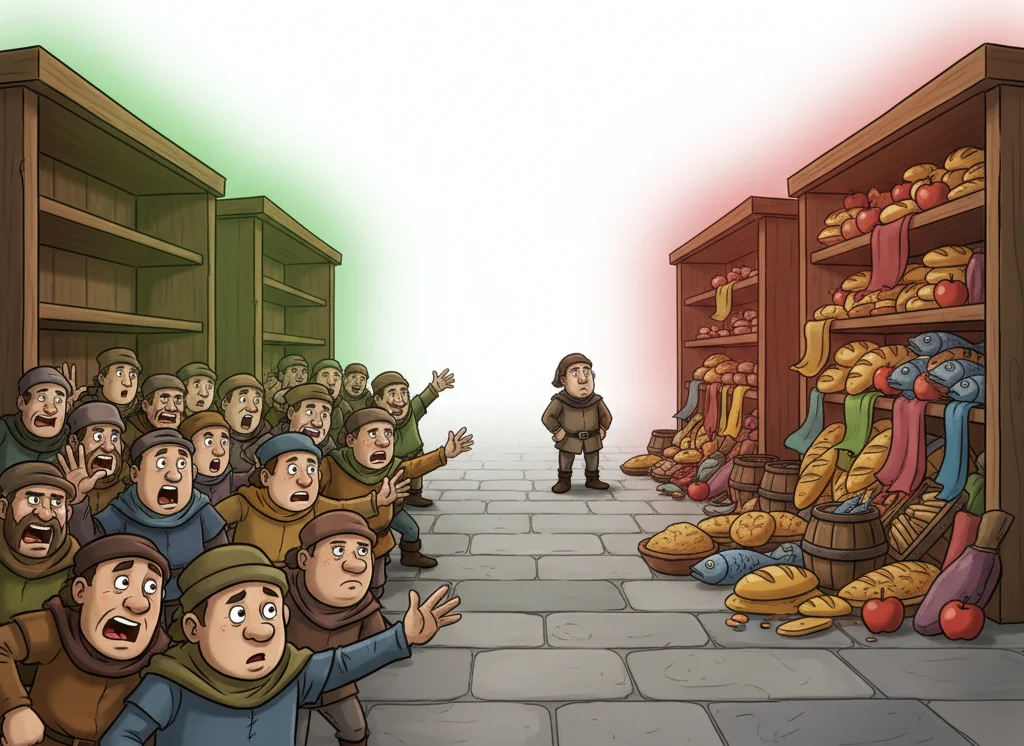
“The rate on your GTBank app isn't the 'market' rate. It's a retail price with a hefty markup.”
For trading purposes, the answer is 'less often than you think.' But there are legitimate use cases.
Use GTBank Forex for:
- Personal Transactions: Paying for international school fees, medical bills, or subscriptions where you need to send dollars directly from your Nigerian account.
- Business Payments: Legitimate business import payments where the beneficiary requires a wire transfer from a Nigerian bank.
- Travel Allowance: When you need physical cash or a travel card for a trip abroad (PTA/BTA).
Do NOT use GTBank Forex as your primary method to fund a retail forex brokerage account. The double conversion kills you: Naira -> USD at GTBank's high rate, then USD sent to broker. When you withdraw, broker sends USD, bank converts to Naira at their low buy rate. The spread eats you alive. I made this mistake twice in 2018, and it wiped out the gains from three decent swing trades.
Timing matters even for legitimate purchases. Rates can be more volatile early Monday (reacting to weekend news) and late Friday. Mid-week, especially Wednesday afternoon, has sometimes shown slightly calmer, less aggressive pricing in my experience. Always check the rate in your app, but don't expect massive differences hour-to-hour unless there's major news.
This is the secret sauce for Nigerian traders. You must separate 'getting local currency to a broker' from 'buying forex from a bank.'
1. Local Payment Processors (The Game Changer): Brokers like Exness, XM, and Pepperstone offer deposits via local Nigerian debit/credit cards (Mastercard, Visa) and bank transfers in Naira. The broker's payment processor handles the conversion at a rate that is almost always significantly better than your bank's retail rate. You deposit Naira, your trading account is credited in USD or EUR, but the effective exchange rate you get is far superior. This is the number one method I recommend.
2. Cryptocurrency Transfers: Buy USDT (Tether) with Naira on a local peer-to-peer (P2P) platform. Send the USDT directly to a broker that accepts crypto deposits. This method often provides the best effective exchange rate and is very fast. The volatility risk is minimal if you buy and transfer USDT quickly. It bypasses the traditional banking system entirely.
3. Direct Broker USD Transfers (For Larger Amounts): If you must wire USD, consider using a fintech or bureau de change that offers better rates than bank retail for larger sums ($5,000+). Then do a SWIFT transfer. This is more for seasoned traders with larger capital. For most, options 1 and 2 are king.
Using a position size calculator is useless if your funding cost is 3% higher than you planned. Always factor in the true cost of getting your capital onto the platform.
“Your trading edge is in the markets, not in micro-optimizing your deposit rate.”
Stop obsessively refreshing your banking app. To understand where GT Bank forex rates might head, you need to look at the source.
1. Follow the I&E Window: Financial news sites like Nairametrics and BusinessDay publish the closing rates and turnover from the I&E (NAFEX) window. This is your primary leading indicator. A rising I&E rate means retail bank rates will follow.
2. CBN Announcements & Circulars: The CBN website is dry but crucial. A new circular on domiciliary account rules or intervention sales can move the market. Set up Google Alerts for 'CBN FX'.
3. Market Sentiment Gauges: Listen to the chatter. Are manufacturers complaining about dollar scarcity? Is there pressure on the Naira from falling oil prices? This fundamental pressure eventually feeds into the official and parallel markets, which banks are acutely aware of.
4. Your Broker's Deposit Rate: This is your practical benchmark. Check the effective rate you get when you initiate a Naira deposit on your broker's platform. Compare that to GTBank's sell rate. That difference is your 'savings' from using the smarter method. I keep a simple spreadsheet noting the GTBank sell rate and my broker's effective rate on the day I deposit. The gap is consistently 1.5% to 3.5% in favor of the broker's channel.
This monitoring isn't for daily trading, but for managing your capital. If you see sustained pressure on the Naira, it might be a signal to fund your account sooner rather than later if you have the capital ready.
💡 윈스턴의 팁
The most expensive trade is often the one you never take because you were waiting for a 'better' bank rate. Fund your account efficiently, then focus on your market edge.

Let me save you some money and frustration.
Mistake 1: Assuming Bank Rates are for Trading. This is the cardinal sin. The spread on GTBank's USD/NGN is larger than the entire daily range of something like EUR/CHF. They are different instruments for different purposes.
Mistake 2: Chasing the 'Best' Rate. You might spend days waiting for the rate to drop 5 Naira, missing a perfect market setup that could have made 50 pips on EUR/USD. Your trading edge is in the markets, not in micro-optimizing your deposit rate beyond a reasonable point.
Mistake 3: Using Domiciliary Account for Active Trading. Funding a domiciliary account at a bank's poor rate, then transferring to a broker, adds an unnecessary step and cost. Go direct from your Naira account to the broker via their local channels.
Mistake 4: Not Accounting for the Total Cost. You buy USD at ₦1,510. Your trade makes 2%. You withdraw $1,020. The bank buys it at ₦1,490. Your effective return in Naira is gutted. Always think in terms of round-trip cost.
Mistake 5: Panic Buying Forex. When there's a currency crisis headline, everyone rushes to buy dollars from banks, which drives their rates up further. Have a steady, planned capital allocation strategy for your trading account. Don't let FX news trigger emotional deposit decisions.
Just as you need the right tools to manage FX conversion costs, you need the right tools to manage your trades; Pulsar Terminal's drag-and-drop orders and multi-TP/SL features let you execute complex trade plans on MT5 instantly, so you can focus on the market, not your mouse.
Pulsar Terminal
MT5 올인원 도구: 드래그앤드롭 주문, 다중 TP/SL, 트레일링 스톱, 그리드 트레이딩, 볼륨 프로파일, 프롭펌 보호. 매일 1,000명 이상의 트레이더가 사용.
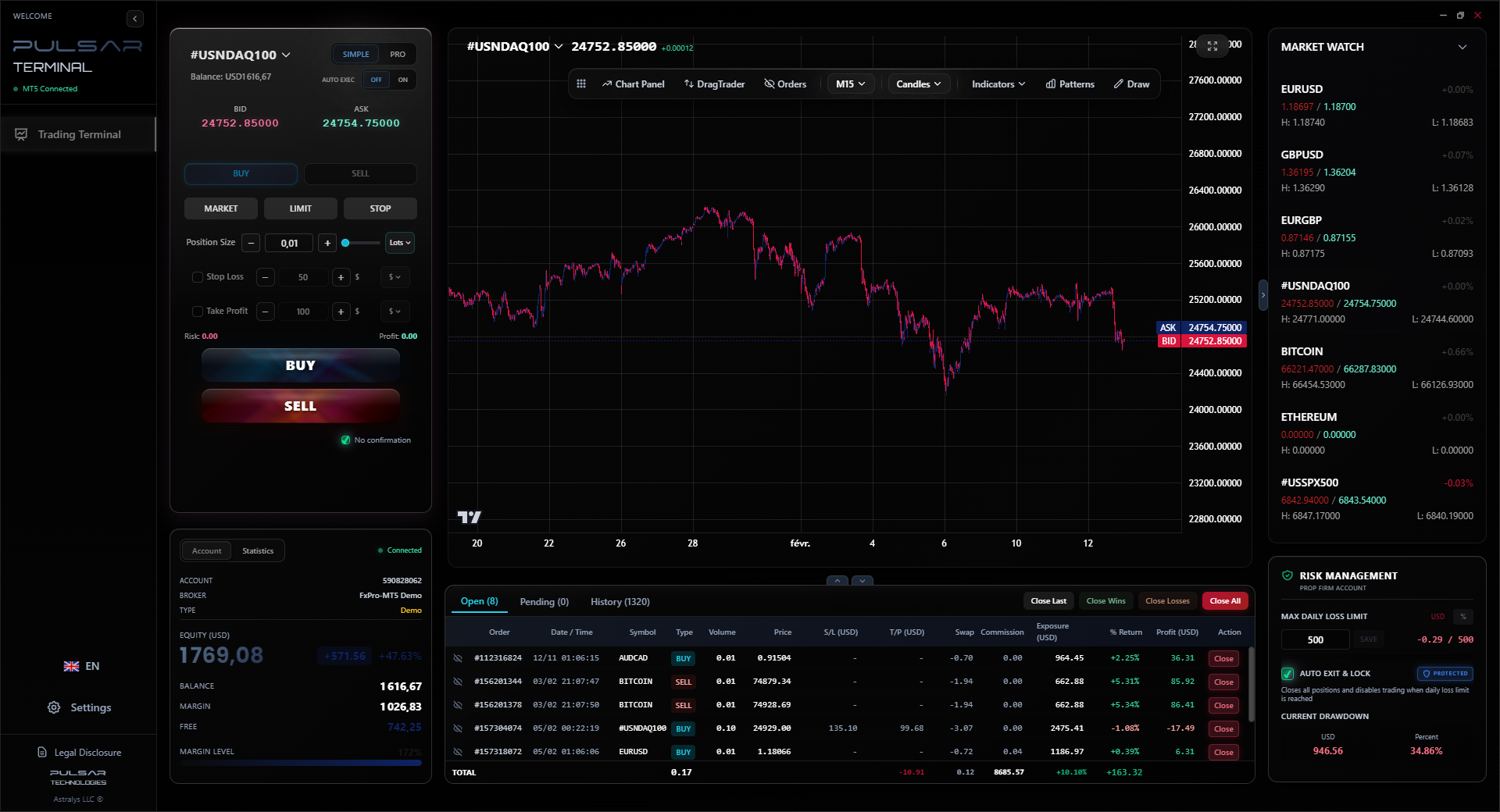
“Always think in terms of round-trip cost: the rate to get in, and the rate to get out.”
Q: Can I use my GTBank domiciliary account with my forex broker? A: Technically, yes. You can wire USD from it. But you first had to fund that domiciliary account, likely at GTBank's retail rate. It's an expensive middleman. Direct Naira funding to your broker is almost always cheaper.
Q: Why is the difference between the bank's buy and sell rate so large? A: That's the spread. It covers their operational cost, currency risk (they have to hold that dollar inventory), and profit. It's the core of their FX retail business. In volatile times like we've seen, this spread widens to compensate for increased risk.
Q: Are GTBank forex rates the same in all branches? A: For standard retail transactions, the rates are typically centralized and the same across digital platforms (app, internet banking). There's no point branch-hopping.
Q: Is it illegal to use other methods like crypto to fund my account? A: Using licensed, recognized crypto P2P platforms to buy USDT is a legal activity in Nigeria. Sending that USDT to an international broker that accepts it is a transaction between you and the broker. Always use your own verified accounts and comply with your broker's terms.
Q: How often do the rates change? A: Multiple times a day based on the factors we discussed (I&E window, liquidity, demand). They can be static for hours, then move 10 Naira in 10 minutes if there's a market-moving event.
FAQ
Q1What is the difference between GTBank's forex rate and the rate on my trading platform?
GTBank's rate is a retail price for converting physical/electronic Naira to foreign currency for personal or business use. The rate on your trading platform (like MetaTrader) is the live interbank rate for trading currency pairs. They are completely different markets with different spreads. The bank's spread is often 100x larger.
Q2What's the cheapest way to fund my international forex broker account from Nigeria?
The cheapest way is usually through your broker's local deposit option in Naira (debit/credit card or bank transfer). Their payment processor gives a much better effective exchange rate than any Nigerian bank's retail forex window. The second cheapest is often via cryptocurrency (USDT) transfer.
Q3Can I trade based on movements in GTBank's forex rates?
No. The movements are too slow, too large, and based on local retail liquidity, not global macro trends. You'd be 'trading' a derived, lagging product. Your analysis should focus on the actual instruments (like XAU/USD or EUR/USD) on your broker's platform, using proper technical and fundamental analysis.
Q4Why does the rate sometimes disappear or say 'unavailable' on the GTBank app?
This usually happens during periods of extreme volatility or dollar scarcity. The bank may temporarily suspend rate quoting because the underlying market (I&E window) is illiquid or moving too fast, making it risky for them to offer a firm price. It's a sign of market stress.
Q5Should I keep my trading profits in USD or convert to Naira?
This is a personal financial decision. If you believe the Naira will strengthen, convert. If you believe it will weaken or you plan to reinvest in USD-denominated assets/trades, keep it in USD. Many traders keep capital in USD for future trading and only convert to Naira what they need for living expenses, to avoid constant conversion costs.
Q6Are there limits on how much forex I can buy from GTBank?
Yes. For Personal Travel Allowance (PTA) and Business Travel Allowance (BTA), there are specific limits set by CBN guidelines. For other purposes like tuition or medicals, you need to provide valid documentation, and the bank's compliance department will approve based on CBN regulations. There's no 'unlimited' retail forex purchase.
윈스턴 교수의 수업
핵심 요약:
- ✓Bank retail FX spreads are for conversions, not trading calculations.
- ✓Local broker deposits often give a 1.5-3.5% better rate than banks.
- ✓Monitor the I&E window rate to predict retail bank FX moves.
- ✓Factor in the total round-trip cost of funding and withdrawal.
이 기사가 얼마나 유용했나요?
별을 클릭하여 평가
주간 트레이딩 인사이트
무료 주간 분석 & 전략. 스팸 없음.
저자 소개
Olumide Adeyemi
서아프리카 트레이딩 선구자
나이지리아에서 가장 활발한 외환 트레이딩 교육자 중 한 명. 라고스에서 8년간 트레이딩 경험. 아프리카 트레이더를 위한 소자본 전략과 프롭 펌 챌린지 전문.
댓글
위험 고지
금융 상품 거래에는 상당한 위험이 수반되며 모든 투자자에게 적합하지 않을 수 있습니다. 과거 성과가 미래 수익을 보장하지 않습니다. 이 콘텐츠는 교육 목적으로만 제공되며 투자 조언으로 간주되어서는 안 됩니다. 거래 전에 항상 직접 조사를 수행하십시오.
이 기사도 읽어보세요

Cara Trading Forex Sukses: 7 Prinsip dari Trader Profesional
Cara trading forex sukses dengan 7 prinsip trader pro: manajemen modal, disiplin, journal trading, backtest. Data nyata, bukan janji profit palsu.
Jam Trading Forex Terbaik untuk Trader Indonesia: Panduan Lengkap dengan Tabel Waktu
Panduan jam trading forex untuk trader Indonesia. Tabel 4 sesi dunia, jam emas 20:00-00:00, sesi mana yang harus dihindari. Data akurat + tips dari trader berpengalaman.
Top 5 Sàn Forex Uy Tín Nhất 2026: Review Jujur dari Trader Indonesia
Top 5 sàn forex uy tín 2026 untuk trader Indonesia. Review jujur: spread, deposit, withdraw, dukungan lokal. Exness, XM, IC Markets & lebih.
