


Most traders who follow Reuters forex news are doing it wrong.

Olumide Adeyemi
서아프리카 트레이딩 선구자 ·  Nigeria
☕ 12 분 소요
배울 내용:
- 1Why Reuters (Not Twitter) is Your Source for Naira Moves
- 2Filtering the Noise: What to Actually Read
- 3The Art of Timing: Don't Buy the Rumor, Sell the Fact
- 4Case Study: Trading a CBN Policy Shift
- 5Your Tools & Broker Matter More Than You Think
- 6The Psychology: Fighting FOMO and Confirmation Bias
- 7Specific Mistakes Nigerian Traders Make (And How to Avoid Them)
- 8Putting It All Together: Your Weekly News Routine
Most traders who follow Reuters forex news are doing it wrong. They're not trading the news, they're gambling on headlines. I've watched traders in Lagos blow accounts because they saw 'CBN' and 'dollar' in the same sentence and slammed the buy button on USD/NGN. This guide isn't about reading the news. It's about dissecting it, timing it, and using it to place asymmetric bets where your risk is tiny and your potential reward is huge. I'll show you exactly how, using the Nigerian market as our case study.
In Nigeria, the forex market doesn't just react to charts. It convulses based on policy whispers from the CBN, statements from the Finance Minister, and data on external reserves. Social media is a swamp of speculation and 'guru' predictions. Reuters, for all its dry tone, is often the first to get the official word. Their journalists have direct lines to the sources that matter. When they report that portfolio inflows hit -14% in 2024, that's not a rumor. It's a hard number that tells you foreign investors were pulling out. That pressure directly feeds into the Naira's value. I learned this the hard way early on. I was short USD/NGN based on a technical setup, ignoring the steady drumbeat of Reuters reports about dwindling reserves. When the CBN finally moved, the pair gapped up 5% overnight. My stop-loss was obliterated. That was a $2,000 lesson: in Nigeria, the chart is secondary to the policy narrative. Reuters helps you build that narrative.

Warning: Never trade a major CBN policy announcement based on a single headline. Wait for the full statement. The initial report might only have half the story, and the market's first reaction is often wrong.
The Two Types of News That Move Markets
You need to separate the wheat from the chaff. There are two categories:
- Scheduled Events: These are on the calendar. Monetary Policy Committee (MPC) meeting dates, inflation data releases, and external reserve updates. You can prepare for these. You know when they're coming.
- Unscheduled Bombshells: This is where Reuters earns its keep. A sudden report on the CBN merging exchange rates, or an exclusive interview with the Governor hinting at a devaluation. These create volatility spikes that can make or break you in minutes. Having a position size calculator open and ready for these moments is non-negotiable.
You don't need to read every article. You need a system. Here's mine, honed over a decade of scanning headlines while my coffee gets cold.
First, I set up alerts for specific keywords on the Reuters terminal or their financial news feed. My list for Nigeria: CBN, Naira, MPC, Cardoso (the Governor), External Reserves, FX backlog, BDC. This filters out 90% of the irrelevant global noise.
Second, I assess the source within the source. A report citing 'a senior banking source' or 'a document seen by Reuters' carries more weight than a piece summarizing a publicly known speech. The former is new information leaking into the market.
Third, and most critically, I look for numbers I can compare. When Reuters reported Nigeria's reserves grew to over $43 billion in 2025, I didn't just see a big number. I pulled up the old report showing $37.9 billion in July 2024. That's a trend. A strengthening reserve position can signal the CBN has more firepower to defend the Naira, which might cap USD/NGN rallies. This is fundamental analysis, not headline chasing. It's the difference between a trader and a gambler.
Let me give you a real example. In late 2024, Reuters had a piece detailing the new rules for BDCs, specifically the $150,000 weekly purchase limit. On the surface, it's just regulatory news. But the signal was in the detail: "Any FX acquired must be sold or used within 24 hours." This was designed to stop hoarding and speculation at the BDC level. I interpreted this as a CBN move to increase dollar liquidity in the short-term window, potentially causing a temporary dip in the black-market premium. It wasn't a trade on the spot Naira pair directly, but it informed my view on market sentiment.

💡 윈스턴의 팁
The first headline is for the amateurs. The second, corrected headline 20 minutes later is where the professionals trade. Patience isn't a virtue here; it's a profit center.
“In Nigeria, the chart is secondary to the policy narrative. Reuters helps you build that narrative.”
This is the oldest adage in the book, and Nigerian traders violate it constantly. The pattern is predictable: a rumor swirls for days (often on WhatsApp), the Naira weakens in the parallel market. Then, Reuters publishes the official confirmation from the CBN. And what happens? The Naira often stabilizes or even strengthens briefly. Why? Because the uncertainty is removed. All the weak hands who sold on the rumor have already sold. The news is 'priced in.'
Your job is to anticipate this sequence. I use a simple two-step checklist:
- Has this been rumored for more than 48 hours? If yes, the initial market move has likely happened. The Reuters confirmation is the end of the move, not the start.
- What is the actual data vs. expectations? This is key for scheduled news. If Reuters flashes that inflation came in at 28.5% but the market consensus was 30%, that's a lower number. That could be seen as positive for the Naira, even though 28.5% is objectively high. I got caught on the wrong side of this with US CPI data early in my career. The number was high, but not as high as feared, and the dollar sold off. I was long. It hurt.
For unscheduled news, the move is violent and fast. You have two choices: be positioned ahead of time based on a broader thesis (which is high risk), or wait for the initial spike and look for a failed retest. I prefer the latter. When news breaks, liquidity evaporates and spreads widen. Your broker's spread definition becomes very real as it balloons to 50 pips or more. Entering at market in that chaos is a great way to get a terrible fill. I wait 15-30 minutes for the institutional machines to do their thing and for a clear price level to establish itself.
Let's walk through a hypothetical but very realistic scenario using the data we have.
The Setup: It's 2025. USD/NGN has been trading in a range between ₦1,200 and ₦1,400. Reuters has been publishing pieces about rising external reserves ($43bn) and increased FDI ($1.5bn). The tone is cautiously optimistic.
The News: A Reuters exclusive hits: "CBN sources say MPC considering 100bps rate hike at next meeting to curb inflation, attract portfolio flows."
The Trader's Log:
- Immediate Reaction (Rumor Phase): The Naira might strengthen instantly. Don't chase. The spread is wild.
- My Analysis: A 100bps (1%) hike would bring the policy rate to, say, 19%. This aims to make Naira assets more attractive. Higher rates can strengthen a currency. My thesis: potential Naira strength.
- My Trade Plan: I will not buy Naira now. I will wait for the official announcement after the MPC meeting.
- The Event: The MPC announces a 150bps hike - more than the Reuters leak.
- The Trade: This is the 'sell the fact' moment. The initial spike in Naira strength (from the rumor) might see profit-taking. I look for USD/NGN to dip but then find support. I enter a long USD/NGN position on a bullish reversal pattern (like a hammer candle on the hourly chart) after the announcement, with a tight stop-loss below the day's low. Why long? Because sometimes the market views an aggressive hike as a sign of desperation, not strength. It's a contrarian play on the 'news sell-off.'
- Risk Management: My position size is 1% of my account. My stop-loss is 50 pips away. My risk is 0.5% of my account. I'm aiming for a 2:1 reward-to-risk ratio (100 pip target).
This isn't about being right on the direction. It's about having a logical plan based on the news flow and managing my risk precisely. The Reuters forex news gave me the context, but my entry was technical, and my survival was based on position sizing.
“Your emotions are useless during news events. Your plan is everything.”
Trading news in Nigeria comes with unique challenges. Your internet might flicker. Power might go. You need a broker that won't fail you when volatility is highest.
Broker Non-Negotiables for News Trading:
- Execution Speed & Slippage: During CBN news, prices jump. A broker with slow execution will give you horrific slippage. I've had entries filled 30 pips away from my click with a bad broker. It's theft.
- Spreads on Major & Exotic Pairs: You might trade USD/NGN, but also watch EUR/USD for global risk sentiment. Know your broker's typical and worst-case spreads.
| Broker | EUR/USD Spread (Standard) | Min. Deposit | Key Point for Nigerians |
|---|---|---|---|
| Exness | 0.1-0.2 pips (Raw) | $10 | Very low spreads, popular locally. Our full review. |
| XM | ~1.0 pip | $5 | Good for smaller accounts, offers local deposit. |
| IC Markets | 0.0 pips + commission | $200 | Raw spread model, excellent execution. Our take. |
| Pepperstone | 0.0 pips + commission | $0 | Top-tier execution, great platform. See review. |
Your Toolkit:
- An Economic Calendar: Mark all MPC dates, inflation data releases.
- A Reliable News Feed: Reuters Eikon, or a reputable financial site that aggregates Reuters feeds.
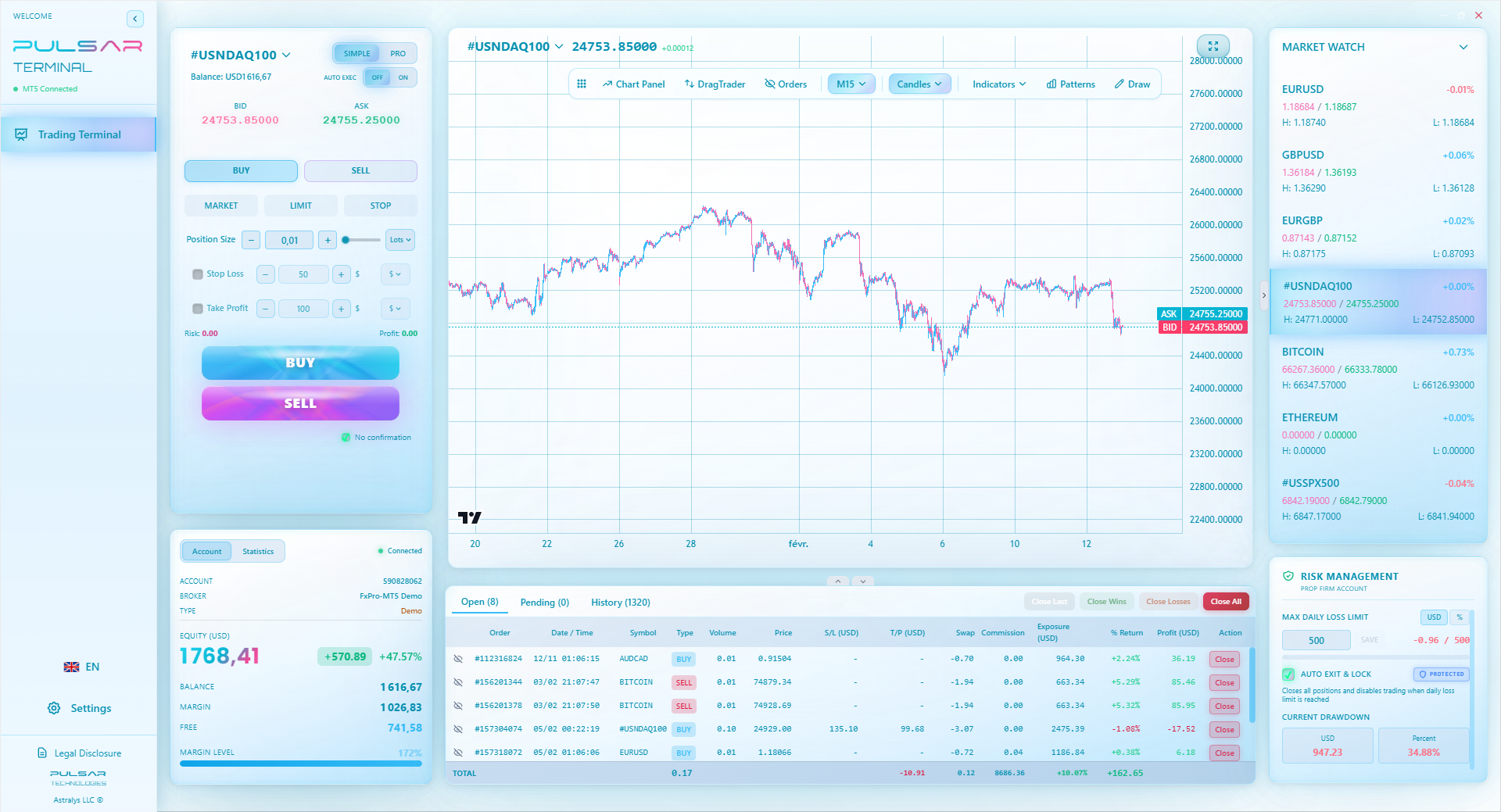
- A Platform with Instant Order Execution: You need Market, Stop, and Limit orders at your fingertips. This is where a tool like Pulsar Terminal changes the game for MT5 users. Manually moving a stop-loss to breakeven while three news headlines are flashing is a sure way to make a mistake.
💡 윈스턴의 팁
If your heart rate increases while reading a news flash, you are not ready to trade it. Your trade plan should be so mechanical that excitement is irrelevant.
This is where accounts die. You read a Reuters headline that aligns perfectly with your existing bias. You feel smart. You feel validated. You add to your position, ignoring that the market has already moved 80% of the expected distance. That's confirmation bias, and it makes you reckless.
Then there's FOMO (Fear Of Missing Out). You see USD/NGN ripping higher after a news blast. You panic, you buy at the top, and then it reverses. You're now holding a bag of losses. I've been there. In 2020, I FOMO-bought Bitcoin after a major news breakout. I was up 10% in an hour, felt like a genius, then rode it all the way back down to a 15% loss because I had no plan.

Pro Tip: Write your plan before the news. "If Reuters reports X, I will do Y, but ONLY if price action shows Z." Tape it to your monitor. Your emotions are useless during news events. Your plan is everything.
Another trap: over-trading. Not every Reuters article is a trade signal. Most are just background noise that adds color to your market understanding. If you feel compelled to trade every single piece of news, you're a junkie, not a trader. Your job is to wait for the high-probability, high-clarity setups. Sometimes, that means watching from the sidelines for weeks. This is a core principle of successful swing trading.
When news hits and you need to manage multiple orders and stops instantly, a tool like Pulsar Terminal lets you drag-and-drop everything on your MT5 chart without fumbling with tickets.
Pulsar Terminal
MT5 올인원 도구: 드래그앤드롭 주문, 다중 TP/SL, 트레일링 스톱, 그리드 트레이딩, 볼륨 프로파일, 프롭펌 보호. 매일 1,000명 이상의 트레이더가 사용.
“The goal isn't to know everything. The goal is to know enough to manage your risk and place smart bets.”
Let's get brutally specific.
Mistake 1: Trading the Parallel Market Rate as a Direct Signal. Reuters might report the black-market rate hit ₦1,600/$. Retail traders see this and immediately go sell the official pair on their broker, expecting convergence. But the CBN can keep those markets separated for months. It's not a direct arbitrage. The broker's USD/NGN rate is influenced by futures, NAFEX, and liquidity, not just the black-market price.
Mistake 2: Ignoring Global Context. A Reuters headline says "Dollar Strengthens as Fed Signals Hawkish Stance." If you're only focused on CBN news, you might miss that a strong dollar globally will pull USD/NGN up, regardless of positive local news. Always cross-check global pairs like EUR/USD for the broader trend.
Mistake 3: No Plan for Gaps. Major news often breaks over the weekend or when the local market is closed. Your USD/NGN position can open on Monday 3% away from where you left it. If your stop-loss was 2% away, you get a margin call at the worst possible price. Solution: reduce position size drastically before major event risks, or use options (if available) to define your risk.
Mistake 4: Chasing Liquidity. After news, the most obvious move is often over. The real money is made in the reaction to the reaction. Use an indicator like the RSI indicator on a short timeframe (like 5-min) to spot overbought or oversold conditions in the immediate aftermath. Don't join the stampede; wait for it to tire itself out.
Here's a practical system you can start today.
Sunday Night:
- Scan the Reuters website for any weekend developments. Check the global economic calendar for the week ahead. Note the time of any Nigerian data releases.
Pre-Market (Each Day):
- 10-minute scan of Reuters' top business headlines. Look for Nigeria/Africa section.
- Check key global asset prices: DXY (Dollar Index), Oil (Brent), and Gold (XAU/USD). These set the tone.
During Market Hours:
- Have your trading platform and news feed side-by-side.
- Keep your position size calculator open.
- For scheduled news, decide 1 hour before: Am I trading this? If yes, what's my exact trigger, entry, stop, and target? Write it down. If no, I will watch.
Post-Market:
- Review. Did a news event move the market as expected? Why or why not? Did I stick to my plan? This 15-minute review is more valuable than any indicator.
This routine turns reactive news consumption into a proactive trading edge. It forces discipline. Reuters forex news stops being a source of anxiety and becomes just another piece of data in your systematic approach to the market. Remember, the goal isn't to know everything. The goal is to know enough to manage your risk and place smart bets. Everything else is noise.
FAQ
Q1Is Reuters free for Nigerian traders?
No, full access to the Reuters terminal (Eikon) is expensive and for institutions. However, many of their key forex and market-moving articles are republished for free on their website (reuters.com/business/finance) and through partner financial news sites. You can also set up Google News alerts for 'Reuters Nigeria Forex' to catch major headlines.
Q2What's more important for USD/NGN: Reuters news or technical analysis?
In the Nigerian forex market, news and policy (reported by sources like Reuters) are the primary drivers. Technical analysis helps you with entry timing, stop placement, and risk management within that fundamental context. Think of news as telling you what might happen (direction), and technicals telling you when and where to get in and out. You need both.
Q3How do I know if a Reuters forex news report is already 'priced in'?
Look at the price action in the hours and days before the report. If the market has been steadily moving in one direction and the report confirms that trend, it's likely largely priced in. The biggest moves happen when the news is a genuine surprise or contradicts the recent market trend. Also, watch for leaks; if a story has been rumored on financial blogs for a day, the official Reuters confirmation may be the end of the move.
Q4Can I use Reuters news for scalping the Naira pairs?
It's extremely high risk. News spikes cause massive spread widening and slippage, which can destroy a scalping strategy that relies on small, frequent profits. Scalpers might use the aftermath of news - once liquidity returns - to trade the consolidation or pullback, but trading the initial headline is more akin to gambling than a systematic scalping approach.
Q5What other news sources should I combine with Reuters?
For Nigerian context, also monitor the official CBN website for press releases and MPC communiqués. For global context that affects risk sentiment (which impacts all currencies), Bloomberg and the Financial Times are also top-tier. Avoid basing trades solely on social media commentary or unverified blogs.
Q6Does the CBN's BDC policy (like the $150k weekly limit) affect my trades with an international broker?
Not directly, as your broker's USD/NGN price is derived from the NAFEX market and futures. However, it affects sentiment and dollar liquidity in the overall economy. A successful crackdown on BDC speculation could improve confidence in the Naira, which could eventually feed into the price you see on your broker's platform. It's an indirect, sentiment-based factor.
윈스턴 교수의 수업
핵심 요약:
- ✓Trade the market's reaction to news, not the news itself.
- ✓Always know your broker's worst-case spread during volatility.
- ✓Reduce position size by 50% before major scheduled news.
- ✓If you can't write down your exit plan before the news, don't enter.
이 기사가 얼마나 유용했나요?
별을 클릭하여 평가
주간 트레이딩 인사이트
무료 주간 분석 & 전략. 스팸 없음.
저자 소개
Olumide Adeyemi
서아프리카 트레이딩 선구자
나이지리아에서 가장 활발한 외환 트레이딩 교육자 중 한 명. 라고스에서 8년간 트레이딩 경험. 아프리카 트레이더를 위한 소자본 전략과 프롭 펌 챌린지 전문.
댓글
위험 고지
금융 상품 거래에는 상당한 위험이 수반되며 모든 투자자에게 적합하지 않을 수 있습니다. 과거 성과가 미래 수익을 보장하지 않습니다. 이 콘텐츠는 교육 목적으로만 제공되며 투자 조언으로 간주되어서는 안 됩니다. 거래 전에 항상 직접 조사를 수행하십시오.
이 기사도 읽어보세요

Cara Trading Forex Sukses: 7 Prinsip dari Trader Profesional
Cara trading forex sukses dengan 7 prinsip trader pro: manajemen modal, disiplin, journal trading, backtest. Data nyata, bukan janji profit palsu.
Jam Trading Forex Terbaik untuk Trader Indonesia: Panduan Lengkap dengan Tabel Waktu
Panduan jam trading forex untuk trader Indonesia. Tabel 4 sesi dunia, jam emas 20:00-00:00, sesi mana yang harus dihindari. Data akurat + tips dari trader berpengalaman.
Top 5 Sàn Forex Uy Tín Nhất 2026: Review Jujur dari Trader Indonesia
Top 5 sàn forex uy tín 2026 untuk trader Indonesia. Review jujur: spread, deposit, withdraw, dukungan lokal. Exness, XM, IC Markets & lebih.
