


Here's a fact that should sober you up: over 90% of retail forex traders lose money.

Olumide Adeyemi
서아프리카 트레이딩 선구자 ·  Nigeria
☕ 8 분 소요
배울 내용:
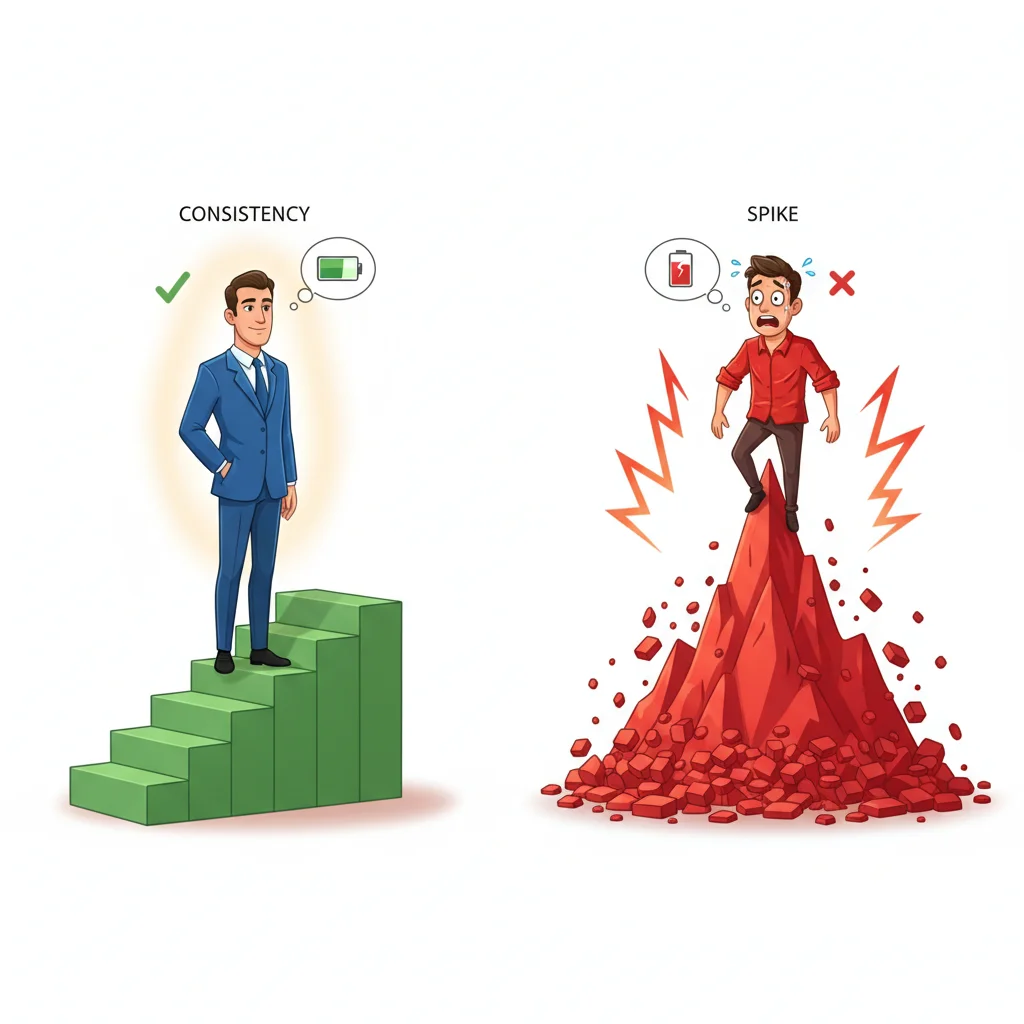
Here's a fact that should sober you up: over 90% of retail forex traders lose money. Yet, we're obsessed with the 1% who win big. In Nigeria, with over 300,000 active retail traders, the dream of joining the top forex traders in the world is a powerful lure. But chasing ghosts like George Soros won't pay your data bill. Let's cut through the celebrity hype. Real success isn't about copying a billionaire's 1992 trade; it's about building a system that survives the Naira's volatility and the SEC's new 2025 rules.
When you hear 'top forex traders in the world,' you picture a lone wolf in a penthouse, making billion-dollar calls. That's mostly fiction. The real top players today are institutions, hedge funds, and algorithmic trading desks. Their edge isn't gut feeling; it's capital access, microseconds-latency connections, and teams of PhDs.
For you, the Nigerian retail trader, trying to emulate that is like bringing a knife to a drone fight. Your battle is different. Your edge comes from discipline, risk management, and understanding your local context - like how CBN policy shifts can rock USD/NGN pairs. The legends are inspiring, but their playbook is from a different era. Your focus should be on the mechanics, not the mythology.

Warning: Don't get starstruck by famous names. Many 'gurus' selling courses made their real money from selling courses, not from consistent trading. Your goal is sustainable profitability, not celebrity.
Forget the yacht photos. Look for these boring, essential habits instead. They're what separate the pros from the punters on your WhatsApp trading groups.
Ruthless Risk Management
Every top trader I've ever met or studied has one non-negotiable rule: they know exactly how much they can lose on any single trade. It's usually 1-2% of their account. They use a position size calculator religiously. I learned this the hard way early on. In 2019, I got cocky on a GBP/USD short, risked 5% of my account on a 'sure thing,' and watched a surprise Brexit headline wipe out two weeks of profits in an hour. That loss stung, but it taught me more than any win.
Emotional Detachment
They treat trading like a business, not a casino. A winning trade isn't a reason to celebrate; it's a correctly executed part of the plan. A losing trade isn't a personal failure; it's the cost of doing business. This is brutally hard when you're trading with money you need for rent, but it's non-negotiable.
A Defined, Tested Edge
They have a specific setup they understand inside out. Maybe it's a MACD indicator divergence on the 4-hour chart, or a price action pattern on EUR/USD. They don't jump from scalping strategy one minute to swing trading the next. They know their statistical edge over hundreds of trades, not just the last five.

💡 윈스턴의 팁
A 'top trader' is just someone who survived their own stupidity long enough to learn. Your first goal is survival, not stardom.
“Your battle isn't in a penthouse; it's on a smartphone, fighting against spreads, data costs, and your own impatience.”
You can't just follow a generic US trading guide. Our environment has unique rules and costs you must bake into your strategy.
First, the legal stuff. The SEC's new 2025 act means the wild west days are ending. If you're using an international broker, that's still fine, but know that any profit is subject to that 10% capital gains tax. Keep clean records for FIRS. More critically, the CBN's rules mean you can't fund your trading account with cheap official FX. You're using the parallel market rate, which adds an immediate cost layer.
Then there's practicality. Unstable power and data costs are a real tax on your trading. A strategy requiring constant screen time might fail you during 'NEPA take light.' I once missed a critical exit on a Gold trade because of a sudden outage, turning a potential 3% gain into a 1% loss. That's a 4% swing because of light! Consider strategies that don't require you to babysit the chart all day.
Your broker choice is also critical. You need one with reliable local deposit/withdrawal options and a platform that works on shaky networks. Some, like Exness and XM, have built a strong local presence for this reason.
Let's talk numbers, because hope doesn't pay fees. Before you even place a trade, you're already down.
| Cost Factor | Typical Range in Nigeria | Why It Matters |
|---|---|---|
| Education | ₦50k - ₦350k | Don't overpay. Quality free resources exist. A fancy course won't fix poor discipline. |
| Prop Firm Challenge | ₦50k - ₦150k | An evaluation fee. See it as a cost of capital, not a ticket to riches. Many fail. |
| Monthly Data | ₦8k - ₦15k | A fixed overhead. Your trading must cover this consistently. |
| Spread & Commissions | Varies by broker | Your biggest ongoing cost. A 2-pip spread on EUR/USD means the price must move 2 pips in your favor just to break even. |
| Swap Fees | Calculated daily | For holding trades overnight. Can be positive or negative. Check your broker's sheet. |

Example: You trade a standard lot (100,000 units) of EUR/USD. Your broker's spread is 1.5 pips. Each pip is worth $10. So, the moment you enter that trade, you're down $15 (1.5 * $10). That's over ₦20,000 gone before the market even moves for you.
The new trader's killer? They chase profits without accounting for these cumulative costs. They need a 3-4% return just to cover fees and break even. Use a broker known for tight spreads, like IC Markets or Pepperstone, to reduce this friction.
💡 윈스턴의 팁
In Nigeria, your trading edge might be patience. While others chase noise during unstable light, you wait for the one clear setup when you have power and data.
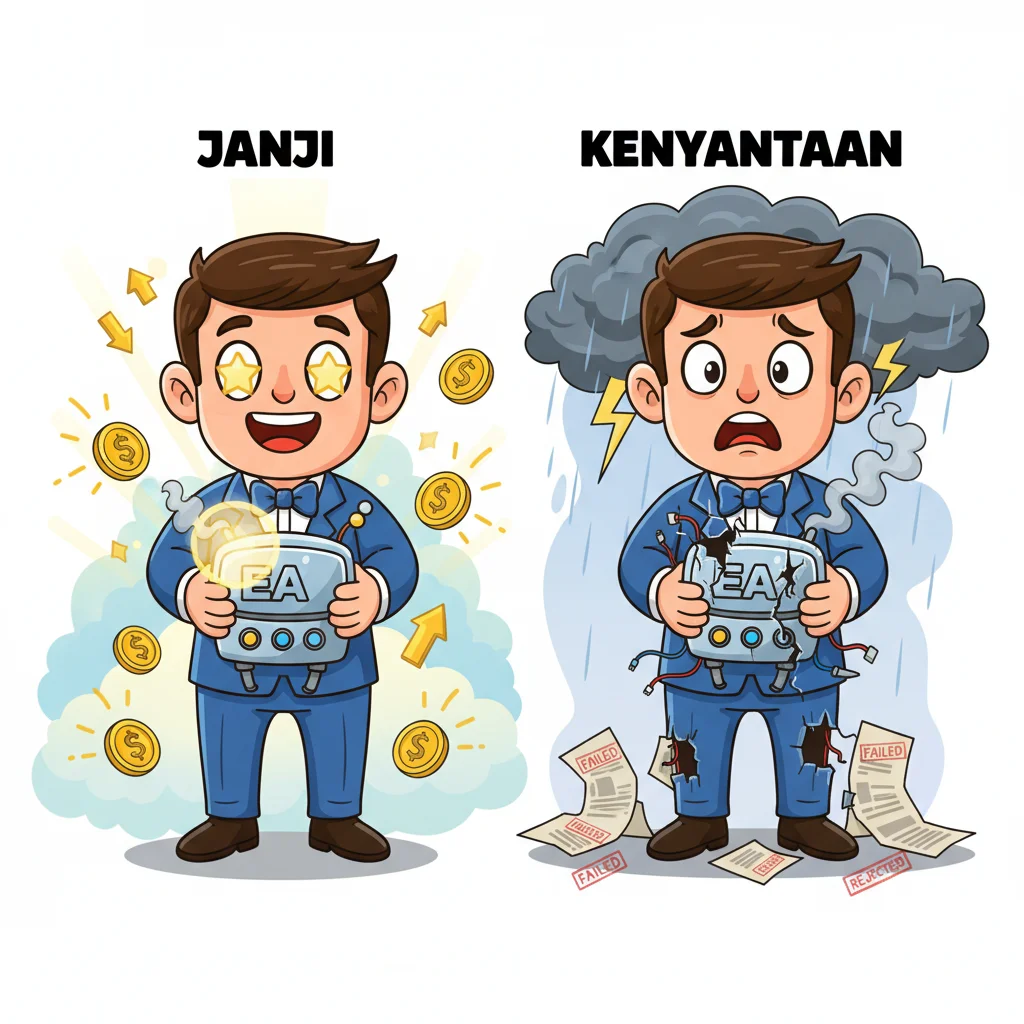
“use is a debt trap, not a gift. Use it like pepper - a little can enhance, too much destroys.”
This is the core work. You must develop a process that fits your life, capital, and psychology.
Start with one pair. I don't care if it's EUR/USD, GBP/USD, or XAU/USD (Gold). Master it. Understand its average daily range, what moves it (ECB news, US NFP), and how it behaves during London vs. New York sessions. My first profitable year came from trading only the EUR/USD guide during the London open. Nothing else.
Define your entry, exit, and stop-loss with absolute clarity. Write it down. 'I will buy if price breaks above the 1-hour resistance with RSI indicator above 30 and rising. My stop-loss will be 20 pips below the recent swing low. My take-profit will be at the next resistance level, 40 pips away.' This turns emotion into execution.
Backtest it. Not for 10 trades. For 100+. Use old chart data. Does it hold up? Then forward-test on a demo account with real-time data for another month. Only then, risk real money, starting small. This is the unsexy grind that separates you from the 90%.

Pro Tip: Your first profit target should be consistency, not riches. Aim for a month where you have more winning trades than losers, and where your average win is bigger than your average loss. That's a positive expectancy system. Protect it.

You can have the best system in the world and still blow up your account. Here's how.
Revenge Trading: You take a loss. Anger and embarrassment kick in. You jump right back in with a bigger position to 'make it back fast.' This is how a 2% loss becomes a 20% disaster. I've done it. After that big loss I mentioned, I revenge-traded and lost another 3% in 15 minutes. I had to shut down the platform and walk away for two days.
Overleveraging: Nigerian brokers often offer high use like 1:500. It's a debt trap, not a gift. use amplifies losses just as fast as gains. A 10-pip move against you on a highly leveraged position can trigger a margin call before you can blink. Use use like pepper - a little can enhance, too much destroys.
The 'Holy Grail' Search: You abandon a decent strategy after three losses to chase a new indicator you saw on YouTube. This cycle never ends. Top traders have the discipline to stick to their plan through a losing streak, because they know it's statistically sound over time.
💡 윈스턴의 팁
If you can't write down your exact entry and exit rules before you trade, you're not trading. You're gambling. Close the platform.
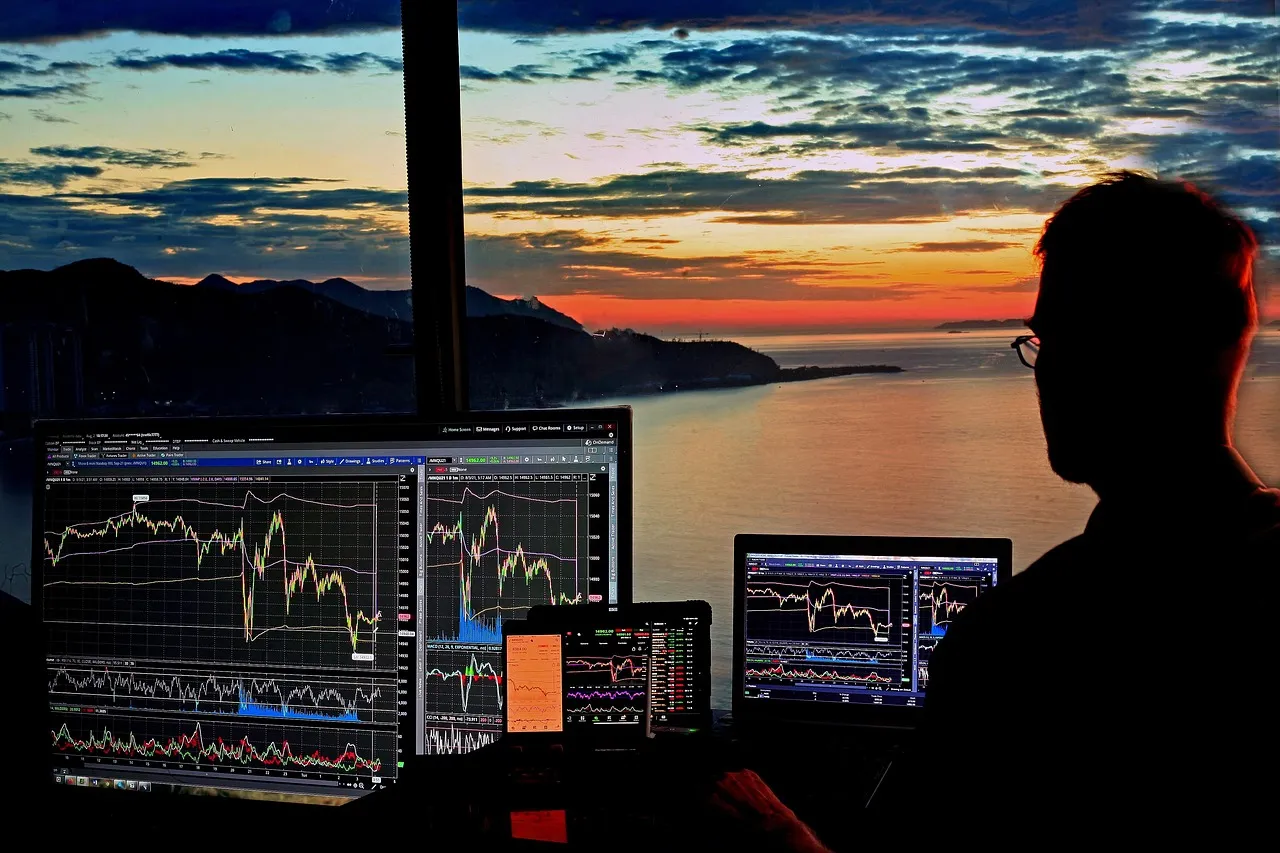
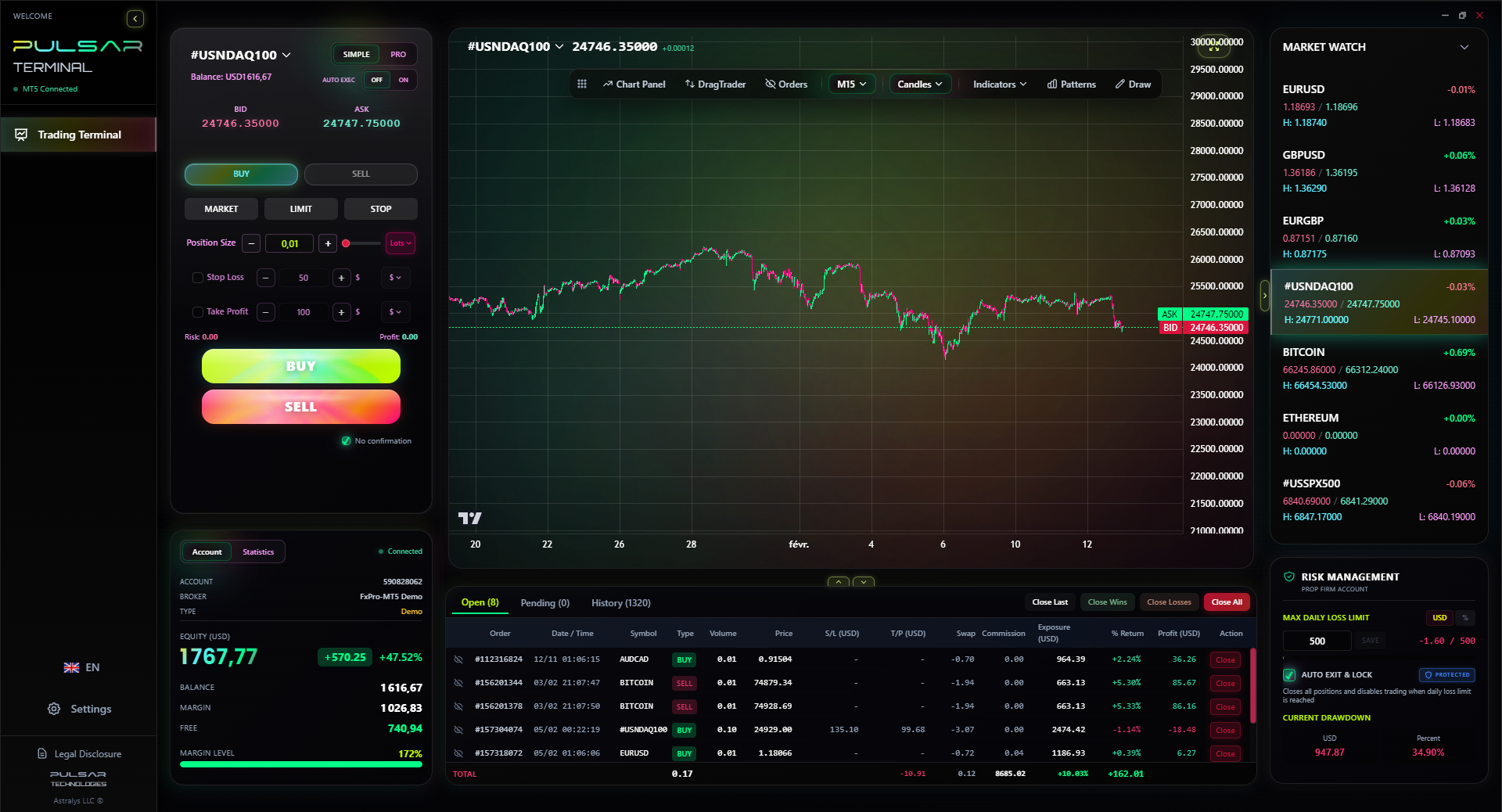
When psychology is your biggest enemy, automating your exit strategy with tools like Pulsar Terminal removes the temptation to move your stop-loss or take profit too early.
Pulsar Terminal
MT5 올인원 도구: 드래그앤드롭 주문, 다중 TP/SL, 트레일링 스톱, 그리드 트레이딩, 볼륨 프로파일, 프롭펌 보호. 매일 1,000명 이상의 트레이더가 사용.
“The moment you enter a trade, you're already down. Your first job is to cover the spread, then make a profit.”
So, how do you actually start moving toward being a top performer? Not by looking at the world's top forex traders, but by looking in the mirror.
Phase 1: Education & Simulation (3-6 Months) Don't spend ₦300k on a mentor. Spend time. Learn the basics: what a pip definition is, how a spread definition works, what margin is. Paper trade your single-pair strategy relentlessly. Your goal here is to lose money on demo. Make every mistake in the book where it costs nothing.
Phase 2: Micro-Live Trading (6+ Months) Fund a live account with money you can afford to lose completely - maybe ₦50,000. Trade micro lots (0.01). Your goal is no longer profit; it's to execute your plan perfectly and keep your emotions in check under real monetary pressure. Pay your 10% tax on any gains to get used to the process.
Phase 3: Scaling & Refinement (Ongoing) Only after 6-12 months of consistent, disciplined micro-trading should you consider adding capital. Scaling a broken system just breaks it faster. This is where you might explore tools that help automate parts of your process, like managing multiple take-profit levels or setting trailing stops, to remove more emotion.
The dream is possible. But the path is paved with discipline, patience, and a relentless focus on your own process, not someone else's legend. Start building your own.
FAQ
Q1Is forex trading legal in Nigeria?
Yes, forex trading is legal. However, the new SEC rules under the 2025 Act require online forex platforms to register locally. As a trader, you can still use internationally regulated brokers, but you must report and pay capital gains tax on your profits in Nigeria.
Q2Who is the richest forex trader in the world?
Names like George Soros or Stanley Druckenmiller are often cited, but their legendary trades were decades ago and involved monumental institutional capital. For a retail trader in Nigeria today, this is a irrelevant distraction. Focus on becoming consistently profitable, not on billionaire lists.
Q3How much do I need to start forex trading in Nigeria?
You can open an account with as little as $10 (approx. ₦15,000) with some international brokers. However, to trade properly with sensible risk management (e.g., not risking more than 2% per trade), a more realistic starter amount is ₦100,000 - ₦200,000. Remember, you also need to budget for data costs and potential education.
Q4What is the best trading strategy for beginners in Nigeria?
The best strategy is a simple one you can execute consistently. Many start with swing trading on higher timeframes (like 4-hour or daily charts) because it doesn't require staring at screens all day, which helps with our unreliable power situation. Pick one major pair, learn its behavior, and combine price action with one or two indicators like Moving Averages or RSI.
Q5How do I choose a reliable forex broker in Nigeria?
Look for strong international regulation (like ASIC, FCA, CySEC), low and stable spreads, reliable deposit/withdrawal methods for Nigeria (like bank transfer, USSD, or local e-wallets), and a platform that works well. Check reviews for their local support. Brokers like Exness, XM, and IC Markets are popular choices among Nigerian traders for these reasons.
Q6Do I pay tax on forex trading profits in Nigeria?
Yes. The Federal Inland Revenue Service (FIRS) considers forex trading profits as capital gains, which are taxable at 10%. You are responsible for keeping records and declaring this income.
윈스턴 교수의 수업
핵심 요약:
- ✓Risk a maximum of 1-2% of your capital on any single trade.
- ✓Master one currency pair before even looking at another.
- ✓Factor in at least ₦10,000 monthly for data and overheads.
- ✓10% of your profits belong to FIRS. Plan for it.
이 기사가 얼마나 유용했나요?
별을 클릭하여 평가
주간 트레이딩 인사이트
무료 주간 분석 & 전략. 스팸 없음.
저자 소개
Olumide Adeyemi
서아프리카 트레이딩 선구자
나이지리아에서 가장 활발한 외환 트레이딩 교육자 중 한 명. 라고스에서 8년간 트레이딩 경험. 아프리카 트레이더를 위한 소자본 전략과 프롭 펌 챌린지 전문.
댓글
위험 고지
금융 상품 거래에는 상당한 위험이 수반되며 모든 투자자에게 적합하지 않을 수 있습니다. 과거 성과가 미래 수익을 보장하지 않습니다. 이 콘텐츠는 교육 목적으로만 제공되며 투자 조언으로 간주되어서는 안 됩니다. 거래 전에 항상 직접 조사를 수행하십시오.
이 기사도 읽어보세요

Cara Trading Forex Sukses: 7 Prinsip dari Trader Profesional
Cara trading forex sukses dengan 7 prinsip trader pro: manajemen modal, disiplin, journal trading, backtest. Data nyata, bukan janji profit palsu.
Jam Trading Forex Terbaik untuk Trader Indonesia: Panduan Lengkap dengan Tabel Waktu
Panduan jam trading forex untuk trader Indonesia. Tabel 4 sesi dunia, jam emas 20:00-00:00, sesi mana yang harus dihindari. Data akurat + tips dari trader berpengalaman.
Top 5 Sàn Forex Uy Tín Nhất 2026: Review Jujur dari Trader Indonesia
Top 5 sàn forex uy tín 2026 untuk trader Indonesia. Review jujur: spread, deposit, withdraw, dukungan lokal. Exness, XM, IC Markets & lebih.
