


Let's be blunt: most of the 'top forex traders' you see on Instagram and YouTube are selling a dream, not a real trading career.

Olumide Adeyemi
서아프리카 트레이딩 선구자 ·  Nigeria
☕ 10 분 소요
배울 내용:
- 1The Myth vs. The Reality of a 'Top Trader'
- 2The Non-Negotiable Habits of Real Performers
- 3The Psychology of Survival: Not Blowing Up
- 4Building a Technical Edge (Keep It Stupid Simple)
- 5Why Your Broker & Execution Matters More Than You Think
- 6The Journey: From Novice to Consistent
- 7Tools to Enforce Discipline, Not Replace It
- 8A Final Word for Nigerian Aspiring Traders
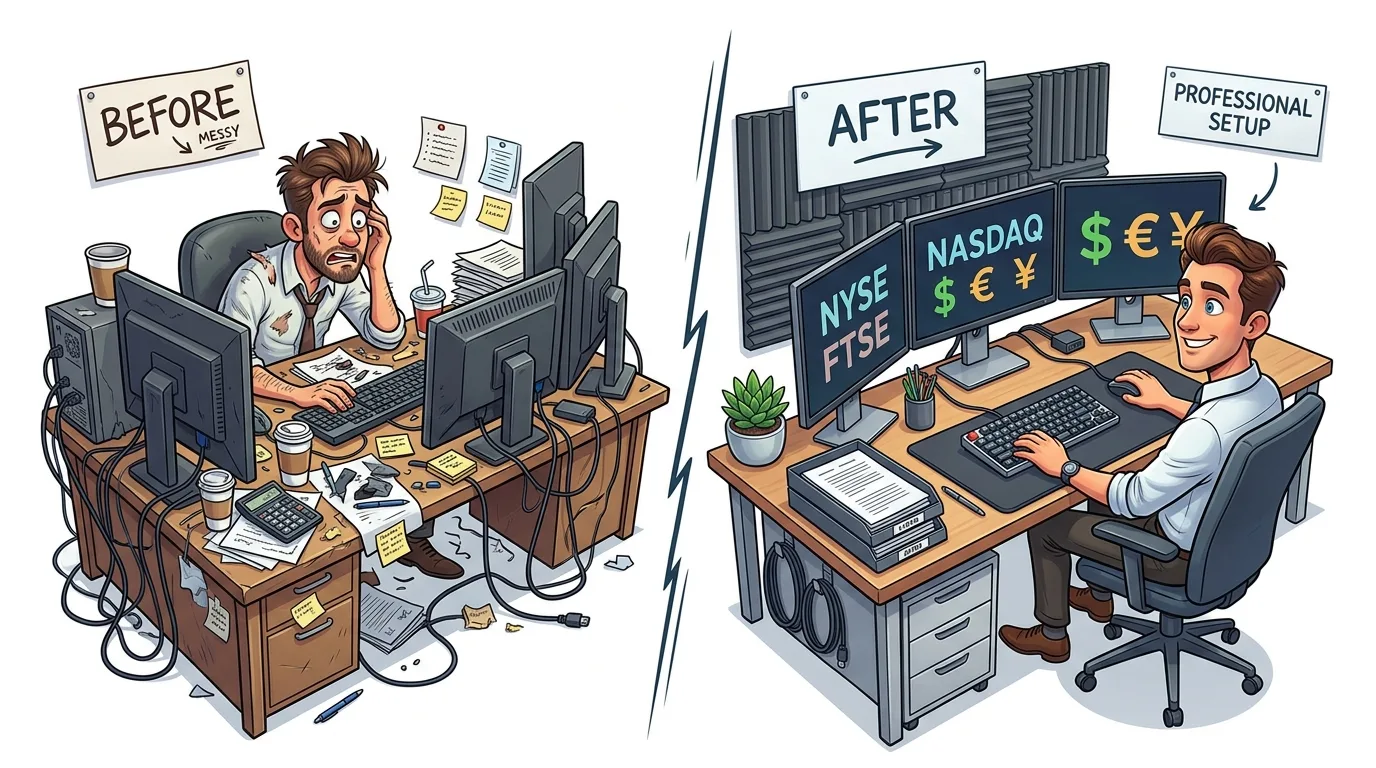
Let's be blunt: most of the 'top forex traders' you see on Instagram and YouTube are selling a dream, not a real trading career. They're marketers with a P&L screenshot, not risk managers. The real top performers in Nigeria aren't the loudest; they're the most disciplined, the most boring, and the most focused on not losing money. I've blown up accounts, chased losses, and believed the hype. This guide isn't about getting rich quick. It's about understanding the actual, evidence-based habits that separate the consistent 10% from the 90% who fund their profits.
The myth is a young guy in a luxury car, funded by a prop firm, talking about his latest 1000-pip win. The reality is often someone quietly managing a six-figure account from their home office in Lagos or Port Harcourt, more concerned with their monthly Sharpe ratio than any single trade. The difference is foundational. One is focused on outcomes (big wins), the other on process (consistent execution).
I learned this the hard way. Early on, I had a trade on GBP/JPY that netted me over 400 pips. I felt like a genius, a 'top trader.' I posted about it. The very next week, I gave back all those profits plus 30% of my account on two revenge trades after a stop-loss was hit. The win was luck; the loss was poor process. Real top forex traders have a system that survives their worst days, not just celebrates their best.

Warning: If a 'guru' only shows winning trades, they are lying by omission. Every single profitable strategy has losing periods. A trader who doesn't show you their losses is a fraud.
The core reality is this: sustainable trading is a business of probability and risk management. It's less about being right on direction and more about being right on position size. Your goal isn't to pick every top or bottom; it's to ensure a losing trade doesn't cripple your ability to trade tomorrow. This is the unsexy truth you won't see in ads for expensive mentorship programs.

💡 윈스턴의 팁
A 'top trader' is defined by their worst trade, not their best. Anyone can get lucky. Consistency is shown in how you handle a loss.
Forget fancy indicators. The habits below are what actually move the needle. They're boring, repetitive, and absolutely critical.
1. They Treat Trading Like a Business, Not a Casino
This means having a written business plan. It sounds formal, but it's just a document that answers: What's my edge? What markets do I trade (e.g., EUR/USD, XAU/USD)? What's my maximum daily and weekly loss? What's my profit target for the month? Real traders review this plan weekly. They know their 'salary' is the average risk-adjusted return their system generates, not the lottery ticket of one huge trade.
2. They Are Masters of Position Sizing
This is the most important skill, full stop. A top trader might risk only 0.5% to 1% of their account on any single trade. Let's do the math: if you have a ₦500,000 account and risk 1%, that's ₦5,000. If your stop-loss is 50 pips on USD/NGN, your position size is calculated to lose exactly ₦5,000 if that stop is hit. They don't guess. They use a position size calculator for every single entry. I didn't do this for years, and it's the #1 reason I blew up my first two accounts.
3. They Have a Pre-Market Ritual
They don't just open the platform and start clicking. They review economic calendars, check for major news, and assess the overall market context. Is it a trending or ranging day? This ritual puts them in the right mindset and prevents impulsive trades based on emotion.

Pro Tip: Your first trade of the day is often your worst. Impose a rule: no trades in the first 30 minutes after you log on. Let the market show you its mood first.
“Sustainable trading is a business of probability and risk management. It's less about being right on direction and more about being right on position size.”
Here's the secret: the technical analysis part is maybe 20% of the battle. The other 80% is your psychology. The top forex traders have fundamentally different mental software.
They've killed the ego. They don't need to be 'right' about the market. They need their system to be profitable over 100 trades. This means they can take a stop-loss, shrug, and move on. They don't see it as a failure; they see it as the cost of doing business. I used to hate being wrong. I'd move my stop-loss further away, turning a $100 loss into a $500 disaster. That's ego trading.
They embrace boredom. Profitable swing trading or trend-following can mean days or weeks with no action. The amateur gets bored and takes a low-probability 'boredom trade' that wrecks their stats. The pro waits for their A+ setup, even if it takes time.
They have an exit plan before entry. Every. Single. Time. Where is your profit target? Where is your stop-loss? A top trader knows both before the trade is live. This removes emotion the moment the position is open. If you're thinking, 'I'll just see how it goes,' you've already lost.

You don't need 15 indicators flashing on your screen. Complexity is the enemy of execution. Most top traders I know use a very simple framework.
- Identify the Trend: Use a simple moving average (like the 50 or 200 period) or just learn to read higher highs and higher lows (or lower highs/lows). Are you trading with the trend or against it? Trading with the trend increases your probability.
- Find Key Levels: Where is support and resistance? These are areas where price has reversed before. These are logical places for your stop-loss and profit target.
- Use a Trigger for Entry: This could be a MACD indicator crossover in the direction of the trend, or the RSI indicator coming out of oversold/overbought territory. Just one or two confirmations.
Here’s a real example from my journal: I saw EUR/USD in a clear uptrend on the daily chart. It pulled back to a major support level that had held twice before. On the 4-hour chart, the RSI dipped below 30 (oversold) and then crossed back above it. That was my trigger. I entered long at 1.0725, placed my stop-loss below the support at 1.0690 (35 pips risk), and set a profit target at the previous high near 1.0800. The trade worked, but the key was my risk was defined and small (1% of my account) before I even clicked buy.

Example: Simple Trade Math Account: $10,000 | Risk per Trade: 1% = $100 EUR/USD Trade: Entry 1.0725, Stop 1.0690 (35 pip risk) Pip Value Needed: $100 / 35 pips = $2.86 per pip Position Size: ~0.29 lots (standard lot = $10/pip, so $2.86/pip = 0.286 lots) This precise math is why you need a calculator.
💡 윈스턴의 팁
If you can't write down the exact rule that triggered your entry, you're gambling. A rule can be simple: 'Price above 200 MA, pullback to 50 MA, bullish pin bar closes.'

“The moment you fear a margin call more than you fear missing a trade, you've turned a corner.”
In Nigeria, you have to be extra careful. Your broker is your business partner. A bad one will steal from you through hidden fees, terrible execution, or outright fraud.
Real top traders prioritize two things above all else: regulation and execution quality. They need to know their funds are safe and that their orders are filled at the price they see, especially for strategies like scalping. A 2-pip spread that suddenly widens to 10 pips when news hits can turn a winning trade into a loser.
They look for brokers with strong international regulation (like ASIC, FCA, CySEC) that accept Nigerian clients. They test the execution on a demo account during volatile periods. They understand the costs: not just the spread, but potential commission per lot and overnight swap fees.
I made the mistake of using an unregulated 'bucket shop' early on. Wins were easy, losses were easy... until I tried to withdraw a large profit. Delays, excuses, and finally, an account closure. I lost everything. Don't be me. Do your homework. Look at detailed reviews of brokers like Exness, IC Markets, XM, or Pepperstone to see their specific conditions for Nigerian traders, deposit methods, and track record.
A top trader views slippage and spread as a direct tax on their edge. They choose the platform that taxes them the least.
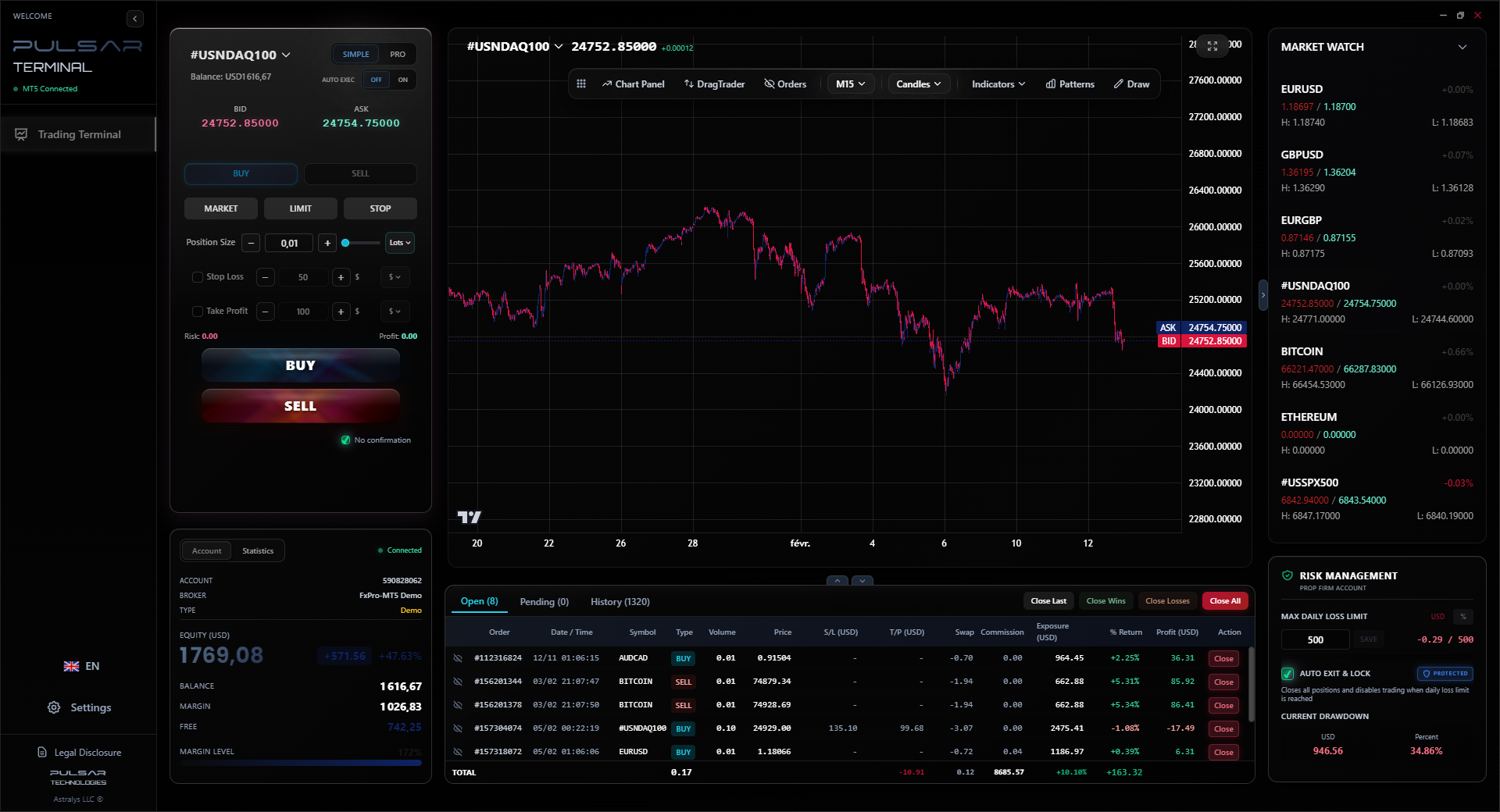
Managing multiple take-profit levels and a trailing stop manually is stressful and error-prone; Pulsar Terminal lets you set the entire trade plan with one click directly on your MT5 chart.
Pulsar Terminal
MT5 올인원 도구: 드래그앤드롭 주문, 다중 TP/SL, 트레일링 스톱, 그리드 트레이딩, 볼륨 프로파일, 프롭펌 보호. 매일 1,000명 이상의 트레이더가 사용.
This isn't a linear path. It's a cycle of learning, failing, adjusting, and growing. Here's a rough map of the phases most real traders go through.
| Phase | Focus | Common Pitfall |
|---|---|---|
| The Enthusiast | Learning everything, trying every indicator. | Analysis paralysis. No actual trading plan. |
| The Gambler | Placing trades based on gut or tips. | No risk management. Blowing up accounts. |
| The System Seeker | Developing and backtesting a strict rule-based plan. | Over-optimizing for the past. "Curve-fitting." |
| The Risk Manager | Focusing entirely on position sizing and psychology. | The boring work. Where most quit. |
| The Consistent Performer | Executing the plan mechanically, reviewing stats. | Complacency. Forgetting the fundamentals. |
You'll loop back through these phases. The key is to get stuck in the 'Risk Manager' phase. That's where the magic happens. This is where you stop looking for the 'perfect entry' and start obsessing over the 'perfect position size.' This is where you learn that a series of small, controlled losses is a sign of a healthy system, not a broken one. The moment you fear a margin call more than you fear missing a trade, you've turned a corner.

“Your biggest tool is a checklist. This one habit will save you from 80% of your impulsive mistakes.”
Discipline is a muscle that gets tired. The best traders use tools to automate good behavior and remove emotion from key decisions.
A trading journal is non-negotiable. Not just 'I won' or 'I lost.' A proper journal records: the asset (e.g., XAU/USD), entry/exit price, the reason for the trade (which rule from your plan?), the risk taken (in % and $), the emotional state, and a screenshot. You review this weekly to find your real edge - and your real weaknesses.
Technology can help lock in rules. For example, tools that allow you to set a trade with multiple take-profit levels and a trailing stop from the outset take the emotion out of the exit. You plan the trade's entire life cycle before your emotions are involved.
Pro Tip: Your biggest tool is a checklist. A physical or digital list of every condition that must be true before you enter a trade. If you can't check every box, you don't trade. This one habit will save you from 80% of your impulsive mistakes.
💡 윈스턴의 팁
Your profit target should be based on market structure (like a resistance level), not a random number of pips. Let the market pay you what it wants to give.
The market doesn't care that you're trading from Lagos or Abuja. It doesn't care about the unstable power or the economic pressures. It's a global arena. That's the bad news. The good news? The principles of success are the same everywhere: discipline, risk management, and patience.
Your unique challenge is navigating the local environment. Be smarter about your broker choice. Be aware of how currency fluctuations can affect your deposits and withdrawals. Understand that the 'get-rich-quick' forex marketing is particularly aggressive here. Your shield against all of it is education and a business mindset.
Don't aim to be a 'top forex trader' as the internet defines it. Aim to be a consistent, professional risk manager who happens to trade currencies. The profits will follow the process, not the other way around. Start small, risk tiny amounts, and focus on surviving for six months. That's a bigger achievement than any one winning trade. I wish I had someone tell me that 12 years ago. It would have saved me a fortune and a lot of heartache.

FAQ
Q1How much money do I need to start trading forex in Nigeria?
Technically, you can start with as little as $10 with some micro accounts. Realistically, you need enough to trade properly without risking a huge percentage per trade. A more serious starting point is $200-$500. This allows you to use sane position sizing (e.g., 0.5% risk on a $500 account is $2.50) and absorb a string of losses without a margin call. Remember, your goal is to learn and preserve capital, not get rich from day one.
Q2Who are the real top forex traders in Nigeria I can learn from?
You won't find most of them on social media. Look for educators who focus on process, not profits. Look for those who talk openly about losses, risk management, and psychology. Be deeply skeptical of anyone selling a 'secret system' or guaranteed returns. The best teacher is often your own trading journal, analyzing what you did right and wrong.
Q3Is forex trading a reliable source of income in Nigeria?
It can be, but it's one of the hardest ways to make an easy living. It's not reliable in the sense of a monthly salary. Even the best traders have losing months. View it as running a business where income is variable. Your reliability comes from your risk management, ensuring a bad month doesn't wipe you out. It's a supplement or a potential primary income only after years of proven, consistent profitability on a demo and then a small live account.
Q4What's the biggest mistake new Nigerian traders make?
Two tied for first: 1) Risking far too much per trade (5%, 10%, even more), destroying their account on a few bad trades. 2) Choosing a broker based on flashy ads or unrealistic bonuses instead of regulation and execution quality. They focus on predicting price and ignore managing money.
Q5Can I pass a prop firm challenge to become a funded trader?
You can, but it's a serious test of the exact principles in this article. Prop firms impose strict daily and overall loss limits. To pass, you need the discipline of a top trader from day one: tiny risk per trade, no revenge trading, absolute adherence to rules. Many fail because they treat it like their reckless personal account. If you can trade profitably with a 1% max daily risk rule on your own account for 3+ months, you might be ready.
Q6How many hours a day do real forex traders work?
It varies wildly. A scalper might be screen-bound for hours. A swing trader might only check charts for 30-60 minutes at the end of the day to analyze and set orders. The 'work' is often in the preparation, journal review, and planning, not in constant clicking. More screen time often leads to worse decisions due to overtrading.
윈스턴 교수의 수업
핵심 요약:
- ✓Risk only 0.5%-1% of your account per trade. Always.
- ✓A written plan beats a good memory every time.
- ✓Your broker's execution is a direct tax on your profits.
- ✓Journal every trade to find your true statistical edge.
이 기사가 얼마나 유용했나요?
별을 클릭하여 평가
주간 트레이딩 인사이트
무료 주간 분석 & 전략. 스팸 없음.
저자 소개
Olumide Adeyemi
서아프리카 트레이딩 선구자
나이지리아에서 가장 활발한 외환 트레이딩 교육자 중 한 명. 라고스에서 8년간 트레이딩 경험. 아프리카 트레이더를 위한 소자본 전략과 프롭 펌 챌린지 전문.
댓글
위험 고지
금융 상품 거래에는 상당한 위험이 수반되며 모든 투자자에게 적합하지 않을 수 있습니다. 과거 성과가 미래 수익을 보장하지 않습니다. 이 콘텐츠는 교육 목적으로만 제공되며 투자 조언으로 간주되어서는 안 됩니다. 거래 전에 항상 직접 조사를 수행하십시오.
이 기사도 읽어보세요

Cara Trading Forex Sukses: 7 Prinsip dari Trader Profesional
Cara trading forex sukses dengan 7 prinsip trader pro: manajemen modal, disiplin, journal trading, backtest. Data nyata, bukan janji profit palsu.
Jam Trading Forex Terbaik untuk Trader Indonesia: Panduan Lengkap dengan Tabel Waktu
Panduan jam trading forex untuk trader Indonesia. Tabel 4 sesi dunia, jam emas 20:00-00:00, sesi mana yang harus dihindari. Data akurat + tips dari trader berpengalaman.
Top 5 Sàn Forex Uy Tín Nhất 2026: Review Jujur dari Trader Indonesia
Top 5 sàn forex uy tín 2026 untuk trader Indonesia. Review jujur: spread, deposit, withdraw, dukungan lokal. Exness, XM, IC Markets & lebih.
