


You're ready to trade, your chart is up, but nothing's moving.

Olumide Adeyemi
서아프리카 트레이딩 선구자 ·  Nigeria
☕ 11 분 소요
배울 내용:
You're ready to trade, your chart is up, but nothing's moving. The market feels dead. Sound familiar? I've been there, staring at a flat EUR/USD chart at 11 AM Nigerian time, wondering if my platform is broken. It wasn't. I was just trading in a dead zone. Knowing exactly when the forex market opens and closes for our time zone isn't just trivia, it's the difference between catching a wave and watching from the shore. Let's get your trading clock set to Lagos time.
First, forget the 24/7 hype. Yes, the forex market is open 24 hours a day from Sunday evening to Friday night, UTC. But for us in Nigeria (West Africa Time, WAT), that translates to a very specific weekly window.
The market opens for the new trading week at 5:00 PM on Sunday, Nigerian time. It runs non-stop until 10:00 PM on Friday, Nigerian time. That's your weekly playground.
I learned this the hard way. Early in my career, I'd try to trade on Saturday morning. I'd see a setup on the weekly chart, get excited, and place a trade. Nothing would happen. My order would just sit there, unexecuted, until Sunday evening. I was literally trading against a closed market. It was a waste of mental capital and a quick lesson in market mechanics. The weekend is for analysis, not execution.

Warning: The period between Friday 10 PM and Sunday 5 PM (WAT) is the weekend close. No trades execute. Any orders you place during this time are queued for the Sunday open, which can lead to nasty slippage if there's a price gap.

💡 윈스턴의 팁
The market's personality changes with each session. Treat the quiet Asian range like a careful chess match, and the New York volatility like a rapid-fire reaction test. Use different strategies for each.
“The London-New York overlap from 3:00 PM to 6:00 PM Nigerian time isn't just a busy period, it's where the market shows its true hand.”
Within that 24-hour cycle, liquidity ebbs and flows based on which global financial center is awake. Here’s the breakdown in your local time.
The Asian Session (1:00 AM – 10:00 AM WAT)
This kicks off with Tokyo. It’s often the quietest major session. Pairs like USD/JPY and AUD/USD get attention. Volatility is usually lower. I used to hate this session, thinking it was boring. Then I specialized in scalping strategy on USD/JPY during the Tokyo fix (around 3-4 AM WAT). The predictable, range-bound action was perfect for my system. Don’t write it off.
The European/London Session (9:00 AM – 6:00 PM WAT)
This is where things wake up. London is the world's forex hub. Liquidity pours in. All major pairs move, especially EUR/USD, GBP/USD. This session offers the first real trend opportunities of the day. For a full breakdown of trading the most liquid pair, see our EUR/USD guide.
The North American/New York Session (3:00 PM – 12:00 AM WAT)
The big one for many. New York opens as London is still humming. This is peak liquidity. Economic data from the US drops here, causing massive spikes. It’s exciting but dangerous if you’re not disciplined.
The Pacific/Sydney Session (5:00 AM – 2:00 PM WAT)
This overlaps with the tail end of Asia and the start of Europe. It’s a transition session. Not huge volume, but it can set the tone. AUD and NZD pairs are active.
Here’s a quick visual of how they stack up for a Nigerian workday:
| Session | Nigerian Time (WAT) | Key Centers | Typical Activity |
|---|---|---|---|
| Sydney | 5:00 AM – 2:00 PM | Sydney, Wellington | Moderate, sets early tone |
| Tokyo | 1:00 AM – 10:00 AM | Tokyo, Singapore | Range-bound, JPY pairs |
| London | 9:00 AM – 6:00 PM | London, Frankfurt | High liquidity, trends develop |
| New York | 3:00 PM – 12:00 AM | New York, Toronto | Peak volatility, news-driven moves |
“I blew up an account trading the 'dead zone' between sessions, where wide spreads turn a small loss into a catastrophic one.”
If you only have a few hours to trade, focus here. This is where the magic happens. When two major financial centers are open, trading volume doubles, spreads tighten, and trends get real legs.
The most important overlap for us is the London & New York session. It runs from 3:00 PM to 6:00 PM Nigerian time. For four years, I structured my entire day around this window. I’d do my analysis in the morning, then be at my desk by 2:30 PM ready for the 3 PM surge.

Example: On a typical day, the EUR/USD spread on my broker might be 1.2 pips at 2 PM. At 3:05 PM, as New York money floods in, that same spread can drop to 0.8 pips. That’s a 33% reduction in your immediate cost of entry. It adds up.
The other significant overlap is the Asian & European session (9:00 AM – 10:00 AM WAT). It’s shorter but can see a nice pickup in activity, especially if there’s European data on the calendar.
My biggest profits have come from the London-New York overlap. I remember a specific trade on GBP/USD. I entered at 1.3850 at 3:15 PM WAT, just as New York opened. A strong US data print hit at 3:30 PM. The pair tanked. I caught 85 pips down to 1.3765 in under an hour. The volume was so high my limit order filled instantly. That’s the power of the overlap.
But a warning: higher volume also means faster moves against you. You must have your stop-loss set before the overlap begins. Emotional decisions during this volatility are a recipe for a margin call.
“I blew up an account trading the 'dead zone' between sessions, where wide spreads turn a small loss into a catastrophic one.”
You can't trade all sessions. You'll burn out. The key is to match a session's personality to your own trading style and daily schedule.
Are you a 9-to-5 worker in Lagos or Abuja? The London-New York overlap (3 PM - 6 PM) is your prime time. You're home from work (or wrapping up). This suits a swing trading approach where you hold trades for a few days. Place your trades in the evening, manage them before work the next morning. The Asian session (late night/early morning) is for analysis and order placement only.
Are you a student or have a flexible schedule? You can explore the London session (9 AM - 6 PM) in full. This is great for day trading. You can catch the European open, trade through lunch, and take profits into the New York overlap. You need discipline to not overtrade during the midday lull.
Are you a night owl? The New York session (3 PM - 12 AM) and the Asian session open (1 AM) are yours. Trading USD/CAD or USD/JPY during the US session can be very productive. Just be ready for the potential whipsaws around major US news at 3:30 PM our time.
I started as a 9-to-5 banker. I forced myself to trade the Asian session before work. It was a disaster. I was tired, impatient, and taking trades just to be "in the market." My consistency only came when I admitted my lifestyle suited evening trading. I switched to the London-New York window and my performance transformed.
💡 윈스턴의 팁
Your most dangerous trade is the one you take out of boredom in a dead session. If the chart isn't moving, that's the market telling you to step away. Go analyze, don't force it.
“Your lifestyle dictates your trading session. A 9-to-5 worker fighting the Asian morning market is a recipe for exhaustion and losses.”
Knowing the session times is useless if your broker's platform is slow or you're getting killed by conversion fees. Here’s the on-the-ground reality for Nigerian traders in 2026.
The Naira Account Advantage Some brokers like HFM and FXTM offer NGN-denominated accounts. This is a game-saver. You deposit and withdraw in Naira. Your profit and loss are displayed in Naira. It removes the mental gymnastics of converting everything from USD and protects you from intraday Naira volatility on your trading capital. If you're starting out, seek this option.
Broker Execution During Key Sessions Not all brokers handle the 3 PM overlap equally. During peak volatility, some offshore brokers with poor infrastructure experience requotes or slippage. I've had trades slipped by 3-5 pips at New York open on a "discount" broker. I switched to a broker with a better reputation for execution, like the ones we review such as IC Markets or Pepperstone, and the problem vanished. Pay for reliability.
Platform of Choice: MT5 While MT4 is still popular, MT5 is the future. It handles more volume types, has more timeframes, and better tools for advanced strategies. For session trading, the built-in economic calendar and depth of market (where available) are useful. Most serious brokers support it.
The Tax Man Cometh Remember, regardless of your broker's location, the FIRS expects its share. Profits from forex trading are typically subject to a 10% Capital Gains Tax. Keep clean records. The days of it being an invisible side hustle are over.

Pro Tip: Test your broker's execution at the Sunday 5 PM open and the Monday 3 PM (London-New York) open. Place small, market orders. Note the slippage and speed. If it's consistently bad during these high-volume opens, consider it a red flag.
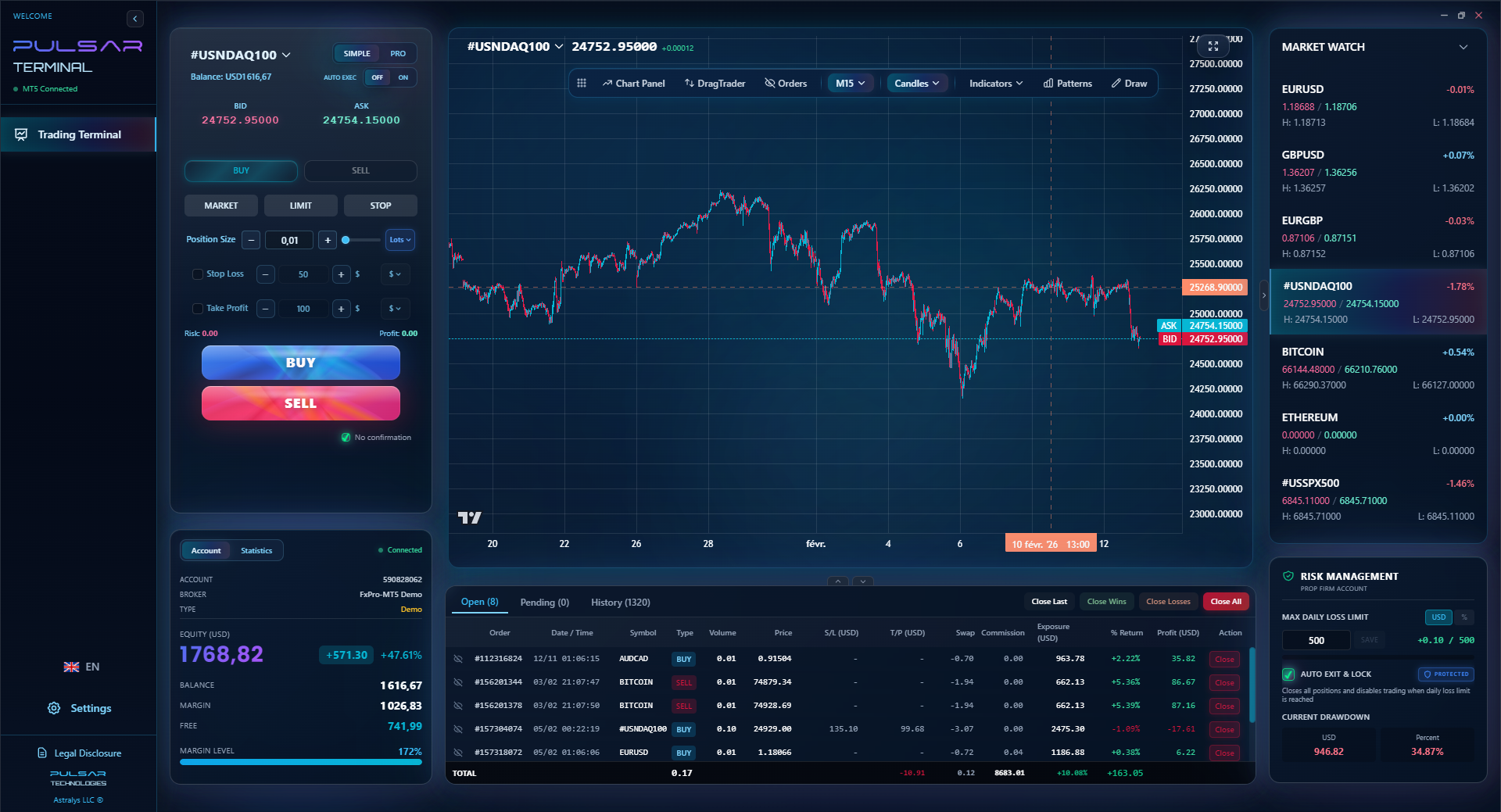
Managing multiple trades across volatile session overlaps is complex, but tools like Pulsar Terminal let you set multi-level take-profits and stop-losses on MT5 with one click, automating your session-based exit strategy.
Pulsar Terminal
MT5 올인원 도구: 드래그앤드롭 주문, 다중 TP/SL, 트레일링 스톱, 그리드 트레이딩, 볼륨 프로파일, 프롭펌 보호. 매일 1,000명 이상의 트레이더가 사용.
“Your lifestyle dictates your trading session. A 9-to-5 worker fighting the Asian morning market is a recipe for exhaustion and losses.”
Let's get honest. I've blown up an account or two by ignoring market hours. Here’s my hall of shame.
1. Trading the "Dead Zone." The period between the New York close (12 AM WAT) and the Asian session really getting going (around 2 AM WAT) is treacherous. Spreads widen massively. A 1-pip spread on EUR/USD can balloon to 5 or 6 pips. I once entered a USD/CHF trade at 1:15 AM because I saw a "perfect" pin bar. The spread was 7 pips. The trade needed to move 7 pips just for me to break even. It didn't. I got stopped out for a loss that was 80% due to the insane spread. Now, I have a hard rule: no trades between 12 AM and 2 AM WAT.
2. Ignoring the Sunday Open Gap. The market closes Friday at 10 PM WAT and reopens Sunday at 5 PM WAT. A lot can happen geopolitically over 55 hours. I learned this trading Gold (XAU/USD). I had a buy stop order placed above Friday's high. Over the weekend, Israel-Iran tensions flared. Gold gapped up over $50 at the Sunday open. My order filled way above my intended price, in the middle of a spike. It reversed instantly and stopped me out for a huge loss. Now, I never leave pending orders over the weekend. I assess the gap on Sunday at 5:15 PM and then decide.
3. Chasing News During the New York Open. US Non-Farm Payrolls data drops at 3:30 PM our time. The volatility is insane. I used to try to "catch the spike." It's a lottery. The spread widens, liquidity vanishes for a second, and you can get filled at a terrible price. I now wait at least 5-10 minutes after a major news release for the market to find its new balance. Let the algos fight it out first.
4. Not Using a Session-Specific Strategy. I used the same aggressive, trend-following strategy in the quiet Asian session as I did in the New York session. It failed. Asian sessions often mean-revert. Now, I use a range-bound RSI indicator strategy in Asia and switch to a MACD indicator trend strategy for London/New York. Your tools must match the market's mood.
💡 윈스턴의 팁
Always know what 'time' it is on the global forex clock before you click buy or sell. Entering a trend trade in the last 30 minutes of the Tokyo session is like sprinting as the finish line is being packed away.
“The Sunday 5 PM open is for observation, not execution. Let the weekend gap settle before you commit any capital.”
Knowledge is nothing without a system. Here’s a simple weekly routine you can adapt.
Sunday Evening (5:00 PM - 7:00 PM WAT):
- 5:00 PM: Market opens. DO NOT TRADE for the first 15-30 minutes. Watch. Assess the gaps.
- Analyze the weekly charts. Plan your broad bias for key pairs.
- Set price alerts for key levels you've identified.
- Review the economic calendar for the week ahead.
Weekday Mornings (Before 9:00 AM WAT):
- Review what happened in the Asian session. Did it respect or break your key levels?
- Check the calendar for European news events.
- If you're a day trader, identify 2-3 potential setups for the London open.
London Session (9:00 AM Onwards):
- Be at your desk by 8:45 AM. Watch the first 15 minutes of the London open for direction.
- Execute planned trades. Manage existing positions.
- Use the midday lull (often 1-2 PM WAT) to review, not to find new trades.
London-New York Overlap (3:00 PM - 6:00 PM WAT):
- Prime Time. Have your game plan set BEFORE 3 PM.
- Execute. This is when you take your high-conviction trades.
- Be extra vigilant if major US data is due at 3:30 PM.
Friday Evening (Before 10:00 PM Close):
- Close out any speculative, short-term positions. Don't carry unnecessary weekend risk.
- Review your week's trades. What worked during which sessions?
- Withdraw any profits you need, remembering to use a position size calculator to ensure you're not overexposed for the next week.
The forex market never sleeps, but you must. By syncing your activity with its natural rhythms, you trade with the flow, not against it. You stop fighting quiet markets and start riding the liquid ones. That’s when this game gets rewarding.
FAQ
Q1What time does forex market open in Nigeria on Sunday?
The forex market opens for the new trading week at 5:00 PM Nigerian time (West Africa Time, WAT) every Sunday.
Q2What is the best time to trade forex in Nigeria?
The best time is during the London & New York session overlap from 3:00 PM to 6:00 PM Nigerian time. This period has the highest liquidity and tightest spreads, offering the best trading conditions for most strategies.
Q3Is forex trading legal in Nigeria?
Yes, forex trading is legal for individuals in Nigeria. The Central Bank of Nigeria (CBN) and SEC oversee aspects of the market. However, most retail traders use international brokers. Remember, profits are subject to a 10% Capital Gains Tax.
Q4Can I trade forex at night in Nigeria?
Yes, the New York session runs from 3:00 PM to 12:00 AM (midnight) Nigerian time. You can also trade the Asian session which starts at 1:00 AM. However, liquidity is lower late at night (after NY close) and spreads can widen.
Q5Do Nigerian forex brokers offer Naira accounts?
Some international brokers accepting Nigerian clients, like HFM and FXTM, offer NGN-denominated trading accounts. This allows you to deposit and withdraw in Naira and see your P&L in Naira, avoiding currency conversion fees on your capital.
Q6What day does forex trading close in Nigeria?
The forex market closes for the week at 10:00 PM Nigerian time (WAT) on Friday. It remains closed until reopening at 5:00 PM on Sunday.
Q7Which trading session is most volatile for a Nigerian trader?
The first hour of the New York session (3:00 PM - 4:00 PM WAT), especially when major US economic data (like Non-Farm Payrolls at 3:30 PM) is released, is typically the most volatile period of the day.
윈스턴 교수의 수업
핵심 요약:
- ✓Market opens Sunday 5 PM, closes Friday 10 PM (WAT).
- ✓Golden overlap is 3 PM - 6 PM WAT (London & New York).
- ✓Match your strategy to the session's volatility.
- ✓Avoid trades between 12 AM - 2 AM WAT (widest spreads).
- ✓Use Naira accounts to hedge local currency risk.
이 기사가 얼마나 유용했나요?
별을 클릭하여 평가
주간 트레이딩 인사이트
무료 주간 분석 & 전략. 스팸 없음.
저자 소개
Olumide Adeyemi
서아프리카 트레이딩 선구자
나이지리아에서 가장 활발한 외환 트레이딩 교육자 중 한 명. 라고스에서 8년간 트레이딩 경험. 아프리카 트레이더를 위한 소자본 전략과 프롭 펌 챌린지 전문.
댓글
위험 고지
금융 상품 거래에는 상당한 위험이 수반되며 모든 투자자에게 적합하지 않을 수 있습니다. 과거 성과가 미래 수익을 보장하지 않습니다. 이 콘텐츠는 교육 목적으로만 제공되며 투자 조언으로 간주되어서는 안 됩니다. 거래 전에 항상 직접 조사를 수행하십시오.
이 기사도 읽어보세요

Cara Trading Forex Sukses: 7 Prinsip dari Trader Profesional
Cara trading forex sukses dengan 7 prinsip trader pro: manajemen modal, disiplin, journal trading, backtest. Data nyata, bukan janji profit palsu.
Jam Trading Forex Terbaik untuk Trader Indonesia: Panduan Lengkap dengan Tabel Waktu
Panduan jam trading forex untuk trader Indonesia. Tabel 4 sesi dunia, jam emas 20:00-00:00, sesi mana yang harus dihindari. Data akurat + tips dari trader berpengalaman.
Top 5 Sàn Forex Uy Tín Nhất 2026: Review Jujur dari Trader Indonesia
Top 5 sàn forex uy tín 2026 untuk trader Indonesia. Review jujur: spread, deposit, withdraw, dukungan lokal. Exness, XM, IC Markets & lebih.
