


If you're searching for 'Absa Bank forex trading' hoping to open a leveraged account and trade EUR/USD, I've got some bad news.

David van der Merwe
Pedagang Pasaran Membangun ·  South Africa
☕ 10 minit baca
Apa yang akan anda pelajari:
- 1What Absa Actually Offers (Spoiler: It's Not a Trading Platform)
- 2The Hard Truth About South African Forex Law
- 3Absa Fees and Costs: The Real Numbers
- 4Legitimate Forex Trading Alternatives in SA
- 5Funding Your Real Trading Account from SA
- 6Common Pitfalls and How to Avoid Them
- 7Final Verdict: Absa vs. Real Forex Trading
If you're searching for 'Absa Bank forex trading' hoping to open a leveraged account and trade EUR/USD, I've got some bad news. You're looking in the wrong place, my friend. I made this exact mistake years ago, walking into a branch ready to deposit and getting a confused look from the consultant. The reality is, Absa doesn't offer retail forex trading in the way you think. This guide will clear up the confusion, explain what Absa actually does, and show you the legitimate (and regulated) paths to trade forex from South Africa.
Let's get this straight right away. Absa Bank is an Authorised Dealer appointed by the South African Reserve Bank (SARB). Their forex services are built for moving money, not for speculation. Think of it as the bank you use to send cash to your cousin in the UK or to pay for an imported car, not the platform where you scalp the EUR/USD on a 5-minute chart.
Their core forex products are about facilitation:
- International Money Transfers: This is their bread and butter. You can send money overseas via SWIFT or receive it, but you're paying their exchange rate margin and fees. It's a service, not a trading opportunity.
- Foreign Currency Accounts: You can hold money in USD, GBP, EUR, and about 15 other currencies. This is useful if you earn in foreign currency or want to hedge against Rand volatility for a future payment. But you're not buying and selling these currencies against each other for profit within the account.
- The World Trader Account: Now, this one gets people excited, but it's often misunderstood. It's a platform for investing in international stock markets (like the NYSE or LSE), not for forex trading. The minimum is $1,000 per market, and you pay brokerage on share trades.
I learned this the hard way. Back in 2018, I tried to use a currency account to 'trade' by constantly converting between ZAR and USD. The fees and the terrible spread (we'll get to that) ate any theoretical profit before I even started. It was a rookie mistake that cost me a few hundred Rand in pure bank charges.

💡 Petua Winston
A bank is for storing and moving money. A broker is for trading price movements. Never confuse the two. Trying to make your bank act like a broker is like using a screwdriver to hammer a nail.
“Absa Bank is built for moving money, not for speculation.”
This is the most critical part of understanding why Absa isn't your forex broker. South Africa has strict exchange control laws governed by the SARB. The big rule for retail traders like you and me is this: South African residents are prohibited from speculating against the Rand.
Let that sink in. You cannot legally use a local platform to bet that the Rand will weaken against the Dollar. This is why you won't find ZAR pairs offered by South African banks for speculative trading.
Who Can Actually Deal in Forex?
Only Authorised Dealers (like Absa, Standard Bank, FNB) and Authorised Dealers with Limited Authority (ADLAs) are licensed by the SARB to deal in foreign currency. These entities provide the services I mentioned above - transfers, accounts, etc. - within a strict framework.
So How Do People Trade Forex Then?
They use international, FSCA-licensed brokers. The Financial Sector Conduct Authority (FSCA) is our market conduct regulator. They license both local and international brokers to offer derivative products (like CFDs) to South African clients. When you trade with an Exness or an IC Markets that holds an FSCA license, you're trading a contract for difference based on the price of a currency pair. You're not physically exchanging Rands for Dollars through the SARB's control system. It's a legal loophole, but a regulated and accepted one.

Warning: Using your local credit or debit card to fund an unregulated international broker is a major red flag and could get your bank account flagged. Always, always verify FSCA authorization.
“South African residents are prohibited from speculating against the Rand. This is why you won't find ZAR pairs offered by South African banks.”
Even for its intended services, Absa's forex isn't cheap. If you're thinking of using them for transfers, you need to know the numbers. They have two main cost components: the stated fee and the hidden spread.
International Transfer Fees (via SWIFT):
- Sending Online: 0.55% commission (min R180, max R800) + R100 electronic fee.
- Sending in Branch: 0.75% commission (min R250, max R900) + ~R185 electronic fee.
That's just the ticket price. The real killer is the exchange rate margin. Absa doesn't give you the mid-market rate you see on Google. They add a markup, typically between 1.2% and 4%. On a small transfer, this can be devastating.
📊 Example: Let's say you need to send $1,000 to the US. The mid-rate is 18.50 ZAR/USD.
- Ideal Cost: 18.50 * 1000 = ZAR 18,500
- Absa's Rate (with a 3% margin): ~19.06 ZAR/USD
- Your Cost: 19.06 * 1000 = ZAR 19,060
- Hidden Cost: ZAR 560 (3%)
- Plus the Commission & Fee: ~ZAR 280 (0.55% + R100)
- Total Overpay: About ZAR 840 on a ZAR 18,500 transfer. That's an effective fee of over 4.5%.
For a foreign currency account, there's usually no monthly fee, but your interest is calculated as LIBID minus a margin that Absa sets. You're not getting the top rate.
Contrast this with a forex broker's spread. On a major pair like EUR/USD, you might pay a 0.8 pip spread with a broker like XM. On a standard lot, that's about $8. The cost structure is completely different and designed for frequent trading, not occasional transfers.
“South African residents are prohibited from speculating against the Rand. This is why you won't find ZAR pairs offered by South African banks.”
Okay, so Absa is out for trading. Where should you look? You need an FSCA-licensed broker. Here’s a quick comparison of some well-known options available to South Africans:
| Broker | FSCA License? | Typical EUR/USD Spread | Min Deposit (Approx.) | Good For |
|---|---|---|---|---|
| IC Markets | Yes | 0.0 - 0.2 pips (Raw) | $200 (or ZAR equiv.) | Low costs, scalping |
| Pepperstone | Yes | 0.0 - 0.2 pips (Razor) | $200 (or ZAR equiv.) | Advanced platforms, tight spreads |
| XM | Yes | 0.8 - 1.0 pips (Standard) | $5 (or ZAR 100) | Beginners, small accounts |
| Exness | Yes | 0.0 - 0.3 pips (Raw) | $10 (or ZAR equiv.) | Flexible accounts, popular locally |
My Personal Experience: I've funded accounts with both IC Markets and XM from my FNB account. The process is straightforward: you do an EFT to their locally managed South African entity (because they're FSCA licensed). It clears in a day or two. I started with XM's $30 minimum back in 2015 - a great way to test the platform with real money but tiny position sizes.
Key things to check:
- FSCA License Number: It should be clearly displayed on their South African website.
- ZAR Account Option: Some offer ZAR-denominated accounts. This means your profits and losses are in Rands, which simplifies tax. You still trade USD-based pairs, but it cuts out a conversion layer.
- Local Support: Do they have a South African phone number or support team? It matters when you have an issue.
These brokers offer MetaTrader 4/5, which is where the real trading happens. This is where you'd apply your MACD indicator strategies or manage your swing trading positions.
💡 Petua Winston
The most important regulation isn't the one that lets you trade; it's the one that forces your broker to keep your deposit in a segregated client trust account. That's the FSCA's real value.
“The real killer is the exchange rate margin. Absa doesn't give you the mid-market rate you see on Google.”
This is the practical bridge between your Absa bank account and your trading account. Since you can't use your bank card for speculative trading, here’s how it actually works with an FSCA-licensed broker.
You'll typically initiate a local EFT into a South African bank account held in the broker's name (like "IC Markets South Africa PTY LTD"). Because the broker is licensed here, they have a local entity to receive these funds. It's not an international transfer, so you avoid Absa's hefty SWIFT fees. The broker then credits your trading account in USD or ZAR.
Withdrawal is the reverse: You request a withdrawal to your linked South African bank account (your Absa account), and the broker's local entity sends you a local EFT. It usually takes 1-3 business days.

Pro Tip: Before you deposit a large amount, do a small test withdrawal. This verifies the entire process - your banking details are correct, and the broker's payout system works smoothly. I always do this with a new broker. It cost me R50 in fees once to save potential headaches with a R20,000 deposit later.
Remember your SARB allowances: You have an annual R10 million foreign capital allowance. While funding an FSCA-licensed broker via local EFT doesn't directly use this (it's a domestic transfer to their SA entity), if you ever want to move money to an international broker without an FSCA presence, you'd need to use this allowance via an Authorised Dealer like Absa. It's a complicated process, which is why sticking to FSCA brokers is simpler.
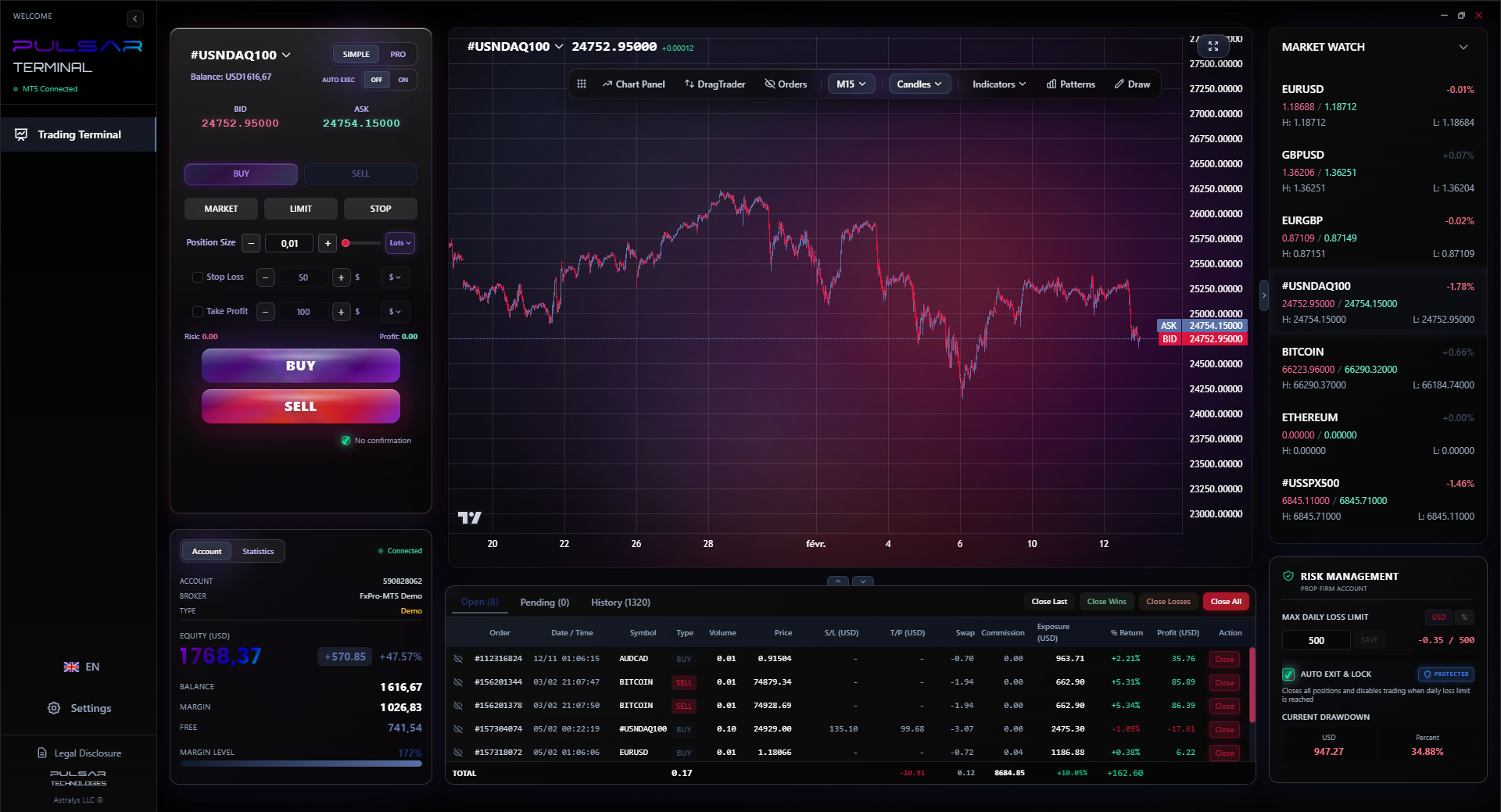
Managing complex trades and risk on MT5 is easier with tools that automate partial closures and trailing stops, letting you focus on strategy over mechanics.
“The real killer is the exchange rate margin. Absa doesn't give you the mid-market rate you see on Google.”
I've seen friends lose money before they even placed a trade. Don't be that person.
Pitfall 1: Using an Unregulated "Bucket Shop." They promise the world, easy sign-up, and direct card deposits. They might even offer insane bonuses. These operations are illegal in SA, and if they scam you, you have zero recourse. The FSCA won't help you. Always check the FSCA registry.
Pitfall 2: Misunderstanding use. Just because you can get 500:1 use doesn't mean you should. I once put on a trade with 100:1 use on XAU/USD during a news event. The spike against me triggered a margin call in seconds, wiping out 15% of my account. It was a brutal, expensive lesson in humility. Use a position size calculator religiously.
Pitfall 3: Trading Exotic Pairs Like USD/ZAR. You might think trading your home currency is easier. It's not. It's often more expensive and volatile. The spreads are much wider. A broker might charge 50-100 pips on USD/ZAR, compared to 1 pip on EUR/USD. That means the price needs to move 50 pips in your favor just to break even. Stick to the major pairs when you're starting.
Pitfall 4: Ignoring Tax Implications. In South Africa, profits from trading are generally considered income tax, not capital gains. You need to keep careful records of all your trades, deposits, and withdrawals. Your broker's statements are your bible come tax season.
💡 Petua Winston
Your first trade with a new broker should be a test withdrawal, not a test of your latest strategy. Prove the exit works before you worry about the entry.
“They are completely different tools for completely different jobs. Confusing them will cost you time and money.”
Let's wrap this up clearly.
Use Absa Bank for:
- Sending money overseas for family, education, or property payments.
- Receiving foreign income like freelance payments.
- Holding foreign currency for future known expenses (a hedge).
- Accessing international stock markets via their World Trader Account.
Use an FSCA-Licensed Forex Broker for:
- Speculative trading of currency pairs, indices, commodities, and cryptocurrencies with use.
- Implementing short-term strategies like scalping.
- Technical analysis on platforms like MT5 with advanced tools.
They are completely different tools for completely different jobs. Confusing them will cost you time and money.
My journey started with that confused look in the Absa branch. It led me to proper education, a demo account, and eventually funding a small real account with a regulated broker. That's the path. Skip the step where you try to force your retail bank to be something it's not. Understand the rules of the game in South Africa, pick the right tool for the job, and always, always prioritize working with a properly licensed broker. Your capital depends on it.
FAQ
Q1Can I trade forex directly through my Absa online banking?
No, you cannot. Absa's online banking platform does not offer a leveraged forex trading facility where you can speculate on currency pair price movements. It only allows for international money transfers and managing foreign currency accounts.
Q2Is forex trading even legal for South Africans?
Yes, but with a big caveat. It is legal to trade forex derivatives (like CFDs) through a broker licensed by the Financial Sector Conduct Authority (FSCA). It is illegal to speculate against the South African Rand through unauthorized channels or to use a local bank like Absa for that purpose.
Q3What is the cheapest way to send money overseas with Absa?
For smaller amounts, using the Western Union service via the Absa app might be cheaper than a SWIFT transfer due to lower fixed fees. For larger amounts, the online SWIFT transfer (0.55% commission) is cheaper than going to a branch (0.75%). Always remember the hidden exchange rate margin of 1.2-4% is your biggest cost.
Q4Can I use my Absa credit card to fund a forex trading account?
It is strongly discouraged and may violate your cardholder agreement if used for speculative trading. Also,, FSCA-licensed brokers in SA typically do not accept card deposits for this reason. They use local EFT deposits into their South African entity's bank account.
Q5Does Absa's World Trader Account let me trade forex?
No. The World Trader Account is for buying and selling shares (stocks) on international stock exchanges like the New York Stock Exchange. It is not a platform for trading currency pairs with use.
Q6How do I check if a forex broker is regulated in South Africa?
Go to the official FSCA website and use their 'Search for an authorised financial services provider' tool. Enter the broker's name or their provided FSCA license number. If they aren't listed, do not deposit any money with them.
Q7What is the minimum amount I need to start real forex trading?
With brokers like XM, you can start with as little as $5 (roughly R100). However, I strongly advise starting with a much larger demo account to learn, and when going live, start with an amount you can afford to lose - a few hundred dollars at minimum - to properly test strategies and manage position sizing realistically.
Pelajaran Prof. Winston
:
- ✓Absa provides forex services, not a forex trading platform.
- ✓SARB rules prohibit speculating against the ZAR via local banks.
- ✓Always use an FSCA-licensed broker for legal trading.
- ✓Absa's hidden exchange rate margin can be over 4% on transfers.
- ✓Fund via local EFT to the broker's SA entity, not card.
- ✓Test withdrawal processes before making large deposits.
Sejauh mana artikel ini berguna?
Klik bintang untuk menilai
Pandangan Dagangan Mingguan
Analisis & strategi mingguan percuma. Tiada spam.
Tentang Penulis
David van der Merwe
Pedagang Pasaran Membangun
Pedagang berpangkalan di Johannesburg dengan 11 tahun dalam mata wang pasaran membangun. Pakar dalam pasangan ZAR, dagangan terkawal FSCA, dan analisis pasaran Afrika Selatan.
Komen
Anda mungkin juga suka

Cara Trading Forex Sukses: 7 Prinsip dari Trader Profesional
Cara trading forex sukses dengan 7 prinsip trader pro: manajemen modal, disiplin, journal trading, backtest. Data nyata, bukan janji profit palsu.
Jam Trading Forex Terbaik untuk Trader Indonesia: Panduan Lengkap dengan Tabel Waktu
Panduan jam trading forex untuk trader Indonesia. Tabel 4 sesi dunia, jam emas 20:00-00:00, sesi mana yang harus dihindari. Data akurat + tips dari trader berpengalaman.
Top 5 Sàn Forex Uy Tín Nhất 2026: Review Jujur dari Trader Indonesia
Top 5 sàn forex uy tín 2026 untuk trader Indonesia. Review jujur: spread, deposit, withdraw, dukungan lokal. Exness, XM, IC Markets & lebih.
All these calculators are built into Pulsar Terminal with real-time data from your MT5 account. One-click position sizing, automatic risk management, and instant calculations.
