


Let's cut through the hype.
James Mitchell
Penganalisis Dagangan Kanan
☕ 12 minit baca
Apa yang akan anda pelajari:
- 1What Even Is an "Alpha" Prop Firm?
- 2The Looming Storm: US Regulations Are About to Change Everything
- 3The Real Costs (They Never Show You This in the Ads)
- 4The 7% Reality: Why Almost Everyone Fails
- 5Choosing a Firm in 2025: A Due Diligence Checklist
- 6The Only Strategy That Works: Passing is the Easy Part
- 7The Tax Man Cometh: Treat This Like a Business
- 8Final Verdict: Is the Alpha Prop Firm Path Worth It?

Let's cut through the hype. The promise of an alpha prop firm - where you trade massive capital for a huge profit split - is a fantasy for most. The real story is a business model designed to collect fees from hopeful traders, with only about 7% ever seeing a payout. I've been through the grinder, passed challenges, and blown funded accounts. This isn't theory; it's my trading journal. I'll show you the real numbers, the changing US regulations that could upend the industry by 2026, and the exact mindset shift you need to have any shot at being in that winning 7%.
The term gets thrown around a lot. An "alpha prop firm" isn't some official category. It's marketing slang for a firm that supposedly offers superior conditions - higher profit splits, bigger capital allocations, more flexible rules. In reality, it's just a prop firm. The structure is almost always the same: you pay a fee for a challenge, pass their rules, and get a simulated account. If you make money in the sim, you get a share of the simulated profits. The firm's real capital is only at risk if you consistently prove yourself. It's a brilliant risk-transfer mechanism. They're not betting on you; they're selling you a lottery ticket where the house always wins on volume.
I learned this the hard way. Early on, I was seduced by a firm advertising "alpha-level funding." I paid a $299 evaluation fee for a $50k account. I passed, got "funded," and made $3,200 in the first two weeks. I felt like a genius. Then I got sloppy, broke a daily loss rule on a revenge trade after a bad EUR/USD move, and lost the account. My cut of those profits? Zero. Their take from my fee? All of it. That's the alpha prop firm game.

Warning: Don't get hung up on the "alpha" label. It's a sales term. Focus solely on the concrete numbers: the evaluation cost, profit split percentage, and the specific, often brutal, trading rules.

💡 Petua Winston
The 'alpha' is in the risk management, not the returns. A firm's rules are a forced risk framework. Your job is to build a stricter one inside it.
This is the part most prop firm reviews ignore, and it's the most important. For years, prop firms in the US have operated in a gray area. They call themselves "educational services" to avoid direct SEC or CFTC oversight. That free ride is ending.
The SEC's New "Dealer" Rule
In early 2024, the SEC adopted new rules that massively broaden who counts as a "dealer." If a prop firm's trading activity is deemed systematic and regular, they could be forced to register with the SEC and FINRA. Think net capital requirements, regular audits, the whole nine yards. The compliance clock is ticking, with deadlines likely hitting through 2025.
The CFTC's CTA Threat
For firms offering futures trading (like NinjaTrader or Tradovate platforms), the CFTC is even more direct. They're openly considering classifying these evaluation-based firms as Commodity Trading Advisors (CTAs). This isn't a maybe; it's a "when." By 2026, I expect this to be reality. CTA registration means NFA membership, strict risk disclosure documents, and a level of scrutiny these firms have never faced.
What does this mean for you, the trader? Firms will have higher operational costs. Those costs will be passed down to you through higher evaluation fees, lower profit splits, or stricter rules. Some smaller firms might just shut down. The era of the wild west prop shop is closing. When you choose a firm now, you're not just betting on your skills; you're betting on their ability to navigate this regulatory hurricane. I'd stick with larger, more established names that have the legal teams to adapt, like the ones we've reviewed such as Topstep or Apex Trader Funding.
“From a gross profit of $1,850, I kept $1,324. My effective profit split was 71.5%, not 80%. You must factor this in from the start.”
That $99 challenge fee is just the entry ticket. The real cost of doing business with an alpha prop firm is a layered cake of deductions that quietly eats your profits.
Let's break down a real example from my books. I traded a $100,000 E-mini S&P 500 futures account with a well-known firm.
- Monthly Platform Fee: $15 (for Tradovate)
- Exchange Data Fees: $13 (CME real-time data)
- Per-Trade Commission: $0.85 per side, per contract. So a round-turn trade on 2 contracts cost me $3.40.
In one active month, I took 47 trades. Here's the math:
- Commissions: 47 trades * $3.40 = $159.80
- Platform & Data: $28
- Total Monthly Overhead: $187.80
I made a gross profit of $1,850 that month. My profit split was 80%. Sounds great, right? Not so fast.
First, the firm deducts commissions from the gross. So: $1,850 - $159.80 = $1,690.20. Then, they take their 20% from that amount: $1,690.20 * 0.20 = $338.04. My share before overhead: $1,690.20 - $338.04 = $1,352.16. Now, subtract my fixed costs: $1,352.16 - $28 = $1,324.16 net to me.
From a gross profit of $1,850, I kept $1,324. My effective profit split was 71.5%, not 80%. You must factor this in from the start. Always read the fee schedule. Every dollar in commission is a dollar that doesn't get multiplied by your profit split.

Example: A 5% profit target on a $50k account is $2,500. If you pay $250 in commissions to get there, your real target is 5.5%. It changes your entire position size calculator and risk approach.
The industry's dirtiest secret isn't a secret at all if you look at the numbers. Only about 5-10% pass the initial evaluation. And of all traders who buy a challenge, a mere 7% ever receive a payout. Let that sink in. For every 100 people dreaming of alpha status, 93 walk away with less money than they started with.
Why? It's not a conspiracy. It's psychology and poor strategy.
- The Challenge Mindset vs. The Trading Mindset: People trade the challenge to "pass," not to trade well. They become micro-managers, terrified of a 5% drawdown. This creates tense, forced trading that's doomed. I failed my first two challenges because of this. I was trading a chart of my P&L, not the market.
- Rule Myopia: The daily loss limit is a killer. It's often tiny, like 5% of the account's initial balance. A single bad scalping strategy session can blow it. Traders then sit on hands for 23 hours, watching perfect setups go by. The rule isn't there to protect you; it's there to create a statistical edge for the firm.
- Misunderstanding use: A "$100,000 account" isn't $100,000 of your risk capital. It's $100,000 of the firm's simulated risk, with you on the hook for the first loss. This false sense of security leads to oversized positions. A 2% risk on a $100k account is $2,000 - a huge amount for most. If you wouldn't risk $2,000 of your own cash on one trade, you shouldn't do it with theirs.
The firms publishing these stats, like Topstep's 12.4% pass rate, are actually the more transparent ones. The silent majority of failures never get reported. Your goal isn't to beat the market; it's to be more disciplined than 93% of other traders.
💡 Petua Winston
Calculate your effective profit split after ALL fees (commissions, data, platform). If it's below 70%, you're working for the firm, not with them.
“For every 100 people dreaming of alpha status, 93 walk away with less money than they started with.”
Forget the splashy promises. Your selection process needs to be cold, clinical, and focused on survival. Here’s my checklist, born from expensive mistakes.
| What to Look For | Why It Matters | Red Flag |
|---|---|---|
| Clear, Simple Rules | One-page summary of max daily loss, max overall loss, profit target, restricted instruments. | 10-page rulebook full of legalese and "gotchas" about news trading. |
| Realistic Profit Targets | 8-10% for Phase 1, 5% for Phase 2 is standard. Anything over 15% is a trap. | "Make 25% in 30 days with no time limit!" (The drawdown rule will be impossible). |
| High Profit Split on Scaling | 80% is baseline. Look for 90%+ or scaling plans that reach 90/10. | "Earn up to 50% profit share!" (This is laughably low). |
| Transparent Fee Schedule | All commissions, data fees, platform fees, and withdrawal fees listed upfront. | Hidden fees discovered only in the user dashboard after you pay. |
| Withdrawal Frequency & Minimum | Weekly or bi-weekly payouts with a low minimum ($50-100). | Monthly payouts with a $500 minimum. They're banking on you blowing the account before you can cash out. |
| Regulatory Preparedness | The firm publicly addresses SEC/CFTC changes and has a compliance page. | No mention of regulations, or claims they "don't apply." This firm is a ticking time bomb. |
My personal shift was moving from firms with flashy challenges to boring, established ones. The peace of mind is worth it. I've had good execution experiences with brokers used by major prop firms, like the ones in our IC Markets review and Pepperstone review, though you'll be on the prop firm's master account.

Pro Tip: Before you pay a cent, join a free trading community (not affiliated with the firm) and ask for real user experiences. Search the firm's name + "payout problem" or "rules change." A few complaints are normal; a pattern of them is a deal-breaker.
Passing the challenge is just the tutorial level. The real game is keeping the funded account. Your strategy must be built for longevity, not just a one-time sprint.
Phase 1 & 2 (The Challenge): Your goal is survival, not glory. Use a strategy with a high win rate, even if the reward-to-risk is lower (like 1:1). You need consistency to avoid the daily loss limit. I used a simple MACD indicator crossover on the 15-minute chart, combined with support/resistance, aiming for 10-15 pips on forex pairs. Boring. Effective. Risk 0.5% per trade, max. Your job is to be a sniper, not a machine gunner.
Phase 3 (The Funded Account): This is where you breathe. The daily loss limit usually resets, but the overall drawdown (max loss) is your new nemesis. This is when you can gradually scale into your real strategy, perhaps a swing trading approach on the 4-hour chart. But you must implement a hard trailing drawdown mechanism for yourself.
Here's my rule: Once my account equity hits a new high, I mentally lock in 50% of those profits as untouchable. If my equity is $105,000 (a $5k profit), I act as if my drawdown line is now $102,500. If I fall back to that, I stop trading for the week. This self-imposed rule has saved me from multiple margin call scenarios. The firm's rules are your outer boundary; your personal rules must be much stricter.
The psychological shift is everything. The funded account isn't "won money." It's a license to operate that can be revoked at any time. Trade it with more caution than your own money, not less.
Managing a prop firm's daily loss limit is a constant mental battle, which is why automating safety nets with a tool like Pulsar Terminal directly on your MT5 chart is a game-saver.

“The funded account isn't 'won money.' It's a license to operate that can be revoked at any time.”
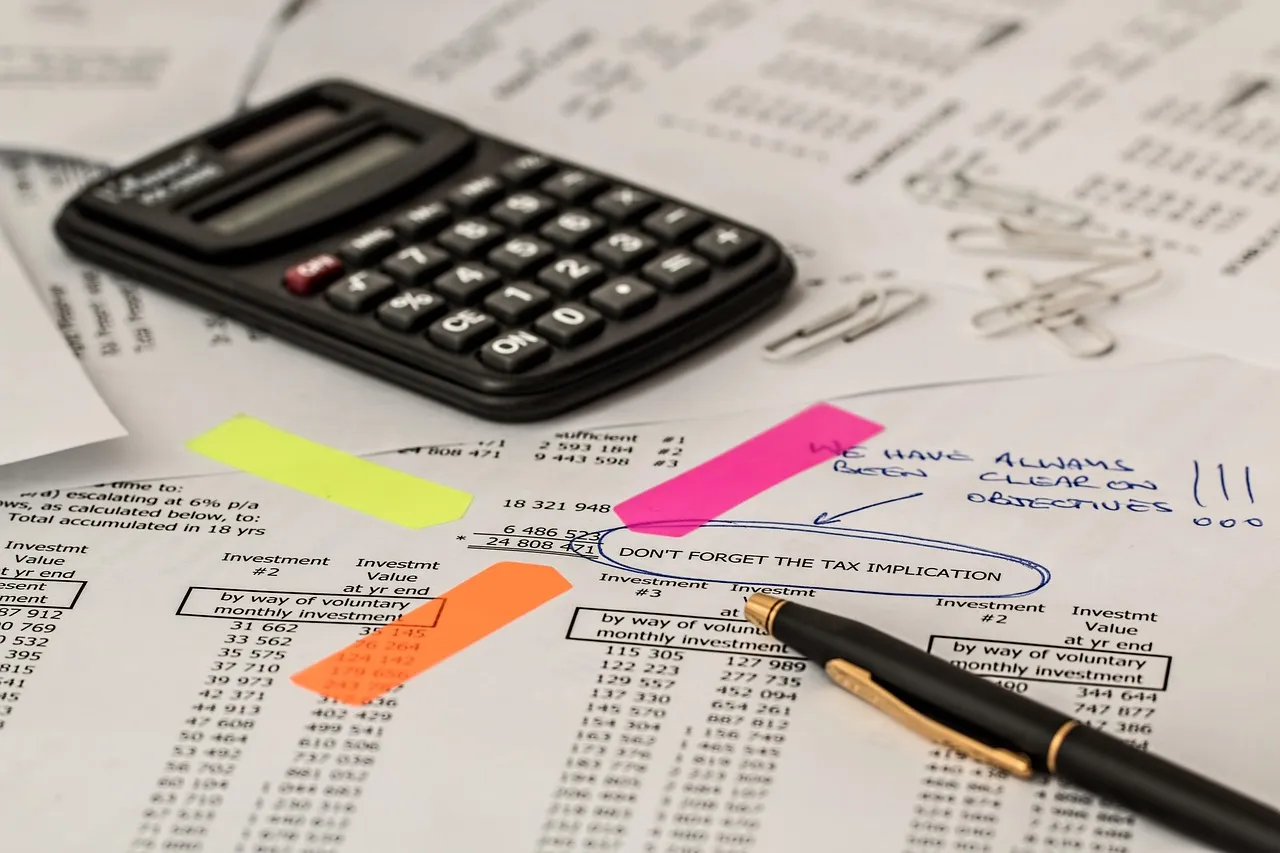
If you make it to the 7% and start getting payouts, congratulations. Now you have a new problem: the IRS. Prop firm payouts are self-employment income (Form 1099-NEC or 1099-MISC), not capital gains.
This is a huge deal. It means:
- You owe income tax (federal and state) on every dollar.
- You owe self-employment tax (roughly 15.3%) to cover Social Security and Medicare.
- Your effective tax rate can easily be 30-40% depending on your bracket.
You must set aside a portion of every single payout immediately. I learned this the painful way. My first big quarterly payout was $9,800. I was thrilled. I didn't set aside enough for taxes and got hammered the next April. Now, I automatically transfer 35% of every payout to a separate savings account. It's not my money; it's the government's, and I'm just holding it.
Keep careful records: all evaluation fees, platform fees, data fees, home office expenses, internet bills, trading education costs. These are business expenses that can offset your income. Talk to a CPA who understands trading. The $300 consultation could save you thousands.
Legally, you are an independent contractor. You have no employment benefits, no guarantee of future payouts, and the firm can change the rules or terminate your agreement with notice. Don't plan your life around this income until you have multiple years of consistent, after-tax profit. It's a volatile gig, not a career.
💡 Petua Winston
Your first funded account goal isn't a Lamborghini. It's to fund your next evaluation fee, if needed. Preserve the license above all else.
For 93% of people, no. It's an expensive lesson. For the disciplined 7%, it can be a powerful capital-access tool, but it's not a golden ticket.
Who should try it?
- A consistently profitable trader with a verified track record (even on a small account) who is capital-constrained.
- A trader with the mental discipline to follow a system robotically, treating firm rules as absolute law.
- Someone who can afford to lose the evaluation fees without it affecting their life or trading psychology.
Who should avoid it?
- Anyone looking for a "get-rich-quick" scheme or needing to "make back" losses.
- Traders who are still experimenting with strategies or have less than a year of live trading experience.
- People who can't control their emotions after a losing trade. The rules will expose and punish you.
My journey through prop firms cost me over $2,000 in various fees before I had a sustainable run. It taught me more about discipline and risk management than any book. But I could have learned those lessons on a $500 micro account. The prop firm just raised the stakes and the cost of tuition.
If you proceed, go in with your eyes open. See it for what it is: a high-stakes performance test where the odds are stacked against you. Your edge isn't a secret indicator; it's your ability to manage risk and your own psychology better than the vast, hopeful crowd you're walking in with. That's the only real alpha you'll find.
FAQ
Q1What is the best alpha prop firm in the USA?
There's no single "best." The right firm depends on your trading style (futures vs. forex), capital needs, and tolerance for rules. Currently, larger, established firms like Topstep (for futures) or FTMO (for forex, though international) are considered more reputable due to their transparency and longevity, which will be crucial as US regulations tighten. Always do your own due diligence using the checklist in this article.
Q2What percentage of traders actually make money with prop firms?
The data is stark. Only about 5-10% pass the initial evaluation challenges. More importantly, only about 7% of all traders who purchase a challenge ever receive a payout. This means over 93% of participants lose their evaluation fee and see no profit. Success requires treating it as a serious professional audition, not a lottery.
Q3Are prop firms legal in the United States?
Currently, yes, but they operate in a regulatory gray area by structuring themselves as educational evaluation services. This is changing rapidly. New SEC rules in 2024/2025 and expected CFTC action by 2026 are set to force major prop firms to register, likely as dealers or Commodity Trading Advisors (CTAs). This will increase oversight and could change their business models significantly.
Q4How are prop firm payouts taxed?
In the US, prop firm payouts are treated as self-employment income (reported on 1099-NEC/MISC), not capital gains. You will owe both income tax and self-employment tax (about 15.3% for Social Security/Medicare). You must set aside 30-40% of each payout for taxes and keep records of all related business expenses (fees, software, etc.) to deduct.
Q5What's the biggest mistake traders make in prop firm challenges?
Trading to "pass the challenge" instead of trading their proven strategy. This leads to micromanaging, fear of drawdowns, and breaking rules after a single loss. The second biggest mistake is misusing use - trading a $100k simulated account as if it's real $100k of their own risk capital, leading to position sizes that are psychologically unsustainable.
Q6Can you trade cryptocurrencies with a US prop firm?
It's very rare and becoming rarer. Most US-based prop firms focus on regulated futures (like CME Bitcoin futures) or forex. Direct spot crypto trading is typically avoided due to extreme volatility, lack of regulation, and the heightened risk it poses to the firm's capital models. Always check a firm's list of allowed instruments.
Pelajaran Prof. Winston
:
- ✓Effective profit split is often 10% lower than advertised after fees.
- ✓Only 7% of challenge buyers ever receive a payout.
- ✓US regulatory changes in 2024-2026 will increase costs and scrutiny.
- ✓Taxes on payouts are 30-40%, not capital gains rates.
- ✓The daily loss limit is the primary statistical edge for the firm.
Sejauh mana artikel ini berguna?
Klik bintang untuk menilai
Pandangan Dagangan Mingguan
Analisis & strategi mingguan percuma. Tiada spam.
Tentang Penulis
James Mitchell
Penganalisis Dagangan Kanan
Berpangkalan di New York dengan lebih 9 tahun pengalaman perdagangan. Fokus pada pasangan USD utama, cabaran prop firm, dan landskap peraturan AS.
Komen
Anda mungkin juga suka

Cara Trading Forex Sukses: 7 Prinsip dari Trader Profesional
Cara trading forex sukses dengan 7 prinsip trader pro: manajemen modal, disiplin, journal trading, backtest. Data nyata, bukan janji profit palsu.
Jam Trading Forex Terbaik untuk Trader Indonesia: Panduan Lengkap dengan Tabel Waktu
Panduan jam trading forex untuk trader Indonesia. Tabel 4 sesi dunia, jam emas 20:00-00:00, sesi mana yang harus dihindari. Data akurat + tips dari trader berpengalaman.
Top 5 Sàn Forex Uy Tín Nhất 2026: Review Jujur dari Trader Indonesia
Top 5 sàn forex uy tín 2026 untuk trader Indonesia. Review jujur: spread, deposit, withdraw, dukungan lokal. Exness, XM, IC Markets & lebih.
All these calculators are built into Pulsar Terminal with real-time data from your MT5 account. One-click position sizing, automatic risk management, and instant calculations.
