


I lost R8,000 in under an hour.

David van der Merwe
Pedagang Pasaran Membangun ·  South Africa
☕ 10 minit baca
Apa yang akan anda pelajari:
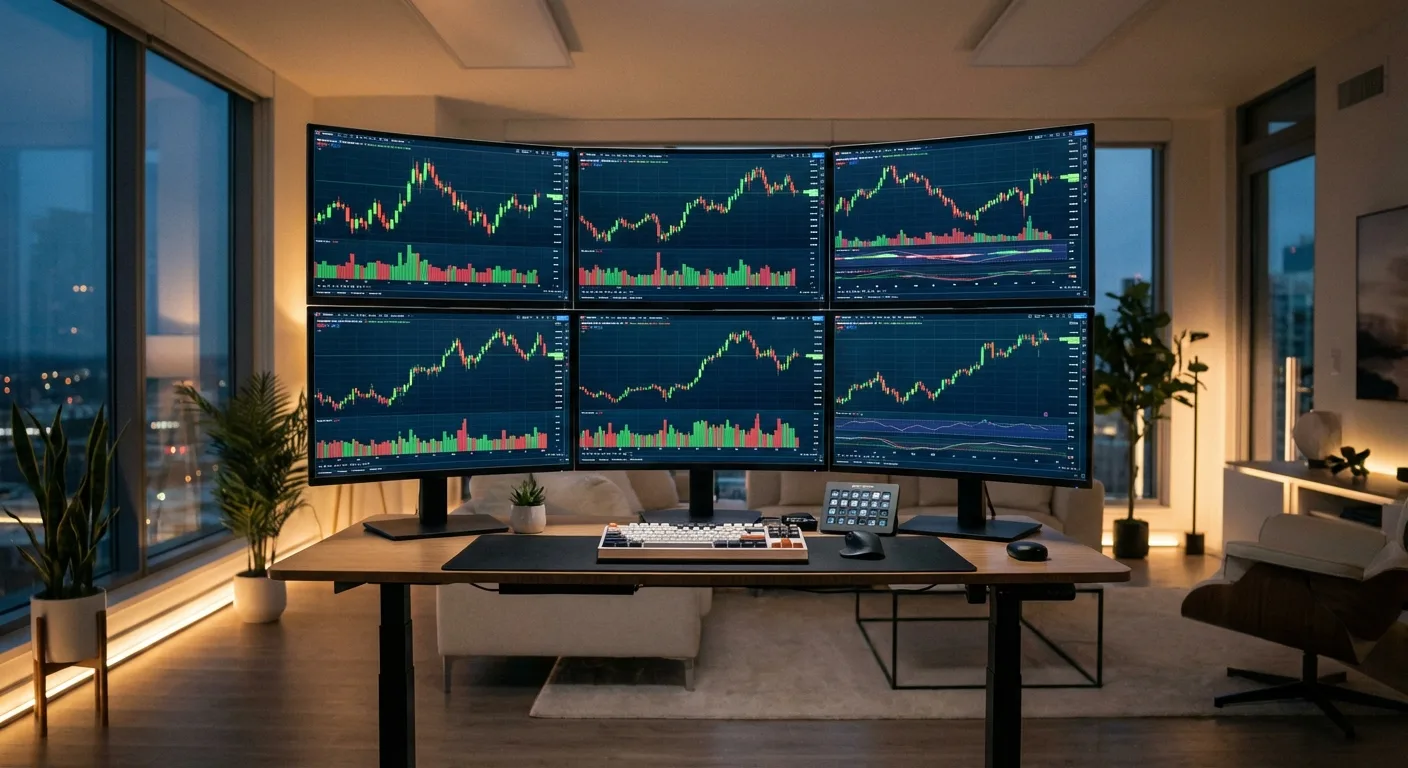
I lost R8,000 in under an hour. It was 2012, and I thought I'd cracked the code on USD/ZAR. The chart looked perfect, the news was bullish, and I went all in with too much use. A surprise statement from the SARB sent the rand rocketing, and my stop-loss got blown through like a tissue in a gale. That loss, more than any win, taught me what it truly means to define forex trading. It's not just buying and selling currencies. It's understanding a global beast, respecting local rules like the FSCA's, and knowing that the rand has a personality all its own. Let's strip away the hype and get real about what this market is.
At its core, forex trading is the simultaneous buying of one currency and selling of another. You're betting on the exchange rate between them. Think EUR/USD or USD/ZAR. If you think the euro will strengthen against the dollar, you buy EUR/USD. If you think the rand will weaken, you buy USD/ZAR. It's that simple in theory, and brutally complex in practice.
The market is decentralized, meaning there's no single exchange like the JSE. It's a global network of banks, institutions, hedge funds, and folks like you and me trading over-the-counter (OTC). This makes it the most liquid market on earth, with over $7 trillion traded daily. That liquidity is a double-edged sword: it means you can get in and out of trades fast, but it also means prices can move violently when big players step in.
For a South African, defining forex trading has a local flavor. You're not just trading abstract pairs; you're often trading the economic fate of your own country against others. Trading USD/ZAR feels different when you're paying for petrol and groceries in rand. That emotional connection can be a liability if you're not careful.

Warning: Liquidity doesn't mean safety. The most liquid pairs (like EUR/USD) can have the tightest spreads, but during major news events, even those spreads can widen dramatically, hitting you with unexpected slippage and bigger losses.
You can't define forex trading here without talking about the Financial Sector Conduct Authority (FSCA). They're the sheriff in town, and trading with an unregulated broker is like inviting a fox into your henhouse. I've seen too many "brokers" vanish with client funds.
The FSCA operates under the Financial Sector Regulation Act. Their main job is market conduct: making sure brokers don't rip you off. Any legit broker offering services to South Africans must be licensed as a Financial Service Provider (FSP). You can and should check their FSP number on the FSCA's website. It's your first line of defense.
use: The Local Advantage (and Danger)
Unlike Europe where use is capped low, the FSCA hasn't set hard limits. This means brokers often offer use up to 1:500. Sounds great, right? More buying power! Here's the reality check: that's a quick way to blow up your account. I used 1:100 on that fateful USD/ZAR trade. The move against me was about 150 pips. On a standard lot ($100,000 position), that 1:100 use turned that move into a 150% loss on my margin. Poof. Gone. Now I rarely go above 1:30, even on what I think are sure things. Use a position size calculator religiously. use is a tool, not a strategy.
Broker Choices in the SA Market
You'll find global brokers with FSCA licenses and local offerings. They'll offer ZAR-denominated accounts, which is convenient but think about the conversion fees. I keep a USD account to avoid constant conversion on international pairs. Look closely at their execution model (Market Maker vs. ECN/STP) and their specific fees on ZAR pairs. A broker like Exness or IC Markets, if properly licensed here, might offer tighter spreads on majors, but always verify their local status first.

💡 Petua Winston
Your first R10,000 in profit is the most expensive you'll ever earn. It's the tuition fee the market charges for your education. Don't celebrate it. Reinvest it in better tools or more learning.
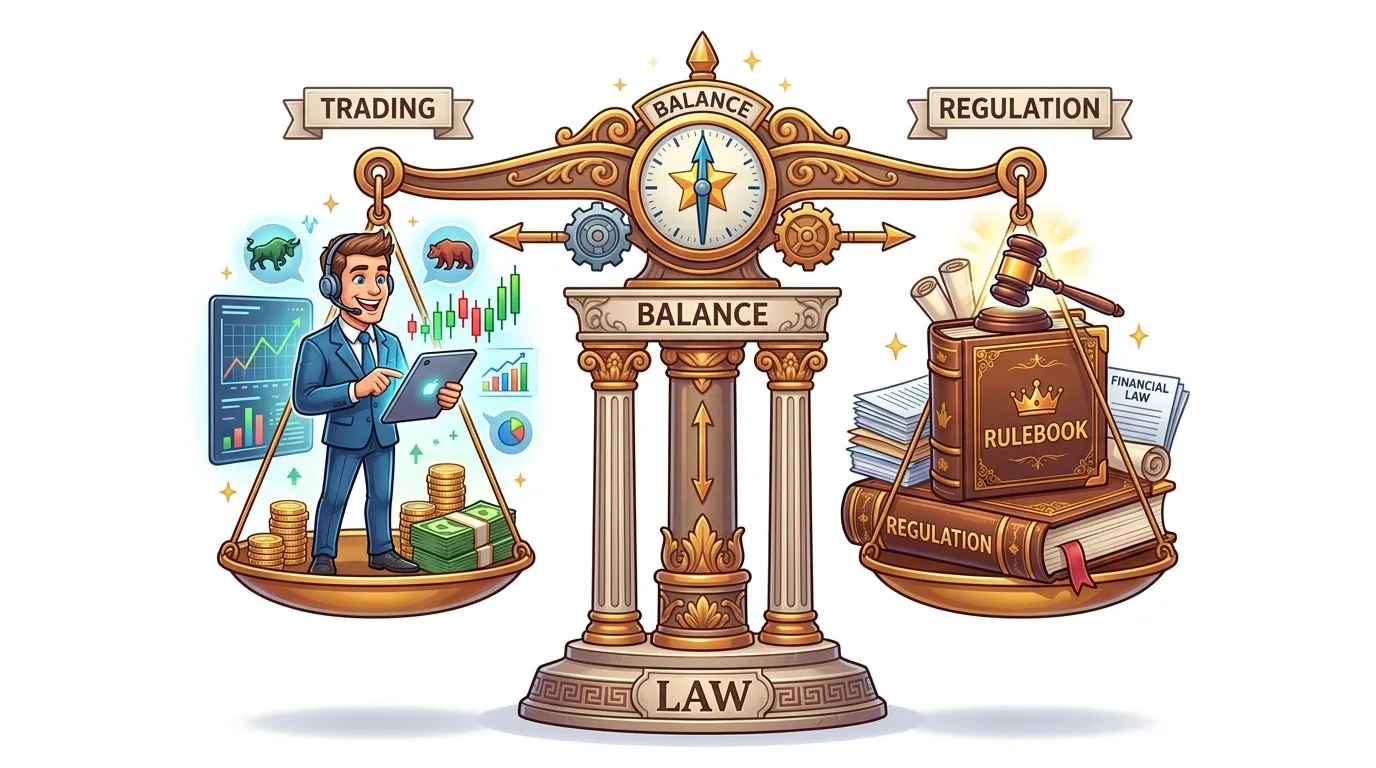
“To define forex trading is to define a constant battle between your discipline and your greed.”
When brokers advertise "low costs," they're usually talking about the spread. That's the difference between the buy (ask) and sell (bid) price. It's how many market makers make their money. But to truly define forex trading costs, you need to account for everything.
Let's break down a real trade I placed last month on GBP/USD:
- Spread: 0.8 pips on my standard account. On a mini lot (10,000 units), that's $0.80 cost to enter.
- Commission: My broker charges none on this account type. (ECN accounts would have a commission but a near-zero spread).
- Swap Fee: I held the trade for three days. The swap was -$1.20 per night. That's -$3.60 total, because interest rates favored the other side.
- Slippage: On entry, none. On exit, during a slightly volatile period, I got 0.2 pips of slippage. Another $0.20.
Total cost on that trade: $4.60. The trade profited $85. So costs were about 5.4% of my profit. On a losing trade, those costs just add salt to the wound.

Example: Trading USD/ZAR: The spread is much wider. Let's say it's 25 pips (common). On a mini lot (10,000 USD), each pip in USD/ZAR is worth about ZAR 1.35 (it varies).
- Spread cost: 25 pips * ZAR 1.35 = ZAR 33.75 just to open the trade.
- That means the pair needs to move 25 pips in your favor just to break even on the spread. This fundamentally changes your strategy compared to trading a 1-pip spread on EUR/USD.
USD/ZAR, EUR/ZAR, GBP/ZAR. These are our home games. They behave differently from the major pairs. Higher volatility, wider spreads, and they react fiercely to local news: SARB interest rate decisions, political headlines, load-shedding schedules, and commodity prices (especially platinum and gold).
I learned this the hard way early on. I was trading USD/ZAR like it was EUR/USD, using similar stop-loss distances. A routine political comment caused a 80-pip spike against me, taking me out before the price settled back to where it started. My stop was too tight for the instrument's character.
Correlations with Gold
The rand is a commodity currency. Watch XAU/USD (gold). Often, when gold rises, the rand strengthens (because SA is a major producer). It's not a perfect correlation, but it's a relationship you need to be aware of. I once had a long USD/ZAR trade and a long gold trade on simultaneously, effectively hedging myself into a net-zero position without realizing it. A rookie mistake that cost me opportunity.
Payment methods are also local. EFTs are king, but processing times can lag. I plan my deposits ahead of time. Some brokers offer instant Ozow or SiD deposits, which is a nice local touch.
💡 Petua Winston
The rand has a PhD in volatility. Never trade USD/ZAR with the same stop-loss distance you'd use for EUR/USD. Give it room to breathe, or it will suffocate your account.
“use is a tool, not a strategy. Using too much is the fastest known method to turn a live account into a demo account.”
So you want to define forex trading for yourself, not just read about it. Here's the stripped-down, no-BS path I wish I'd followed.
- Education Before Deposit: Don't put a cent in yet. Use a demo account for at least 3 months. Treat the virtual money like real money. This tests your psychology without risk. I demo-traded for 4 months and still wasn't ready.
- Pick a Regulated Broker: FSCA license is non-negotiable. Compare their conditions for ZAR pairs. Look at minimum deposit (R500-R2000 is common), spreads on USD/ZAR, and whether their platform (usually MT4 or MT5) feels intuitive to you. XM and Pepperstone have strong local presences, but always check the current FSCA status.
- Start Stupidly Small: When you go live, deposit the minimum. Your first goal is not to make money. Your first goal is to not lose the deposit. Trade micro lots (1,000 units). The emotional experience is completely different from demo.
- Develop a Simple Plan: Will you be a scalping fiend or a swing trading patient hunter? Pick one. My first profitable year came from simple swing trading using just the RSI indicator and support/resistance. I waited for RSI to hit oversold on a pullback to a clear support level on the 4-hour chart. Boring. Effective.
- Record Everything: Keep a journal. Entry, exit, why you took the trade, your emotional state. I reviewed mine weekly. My biggest finding? I lost more on trades I entered out of boredom than from any technical failure.

Pro Tip: Tax. SARS sees forex trading as speculative income. It's taxable under normal income tax rules. Keep impeccable records of all your trades, deposits, and withdrawals. A good accountant who understands trading is worth every rand.
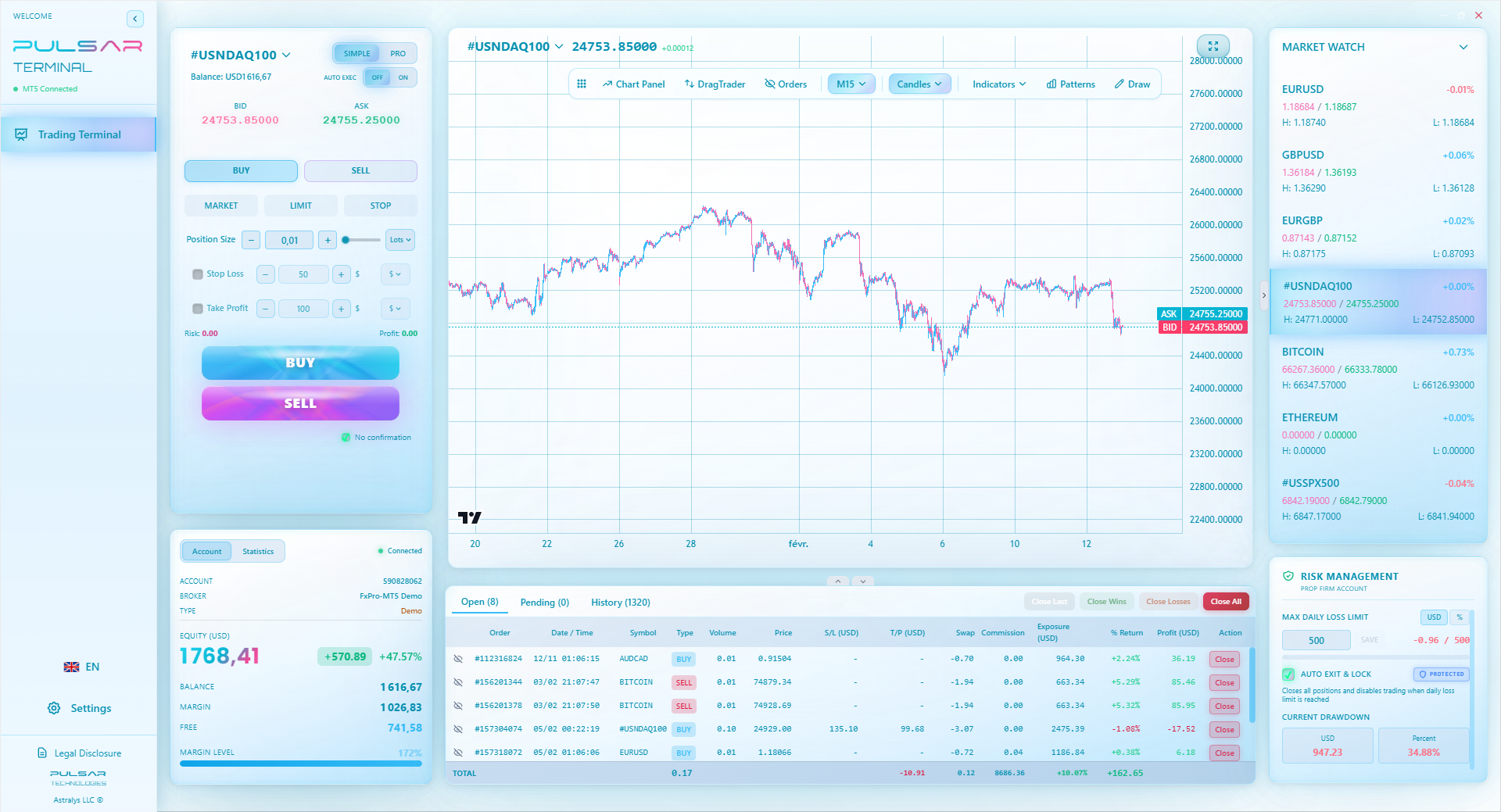
Managing multiple trades and setting advanced stop-losses manually on MT5 is a headache; Pulsar Terminal automates trailing stops, breakeven moves, and multi-target orders with a simple drag-and-drop.
Let's get vulnerable. Here's where I've sent good money after bad.
Chasing Losses: After that R8,000 loss, I deposited another R5,000, convinced I could win it back immediately. I traded bigger, angrier. Lost the R5,000 in two days. The hole just got deeper. The only correct move after a big loss is to walk away. Shut the platform. Come back tomorrow or next week.
Ignoring the Macro: In 2018, I was beautifully long on EUR/USD based on my charts. Totally ignored the building drama around US-EU trade tensions. A tariff tweet from Trump wiped out my two-week gain in minutes. You must have a cursory understanding of what's moving the market beyond your charts. Are central banks hawkish? Is there geopolitical tension?
Overcomplicating the Charts: I had a phase with 12 indicators on screen. MACD, Bollinger Bands, Stochastics, Ichimoku Clouds. It was a colorful mess that gave conflicting signals. Price action got lost. Simplicity wins. Now I use 2, maybe 3 indicators max. Clean charts lead to clearer decisions.
Misunderstanding the Spread: I used market orders for everything, not realizing that in fast markets, the spread could widen and I'd get a worse fill. For entering, use limit orders. You control the price. This alone saved me thousands in slipped entries over the years.
The ultimate pitfall is not defining forex trading for what it is: a high-risk, high-reward skill that takes years to master. It's not a side hustle. It's a second job that you pay to learn.
💡 Petua Winston
If you can't explain your trade setup in one simple sentence ('Price bounced off the daily support with RSI oversold'), it's probably too complicated and likely to fail.
“The only correct move after a big loss is to walk away. Shut the platform. The market will still be there tomorrow.”
Forex trading isn't for everyone. It's for people who can handle stress, who are brutally self-critical, who have risk capital they can afford to lose (money that, if gone, doesn't change your lifestyle), and who have the patience of a saint.
Ask yourself:
- Can I follow a rule even when every emotion is screaming to break it?
- Can I accept a losing trade as the cost of doing business, without it ruining my day?
- Do I have the time to analyze, learn, and monitor my trades?
If you answered no to any of these, consider other investments. The market will exploit your weaknesses. I've seen it destroy marriages and savings.
But if you have the temperament, it offers unparalleled freedom. No boss, no commute, a global market open 24/5. I remember the first month I made more from trading than my old salary. It was surreal. But the next month I gave half of it back. That's the rollercoaster.
To define forex trading is to define a constant battle between your discipline and your greed, your analysis and the market's chaos. Start small, learn big, and never stop respecting the power of the rand and the global currents that move it. Good luck. You'll need it, and a hell of a lot of skill.
FAQ
Q1Is forex trading legal in South Africa?
Yes, absolutely. It's legal and regulated by the Financial Sector Conduct Authority (FSCA). The key is to only use brokers who are licensed by the FSCA as Financial Service Providers (FSPs). Trading with an unregulated, offshore broker is legal for you but offers zero protection if something goes wrong.
Q2How much money do I need to start forex trading in South Africa?
You can start with very little. Many regulated brokers offer accounts with minimum deposits as low as R500 or $50. However, starting with the bare minimum is smart. Your initial deposit should be money you are 100% prepared to lose while you learn. The real cost is in education and the inevitable early losses, not just the deposit.
Q3What is the best currency pair for beginners in South Africa?
Start with major pairs like EUR/USD or GBP/USD. They have the tightest spreads, high liquidity, and tons of free analysis available. Avoid USD/ZAR as a beginner, despite it being familiar. The wider spreads and higher volatility make it a much tougher environment to learn basic skills without getting chewed up by costs.
Q4How are forex trading profits taxed in South Africa?
SARS treats profits from forex trading as income from a speculative business (unless you can prove it's capital in nature, which is very difficult). This means your net profit (profits minus losses and allowable expenses) is added to your other income and taxed at your marginal income tax rate. Keep detailed records of every single trade.
Q5What is a pip, and how is it calculated for ZAR pairs?
A pip is a 'percentage in point,' the smallest price move a currency pair can make. For most pairs, it's 0.0001. For USD/ZAR, it's usually 0.0010. The monetary value depends on your trade size. On a standard lot (100,000 units) of USD/ZAR, a 1 pip move is roughly ZAR 10. On a mini lot (10,000 units), it's about ZAR 1. Use a pip definition calculator until it becomes second nature.
Q6What happens if I get a margin call?
A margin call is a warning from your broker that your account equity has fallen below the required level to maintain your open positions. If you don't add funds, the broker will automatically close some or all of your trades to prevent further losses that could put your account in negative balance. It's a safety mechanism that feels like a disaster. The best practice is to manage your risk so you never get near a margin call.
Q7Can I trade forex part-time in South Africa?
Yes, many successful traders do. Swing trading on higher timeframes (like 4-hour or daily charts) is suited for part-time traders, as you only need to check the charts once or twice a day. Avoid scalping or day trading on lower timeframes if you have a full-time job, as it requires constant screen attention and is incredibly stressful to juggle.
Pelajaran Prof. Winston
:
- ✓FSCA regulation is your non-negotiable first filter.
- ✓USD/ZAR spreads cost 25x more than EUR/USD. Plan accordingly.
- ✓Never use use above 1:30 as a beginner.
- ✓Your first live goal is survival, not profit.
- ✓Taxable income goes to SARS. Keep every record.
Sejauh mana artikel ini berguna?
Klik bintang untuk menilai
Pandangan Dagangan Mingguan
Analisis & strategi mingguan percuma. Tiada spam.
Tentang Penulis
David van der Merwe
Pedagang Pasaran Membangun
Pedagang berpangkalan di Johannesburg dengan 11 tahun dalam mata wang pasaran membangun. Pakar dalam pasangan ZAR, dagangan terkawal FSCA, dan analisis pasaran Afrika Selatan.
Komen
Anda mungkin juga suka

Cara Trading Forex Sukses: 7 Prinsip dari Trader Profesional
Cara trading forex sukses dengan 7 prinsip trader pro: manajemen modal, disiplin, journal trading, backtest. Data nyata, bukan janji profit palsu.
Jam Trading Forex Terbaik untuk Trader Indonesia: Panduan Lengkap dengan Tabel Waktu
Panduan jam trading forex untuk trader Indonesia. Tabel 4 sesi dunia, jam emas 20:00-00:00, sesi mana yang harus dihindari. Data akurat + tips dari trader berpengalaman.
Top 5 Sàn Forex Uy Tín Nhất 2026: Review Jujur dari Trader Indonesia
Top 5 sàn forex uy tín 2026 untuk trader Indonesia. Review jujur: spread, deposit, withdraw, dukungan lokal. Exness, XM, IC Markets & lebih.
All these calculators are built into Pulsar Terminal with real-time data from your MT5 account. One-click position sizing, automatic risk management, and instant calculations.
