


I remember staring at my screen in 2015, the USD/ZAR at 14.85, convinced I'd cracked the code from some flashy forex book PDF I'd downloaded.

David van der Merwe
Pedagang Pasaran Membangun ·  South Africa
☕ 10 minit baca
Apa yang akan anda pelajari:
- 1Why That "Free Forex Book PDF" Promise is Usually Broken
- 2What Real Trading Education Actually Looks Like
- 3Where to Find Genuine Resources (Including Good PDFs)
- 4Building a South African-Centric Trading Plan
- 5Common Pitfalls Every South African Trader Must Avoid
- 6From Knowledge to Consistent Action
- 7Your Next Steps Today
I remember staring at my screen in 2015, the USD/ZAR at 14.85, convinced I'd cracked the code from some flashy forex book PDF I'd downloaded. I went all in. An hour later, a surprise SARB statement hit the wires, the Rand ripped higher, and I was staring at a R8,000 loss. The 'secret strategy' in that PDF was worthless. That moment cost me money, but it taught me the real value of a proper trading education. Let's talk about how you, as a South African trader, can actually find useful resources and avoid the junk.
You've seen the ads. "Download my FREE forex book PDF and discover the secret to consistent profits!" They're everywhere, especially targeting new traders in markets like ours. Here's the uncomfortable truth: 99% of those are lead magnets, not education. Their sole purpose is to get your email so they can sell you a R5,000 'masterclass' or a dodgy signal service.
The content is often generic, repurposed from other free sources, and filled with vague platitudes about 'discipline' and 'mindset' without any actionable, market-tested methodology. For a South African trader, this is doubly dangerous. Strategies lifted from US day-trading books often fail to account for the unique volatility of pairs like USD/ZAR or the specific market hours and liquidity we deal with.
I downloaded one years ago that preached a scalping strategy requiring 0.1 pip spreads. Great in theory, but try that on EUR/ZAR when the spread is 14 pips wide. You're doomed before you even place the trade. That's why understanding local costs, like the spreads on ZAR pairs, is non-negotiable. A real resource needs to speak to our market.

Warning: If a 'guru' promises a forex book pdf that will make you rich with no screen time, it's a scam. Period. Real trading is a skill, not a secret handout.
The FSCA has been cracking down on unlicensed financial advice for a reason. Good information exists, but you need to know where to look and what to ignore.

So if the flashy PDFs are trash, what should you be studying? Real education is structured, boring sometimes, and focuses on the unsexy fundamentals. It's a pyramid.
The Foundation: Mechanics & Mindset
This is your absolute bedrock. You need to understand how the market works at a mechanical level. What is a spread and how does it eat into your profits on exotic pairs? What is a pip and how do you calculate its value in Rands? What triggers a margin call? This is where a truly well-written guide or book is worth its weight in gold. It explains these concepts clearly, without rushing to the 'fun' part.
Most importantly, it dedicates serious time to risk and psychology. It will force you to use a position size calculator before you even think about a chart. My single biggest early mistake was risking 5% of my account per trade because some forum guru said to. I blew up two small accounts that way. A 2% max risk rule isn't a suggestion; it's what keeps you in the game.
The Framework: Analysis & Strategy
Only after the foundation do you get into analysis. This means learning about price action, support/resistance, and maybe one or two indicators deeply - like the RSI indicator or MACD indicator - instead of ten poorly. A good resource will show you how to combine these tools into a clear, rules-based strategy for scalping or swing trading.
The Practice: Execution & Review
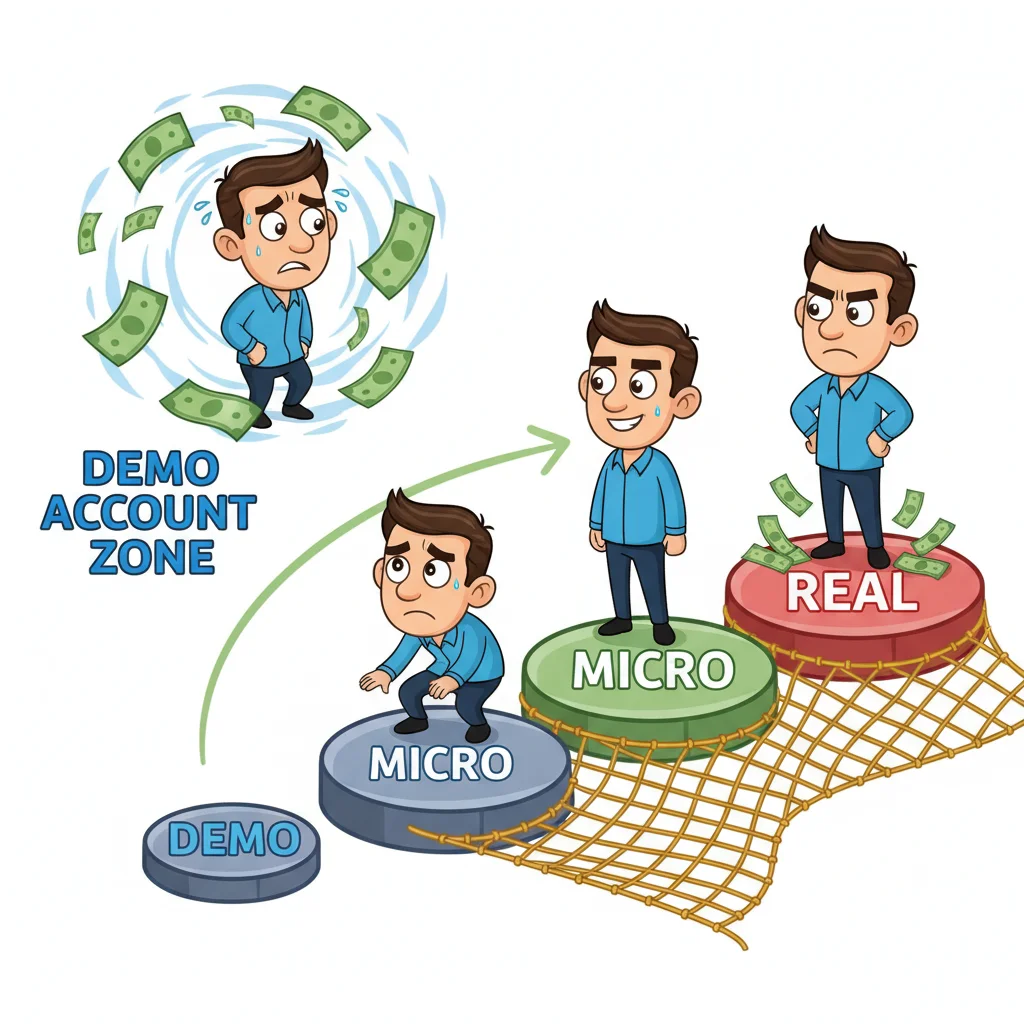
Finally, it pushes you to practice on a demo account, then a live account with tiny size, and to journal relentlessly. Did you follow your plan? Why did that USD/ZAR trade fail? Was it the strategy or your execution? This cycle of plan, trade, review is the real 'secret'.

💡 Petua Winston
A library of a hundred trading books is useless if you haven't mastered the first chapter of the first one: risk management. Start there, stay there, and build out slowly.
“Real education is structured, boring sometimes, and focuses on the unsexy fundamentals.”
Good stuff is out there, often for free or at a fair price. You just have to avoid the carnival barkers.
1. Reputable Broker Education Hubs: This is your best first stop. FSCA-regulated brokers like IG, FP Markets, and XM have invested heavily in education. IG's Academy app is fantastic. These are neutral, professional, and designed to make you a competent trader (because competent traders are better clients). They cover basics, advanced concepts, and often have webinars. This is where you'll find the closest thing to a legitimate, free forex book pdf – structured course modules you can work through.
2. Classic Trading Books (Buy Them): Go to Takealot or your local bookstore and buy the timeless texts. Books like "Trading in the Zone" by Mark Douglas (for psychology) or "Technical Analysis of the Financial Markets" by John Murphy are industry standards for a reason. You're paying for decades of condensed wisdom, not a get-rich-quick scheme. I still revisit my dog-eared copy of Murphy's book.
3. Financial Regulatory Bodies: The FSCA website has investor awareness material. While not a trading strategy guide, it will teach you about your rights, how to check if a broker is licensed, and the hallmarks of a scam. This knowledge is your first line of defense.
4. Quality Independent Analysts (Be Critical): Look for local or global analysts who focus on education over signals. They often publish detailed market analysis that explains their thinking process. The goal is to learn how they assess the market, not to blindly copy their trades. See if their analysis on pairs like XAU/USD or EUR/USD holds up over time.

Pro Tip: When you find a resource, test its concepts on a USD/ZAR chart from 2020 (COVID crash) or during a SARB interest rate decision. If the logic falls apart in extreme volatility, its utility is limited.
Your trading plan isn't a generic document. It's a custom blueprint for operating in your market. Here are the local factors it must address:
Trading Hours & Pairs: Are you trading London overlap (10am-1pm SAST) for EUR/USD, or are you focusing on USD/ZAR, which is active during SA business hours and reacts to local news? Your plan must specify which pairs you trade and why. Don't jump from Gold to the Rand to the Euro. Master one market first.
Costs & use: Your plan must have a section on costs. Write it down: "My broker, IC Markets, offers USD/ZAR spreads from 5 pips. I will not enter a trade if the spread is wider than 8 pips." Remember, the FSCA use cap is 30:1 for retail traders. Your plan should use far less - I never exceed 10:1, even on my best setups.
News & Data: Your economic calendar must highlight South African events: SARB repo rate announcements, CPI/PPI data, budget speeches, and S&P/Moody's credit reviews. A trade just before a SARB announcement is a gamble, not a planned entry.
Risk Parameters: This is non-negotiable. Your plan must state:
- Maximum risk per trade (e.g., 1.5% of account equity).
- Daily loss limit (e.g., 3%).
- Weekly loss limit (e.g., 6%). Once hit, you stop for the day/week.
My plan in 2023 saved me from myself. I had a great run in January, got cocky, and broke my own 2% risk rule on a GBP/ZAR trade. I lost 4.5% in one go. Because my plan had a 5% daily stop-loss, I shut down for the day instead of revenge trading. That rule saved me from a potential 10%+ disaster.
“Your trading plan isn't a generic document. It's a custom blueprint for operating in *your* market.”
Let's talk about the specific ways traders here lose money, so you can sidestep them.
Pitfall 1: Chasing ZAR Exotics for the 'Big Move'. USD/ZAR can move 500 pips in a week. That's tempting! But it's a double-edged sword. The spreads are wide (5-15 pips), and the volatility can stop you out before the move even begins. I learned this trading EUR/ZAR. I was right on the direction, but a 14-pip spread and a 50-pip stop-loss meant I needed a 64-pip move just to break even. The market reversed 45 pips and took me out.
Pitfall 2: Ignoring the FSCA & Using Unregulated Offshore Brokers. It might seem easier to sign up with an unregulated broker offering 500:1 use. But if they disappear with your money, you have zero recourse. Stick with FSCA-regulated brokers like Pepperstone (which holds an FSCA license) or other reputable, regulated entities. The 30:1 use limit is there to protect you.
Pitfall 3: Underestimating the Impact of Local Politics & Load-Shedding. Our market is sensitive to political headlines and Eskom news. A major cabinet reshuffle or a move to Stage 6 load-shedding can cause a sharp Rand sell-off. Your trading plan needs a protocol for these events: perhaps tightening stops or avoiding new entries during high-risk news periods.
Pitfall 4: Not Accounting for Tax. The SARS man cometh. Your net trading profits are taxable income. Keep careful records of all trades, deposits, and withdrawals. A simple spreadsheet from day one will save you a nightmare later.

Example: Let's say you risk 2% (R2,000) on a USD/ZAR trade with a 50-pip stop-loss. The pip value is roughly R1.20 per mini lot. Your position size should be R2,000 / (50 pips * R1.20) = ~3.3 mini lots. Not rounding up to 4 lots 'just in case' is the discipline that separates survivors from casualties.
💡 Petua Winston
The most valuable 'forex book pdf' you'll ever create is your own trading journal. Document every decision, every emotion, every outcome. That's where the real patterns emerge.
Reading a great forex book pdf or completing a course is just step one. The real work is turning that knowledge into disciplined, repetitive action. This is where most fail.
You need to build a routine. Mine looks like this:
- Sunday Evening: Review the weekly economic calendar. Mark high-impact SA and global events.
- Pre-Market (Each Day): Check for any overnight gaps. Review my watchlist of 5-6 pairs. I don't look for trades; I wait for the market to meet my pre-defined criteria.
- Trade Execution: If a setup appears, I calculate my position size using my position size calculator, place the trade, set my stop-loss and take-profit, and walk away. No micromanaging.
- End of Day: I spend 10 minutes in my journal. I note the trade, the rationale, the outcome, and my emotional state. Was I anxious? Overconfident?
The goal is to remove emotion and make trading boringly mechanical. Your edge comes from superior risk management and patience, not from predicting every wiggle in the Rand. I had a 3-month period where I only took 9 trades. It was frustratingly quiet, but 7 were winners because I waited for only the clearest setups. Patience, enforced by a plan, is a strategy in itself.
Turning your trading plan into consistent action requires tools that remove emotion, like Pulsar Terminal's automated order and risk management features on MT5.

“Patience, enforced by a plan, is a strategy in itself.”
Forget about searching for a magical forex book pdf. Start building a real education with these actionable steps:
- Open a Demo Account: Do this today with an FSCA-regulated broker like Exness or IC Markets. It's free, and it's your risk-free training ground.
- Pick ONE Learning Source: Commit to one proper educational hub - like your broker's academy - or one classic book. Work through it completely over the next month.
- Draft Your Trading Plan: Use the framework from section 4. Write down your rules for pairs, risk, times, and strategy. This is a living document you'll refine.
- Practice Your Process on Demo: Trade your plan on demo for at least two months. You need to see it through different market conditions - trending, ranging, volatile.
- Start Small: When you go live, start with an amount you can afford to lose completely. Your first goal is not profit; it's to execute your plan perfectly for 100 trades. The profits will follow the process.
The journey is long, and you will have losing streaks. I've had them. But with a solid education from credible sources, a plan built for South Africa's unique market, and iron-clad discipline, you give yourself a real fighting chance. Now, go do the work.
FAQ
Q1Are free forex book PDFs from the internet ever worth it?
Rarely. Most are low-quality lead magnets designed to sell you something else. The information is often generic, outdated, or deliberately vague. Your time is better spent with educational materials from regulated brokers or by investing in a few classic, well-reviewed trading books.
Q2What is the single most important thing for a new South African trader to learn?
Risk management. Before you learn a single indicator, you must learn how to size your positions correctly using a position size calculator, set stop-losses, and define your maximum daily loss. Understanding the wide spreads on ZAR pairs like USD/ZAR is a critical part of this. Without risk management, you will not survive.
Q3Can I use international trading strategies in South Africa?
You can, but you must adapt them. Strategies designed for highly liquid pairs like EUR/USD with tiny spreads often fail on volatile exotic pairs like ZAR crosses. Always test any strategy on South African market hours and factor in our wider spreads and sensitivity to local news before risking real money.
Q4How do I know if a broker is legitimately regulated in South Africa?
Go directly to the Financial Sector Conduct Authority (FSCA) website and use their searchable register of authorised financial service providers. Any legitimate broker operating here will have an FSP number. You should verify this number on the FSCA site, not just trust it on the broker's homepage.
Q5Is forex trading taxable in South Africa?
Yes. The South African Revenue Service (SARS) views net profits from forex trading as taxable income. You are required to declare these profits in your annual tax return. It is crucial to keep detailed records of all your trades, deposits, and withdrawals for tax purposes.
Q6What's a realistic starting capital amount for a beginner in South Africa?
Start with an amount you can afford to lose completely - this is non-negotiable. Many reputable brokers have minimum deposits as low as $5 or R100. Starting with R2,000-R5,000 is common, but the key is to trade micro or mini lots so you can practice proper position sizing. The goal is learning, not getting rich quick.
Q7Why is the use for retail traders capped at 30:1 by the FSCA?
The FSCA implemented this cap (aligned with global ESMA standards) to protect retail investors. High use amplifies both gains and losses. While it may seem restrictive, the 30:1 limit forces traders to use more of their own capital, which encourages better risk management and prevents account blow-ups from a single, small adverse price move.
Pelajaran Prof. Winston
:
- ✓Free 'secret' PDFs are almost always marketing traps.
- ✓Master risk management before any strategy.
- ✓Always factor in ZAR pair spreads (5-15 pips).
- ✓Test every strategy against SA market volatility.
- ✓Your trading journal is your most important book.
Sejauh mana artikel ini berguna?
Klik bintang untuk menilai
Pandangan Dagangan Mingguan
Analisis & strategi mingguan percuma. Tiada spam.
Tentang Penulis
David van der Merwe
Pedagang Pasaran Membangun
Pedagang berpangkalan di Johannesburg dengan 11 tahun dalam mata wang pasaran membangun. Pakar dalam pasangan ZAR, dagangan terkawal FSCA, dan analisis pasaran Afrika Selatan.
Komen
Anda mungkin juga suka

Cara Trading Forex Sukses: 7 Prinsip dari Trader Profesional
Cara trading forex sukses dengan 7 prinsip trader pro: manajemen modal, disiplin, journal trading, backtest. Data nyata, bukan janji profit palsu.
Jam Trading Forex Terbaik untuk Trader Indonesia: Panduan Lengkap dengan Tabel Waktu
Panduan jam trading forex untuk trader Indonesia. Tabel 4 sesi dunia, jam emas 20:00-00:00, sesi mana yang harus dihindari. Data akurat + tips dari trader berpengalaman.
Top 5 Sàn Forex Uy Tín Nhất 2026: Review Jujur dari Trader Indonesia
Top 5 sàn forex uy tín 2026 untuk trader Indonesia. Review jujur: spread, deposit, withdraw, dukungan lokal. Exness, XM, IC Markets & lebih.
All these calculators are built into Pulsar Terminal with real-time data from your MT5 account. One-click position sizing, automatic risk management, and instant calculations.
