


Let's be honest: most 'free money' offers in forex are a complete waste of your time.

David van der Merwe
Pedagang Pasaran Membangun ·  South Africa
☕ 10 minit baca
Apa yang akan anda pelajari:
- 1What Exactly Is a No Deposit Bonus? (It's Not Free Money)
- 2The South African Rules: FSCA and Why They Matter
- 3Brokers with Real No Deposit Offers (2026 Update)
- 4The Fine Print: Volume Requirements & Withdrawal Traps
- 5A Step-by-Step Plan to Actually Make Money From It
- 6Mistakes I Made So You Don't Have To
- 7What If There's No Bonus? Solid Alternatives
Let's be honest: most 'free money' offers in forex are a complete waste of your time. But a genuine no deposit bonus from a regulated broker? That's one of the few shortcuts we have. I've turned a $30 bonus into over $400 in withdrawable cash, and I've also had bonuses vanish before I could even place a trade. In this guide, I'll show you exactly which forex brokers giving no deposit bonus are worth your effort in South Africa right now, how to navigate the brutal fine print, and turn that free credit into real, withdrawable Rands.
A no deposit bonus is exactly what it sounds like: a broker gives you a small amount of trading credit without you putting in any of your own cash first. Think of it as a demo account, but with real profit potential. The key word is potential.
It's not a gift. It's a marketing tool. The broker is betting that you'll get a taste of trading, hopefully make a profit, and then deposit your own money to keep going. The bonus itself is almost never withdrawable. You can only withdraw the profits you make from trading with it, and only after jumping through some serious hoops.

Warning: If you see a broker offering a $500 or $1000 no deposit bonus, run. That's a classic scam sign. Legitimate offers from regulated brokers are typically between $10 and $100. Anything more is bait for a bucket shop.
I learned this the hard way early on. I signed up for a broker promising a $200 bonus. After a week of trading and building it to $280, I tried to withdraw my $80 profit. The support agent pointed to clause 14b in the terms: 'Bonus funds are forfeit if any trade is held open over a weekend.' I'd forgotten a small USD/ZAR position from Friday. Poof. Bonus gone, profit gone. Lesson burned into my brain: the terms are the entire game.

💡 Petua Winston
A bonus is a test, not a treasure. Your mission is to pass their volume exam with a small profit, not to hunt for a jackpot.
“The real value of a no-deposit bonus isn't the money; it's the risk-free test of a broker's execution.”
In South Africa, our watchdog is the Financial Sector Conduct Authority (FSCA). They're the ones who make sure brokers aren't playing dirty. For us, this is non-negotiable. Only consider forex brokers giving no deposit bonus if they are regulated by the FSCA or another top-tier authority like CySEC or ASIC.
The 30:1 use Cap
Since 2021, the FSCA capped use for retail traders at 30:1. This is a good thing, trust me. It stops you from blowing an account with a few bad trades. That $30 bonus with 30:1 use gives you $900 in buying power. That's enough to learn with, but not enough to ruin you if you're reckless.
Transparency on Promotions
FSCA-regulated brokers must state their bonus terms clearly. No hidden nonsense (in theory). This means you can actually find and understand the trading volume requirements before you start. If the terms are buried or written in legalese, that's a red flag. A good broker like XM or AvaTrade will have their bonus terms in a clear, separate section.
Using an unregulated offshore broker for a bigger bonus is like leaving your car unlocked in Joburg CBD for a free air freshener. The initial offer might seem sweet, but you'll likely lose a lot more in the end. Stick with the regulated players. Your future self will thank you. For a deep look at a top regulated option, check out our XM review.
“If you see a $1000 no-deposit bonus, you're not looking at a gift. You're looking at bait.”
Based on current offers and my own testing, here are the brokers actually providing legitimate no-deposit bonuses to South African traders. Remember, offers change, so always verify on their site.
| Broker | Typical No-Deposit Bonus | Key Regulation | The Realistic Take |
|---|---|---|---|
| XM | $30 | FSCA | The gold standard. Reliable, clear terms. A proper test drive. |
| FBS | $100 / $140 | IFSC | Popular here, but read their specific volume requirements carefully. |
| InstaForex | $1,000 (Virtual) | CySEC | This is a demo contest bonus, not real cash. Good for practice, not profit. |
| RaiseFX | $30 | FSCA | Local regulator, straightforward offer. |
| AvaTrade | $50 (~R750) | FSCA | Trusted name, good for beginners. |
| JustMarkets | $30 | FSCA | Solid offer, decent trading conditions. |
My personal experience? The XM $30 bonus is the most consistent. I opened an account, verified my ID (a must), and the $30 was in my trading account the next day. I used a simple scalping strategy on EUR/USD during the London open, targeting 5-10 pips per trade. Within two weeks, I'd grown it to $127. The hard part was meeting the volume requirement to withdraw.

Pro Tip: Don't get greedy with the bonus. Your goal isn't to 10x it. Your goal is to make a modest profit (say, get the $30 to $80-$100) while carefully working through the required trading volume. Treat it like a paid exam.
“If you see a $1000 no-deposit bonus, you're not looking at a gift. You're looking at bait.”
This is where they get you. Turning the bonus into withdrawable cash is a mission. You must understand these conditions before your first trade.
Trading Volume (The Biggest Hurdle)
To withdraw your profits, you must trade a certain number of lots. The volume is usually calculated as: Bonus Amount x Multiplier. For example:
- XM often requires a volume of 10 standard lots to withdraw profits from their $30 bonus. That's 1,000,000 units traded 10 times.
- Tickmill (for their welcome account) requires 5 lots.
- RaiseFX requires 3 standard lots to withdraw up to $100 from their $30 bonus.
This forces you to trade actively. You can't just make one lucky trade and cash out. I once tried to do this on a broker (now defunct) with a 20-lot requirement. I got impatient, increased my lot size to clear it faster, and wiped out the entire bonus on a single GBP news spike. Patience is mandatory.
Time Limits and Minimum Withdrawals
Some bonuses expire. You might have 30, 60, or 90 days to hit that volume target. Others, like XGLOBAL FX, set a high minimum withdrawal for bonus profits (e.g., $200). This forces you to either trade very well or make a deposit to unlock normal withdrawal rules. Always check.
The Tax Man Cometh
Here's something many forget: profits from these bonuses are taxable income in South Africa. If you make R1500 from a bonus, that's part of your capital gains. Keep a simple spreadsheet. Note the bonus credit, your trades, and the final profit you withdraw. When tax season comes, you'll have the records. The South African Revenue Service (SARS) doesn't care if the starting capital was 'free.'
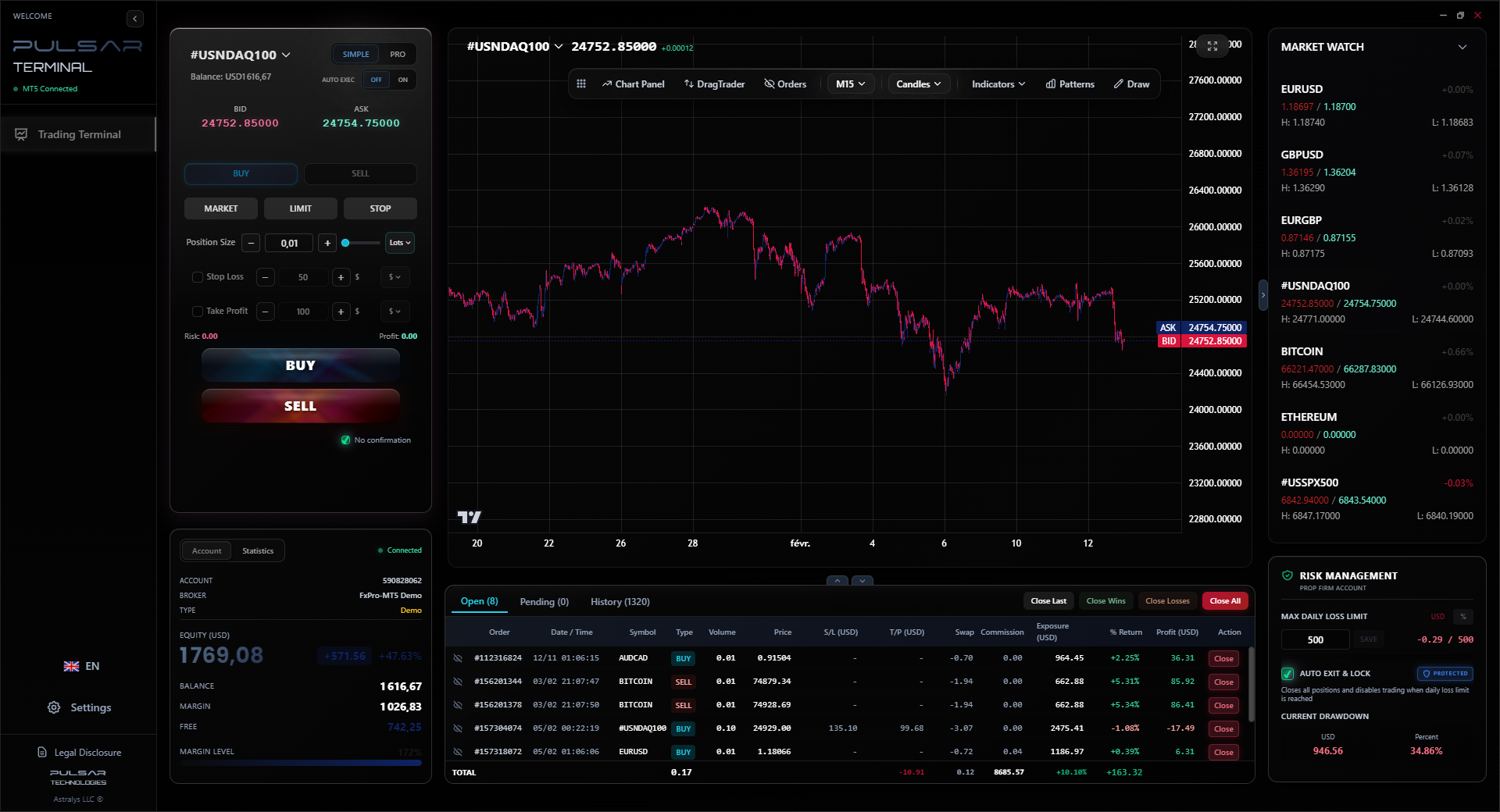
Managing this volume requirement without blowing the account is a skill. Using a tool that helps you plan entries and exits precisely is a huge advantage. This is where a platform that integrates with MT5, offering advanced order types, can make hitting those volume targets less stressful.
💡 Petua Winston
The difference between a 0.01 lot and a 0.1 lot trade is 10x the risk and 10x the volume credit. Choose based on your survival plan, not your speed goal.
“Turning bonus credit into cash is a volume grind, not a get-rich-quick play. Patience is your primary strategy.”
Okay, you've picked a regulated broker with a clear offer. Now, let's turn that credit into cash.
Step 1: Read the Terms. Again. Print them out. Highlight the volume requirement, time limit, and any restricted instruments (some bans don't allow crypto or exotic pairs with bonuses).
Step 2: Verify Your Account Immediately. They won't credit the bonus until you submit your ID and proof of residence. Do this first thing to avoid delays.
Step 3: Trade Micro Lots and Have a Strategy. That $30 is not for heroics. Use micro lots (0.01). If your strategy is based on the RSI indicator or MACD indicator, stick to it. Don't improvise. Your primary goal is to preserve capital while grinding out the volume. Aim for high-probability, small-win trades. I focused on major pairs like EUR/USD during overlapping sessions for better liquidity.
Step 4: Calculate Your Volume Progress. If you need to trade 10 lots, that's 1000 micro-lot trades. Track it daily. This disciplined approach stops you from ramping up risk out of frustration.
Step 5: Withdraw Your Profit, Then Decide. Once you've met the volume and have a profit, request the withdrawal. Only after that profit is safely in your bank or e-wallet should you consider depositing your own money with that broker. You've now proven their platform works for you and that you can navigate their systems.

Example: You get a $30 bonus from Broker XYZ. Terms: 5-lot volume to withdraw profits. You trade 0.01 lots (0.05 lots volume per trade). You need 100 such trades to reach 5 lots. You aim for a 5-pip target on each, risking 3. With a 60% win rate, you slowly build profit while ticking off the volume. It's a grind, not a lottery.
“Turning bonus credit into cash is a volume grind, not a get-rich-quick play. Patience is your primary strategy.”
I've messed this up so you can get it right.
Pitfall 1: Chasing the Biggest Bonus Number. The $1,000 'bonus' is almost always a virtual demo contest. The $30 cash bonus is infinitely more valuable. I wasted a month on a 'demo contest' only to win a coupon for a lower spread, which I never used.
Pitfall 2: Ignoring the Per-Trade Volume. Not all lots are created equal. A 0.01 lot trade adds 0.01 to your volume tally. A 1.00 lot trade adds 1.0. I once misunderstood this, thinking I was close to my target when I was only 10% there. Use a position size calculator to keep track.
Pitfall 3: Withdrawing Too Early (Or Too Late). If you request a withdrawal before meeting the volume, they'll likely reject it and you might lose the bonus. If you wait too long past a time limit, you forfeit it. Set calendar reminders.
Pitfall 4: Assuming All Profits Are Yours. Most brokers have a maximum withdrawable profit from a no-deposit bonus. You might turn $30 into $500, but if their max is $100, that's all you get. The rest goes back to them. Know the cap. It's usually in the fine print you didn't read (see Pitfall 1).
The psychological pressure of trading with 'house money' is different. It can make you either too reckless or too timid. Having a rigid plan and tools to execute it removes emotion. For instance, setting a trailing stop or multiple take-profit levels automatically lets the trade run according to plan while you focus on the next setup, which is crucial for hitting those volume targets efficiently.
Managing the precise lot sizes and multiple trades needed to hit bonus volume targets is far easier with a tool that lets you set complex order grids and automated closures directly on your MT5 charts.
“The FSCA's 30:1 use cap isn't a limitation for beginners. It's a life jacket.”
Maybe the current offers are thin, or you'd rather just start with your own cash. That's a smart approach too. Here are two great paths:
1. Start Small with a Regulated Broker. Brokers like IC Markets or Pepperstone might not always have a no-deposit bonus, but they offer raw, low-cost trading environments. Their minimum deposits can be as low as $200 (about R3700). With tight spreads and reliable execution, your Rands go further on every trade. This is my preferred method now. I'd rather have full control and clear profit from day one than dance to a bonus's tune.
2. Use a Proper Demo Account. A fully-featured, unlimited demo account is a better learning tool than a restrictive bonus account. You can practice swing trading strategies for weeks without a volume clock ticking. Treat it like real money. Once you can consistently grow a $10k demo account over 3 months, you're ready to fund a live account.
The bottom line? A no-deposit bonus is a useful tool for a very specific purpose: testing a broker's execution and platform with minimal risk. It is not a wealth creation scheme. The real money in forex comes from skill, discipline, and a solid edge, not sign-up promotions. Focus on building those, and the bonuses become just a nice occasional perk on the journey.
FAQ
Q1Can I actually withdraw money from a no deposit bonus?
Yes, but not the bonus itself. You can only withdraw the profits you generate from trading the bonus funds, and only after meeting the broker's specific trading volume requirements. Always read the terms to see how many lots you need to trade before a withdrawal is allowed.
Q2Which South African forex broker has the best no deposit bonus?
As of 2026, XM's $30 no-deposit bonus is consistently reliable for South Africans, backed by FSCA regulation. FBS also offers a popular $100/$140 bonus. 'Best' depends on your trading style and ability to meet their specific withdrawal conditions. Always prioritize the broker's regulation and transparency over the bonus amount.
Q3Do I pay tax on profits from a no deposit bonus in South Africa?
Yes. SARS views any profit from trading as taxable income, regardless of the source of the initial capital. If you withdraw profit from a bonus, it forms part of your capital gains or income (if you're a professional trader). Keep accurate records of all trades related to the bonus.
Q4What is the typical trading volume required to withdraw profits?
It varies, but a common requirement is to trade 10 to 30 times the bonus amount in lot volume. For a $30 bonus, you might need to trade 3 to 10 standard lots (where 1 standard lot = 100,000 units). This means you'll need to place many small trades to reach the target without excessive risk.
Q5Is a no deposit bonus a good way to start forex trading?
It's a good way to test a broker's platform and execution with zero financial risk. It's a terrible way to learn to trade, as the pressure to meet volume targets can force bad habits. Use it to verify a broker, then fund a proper account or use an unlimited demo to learn strategy and discipline.
Q6What happens if I lose the no deposit bonus money?
Nothing. That's the main benefit. You lose the broker's credit, not your own money. Your account will typically go to zero, and you can either walk away or deposit your own funds to start fresh. No debt, no liability. It's a risk-free trial.
Pelajaran Prof. Winston
:
- ✓Prioritize FSCA regulation over bonus size every single time.
- ✓Assume you can only withdraw profits after trading 10x the bonus in volume.
- ✓Trade with 0.01 lots to survive the volume requirement.
- ✓Taxable profits start with your first successful withdrawal.
Sejauh mana artikel ini berguna?
Klik bintang untuk menilai
Pandangan Dagangan Mingguan
Analisis & strategi mingguan percuma. Tiada spam.
Tentang Penulis
David van der Merwe
Pedagang Pasaran Membangun
Pedagang berpangkalan di Johannesburg dengan 11 tahun dalam mata wang pasaran membangun. Pakar dalam pasangan ZAR, dagangan terkawal FSCA, dan analisis pasaran Afrika Selatan.
Komen
Anda mungkin juga suka

Cara Trading Forex Sukses: 7 Prinsip dari Trader Profesional
Cara trading forex sukses dengan 7 prinsip trader pro: manajemen modal, disiplin, journal trading, backtest. Data nyata, bukan janji profit palsu.
Jam Trading Forex Terbaik untuk Trader Indonesia: Panduan Lengkap dengan Tabel Waktu
Panduan jam trading forex untuk trader Indonesia. Tabel 4 sesi dunia, jam emas 20:00-00:00, sesi mana yang harus dihindari. Data akurat + tips dari trader berpengalaman.
Top 5 Sàn Forex Uy Tín Nhất 2026: Review Jujur dari Trader Indonesia
Top 5 sàn forex uy tín 2026 untuk trader Indonesia. Review jujur: spread, deposit, withdraw, dukungan lokal. Exness, XM, IC Markets & lebih.
All these calculators are built into Pulsar Terminal with real-time data from your MT5 account. One-click position sizing, automatic risk management, and instant calculations.
