


Here's a number that should make you pause: over 90% of retail forex traders lose money.

David van der Merwe
Pedagang Pasaran Membangun ·  South Africa
☕ 9 minit baca
Apa yang akan anda pelajari:
Here's a number that should make you pause: over 90% of retail forex traders lose money. Yet, every week, another 'forex signal robot' promises to flip that statistic for you, often targeting South Africans with dreams of easy ZAR profits. I've been trading for over 12 years, and I've seen more accounts blown up by these automated promises than by any bad manual trade. This isn't a theoretical guide. It's a breakdown of what these robots actually are, how they work in our market, and the cold, hard reality of using them under FSCA rules. If you're thinking of buying one, you need to read this first.
Let's cut through the marketing fluff. A forex signal robot is just a piece of software, usually an Expert Advisor (EA) for MetaTrader 4 or 5, that's programmed to either generate trading signals (tell you when to buy/sell) or to automatically execute trades on your behalf. In South Africa, you'll see them sold as everything from "AI-powered gold mines" to simple Telegram alert services.
There are two main types, and confusing them is your first mistake:
- Signal Generators: These just send you alerts. A message pops up: "BUY EUR/USD at 1.0850." It's then on YOU to log into your broker platform, place the trade, and manage it. The robot doesn't touch your money.
- Fully Automated EAs: This software connects directly to your trading account via MT4/MT5. Once you switch it on, it can open, modify, and close trades without you lifting a finger. This is where the real danger - and supposed convenience - lies.

Warning: That 'fully automated' part is a massive legal and financial responsibility. You are giving a piece of code, often from an unregulated entity, the keys to your trading account. If it goes haywire, it can place 100 trades in a minute and wipe you out. Your broker won't refund you because you authorized the EA to trade.
The core promise is always the same: remove emotion, trade 24/7, and follow a "proven" system. The problem is, the market isn't a static system. What worked in a backtest on 2021 data often falls apart in live 2026 trading, especially with a volatile pair like USD/ZAR. I learned this the expensive way early on. I bought a robot touted for GBP/JPY. It made 12% in two months in a demo. Live? It got chopped up in a low-volatility range and hit a 15% drawdown before I pulled the plug. The backtest didn't account for shifting market liquidity.
This is the most critical section for any South African. The Financial Sector Conduct Authority (FSCA) regulates financial services providers - that's your broker. They do not regulate or approve individual forex signal robots or EA sellers. That guy selling the "Millionaire Pips EA" from his Facebook page? He almost certainly doesn't have an FSP license.
Your Broker's Stance
Most FSCA-regulated brokers like those we review (e.g., Exness, IC Markets) allow the use of EAs on their MT4/MT5 platforms. It's a standard feature. But here's the catch in their terms of service: you are 100% liable for all trades executed by your EA. If the robot malfunctions and causes a negative balance, you owe that money. Their support won't help you debug why "GoldFinder Pro" just blew your account.
The Legal Grey Zone
Where it gets murky is if the EA seller also takes a percentage of your profits. That could be construed as managing a client's funds, which does require an FSP license. Most avoid this by charging a flat monthly fee. The FSCA has issued warnings about unregulated forex brokers and investment schemes, but the direct regulation of EA sellers remains a grey area. Your protection is minimal.

Pro Tip: Before buying any robot, ask the seller: "Are you registered as a Financial Service Provider (FSP) with the FSCA?" If they say yes, verify the number on the FSCA website. If they hedge or say it's not needed, you know you're dealing with an unregulated entity. Your recourse if it fails is basically zero.
The real risk isn't just a bad algorithm. It's the combination of unlimited use (which some robots abuse) and a lack of human oversight. A proper position size calculator is your first defense, but many robots override sensible position sizing with aggressive martingale or grid strategies that work until they don't.

💡 Petua Winston
If you can't code the robot's logic yourself in plain English, you don't understand the risk you're taking. Never trade what you don't comprehend.
“A robot designed for EUR/CHF won't adapt to USD/ZAR's political risk spikes. You need a human brain for that.”
Let's talk numbers in Rands. You see a robot for $99 a month. That's about R1,800. Seems okay for potential profits, right? That's just the start.
The Direct Costs:
- Purchase/Subscription: Ranges from a few hundred Rands for a basic script to R20,000+ for "premium" systems. Monthly fees are common, from R200 to R2,000.
- VPS (Virtual Private Server): For a 24/7 automated EA, you need a VPS to run your MT4. That's another R150-R400 per month. If your home internet drops, your trades stop.
- Broker Costs: This is the killer. Robots often trade frequently, racking up spreads and commissions. A scalping robot trading EUR/USD 10 times a day at a 0.6 pip spread costs you 6 pips daily just on the spread. On a standard lot, that's $60 (over R1,000) per day in spread costs alone before you make a cent.
The Hidden Costs:
- Drawdowns: No robot wins every trade. A 30% drawdown means you need a 43% return just to break even. Can your capital and psychology handle that?
- Opportunity Cost: The time and money spent testing a dud robot could have been spent learning a real scalping strategy or swing trading method you actually control.
I tested a popular volatility breakout robot in 2023. Subscription: $89/month. VPS: $30/month. Over three months, it executed 247 trades. The net profit was $212. Sounds good? Subtract costs: $267 in subscriptions + $90 VPS + approximately $380 in estimated spread/commission costs. I was down over $500. The robot was profitable on paper, but the transaction costs ate it alive. That's the reality they don't show in the sales video.
If you're still determined, you must test properly. Throwing it on a live account is financial suicide.
Step 1: Strategy Disclosure Demand to know the core logic. Does it use RSI indicator divergences? MACD crossovers? Price action? If the seller says "it's a proprietary secret," walk away. You can't assess risk if you don't know the strategy.
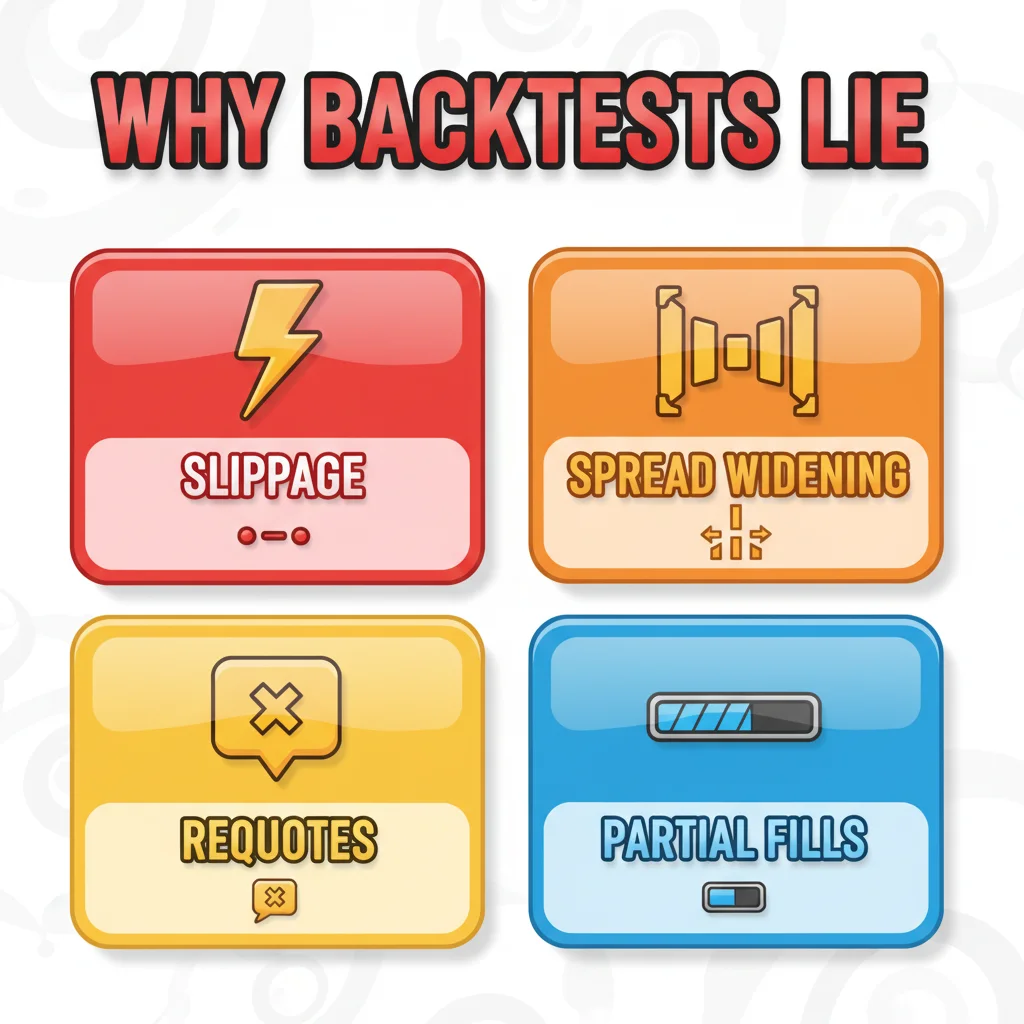
Step 2: Backtest with a Grain of Salt Run a backtest on your MT4 platform, not just watch their pretty video. Use a variety of market conditions. But remember: backtests are perfect hindsight. They assume you got filled at the exact price, with no slippage - a fantasy in fast markets.
Step 3: Demo Forward Test This is non-negotiable. Run the robot on a demo account for at least 2-3 months. Track every trade. Does it perform like the backtest? How does it handle news events? What's the maximum drawdown? This is where 95% of robots fail.
Step 4: Micro-Live Test Only after a successful demo, fund a live account with the absolute minimum your broker allows. For XM or Pepperstone, that might be $100 (R1,800). Use nano or micro lots. The goal here isn't to make money; it's to confirm the robot works with real market execution, slippage, and latency. Expect slightly worse results than the demo.

Example: Let's say a robot's backtest shows a 25% max drawdown. In your live test, you start with R2,000. You should be prepared to see that account drop to R1,500 and not panic. If you can't stomach that, this robot isn't for you, no matter what the promised return is.
This process takes months. Most people skip it because they're eager. That eagerness is exactly what the sellers bank on.
💡 Petua Winston
The most valuable automation isn't a trading robot; it's a risk management robot. Set hard stops and walk away. Letting winners run and cutting losers is 80% of the game.
“Invest your money and time into education first. The path to sustainable trading isn't hidden in a $99 robot.”
Forget buying a black box. Build your own system. It's cheaper and you'll actually learn something.
1. Use Free Indicators as Signal Generators. Set up MT4 with the RSI indicator and a moving average crossover. Create your own simple rule set: "Only take long trades when price is above the 200 EMA and RSI crosses above 30 from oversold." Now you have a free signal generator. You control the execution and risk.
2. Paper Trade a Strategy. Pick one major pair like EUR/USD or a commodity like XAU/USD. Learn its personality. Write down a specific strategy and track it in a demo account for 100 trades. Analyze your wins and losses. This data is worth more than any robot.
3. Automate Your Own Rules. Once you have a manual strategy that works consistently in demo and small live tests, then you can think about automation. You can hire a freelance MQL5 programmer to code your exact rules into an EA. This costs money (R5,000-R15,000), but you own the logic. You know its weaknesses. This is how professional traders use automation - to execute their proven plan, not to find a magical plan for them.
The truth is, there's no substitute for screen time and understanding what a pip definition really means for your P&L, or how the spread definition impacts your strategy. A robot can't give you that intuition. Chasing a fully automated solution as a beginner is like trying to run before you can crawl. You'll fall hard.
If you're looking to automate the mechanical parts of a strategy you've already mastered, tools like Pulsar Terminal let you build and manage complex order grids and risk rules directly on MT5, keeping you in control of the logic.

So, after all that, is there ever a place for a forex signal robot for a South African trader? Maybe, but the conditions are strict.
Consider it ONLY if:
- You are already a consistently profitable manual trader.
- You want to automate the execution of a specific, boring task (like a grid hedge on a range-bound pair) that you fully understand.
- You have the technical skill to monitor, adjust, and pull the plug on the software.
- You are using it with a well-capitalised account where the risk per trade is 1% or less.
For the vast majority, especially beginners, the answer is a resounding no. They are a distraction. The pursuit of a "set and forget" system leads to neglect. You stop watching the markets, you stop learning, and you become entirely dependent on a piece of code you didn't write.
The South African market, with its unique volatility in ZAR pairs, requires nuance. A robot designed for EUR/CHF won't adapt to USD/ZAR's political risk spikes. You need a human brain for that.
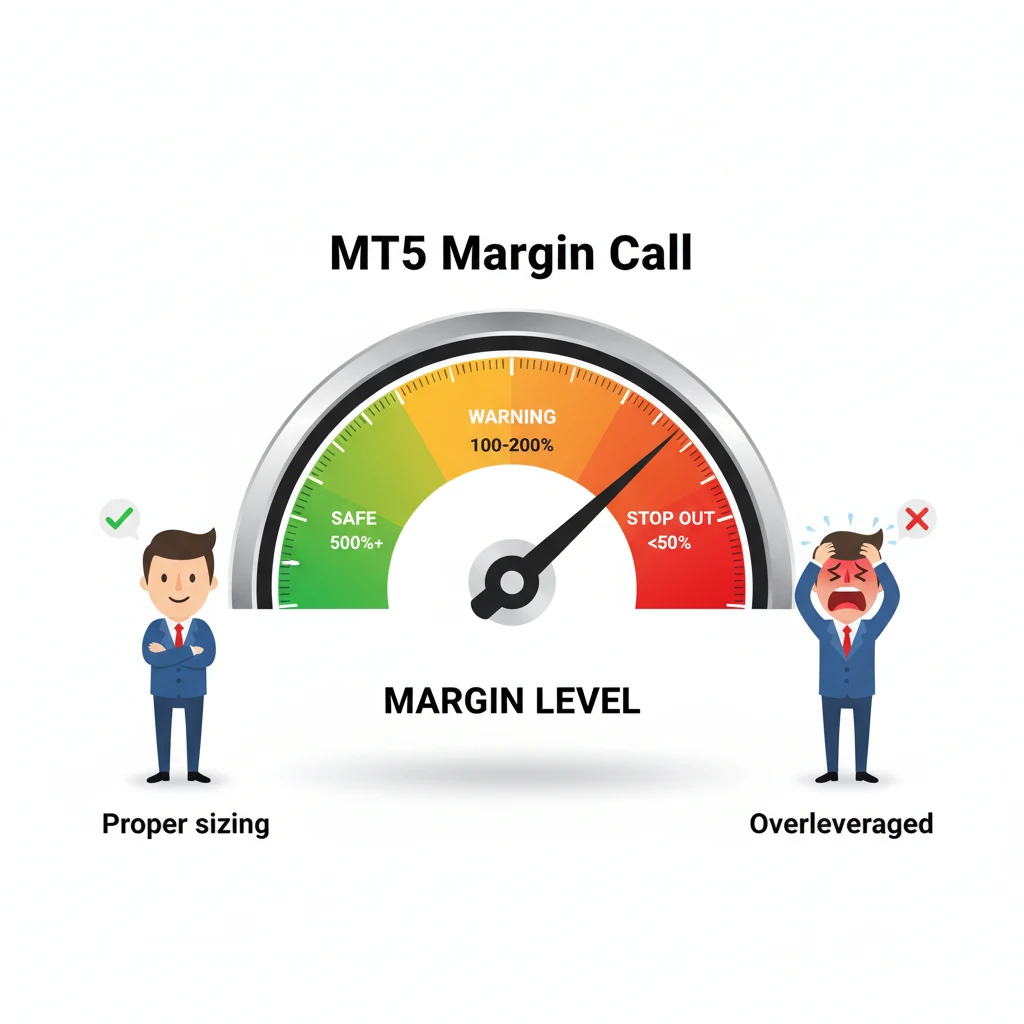
Invest your money and time into education first. Learn proper risk management so you never face a margin call. Understand broker fees. Develop patience. The path to sustainable trading isn't hidden in a $99 robot. It's built through disciplined, informed decision-making - something no algorithm can sell you.
FAQ
Q1Are forex signal robots legal in South Africa?
Using them is legal, but it's an unregulated activity. The FSCA regulates your broker, not the robot seller. This means if the robot fails or is a scam, you have very little legal recourse. You are solely responsible for all losses it incurs on your account.
Q2What is the best forex signal robot for South Africans?
I won't recommend a specific product because their performance is unreliable and context-dependent. The 'best' robot for a quiet EUR/USD market will blow up trading USD/ZAR during a SARB announcement. Focus on learning trading fundamentals instead of searching for a non-existent 'best' robot.
Q3How much money do I need to start with a forex robot?
Far more than you think. Beyond the robot cost, you need enough capital to survive significant drawdowns (think R20,000+ for a standard account) and cover monthly VPS and spread costs. Starting with a minimum deposit of R1,800 is a sure way to lose it all quickly to fees and a single losing streak.
Q4Can I use a forex robot on my phone?
For full automation, no. A true Expert Advisor (EA) must run continuously on the MetaTrader platform, which requires a desktop computer or, more reliably, a paid Virtual Private Server (VPS). Signal alert robots can send notifications to your phone, but you still have to manually execute every trade.
Q5Do professional traders in South Africa use signal robots?
Some use automated systems, but these are custom-coded tools that execute their own proven, refined strategies. They don't buy "off-the-shelf" robots promising 80% win rates. The automation is for efficiency and discipline, not for providing an edge they don't already possess.
Q6What's the biggest mistake people make with forex robots?
Trusting them completely and abandoning oversight. They set it, forget it, and don't monitor performance or changing market conditions. They also fail to account for real-world costs (spreads, swaps, slippage) which turn a profitable backtest into a losing live account.
Pelajaran Prof. Winston
:
- ✓FSCA regulates brokers, not robot sellers. You have zero protection.
- ✓Transaction costs (spreads, commissions) often erase a robot's paper profits.
- ✓Demo test for 2-3 months minimum. 95% of robots fail this step.
- ✓Automate your own proven strategy, never an unknown black box.
Sejauh mana artikel ini berguna?
Klik bintang untuk menilai
Pandangan Dagangan Mingguan
Analisis & strategi mingguan percuma. Tiada spam.
Tentang Penulis
David van der Merwe
Pedagang Pasaran Membangun
Pedagang berpangkalan di Johannesburg dengan 11 tahun dalam mata wang pasaran membangun. Pakar dalam pasangan ZAR, dagangan terkawal FSCA, dan analisis pasaran Afrika Selatan.
Komen
Anda mungkin juga suka

Cara Trading Forex Sukses: 7 Prinsip dari Trader Profesional
Cara trading forex sukses dengan 7 prinsip trader pro: manajemen modal, disiplin, journal trading, backtest. Data nyata, bukan janji profit palsu.
Jam Trading Forex Terbaik untuk Trader Indonesia: Panduan Lengkap dengan Tabel Waktu
Panduan jam trading forex untuk trader Indonesia. Tabel 4 sesi dunia, jam emas 20:00-00:00, sesi mana yang harus dihindari. Data akurat + tips dari trader berpengalaman.
Top 5 Sàn Forex Uy Tín Nhất 2026: Review Jujur dari Trader Indonesia
Top 5 sàn forex uy tín 2026 untuk trader Indonesia. Review jujur: spread, deposit, withdraw, dukungan lokal. Exness, XM, IC Markets & lebih.
All these calculators are built into Pulsar Terminal with real-time data from your MT5 account. One-click position sizing, automatic risk management, and instant calculations.
