


Thinking a forex trading affiliate program is your ticket to easy money? You're not alone.
James Mitchell
Penganalisis Dagangan Kanan
☕ 9 minit baca
Apa yang akan anda pelajari:
- 1What Is a Forex Affiliate Program, Really?
- 2The Hard Numbers: What You'll Actually Earn
- 3Getting Started: Picking a Program and Broker
- 4Promotion: What Works (And What's a Waste of Time)
- 5The Ugly Side: Common Mistakes and Pitfalls
- 6From Side Hustle to Business: How to Scale
- 7The Final Verdict: Is This Worth It For You?

Thinking a forex trading affiliate program is your ticket to easy money? You're not alone. Every other ad promises 'passive income' just for sharing a link. I've managed affiliate teams and seen the backend reports most promoters never show you. The truth is messier, less glamorous, and far more interesting. Let's cut through the marketing and look at what this actually takes.
At its core, it's a referral partnership. You send a potential trader to a broker (like Exness, IC Markets, or XM), and if they open an account and trade, you get a cut. It's not charity. Brokers have some of the highest customer acquisition costs in finance. Paying you a commission is often cheaper than running another Super Bowl ad.
There are usually two main payout models, and your choice here dictates everything.
Revenue Share (RevShare)
This is the long game. You earn a percentage of the spread or commission generated by your referred client's trades, for as long as they have an account. If you refer a high-volume trader, this can be a serious income stream. I have one revshare client from 2018 who still generates about $120-$200 a month, like clockwork. The catch? It starts small and requires patience. That client didn't become profitable for me until his sixth month of trading.
Cost Per Acquisition (CPA)
This is the quick cash. The broker pays you a one-time flat fee for each qualified referral. A 'qualified' account usually means a minimum deposit (e.g., $200) and sometimes a minimum number of trades. The fees can be tempting - anywhere from $50 to $800 per client, depending on the country and broker. The problem? That's it. You get paid once, even if that client goes on to trade millions. I made a mistake early on taking a $400 CPA for a Swiss trader who deposited $10k. He traded for years. My revshare loss on that one still stings.

Warning: Many programs offer a 'hybrid' model (CPA + smaller RevShare). Read the terms. Often, if you take the CPA, your revshare percentage is slashed to near zero. They're not giving you both full payouts.
Forget the screenshots of $10k payouts. Let's talk averages. Your earnings are a function of three things: your referral's deposit, their trading volume, and their longevity.
Most retail traders don't last. A sobering industry stat is that over 70% of new funded accounts are inactive within 90 days. If you're on revshare, that's a problem.
Here's a realistic example from my own tracking spreadsheet. Let's say you refer 10 clients to a broker like Pepperstone.
| Metric | Average Value |
|---|---|
| Average Initial Deposit | $500 |
| Accounts Still Active After 3 Months | 3 out of 10 |
| Avg. Monthly Trading Volume (per active client) | 5 lots |
| Your RevShare Rate (per lot) | $8 |
| Your Monthly RevShare (Est.) | 3 clients * 5 lots * $8 = $120 |
That's $120 a month from 10 referrals. To make a full-time income, you need hundreds, maybe thousands, of active referrals. It's a volume business. The promoters showing huge checks usually have massive audiences or are paying for expensive ads.

Example: Let's say you go the CPA route. A broker offers $150 per qualified account. You refer 10 people, 4 meet the criteria (deposit $200, execute 5 trades). Your one-time payout is 4 * $150 = $600. Then it's done. You have to constantly find new people to keep the money flowing.

💡 Petua Winston
Your first affiliate goal isn't a payout. It's to get one person to trust your recommendation enough to act on it. That's the foundation.

“A 25% revshare with a top-tier broker is worth infinitely more than 90% from a bucket shop.”
Don't just sign up for the first program you see. Your choice of broker partner is everything. A shady broker with a 50% revshare is worthless if all their clients get frustrated and leave.
Look for these things:
- Regulation: This is non-negotiable. A broker regulated by the FCA (UK), ASIC (Australia), or CySEC (EU) is more stable. Your referrals' money is safer, and they're less likely to rage-quit over withdrawal issues. Check our reviews for brokers like IC Markets and Pepperstone to start your research.
- Affiliate Dashboard: You need clear, real-time reporting. Can you see exactly what each client traded, what you earned, and when payouts hit? If the dashboard looks like it's from 1995, run.
- Cookie Duration: How long does your referral link 'remember' a visitor? 30 days is standard, 90 days is good, 180 days is excellent. This means if someone clicks your link, comes back three months later, and signs up, you still get credit.
- Payment Methods & Threshold: Do they pay via PayPal, wire, or crypto? What's the minimum payout? $100 is common.
My process? I test the broker as a trader first. I open a small live account, test execution speeds, and make a withdrawal. If I wouldn't trade there myself, I won't recommend it. It's that simple.
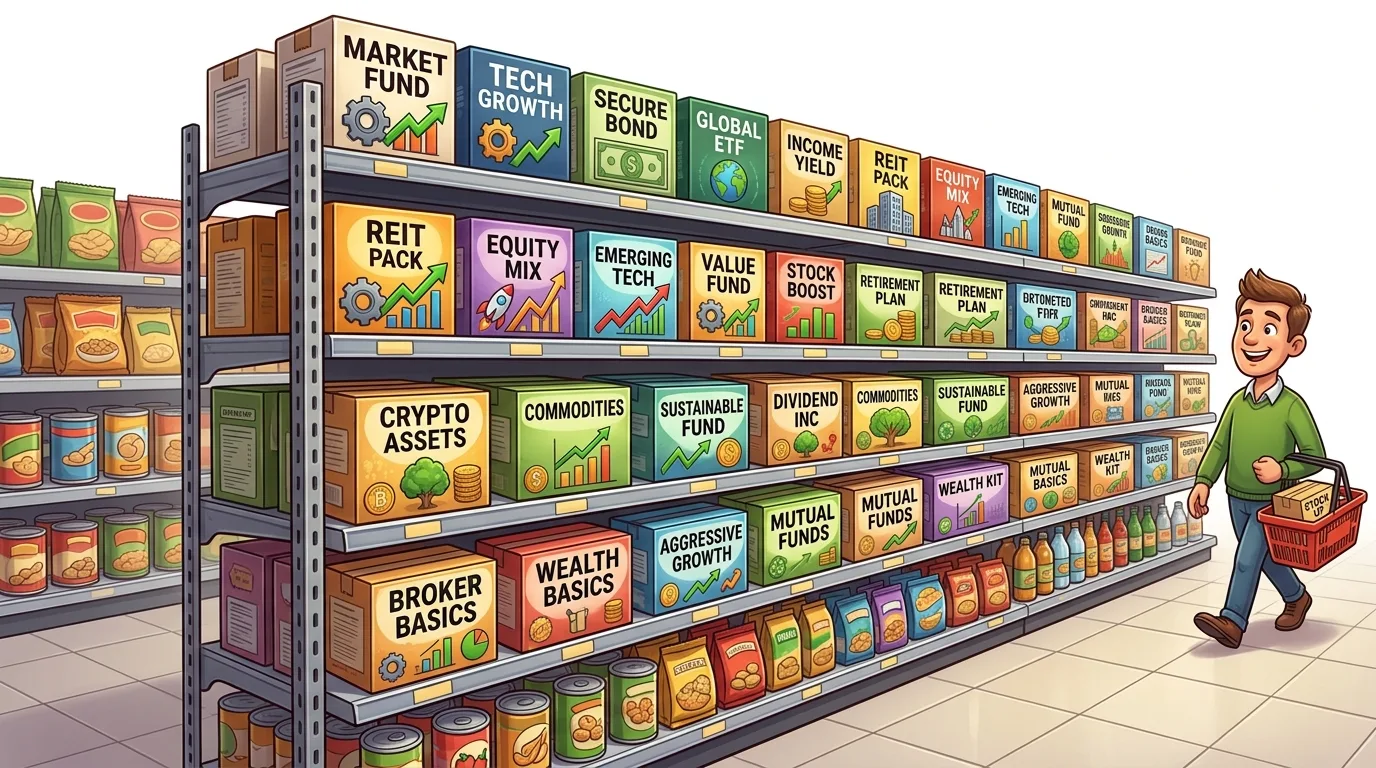
Throwing a link in your Instagram bio won't cut it. You need a strategy. Here’s what I’ve seen move the needle.
Content is King (Cliché, but True): You're not selling a broker. You're solving a problem. Create guides that traders actually need. For example:
- "How to Set a Stop-Loss Using a position size calculator"
- "A Beginner's Guide to Trading EUR/USD"
- "My Scalping Strategy for the London Session"
Within that helpful content, you naturally mention, "I use XYZ broker for this because..." and provide your affiliate link. This is called contextual promotion. It converts because it's based on trust, not a sales pitch.
Paid Ads (The Money Pit): This is where most beginners blow their budget. You can't just run a Facebook ad saying 'Make Money Trading!' to a general audience. The cost per click will bankrupt you. If you use paid ads, you must target with laser precision - people already searching for "best forex broker for beginners" or watching trading tutorials on YouTube. Even then, your landing page must be exceptional. I spent $2,300 testing Google Ads before I found a keyword and page combo that broke even. It's a tough game.
Forums and Communities: Engage genuinely. Don't spam. On trading forums or Discord servers, answer questions thoroughly. If someone asks about a good broker for low spreads, share your experience and your link. Being a helpful member of the community builds lasting credibility.

Pro Tip: Track everything. Use link shorteners with analytics (like Bitly) or the tracking tools in your affiliate dashboard. See which content, which platform, brings you the most clicks and conversions. Double down on what works.
💡 Petua Winston
Never promote a broker you haven't personally funded and traded with. Your credibility is your only real asset in this game.

“The only thing passive about affiliate income is the payout after you've done the hard work.”
I've made most of these. Learn from my losses.
1. Chasing the Highest Payout: The broker offering 90% revshare is often a bucket shop with terrible execution. Clients will lose money quickly, blame the platform, and leave. A 25% revshare with a top-tier broker like XM is worth infinitely more because clients stay and trade.
2. Not Understanding the Terms: Read the fine print on 'negative balance protection.' If your client blows up their account and goes into negative balance, some brokers will deduct that loss from your affiliate earnings. Also, watch for 'rollover' clauses. If a client is inactive for X months, your revshare might drop or stop.
3. Expecting 'Passive' Income: This is the biggest lie. It's not passive. It's a marketing and content creation business. You must consistently produce value, nurture your audience, and manage relationships. The only thing passive is the payout after you've done the hard work.
4. Promoting to the Wrong People: Your unemployed cousin is not a good referral. The ideal candidate is someone already interested in trading, with some risk capital, who is looking for a reliable platform. Targeting get-rich-quick seekers leads to quick deposits followed by immediate losses and chargebacks, which can get your affiliate account banned.
5. Ignoring Compliance (Especially in the US): You cannot make false claims. You can't promise profits. If you're in the US or targeting US clients, the FTC has rules about disclosing affiliate relationships. Put "(Affiliate Link)" clearly next to your links. It's not just ethical, it's the law.

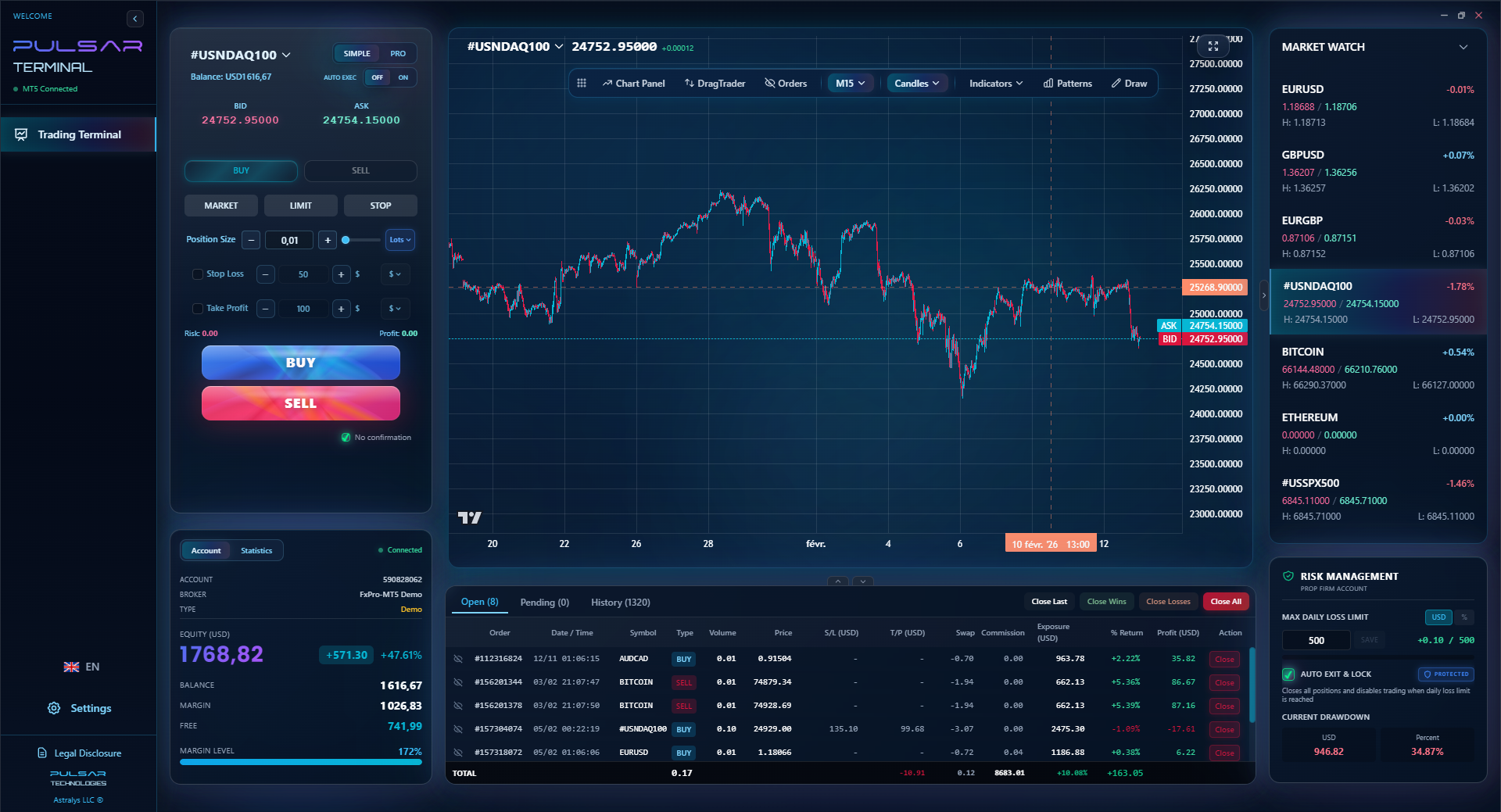
Managing multiple affiliate campaigns and tracking performance is complex, much like managing a portfolio of trades, which is where tools like Pulsar Terminal's advanced trade management can save you hours.
Once you have a system that works, scaling is about efficiency and use.
Build a Library: Don't create one-off posts. Build a resource library. A central blog or YouTube channel where all your tutorials, broker comparisons, and strategy guides live. This becomes an evergreen source of traffic and referrals. I still get sign-ups from a YouTube video I made on understanding the spread definition three years ago.
Consider a Sub-Affiliate Network: Some programs allow you to recruit other affiliates under you. You get a smaller cut of their earnings. This can work if you're a well-known educator, but it adds a layer of management. You're now responsible for teaching others how to promote.
Diversify Your Programs: Don't rely on one broker. Partner with 2-3 reputable ones. This protects you if one changes their terms or has a technical issue. It also allows you to match the right broker to a trader's specific needs (e.g., one for low spreads, another for great customer service in a specific region).
Invest in Tools: As you grow, your time is your most valuable asset. Use tools to schedule social media posts, manage email lists, and track performance across different programs. The goal is to systemize your promotion so you're not manually posting every day.
Remember, scaling requires treating this like a real business. That means tracking expenses (website hosting, ads), paying taxes on your earnings, and constantly optimizing your conversion funnel.
💡 Petua Winston
Track your time. If you spend 40 hours creating content to make a $200 commission, you're working for $5 an hour. Optimize or quit.

“Your first $50 payout from a real, satisfied referral feels better than any lottery ticket, because you built it.”
So, should you start a forex trading affiliate program? It depends entirely on your situation.
It's PROBABLY a good fit if:
- You're already creating trading content (blogs, videos, social media) and have an engaged audience.
- You enjoy teaching and explaining concepts more than trading itself.
- You have the patience to build an asset over 12-24 months, not 30 days.
- You understand this is a marketing job, not a trading job.
It's PROBABLY a bad fit if:
- You think this is 'free money' with no work.
- You don't like writing, recording, or being visible online.
- You need to generate significant income next month to pay rent.
- You're uncomfortable with the fact that your income is tied to other people's trading activity (and losses).
The most successful forex affiliates I know are former traders or educators who genuinely want to help people avoid the mistakes they made. The money follows that intent. If your only intent is the commission, people will smell it a mile away, and your results will reflect that.
Start small. Pick one reputable broker. Create one fantastic, in-depth guide. Promote it honestly. See what happens. That first $50 payout from a real, satisfied referral feels better than any lottery ticket, because you built it.
FAQ
Q1How much can I realistically make from a forex affiliate program?
Realistically, most part-time affiliates make between $100 to $1,000 per month after 6-12 months of consistent work. Full-time professionals with large audiences can make five or six figures, but that's the top 1%. Your first-year goal should be to cover your trading education costs, not replace your salary.
Q2Do I need a website to be a forex affiliate?
Not strictly, but it's highly recommended. A website gives you a home for your content, builds credibility, and helps with search engine traffic. Social media profiles can work, but you don't own that platform - they can change the rules or ban you. Your own website is an asset you control.
Q3What's the difference between a CPA and a RevShare payout?
CPA (Cost Per Acquisition) is a one-time flat fee for a new, qualified client. RevShare (Revenue Share) is a recurring percentage of the trading fees that client generates. CPA is fast cash but finite. RevShare is a slower build but can provide long-term 'mailbox money' if your clients are active traders.
Q4Can I get banned from an affiliate program?
Absolutely. Common reasons include fraudulent traffic (using bots), misleading advertising (promising guaranteed profits), promoting in forbidden countries, or having a high volume of clients who deposit then immediately withdraw (which looks like bonus abuse). Always follow the program's terms of service.
Q5Are there any costs to join a forex affiliate program?
Joining is almost always free. The costs come from running your affiliate business: website hosting, domain name, email marketing software, paid advertising budget, or your time. You don't pay the broker to join.
Q6How and when do affiliates get paid?
Payments are typically made monthly, via methods like PayPal, bank wire, or cryptocurrency. There's usually a minimum payout threshold (e.g., $100). You'll get paid for the commissions earned in the previous month, often with a 15-30 day processing delay. So, January earnings might hit your account in early March.
Q7Can I be an affiliate if I'm not a profitable trader?
Technically, yes. But ethically, it's a gray area. If you're teaching trading strategies or recommending a broker, you should have a solid understanding of the markets. Promoting something you don't understand to beginners can lead to them losing money and damaging your reputation. Knowledge is your most important product.
Pelajaran Prof. Winston
:
- ✓RevShare builds an asset; CPA is just a transaction.
- ✓Test the broker as a trader first. Always.
- ✓90% of your results come from 10% of your content.
- ✓Read the terms on negative balance and inactivity.
- ✓Disclose your affiliate links. It's the law.
Sejauh mana artikel ini berguna?
Klik bintang untuk menilai
Pandangan Dagangan Mingguan
Analisis & strategi mingguan percuma. Tiada spam.
Tentang Penulis
James Mitchell
Penganalisis Dagangan Kanan
Berpangkalan di New York dengan lebih 9 tahun pengalaman perdagangan. Fokus pada pasangan USD utama, cabaran prop firm, dan landskap peraturan AS.
Komen
Anda mungkin juga suka

Cara Trading Forex Sukses: 7 Prinsip dari Trader Profesional
Cara trading forex sukses dengan 7 prinsip trader pro: manajemen modal, disiplin, journal trading, backtest. Data nyata, bukan janji profit palsu.
Jam Trading Forex Terbaik untuk Trader Indonesia: Panduan Lengkap dengan Tabel Waktu
Panduan jam trading forex untuk trader Indonesia. Tabel 4 sesi dunia, jam emas 20:00-00:00, sesi mana yang harus dihindari. Data akurat + tips dari trader berpengalaman.
Top 5 Sàn Forex Uy Tín Nhất 2026: Review Jujur dari Trader Indonesia
Top 5 sàn forex uy tín 2026 untuk trader Indonesia. Review jujur: spread, deposit, withdraw, dukungan lokal. Exness, XM, IC Markets & lebih.
All these calculators are built into Pulsar Terminal with real-time data from your MT5 account. One-click position sizing, automatic risk management, and instant calculations.
