


Most Indian traders think buying gold means jewelry shops or digital gold apps.

Rajesh Sharma
Penganalisis Forex Kanan ·  India
India
☕ 11 minit baca
Apa yang akan anda pelajari:
- 1What Exactly Is a Gold ETP in India?
- 2The 2026 Rulebook & Real Costs (No Sugarcoating)
- 3How to Actually Trade Gold ETFs: A Tactical Guide
- 4Gold ETF vs. Physical, Digital Gold & Sovereign Bonds
- 5Setting Up: Brokers, Platforms & Your First Trade
- 6Pitfalls & Common Mistakes I've Made (So You Don't Have To)
- 7Advanced Tactics & The 2026 Market Outlook
Most Indian traders think buying gold means jewelry shops or digital gold apps. They're missing the real game. A gold exchange traded product, specifically Gold ETFs traded on the NSE and BSE, is where serious money moves. I've seen too many friends get burned with high making charges or confusing tax rules when there's a cleaner, more transparent way. Let's set the record straight on how to use these instruments properly, especially with SEBI's big 2026 rule changes that just kicked in.
Forget the fancy term. In India, when we say 'gold exchange traded product,' we're almost always talking about Gold ETFs (Exchange Traded Funds). Think of it like a share, but instead of owning a piece of a company, you own a slice of a vault full of physical gold. The fund manager buys the bars, stores them securely, and you get units that track the price.
The biggest myth? That it's complicated. It's simpler than buying a stock. You need a demat and trading account (which you already have if you trade equities), and you buy the ETF ticker just like you'd buy RELIANCE or TCS. Each unit typically represents 1 gram of gold. No worries about purity (it's 99.5% pure), storage, or insurance theft. The fund handles all that.
Here's the key change for 2026: SEBI now mandates that at least 95% of the fund's assets must be in physical gold or approved gold-linked instruments like the Gold Monetization Scheme. This rule, effective April 1, 2026, tightens things up. Before, there was more wiggle room. Now, you're getting much more direct exposure to the actual metal.

Example: Let's say the live price for 1 gram of gold is ₹7,500. Your HDFC Gold ETF or Nippon India Gold ETF unit should trade very close to that price on the exchange. The tiny difference is the 'tracking error,' which we'll get into.
“A Gold ETF isn't just 'gold.' It's a financial security traded on the NSE that gives you precise, liquid exposure to the metal's price in rupees.”
SEBI isn't messing around. The regulations have gotten stricter, which is good for us traders. Transparency is up.
The New Valuation Rule
This is huge. Before April 2026, funds valued their gold using international benchmarks like LBMA (London prices), then adjusted for the USD/INR rate, import duty, etc. It was a black box for most investors. Now, they must use polled spot prices from Indian exchanges like the MCX. This means the ETF's Net Asset Value (NAV) reflects the genuine Indian market price more accurately. Less manipulation, fairer pricing.
The Real Cost Breakdown
Let's talk numbers. The expense ratio is your annual fee for the fund's management. These have gotten competitive.
| Fund Example | Expense Ratio (approx.) | Note |
|---|---|---|
| Invesco India Gold ETF FoF | ~0.10% | One of the lowest. A Fund of Funds that invests in other Gold ETFs. |
| Typical Gold ETF | 0.20% - 0.40% | Standard range for direct ETFs like those from Nippon, HDFC, SBI. |
| Higher-Cost ETF | Up to 0.52% | Some older schemes may still charge this. Always check the factsheet. |
Brokerage? If you're buying for delivery (holding in your demat), it's often zero on many modern platforms like Zerodha or Groww for equity ETFs. If you're day-trading it, you'll pay your usual equity intraday charges.

Warning: The expense ratio silently eats returns. A 0.5% fee might not sound like much, but over 10 years in a sideways gold market, it can be the difference between profit and loss. Always factor it into your long-term position size calculator.
The Tax Shock (2026 Update)
This is where most blogs get it wrong. They're quoting old rules. Here's the latest from the Union Budget 2026 as it stands:
- Short-Term Capital Gains (STCG): Sell within 12 months? Your profit gets added to your income and taxed at your slab rate. Could be 30%+.
- Long-Term Capital Gains (LTCG): Hold for more than 12 months? The tax rate is 12.5% on your profit. Indexation benefit is NOT available. This is a change from the pre-2023 era.
I learned this the hard way. In 2024, I held a Gold ETF position for 14 months, assuming I'd get indexation. The tax bill was higher than I modeled. Now I always run the post-tax numbers before entering any long-term commodity trade.

💡 Petua Winston
The new SEBI valuation rule is a trader's friend. Price discovery is now more transparent and tied to the local market. Trust the ticker more than you did last year.
“The 2026 tax rule is clear: hold over a year, pay 12.5%. No indexation. Factor this into every long-term position.”
Trading a Gold ETF isn't just 'buy and pray.' It's a tactical instrument. Here’s how I use it.
For the Long-Term Investor (The SIP Approach)
This is the classic use. Set up a SIP in a Gold ETF Fund of Funds (FoF) for as low as ₹100/month on platforms like Groww. You're averaging into gold over time, building a hedge against inflation and rupee weakness. It's fire-and-forget. The swing trading mindset doesn't apply here; it's pure accumulation.
For the Active Trader
This is where it gets fun. Gold ETFs have decent liquidity (check the average daily volume on your terminal). You can trade them intraday or swing trade based on technicals.
My Go-To Setup: I watch the USD/INR pair alongside the Gold ETF chart. A falling rupee (USD/INR up) often boosts INR gold prices, even if international gold in dollars is flat. It's a double factor. I use the RSI indicator on the 4-hour chart to spot overbought/oversold conditions within a broader trend.
A Real Trade: In Jan 2026, with inflows hitting ₹24,039 crore, sentiment was frothy. Nippon Gold BeES (the ticker) was in a strong uptrend. I bought at ₹5,850 per unit on a pullback to the 20-day EMA. My target wasn't a round number; it was a previous resistance zone at ₹6,120. I scaled out half there and let the rest run with a trailing mental stop. Closed the final lot at ₹6,050. Not a home run, but a clean 3.4% swing trade.
The beauty? No spread definition worries like in forex gold (XAU/USD). The bid-ask is usually just 1-2 paisa. Your entry and exit are precise.

Pro Tip: Don't just look at the Gold ETF chart. Pull up a chart of physical gold futures (MCX: GOLDJUN26) on another screen. Sometimes the ETF lags or leads the futures by a few minutes. That discrepancy can be a signal.
“The 2026 tax rule is clear: hold over a year, pay 12.5%. No indexation. Factor this into every long-term position.”
Why choose an ETF over other options? Let's break it down.
- vs. Physical Gold (Jewelry/Coins): This is a no-brainer for trading. Jewelry has making charges (10-15% gone immediately), purity issues, and is a nightmare to sell quickly at fair value. Coins have high premiums. ETFs have none of that. Liquidity is instant during market hours.
- vs. Digital Gold (Paytm, PhonePe): Digital gold is easy to buy, but often harder to sell seamlessly, and you usually can't hold it in your demat. It's more of a consumer product. An ETF is a financial instrument. The regulation (SEBI vs. ???) and transparency are on another level.
- vs. Sovereign Gold Bonds (SGBs): SGBs are great for a 8-year hold – you get 2.5% annual interest and no capital gains tax at maturity. But they are illiquid. You're locked in, or you must sell on the secondary market where volumes are pathetic. For an active trader, that's a prison sentence. An ETF is for when you want control.
- vs. Trading MCX Gold Futures: Futures offer massive use, which is great and dangerous. They have expiry dates, forcing you to roll over contracts. ETFs have no expiry. You can hold them forever. Futures are for pure, short-term speculation. ETFs can be for speculation or investment. I use both, but I keep my risky, leveraged plays in futures and my core 'gold holding' in ETFs.
The AUM numbers tell the story: Gold ETF assets tripled to ₹1.3 trillion in 2025. Money is voting with its feet.
💡 Petua Winston
Your Gold ETF is a rupee-denominated asset. A weakening rupee can boost your ETF even if dollar-gold is flat. Always have a USD/INR chart open next to it.
“Your biggest risk trading Gold ETFs isn't gold price movement - it's forgetting the impact of the Indian rupee.”
You don't need a special account. If you can trade stocks, you can trade Gold ETFs.
Step 1: Choose Your Broker/Platform Your existing equity broker works (Zerodha, Angel One, ICICI Direct). For just buying and holding, any of them are fine. If you're an active trader, look for:
- Zero brokerage on delivery trades: This is standard now.
- A good charting platform: To analyze the ETF itself and related assets like the EUR/USD guide (as dollar strength affects gold globally).
- Reliable execution: During volatile times (like RBI announcements), you need orders to fill fast.
I have accounts with a few. For serious analysis, I often use data from IC Markets review on TradingView, even though I execute the ETF trade locally. Their international gold charts are superior.
Step 2: Find the Ticker Search in your market watch:
- Nippon India Gold BeES:
GOLDBEES(One of the most liquid) - HDFC Gold ETF:
HDFCMFGETF - SBI Gold ETF:
SBIGETFS
Step 3: Your First Trade (A Practice Run) Don't go big first. Buy 1 unit. See how it settles in your demat account overnight. Notice how the price moves the next day relative to the news headline "Gold prices fall." Get a feel for it.
Step 4: The Mindset Shift You're not buying 'gold.' You're buying a financial security linked to gold. This means it's subject to market hours (9:15 AM - 3:30 PM). You can't react to a 2 AM geopolitical shock until the market opens. Plan accordingly. This is why some traders also keep a small XAU/USD guide position with an international broker for 24-hour exposure, using the ETF for their core Indian rupee position.

“Your biggest risk trading Gold ETFs isn't gold price movement - it's forgetting the impact of the Indian rupee.”
I've lost money so you can learn. Here are the classic errors.
Mistake 1: Ignoring the Rupee. This was my biggest early blunder. I'd see international gold rallying, buy the ETF, and then watch it do nothing because the rupee strengthened (USD/INR fell), offsetting the gain. Now, I never enter a Gold ETF trade without checking the USD/INR trend on the higher timeframe.
Mistake 2: Chasing Liquidity in Small ETFs. There are many Gold ETFs. Stick to the top 3 by volume (like GOLDBEES). I once tried to get a 'better price' on a low-volume ETF. Exiting was a nightmare; I had to drop my sell price way below the NAV to get filled. The spread killed me.
Mistake 3: Forgetting About Taxes When Scalping. If you're doing a scalping strategy on Gold ETFs with multiple trades a week, every profit is short-term and added to your income. At the end of the year, you could be in for a nasty tax surprise that turns all those small wins into a net loss. Keep a ruthless trade journal with a P&L column for the taxman.
Mistake 4: Using It Like a Futures Contract. You can't lever an ETF like futures. Don't try to 'double down' with the same capital size. The moves are slower. Patience is key. If you need the adrenaline of use, go to the MCX. But know that's a different beast with different risks, like a margin call.
Mistake 5: Not Having an Exit Plan. 'It's just gold, it always goes up long-term.' That's an investment mantra, not a trading plan. Have a clear stop-loss level based on support, not on a random round number. Is your stop below a key weekly low? Is it a percentage of your capital? Define it before you enter.
💡 Petua Winston
Liquidity is everything. Stick to the top 2-3 Gold ETFs by volume. Saving a rupee on entry means nothing if you lose ten trying to exit.

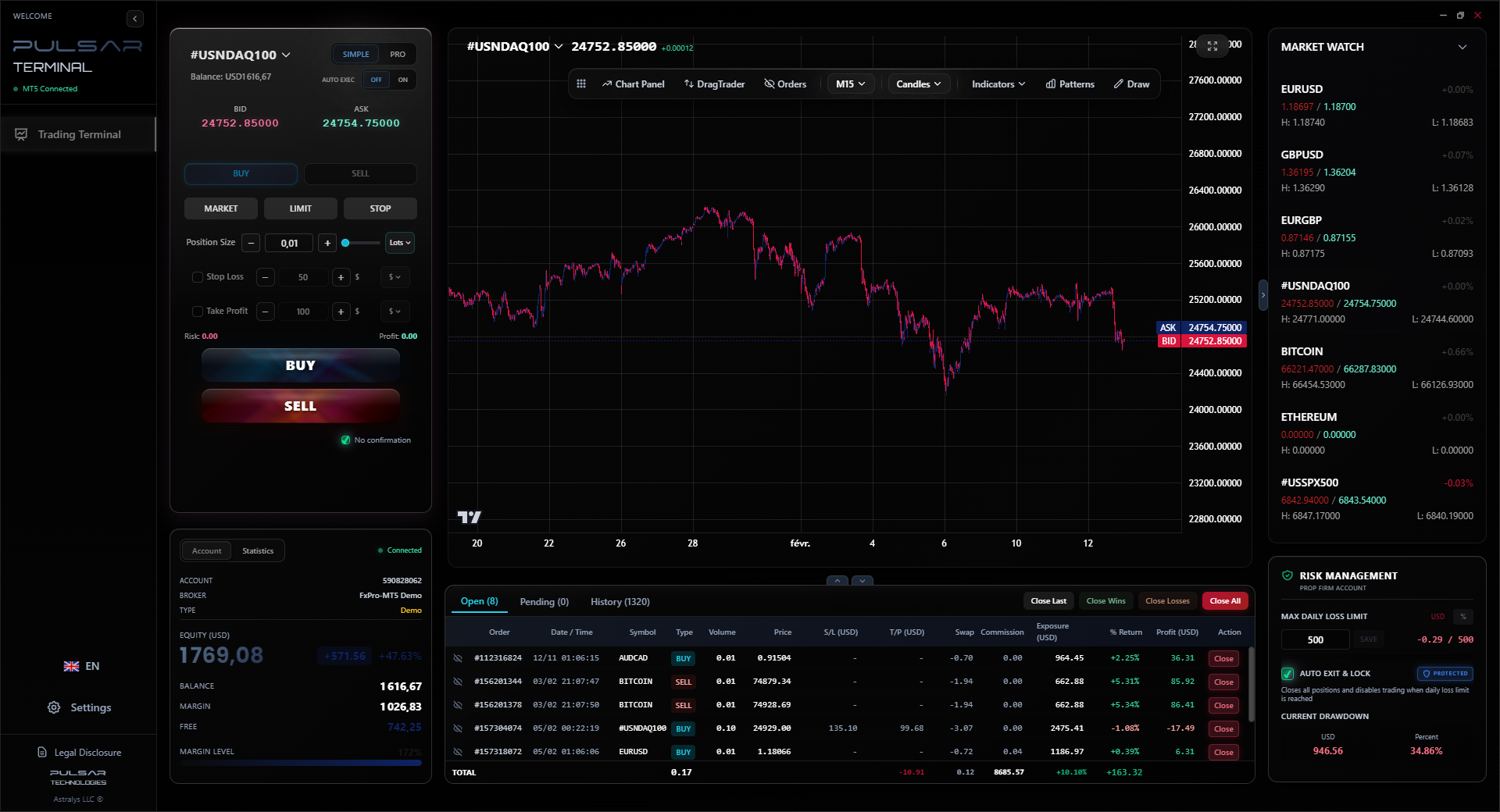
Managing multiple partial exits on a Gold ETF swing trade is clunky on a basic platform; Pulsar Terminal lets you set multi-level take-profits and trailing stops directly on your MT5 chart with a drag.
“SEBI's new valuation rule kills the black box. ETF prices now reflect genuine Indian market conditions, not calculated London prices.”
With India now the 6th largest holder of gold ETF assets globally (95 tonnes), this isn't a niche market anymore. The flows are institutional.
Using ETFs in a Portfolio
I don't just trade Gold ETFs in isolation. They're a core part of my portfolio's 'risk-off' allocation. When my equity positions are heavily long and feeling stretched, I might overweight my Gold ETF holding from 5% to 10% as a hedge. It's negatively correlated with equities more often than not.
The Inflow Signal
The surge to $4.4 billion in net inflows in 2025 wasn't random. It was fear (global uncertainty) and recognition. Watch these inflow/outflow reports from the Association of Mutual Funds in India (AMFI). Sustained inflows can indicate a strong underlying bid in the market, even if the price is choppy.
Pair Trading Idea (For the Experienced)
This is advanced. You could go long a Gold ETF and short a Nifty Bank ETF (like BANKBEES) if you believe a financial shock is coming (banking stress typically hurts bank stocks and boosts gold). The trade captures the relative performance. It's capital intensive and requires careful monitoring, but it's a way to play a thesis without betting on outright market direction.
The 2026 Outlook
The new SEBI valuation rules should reduce tracking error and increase trust. The 12.5% LTCG tax, while not ideal, provides clarity. With central banks (including RBI) still buying gold and geopolitical tensions a constant, the structural case for holding some gold remains. The ETF is the smartest way for an Indian trader to express that view. It's not about getting rich quick. It's about prudent, strategic exposure in the currency you live in.
Finally, remember this is a market like any other. It can be analyzed. Use the MACD indicator to spot trend changes on the weekly chart. Draw your support and resistance lines. Manage your risk. The fact that it's 'gold' doesn't make it magical. It makes it a tradable asset with unique drivers. Understand those drivers, and you have an edge.

FAQ
Q1What is the minimum amount needed to invest in a Gold ETF in India?
You can start with the price of just 1 unit, which is roughly equal to 1 gram of gold. At current prices (approx. ₹7,500 per gram), that's your minimum. For SIPs in Gold ETF Fund of Funds, some platforms allow you to start with just ₹100.
Q2Are Gold ETFs better than physical gold?
For trading and investment purposes, overwhelmingly yes. ETFs have no making charges, assured purity, instant liquidity on the exchange, secure storage, and are easier to track for taxes. Physical gold has sentimental value but is inefficient as a financial asset.
Q3How is the new 2026 SEBI valuation rule different?
Before April 2026, funds used international (LBMA) prices and calculated a local price. Now, they must use live polled spot prices from Indian commodity exchanges (like MCX). This makes the Net Asset Value (NAV) more transparent and directly reflective of the Indian market, reducing potential valuation gaps between funds.
Q4What are the brokerage charges for trading Gold ETFs?
If you buy and take delivery (hold in demat), most discount brokers charge zero brokerage. If you buy and sell intraday, standard equity intraday brokerage applies (which can be a flat fee per trade or a very small percentage). Always check with your specific broker.
Q5Can I do SIP in Gold ETFs?
Yes, but typically through a 'Gold ETF Fund of Funds' (FoF). You cannot set up a direct SIP for a single ETF unit on the exchange, but the FoF structure allows you to invest a fixed sum regularly, which the FoF then uses to buy ETF units for you. It's the standard way to SIP into gold.
Q6What happens to my Gold ETF if the fund house shuts down?
Your gold is safe. The physical gold is held by a custodian (like a bank) in a separate vault, not by the fund house itself. If the scheme is wound up, the gold is sold and the proceeds are distributed to unit holders. Your asset is segregated from the fund manager's business risk.
Q7Why does my Gold ETF price not move exactly with the newspaper's gold rate?
The newspaper rate is often a retail 'buying' price for physical gold, which includes local premiums. Your ETF tracks the wholesale bullion price. There will also be a tiny lag and the effect of the fund's expense ratio (tracking error). During market hours, it should closely follow the underlying bullion futures price.
Pelajaran Prof. Winston
:
- ✓Gold ETFs must hold 95%+ in physical gold (2026 SEBI rule).
- ✓LTCG tax is 12.5% after 1 year (no indexation benefit).
- ✓Expense ratios range from 0.1% to 0.5% - shop around.
- ✓Always correlate trades with the USD/INR chart.
- ✓Use high-liquidity ETFs like GOLDBEES for clean exits.
Sejauh mana artikel ini berguna?
Klik bintang untuk menilai
Pandangan Dagangan Mingguan
Analisis & strategi mingguan percuma. Tiada spam.
Tentang Penulis
Rajesh Sharma
Penganalisis Forex Kanan
Lebih 10 tahun berdagang di pasaran India dan Asia Selatan. Bermula dengan derivatif mata wang NSE sebelum beralih ke forex antarabangsa. Pakar dalam pasangan USD/INR dan pasaran membangun.
Komen
Anda mungkin juga suka

Cara Trading Forex Sukses: 7 Prinsip dari Trader Profesional
Cara trading forex sukses dengan 7 prinsip trader pro: manajemen modal, disiplin, journal trading, backtest. Data nyata, bukan janji profit palsu.
Jam Trading Forex Terbaik untuk Trader Indonesia: Panduan Lengkap dengan Tabel Waktu
Panduan jam trading forex untuk trader Indonesia. Tabel 4 sesi dunia, jam emas 20:00-00:00, sesi mana yang harus dihindari. Data akurat + tips dari trader berpengalaman.
Top 5 Sàn Forex Uy Tín Nhất 2026: Review Jujur dari Trader Indonesia
Top 5 sàn forex uy tín 2026 untuk trader Indonesia. Review jujur: spread, deposit, withdraw, dukungan lokal. Exness, XM, IC Markets & lebih.
All these calculators are built into Pulsar Terminal with real-time data from your MT5 account. One-click position sizing, automatic risk management, and instant calculations.
