


You're a South African trader planning a trip to a trading conference or a research visit abroad.

David van der Merwe
Pedagang Pasaran Membangun ·  South Africa
☕ 9 minit baca
Apa yang akan anda pelajari:
- 1What Exactly is an HDFC Forex Card? (And Is It For You?)
- 2Why the Login Portal is Your Lifeline
- 3The Step-by-Step Login & Management Guide
- 4The Real Cost: Fees, Rates, and the ZAR Factor
- 5Common Problems from SA & How I Fixed Them
- 6South African Alternatives for Travel Cash
- 7Managing It Like a Trading Account
You're a South African trader planning a trip to a trading conference or a research visit abroad. You need a reliable, cost-effective way to access foreign currency. Is an HDFC Bank Forex Card a viable option for you, and how do you actually manage it from here? I've used one for years to fund my trips to financial hubs, and the login portal is your command centre. It's not without its quirks, especially when dealing with it from outside India. Let me walk you through what it really is, how to use it, and the mistakes I've made so you don't have to.
First things first: an HDFC Forex Card is a prepaid foreign currency card issued by HDFC Bank, one of India's largest private banks. It's not a South African product. You load it with a foreign currency (like USD, EUR, or GBP) before you travel, locking in an exchange rate. Think of it as a dedicated, multi-currency wallet on a piece of plastic.
For us in South Africa, getting one isn't as straightforward as walking into a local branch. You typically need to have an existing relationship with HDFC Bank, often through an NRE/NRO (Non-Resident Indian) account. This makes its primary user base the Indian diaspora, including traders and professionals living abroad. If you don't have that connection, this card likely isn't an option, and you'd look at solutions from South African banks like Standard Bank's Global Travel Card or ABSA's Forex Card instead.

Warning: Don't confuse this with a multi-currency trading account from a broker like Exness or IC Markets. This is for spending cash abroad, not for executing trades. Mixing the two is a surefire way to mess up your personal and trading finances.
Once you have the card, the hdfc forex card login portal on their NetBanking platform is everything. From South Africa, this is your only practical way to manage the card. You can't just pop into a branch. The portal lets you check your balance in multiple currencies, view transactions, and, most importantly, reload the card.
Reloading is a critical function. Say you're at a trading seminar in London and you burn through your GBP balance faster than expected. A quick login from your hotel, a fund transfer from your linked NRE account, and you're topped up. I learned this the hard way in Frankfurt. I assumed my initial load was enough, didn't monitor the balance, and got declined at a crucial moment trying to pay for a last-minute taxi to the exchange. The embarrassment was a better teacher than any manual.
The portal also shows you the exact exchange rate you got for each load, which is vital for tracking your travel expenses against the budget. As traders, we're numbers people. This detail matters.
Security is Non-Negotiable
Logging in from international IP addresses can sometimes trigger security holds. Always ensure your registered mobile number for OTPs (One-Time Passwords) is active and can receive SMSs in South Africa. I once had a 24-hour lockout because my South African SIM wasn't receiving the Indian bank's SMS properly. Now, I test the login a week before any trip.

💡 Petua Winston
A travel card login is a risk management tool. Check it as often as you check your trading platform when you have an open position.
“The HDFC forex card login portal is your command centre when you're managing travel funds from six thousand miles away.”
Let's get practical. Here’s how you access and use the portal from Cape Town or Johannesburg.
- Access the Site: Go to the HDFC Bank NetBanking login page. Always type the URL directly or use a saved bookmark to avoid phishing sites. This is as basic as checking your broker's URL before entering credentials.
- Enter Credentials: Use your Customer ID/IPIN (NetBanking password). This is separate from your card PIN.
- Navigate to the Card: Once logged into NetBanking, find the section for 'Cards' or 'Forex Card'. The layout changes occasionally, but the function is always there.
- Key Dashboard Functions:
- View Balance: See balances for each currency loaded.
- View Transactions: Your spending history. Match this against your receipts.
- Reload Card: Transfer funds from your linked NRE/NRO savings account to the card in your chosen currency.
- Block Card: The instant button to press if it's lost or stolen.

Pro Tip: Set up transaction alerts if the portal allows it. Getting an SMS or email for every transaction is the best real-time audit. It’s the same principle as setting alerts for your margin call levels in trading – don’t wait to find out passively.
This is where your trader's eye for detail pays off. The card isn't free. Understanding the fee structure is crucial to see if it beats just using your South African credit card abroad.
| Fee Type | Typical Charge | Note |
|---|---|---|
| Issuance/Joining Fee | Often waived | Check promotions. |
| Reload Fee | A small percentage (~1%) | This adds up. |
| ATM Withdrawal Fee | Fixed fee + forex margin | Can be steep; avoid for small amounts. |
| Inactivity Fee | Charged after 6-12 months | Not a problem for frequent travellers. |
The biggest variable is the exchange rate. HDFC applies its own rate when you load ZAR (or your account currency) onto the card in USD/EUR. You need to compare this rate to the mid-market rate on the day. There's always a margin, their 'spread' if you will. I once calculated that on a $5,000 load, the margin cost me about ZAR 450 compared to the perfect interbank rate. It's a cost of convenience, like the spread you pay on a forex trade.
Compare this to your SA bank's credit card: they'll charge a 2.25-3.5% Dynamic Currency Conversion (DCC) fee on every transaction plus their own poor exchange rate. Often, the forex card wins for larger, planned expenses. For small, spontaneous buys, the difference is negligible.
💡 Petua Winston
The 'spread' on a forex card reload is your cost of convenience. Know it, calculate it, and decide if the convenience is worth the pips.
“Loading a forex card is like entering a trade – you're committing capital based on your analysis of future needs.”
Here’s the gritty part, the stuff that happens when you're six time zones away.
- Login Failed / OTP Not Received: This is the top issue. Ensure your international roaming is on for SMS. If it persists, use the ‘Forgot Password’ or ‘Resend OTP’ feature. As a last resort, you must call their international helpline. Have your customer ID and card details handy. I keep a physical copy of these in my travel documents, separate from my wallet.
- Card Declined at POS/ATM: First, check your balance in the specific currency via the hdfc forex card login. Did you load EUR or are you trying to spend USD? Second, some terminals ask for a PIN, some for a signature. Know your PIN. Third, always choose to be charged in the local currency, not Rand. If a German terminal asks, ‘Charge in ZAR or EUR?’ always pick EUR. Let HDFC do the conversion, not the local merchant’s terrible DCC rate.
- Lost/Stolen Card: Log in immediately and hit ‘Block Card’. Then call the helpline. The replacement can be sent to an international address, but it takes time. This is why I never travel with only one source of funds. I keep a backup travel card and some cash, just like I never risk my entire account on one scalping strategy trade.

Example: In 2023, my card was skimmed in Bangkok. I saw two strange small transactions via my alert. Logged in, blocked it within 20 minutes. The loss was about $50, and it was refunded after a dispute process. The lesson? Frequent login and alerts are your security trailing stop.
If the HDFC route is too complex, here are your local options. I've used most of them.
- Local Bank Forex Cards: Standard Bank, FNB, ABSA, and Nedbank all offer their own versions. The process is easier (walk into your branch), but the exchange rates and fees are often less competitive. Convenience has its price.
- International Prepaid Cards (Revolut, Wise): These digital-first options are gaining traction. You top up with ZAR, convert to foreign currency at good rates, and spend via a card or phone. Their apps are superior to traditional bank portals. However, physical card delivery to SA can be slow, and ATM withdrawal limits apply.
- Traditional Credit/Debit Cards: Simple but expensive. Inform your bank of your travel plans to avoid fraud blocks. Always opt for local currency billing. The fees will eat into your budget.
- Cash in Advance: The old-school method. Order forex from your bank or a bureau de change like Bidvest or ABSA Forex. You get physical cash at a decent rate, but it carries security risks. I never carry more than a few days' spending money in cash.
Your choice depends on your trip's nature. For a short conference, a loaded forex card or Wise card is perfect. For a longer research stint, a mix of a card and periodic international bank transfers might work better.
💡 Petua Winston
Always have a backup funding source when traveling. One card failing is an inconvenience. All cards failing is a crisis.
“The discipline you use to avoid a margin call is the same discipline that stops your card from being declined at a critical moment.”
This is where we traders have an edge. Managing a forex card is a microcosm of managing a trading account.
1. Pre-Trip Analysis (Planning): Don't just guess how much you'll need. Budget for conferences, meals, transport, and a buffer. This is your position sizing. Loading the card is like entering a trade – you’re committing capital based on your analysis.
2. Active Monitoring (Risk Management): Logging in every couple of days to check balances is your daily check on position size and equity. A declining balance is like a drawdown. Are you spending too fast (overtrading)? Do you need to reload (add funds) or adjust your spending (tighten your strategy)?
3. Post-Trip Review (Journaling): When you're back, review the statement from your hdfc forex card login. Did your budget match reality? Where did the leaks occur? This is identical to reviewing your trading journal. I found I was consistently overspending on taxis. My fix? Researching public transport routes in advance – just like backtesting a new swing trading idea before risking capital.
The discipline you use to avoid a margin call is the same discipline that stops your card from being declined at a critical moment. It’s all financial risk management, just on a different scale.
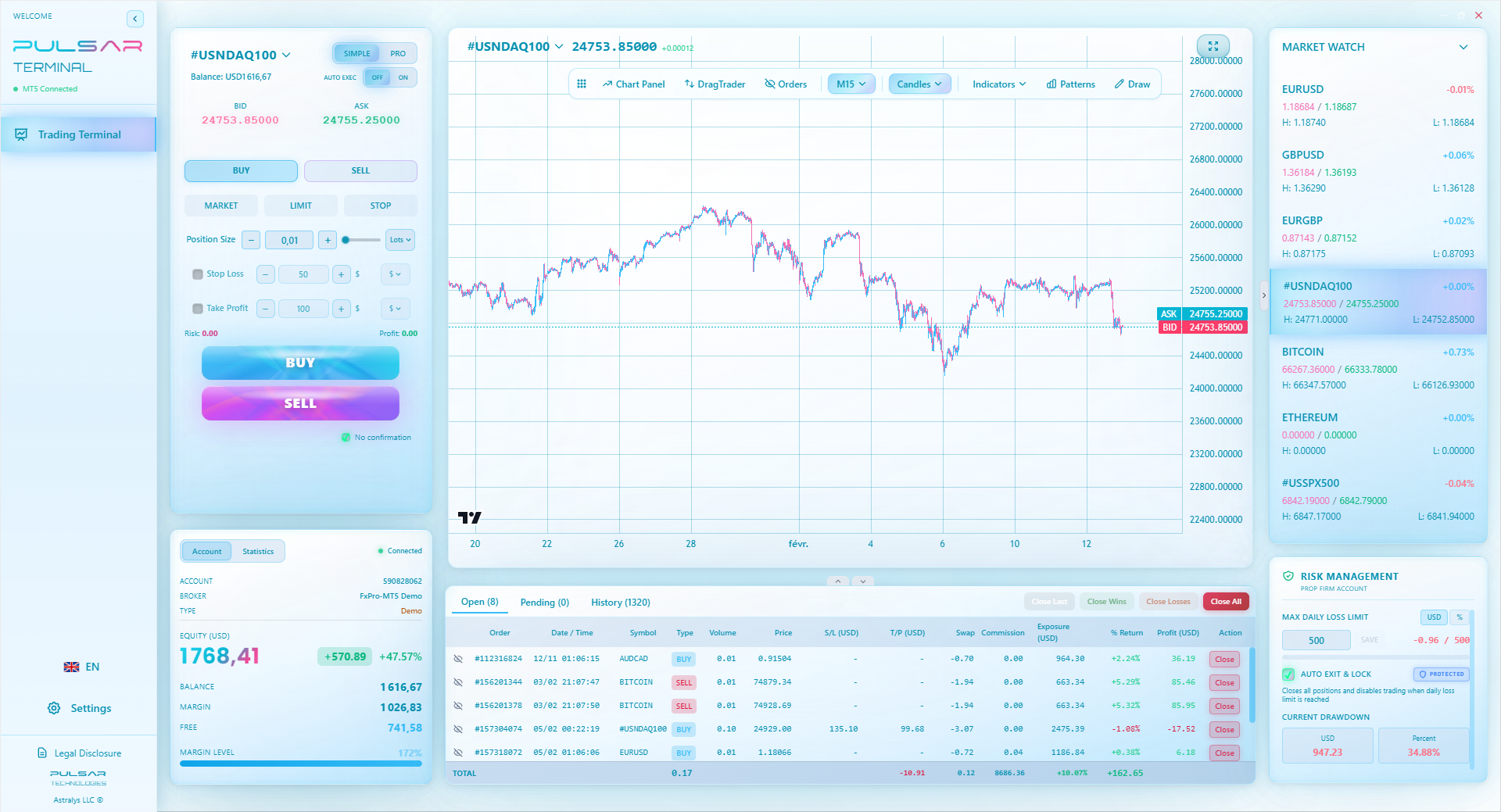
Just as disciplined monitoring of your forex card login prevents travel mishaps, Pulsar Terminal's automated risk management tools prevent trading disasters by enforcing stop-loss and take-profit rules directly on your MT5.
FAQ
Q1Can I get an HDFC Forex Card if I'm not Indian or don't have an NRI account?
Realistically, no. The card is primarily issued to Indian residents and Non-Resident Indians (NRIs) with specific account types (NRE/NRO). South African citizens without this existing banking relationship should explore local forex card options from Standard Bank, FNB, or digital services like Wise.
Q2What should I do if I forget my HDFC NetBanking login password?
Use the 'Forgot IPIN' or 'Reset Password' link on the login page. You will need your Customer ID and will likely have to authenticate via the registered mobile number (OTP). If you're locked out, you must contact HDFC Bank's customer care directly, which can be challenging from South Africa. Keep your credentials secure and accessible.
Q3Is it cheaper than using my South African credit card overseas?
Usually, yes, for larger planned expenses. A forex card locks in a rate and typically has lower fees than the 2.25-3.5% foreign transaction fee + poor dynamic currency conversion rate of most SA credit cards. For small, one-off purchases, the difference may be minimal.
Q4How do I reload my HDFC Forex Card from South Africa?
You reload it through the NetBanking portal after your hdfc forex card login. You transfer funds from your linked HDFC NRE/NRO savings account to the card, choosing the foreign currency. You cannot reload it directly from a South African bank account; the funds must already be in your HDFC account in India.
Q5What happens to unused foreign currency on the card after my trip?
It remains on the card. You can either keep it for your next trip, reload it next time, or convert it back to your account currency (like INR) through the portal, which will involve another exchange rate and possibly a fee. It's often better to hold it if you travel frequently.
Q6Can I use the HDFC Forex Card for online trading deposits?
Absolutely not. Brokers like Pepperstone or XM will not accept prepaid forex cards for deposits. They require bank transfers, credit/debit cards, or dedicated e-wallets. Using a travel card for this will fail and may cause unnecessary complications. Keep your travel and trading finances strictly separate.
Pelajaran Prof. Winston
:
- ✓Forex cards lock in rates, acting as a hedge against currency moves.
- ✓Monitor the card login as actively as your trading journal.
- ✓Always choose local currency at foreign point-of-sale terminals.
- ✓The reload fee is your 'spread'; factor it into your travel budget.
Sejauh mana artikel ini berguna?
Klik bintang untuk menilai
Pandangan Dagangan Mingguan
Analisis & strategi mingguan percuma. Tiada spam.
Tentang Penulis
David van der Merwe
Pedagang Pasaran Membangun
Pedagang berpangkalan di Johannesburg dengan 11 tahun dalam mata wang pasaran membangun. Pakar dalam pasangan ZAR, dagangan terkawal FSCA, dan analisis pasaran Afrika Selatan.
Komen
Anda mungkin juga suka

Cara Trading Forex Sukses: 7 Prinsip dari Trader Profesional
Cara trading forex sukses dengan 7 prinsip trader pro: manajemen modal, disiplin, journal trading, backtest. Data nyata, bukan janji profit palsu.
Jam Trading Forex Terbaik untuk Trader Indonesia: Panduan Lengkap dengan Tabel Waktu
Panduan jam trading forex untuk trader Indonesia. Tabel 4 sesi dunia, jam emas 20:00-00:00, sesi mana yang harus dihindari. Data akurat + tips dari trader berpengalaman.
Top 5 Sàn Forex Uy Tín Nhất 2026: Review Jujur dari Trader Indonesia
Top 5 sàn forex uy tín 2026 untuk trader Indonesia. Review jujur: spread, deposit, withdraw, dukungan lokal. Exness, XM, IC Markets & lebih.
All these calculators are built into Pulsar Terminal with real-time data from your MT5 account. One-click position sizing, automatic risk management, and instant calculations.
